You’ll get bakery-quality croissants in an air fryer by using warm, steady convection and a shortcut lamination that keeps butter layers intact. Preheat briefly, space pieces, and proof at cool then warm stages to build flavor and oven spring. Keep butter cold, rest between folds, and watch for hot spots so you can adjust time or temp. Crisp tops and tender interiors come fast—keep going for step-by-step lamination, proofing, and troubleshooting tips and storage basics
Why the Warm Air Fryer Method Works
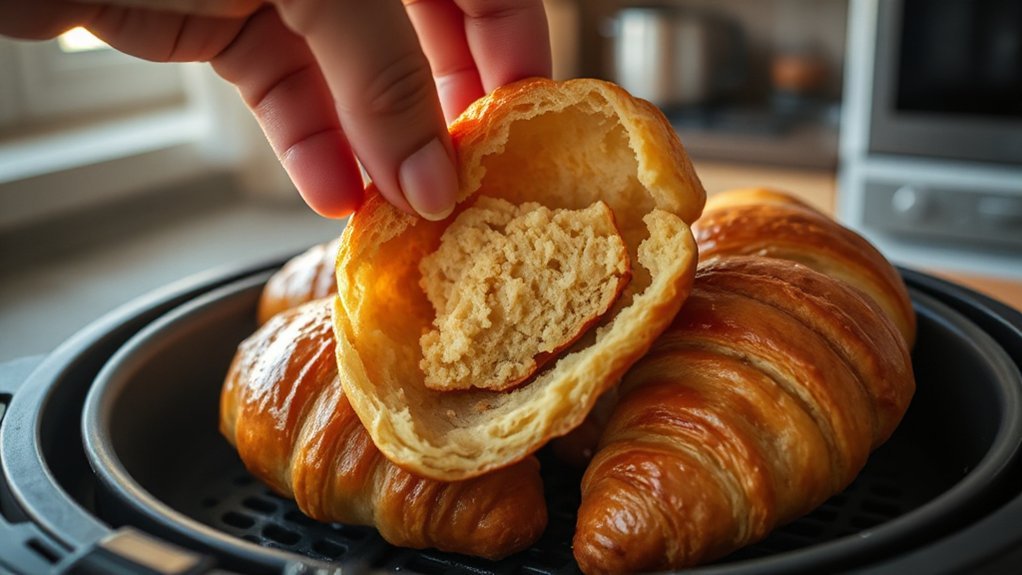
Because the air fryer preheats quickly and traps circulating hot air, it gives croissants an even, gentle warmth that wakes the dough and keeps the butter layers intact. You’ll notice rise happens faster because steady convection reduces harsh thermal gradients between exterior and center, so layers expand uniformly without melting butter into the dough. That controlled environment changes crust chemistry: Maillard reactions and surface caramelization kick in without burning, producing a thin, crisp shell while interior stays flaky and tender. You don’t need to babysit temperature swings — the machine maintains airflow and consistent heat, which shortens proofing and browning times compared with ovens. You’ll also get predictable results across batches since air circulation replicates professional deck oven behavior on a small scale. Use that predictability to time your turns and glazes, and you’ll pull out croissants with even lamination, glossy color, and satisfying shatter when you bite.
Ingredients and Essential Tools
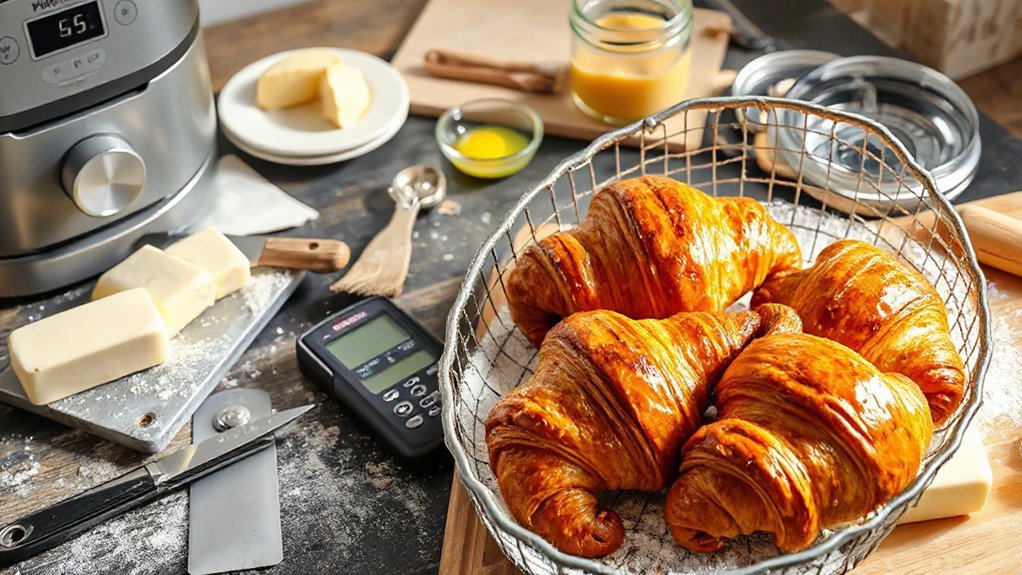
You’ll only need a handful of key ingredients—flaky croissant dough, butter, a bit of sugar and egg wash, plus any fillings you want. You’ll also want the right equipment: a reliable air fryer, parchment or silicone liners, a pastry brush, and a sharp knife or bench scraper. With those basics on hand, you’ll be ready to bake crisp, flaky croissants in no time.
Key Ingredients
The essentials for great air fryer croissants are simple: quality croissant dough (store-bought refrigerated or homemade), a little flour for dusting, butter if you’re rolling from scratch, and an egg wash for that glossy finish—add fillings like chocolate, jam, or ham and cheese if you want. You’ll care about butter quality and flour protein: high-fat butter creates distinct layers, and a medium protein flour keeps crumbs tender while holding structure.
| Ingredient | Role |
|---|---|
| Dough | Structure and rise |
| Butter | Laminated layers |
| Flour | Texture balance |
| Egg wash | Color and sheen |
Use fresh ingredients, keep things cold, and you’ll get bakery-style results fast. Measure ingredients accurately, resist overworking dough, chill between laminations, and preheat the air fryer briefly so your croissants puff evenly and brown beautifully quickly.
Essential Equipment
An air fryer with a roomy basket and reliable temperature control is your single most important tool for crisp, evenly browned croissants—pair it with a small set of pastry essentials and you’ll be ready to bake like a pro. You’ll want a rolling pin, bench scraper, sharp pastry cutter, silicone baking mat, and an instant-read thermometer for precise dough temperature. Nonstick parchment rounds prevent sticking and make transfers easy. Keep a simple Maintenance Checklist: clean filters, wipe interior, and check seals after every few uses. For safety, include Safety Accessories like heat-resistant gloves, a silicone spatula, and a stable cooling rack. With these tools in hand you’ll work faster, avoid mishaps, and consistently produce flaky, golden results for bakery-level croissants every single time reliably.
Shortcut Lamination Technique
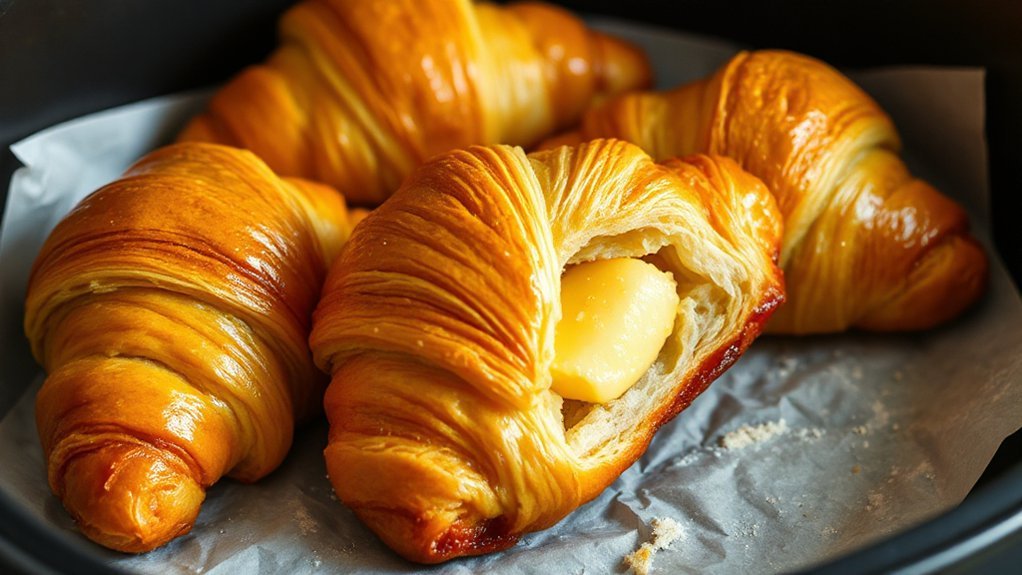
When you’re short on time, a single-fold lamination gives you flaky layers without the marathon of turns. You do one simple fold, roll, chill, and repeat as needed to build structure efficiently. Just mind your dough relaxation timing between turns — rest long enough for the gluten to relax and the butter to stay cool, or you’ll get tearing or greasy spread.
Single-Fold Lamination
Because you want flaky layers without the marathon of traditional laminations, single-fold lamination gives you a fast, reliable shortcut: you fold the butter into the dough once, then perform a few simple turns to build layered structure, cutting overall time and handling while still producing crisp, airy croissants perfect for the air fryer. You get a method with roots in practical bakery shortcuts—Historical context that justifies fewer turns—and a predictable result focused on Layer aesthetics and oven spring. You’ll work cleanly, keep butter cold, and aim for distinct sheets without overworking dough.
- Incorporate a butter block
- Make one envelope fold
- Rest briefly, then two simple turns
- Chill before shaping
Follow this and you’ll save time while baking bakery-quality croissants daily.
Dough Relaxation Timing
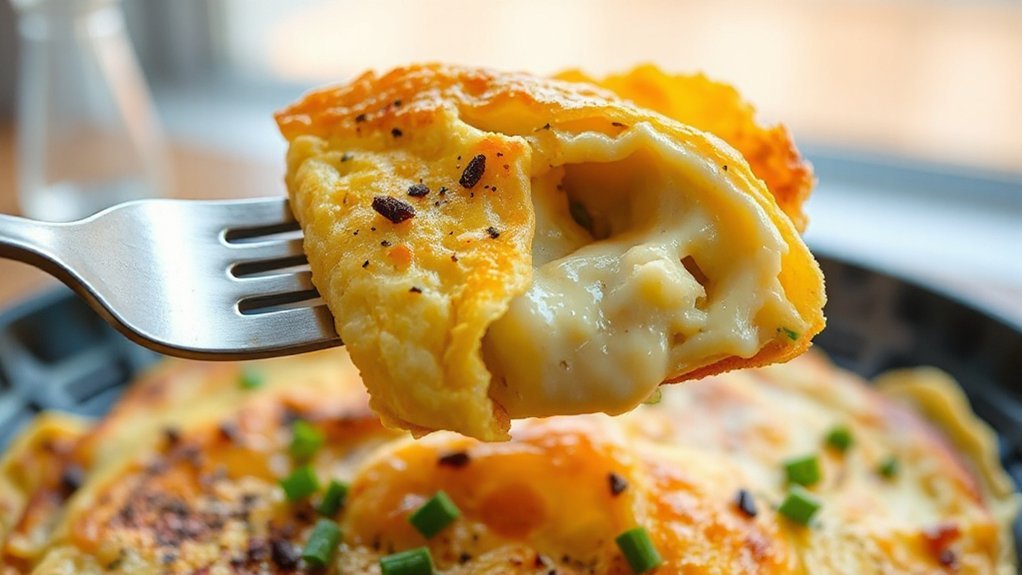
Letting the dough relax between folds is what keeps your butter layers distinct and your croissants from shrinking or tearing. You’ll pause 15–20 minutes during shortcut lamination so stress relaxation occurs; that brief rest lets the dough cool slightly and the butter settle. Don’t skip it: if you rush, layers mash and bake unevenly. Watch the dough, not the clock—when it springs back slowly, gluten realignment has happened and you’re ready for the next fold. For warm air fryer croissants, shorter rests work because cooler butter and tight timing reduce risk, but err on slightly longer rests if your kitchen’s warm. Use gentle handling after each rest to preserve layers and get flaky, airy results every time. and keep dough cool between every fold.
Dough Preparation: Step-by-Step
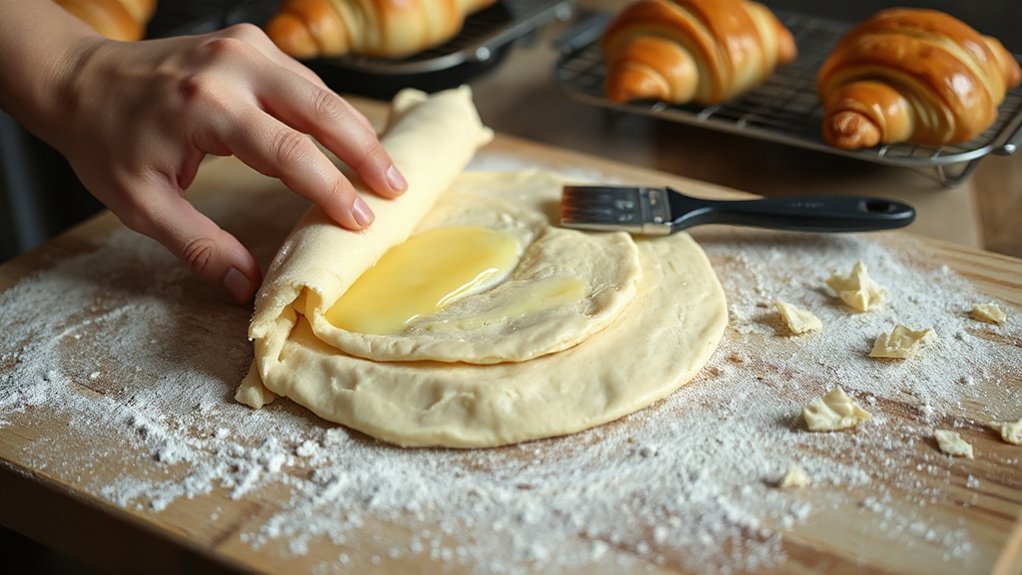
Start by gathering your ingredients and chilling the butter so you’re ready to laminate without drama. You’ll mix flour, salt, sugar, yeast and cold liquid, aiming for a tacky, not sticky, dough. Knead briefly, rest (autolyse) to relax gluten, then shape into a square and chill — this supports a smooth lamination. Maintain a steady kitchen workflow and strict time management: set timers for rests and chills so butter and dough stay at ideal temperatures.
- Mix: combine dry and wet until cohesive.
- Rest: 20–30 minutes for gluten relaxation.
- Laminate prep: roll dough, enclose butter, chill 30 minutes.
- Turns: perform three folds with 30–45 minute chills between.
Keep surfaces floured lightly, use a bench scraper, and cool hands if butter softens. These precise, paced steps set you up to execute crisp, layered croissants in the air fryer. Stay cool, patient, and punctual always.
Shaping, Filling, and Rolling Options
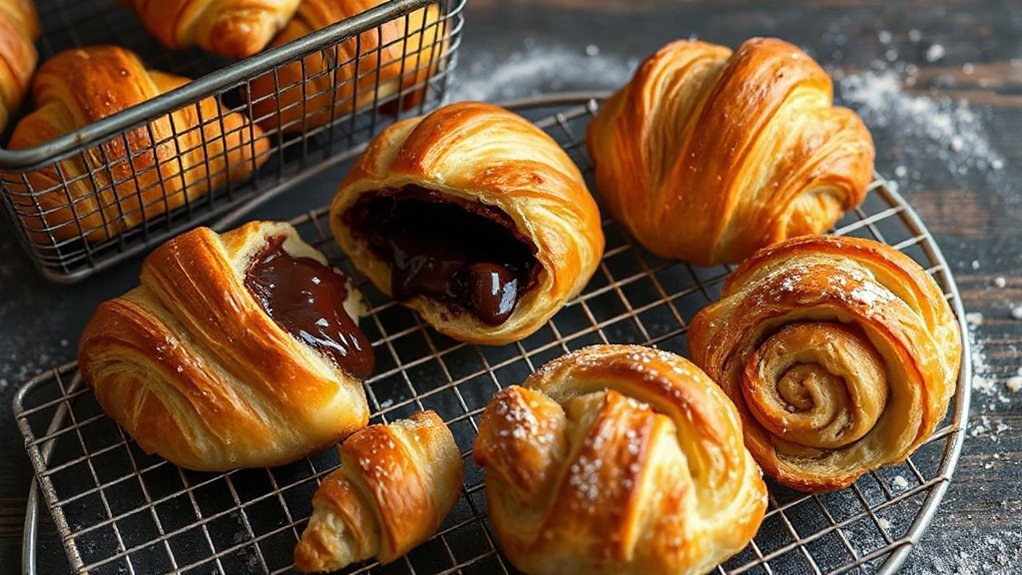
With your laminated dough chilled and relaxed, you’re ready to shape, fill, and roll—this is where croissant personalities come alive. You’ll cut triangles for crescents, rectangles for pocket rolls, or strips for spiral braids. Fillings stay simple: chocolate, almond, or ham and cheese; don’t overfill. For crescents, stretch tips before rolling to get a tight spiral. For pocket rolls, fold edges to seal a neat cavity for jam or custard. To make spiral braids, stack thin rectangles, add filling, then roll and twist gently. Work cold but pliable dough; handle it confidently so layers stay distinct. Use egg wash for shine and sprinkle seeds if you like crunch. Mix shapes and fillings on one tray to please every palate.
| Shape | Ideal Filling |
|---|---|
| Crescent | Chocolate |
| Pocket Roll | Jam or custard |
| Spiral Braid | Almond paste |
Label variations so you remember fillings and bake times at a glance for precise results.
Proofing and Temperature Staging
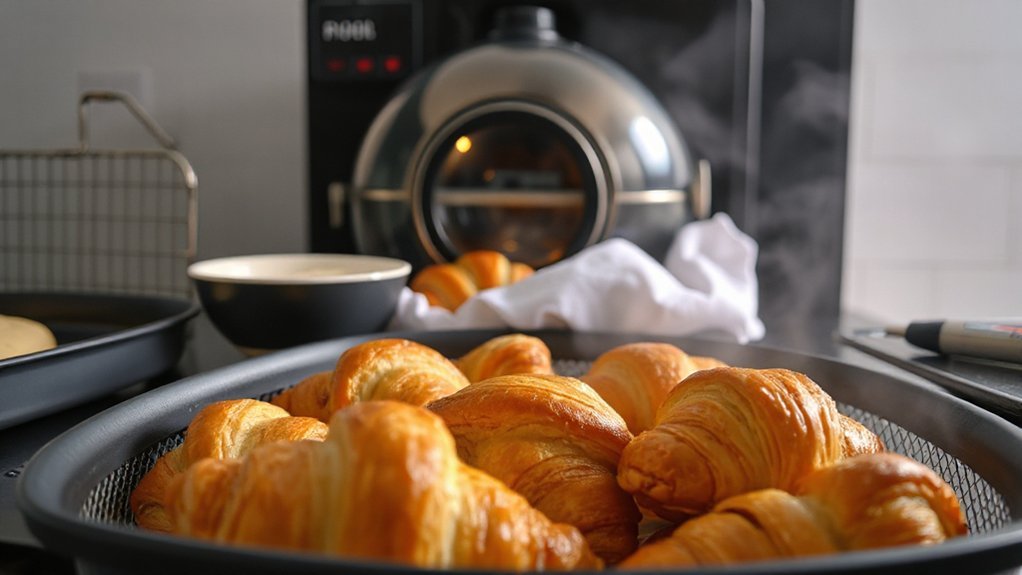
While you want the dough to rise, you also need to protect the butter layers, so temperature staging matters: proof cooler for flavor and structure, warmer for a quicker finish. You’ll proof gently, letting yeast develop without melting butter. Start in a cool spot (18–20°C) for an extended slow rise to build flavor; that’s where Humidity Control helps—keep 75–80% relative humidity to avoid crusting. Then move to a slightly warmer stage (24–26°C) for the final puff before baking.
Think of it like Thermal Profiling for your pastry: timed ramps between temps preserve laminations and optimize oven spring.
- Cool proof: slow fermentation, flavor development.
- Intermediate rest: relax gluten, maintain layers.
- Warm proof: active rise, better lift.
- Chill briefly: firm up butter before transfer.
You’ll monitor timing and feel rather than rely on strict minutes. Adjust stages based on dough temperature and loaf size; small batches need shorter ramps often.
Air Fryer Settings, Timing, and Troubleshooting
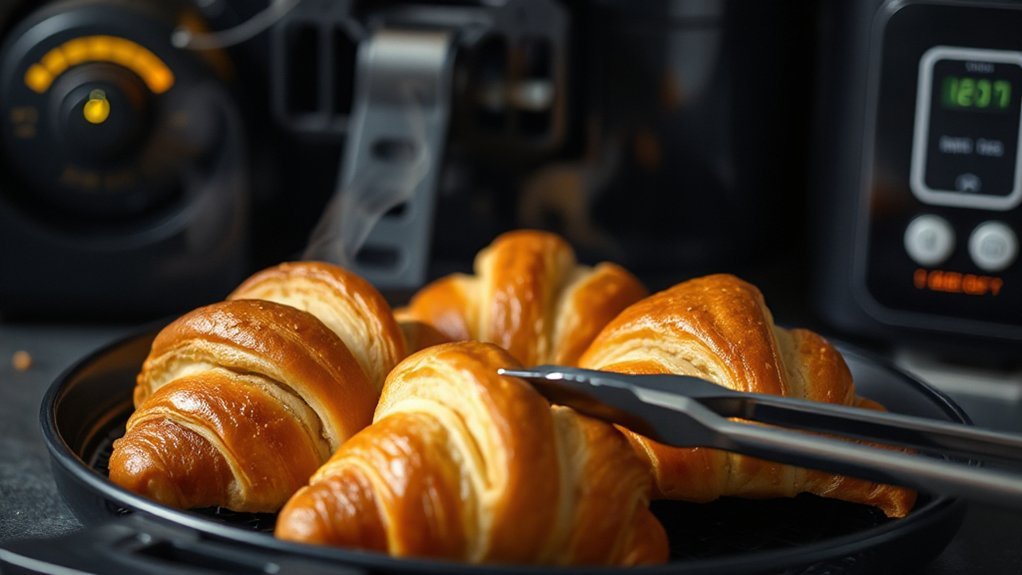
Because air fryers circulate intense, fast-moving heat, you’ll want to tweak temperature, time, and placement differently than you would for an oven: aim for 180–190°C (350–375°F) for most croissants, preheat for 3–5 minutes, and give each piece plenty of space so air can lift and brown them evenly.
| Setting | Guideline |
|---|---|
| Temp | 180–190°C / 350–375°F |
| Time | 10–14 min; rotate at 7 min |
| Placement | Single layer, 2 cm gap |
| Troubleshoot | See notes below |
Check temp with a probe or oven thermometer for temperature calibration. If one side browns faster, do hot spot mapping by testing positions and rotating trays. Start at 10 minutes; add 1–2 minutes if underdone. For soggy bottoms, increase air flow, lower temp 5°C and lengthen time. If exterior burns, lower temp and cover loosely with foil after golden color. Keep notes—your air fryer model and basket design change results; small adjustments make bakery-quality croissants. Enjoy baking.
Serving, Storage, and Reheating Tips
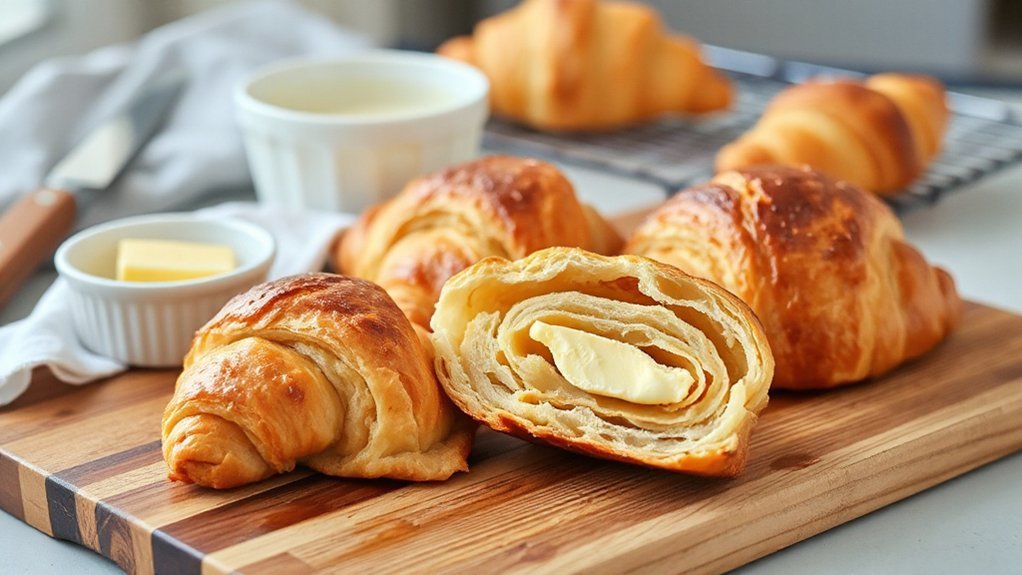
After dialing in temperature and timing, you’ll want to keep those flaky layers at their peak for serving, storing, and reheating. Serve croissants within an hour for best crunch; if you’re making a spread, warm plain or filled croissants to refresh butter and layers. For storage, cool, then seal in an airtight container at room temperature for up to 24 hours or freeze for up to a month. Reheat from frozen at 325°F in your air fryer until interior hits 145°F, or thaw overnight and crisp at 300°F for 4–6 minutes.
Keep croissants flaky: serve within an hour, cool and seal for 24 hours, or freeze and crisp before serving.
- Plate simply: linen napkin, small ramekin of preserves, and fresh fruit for clean Plating Suggestions.
- Build a sandwich: sliced croissant, greens, cheese, and ham—serve warm.
- Use foil tents to retain heat when transporting.
- Freeze portions individually to grab later.
Think about Beverage Pairings—coffee, tea, or sparkling wine elevate each bite. Enjoy peak texture.
Conclusion
You just made bakery‑quality croissants in your air fryer, and you’ll be amazed—over 60% of home bakers say shortcuts like this keep them baking more often. You’ll feel proud pulling golden, flaky layers out in minutes, and you’ll want to show them off. Keep experimenting with fillings and proofs, and don’t worry if a batch isn’t perfect; every try teaches you more and gets you closer to pastry perfection. Enjoy the applause and extra coffee.
About The Author