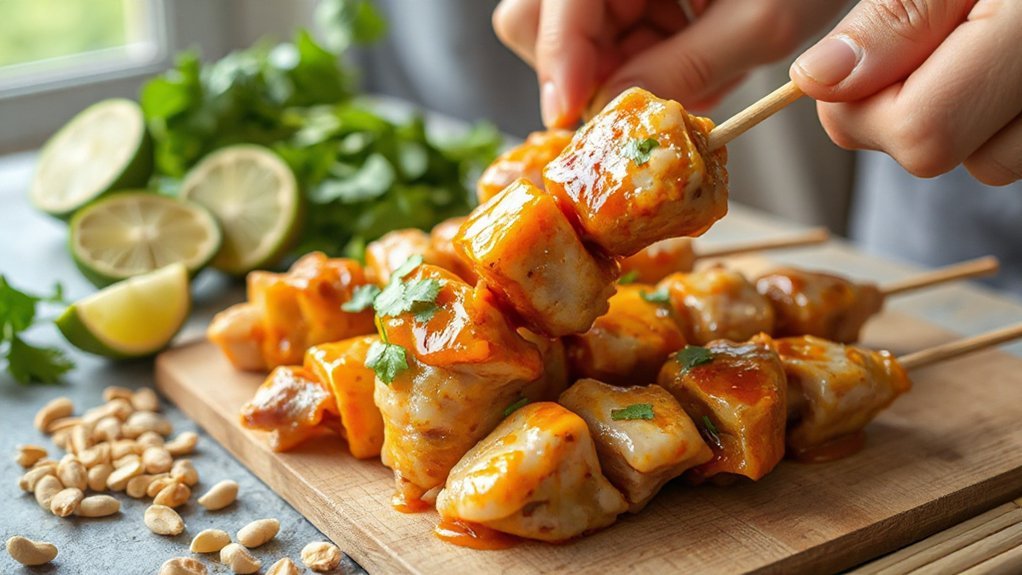
You’ll easily make restaurant-quality Thai chicken satay in your air fryer—crispy outside, juicy inside—by using a balanced marinade of coconut milk, fish sauce, lime, garlic and toasted peanuts for umami, plus a brief brine or two- to four-hour marinate for best texture. Preheat to 375°F, skewer thin slices, cook single-layered, flip once, reach 165°F. Whip a glossy peanut sauce with peanuts, coconut milk, tamarind and brown sugar. Keep going to get tips, timing and sides.
Why Air Fryer Chicken Satay Is a Game Changer
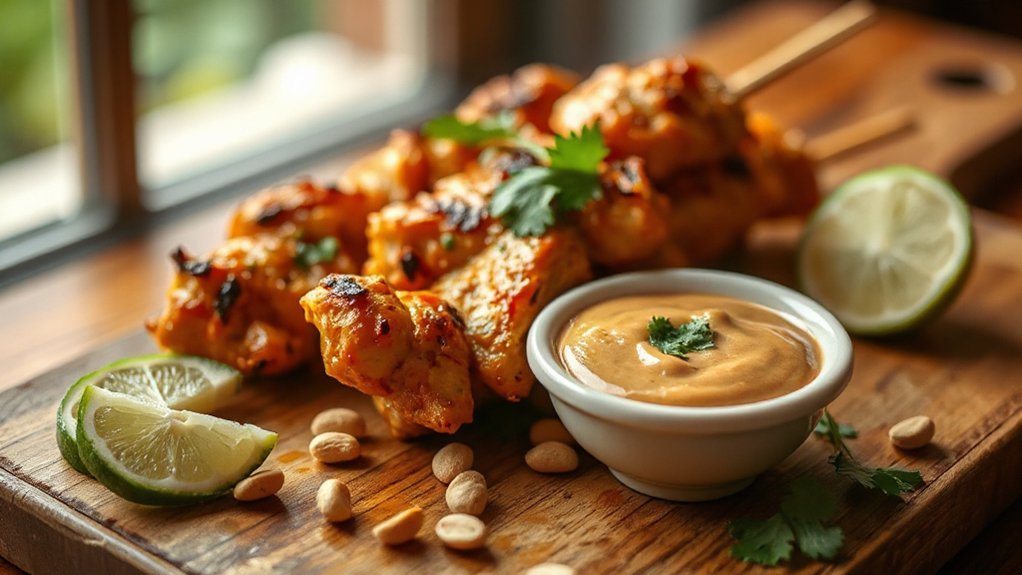
With an air fryer, you get satay that’s crisp on the outside and juicy inside without drowning it in oil. You’ll love how quickly it browns, giving you that grilled char without a grill. It’s a game changer because it trims fat and time: the Health Benefits are obvious when you cut oil yet keep protein satisfying. You also reduce smoke and mess, so cleanup’s fast and you can cook indoors year-round. For busy evenings, the Weeknight Convenience is unbeatable—marinate briefly, pop skewers in, and you’ve got dinner in minutes. You’ll get consistent results every batch, so guests and picky eaters get the same great bite. You can scale portions without fuss and reheat leftovers that still stay tender. This method saves you effort and keeps flavor front and center, making restaurant-quality satay feel achievable at home any night. You’ll impress friends without breaking a sweat tonight.
Key Ingredients and Pantry Hacks
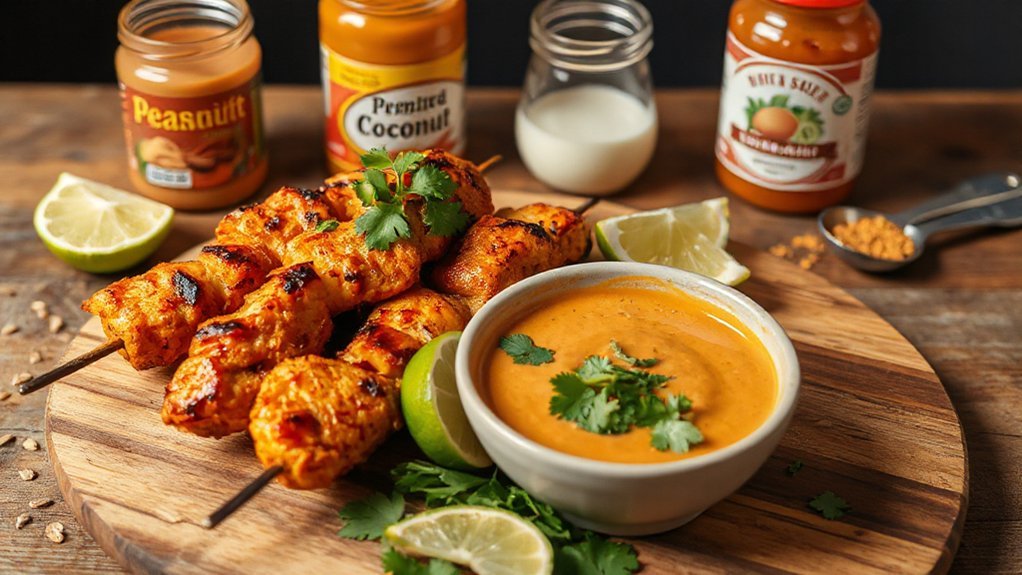
Now that you know why the air fryer makes satay so satisfying, let’s talk ingredients that make it sing and pantry tricks that save time. You want fresh garlic, lemongrass or dried substitute, coconut milk, and good-quality peanut butter — and buy skewers that won’t burn. Keep a tidy Spice Storage routine: airtight jars, small batches, and a simple Labeling System so you grab cumin, coriander, and turmeric without guessing. Freeze prepped skewers flat to speed weeknight dinners.
- Prep: slice chicken thin, portion, freeze between parchment.
- Nuts: toast peanuts, cool, then store in sealed jar.
- Aromatics: mince and freeze in tablespoon portions.
- Skewers: soak wood, or use reusable stainless.
These habits cut hands-on time, prevent waste, and make your air fryer satay consistently restaurant-ready without extra fuss. Keep essentials like fish sauce, palm sugar, and lime handy; they’ll pull everything together in minutes for quick, bold dinners tonight.
The Updated Marinade: Flavor Science
You want a marinade that balances salt and umami so the chicken sings without tasting salty. Use soy, fish sauce, or miso sparingly to layer savory depth while tasting as you go. Add a touch of acid—lime juice, vinegar, or yogurt—to gently tenderize the meat and brighten the whole flavor.
Salt and Umami Balance
Balancing salt and umami in the updated marinade makes your chicken satay sing without tasting salty, and it’s mostly about layering—not just adding more salt. You’ll use Sensory science to tune savory depth while honoring Cultural preferences for subtlety or boldness. Start with modest salt, add umami from fish sauce, soy, or mushroom powder, and finish with toasted peanuts in the sauce to echo those notes. Taste as you go; salt amplifies aromas, umami rounds flavors.
- Measure salt baseline, then adjust.
- Add fish sauce for savory lift.
- Use soy or mushroom powder for depth.
- Let peanuts reinforce umami in the sauce.
Work in small increments, resting between adjustments so flavors meld and you avoid oversalting; the air fryer highlights every nuance for better restaurant quality.
Acid for Tenderness
Although acid doesn’t magically turn tough meat into silk, it’ll gently loosen muscle fibers and help your chicken absorb flavors when you use it smartly. You’ll balance acid with oil and aromatics so the meat tenderizes without getting mushy; think of acid as a controlled extractor. For quick jobs, a Citrus Comparison helps: lime and lemon give bright, fast action, orange adds sweetness and gentler acid. If you want more depth, explore Vinegar Varieties—rice vinegar is mild, apple cider gives fruitiness, white wine vinegar packs sharpness. Use about 1–2 tablespoons acid per pound, marinate 30 minutes to 2 hours depending on cut thickness, and never exceed 6 hours. Rinse or pat dry if needed before air frying for perfect texture and flavor every time.
Preparing the Chicken for Maximum Juiciness

Brining the chicken briefly locks in moisture and gives you a forgiving margin against overcooking — aim for a simple salt-and-sugar brine for 20–30 minutes for bite-sized satay pieces. After brining, trim any excess fat and use butterfly cuts on thicker breasts to create even, thin pieces; that keeps the air fryer from drying edges. You can also make shallow pocket stuffing in larger pieces for extra flavor pockets without overloading the surface.
- Cut uniformly so skewers cook evenly.
- Pat dry thoroughly to help the coating adhere.
- Thread pieces snugly but not crowded.
- Chill briefly on a rack to firm up before air frying.
Handle the meat gently, avoid pounding to mush, and focus on consistent size — that’s the real key to juicy, restaurant-quality satay. Use room temperature chicken briefly before cooking and monitor internal temp; pull at 165°F and rest a few minutes for the juices.
Marinating Times and Tips for Best Results
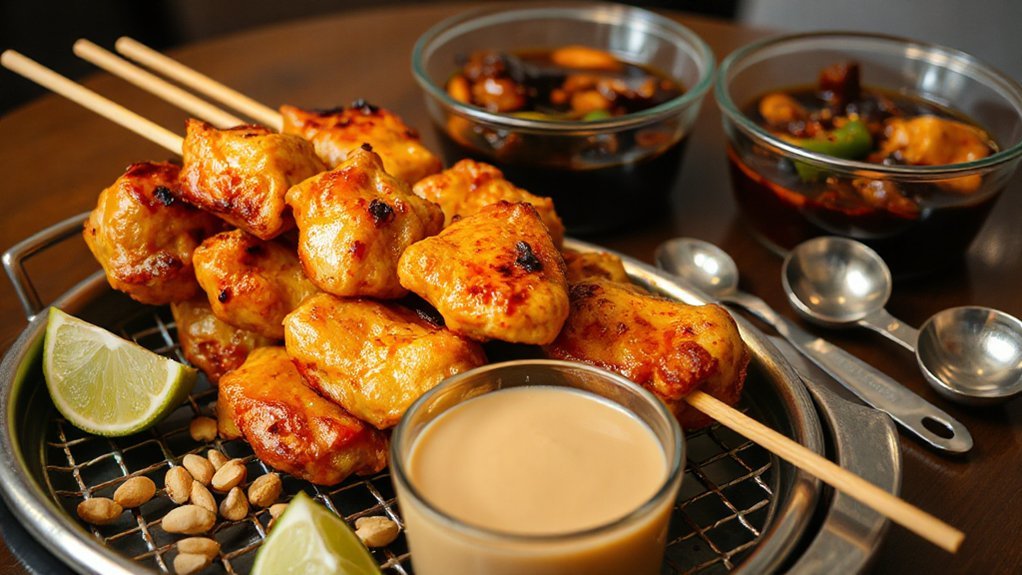
Once your chicken’s trimmed and skewered, marinating makes the difference between bland and boldly flavored satay — and timing matters. You want aromatics to penetrate, so aim for at least 30 minutes if you’re short on time, but plan for a 2–4 hour window for deeper flavor. For maximum impact, marinate overnight up to 12 hours; beyond that the texture can get mushy from acids. Respect Food Safety: always keep marinating chicken refrigerated and discard any leftover marinade that touched raw meat unless you boil it first. Use airtight containers or zip bags to guarantee even coating and easy refrigeration. Rotate bags occasionally so every piece sees the mix. If you’re in a hurry, a quick 15–30 minute rest at room temperature after removing from fridge helps the meat take heat more evenly before cooking. These Time Windows give you control—pick one that fits your schedule and goals.
Air Fryer Setup and Temperature Guide
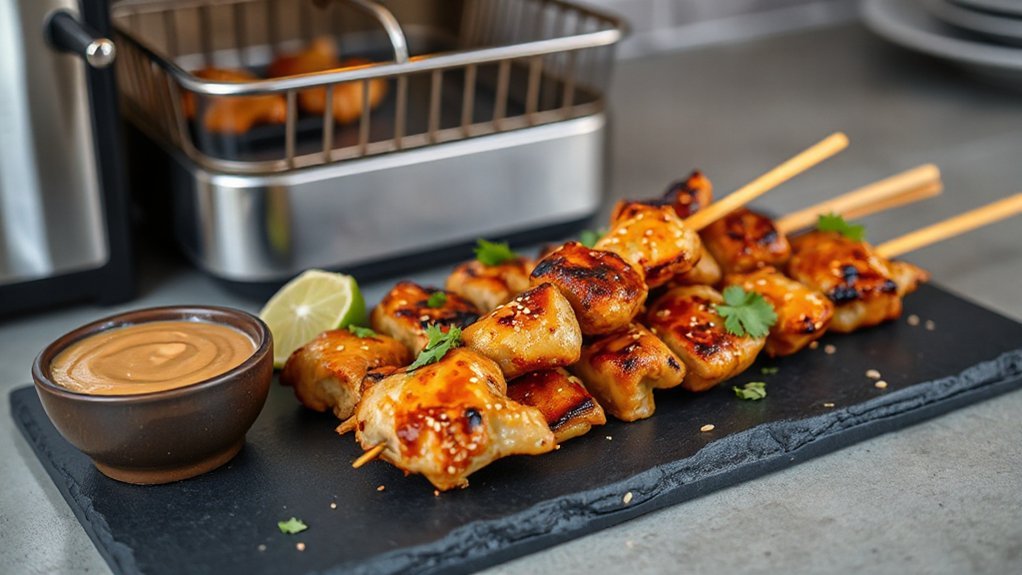
Preheat your air fryer to 375°F (190°C) and arrange the rack or basket so the skewers sit in a single layer with a little space between each—crowding causes soggy, unevenly cooked meat. Use the grill or poultry preset selection if your unit has one; it mimics direct heat and speeds caramelization. Confirm rack placement so air flows above and below the skewers—middle is usually best. If trays or crisper plates are included, use them to lift meat off pooled juices. Keep the basket dry and lightly oiled to prevent sticking. Avoid overfilling the drawer; bite-sized batches cook more evenly. Set a brief preheat and monitor the first batch to learn your fryer’s hot spots. With these setup tips you’ll get golden edges and juicy centers without guesswork.
- Middle rack for evenly.
- Leave ½-inch between skewers.
- Use grill preset selection.
- Preheat briefly check hot spots.
Step-by-Step Cooking Instructions
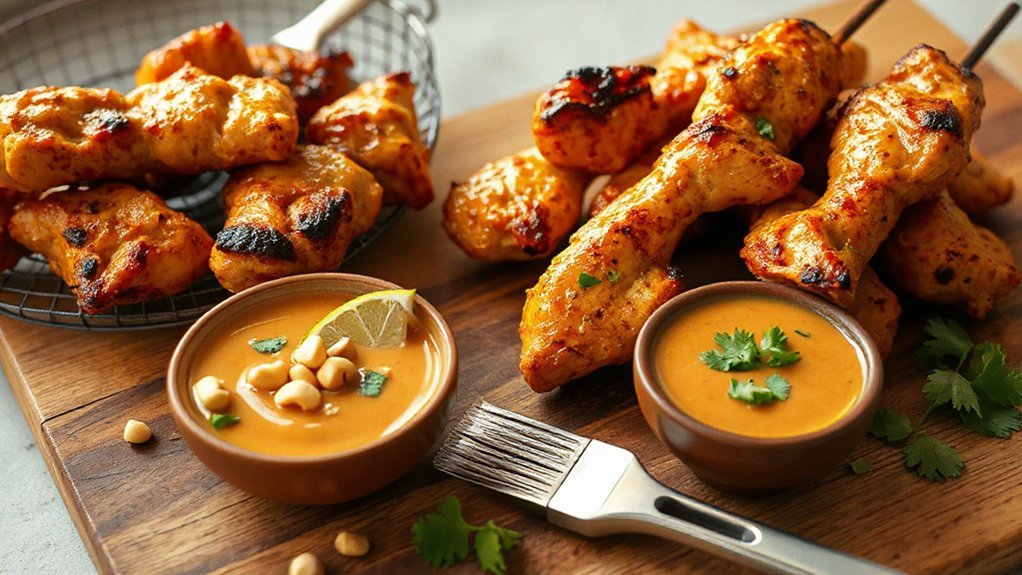
With your air fryer set and racks arranged, you’re ready to cook the satay—work in single layers so each skewer browns evenly. Preheat time done, place marinated skewers in a single layer, leaving space between pieces for airflow. Cook at the recommended temp, flipping halfway to expose all sides. Use Visual cues: golden edges, slight char, and juices running clear indicate doneness. Tiny pink centers mean a little more time; check thick pieces with an instant-read thermometer—165°F is safe for chicken. Don’t overcrowd or stack, or you’ll steam instead of crisp.
Safety reminders: handle skewers carefully, use tongs and oven mitts, and let rested satay sit for five minutes before serving. If your air fryer basket has nonstick coating, avoid metal tools that scratch. Clean splatters promptly once cool. With these steps you’ll get evenly cooked, restaurant-quality chicken satay every time. Enjoy the crunch and juicy interior today.
Glossy Peanut Sauce — Recipe and Variations
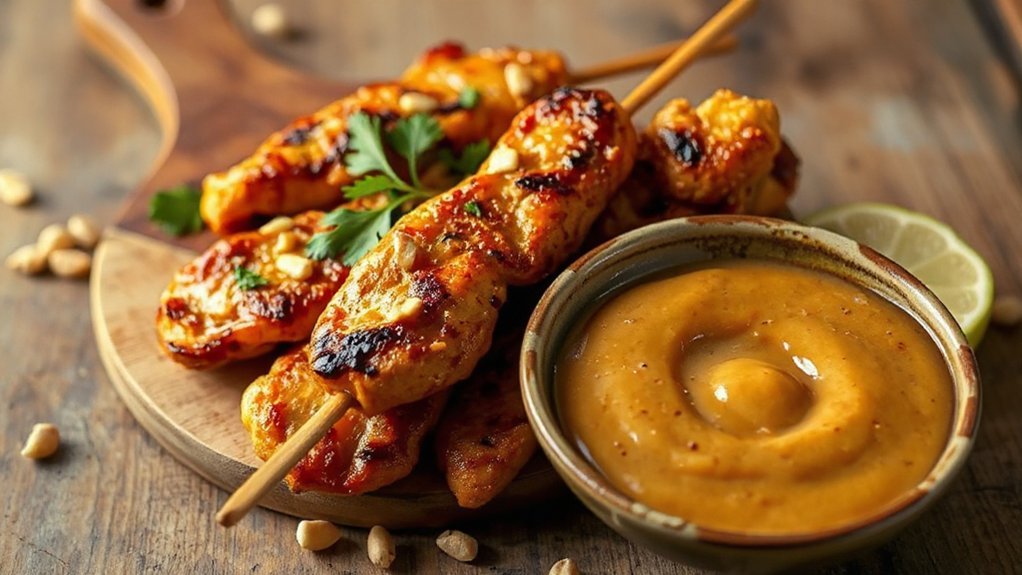
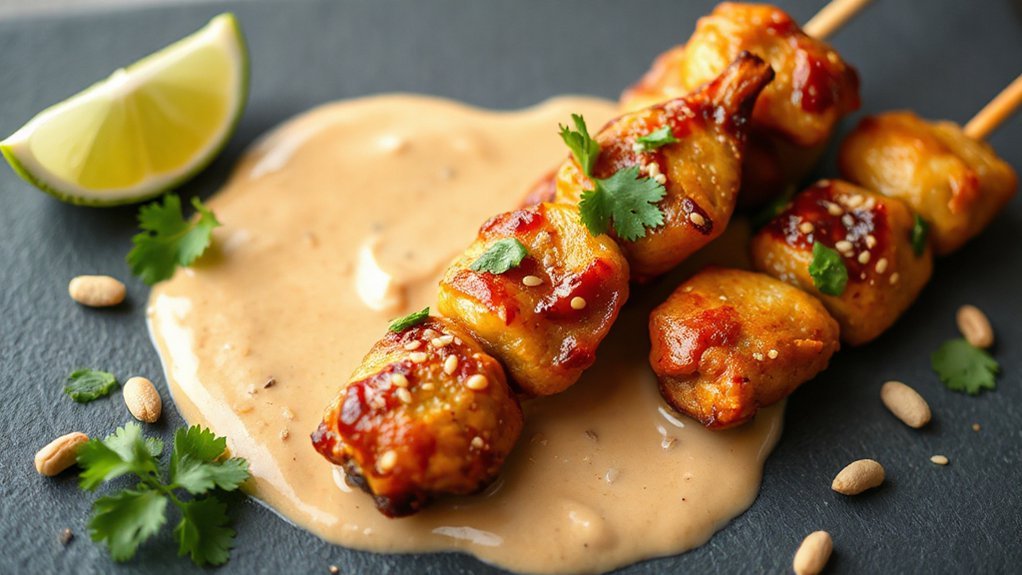
Balance is everything when you make this glossy peanut sauce—you’ll get a silky, slightly sweet finish that clings to each skewer and lifts the dish. Start by toasting peanuts, then blend with coconut milk, tamarind, brown sugar, fish sauce and a squeeze of lime. Heat gently while whisking to promote oil emulsification so the sauce stays smooth and glossy. Adjust thickness with water or more coconut milk.
- Classic: smooth, creamy, mellow sweetness.
- Spicy: add Thai chiles or sriracha for heat.
- Crunchy: fold in chopped peanuts for pronounced texture variations.
- Lighter: thin with stock or lime for a pourable glaze.
Taste as you go, balancing sweet, salty, sour and spicy. Store refrigerated for up to five days and rewarm slowly, whisking to revive consistency. This is practical, quick, and restaurant-worthy. You can tweak heat and sweetness easily; keep notes for consistent results every time guaranteed.
Serving Suggestions and Side Dishes
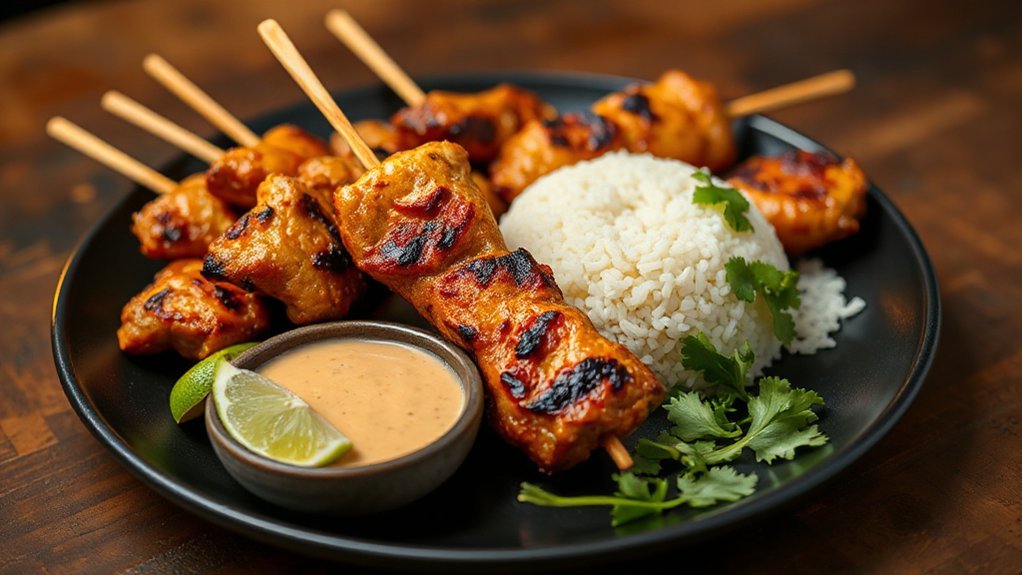
Want to make the meal sing? Pair your air-fried satay with fragrant Coconut Rice and a crisp Cucumber Relish—together they balance richness and spice. Serve skewers straight from the fryer, drizzle glossy peanut sauce for dipping, and offer lime wedges so guests can brighten bites. Add a simple Asian slaw of shredded cabbage, carrots and cilantro tossed with rice vinegar for crunch, or grill pineapple slices to bring sweet char. For a light spread, lay out steamed edamame, pickled shallots and crushed peanuts so people customize textures. If you’re feeding a crowd, set a build-your-plate station with bowls of Coconut Rice, satay, Cucumber Relish and condiments so everyone assembles favorites. Finish with Thai basil or mint sprigs for aroma. Keep portions manageable—two skewers per person plus sides—and you’ll deliver restaurant-quality balance without fuss. Serve chilled beer or jasmine tea to complement flavors and cleanse the palate between bites.
Meal Prep, Storage, and Reheating Tips
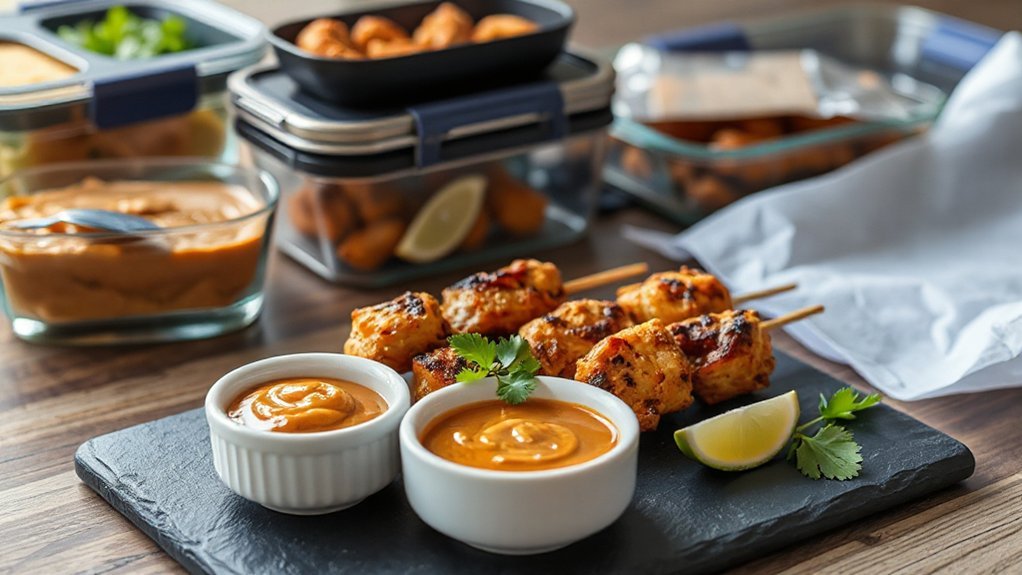
Prepping satay ahead saves time and keeps flavors bright — marinate and skewer the chicken up to 24 hours in the fridge, or freeze raw skewers for up to a month by flash-freezing on a tray and then sealing in a bag. When you plan meals, think Portion Control: pack two skewers per person for snacks, three to four for mains. Use airtight containers for cooked satay; cool completely before sealing to avoid soggy texture. Label bags with date and contents — clear Freezer Labeling prevents mystery meals and waste.
- Flash-freeze skewers flat, then bag to prevent sticking.
- Refrigerate cooked satay for 3–4 days; freeze up to 3 months.
- Reheat in the air fryer at 350°F for 4–6 minutes until heated through.
- Thaw overnight in the fridge for even reheating.
You’ll save time without losing restaurant-quality flavor. Store sauces separately to prolong freshness and texture.
Conclusion
You’ll love how your air fryer turns marinated chicken into golden, sizzling skewers that smell like street food at dusk. Grab a satay, dip it into glossy peanut sauce, and you’ll taste sweet, salty, and tangy fireworks. Keep extras chilled for quick meals, or reheat briefly to revive that crisp edge. With simple prep and bold flavors, you’ll impress dinner guests and make weeknight cooking feel like a mini celebration every single week without fuss.
About The Author