You’ll sear restaurant-quality tuna steaks in minutes with an air fryer for a crisp, caramelized exterior and a silky rare center. Use 1–1½-inch steaks, a short soy-miso–honey marinade with garlic and ginger, and a high-smoke-point oil. Preheat to 400°F (200°C) and cook about 1–2 minutes per side, flipping once. Rest 5–8 minutes, finish with sesame, scallions and flaky salt, and keep leftovers chilled — keep going for exact timings, pro reheating tips, and more inside.
Why This Recipe Works
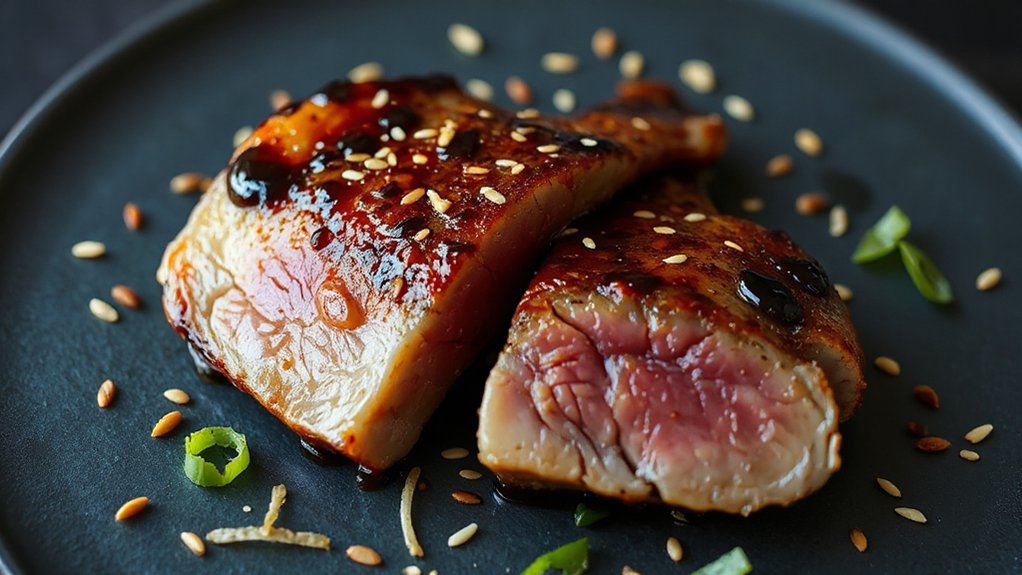
Because the air fryer sears tuna quickly without overcooking the center, you get a crisp exterior and a tender, rare interior every time. You’ll notice how rapid high heat locks in moisture and maximizes nutrient retention, so the tuna stays vibrant and healthful while developing that attractive crust. The quick cook also preserves delicate textures, letting natural umami shine without heavy sauces muting the fish. From a flavor psychology angle, the contrast between seared outside and cool, rare inside creates satisfying complexity your senses interpret as premium and fresh. You’ll enjoy bold surface caramelization that amps aroma and mouthfeel, while the rare core offers a silky, melt-in-your-mouth finish. This balance makes each bite interesting and keeps you coming back. In short, the air fryer gives predictable, restaurant-quality results that highlight tuna’s best traits with minimal fuss. You’ll get fast cleanup and repeatable timing for confident weekday cooking results.
Key Ingredients and Substitutions
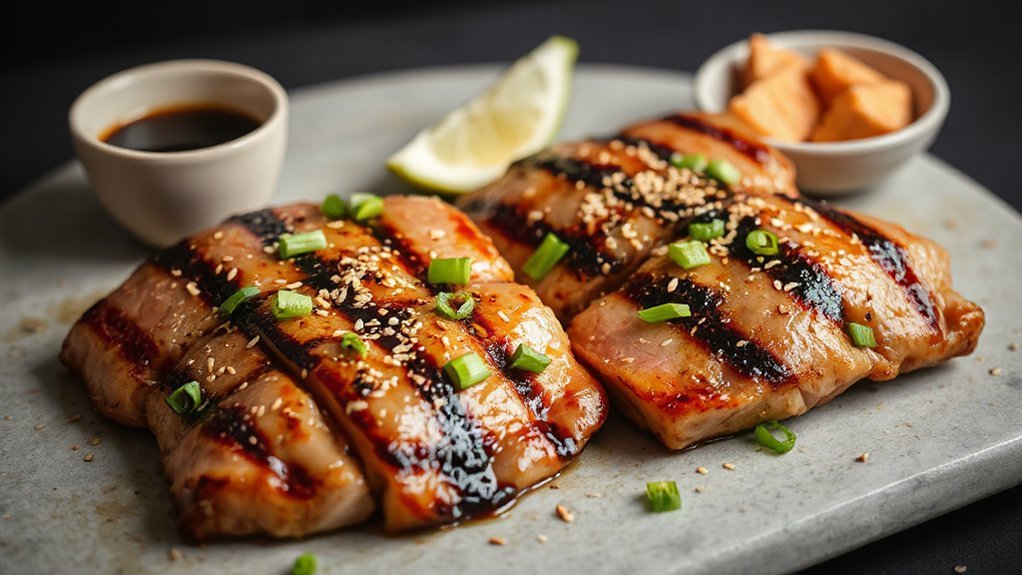
A few simple ingredients—fresh tuna steaks, a high-smoke-point oil, salt and pepper—are all you need to get started, and you can tweak the rest to suit what’s in your pantry. Choose steaks about 1 to 1½ inches thick; look for bright color and firm texture. Prioritize sustainable sourcing—MSC or reputable local fishmongers—and do some label reading to confirm species and catch method. For oil, use avocado, grapeseed, or refined peanut for searing; extra-virgin olive oil will smoke too soon. Kosher salt and freshly cracked black pepper are ideal; flaky finishing salt and toasted sesame seeds make nice touches without changing technique. If tuna isn’t available, swap in salmon or swordfish steaks—both hold up to quick, hot cooking. For a low-sodium option, reduce salt and rely on a lemon or lime wedge at the table. Keep ingredient swaps simple so the sear and rare center stay the star.
Marinade and Flavor Building
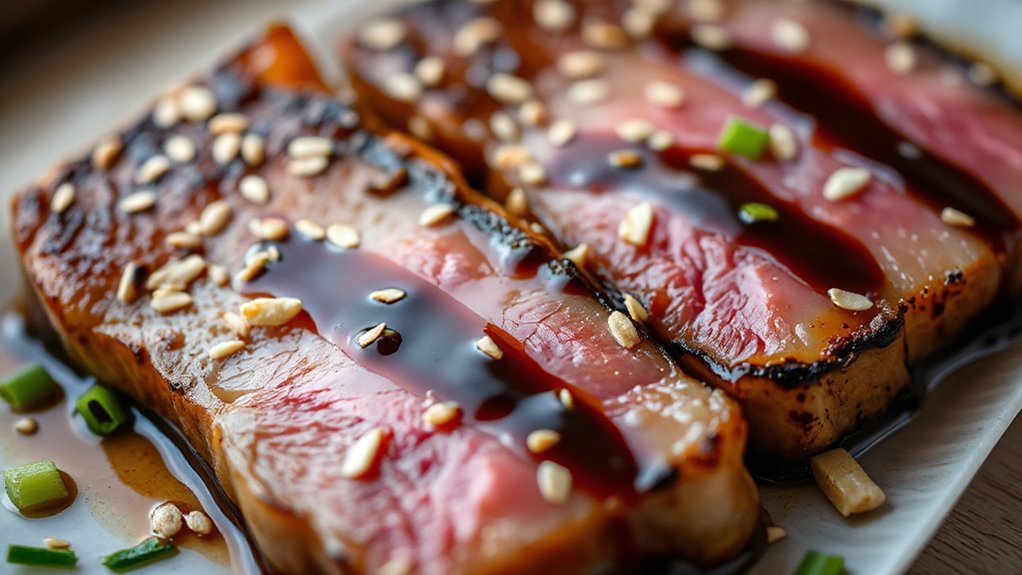
You’ll want to balance salt and sweet—think soy or miso with a touch of honey or brown sugar—to make the tuna sing without overpowering it. Add umami boosters like fish sauce, Worcestershire, or grated mushroom for depth, and brighten things with fresh aromatics such as garlic, ginger, scallions, and lemon zest. Keep the marinade short and punchy so the flavors enhance the fish rather than mask its natural taste.
Balancing Salt and Sweet
Harmony in a marinade comes from balancing bright sweetness with savory salt so your tuna steaks actually sing in the air fryer. You’ll want to measure: a touch of honey or mirin tames soy’s punch without masking the fish. Start with a 1:1 ratio of salty elements to sweet modifiers, then tweak to taste—less sweet if the tuna’s fresh, more if you like glaze. Think about cultural pairings like Japanese mirin with light soy or Thai palm sugar with fish sauce for contrast. Use quick marinades (15–30 minutes) to keep the center rare and let the surface gain flavor and texture contrast. Pat steaks dry before searing so the balance hits the crust, not stews the fish. Adjust salt slowly; small changes make big differences.
Umami Boosters and Aromatics

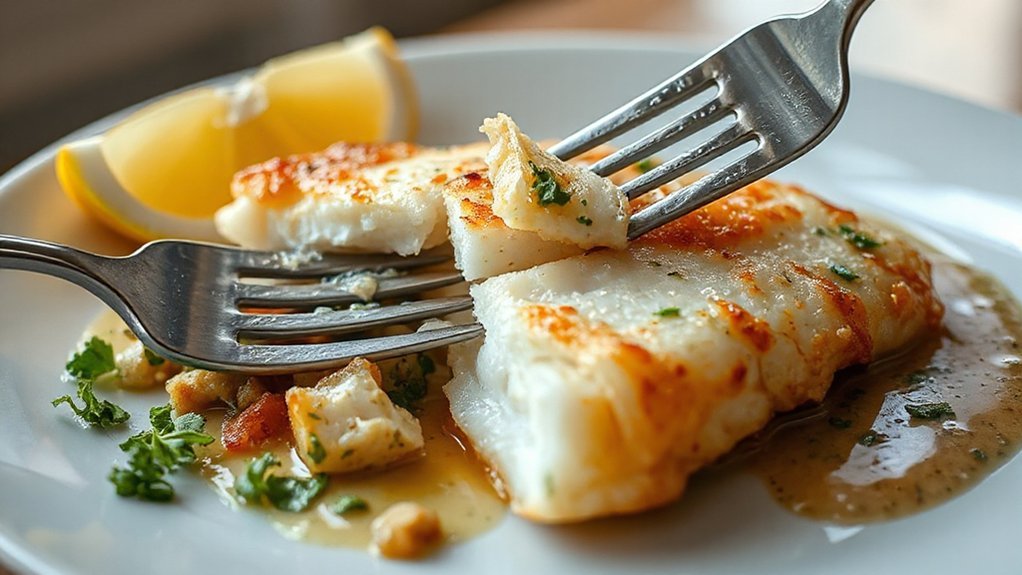
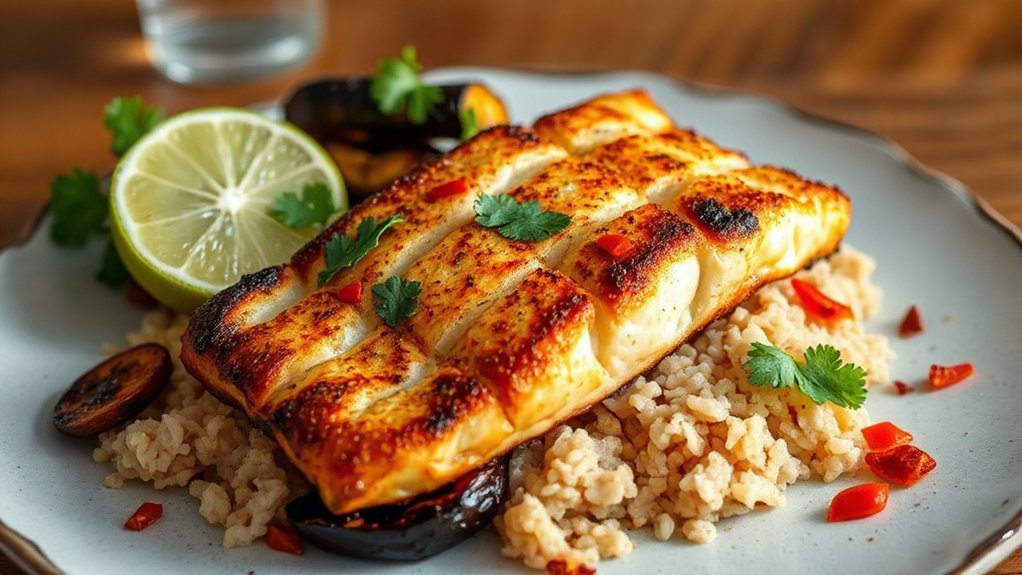
Once you’ve dialed salt and sweet, lean into umami boosters and bright aromatics to give the tuna real depth without overpowering it. Use ingredients like soy, miso, toasted sesame, and a splash of fish sauce sparingly; they layer savory richness that hits your palate and triggers olfactory memory. Add grated ginger, scallion, and a little lime zest for lift—those fresh notes cut through richness and keep the center tasting clean. Apply synergy principles: combine components that amplify each other rather than compete. Marinate briefly—30 minutes is plenty—or brush on just before searing to preserve texture. Taste a tiny smear of the mix on a plate to balance intensity. You’ll end up with vibrant, balanced tuna that sings on the first bite every single time.
Air Fryer Technique and Timing
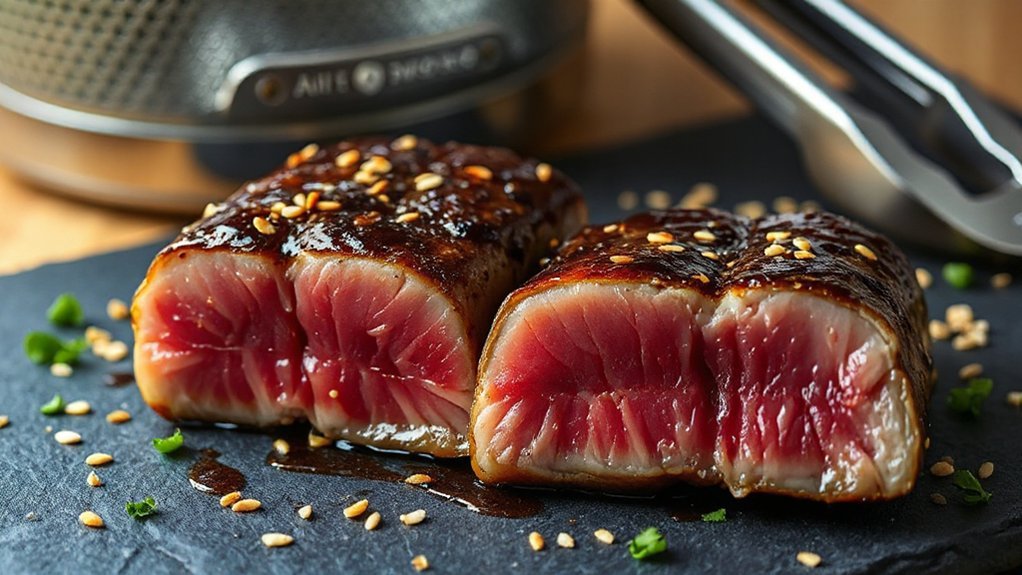
You’ll want to preheat the air fryer and set the rack so the steaks sit in the center of the airflow for even cooking. Use a short, high-heat sear—usually a minute or two per side—to build a crust without overcooking the center. Let the tuna rest a few minutes so carryover heat finishes it and juices redistribute before you slice.
Preheat and Rack Placement
Before cooking, preheat your air fryer 3–5 minutes to about 400°F (200°C) so the tuna sears quickly and stays juicy. Place the rack in the middle or slightly upper position so hot air circulates evenly around each steak; that gives you a golden exterior without overexposing the surface. You’ll save energy efficiency by only preheating briefly and avoiding repeated cycles. Arrange steaks in a single layer with space between pieces for airflow, and don’t overcrowd the basket. Use tongs to handle warm racks and avoid touching metal—minimizing burn risk. If your model has adjustable racks, test placement with a scrap piece to confirm clearance and airflow. Small adjustments here make your tuna consistently tender and nicely browned. You’ll plate confidently and enjoy restaurant-quality results.
High-Heat Sear Timing
When you’re aiming for a restaurant-quality crust, crank the air fryer to high and time the sear precisely—tuna cooks fast, so plan for about 1 to 2 minutes per side at 400°F (200°C) for 1‑inch steaks to hit rare–medium-rare, 2 to 3 minutes per side for thicker cuts, and roughly 45–60 seconds per side for very thin slices. Keep your sear intervals consistent and avoid flipping more than once; that steady rhythm builds a clean exterior. Watch how quickly the edges change color—it’s your cue to act. Remember the thermal gradient: a hot outer layer and cool center create that sought-after rare core. Use a quick test cut only if you’re unsure, and adjust future timing based on thickness and your preference, and serve.
Carryover and Resting
After a quick sear, let the tuna rest so carryover can finish cooking the interior—heat trapped in the steak will raise the internal temp a few degrees, so pull it about 5°F (3°C) below your target and let it sit. You’ll rest the steak on a cutting board for 5–8 minutes; that pause allows internal carryover to stabilize temperature and preserves that rare, buttery center. While it rests, fibers relax, moisture redistributes, and the meat firms just enough for clean slices. Don’t wrap tightly; loose tenting prevents a steamed exterior. Use an instant-read thermometer if you want precision. Slice against the grain, serve immediately, and enjoy the tender texture that proper fiber relaxation and carryover deliver. It makes your tuna taste restaurant-quality every time.
Serving Suggestions and Sauces
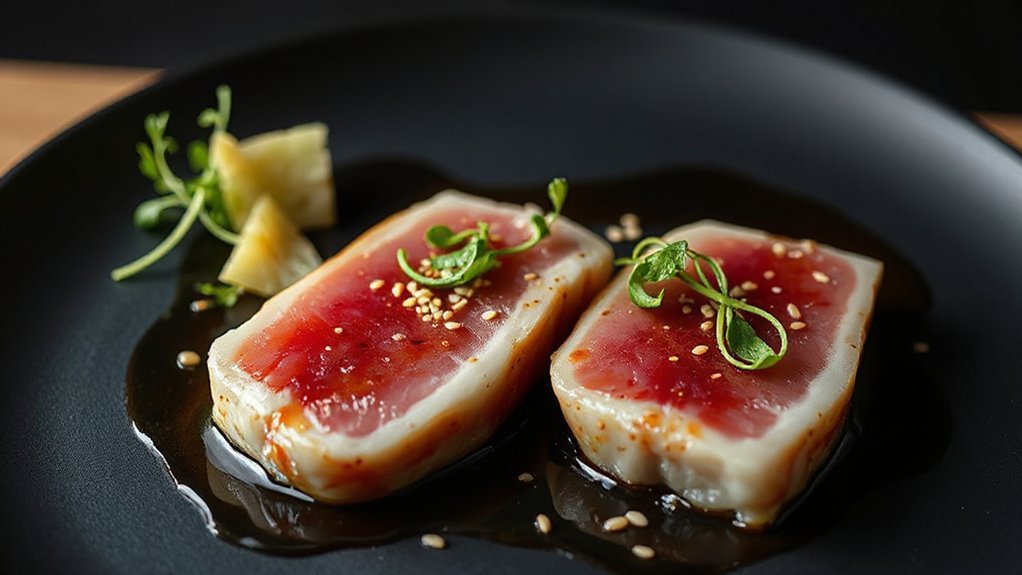
Although the tuna’s meaty flavor stands on its own, pairing it with bright sides and complementary sauces will take your air-fried steaks from good to memorable—you’ll want crisp vegetables, a simple starch, and a sauce that either contrasts with acidity or echoes the fish’s umami. Serve thin slices over an Asian slaw of cabbage, carrot, and scallions for crunch, or arrange on steamed jasmine rice or a light soba noodle salad. For sauces, try a ponzu with grated ginger, a wasabi-yuzu mayo, or a quick sesame-soy vinaigrette. Finish with citrus finishes like lime or yuzu zest to lift the palate, plus toasted sesame and sliced scallion for texture. For a Western touch, drizzle herb chimichurri or lemon-caper beurre blanc. Keep portions small so the tuna remains the star. For wine pairings, reach for an unoaked Chardonnay, a dry Riesling, or a light-bodied Pinot Noir to complement without overpowering.
Storage and Reheating Tips
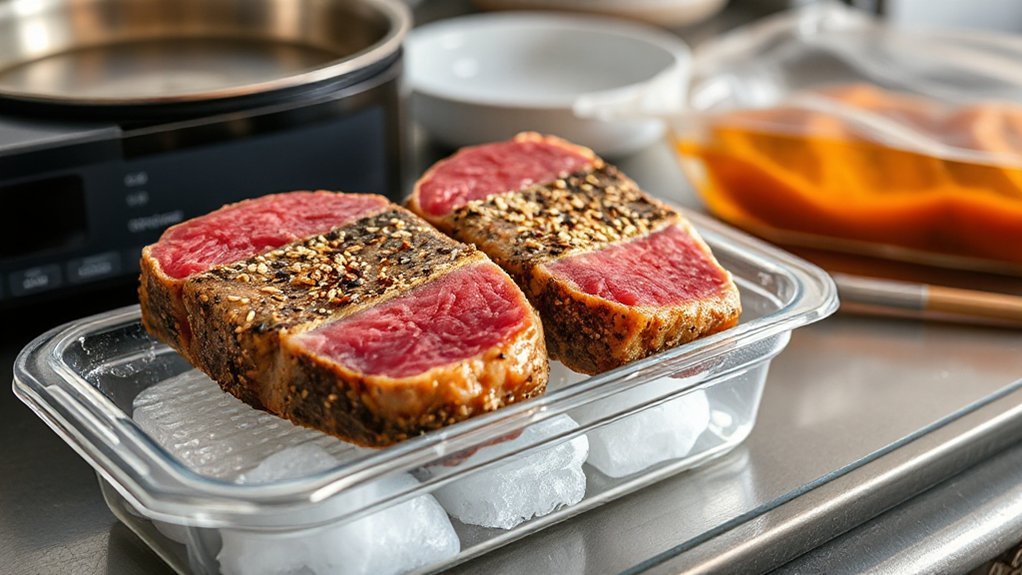
Keep leftovers in an airtight container and refrigerate within two hours to preserve texture and safety; eat within 48 hours for best flavor. When you reheat, remember tuna is best enjoyed rare to medium-rare, so aim for gentle warming. For fridge lifespan, label the container with date and stick to that 48-hour window. To keep texture preservation, avoid high heat that cooks through.
- Warm gently in a low oven (250°F/120°C) for 5–8 minutes.
- Sear quickly in a smoking-hot pan for 30–45 seconds per side to revive crust.
- Serve chilled slices over salad for a no-heat option.
If you microwave, use short bursts at low power and check often. Rest briefly before slicing to let juices redistribute. If your tuna smells off or feels slimy, discard it—don’t risk it. These steps keep flavor bright and make leftovers enjoyable. Rotate methods to discover what best preserves your preferred texture now.
Conclusion
You’ll come away from this quick, Asian-style air fryer tuna feeling like a sailor who found a perfectly polished compass: the crust points to bold flavors, the rare heart guides you back to pure tuna. You’ll trust the method, swap ingredients, and plate with confidence. Every bite becomes a small voyage—bright, fast, and memorable—so you’ll cook it again and again whenever craving a simple, show-stopping dinner that friends, family, and neighbors will rush to taste.
About The Author