Hey y’all—we’re fixin’ to make your mornings simpler. This little guide gives the easiest way to get crispy, juicy breakfast rounds without fuss.
We’ll share go-to temps and minutes for precooked and raw rounds, plus when to flip and when to let them be. Thin Tyson-style pieces need less time; thick ones take a bit longer.
Food safety matters—raw links must hit the safe internal temp. We test with common baskets and adjust for each machine, so you’ll know the best approach whether you start cold or preheated.
No mess, less fat, and more golden edges—that’s the whole point. By the end, you’ll have a trusty house method that works on busy weekdays and lazy Sundays alike.
Key Takeaways
- Use 400°F for quick warm-ups or crispier edges—minutes vary by thickness.
- Thin rounds often don’t need flipping; thicker ones usually do.
- Raw must reach safe internal temp—check with a probe for peace of mind.
- Cold or preheated baskets both work—choose speed or convenience.
- Less fat drains away, and cleanup stays easy—perfect for breakfast routines.
Why You’ll Love Air Fryer Sausage for Breakfast
Busy mornings call for a tidy cooking trick that still delivers big flavor. We get up, grind through the routine, and want breakfast that’s fast and fuss-free. This method trims splatter and leaves you with crisp edges and juicy centers.
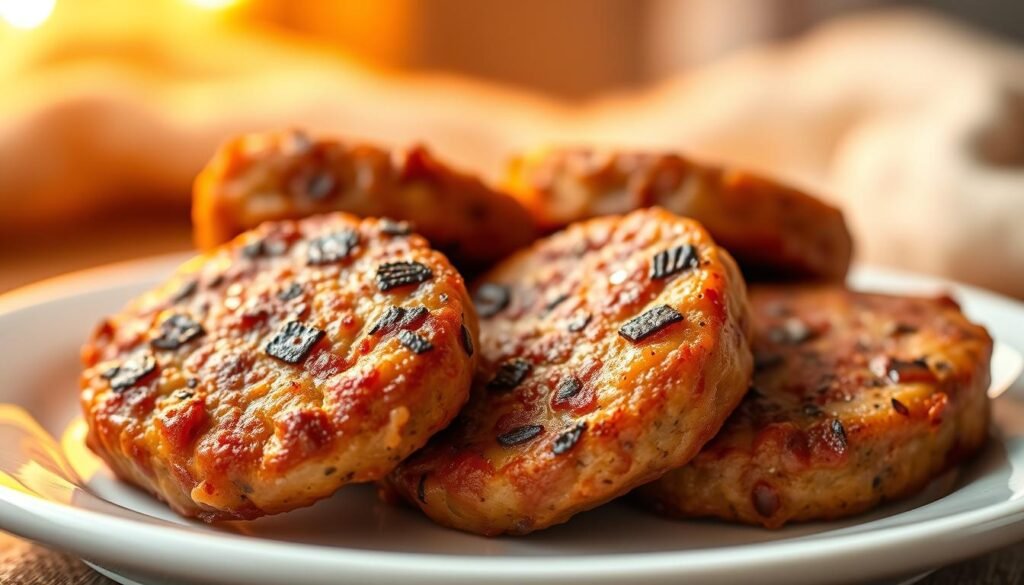
Less grease, less mess, more crispy edges
Grease drains below the fryer basket, so your skillet stays clean and your plate feels lighter. Fat pools away while hot air browns the surface for that craveable snap.
Fast, hands-off cooking that frees up the stovetop
Load up, set the time, and let the machine do the work. You can scramble eggs, toast bread, or pack lunches while the cooking happens.
- Dependable browning from circulating hot air—no babysitting.
- Scale batches easily for two or a crowd—no juggling pans.
- Meal prep friendly: cook ahead, chill or freeze, then reheat for 2–3 minutes.
“This method keeps your hands free, your stovetop clear, and your morning calm.”
| Benefit | Result | Typical Time |
|---|---|---|
| Less splatter | Cleaner kitchen | Minutes per batch |
| Less fat | Lower grease on plate | Drips to basket |
| Fast reheats | Quick breakfasts | 2–3 minutes |
sausage patties in air fryer
Want breakfast fast? We’ll show the quickest, no-fuss way to get golden rounds on the table. This little snapshot gives straight-up temps, minutes, and the doneness to aim for.
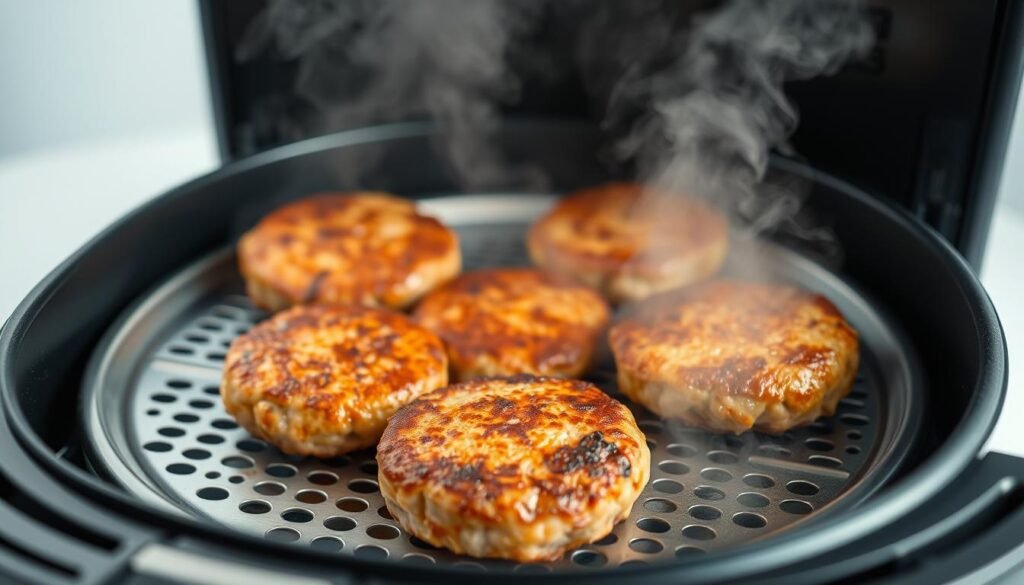
User intent now: the fastest, no-fuss method
Need meat on the table fast? Preheat your air fryer to 400 degrees and you’ll be eating in minutes. For precooked frozen rounds, 2–3 minutes warms them; 5–7 minutes crisps the edges.
Recipe at a glance: time, temp, doneness
- Precooked frozen: 400° for 2–3 min to warm, 5–7 min for crisp.
- Raw rounds: ~400° for about 8 min (cook 5, flip, finish 3) to reach ~160 degrees.
- Start cold or preheated — preheat trims a bit off the total time and aids browning.
- Thin rounds cook faster; add a minute or two for thicker, ground shapes.
“Keep a single layer, leave space between pieces, and check with a thermometer for safe doneness.”
Ingredients & Equipment
Start by rounding up your ingredients and the gear that matters. We keep this simple so mornings stay breezy.
What you need: fresh, frozen, or precooked
Ingredients choices: grab fully cooked frozen sausage patties for speed, fresh sausage patties for from-scratch flavor, or raw slices from a sausage log for classic texture.
If you’re making your own, use ground pork or a ground blend and season to taste.
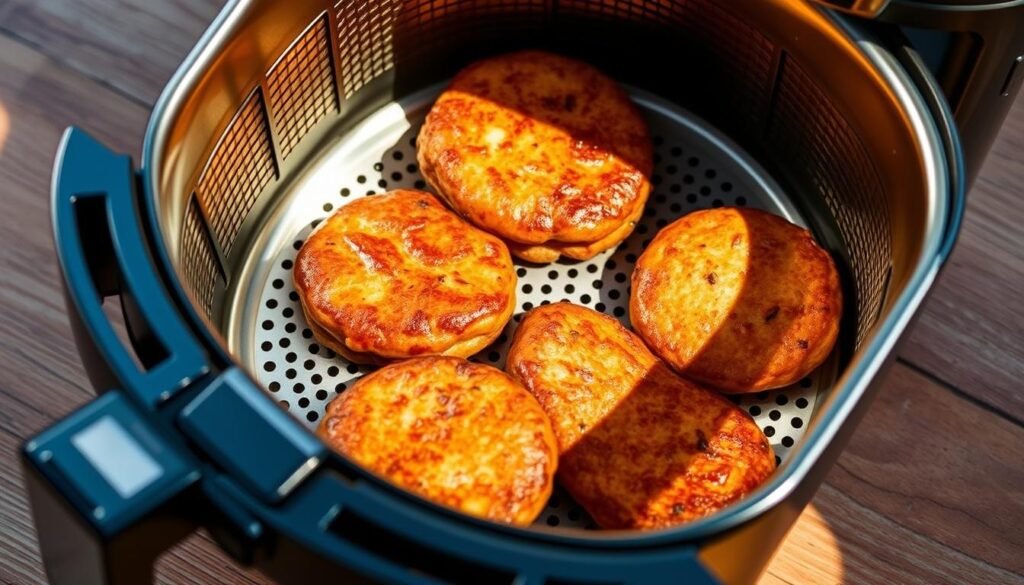
Optional flavor boosters
For homemade vibes, try sage, fennel, paprika, garlic, and thyme. A light drizzle of maple adds a gentle sweetness.
Swap maple for honey or brown sugar if you like. Saltier store-bought rounds may need nothing more.
Air fryer basket basics: size, single layer, airflow
Use a roomy basket and place pieces in a single layer with space around each one.
No stacking—crowding blocks hot air and slows browning. If your fryer basket is small, do batches.
| Item | Why it matters | Tip | Example |
|---|---|---|---|
| Instant-read thermometer | Ensures safe doneness | Check center temp | Fast, accurate reads |
| Air fryer basket | Promotes even heat | Single layer only | Instant Vortex tested models |
| Seasoning kit | Custom flavor | Sage, fennel, paprika | Maple optional |
| Batch plan | Avoids crowding | Cook more, not crowded | Thin rounds cook faster |
“A roomy basket and a quick thermometer make weekday mornings much kinder.”
Step-by-Step: Air Fryer Sausage Patties (Fresh, Frozen, and Precooked)
Let’s walk through a quick, step-by-step method that gets breakfast on the table without fuss. We’ll cover prep, timing, and whether to flip—so you get that golden edge and a safe center.
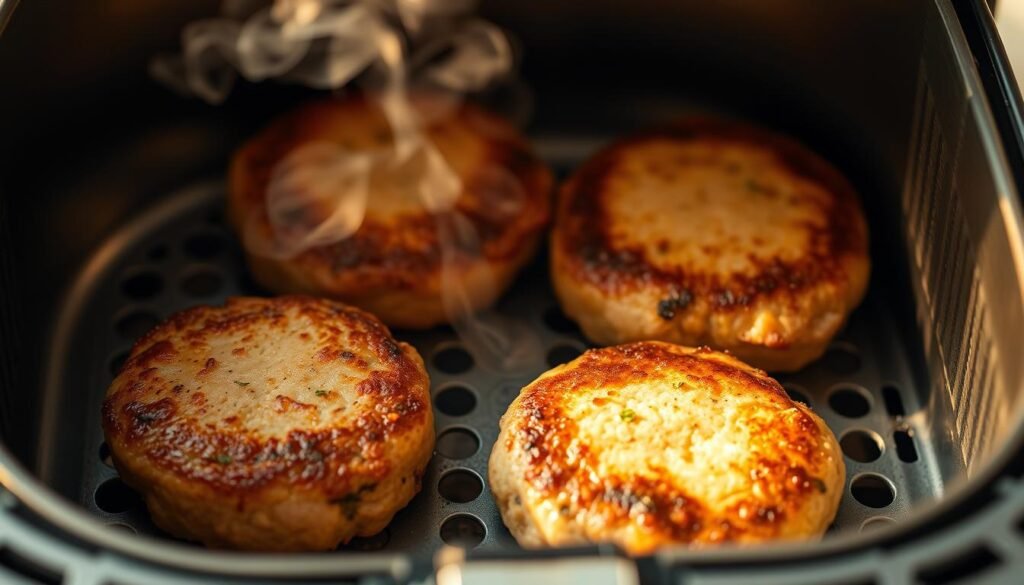
Preheat and prep
Preheat to 400 degrees for fast browning. If you skip preheat, add a minute to your cook minutes. Arrange each round in a single layer so hot air can move around them.
Cook times by goal
- Precooked frozen sausage patties: 2–3 minutes to warm, 5–7 minutes to crisp. Flip optional.
- Fresh sausage patties (raw): ~5 minutes, flip, then 3 minutes more. Aim for safe internal temperature of about 160°F.
- Thicker rounds may need 6–9 minutes at 400 degrees—watch the first batch to learn your machine.
Flip or not?
Thin rounds often crisp fine without flipping. Thicker rounds benefit from a turn halfway for even color.
Small links cook faster—2–5 minutes from frozen. Big links or extra-crispy goals can push to 10–15 minutes.
“Use an instant-read thermometer to confirm internal temperature before serving—safety first, always.”
| Item | Temp | Quick result |
|---|---|---|
| Precooked frozen | 400 degrees | 2–7 minutes (soft to crisp) |
| Raw fresh | 400 degrees | 5 + 3 minutes (to ~160°F) |
| Links (frozen) | 400 degrees | 2–15 minutes (size dependent) |
Time & Temperature Guide
We’ll walk you through the sweet spot of temps and minutes so every round finishes just right.
Precooked rounds: fast and hot
400 degrees is your friend for precooked pieces. A quick 2–3 minutes warms them; 5–7 minutes gives crisp, golden edges.


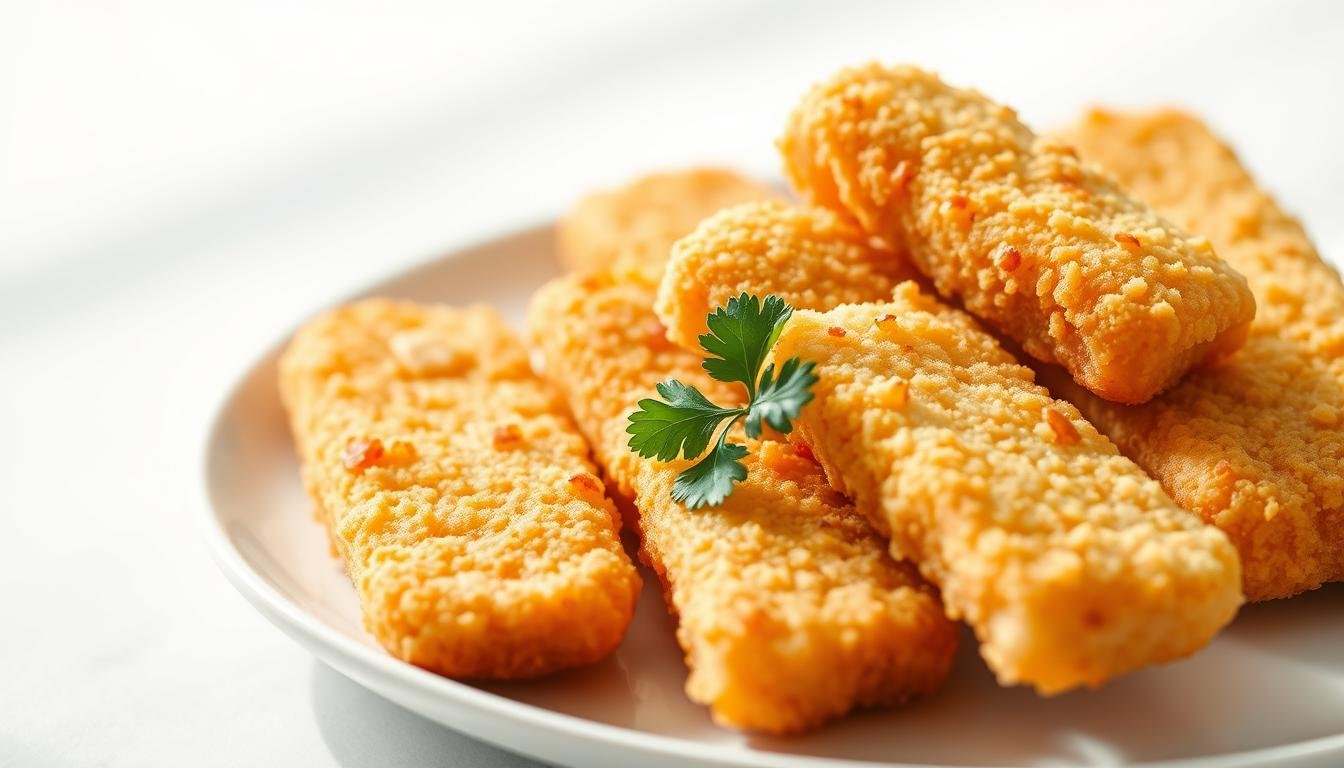
Thin pieces finish sooner. Thick cuts need the longer end of the range—check early and add small bursts of time as needed.
Raw rounds: steady heat for safety
For raw, we like 370–400 degrees depending on your mix. About 8 minutes at 400 degrees (cook 5, flip, finish 3) works well.
Homemade blends often do well at 370 degrees for ~10 minutes. That gentler heat helps cook through without burning the outside.
Target internal temperature
Always measure internal temperature. Aim for 160–165°F for safe, juicy results.
“When in doubt, use a thermometer—it’s the easiest way to stop guessing and start enjoying.”
- Precooked: 400°F, 2–3 min to warm, 5–7 min to crisp.
- Raw: ~400°F for ~8 min, or 370°F for ~10 min for homemade blends.
- Cook time is a guide—your basket, thickness, and load change the minutes needed.
| Type | Degrees | Typical time |
|---|---|---|
| Precooked | 400°F | 2–7 minutes |
| Raw | 370–400°F | 8–10 minutes |
| Safe finish | 160–165°F | Check with thermometer |
Frozen vs. Fresh Sausage: What Changes
We love a shortcut, and frozen rounds are a legit weeknight hero. You can toss frozen sausage right into the basket and still get good browning—just expect a few extra minutes to finish through.
From freezer to fryer: adjusting minutes without defrosting
Precooked frozen warms fast. At 400°F plan about 2–3 minutes to warm and 5–7 minutes to crisp. Thin pieces hit the mark sooner; thicker ones need the long end of the range.
Raw frozen must reach a safe internal temp. These need more time—watch for about 8–12 minutes depending on thickness and size. Bigger links can push to 10–15 minutes for extra crunch.
- No thaw needed—frozen sausage goes straight to the basket and still browns nicely.
- Keep a single layer so cold steam can escape and hot air can do its job.
- If a lot of fat renders, blot with a paper towel for a lighter bite.
- Shake the basket or flip once halfway for even color; check cook time early on your first run.
“Frozen to plate is fast, tidy, and mighty dependable—just confirm temps for safety.”
Safety reminder: raw frozen rounds must hit the safe internal temperature before serving. We check with a quick probe and jot down minutes for our next batch.
Patties, Links, and Homemade Mixes
Make your own breakfast mix and you’ll control flavor, fat, and how fast things finish. We love a simple blend that feeds the family and cooks steady every time.
Breakfast links: faster cook, similar method
Small links cook quicker than round disks. Expect 2–5 minutes for tiny frozen links and up to 10–15 minutes for larger ones when you want extra crisp.
DIY blends: ground pork or turkey options
Try a mix of ground pork + turkey for balance — flavor without too much fat. Season with fennel, sage, garlic powder, paprika, thyme, sea salt, and a splash of maple if you like sweet notes.
Thickness tips: shaping for even cooking
Shape pieces the same thickness so they finish together. Chill formed rounds 10 minutes so they hold their shape when they hit hot air.
“For gentle cooking, 370°F for about 10 minutes works well; oven backup: 400°F for ~20 minutes, flip halfway.”
| Type | Typical Temp | Notes |
|---|---|---|
| Small links (frozen) | 400°F | 2–5 minutes — quick crisp |
| Large links | 400°F | 10–15 minutes — extra color |
| Homemade mix | 370–400°F | ~10 minutes; chill before cooking |
Pro Tips, Meal Prep, and Reheating
Let’s keep your mornings smooth — little wins like smart storage and quick reheats matter. We’ll share short tips that make an air fryer breakfast truly effortless.
Avoid overcrowding for even browning
Keep a single layer in the air fryer basket so hot air circulates around each piece. Crowding steals crisp and wastes cook minutes.
Drain for a lighter bite
Right after cooking, move protein to paper towels to wick away excess fat and grease. That small step makes a big difference on the plate.
- Store cooked items in the fridge up to 4 days; freeze up to 3 months.
- Let batches cool before sealing to avoid soggy steam buildup.
- Label and date containers so you grab the oldest first.
- Portion pairs for quick reheats — saves time on busy mornings.
Fast reheats that work
Reheat from chilled: 2–3 minutes in the air fryer or a quick microwave warm-up. For frozen raw pieces, add a few extra minutes and check doneness with a probe.
“Prep smart, stash well, and reheat fast — that’s how breakfast stays friendly all week.”
Conclusion
A few steady rules (temp, spacing, and a quick probe) turn busy mornings into reliable meals.
Quick summary: precooked pieces crisp at 400°F for about 2–7 minutes depending on thickness. Raw rounds do best around 370–400°F until internal temp hits 160–165°F.
Frozen goes straight to the basket and still browns well. Store cooked items up to 4 days in the fridge or 3 months in the freezer. Reheat for 2–3 minutes for a hot plate fast.
Y’all now have the playbook—simple recipes, basic ingredients like ground pork or turkey, and small habits that cut fat and cleanup. Keep a probe handy and make this morning routine yours!
FAQ
How long do these cook from frozen?
Can we cook fresh rounds straight from the fridge?
Do we need to preheat the unit?
Should we flip during cooking?
How do we avoid excess grease in the basket?
What temp should we aim for for food safety?
Can we use ground pork or turkey to form our own rounds?
How do cooking times change for links vs. rounds?
What’s the best way to reheat leftovers?
Any tips for seasoning or flavor boosts?
How do we pack the basket for best results?
About The Author