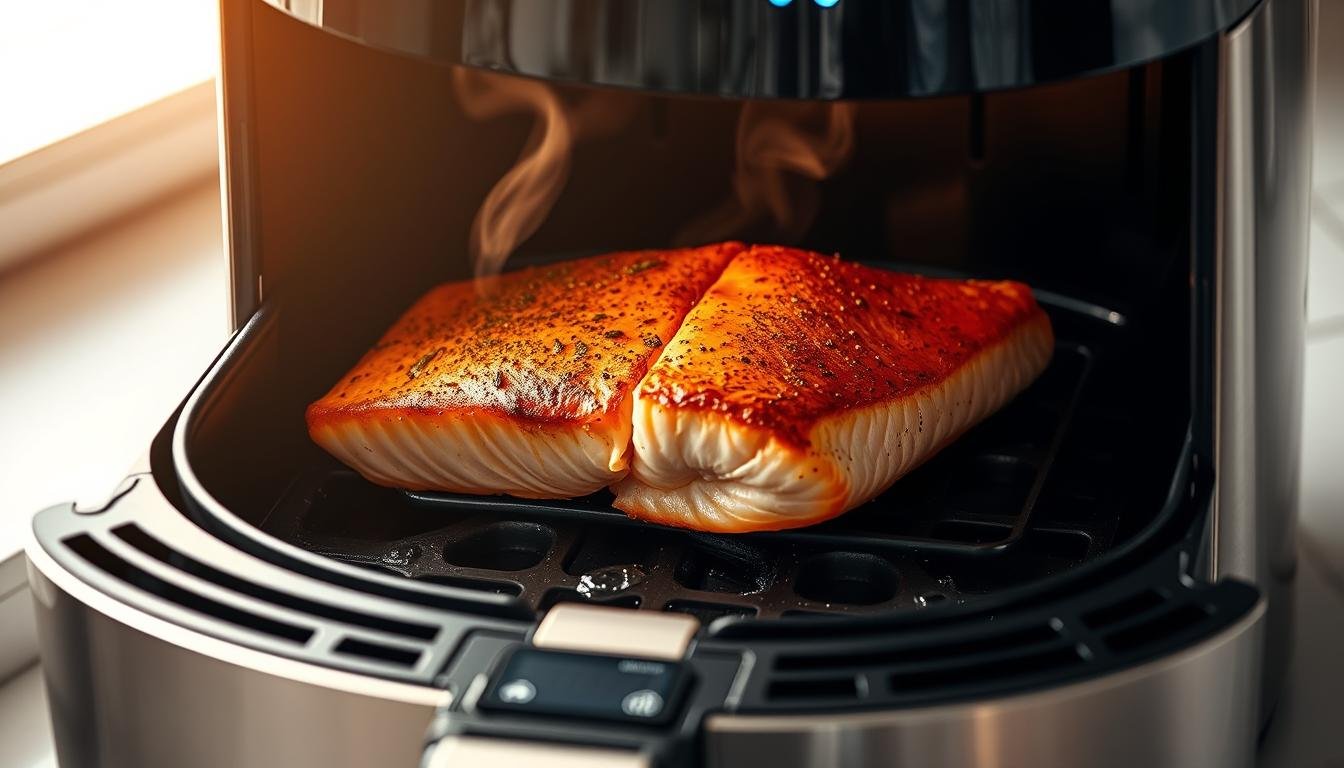
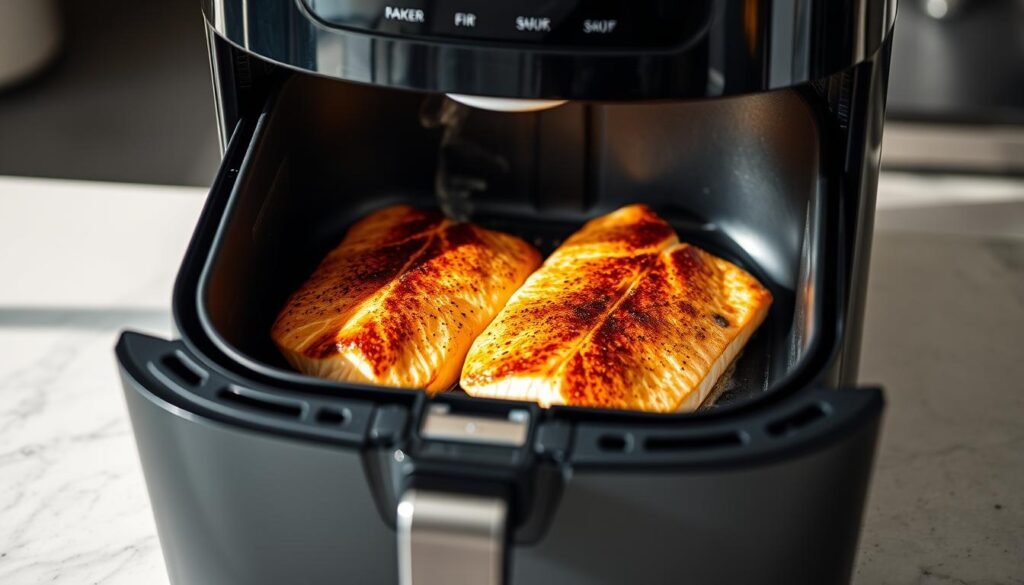
We’ll show you the best way to bring leftovers back to life—tender, flaky, and just enough crisp. Y’all, this is simple and low-fuss. Preheat to 375°F, warm for about 5 minutes, then check for 165°F with a long-stem meat thermometer.
Tip: If it needs a touch more time, add 1–2 minutes. Only reheat salmon once, and store leftovers 3–4 days. Leave space between pieces so hot air moves freely.
For breaded fillets, a light spritz of oil helps crisp without greasiness. Thick cuts might need a flip, but most fillets do fine without it. We’ll walk you through safe checks, quick sauces, and easy serving ideas—Southern-style!
Key Takeaways
- Preheat to 375°F and start with 5 minutes, then verify 165°F internal temp.
- Use a long-stem meat thermometer for safe, even results.
- Store cooked leftovers 3–4 days; reheat only once.
- Give pieces room for airflow—basket spacing matters.
- Spritz oil for breaded pieces; skip extra fat for delicate fillets.
Why the Air Fryer Is the Best Way to Reheat Fish Right Now
We reach for the air fryer when we want quick, even warming that keeps a light crunch without fuss. It beats slow ovens and rubbery microwave results by using fast, circulating hot air to revive texture and flavor.
Faster than the oven, crisper than the microwave
Preheat time is short, so you get dinner on the table faster. That rolling hot air seals the outside and warms the inside evenly—no cold spots and no soggy coating.
Healthier reheating with minimal oil and even hot air circulation
Minimal oil keeps things light—just a tiny spritz if you want extra crisp. The result is moist flesh with a crisp edge and far less added fat than many other methods.
- Speed: Heats in minutes, not the half-hour an oven needs.
- Texture: Restores crunch for battered pieces and gentle warmth for flaky fillets.
- Energy-wise: Uses less power than running a big oven—perfect for summer nights.
reheating fish in air fryer
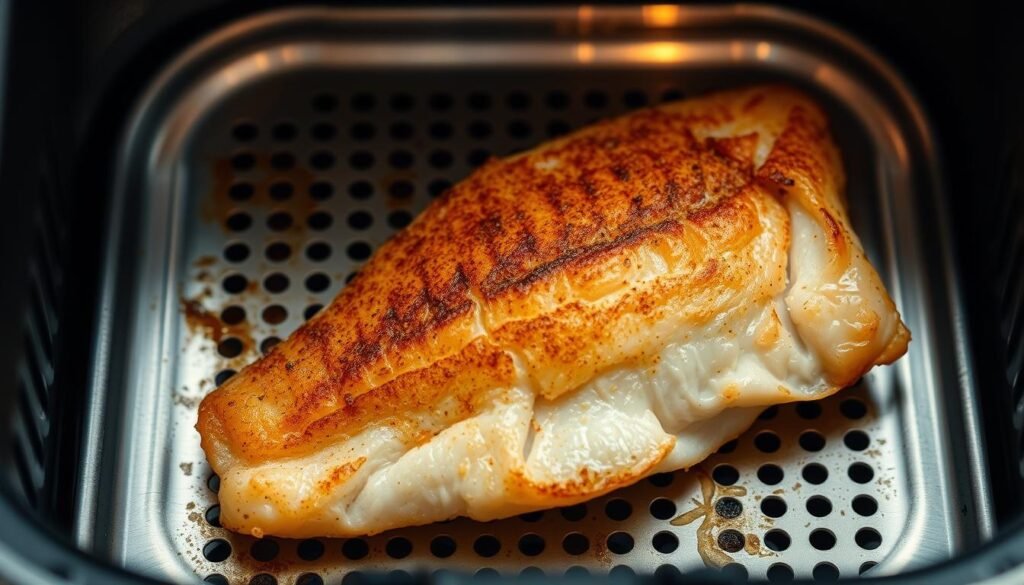
We keep it simple: dry, preheat, and give pieces room. A dry surface helps the crust crisp. Preheat the unit to 350–375°F so hot air hits right away.
Place fillets in a single layer with breathing space. Crowding blocks airflow and leaves cold spots. Thin pieces finish in about 3 minutes; thicker cuts need up to 7 minutes.
Use lower temps for breaded pieces and a touch higher for plain fillets—methods matter for texture. Spritz oil only if the exterior looks dry. Flip gently when needed to avoid breaking delicate fillets.
Keep an eye during the last few minutes. A quick thermometer check tells you when it’s done and safe to serve. If pieces vary in size, run them in batches so smaller bits don’t overcook.
- Pat dry to prevent sogginess.
- Preheat to 350–375°F depending on type.
- Single layer with space—no crowding.
| Type | Temp | Time |
|---|---|---|
| Thin, plain fillets | 375°F | 3–5 min |
| Breaded pieces | 350°F | 4–6 min |
| Thick cuts | 375°F | 6–7 min |
Essential Tools and Prep for Success
Before you pop leftovers back in, give the unit a quick warm-up so heat hits evenly from the start. A short preheat saves time and helps texture stay right. We like simple, sensible setup — no fuss, just good results.
Preheat and set up the basket
Go ahead and preheat the air fryer — those settings help lock in even warming from the jump. Use the fryer basket as a single-layer zone and keep it clean and dry.
Leave gaps between pieces. That basket space keeps hot air moving and helps you dodge soggy bites.
Thermometers, spritz bottles, and liners
- Long-stem thermometer: our safety buddy — it reads fast and keeps hands away from hot sides.
- Small spritz bottle: a kiss of oil revives breading without greasiness; most unbreaded fish don’t need oil.
- Skip heavy liners: choose perforated liners only if they don’t smother the basket.
- Gentle tongs and paper towels: pat dry, lift careful, and finish in batches — don’t stack.
“Tools help, but airflow is king — give that fish room to breathe.”
Quick tips: preheat, single layer, thermometer check — that’s our test-kitchen recipe for steady, tasty comebacks.
Step-by-Step: How to Reheat Unbreaded Fish Fillets
Let’s walk through a simple step-by-step to warm up plain fillets so they stay tender and flaky. We keep things short and sensible—no fancy gear needed.
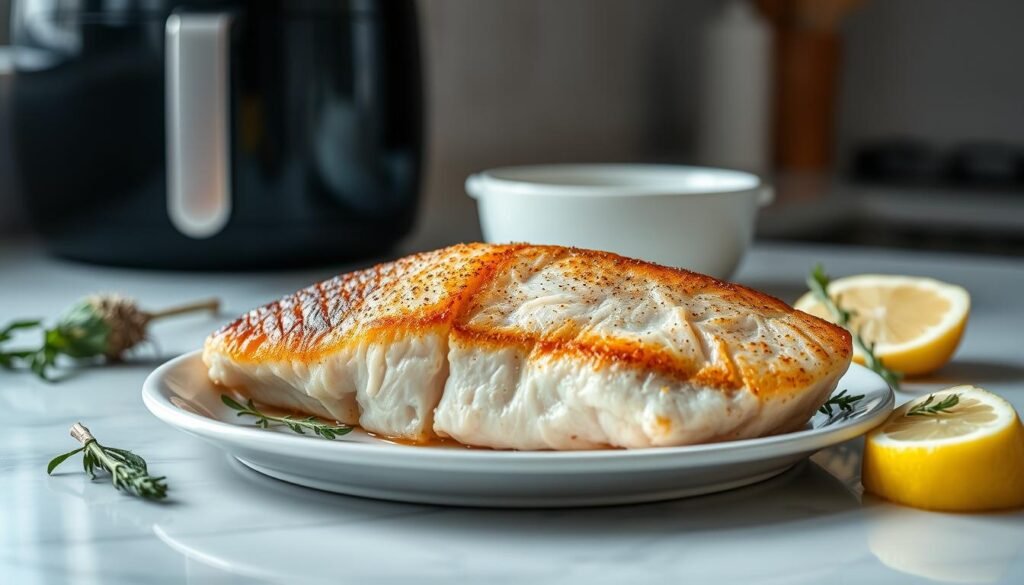
Temperature and time: Preheat your air fryer to 375°F. Start with 5 minutes for average pieces. Thinner cuts need less; thicker cuts may need 1–2 extra minutes. Check often rather than guessing.
Moisture management: oil, butter, and seasoning
Brush a light coat of olive oil or a bit of melted butter on the surface to protect the flesh. Skin-on fillets go skin-side down to shield the meat.
Season after heating—a little salt, pepper, dill, or paprika brightens flavors without drying the fillet.
Internal temperature checks and safe serving
Use a long-stem thermometer to confirm an internal temperature of 165°F. If it’s shy, add one or two-minute bursts until it hits the mark.
- Single layer: give pieces room so hot air circulates.
- No flip usually: handle gently to keep fillets intact.
- Serve right away: the best texture won’t wait around.
“Gentle heat and quick checks beat overcooking every time.”
Follow these steps and you’ll reheat fish gently—hot, flaky, and just right for dinner or a quick salmon salad the next day.
Step-by-Step: How to Reheat Fried or Breaded Fish
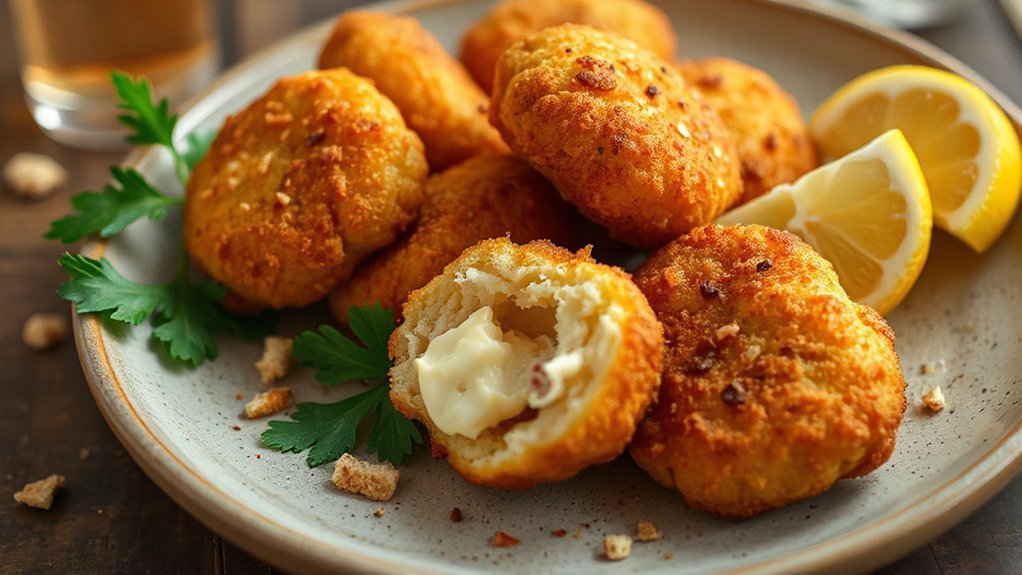
When you want that crunch back, lower temps and space in the basket are your best friends. Set the unit to 320°F and let it preheat so the coating warms gently while the inside heats through.
Timing and placement
Lay pieces in the fryer basket with room between each. Crowded baskets steam and turn the coating gummy.
Reheat 5–7 minutes total. Flip gently halfway so both sides stay crisp. Use a thermometer to check doneness—stop at safe temp and don’t reheat more than once.
Flip, spritz, and rescue soggy coating
If the coating looks dry, a light spritz of oil helps—skip it if the crust already looks oily. Handle battered fillets with a spatula or silicone tongs; they’re delicate.
- Watch color and sound: a golden look and light sizzle mean the crunch is back.
- Different sizes: group similar pieces together—thicker cuts need more time.
- Short checks: it’s safer to peek early than to overdo the time.
“Gentle heat, a mid-way flip, and space in the basket bring that crispy coating back alive.”
Times and Temperatures by Fish Type
Different fillets ask for different heat — let’s match temps to texture. We’ll keep this simple so you can pick the best time and temperature for each kind.
Salmon and trout: richer fillets that stay moist
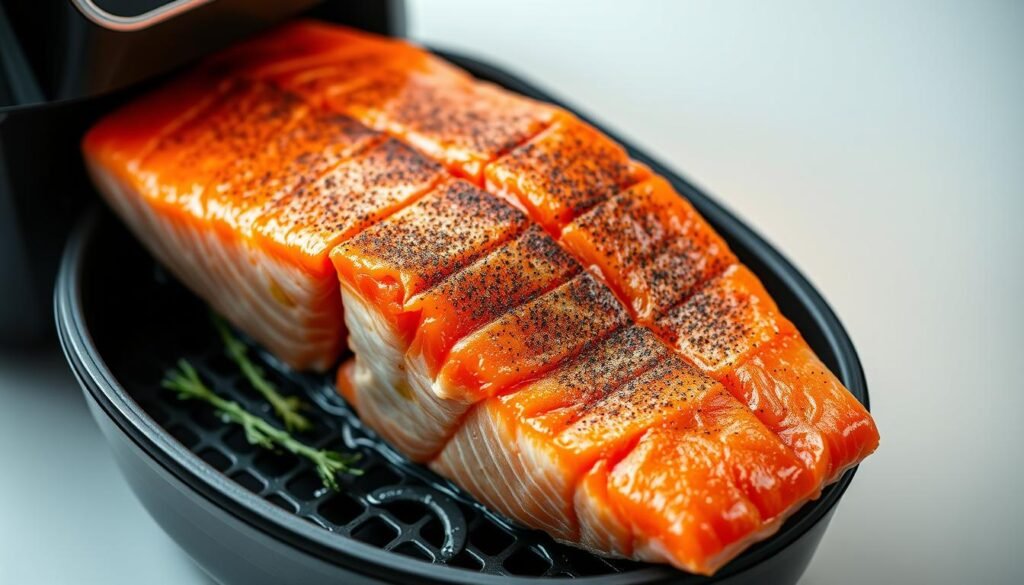
Salmon and trout are forgiving because of their fat. Aim 350–375°F and check at 3–5 minutes depending on thickness.
Tip: thick center cuts may need an extra minute at a slightly lower setting to finish gently.
Cod and haddock: firm, flaky white fish
Cod and haddock take heat well. Start near 350°F and check early to avoid drying the edges.
Lean white pieces can use a tiny brush of oil to protect the surface while they warm.
Fillets to avoid
Delicate fillets like sole or flounder can turn mealy before they warm through. We recommend skipping the attempt unless you want a riskier result.
- Mix of pieces? Stagger batches so each gets the right time.
- From fridge vs room temp: fridge-cold needs the shorter end; room-temp shaves a minute.
- Frozen fish: needs a separate approach—see our frozen adjustments later.
“Gentle heat and timely checks keep moisture where it belongs.”
Food Safety: Internal Temperature and Reheating Limits
Before you dig in, give that leftover a quick temperature check so supper stays safe. We want the center hot, not just the edges.
Target temperatures and how to verify doneness
Aim for 165°F for most leftovers — that’s our go-to safety mark. Some fresh-cooked pieces are fine at 145°F, but warmed leftovers benefit from the higher number.
Probe the thickest part with a long-stem thermometer. Avoid bones and crusts; slide the tip into the center for a true read.
How many times to warm and storage windows


Only warm a portion once. Each pass through heat dries the texture and raises safety risk. We keep it simple: one reheat, then eat or freeze.
| Type | Safe Temp | Fridge Window | Freezer |
|---|---|---|---|
| Salmon / rich fillets | 165°F | 3–4 days | Up to 1 month (uncooked or not yet warmed) |
| Fried or breaded pieces | 165°F | 2 days | Up to 1 month |
| General leftovers | 165°F | 2–4 days | 1 month |
“A quick probe keeps supper safe and your cooking honest.”
- We always check internal temperature — a fast probe keeps food safe and tasty.
- Smaller batches warm more evenly — don’t crowd the basket when you reheat fish.
Troubleshooting Texture: Dry, Soggy, or Unevenly Heated Fish
Got a soggy crust or a tough center? We’ve got simple fixes you can try now. A few small moves and you’ll be back to dinner that feels homemade and cared for.
Fixing dryness without greasiness
Dry pieces often mean too much heat or time. Drop the temp 10–20°F next go and shave a minute off the timer — you may need less than you think.
Brush a thin smear of melted butter or a tiny spritz of oil to add moisture without making things greasy. Pat fillets dry first so you don’t lock in steam.
Restoring crisp coating and preventing gummy breading
- Spread pieces out — crowded trays cause soggy coating.
- Flip breaded portions once halfway to stop the underside from steaming.
- If heating is uneven, group similar sizes and rotate the basket mid-cycle.
- Start with less time and finish in short bursts so you can sneak up on perfect.
“A quick note: keep a small log of settings — your unit will thank you.”
Basket Setup and Batch Size: The Role of Airflow
A little elbow room goes a long way; spread pieces so hot air can dance around them. That hot air needs a clear path to wrap each piece for even color and finish.
Think single layer. Treat the basket like stadium seating—no stacking. A crowded basket traps steam and gives you a soft bottom instead of a crisp edge.
We like to run similar sizes together so everything finishes at the same pace. If you’ve got a crowd, batch it. Short cycles with space beat one long, soggy run every time.
- Preheat the air fryer so the basket walls help form a quick crust.
- Rotate the basket once mid-cycle if your unit has hot spots.
- Use a small rack to lift pieces and boost circulation when possible.
- Watch your time closely—better airflow often means faster finish.
“Fewer pieces = steadier results. Give each bite its room and you’ll thank us.”
Frozen, Refrigerated, and Room Temp: Adjusting the Reheat Method
Whether your leftovers just left the fridge or came straight from the freezer, a few tweaks keep texture steady. We aim for even heat and no soggy bottoms.
From the fridge: preheat air fryer and stick to the lower end of our time windows. Let pieces sit 15–30 minutes while you preheat air to take the chill off. Cold centers warm faster with good airflow, so check early.
From frozen: treat frozen fish gently and plan for extra minutes. Pat off ice crystals first—surface moisture slows crisping. Lay pieces in a single layer and flip once to stop the underside from steaming. You may need to add 1–3 minutes depending on thickness and your model’s heat.
Delicate fillets do better thawed in the fridge first. Always verify internal doneness with a quick probe. If the outside looks done but the center’s cool, drop the temp and add a couple minutes to finish without drying.
“Give each piece room and check early—temperature tells the truth, not the clock.”
Flavor Boosters and Serving Ideas for Leftover Fish
A bright squeeze of citrus or a quick herb sauce can lift leftovers to brand-new life. We keep things simple — little tweaks, big payoff.
Quick sauces, dressings, and citrus for moisture and pop
Brighten up with lemon or lime right before serving. A drizzle wakes taste without weighing it down.
Stir together fast sauces: lemon-dill yogurt, garlic butter, honey-mustard, or creamy tartar. Each one makes salmon sing.
“A little drizzle goes a long way — keep it fresh and light.”
Repurposing leftovers: wraps, salads, bowls, and tacos
Turn leftover fillets into wraps, sandwiches, green or pasta salads, or grain bowls. Add crisp veggies, herbs, and a tangy dressing.
Next-day tacos are weeknight gold — flaky salmon, cabbage slaw, and a lime squeeze. Kids love cakes or quesadillas made from mashed pieces.
| sauce | Best with | Quick note |
|---|---|---|
| Lemon-dill yogurt | Salmon, salads | Light, fresh, great on bowls |
| Garlic butter | Thick fillets, sandwiches | Rich, melts into flakes |
| Honey-mustard | Wraps, kids’ plates | Sweet-tangy, quick mix |
Keep it simple after heating — a pinch of salt, fresh herbs, and a squeeze of citrus does wonders. Jot down favorite recipes so you can riff next time.
These easy add-ons fit right into your air fryer recipes routine and play nicely with pizza air or wings air if you’re feeding a crowd.
Related Air Fryer Crossovers: What Else Reheats Brilliantly
Once you master one method here, your machine becomes a one-stop spot for quick dinner fixes. We love how fast hot, moving air brings texture back with almost no extra oil.
Try these next:
- Pizza—crust crisps up and cheese melts, not rubbery. Perfect for a late-night slice.
- Wings—skin gets crackly again in minutes. Great for game day or snacks.
- Fries, onion rings, and veg sides—crunch returns without deep frying.
- Leftover sandwiches (light on sauce)—toast the outside and warm the filling gently.
- Pastries and breakfast treats—flaky layers revive fast for busy mornings.
Pro tip: jot down favorite fryer recipes and a quick time/temperature note. Run small batches first, then scale up for family-size wins.
“Your air fryer is a leftovers hero — less waste, more yum, in just a few minutes.”
Conclusion
Here’s a quick recap so you can reheat fish with confidence. For salmon, aim 375°F for about 5 minutes and hit 165°F at the center. For breaded or fried pieces, drop to 320°F, run 5–7 minutes, and flip once to revive that coating.
The air fryer is the best way reheat leftovers — less added fat, faster time, and steady results. Stick to one reheating pass, store salmon 3–4 days and fried items 2 days, or freeze up to a month if not warmed.
Keep a long-stem thermometer handy. Jot your favorite time and temp for your model. We love helping you waste less food and enjoy more flavor—now go enjoy that plate while it’s hot and happy!
FAQ
What’s the best way to reheat leftover fried fish so it stays crispy?
How long should we warm plain fillets by thickness?
Do we need to preheat the appliance and the basket?
Can we reheat fish straight from frozen?
How do we keep flaky fillets moist without adding fat?
What’s the safe internal temperature for reheated leftovers?
How many times can we safely reheat seafood?
Why did my coating turn gummy or soggy—how do we fix it?
Any tips for batch size and airflow when reheating several pieces?
What tools help—liners, spritz bottles, or thermometers?
Are some fillets better avoided when reheating this way?
Can we revive flavor with sauces or repurpose leftovers?
What other foods reheat great in this gadget?
About The Author