Well, y’all—let’s get your leftover fish tasting like it just left the stove. We’ll show the best way to warm a fillet so it stays tender, flaky, and full of flavor—no rubbery bites here.
We’ve tested a simple method at home: preheat to 375°F, give the fillet about five minutes, then check the internal temp. Aim for 165°F and add a minute or two if needed.
This approach is quick and keeps moisture far better than the microwave. Use a basket or tray, a dab of oil or butter, and an instant-read thermometer for foolproof results.
We’ll walk you through placement (skin-side down), timing tweaks for thickness, and how to revive crunchy coatings like panko. Plus, we’ll flag safety tips—how long leftovers last and why you should only warm them once.
Key Takeaways
- Preheat to 375°F and start with ~5 minutes — check for 165°F internal.
- This method preserves moisture and restores texture better than a microwave.
- Use a basket, a little fat, and an instant-read thermometer for best results.
- Adjust time for thickness; small portions need less, big fillets need more.
- Store leftovers 3–4 days refrigerated and heat only once for safety.
Why the Air Fryer Is the Best Way to Reheat Salmon
Short answer: this little countertop wizard beats the microwave for texture and outpaces the oven on time.
We love how hot, circulating air crisps edges while keeping the center tender. That means better texture and less of that rubbery, soggy mess you get from fast waves in a box. Pop a single fillet and you’re often done in about 3–5 minutes at 350–375°F, compared with 15–20 minutes in a low oven.
- Fast warm-up — no long preheat, supper’s back quick.
- Crispy skin revival without drying the flesh.
- Less energy than firing a full oven — good for quick lunches.
| Appliance | Time | Result |
|---|---|---|
| Air fryer | 3–5 minutes at 350–375°F | Crisp outside, tender inside; retains moisture |
| Oven | 15–20 minutes at 275°F | Even warming but slower; good for larger portions |
| Microwave | 1–2 minutes (varies) | Fast but can make fish rubbery or soggy |
Bottom line — for speed, texture, and moisture, the salmon air fryer approach gives you fresh-cooked flavor with less guesswork. We’ll show exact timings next so you nail it every time.
Safety First: Storage, Time Windows, and Internal Temperature
Safety first—proper storage and temps keep your meal tasty and worry-free.
Store leftover salmon in a sealed container in the fridge and eat it within 3–4 days. If it looks slimy or smells sour, toss it. Don’t warm a piece you’ve already heated once.
When you bring cooked salmon back up to serving temp, use a reliable thermometer. For leftovers, heat until the center reaches 165°F. That’s the safe target for reheating.
Freshly cooked fish is often considered done at 145°F, while some chefs aim for 125–130°F for a silkier bite. Those lower temps are texture goals—not the right call for reheating.

- Check temp at the thickest point to avoid cold centers.
- Don’t leave fish sitting at room temperature too long—especially on hot days.
- Freeze extras and thaw in the fridge before warming; never thaw on the counter.
- When in doubt—trust your gut and toss questionable leftovers.
| Storage | Time Window | Safe Temp for Reheating |
|---|---|---|
| Fridge (airtight) | 3–4 day(s) | 165°F |
| Frozen | 2–3 month(s) ideal; quality drops after | Thaw in fridge, then 165°F |
| Freshly cooked | Serve same day | 145°F (done); 125–130°F (texture) |
What You’ll Need to Reheat Salmon in the Air Fryer
Start by laying out the essentials—those little things make the biggest difference. We keep this part simple. A few tools and tiny habits protect texture and speed up cooking.
Air fryer basket basics: Use the basket or tray in a single layer so hot air flows around each piece. Don’t overcrowd; crowding kills crispness and makes uneven heating.
- Keep a small piece of foil for a loose tent — don’t wrap tight or you’ll block circulation.
- A light spritz of oil or a dab of melted butter revives crunch on breaded pieces and adds moisture.
- An instant-read thermometer with a long stem helps you probe the center without scorched fingers.
- Paper towels, tongs, and a thin spatula make handling easy and tidy.
Times vary by model and thickness—so start low, check early, and trust the thermometer. We like setting a warm plate nearby so your fish rests and stays cozy while you finish the rest of the meal.
| Item | Why It Helps | Quick Tip |
|---|---|---|
| Air fryer basket | Even circulation and crisping | Single layer, no overlap |
| Foil | Locks moisture without steaming | Use as a loose tent only |
| Thermometer | Prevents overcooking | Long-stem probe for safety |
| Oil | Restores surface crisp and flavor | Light spritz or melted butter |
How to reheat salmon in air fryer
Here’s a tidy plan to warm your fillet so it stays juicy and keeps its crunch. We’ll walk you through quick steps, timing by thickness, and little tricks that pack on flavor.
Quick steps: preheat, place skin-side down, reheat, and rest
Preheat to 350–375°F so hot air hits evenly and fast. Pat the fish dry and place salmon skin-side down in a single layer. Don’t crowd the basket—cook batches if you need to.
Brush or spritz a bit of oil or melted butter. That tiny bit restores moisture and helps seasonings stick. Start with the lower time for thin fillets; go a touch longer for thicker pieces.

Recommended temperatures and minutes by thickness
- Thin pieces: 350°F for 3–5 minutes — check early.
- Thicker fillets: 375°F for 5–7 minutes — aim for even heat.
- Always check center temp; add 1–2 minutes if needed until it hits 165°F for safe reheating.
Oil, butter, and seasonings to preserve moisture and boost flavor
Use a light brush of oil or butter to revive the exterior. A sprinkle of garlic powder, paprika, dill, or lemon pepper adds big flavor with almost no effort.
Finish with a squeeze of lemon and a quick rest on a warm plate. Let those juices settle — a small pause makes a big difference. Now you’re set to enjoy tender, tasty fish with minimal fuss!
Check Internal Temperature Like a Pro
A quick temp check is the secret to tender, worry-free leftovers. Grab your probe and let’s keep things simple. Slide the thermometer into the thickest part of the fillet — right in the center — for the truest reading.
For reheating leftovers aim for 165°F internal temperature. Start checking a minute early. These machines cook fast and we’d rather nudge for a minute than dry the fish out.
- Slide your thermometer into the thickest part — center is best for an accurate temperature.
- If the tip touches the pan or basket the reading will skew hot — avoid the edges.
- Got uneven fillets? Check the thick end first, then spot-check a thinner edge.
- If it’s shy of temp, pop it back for 1–2 minutes — small nudges beat big blasts.
- Rest it a minute after heating so juices settle back in and keep every bite tender.
- No thermometer? Gently flake the center — it should separate and steam lightly — but a thermometer is still your best bet.
- Keep your thermometer clean and dry — good tools make kitchen life sweeter.
Dialing In the Details: Thickness, Coatings, and Skin-On vs. Skinless
A few tweaks for thickness and coating turn leftovers into dinner you’ll brag about. Size matters — small fillets warm faster than big ones. Match time and temp to the piece and you’ll keep great texture.
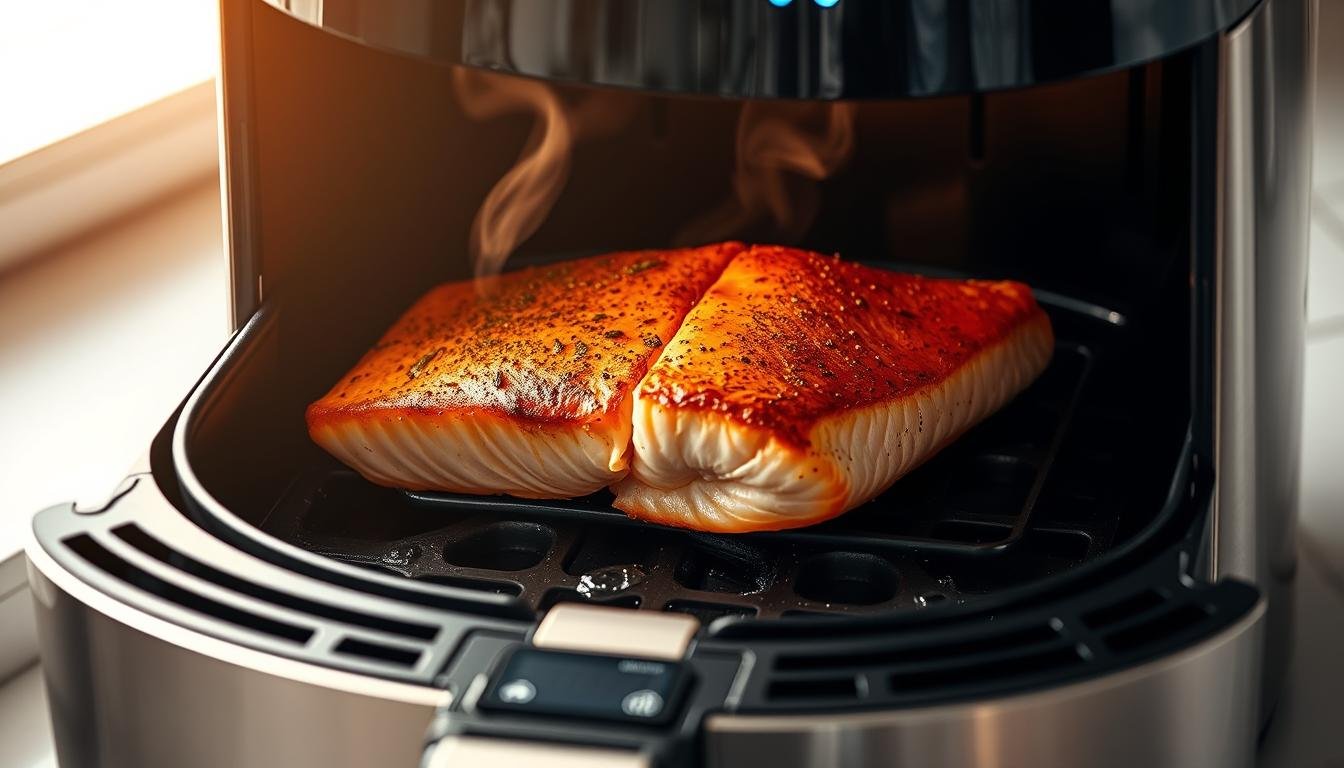
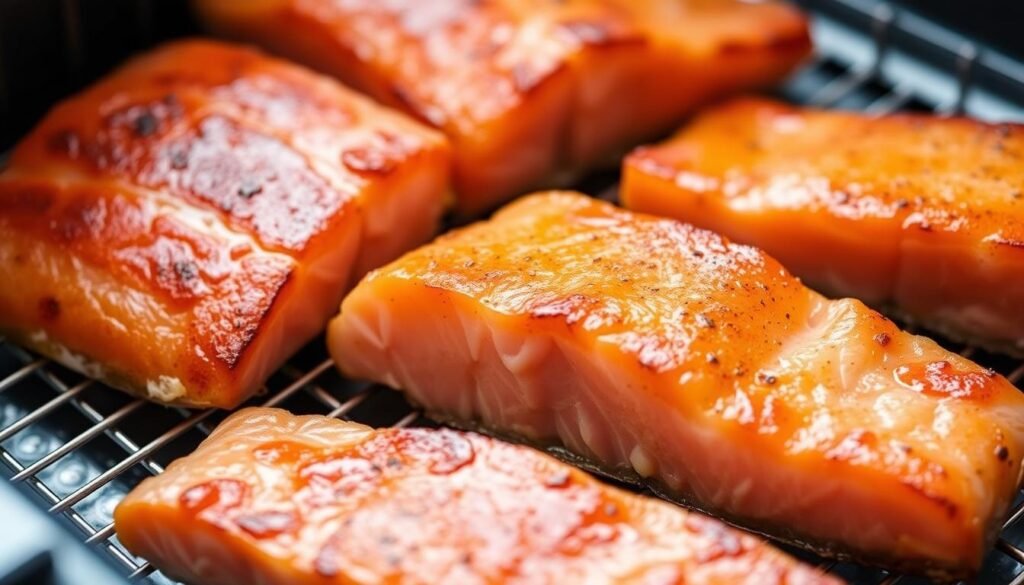
For 3–4 oz portions, start at about 350–360°F and check at 3–4 minutes. Thicker 6–8 oz fillets like a bit more heat — aim for 370–375°F and 5–7 minutes. Probe the thickest part so you don’t overdo a thin tail.
Coatings and skin tips
Breaded or panko-crusted pieces love a light oil spritz and a quick flip halfway through to wake the crunch. Keep pieces spaced in the basket so hot air flows around them — crowding steals crispness.
Skin-on? Start skin-side down and flip for the last minute if you want an extra snap. Skinless fillets benefit from a thin butter brush to guard edges from drying.
| Portion | Temp | Estimated minutes |
|---|---|---|
| 3–4 oz fillets | 350–360°F | 3–4 minutes |
| 6–8 oz fillets | 370–375°F | 5–7 minutes |
| Panko or breaded | 350–375°F | Spritz oil; flip halfway for crisp |
| Skin-on vs skinless | Start skin-side down | Flip last minute for snap; brush butter for skinless |
Quick rules: place salmon in the center of the basket for even flow. Rotate if your machine has hot spots. Adjust in one-minute steps — small nudges beat big misses.
Common Reheating Mistakes to Avoid
A few common slip-ups will dry your fish out faster than you can say ‘dinnertime’—let’s dodge them.
Don’t pack that basket. Overcrowding blocks hot air and leaves you with cold centers and overcooked edges. Give pieces room and do batches. That tiny bit of patience pays off in texture and even cooking.
If you use foil, keep it loose. Tight wraps trap steam and make the exterior soggy. A gentle tent holds moisture without turning the crust limp. For breaded pieces, a light oil spritz helps the crunch revive.
Pull leftovers from the fridge a few minutes while the air fryer preheats. Starting icy-cold means uneven reheating. And please—don’t heat the same piece twice. Each round steals more moisture and flavor.
- Skip cranking max heat the whole time—gentle heat keeps flakes tender.
- If your fryer runs hot, lower the temp and add a minute—small tweaks beat big mistakes.
- Ovens are slow but forgiving; microwaves are fast but can leave fish rubbery—pick the way that fits the texture you want.
- When unsure, check early and finish with quick, 1-minute nudges—easy does it, y’all.
Other Ways to Reheat Salmon (and When to Use Them)
Sometimes you want a gentle touch; other times you want speed — here’s how to pick the right method. We’ll run through options so you can match time and tools to the result you want.
Oven (gentle and moist): Preheat to 275°F, tent with loose foil, and warm for about 15–20 minutes. This way keeps moisture and is great when you’ve got time. Check the center — fresh fish is often checked at 145°F, leftovers should hit 165°F.

Quick, no-fuss options
Microwave (fast as lightning): Place the piece in a microwave-safe dish and cover with a damp paper towel. Heat 1–2 minutes, then check. This method saves minutes but watch for hot edges and uneven warming.
Skillet (crisp skin lovers): Heat medium, add a teaspoon of oil or butter, and sear about 1–2 minutes per side. It brings back sizzle and texture fast. Don’t crowd the pan.
Delicate and precise choices
Steaming: Set the fish over simmering water, cover, and steam 5–7 minutes. This keeps flakes soft and moist.
Sous vide (precision): Seal and warm at 120–125°F for 20–30 minutes, then give a quick sear if you want crust. It’s perfect when you need hands-off, exact temperature control.
| Method | Temp / Setup | Minutes |
|---|---|---|
| Oven (foil tent) | 275°F, loose foil | 15–20 |
| Microwave | Damp towel cover | 1–2 |
| Skillet | Medium heat, oil or butter | 1–2 per side |
| Steaming | Simmering water, lid on | 5–7 |
- Keep pieces spaced — crowding steals even warmth.
- Use foil as a loose tent in the oven; don’t seal airtight.
- Always verify center temperature for safety and even heat.
Serving Ideas for Reheated Salmon
Leftovers don’t have to be boring—one squeeze of citrus and a dollop of sauce works wonders.
Bright, simple touches bring life back to a chilled fillet. Add lemon juice, a pinch of salt and pepper, and a scattering of dill to boost flavor and moisture. A creamy dressing or a quick tartar or dill sauce rescues any slightly dry bite.
Salads, wraps, grain bowls, and quick sauces
- Flake reheated salmon over a big green salad with lemon, dill, and a creamy sauce—fresh and easy.
- Tuck slices into a warm wrap with cucumbers, greens, and a yogurt-dill drizzle for fast lunch.
- Build a grain bowl with rice or farro, roasted veggies, and a lemon-garlic dressing for a satisfying meal.
- Stir into pasta with butter, lemon zest, and peas for a cozy, quick dish.
- Make a quick melt: toast, a little sauce, cheddar—broil until bubbly for a tasty treat.
- Add to scrambled eggs with chives and a squeeze of lemon for a hearty morning plate.
- Serve simple: a warm plate, a pat of butter, dill, and a lemon wedge—classic and comforting.
- If your piece feels dry, a spoonful of tartar, dill cream, or lemon-butter brings moisture back fast.
- Leftover salmon shines the next day—party bites with crackers, herbed cream cheese, and capers are a hit.
Conclusion
Short and sweet: the best way reheat leftovers is the quick crisp-and-warm method we’ve shown. It gives great texture, preserves moisture, and usually takes about 3–7 minutes depending on thickness and model.
Start with a short cook, check the center for 165°F, and add tiny nudges till it’s just right. Keep portions spaced and use a light oil spritz to revive crust. Don’t wrap foil tight and don’t heat any piece more than once.
Prefer a gentler finish? The oven or steaming is the best way for moist results. For crackly skin, the skillet or the salmon air fryer route is your buddy. Season at the end—lemon and salt wake flavor fast. Now grab that basket and enjoy—y’all deserve easy, tasty supper.
FAQ
How soon should we use leftover fish from the fridge?
What’s the best way to warm a piece without drying it out?
How do we check that the center is safe and tasty?
Can we use foil in the basket to keep moisture?
How long does it take for a 6–8 oz fillet?
What about tiny 3–4 oz portions—any special tweaks?
How do we get breading or panko crispy again?
Is it safe to warm the same piece more than once?
Microwave or oven—when should we use them instead?
Any quick flavor tips after warming?
About The Author