You’ll get glossy, flaky, never-dry skin-on salmon in the air fryer by preheating to 400°F, patting fillets dry, oiling the skin, and cooking skin-side down about 7–10 minutes for a 1-inch fillet (adjust ±2 minutes per ½”). Pull at 125–130°F for medium-rare or 135°F for medium, rest briefly, and finish skin-side up for extra crisp. Simple seasoning, thermometer checks, and proper spacing make this foolproof—keep going and you’ll pick up timing, tips, and serving ideas.
Why Skin-On Salmon Works Best
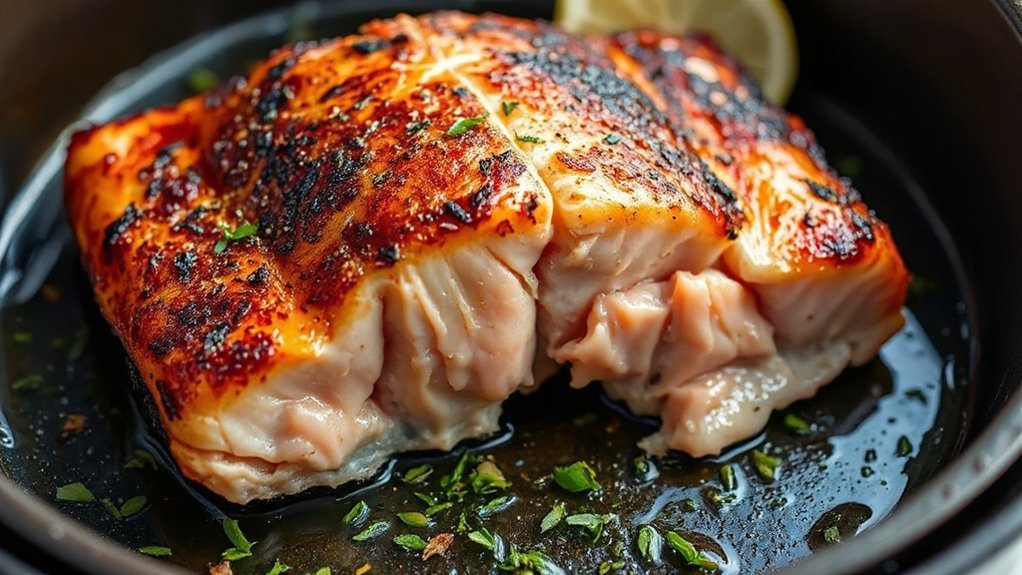
Because the skin crisps up fast in an air fryer, leaving it on gives you a superior texture and protects the delicate flesh from drying out. You’ll notice immediate benefits: the skin locks in juices, so Flavor retention is much better and the meat stays glossy and tender. When you pull the salmon from the air fryer, you get a satisfying Texture contrast — crackly skin against silky flesh — that makes each bite more interesting. You’ll also find the skin acts as a protective barrier during quick, high heat cooking, preventing overcooking on top while the interior reaches perfect doneness. Keep seasoning simple and place salmon skin-side down for even crisping; a light oil and some salt are all you need. Leaving skin on reduces fuss and cleanup, and gives you more forgiving cooking margins, so you’ll hit that never-dry goal more often with minimal effort today.
Choosing the Right Salmon Cut and Thickness
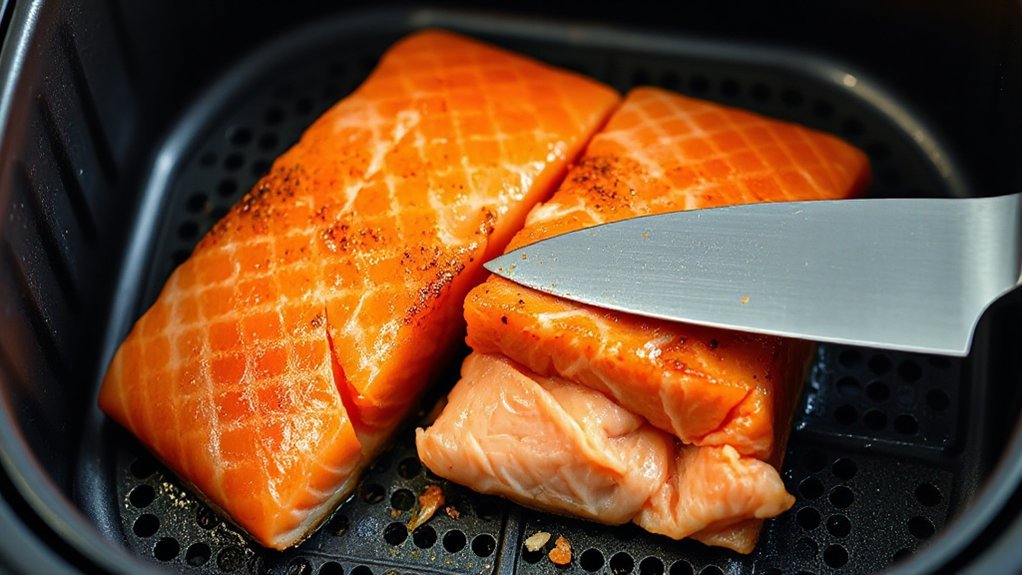
How thick should your salmon be? Aim for 1 to 1½ inches for even cooking and juicy results; thicker fillets give you more leeway, thinner pieces require careful timing. Pick center-cut portions for consistent thickness and reliable Texture variation between crisp skin and tender flesh. Think about Sustainability considerations by choosing responsibly sourced cuts — look for labels or ask your fishmonger.
- Choose a center-cut fillet — confident, even, satisfying.
- Opt for thicker steaks for a bold, restaurant-style bite.
- Use thinner slices when you want quick, weeknight ease.
When you buy, inspect color and firmness: bright, resilient flesh means freshness. If you want a richer mouthfeel, pick fattier belly or collar cuts; if you prefer leaner bites, go for loin. Match the cut to your timing and appetite, and you’ll get perfect results every air-fry. Small choices now make a big difference on the plate.
Preparing and Seasoning the Fillets
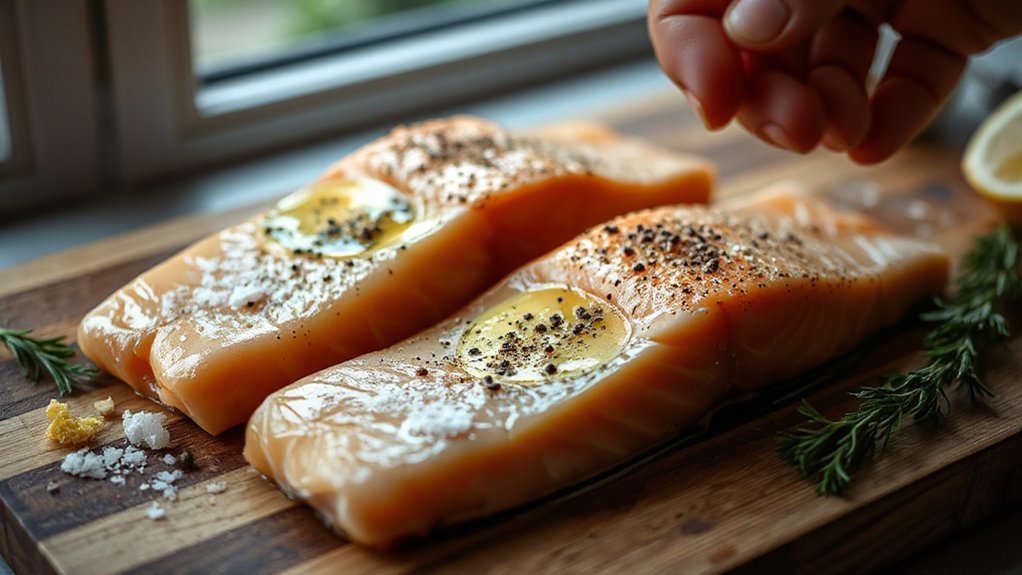
Pat the fillets dry with paper towels and let them sit at room temperature for 10–15 minutes so they cook evenly. While they rest, check for any pin bones and remove them with tweezers; this makes eating effortless. Rub a thin layer of oil on the skin to encourage crisping, then season simply: kosher salt, freshly ground pepper, and a squeeze of lemon. If you want herbs or a light glaze, apply sparingly so the fish’s flavor shines. Buy salmon from suppliers who disclose sourcing ethics—wild, responsibly farmed, or certified options affect taste and sustainability. Keep raw fish and marinades separate, and practice strict utensil hygiene: use dedicated plates and tongs for raw and cooked fillets, and wash cutting boards and tools immediately. Patience in prep pays off; clean, confident seasoning and safe handling set you up for perfect, never-dry air fryer salmon, and enjoy immediately for best.
Air Fryer Temperature and Timing Guide
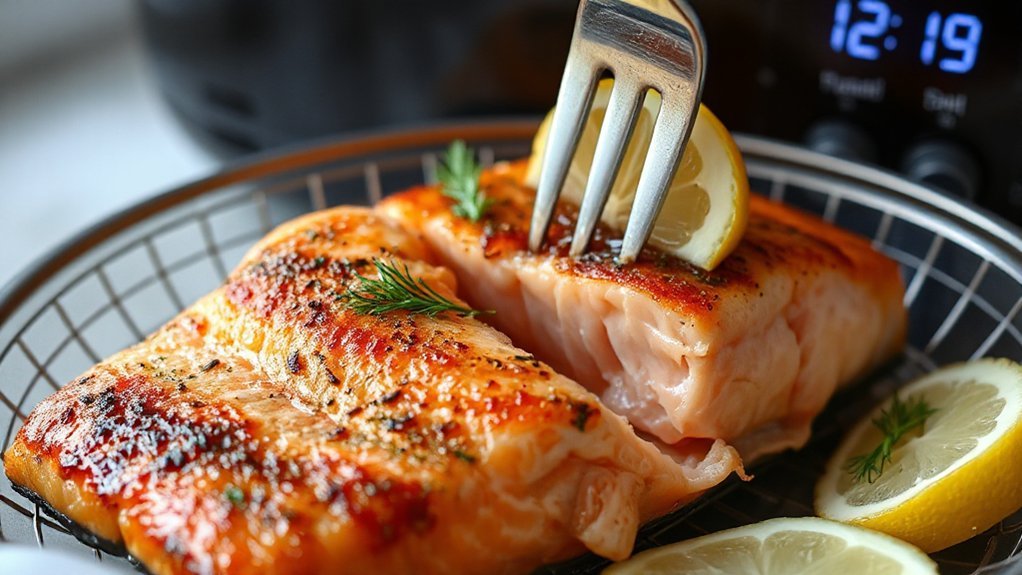
Want perfectly cooked salmon every time? You’ll dial in temperature and timing based on fillet thickness: aim for 400°F for crisp skin and tender flesh, adjusting minutes per half-inch. Factor in your air fryer model—Wattage calibration matters; higher wattage shortens cook time, lower wattage lengthens it. Also remember Altitude adjustments: at high elevations increase time slightly and monitor doneness.
Dial temperature and time to fillet thickness—400°F for crisp skin; adjust for wattage and altitude
- Trust thickness: 1/2″ adds about 4–5 minutes at 400°F; add or subtract for thicker or thinner pieces.
- Target doneness: pull at 125–130°F for medium-rare, 135°F for medium; carryover will finish it.
- Test reliably: use an instant-read thermometer and visual cues for flaking without overcooking.
Keep notes for your specific fryer so you’ll replicate success. Small tweaks after initial runs make results consistently excellent. Adjust preheat times and avoid overcrowding the basket to maintain airflow; tiny changes produce big improvements in texture and timing every single time.
Step-by-Step Cooking Method
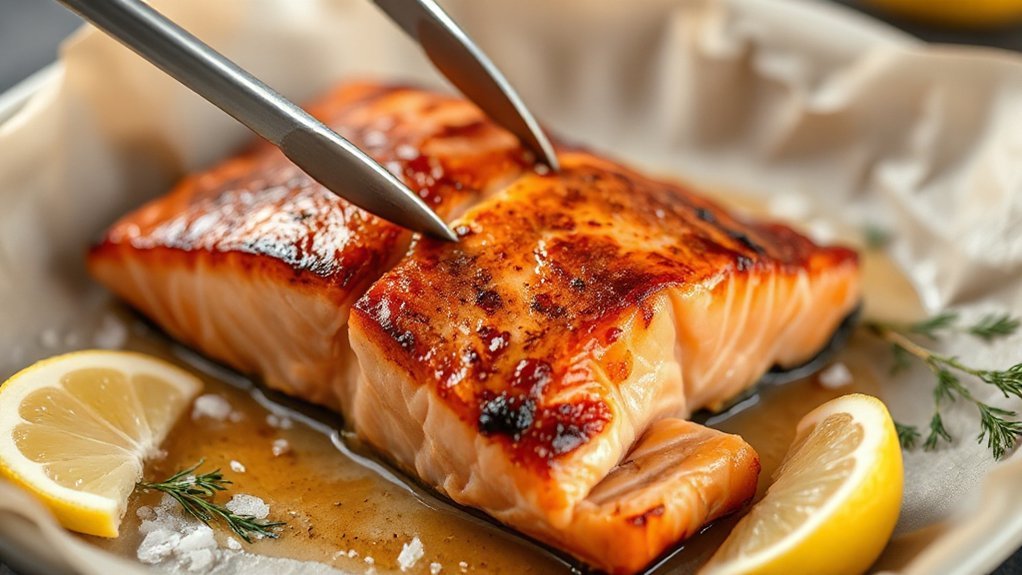
Start by patting the fillets dry, seasoning them simply, and letting them sit a few minutes so the flavors stick. While they’re resting, preheat your air fryer, oil the basket lightly, and set the rack for even airflow. Then cook at the recommended temp until just flaky, let the salmon rest a couple minutes, and serve.
Prep and Season



Before you fire up the air fryer, dry the salmon well and check for any pin bones—run your fingers along the fillet and pull out any with tweezers—then brush a thin coat of oil to help the seasoning stick and the skin crisp. Pat the fish if needed; oil selection matters—pick high smoke point oils like avocado or light olive. Season simply: salt, pepper, lemon squeeze, sprinkle of herbs. If you have fresh herbs, keep them fragrant with proper herb storage. Press gently into skin. Let fillet sit 10–15 minutes to marry flavors.
- Anticipation: lemon and sea awaken your senses before the first bite.
- Confidence: well-seasoned, never oily, balanced.
- Joy: crisp skin, tender flesh, and a proud smile every single time.
Air-Fryer Setup
Preheat your air fryer to 400°F (200°C) and let it run 3–5 minutes so the basket’s hot.
| Mood | Setup |
|---|---|
| Excited | Ready |
| Confident | Aligned |
| Calm | Organized |
Check rack positioning — mid-level usually fits skin-on fillets and promotes even air flow. Pat the salmon dry, oil lightly, and confirm accessory compatibility (grill pan or tray) before loading. Place fish skin-side down on the preheated basket or compatible accessory; avoid overcrowding so air circulates. Use tongs to set pieces gently and leave space between fillets. If your model has adjustable racks, use the middle slot for balanced crisping. Close the basket and monitor through the window if you have one; adjustments are easy if you notice uneven placement. You’ll feel proud serving flawless, crispy skin and moist flesh.
Cook and Rest
Once the air fryer’s running and your fillets are spaced in the basket, set it to 400°F (200°C) and cook skin-side down for about 7–10 minutes for 1-inch-thick fillets (adjust ±2 minutes per additional 1/2-inch); you’ll know they’re done when a digital thermometer reads 125–130°F for medium-rare or 140°F for well-done. When it pings, check temp; carryover raises degrees. Move fillets to a warm plate 5 minutes to finish cooking and let juices settle. Rest aids Meal synchronization — time sides so everything’s ready. For crispier skin, flip skin-side up 30–45 seconds before resting.
- Anticipation: Plate warming sets the mood.
- Satisfaction: slice into moist flesh.
- Pride: you nailed timing.
Serve; use a thermometer and timing to get reliably tender, never-dry salmon.
How to Test for Perfect Doneness
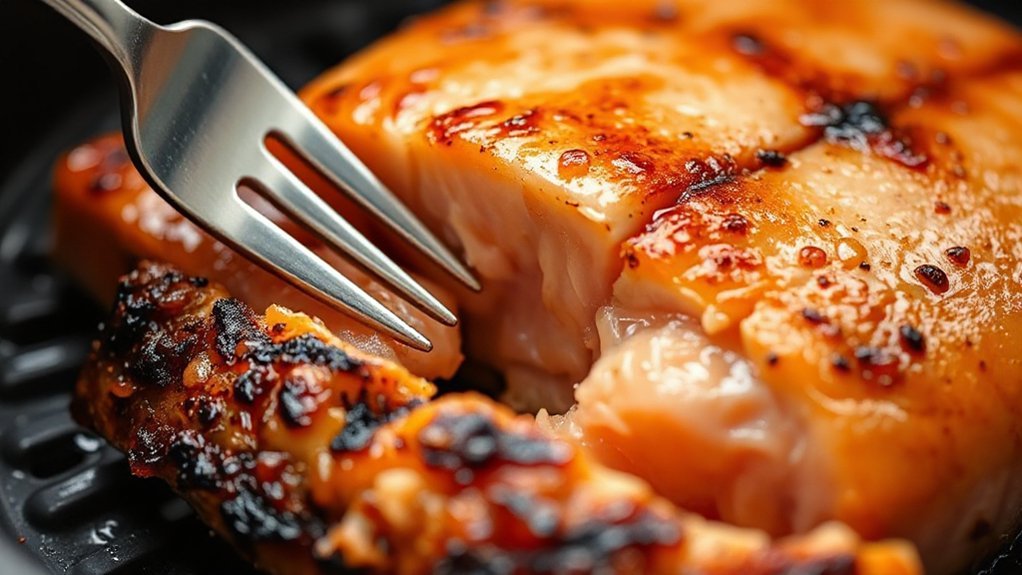
You’ll want two quick checks to know your salmon is done: an internal temperature reading and the touch-and-flake method. Aim for about 125–130°F for medium-rare or 140°F if you like it fully cooked, inserting the probe into the thickest part. For the touch-and-flake test, press gently with a fork—fish should give slightly and flake easily along the muscle fibers.
Internal Temperature Check
How do you know your air-fried salmon is perfect? Use a probe thermometer — different Thermometer types matter (instant-read, leave-in, or probe), and you’ll want to follow FDA guidelines for safety: aim for 125–130°F for medium-rare, 145°F for well done. Insert the probe into the thickest part toward the skin without touching bone.
- Relief — you nailed texture.
- Pride — that crust and tender center.
- Joy — dinner’s ready and consistent.
Check temps quickly to avoid overcooking, let fish rest 2–3 minutes so carryover evens the heat, and clean probes after use. Simple, precise, repeatable. If you prefer visual cues, pair temperature with look and time to build confidence and consistency in every batch. You’ll serve better salmon every time. Trust the probe.
Touch-and-Flake Test
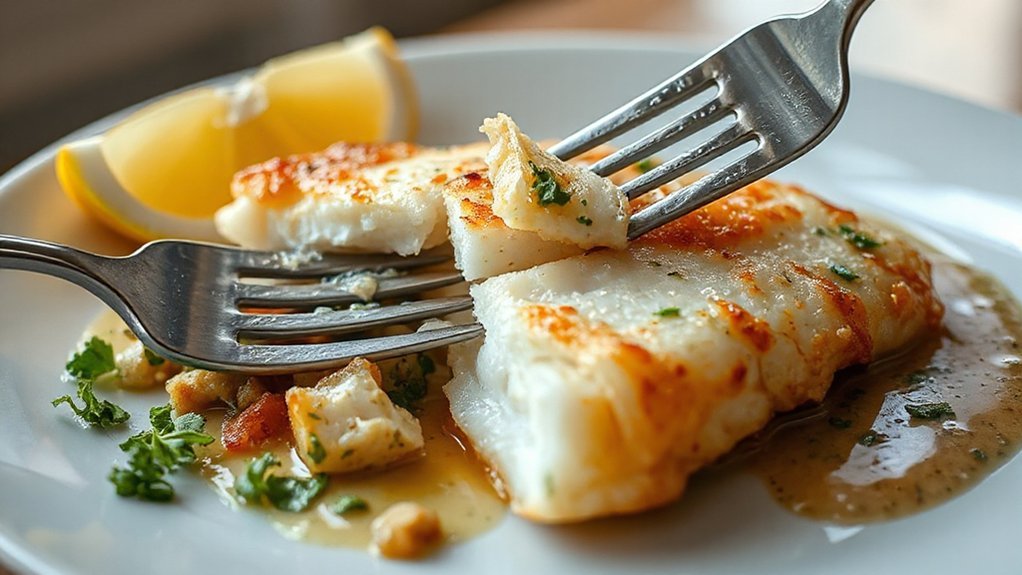
If you don’t have a probe handy or want a quick double-check after taking the temp, use the touch-and-flake test to judge doneness by feel and appearance. Press the thickest part gently with your finger; firm but springy means perfect. Use the hand technique to compare—soft like raw, slightly resistant for medium, firm for well done. Flake with a fork across the grain; flakes should separate easily but still look moist. Watch texture indicators: glossy surface, translucent center turning opaque. Practice on a few fillets and you’ll nail timing. Quick table below helps as a reminder.
| State | Feel | Flake |
|---|---|---|
| Rare | Very | Doesn’t |
| Medium | Slight | Some |
| Perfect | Springy | Moist |
Serving Ideas and Flavor Variations
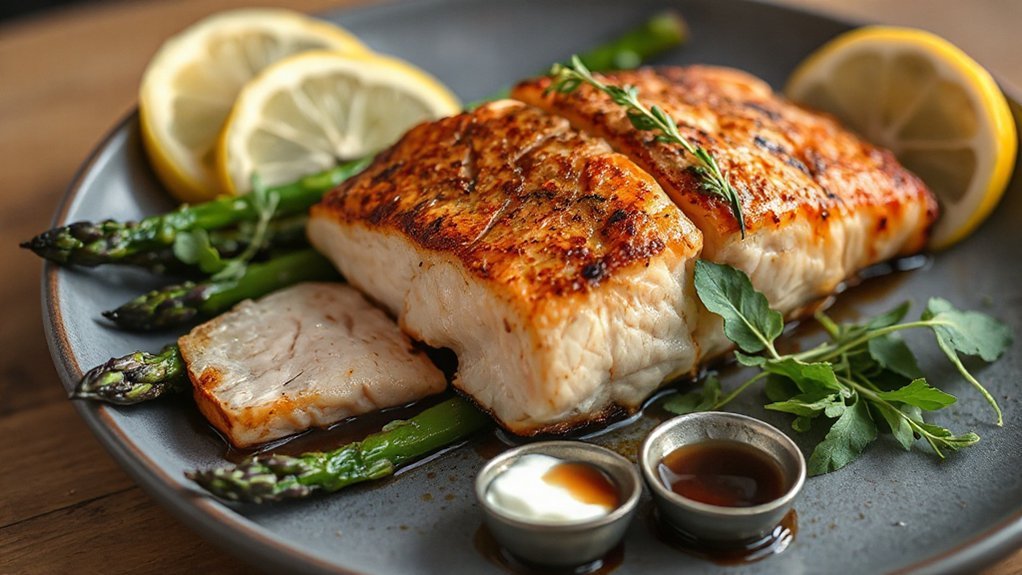
When you want to keep things simple or dress the salmon up for guests, a few quick sauces and side choices make all the difference. You’ll love topping skin-on fillets with Citrus Glazes for bright sweetness or spooning Herb Chimichurri for herbal zip. Pairings should balance texture and color: crisp salads, creamy grains, or roasted vegetables all work.
Keep salmon simple or dress it up with citrus glazes, herb chimichurri, and balanced sides.
- Light and fresh: arugula salad, lemon vinaigrette, shaved fennel.
- Comforting: buttery mashed potatoes, steamed green beans, flaky salt.
- Festive: roasted fingerling potatoes, honeyed carrots, toasted almonds.
Finish with finishing touches—black pepper, a squeeze of lemon, or flaky sea salt—to make the dish sing. For a simple weeknight, serve over quinoa; for guests, plate with a colorful vegetable medley and a small ramekin of sauce so everyone gets their favorite flavor. You’ll look pulled together without fuss. Finish with warm bread and a bright wine to complete the experience. Tonight enjoy.
Troubleshooting Common Problems
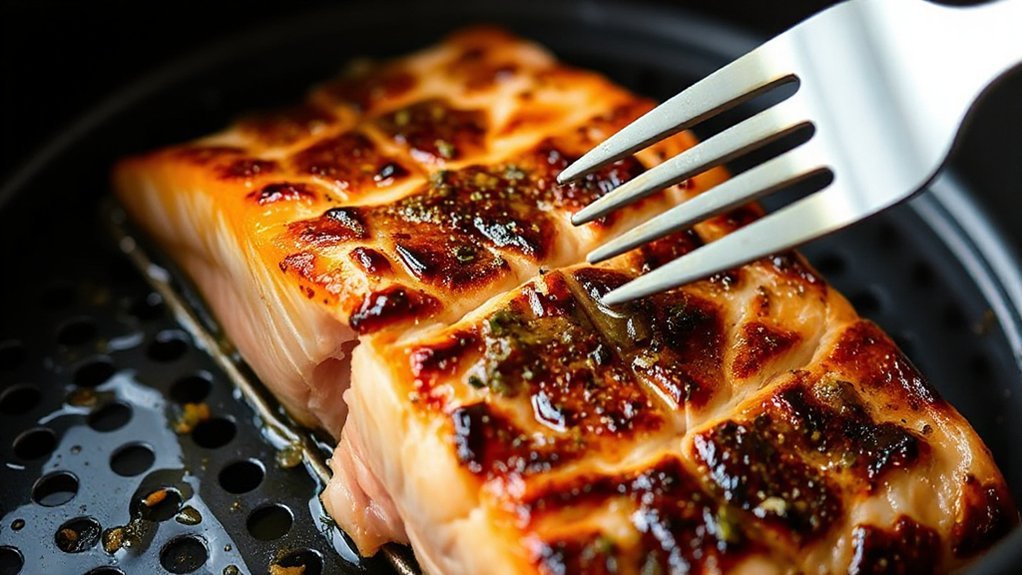
Although air frying salmon is forgiving, you’ll still bump into a few common hiccups—overcooking, sticking, or limp skin—and quick fixes will get you back on track. If your fillets show uneven cooking, flip thicker pieces or arrange similar sizes together; use a thermometer and pull at 125–130°F for medium-rare, or 135°F for firmer texture. To prevent sticking, pat skin dry, brush with oil, and preheat the basket; a quick spray or a parchment square under the fish helps. Limp skin? Finish skin-side up for a minute under high heat or flip earlier so skin crisps. If you notice a fishy odor, make sure the salmon is fresh, rinse and pat dry, and add citrus or a splash of milk before cooking to neutralize smell. Finally, avoid overcrowding; give air room to circulate for consistent results. Small adjustments solve most problems fast. Enjoy perfectly cooked salmon every time now.
Conclusion
You’re ready—skin-on, seasoned, and air-fried—to enjoy salmon that’s never dry. Stick with the temp/timing guide, check flake and thermometer, and you’ll hit tender, flaky perfection every time. Little tricks—patting skin dry, preheating, and letting it rest—make a big difference. Fun fact: air fryer sales jumped over 300% from 2018–2020, so you’re in good company if you rely on one for weekday dinner wins. Try citrus, herbs, or a honey glaze for fast flavor boosts today.
About The Author