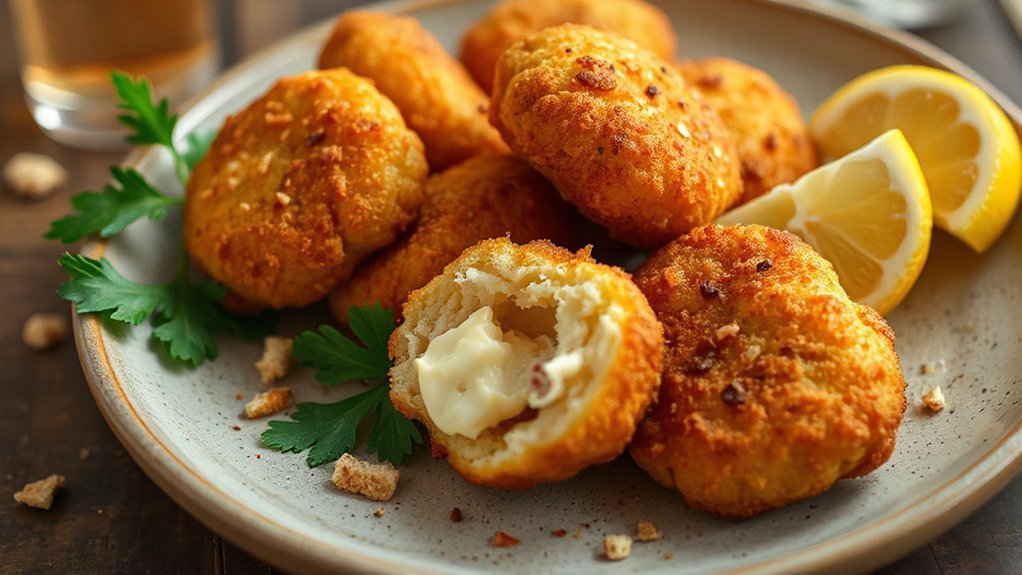
You can get pillowy New Orleans‑style beignets in an air fryer—crispy outside, cloud‑soft inside, with far less oil than deep frying. The enriched yeast dough proofs quickly, you shape into 40–50 g pieces, then air fry at 350°F, flipping halfway for 6–8 minutes until golden. Dust generously with powdered sugar and serve with espresso or compote. Quick tweaks let you make gluten‑free or vegan versions, and the guide covers tips for proofing, texture and reheating.
Why Choose Air Fryer Beignets
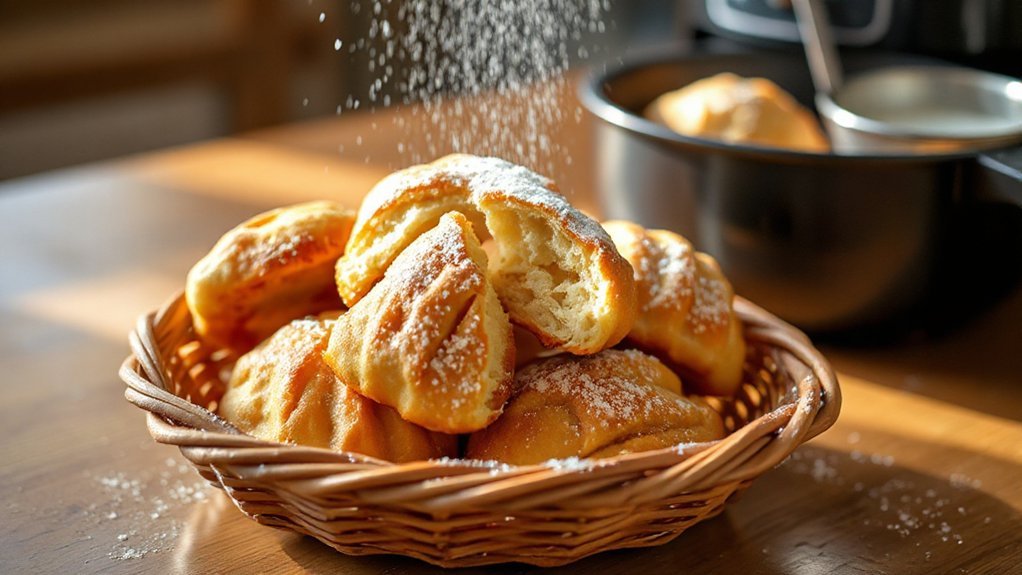
Because you want the crisp, airy beignet experience without standing over a pot of hot oil, the air fryer’s a perfect shortcut. You get that golden exterior and pillow-soft interior using far less oil, a true Lower fat indulgence that still satisfies the craving for an authentic New Orleans treat. The air fryer speeds things up, so you’ll have hot beignets in minutes—perfect for spontaneous brunches or a sweet afternoon pick-me-up. Cleanup’s easier too, giving you real kitchen convenience: no greasy splatters, no bulky frying gear, and minimal dishwashing. You’ll love how consistent results come from even circulation of heat, so you can tweak time and temperature and bank on reliable texture. Whether you’re feeding a crowd or treating yourself, air fryer beignets let you enjoy powdered-sugar bliss with less mess and less fuss, bringing classic flavor into modern, busy routines. They’re a quick, joyful Southern-inspired treat daily.
Essential Ingredients and Substitutions
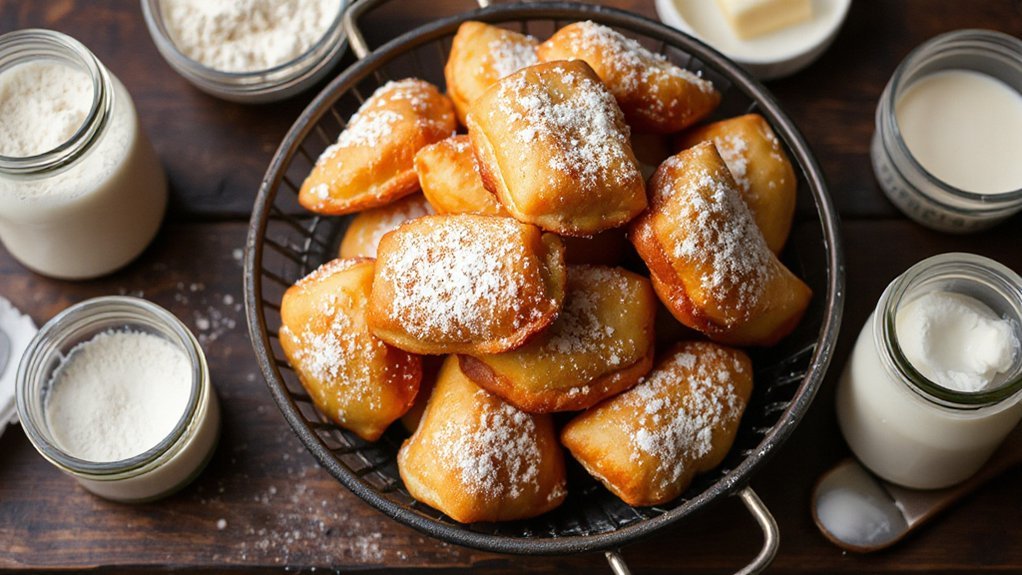
While you can keep these beignets simple, a few key ingredients make the difference between doughy blobs and light, airy pillows: all-purpose flour, sugar, active dry yeast, warm milk, eggs, butter, and a pinch of salt. You’ll want quality flour and properly proofed yeast for structure and lift; sugar balances and butter adds richness. If you need swaps, use instant yeast (cut proof time), or non-dairy milk and dairy-free butter for lactose-free treats. Replace eggs with a commercial egg replacer or mashed banana for vegan options, though texture shifts slightly. For gluten-free, choose a 1:1 baking blend and expect denser results. Enhance aroma with vanilla or other flavor extracts, and brighten each batch with a touch of citrus zest in the dough or finishing sugar. Keep measurements precise and taste as you go to match classic New Orleans flavor in air-fried form. Serve warm for best enjoyment always.
Step-by-Step Dough Preparation

First you’ll wake the yeast gently—warm water, a pinch of sugar, and a few minutes until it foams—so your beignet dough gets its lift. Then you’ll mix and knead until the dough’s smooth and slightly tacky, about 6–8 minutes by hand or 4–5 with a mixer. Pay attention to texture: it should hold shape but still spring back when pressed, which tells you it’s ready to rest and rise.
Yeast Activation Basics
How do you wake up yeast so your beignet dough rises light and airy? You proof active dry yeast in warm water (105–110°F) with a pinch of sugar, watching for foam in five to ten minutes. That bubbling shows yeast biology at work; you’ll get consistent rise if yeast is fresh and handled gently. Check expiration and note storage longevity—store sealed in fridge or freezer to extend life. Use lukewarm milk for enriched doughs, avoid hotter temperatures that kill yeast, and stir gently to combine. If no foam appears, discard and retry. Below’s a quick checklist to guide you.
| Step | Tip |
|---|---|
| Proof | Warm water, sugar; foam in five to ten min |
| Temp | 105–110°F ideal; avoid >120°F |
| Storage | Fridge or freezer for best storage longevity |
Kneading and Texture
Kneading the dough develops the gluten that gives beignets their pillowy chew, so aim for a smooth, slightly tacky ball that springs back when you poke it. You’ll work with tactile cues—feel the dough loosen, become elastic and warm. Use confident massage strokes and a folding push-turn rhythm; ten to twelve minutes by hand usually does it. Stop when the surface is satiny and a fingertip indent bounces back slowly. Resting allows the structure to relax before rise. If dough sticks to your fingers, flour lightly; avoid adding too much flour or you’ll toughen the crumb structure.
- Test: windowpane stretch without tearing.
- Texture: slightly tacky, not sticky.
- Rhythm: steady folds, firm massage strokes.
Trust your hands; they’lltell you when it’s ready.
Shaping and Portioning for Even Cooking
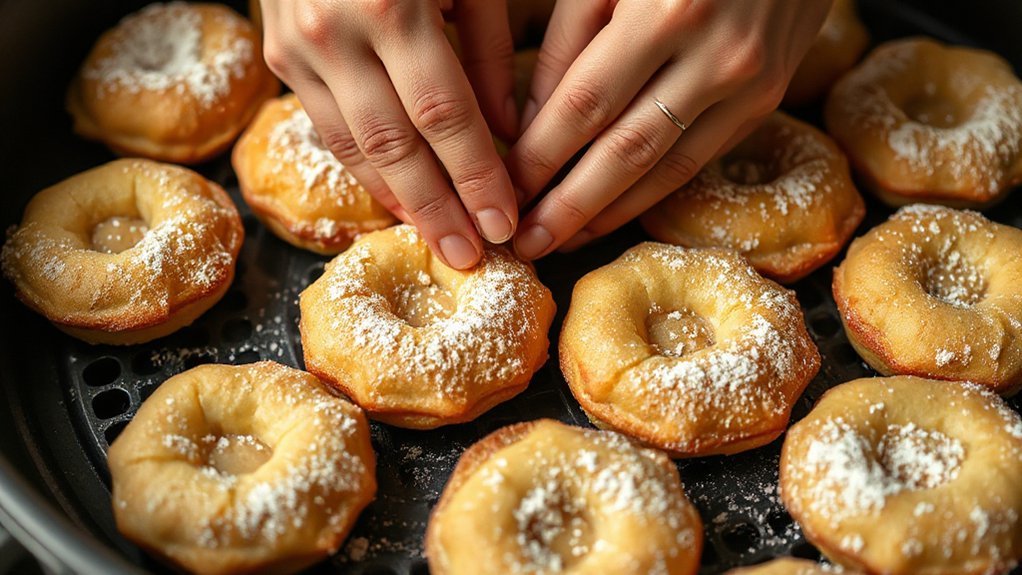
To get perfectly puffed beignets, you’ll want consistent portion weights so each one cooks in the same time. Use a kitchen scale and cut dough into equal pieces, then roll or pat each piece to an even thickness so they brown uniformly. With matching sizes and thicknesses, your air fryer batches will finish together and come out light and airy.
Consistent Portion Weights
Every beignet shines when you keep the pieces the same size, so grab a digital scale and portion dough into equal weights—about 25–30 grams for bite-sized pieces or 40–50 grams for larger ones. You’ll want precise scale calibration before you begin, zeroing your bowl and testing with a teaspoon of water. Consistent weights mean even cook times, predictable puff, and tidy powdered sugar coverage. Use batch tracking—note weights and cook times on a sticky or phone to repeat winners. When shaping, handle dough gently to preserve air pockets and keep pieces uniform.
- Weigh each piece on the scale.
- Tidy rounds for uniform contact.
- Log times and weights for repeatability.
Stick to this and your air fryer beignets will sing daily.
Even Dough Thickness
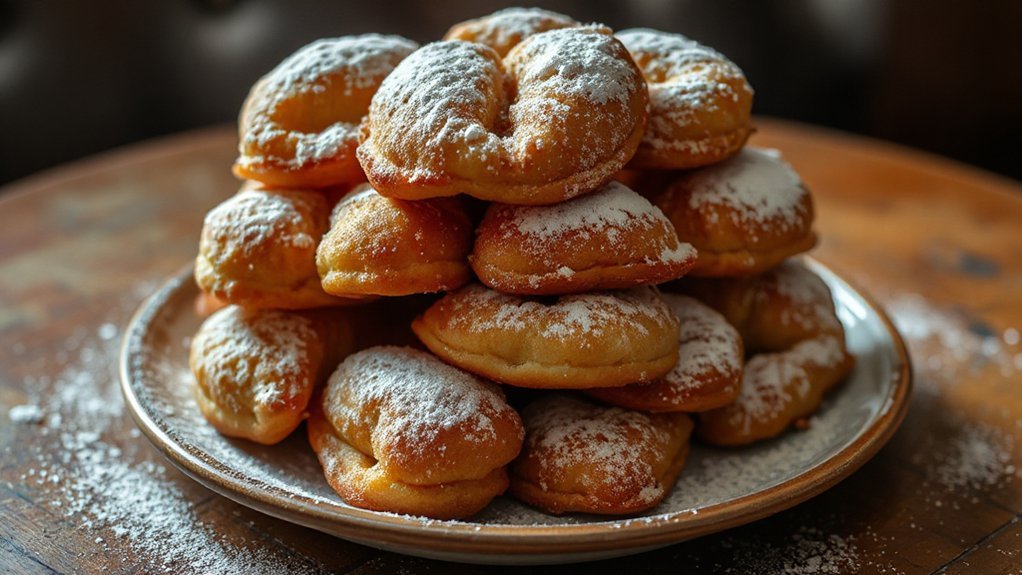
While shaping your beignets, aim for a consistent slab so each piece puffs and browns evenly in the air fryer. Roll or press the dough to an even thickness—about ¼ inch—using visual markers like a ruler or the edge of a baking sheet. You’ll also use tactile indicators: run your fingers gently over the surface to find low spots and smooth them. Cut portions from the slab so every square shares the same profile; that uniformity yields predictable cooking time and golden color. If some pieces look thinner, stack and re-roll briefly rather than frying uneven batches. With these simple checks you’ll get airy beignets with consistent crisp edges and tender centers every time. Serve hot and dust heavily with powdered sugar before serving.
Air Fryer Settings and Timing Guide
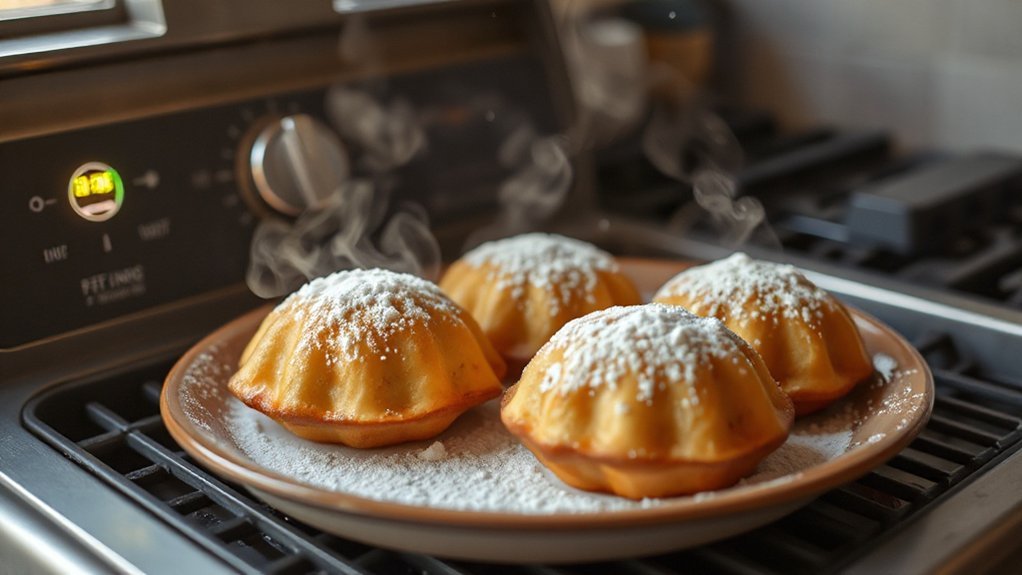
Dial your air fryer to the right temp and you’ll get light, golden beignets every time—generally 350–375°F for 6–8 minutes works well for standard-sized pieces. You should check Temperature Calibration to confirm your machine’s readout and set the Preheat Duration to about 3–5 minutes so the basket’s hot before you add dough. Flip or shake halfway for even color. Use a single layer with space between pieces.
Preheat your air fryer 3–5 minutes, 350–375°F for 6–8 minutes, flipping halfway for golden beignets.
- Start at 350°F for 6 minutes; increase to 375°F if underbrowned.
- Preheat Duration: 3–5 minutes for consistent results.
- Small batches cook faster—watch on the second tray.
Track times by size: halves or larger pieces need the full 8 minutes. Adjust for your model, and rely on sight and a quick touch test to hit that golden finish without overbaking. Keep a kitchen timer and jot adjustments so you’ll perfect timing across batches and enjoy consistent, crisp edges daily.
Tips for Achieving Light, Airy Centers
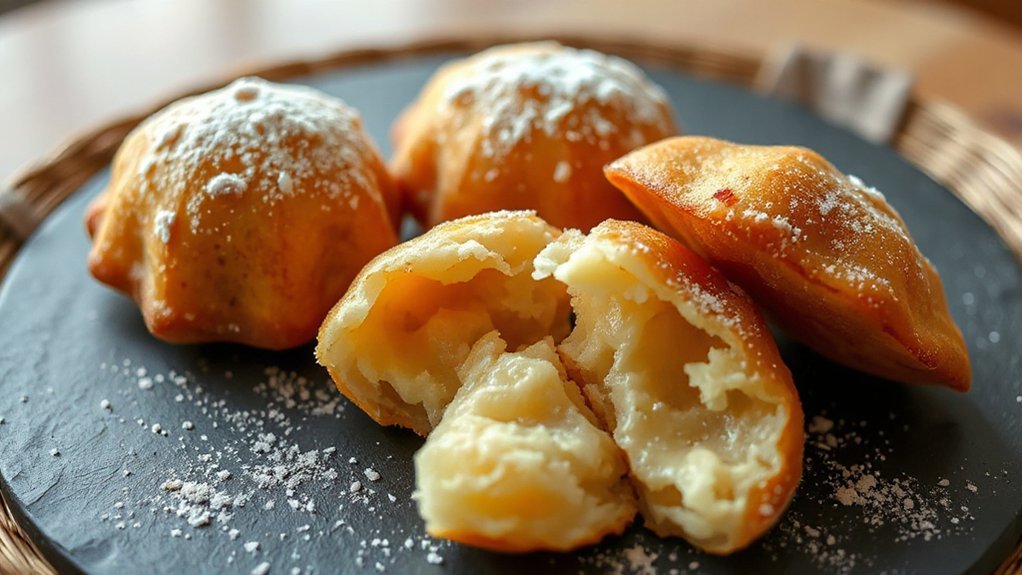
You’ll get pillowy, airy centers by nailing dough hydration—too dry and they’ll be dense, too wet and they’ll lose structure. Aim for a soft, slightly tacky dough that springs back slowly when pressed. Then give the beignets the right proofing time—underproofed means a tight crumb, overproofed can cause collapse, so watch for doubled size and a gentle jiggle.
Proper Dough Hydration
Balancing dough hydration makes the difference between dense fritters and pillow-soft beignets: aim for a slightly higher hydration than for bread—think a tacky, pliable dough that’s moist but not soupy—so steam can puff open airy centers during frying. You’ll watch flour absorption and adjust water little by little; different flours need different hydration benchmarks, so start with the recipe’s percent and tweak until the dough’s smooth, slightly sticky, and stretches without tearing. Handle gently to preserve gas pockets and avoid overworking. Test a small piece in hot oil or your air fryer to gauge rise and texture.
- Measure: weigh flour and water, track flour absorption.
- Adjust: add water in tablespoons to reach tacky feel.
- Rest briefly: let dough relax before shaping.
Correct Proofing Time
When you proof until the dough becomes noticeably puffy and holds a gentle indentation, you’ll set yourself up for light, airy centers—underproofed dough stays tight and dense, while overproofed dough can collapse and lose oven spring. Watch visual cues: dough should look swollen, slightly domed, and retain that finger dent for a few seconds. Use timing benchmarks as a guide—typically 45 to 75 minutes at room temperature or 60 to 90 minutes in a cooler kitchen—but treat them as flexible. If your kitchen is warm, check earlier; if cool, give more time. Once proofed, handle gently to preserve gas bubbles. Flip or stretch minimally, then air fry immediately for beignets that puff, stay tender inside, and taste like a little piece of New Orleans.
Gluten-Free and Plant-Based Variations
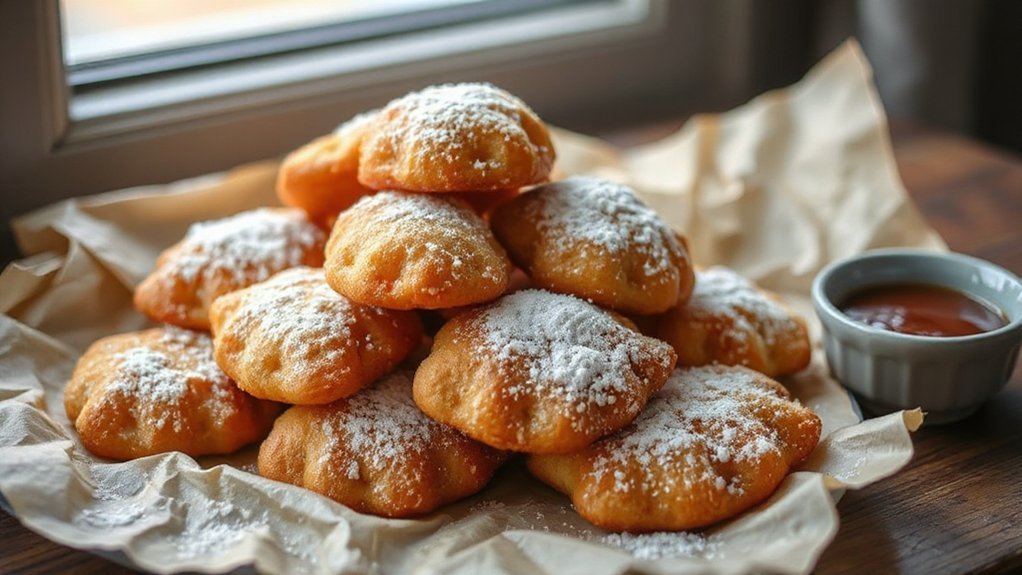
Although traditional beignets rely on wheat and eggs, you can easily swap to gluten-free flour blends and plant-based binders to get the same pillowy, airy result. When you choose ingredients, pay attention to certification considerations and Allergen labeling so you protect guests and avoid cross-contact. Use a blend with xanthan or psyllium for structure, and replace eggs with aquafaba or flax gel.
- Choose a 1:1 gluten-free flour mix with starches and protein for lightness.
- Use aquafaba (3 tbsp = 1 egg) or flaxseed gel for binding and lift.
- Add a teaspoon of baking powder and a touch of vinegar to boost aeration.
You’ll want to adjust hydration and proofing slightly—gluten-free doughs can be stickier and benefit from gentle handling. With small tweaks, your air fryer beignets stay tender, dairy-free if desired, and equally indulgent. Test one small batch first to refine texture and timing for your equipment carefully.
Serving Ideas and Presentation Tips
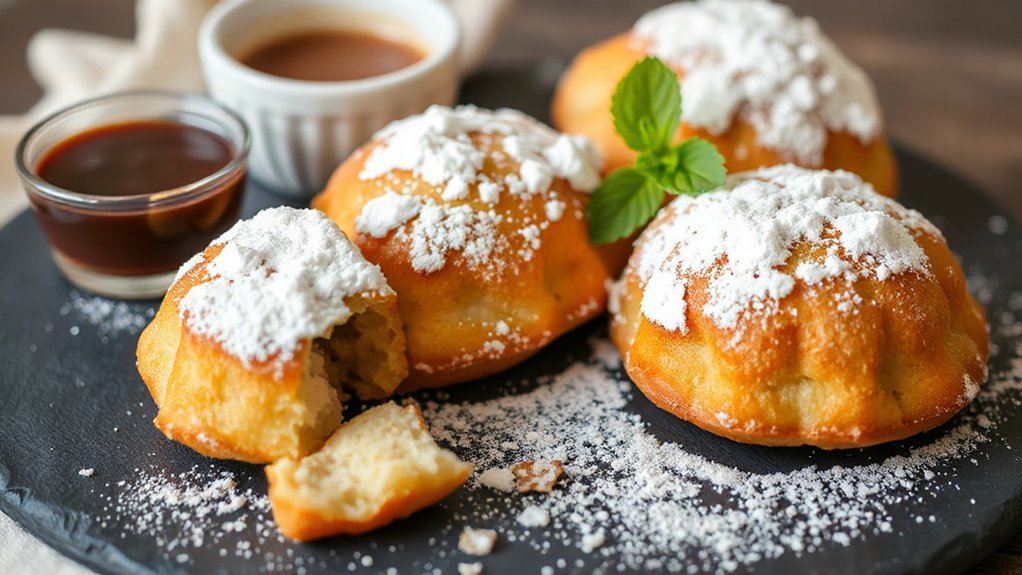
Pair your gluten-free, plant-based beignets with bright, simple accompaniments that highlight their airy texture and warm, pillowy center. Serve on a warmed platter dusted sparingly with powdered sugar and arrange beignets in a loose stack so steam escapes and edges stay crisp. Use minimal Plating Techniques: white plates for contrast, small ramekins with citrus curd or berry compote, and microgreens or mint sprigs for color. Keep portions bite-sized and provide espresso cups, chic iced coffee, or a citrusy tea for Beverage Pairings that cut richness. For casual brunches, line a basket with parchment and sprinkle sugar at the table for interaction. For dinner-party flair, present each guest a single beignet on a saucer with a tiny spoonful of dipping sauce and a lemon twist. You’ll get smiles, great photos, and a perfect balance of sweet, tart, and airy textures. Finish with a dusting of cinnamon for extra warmth.
Storage, Freezing, and Reheating Methods
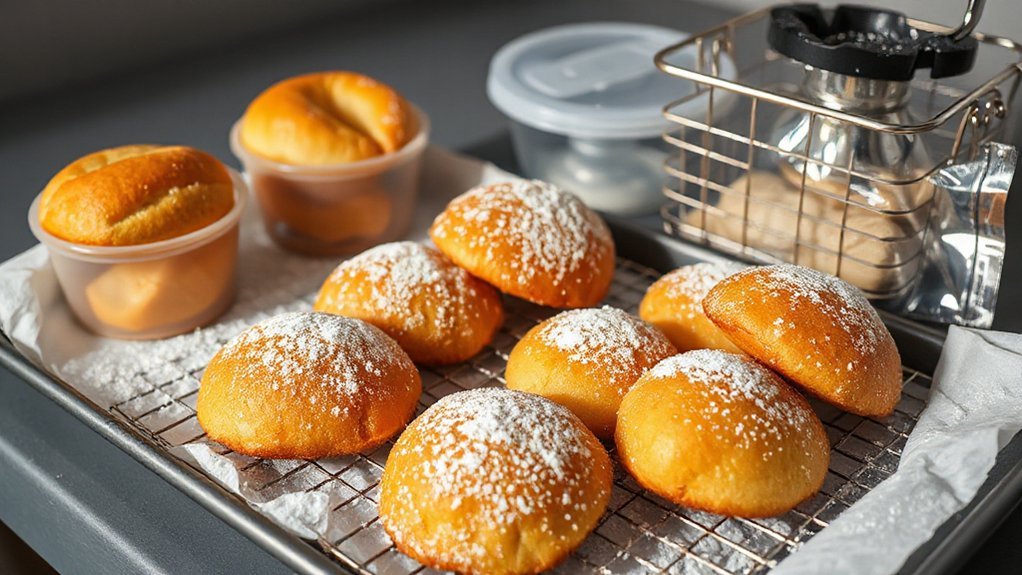
Storing your beignets the right way keeps them crisp-tender and makes reheating a breeze: cool them completely, then tuck leftovers into an airtight container with a paper towel to absorb moisture for short-term fridge storage, or freeze individual pieces flash-style on a baking sheet before transferring them to a sealed bag for longer life. When you pack beignets think about Packaging Options—use airtight containers for day-to-day, vacuum-seal or heavy-duty freezer bags for months. For Odor Control, keep scented foods away and seal containers tightly so flavors don’t migrate. Reheat gently in the air fryer or oven to revive exterior crispness without drying.
- Fridge: single layer, paper towel, 2 days.
- Freeze: flash-freeze, then zip bag, up to 2 months.
- Reheat: 320°F air fryer or 300°F oven, 3–6 minutes, flip once.
Enjoy warm, powdered-sugar goodness every time. Serve immediately after reheating for best texture and taste always.
Common Problems and How to Fix Them
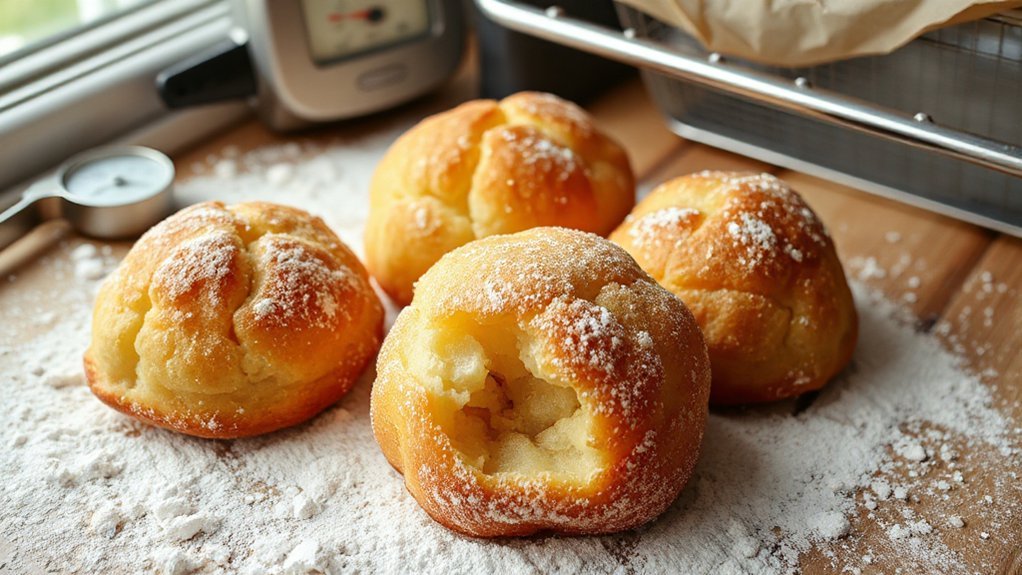
When beignets go wrong, you’ll usually spot problems with texture, color, or oiliness—and most have quick fixes you can use next time. If your beignets come out dense, you probably overworked or under-proofed the dough; let it rest until puffy and use gentle folding. Pale, doughy centers mean they need more time or a slightly higher temp—add 1–2 minutes or 10°F. If they brown too fast, lower the temp and cook longer. An oily result often comes from overcrowding the basket or flipping too soon; give each piece space and let the oil or air circulate. Avoid a powdered mess by dusting just before serving; use a fine sieve and tap gently. If your air fryer shows uneven cooking, clean the basket, check heating element, and rule out equipment failure before blaming the recipe. These fixes keep your beignets light, crisp, and ready for powdered sugar showers.
Conclusion
You’ve taken simple pantry staples and turned them into airy, powdered-sugar clouds—beignets that sing “Bonjour!” with each bite. You’ll love how quick the air fryer is, how crisp outside and pillowy inside they stay, and how easy swaps make them yours. Serve them hot, dunked, dusted, or shared; they vanish fast. Keep experimenting, keep smiling, and remember: good beignets bring people together, one sweet, steamy bite at a time always with love, every single morning.
About The Author