We’ll tell you the window that gets supper on the table fast—and tasty. Pat those fillets dry, slick them with a bit of olive oil and a sprinkle of garlic powder, paprika, salt, and pepper. Slide the fish skin-side down so it releases easy and stays moist.
Preheat five minutes at about 390°F for crisp edges and even browning. Then set the heat to 375°F and roast the fillets for a simple 8–12 minutes—most weeknight pieces land right in that range. Use a quick temp check: 125–130°F for medium-rare, 130–135°F for medium, 140–145°F for well done.
Don’t crowd the basket—give each piece room for good air flow. If a fillet’s frozen, we’ll show a tiny tweak later so you still skip flipping. Lemon, herbs, and a quick side—dinner’s served with hardly any hassle.
Key Takeaways
- Pat, oil, season—skin-side down for best release.
- Preheat 5 minutes near 390°F for crisp edges.
- Main window: 8–12 minutes at 375°F for most fillets.
- Use internal temps 125–145°F to hit your doneness.
- Leave space in the basket—air flow does the work.
- Frozen fillets need a small adjustment—no flip required.
Why Air Fryer Salmon Is a Weeknight Win Right Now
We lean on this trick when time’s tight—juicy, crisp-edged fillets without the drama. Fast and forgiving, the method often finishes in about 8–12 minutes at our go-to temp, and higher heat can shave that to 6–10 minutes for a quicker night.
Cleanup’s a breeze. No big pans, no splatter, and the basket washes up quick. That means more time at the table and less scrubbing later.
- Hands-off main—roughly a ten-ish minute run for most fillets.
- Reliable texture: crisp outside, tender inside—every single time.
- Versatile protein that pairs with greens, grains, or frozen veg.
- Works with fresh or frozen; tweak a minute or two and start checking early.
These recipes save you time and money. You get fancy-tasting dinner without fuss. We promise—you’ll reach for the air fryer more than once in a week.
Ingredients, Seasonings, and Tools You’ll Need
Pick fillets that are roughly an inch thick — they play nice with quick heat and finish evenly. We like two 4‑oz or 6‑oz pieces; pat them dry so seasonings cling and edges crisp.
Salmon choices and thickness
Choose wild-caught for a brighter, briny kick; farmed gives a milder, richer mouthfeel. Aim for ~1″ thickness so each fillet cooks at the same pace.
Pantry seasonings
A simple drizzle of olive oil, then a dusting of garlic powder, paprika, salt, and pepper is all you need for bold flavor. Keep a lemon nearby — zest or a squeeze brightens every bite.
Air fryer basics and tools
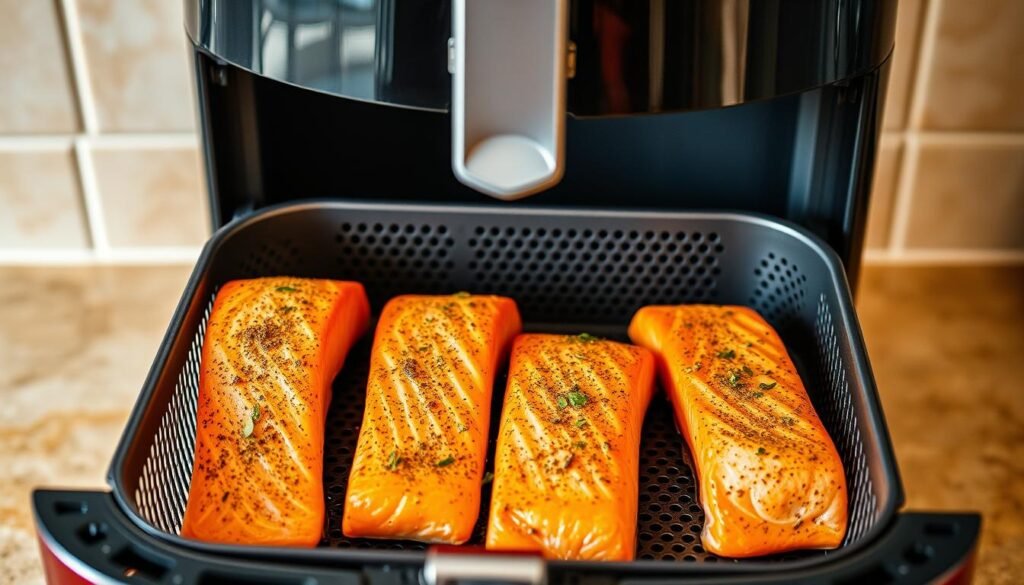
Preheat the fryer for about five minutes for crisper edges. If your fillets are skinless, line the air fryer basket with foil but leave the edges loose so hot air can circulate.
Bring simple tools: tongs, a small brush for oil or glaze, and a thermometer for exact doneness. Give the basket a quick spritz if you worry about sticking, and space each fillet so air can swirl.
Optional flavor swaps
- Swap butter for oil for a silkier, steakhouse vibe.
- Try maple + mustard or honey + Dijon (a splash of soy if you like) for glossy, sweet-savory glaze.
- Feeling feisty? A Cajun rub adds heat and big flavor.
Quick note:Two small fillets, a pat with paper towels, and these few staples set you up for fuss-free fryer salmon that tastes like you fussed all evening.
Prep Like a Pro: Pat Dry, Oil, and Season
Start strong: dry those fillets until they squeak before any oil or spice touches them. A dry surface lets the top brown and the edges get crisp without steaming. We keep this step quick—pat, flip, pat again.
Brush lightly with olive or melted butter so seasonings cling and heat can kiss the top. Sprinkle garlic powder, paprika, salt, and pepper on both sides and press gently so the rub sticks.
Skin-on vs skinless and spacing in the basket
Lay skin-side down when keeping the skin. It acts as a shield and helps release after cooking. For skinless fillets, set a small foil patch beneath each piece but leave the basket edges open so hot air circulates.
- Pat dry till nearly squeaky.
- Thin coat of oil—no puddles.
- Season both sides; press lightly.
- Space fillets for even browning.
- Preheat the basket 5 minutes for better release.
| Prep Step | Action | Why It Matters |
|---|---|---|
| Dry Fillets | Pat until surface is dry | Prevents soggy edges; boosts browning |
| Oil & Season | Brush with olive or butter; add garlic powder, paprika, salt, pepper | Helps spices stick and flavor penetrate |
| Placement | Skin side down or foil for skinless; leave gaps | Protects flesh and ensures hot air flow |
| Preheat | Warm the basket ~5 minutes | Improves crust and easy release |
Final tip: Keep your hands light—too much oil makes the rub slide and can smoke. If glazing, add it near the end so sugars don’t burn. Watch the minutes, but trust your eyes and a quick temp check—those two will save supper.
how long to cook salmon in air fryer at 375
Plan for a short 8–12 minute run and you’ll get flaky, juicy results almost every time. Set fillets skin side down so the delicate flesh stays protected while hot air crisp-kisses the top.
Visual cues beat guesswork: the flesh will shift from glossy and translucent to an opaque pink and will flake easily with a gentle fork nudge. If the edges look done but the center feels shy, let it go another minute — those extra minutes matter.
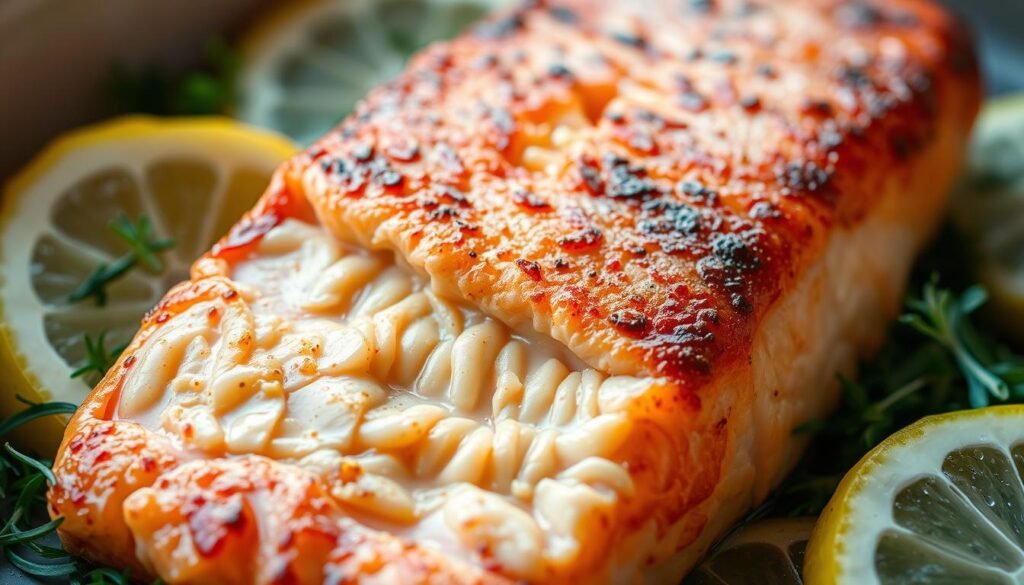
- At 375°F most salmon fillets finish in 8–12 minutes — check earlier for thinner pieces.
- No flip needed — the circulating air cooks evenly and keeps pieces intact.
- Use a quick-read thermometer for precision: 125–130°F medium-rare, 130–135°F medium, 140–145°F well done.
- Space the basket so air can move; crowded fish steams, not crisps.
- Rest 1–2 minutes before serving so juices settle and the texture evens out.
Internal Temperature Guide for Perfect Doneness
Aim for a number, not a minute, and you’ll hit buttery, flaky fish every time.
Think temps first: Medium-rare sits at 125–130°F. Medium lives at 130–135°F. Well done is 140–145°F. These targets keep the texture just right.
Practical checks and a gentle probe
Slide a probe in from the side into the thickest part of the fillet. That keeps the top intact and holds juices. Check 1–2 minutes before you expect it done—carryover heat will nudge the number up.
- Think in temps, not just minutes—your perfect bite lives between 125°F and 145°F.
- Use the flake test if you lack a thermometer—big, moist flakes mean ready.
- Thin ends cook faster—buy even pieces or tuck skinny bits under so they don’t overdo.
- Oily salmon stays forgiving, but precise temps make it downright buttery.
Quick note: Many units finish near 6–10 minutes at higher heat, or 8–12 minutes at our go-to setting, depending on thickness. Pull at target, rest a minute, and plate that goodness.
Thickness Matters: Adjusting Air Fry Cook Time
Thickness makes the biggest difference — a good slice cooks steady from edge to center.
Aim for about a 1-inch fillet. That thickness hits the sweet spot; it browns well and stays juicy all the way through.
Thinner cuts need love early. Start checking a few minutes ahead so they don’t dry out. Thicker steaks often need an extra minute or two—then test again.
If a piece tapers, tuck the skinny end under. That simple trick helps the whole fillet finish at the same time.
When to peek for doneness
- Thin pieces: check 2–3 minutes early.
- Standard 1-inch fillets: follow the main window, then probe.
- Thick cuts: add a minute, retest, repeat as needed.
- Use the side-in thermometer technique to protect the top and keep flakes pretty.
| Thickness | Adjustment | Why it matters |
|---|---|---|
| Thin (<1″) | Check 2–3 minutes earlier | Prevents overcooking and dryness |
| 1-inch | No change; follow standard window | Even cooking and juicy center |
| Thick (>1″) | Add 1–2 minutes, then test | Ensures heat reaches the center |
Final note: Keep pieces similar in size, preheat the basket, and learn your unit’s quirks. Consistency makes great fryer salmon repeatable every time.
Skin Side Down: Texture, Protection, and Easy Release
Set each fillet skin-side down so the flesh stays sheltered while the top gets that golden crust. We like this little move — it protects delicate meat and helps the piece lift free from the tray when it’s done.
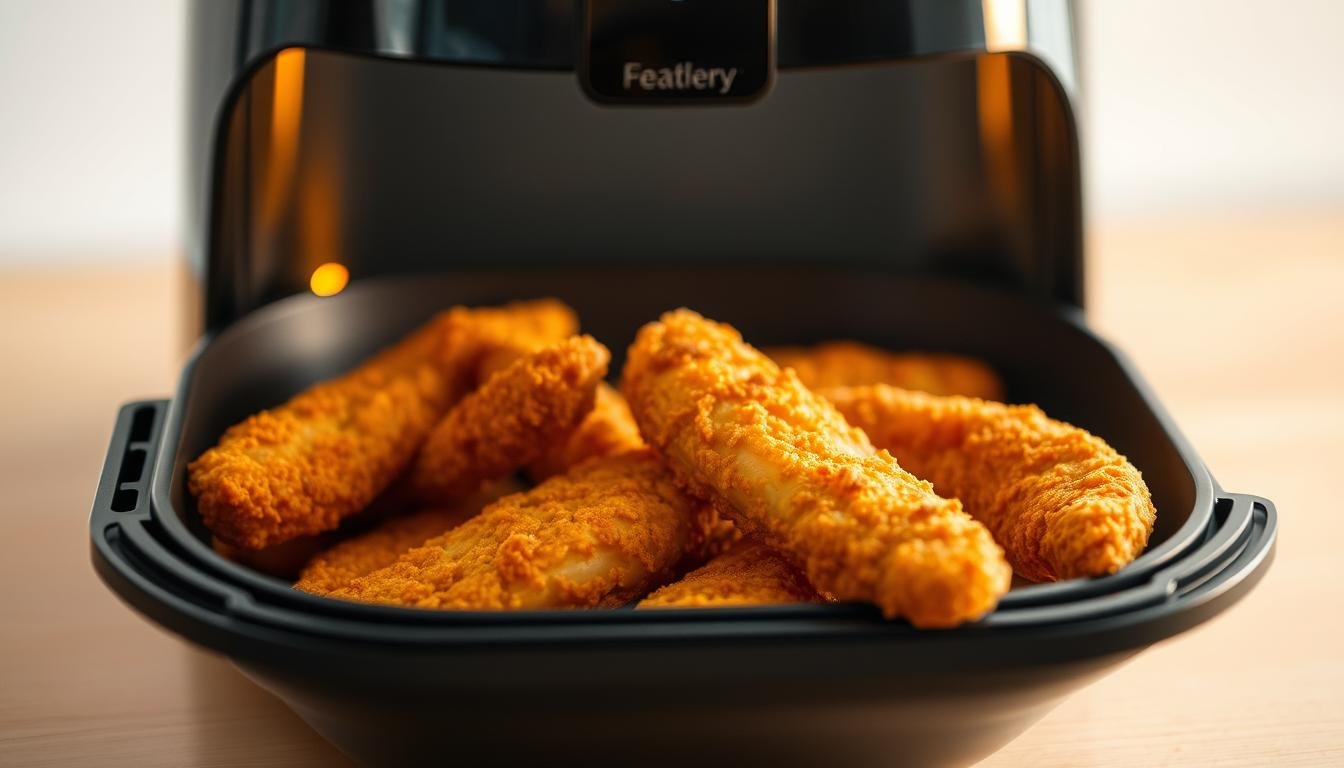


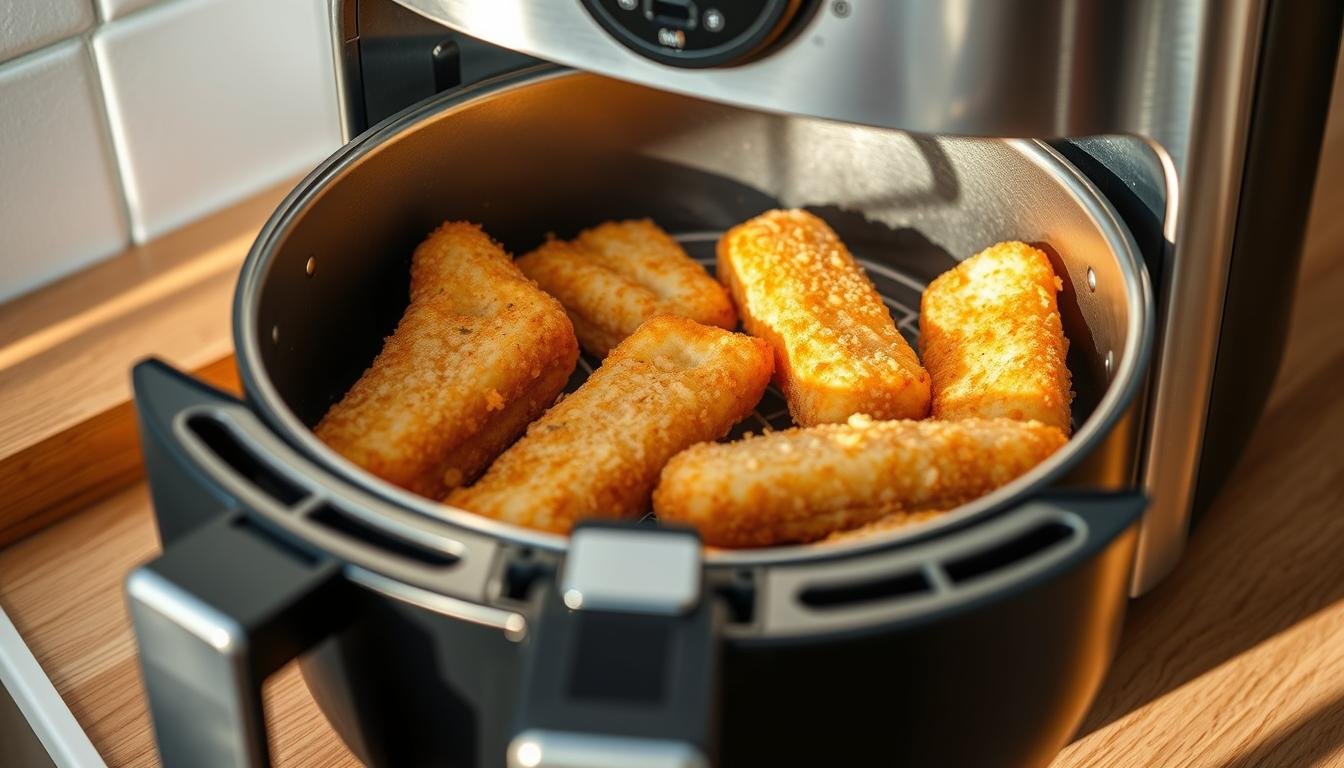
If you want crisp skin, leave it on and keep the surface dry. High heat and a dry pat will give you that crackle. For skinless cuts, tuck a small foil patch under each fillet and leave basket edges open so hot air can swirl.
- Cook skin side down for protection and an even crust.
- The skin acts like a natural nonstick — pat dry and preheat first.
- Don’t crowd the basket; spacing lets hot air crisp the edges.
- No flip needed — the fryer’s circulation cooks evenly without roughing up flakes.
- Season the flesh side a touch heavier; the skin side needs less.
- If a piece sticks, give it 30 seconds more — proteins often release as they finish.
Keep it simple: good prep and a skin-down start make serving easy as butter. We promise — you’ll smile when it slides right onto the plate.
Cooking from Frozen: Timing Tweaks and Two-Step Method
No thaw? No problem. Preheat about five minutes, then add a minute or two to your usual window and start checking early. That small bump gives frozen fillets a fair shot at a flaky finish without drying the edges.
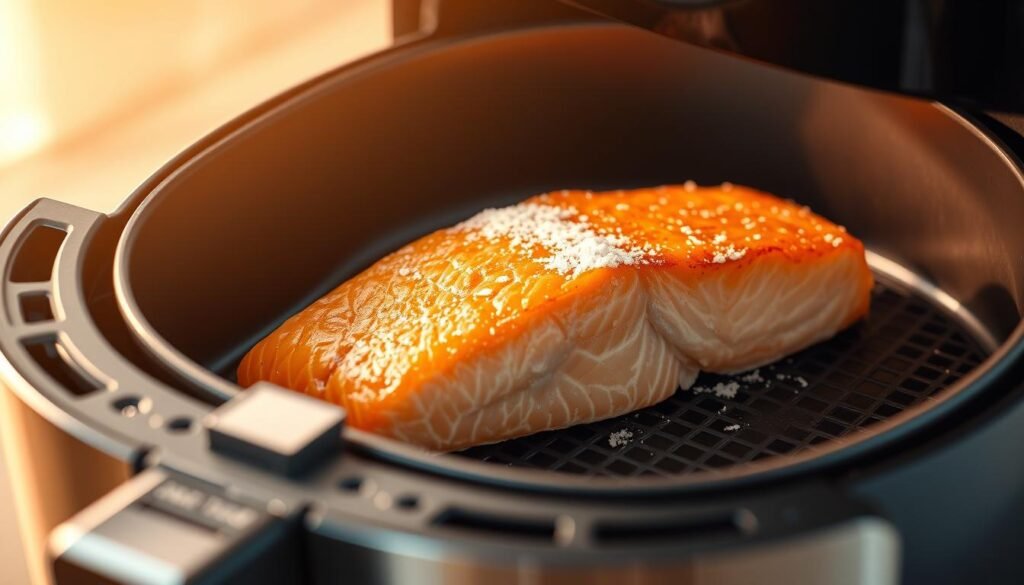
If pieces are icy on top, run cool water over sealed fillets, pat dry, oil lightly, then season with salt, pepper, garlic powder, and paprika. For heavy ice, try a quick two-step: air fry briefly to thaw the surface, pull, season, then return to finish.
- Give each fillet space in the fryer basket—crowding steams not crisps.
- Don’t flip—circulating hot air cooks evenly and keeps fragile fish intact.
- Check flaking and opacity at the thickest part; a fork should slide in easily.
- Aim for your usual internal temps (125–145°F) just like fresh pieces.
Quick tip: For skinless frozen cuts, tuck a small foil strip beneath each piece but leave basket edges open so air can swirl. That’s our simple trick for a reliable fryer salmon finish every time.
Serving Ideas: Lemon, Herbs, and Easy Sides
Brighten this dish right at the table with a loud squeeze of lemon and a handful of fresh herbs. A quick citrus finish wakes up the rich fish and makes the whole plate sing.
We like to keep the sides easy and forgiving. Toss a quick salad, steam or roast a tray of vegetable favorites, or scoop fluffy rice for a filling dinner.
Pair with salads, veggies, or a simple starch
- Make it a plate: mixed greens or a lemony salad, roasted sweet potatoes, or quinoa.
- Set-and-forget sides: fryer-roasted Brussels sprouts or sweet potato wedges while the fillets rest.
- Cold option: leftover pieces are perfect over grain bowls or tossed greens for lunch.
Finishing touches: lemon squeeze, dill, parsley
Finish with a bright lemon squeeze and sprinkle dill or parsley. A little olive oil drizzle gives shine and locks in juices.
| Serving Tip | Why it Works | Best Match |
|---|---|---|
| Lemon + herbs | Brightens rich flavor | Dill or parsley |
| Garlic & paprika on fillets | Adds warm, savory notes | Simple green salad |
| Set out wedges & seasonings | Lets everyone customize | Flaky salt & extra pepper |
Leftovers, Storage, and Reheating Without Drying Out
Tuck cooled fillets into airtight containers and your weekday meals just got easier. Chill them quickly and store in the fridge for up to three days. For longer holds, wrap tight and slide into the freezer—thaw overnight in the fridge for the best texture.
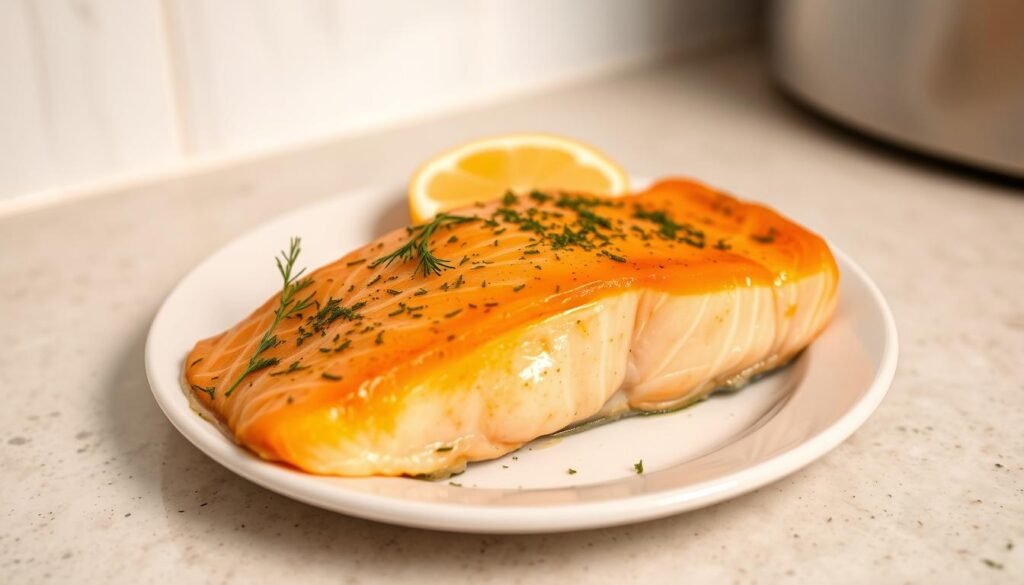
Fridge and freezer tips for fillets
Cool first, then seal. Let pieces reach room temp no more than 30 minutes, blot any excess oil, then chill in an airtight container. Label with the date so you don’t guess later.
Freeze wrapped snug in foil or plastic, then into a freezer bag. Thaw slowly overnight before you plan your next salmon recipe.
Reheat with care
Air fryer is our go-to for reheating. Set the temperature to 350°F and warm for 3–5 minutes—check early so it stays moist. A tiny drizzle of oil refreshes the surface and helps crust return.
Don’t stack pieces in the air fryer basket; leave gaps so hot air circulates. Keep skin-side down when reheating skin-on fillets so the flesh won’t stick.
Cold uses and quick serving ideas
Leftover fish is a flavor workhorse. Flake cold fillets over a salad or grain bowl. Tuck pieces into tacos, or schmear on a bagel with cream cheese and dill for a simple serving that feels special.
- Cool, airtight storage — up to 3 days in the fridge.
- Reheat at 350°F for 3–5 minutes in the air fryer; don’t crowd the fryer basket.
- Freeze tightly; thaw overnight for best texture.
Conclusion
Here’s the short version: prep right, mind thickness, and trust the temperature. For a reliable fryer salmon recipe aim for 8–12 minutes at 375°F with skin-side down. That window, plus a brief preheat, gives crisp edges and tender flesh.
Keep it simple: a drizzle of olive, garlic, paprika, salt, and pepper, then a squeeze of lemon at serving. No flip needed—circulating air does the heavy lifting. Skinless pieces? Tuck foil under each fillet but leave edges open for airflow.
Use a quick-read thermometer (125–130°F for medium-rare, 130–135°F medium, 140–145°F well done). Reheat gently at 350°F for 3–5 minutes. This recipe is forgiving, fast, and perfect for weeknight cooking—y’all got this.
FAQ
What’s the basic cook time range for salmon at 375°F in an air fryer?
Do we need to preheat the air fryer before placing the fillets inside?
Should the fillets be skin-on or skinless for best results?
How do we adjust time based on thickness?
What internal temperature should we target for perfect doneness?
How do we check temp without ruining the fillet?
Can we cook salmon from frozen in the air fryer?
How do we season frozen fillets so spices stick?
Do we need to flip fillets while air frying?
What oils and seasonings work best for air fryer salmon?
Any tips for preventing sticking in the air fryer basket?
How should leftovers be stored and reheated without drying out?
What are quick serving ideas and garnishes?
Can we use foil or parchment in the basket?
What are common signs the salmon is overcooked?
About The Author