You can make lean, protein-packed beef jerky in your air fryer using top‑round or eye‑of‑round, simple marinades (soy, honey, garlic, smoked paprika) and 1/8–1/4‑inch slices for even drying. Chill meat before slicing, marinate 4–24 hours, then dry at about 160–175°F (70–80°C) for 2–4 hours, flipping once. Cool, store airtight or vacuum seal, and reheat gently. You’ll keep flavors flexible—teriyaki, chipotle, or citrus—and if you want tips on timing, safety, and more tricks, keep going now.
Ingredients and Essential Tools
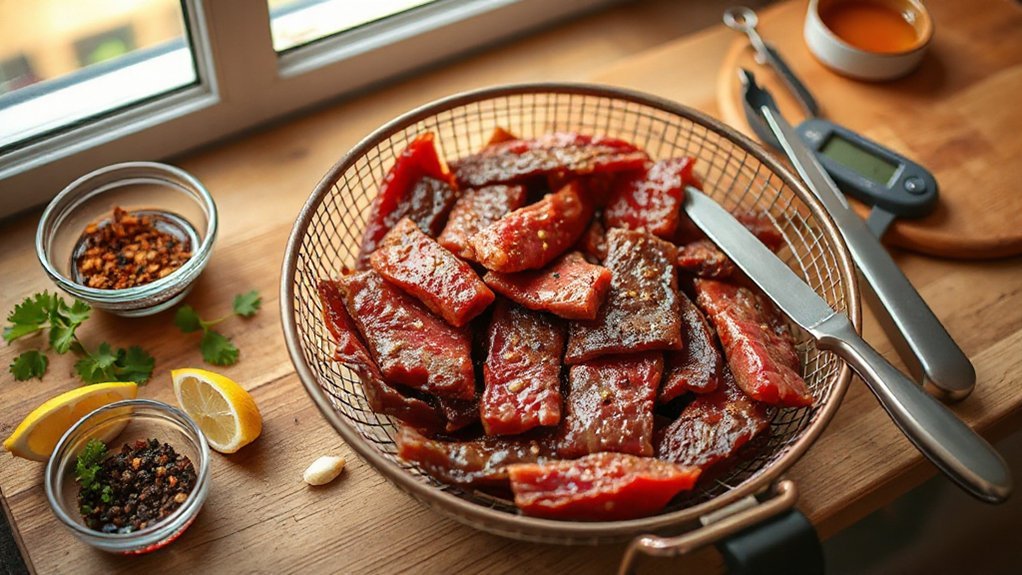
You’ll want to gather your ingredients and a few simple tools before you start—lean beef (like top round or flank), a savory marinade (soy sauce, Worcestershire, a touch of brown sugar, garlic and onion powder, salt, pepper, and smoked paprika), and any heat or sweetness you prefer. You’ll also need an air fryer, a sharp knife and sturdy cutting board, plus paper towels to pat the meat dry. Add resealable bags or a shallow dish for marinating, a wire rack if you like extra airflow, and an instant-read thermometer to check doneness. Don’t forget aromatic herbs if you want a fresh layer of flavor, and Measuring tools—measuring spoons and cups—to keep your marinade balanced. Clean tongs and a tray for resting finished strips make finishing simple. With these basics lined up, you’ll be set to make jerky that’s consistent, flavorful, and quick to customize every time with ease.
Choosing the Right Cut of Beef

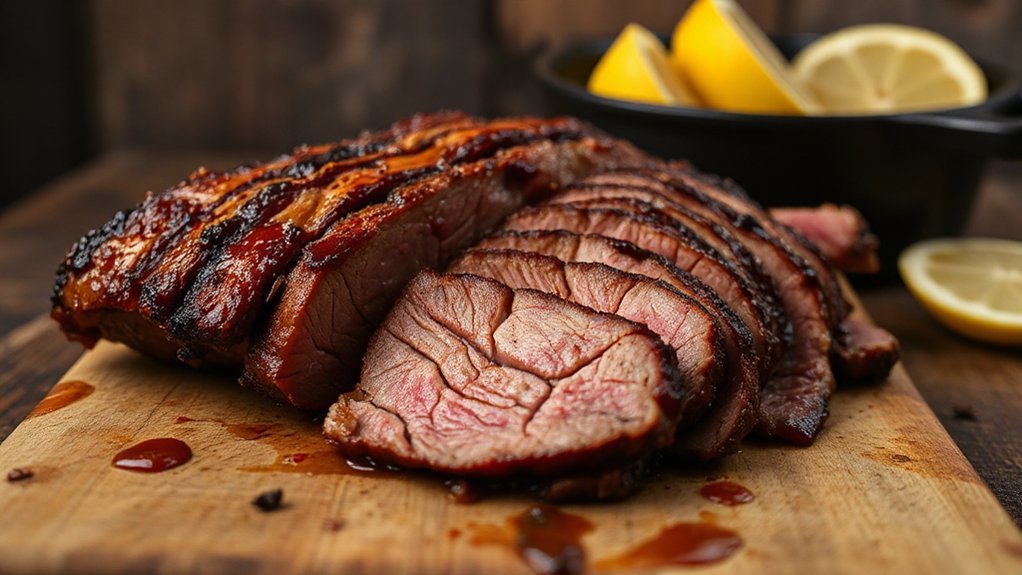
You’ll want to pick a lean cut for long-lasting, shelf-stable jerky, though a little marbling can add extra flavor if you plan to eat it quickly. The best choices are eye of round, top round, flank, or sirloin tip because they slice cleanly and have minimal fat. Trim any visible fat and cut strips about 1/8 to 1/4 inch thick so they dry evenly in the air fryer.
Lean Vs Marbled
Although a bit of marbling boosts flavor and tenderness, lean cuts give you the classic chewy, shelf-stable jerky you want, so pick based on whether you prioritize taste or storage and texture. If you love richer mouthfeel, marbled meat delivers juiciness and a more tender bite, but it can shorten shelf life and smear during slicing. Lean meat dries reliably, yielding that firm, chewy snap most jerky fans expect. For a quick texture comparison, think ribbon versus rope: marbled feels softer, lean feels denser. Understand fat chemistry too; fat doesn’t dry like muscle and can oxidize, affecting flavor over time. You can blend slightly to balance both goals, but keep sanitation and proper curing in mind for safety and longevity and better texture results.
Best Cuts for Jerky
Now that you’ve weighed lean versus marbled, picking the right cut gets a lot easier: aim for muscles with low fat and long grain so strips slice clean and dry evenly.
Choose top round, bottom round, eye of round, or sirloin tip — they’re lean, affordable, and reliable. Consider Breed differences when you want richer flavor; grass‑fed often tastes stronger. Do a simple Price comparison at the butcher or store to balance flavor and budget. Remember connective tissue will chew differently, so pick whole muscles. The table below highlights common cuts and why they work for jerky.
| Cut | Why it works |
|---|---|
| Top Round | Lean, consistent grain |
| Eye of Round | Very lean, great drying |
| Sirloin Tip | Tender, flavorful |
| Bottom Round | Budget‑friendly, reliable |
Enjoy crafting your jerky.
Trim and Slice Thickness
Trimming away silver skin and excess fat gives you a cleaner, safer jerky base and makes slicing easier. When you remove connective tissue, your slices stay uniform and dry evenly, improving presentation aesthetics and texture. Aim for 1/8–1/4 inch thickness; thinner yields crispier jerky, thicker keeps chew. Use a sharp knife and chill the meat for neater cuts. Balance slice thickness with yield optimization so you don’t over-trim and waste good meat. Trust your eye, but measure until you get consistent results. Small adjustments change flavor concentration and mouthfeel, so experiment with a single batch. Enjoy the process—perfect slices make your homemade air fryer beef jerky look and taste like a pro’s.
- Joyful crunch
- Proud presentation
- Satisfying share
- Confident craft
Preparing and Slicing the Meat
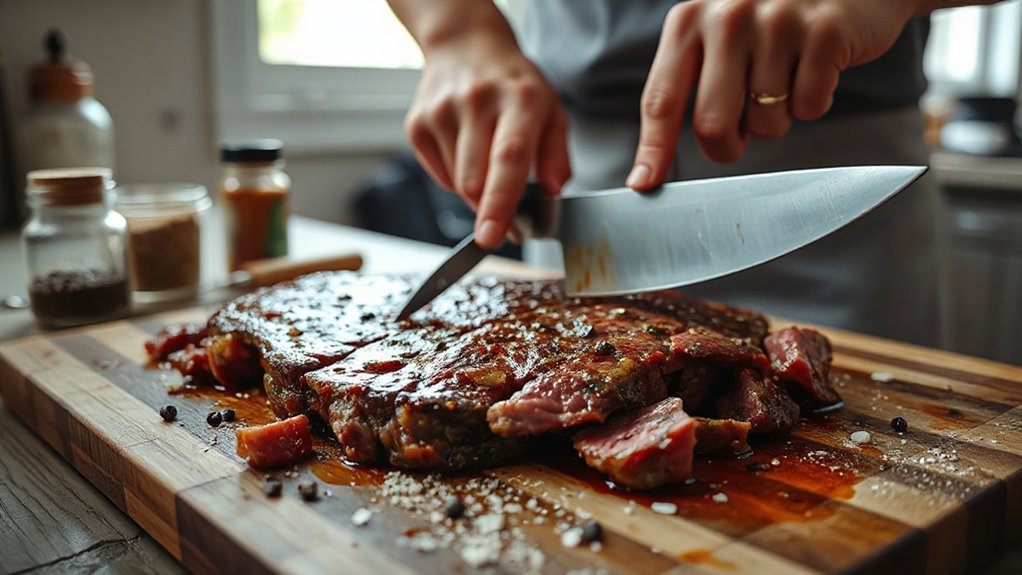
Choosing a lean cut like top round, flank, or eye of round sets you up for great jerky; trim visible fat because it doesn’t dehydrate well and leaves an off taste. Rinse and pat the meat dry, then chill it for 30–60 minutes; slightly firm meat slices cleaner. For consistent strips, slice against the grain for tenderness or with the grain for chewier bites. Prioritize slicing safety: use a stable cutting board, non-slip mat, and keep fingers curled. Regular blade sharpening makes cleaner cuts and reduces slips, so sharpen before you start. Aim for 1/8–1/4 inch thickness; use a ruler or guide if you want uniform pieces that dry evenly. If you prefer, partially freeze the meat for 20–30 minutes to make thin slicing easier. Lay slices flat on trays without overlapping to allow steady airflow in the air fryer. Store trimmed trimmings for cooking later; discard excess fat.
Marinade Recipes and Flavor Variations
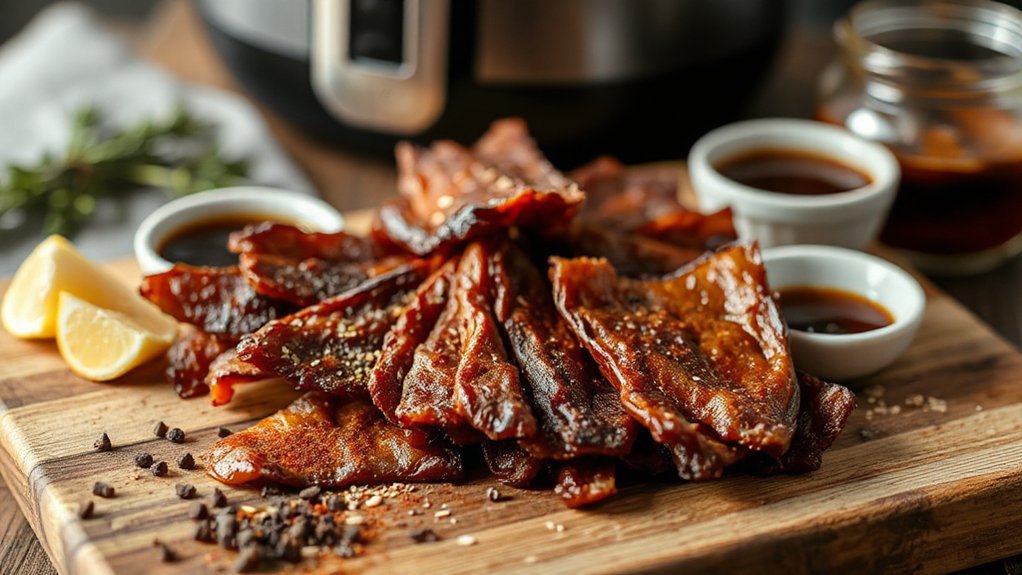
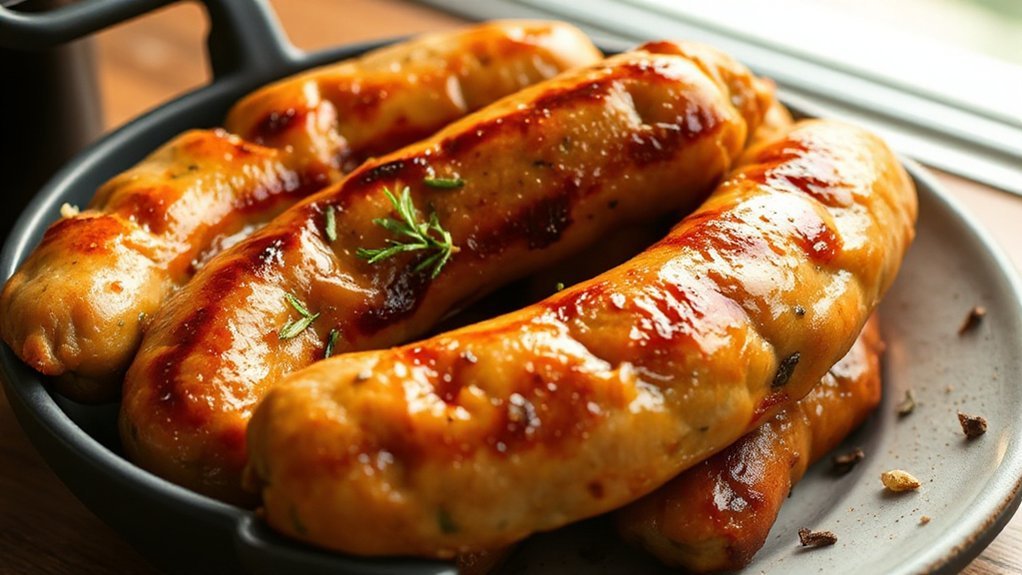
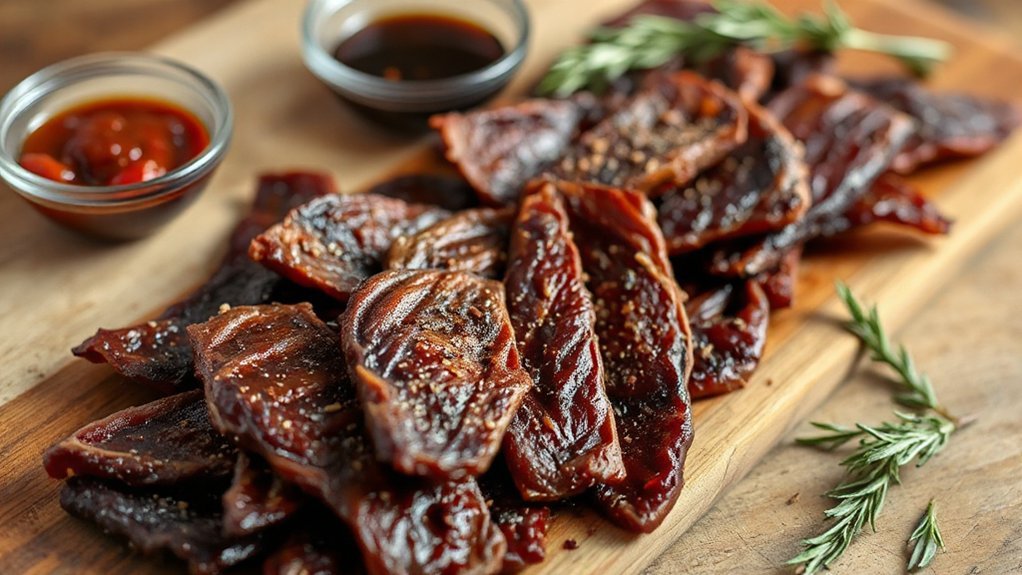
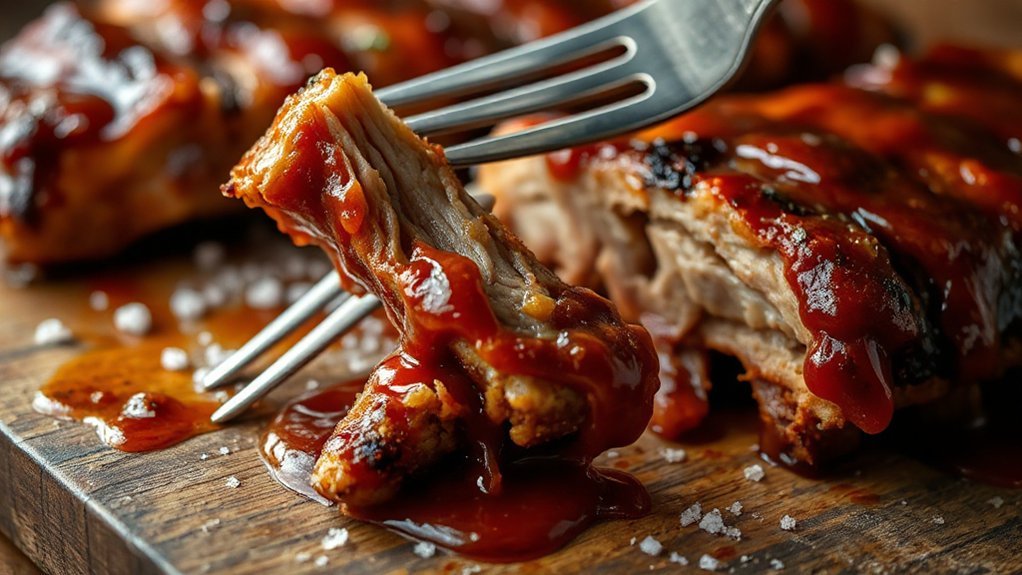
Balancing salt, sweet, acid, and heat will make your jerky marinade sing—start with soy sauce or tamari for umami, add a sweetener like brown sugar or honey, toss in an acid (apple cider vinegar or lime) to brighten, and layer garlic, onion powder, and black pepper with optional chili for kick. From here, customize: try Regional Pairings—teriyaki with ginger and sesame, smoky chipotle and cumin, citrus and cilantro, or miso and mirin. If you like experimenting, use Nontraditional Sweeteners like maple, coconut sugar, or date syrup to add complex sweetness. Keep proportions balanced so flavors enhance rather than overpower the beef. Whisk, taste, and adjust; you’ll learn what sings with your cut. Use the list below to spark joy and make jerky personal and exciting.
- Comforting: sweet‑savory nostalgia.
- Bold: smoky, spicy thrill.
- Bright: zesty, tangy uplift.
- Adventurous: exotic, unexpected notes.
Mix boldly and share proudly with friends often.
Marinating Tips and Timing
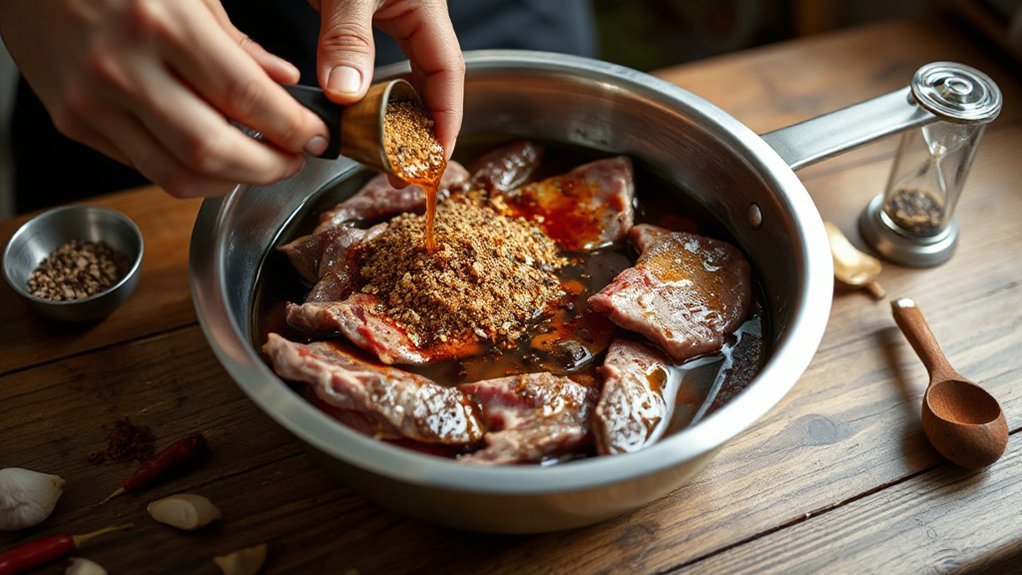
Pick a lean, uniform cut and slice it to a consistent thickness so your jerky cooks evenly. Balance salty, sweet, acid, and heat in your marinade so flavors penetrate without overpowering the meat. Aim for 4–24 hours depending on thickness—shorter for thin strips, longer for thick cuts—and always chill while marinating.
Meat Cut and Thickness
Most people go for lean cuts like top round, eye of round, or sirloin tip because they dry evenly and give you chewy, flavorful jerky without excess fat; aim for slices about 1/8 to 1/4 inch thick so marinades penetrate well and drying time stays predictable. You’ll also appreciate how these cuts echo regional traditions and butchery history, giving your jerky real character. Slice with or against the grain depending on desired chew, keep thickness uniform, and lightly freeze to ease slicing. Monitor drying closely — thickness determines timing. Enjoy experimenting with texture. Trust your instincts and have fun today.
- Crisp excitement when you bite.
- Proud warmth of homemade craft.
- Nostalgic comfort in every chew.
- Confident satisfaction sharing with friends.
Marinade Ingredient Balance
When you mix your marinade, keep a simple ratio in mind—about 2 parts soy (or other salty base) to 1 part sweetener and a splash of acid—to get savory depth, balanced sweetness, and brightness without overpowering the meat. You’ll want supporting aromatics—garlic, ginger, pepper—plus a touch of oil to carry fat-soluble flavors; using an Emulsion Technique (whisking oil into the mix) helps coat meat evenly and improves Flavor Persistence as jerky dries. Salt controls structure and safety, so don’t skimp, but adjust saltiness for soy alternatives. Taste the marinade and tweak in small steps: more acid for lift, more sweet for balance, more heat for kick. Keep it straightforward so your beef absorbs clear, consistent flavor. Store leftovers chilled and reuse within safe limits.
Marinating Time Guidelines
After you’ve dialed in your marinade balance, timing determines how deeply those flavors sink into the meat and how the texture turns out. Aim for 4–24 hours depending on slice thickness and intensity. Short marinades (4–6 hours) give subtle flavor and firmer chew; overnight (12–18 hours) hits a sweet spot for most. For bold results push to 24 hours, but avoid over-marinating. Use timeline planning and prep scheduling to fit jerky into your week: plan slices, fridge space, and air fryer time so flavors develop without rush.
- Quick: 4–6 hours — light, lively.
- Balanced: 12–18 hours — tender, flavorful.
- Bold: 24 hours — punchy, deep.
- Safety: <48 hours — avoid over-marinating.
Trust your nose and taste; adjust next batch confidently.
Air Fryer Settings and Cooking Technique
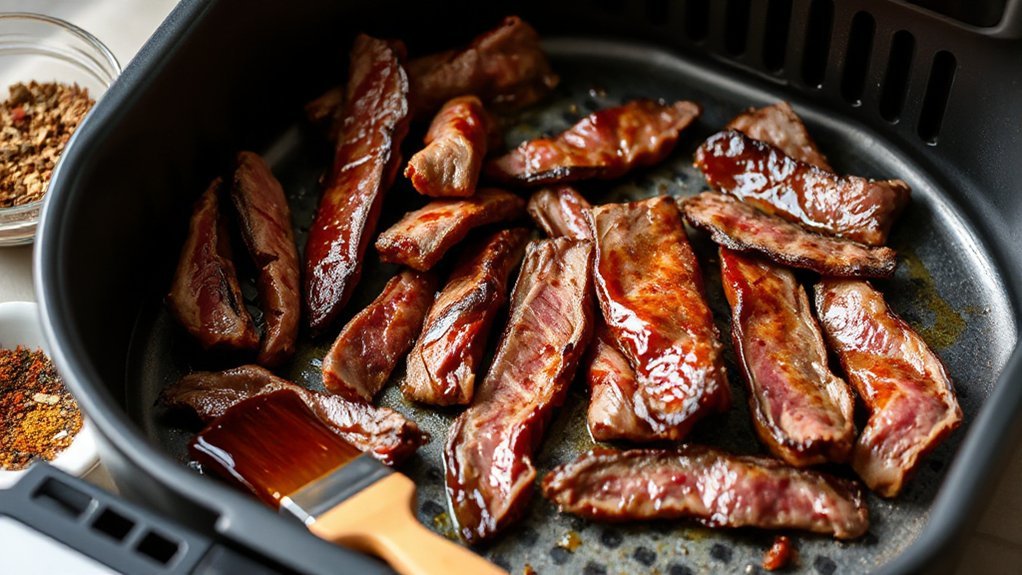
Usually you’ll set the air fryer to a low, steady temperature—around 160–175°F (70–80°C)—so the meat dries instead of cooks. Start with temperature calibration using an oven-safe probe or thermometer, since air fryers vary; that guarantees consistent results. Arrange slices in a single layer with space between them so Airflow dynamics circulate heat evenly; flip halfway to promote uniform drying. Expect total time around 2–4 hours depending on thickness and lean cut; thinner strips finish faster. Check for pliable, dry interiors without crisp brittleness — they should bend and crack slightly. If edges brown too quickly, lower the temp by 5–10°F and extend time. Patience beats high heat here: slow, steady drying preserves flavor and texture. Use the tray or racks that came with your unit, avoid overcrowding, and monitor during the last 30 minutes to nail your preferred chew. Adjust seasoning after, but not during, the cook process.
Storage, Reheating, and Shelf Life
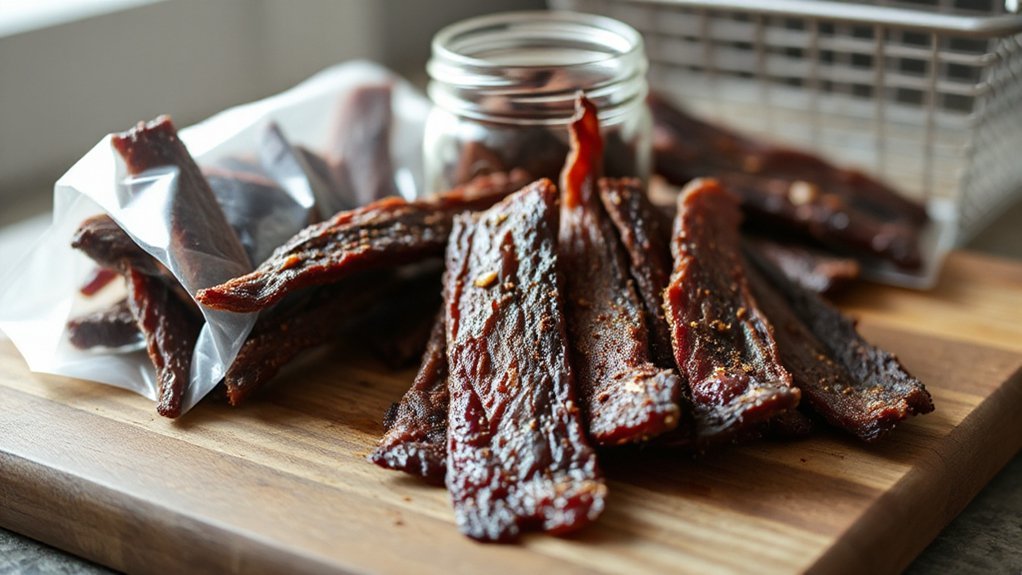
While properly dried jerky can sit at room temperature for short-term snacking, you’ll get the best shelf life by cooling it completely and storing it in airtight packaging. Once cooled, divide into portions and consider vacuum sealing for long-term freshness; that removes air and keeps flavors bright. If you’re keeping jerky a week or two, airtight jars or resealable bags in a cool, dark place work fine. For longer storage, freeze vacuum-sealed packs.
Cool fully, portion and airtight-seal jerky for best freshness; freeze vacuum packs long-term.
If you want to refresh chewy slices, try gentle reheating methods like a low oven or warm skillet to loosen fibers without overcooking; avoid microwaves that can dry meat. Always check for off smells or mold before eating.
- Joy of a perfectly preserved snack.
- Relief knowing it won’t go stale.
- Pride in homemade longevity.
- Excitement for ready-to-eat protein.
Label packs with date and use within recommended times for safety and taste.
Serving Ideas and Nutrition Notes
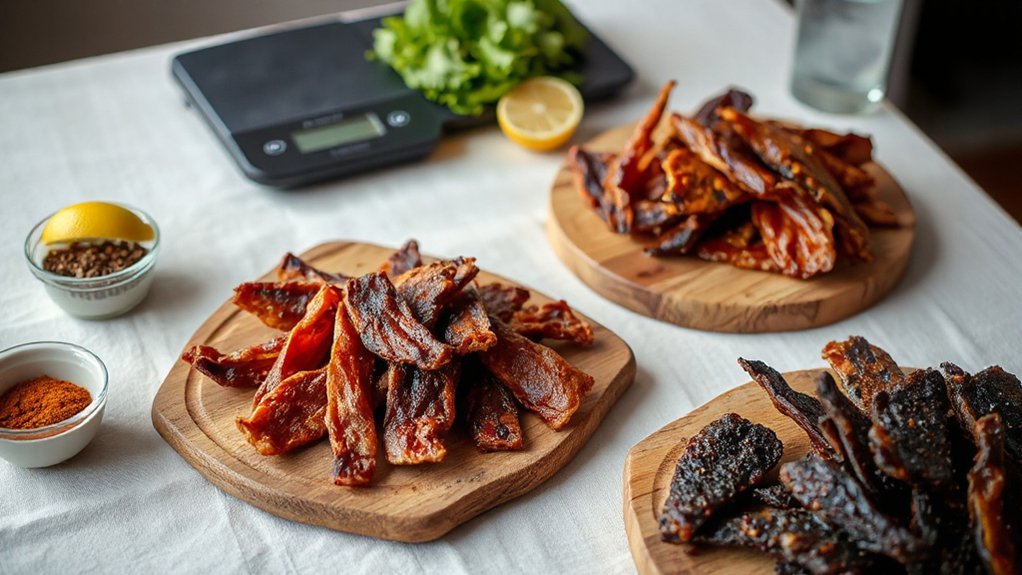
If you want to enjoy your air-fryer beef jerky beyond snacking, try it thinly sliced over salads, chopped into grain bowls, tucked into sandwiches or wraps, or served with mustard, pickles, or a yogurt-based dip for contrast. You can cube it for skewers, crumble it into omelets, or add strips to charcuterie board alongside cheese and olives. For Pairing suggestions, match bold marinades with sharp cheeses and lighter, savory jerky with fresh vegetables or fruit for balance. Think texture and salt — jerky’s chew and umami work well with crunchy greens and creamy dips. For Nutrition Notes, remember jerky is protein-dense and low in carbs, but sodium varies by recipe. A basic Calorie breakdown for a 1-ounce (28 g) serving is roughly 70–90 calories and 8–10 g protein, depending on cut and marinade. Adjust portion sizes to fit your goals and enjoy creative combos that keep snacks interesting.
Conclusion
You thought jerky meant store-bought mystery strips? Turns out you can be the jerk(ily) heroic chef—slicing, marinating, and air-frying flavors that actually taste like something you chose. You’ll impress friends, confuse snack aisles, and save calories without trying too hard. Keep experimenting: smoky, spicy, sweet—your kitchen’s now a tiny artisanal jerky factory. Irony’s delicious: making a humble strip feel gourmet proves snacks can be simple and spectacular. Who knew chewing jerky could feel so triumphant?
About The Author