You can get healthy, crisp frozen mixed vegetables in about ten to twelve minutes using an air fryer—no thawing needed. Preheat, toss veggies with light spray or teaspoon of oil and spices, spread in a single layer, then shake once midway for even browning. Lower temperature for delicate pieces, add two minutes for hearty chunks, and rest so edges stay crisp. Keep going and you’ll pick up timing, seasoning, storage, reheating, and simple serving tips.
Why Air Frying Frozen Mixed Vegetables Works So Well

Because the air fryer blasts hot, circulating air at high speed, it crisps the edges of frozen mixed vegetables without turning them soggy, so you’ll get that roasted texture in minutes. You don’t need to thaw first; those ice crystals vaporize quickly, steaming the interior just enough while air circulation promotes browning on the surface. Toss the veggies with a little oil and seasoning so they brown evenly instead of drying out. Shake the basket once or twice to expose all sides to the hot flow, and you’ll reduce steaming pockets that leave bits limp. The result is tender centers and crisp exteriors, with minimal fuss and faster cook time than oven roasting. This method keeps nutrients locked in and cuts added fats, so you can make a healthy, satisfying side or mix into bowls and salads without extra prep. It’s perfect for busy nights and simple meals.
Best Temperatures and Timings for Different Veggie Mixes
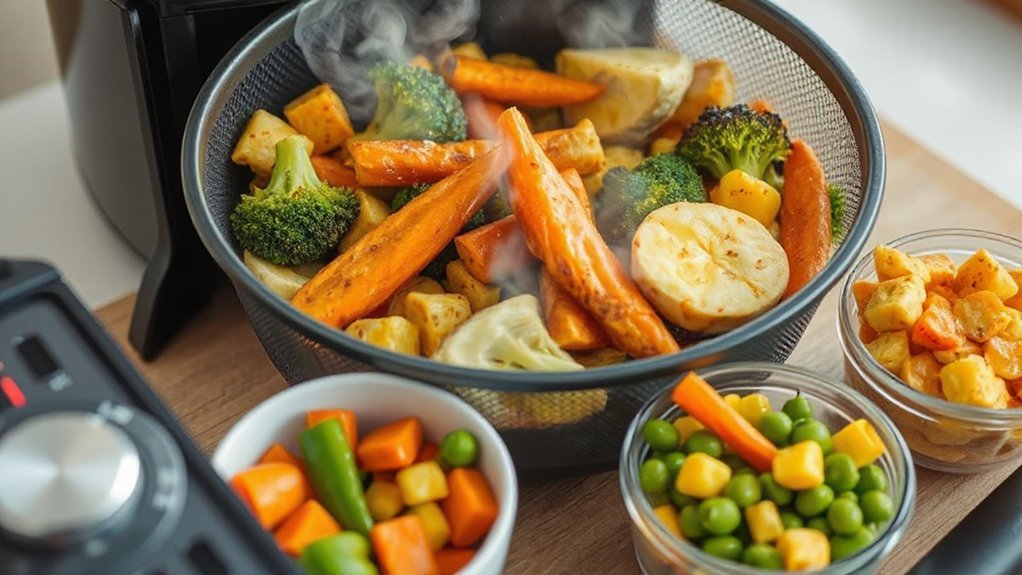
Kick things off at the right temp and you’ll get consistent results: for most frozen mixed veg set the air fryer to 375–400°F—use 400°F for a crispier finish and 375°F if you want a bit more tenderness. Start with 10–12 minutes shaking once at the halfway mark; smaller peas-and-carrots mixes often finish in 8–10 minutes, while heartier blends with cauliflower or butternut need 14–16 minutes. If you like extra char, add 2–3 minutes and monitor closely. Run an oven thermometer to confirm appliance calibration before relying on timings, and note that altitude adjustments may speed cooking; at high elevations reduce times slightly and check for doneness sooner. Single-veg bags (broccoli florets, green beans) typically take 9–13 minutes. Don’t overcrowd the basket—give veggies room for airflow. Use these temps and times as your baseline, then tweak minutes based on your air fryer’s quirks and the texture you prefer today.
Oil, Seasonings, and Flavoring Tricks That Stick
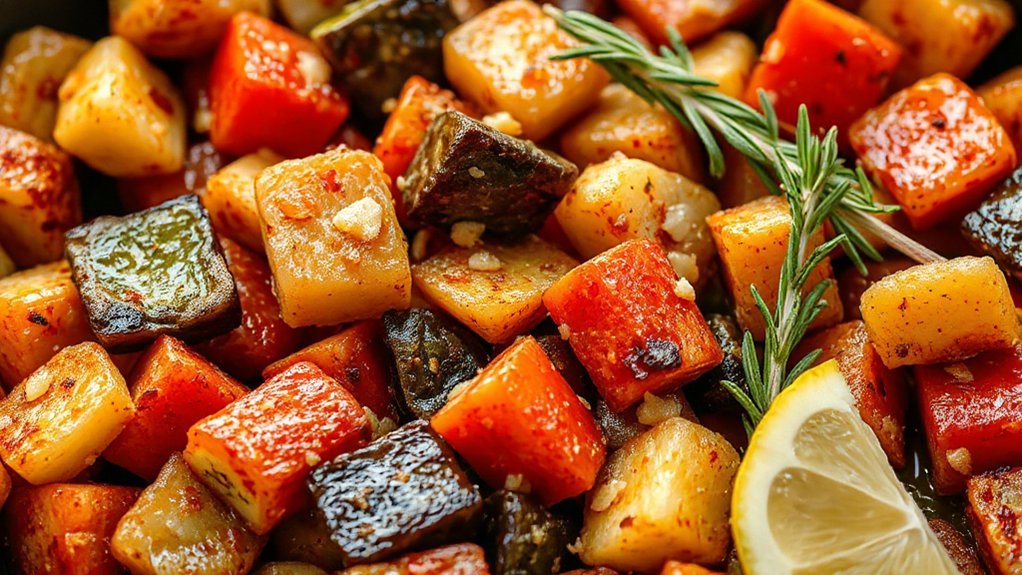
Now that you’ve got temps and timing down, let oil and seasonings be the shortcut to big flavor—toss frozen veggies with a light coating of oil (about 1 teaspoon per cup) so spices stick and edges crisp, or skip oil for a lighter finish and spray sparingly for browning. Choose your oil selection based on smoke point and flavor: avocado or light olive oil for high heat, sesame for finishing. Salt early if using coarse salt; add delicate herbs near the end. Use pepper, garlic powder, smoked paprika, or a squeeze of lemon for brightness. For deeper savory notes, reach for umami boosters like soy sauce, miso paste thinned with a little water, nutritional yeast, or anchovy paste in small amounts. Toss seasonings with the oil so they adhere, and taste as you go. You’ll get consistent, punchy results without overwhelming the natural vegetable flavors. Every time, reliably.
Simple Steps to Prevent Sogginess and Ensure Crisp Edges
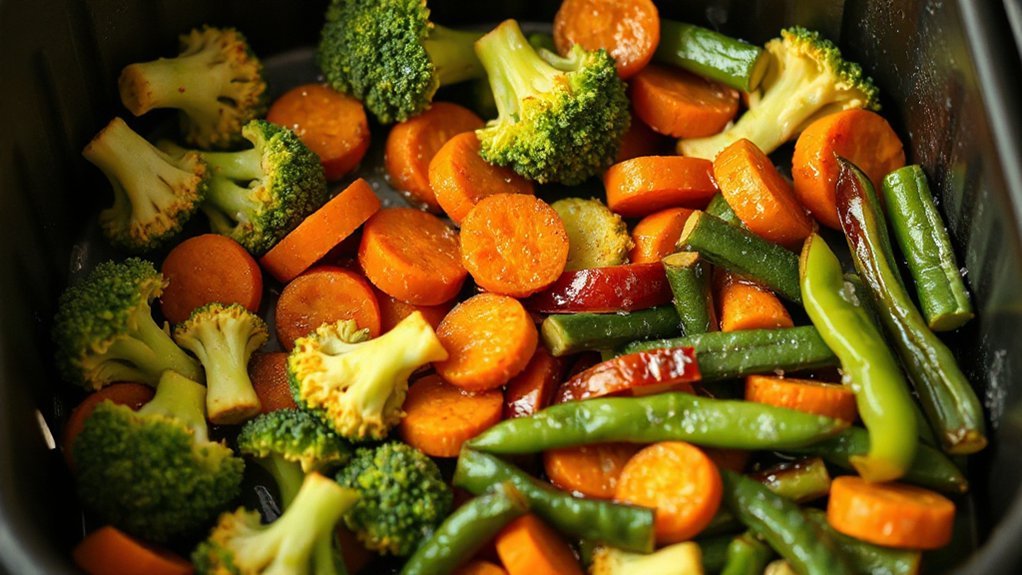
Starting with a hot, well-spaced basket will go a long way toward avoiding soggy, steamed vegetables and getting crisp, browned edges. You’ll preheat the air fryer, arrange a single layering of frozen veggies, and avoid overcrowding. Patting dry any surface frost or ice crystals with a paper towel helps oil and seasonings stick and speeds browning. Shake the basket halfway, but don’t over-handle the pieces.
| Step | Action | Tip |
|---|---|---|
| 1 | Preheat 2–3 min | Hot basket |
| 2 | Patting dry | Remove ice |
| 3 | Single layering | Even spacing |
| 4 | Light oil spray | Helps crisp |
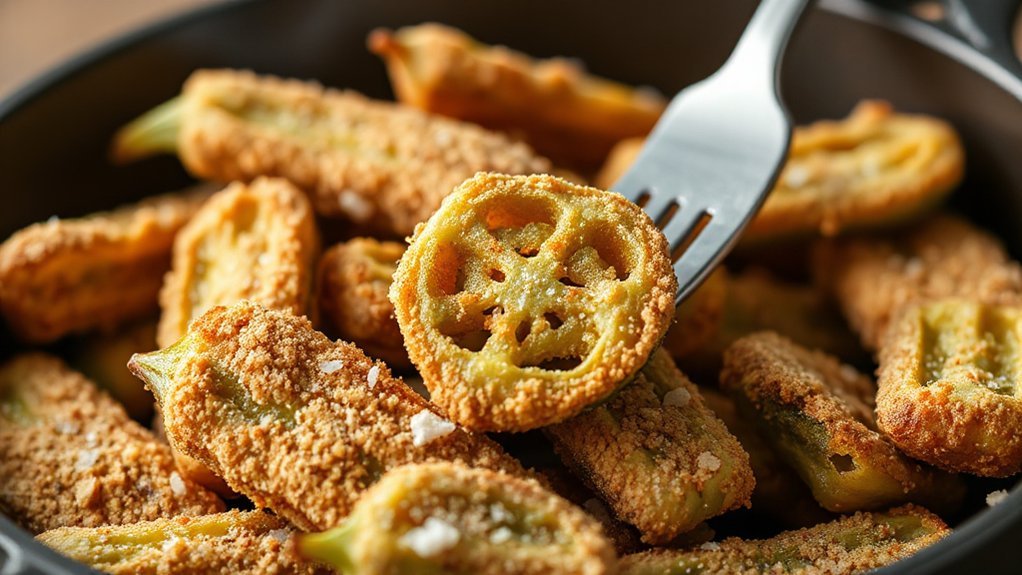
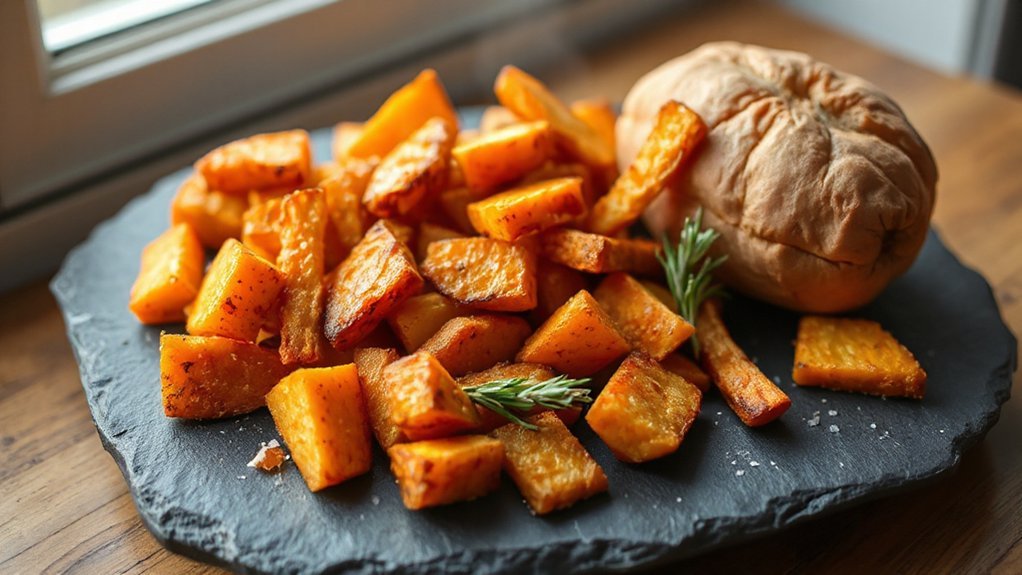

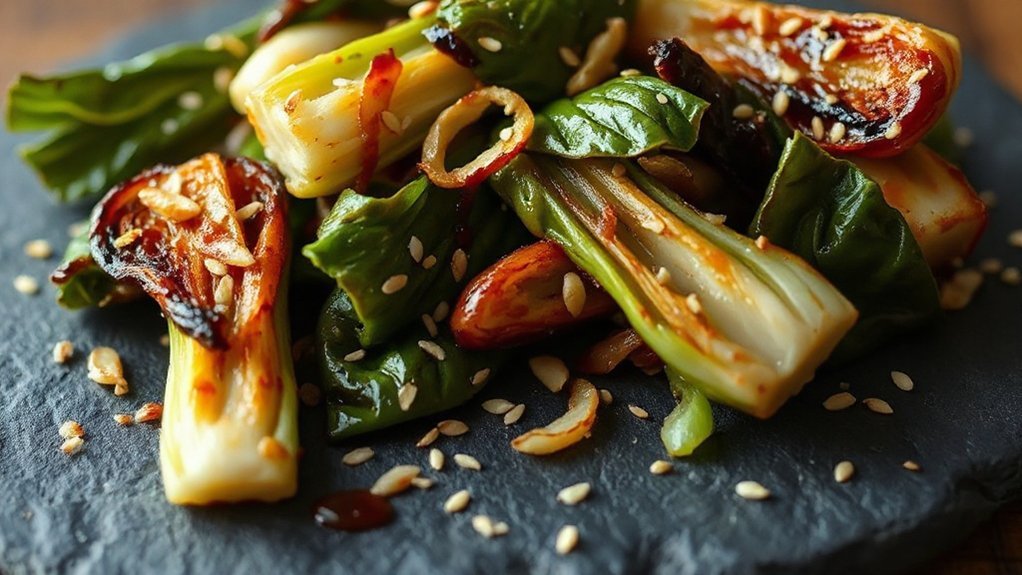
Finish with a quick rest so steam escapes and edges stay crunchy. You’ll get reliable results by following these simple, repeatable steps every time.
Quick Serving Ideas and Kid-Friendly Variations
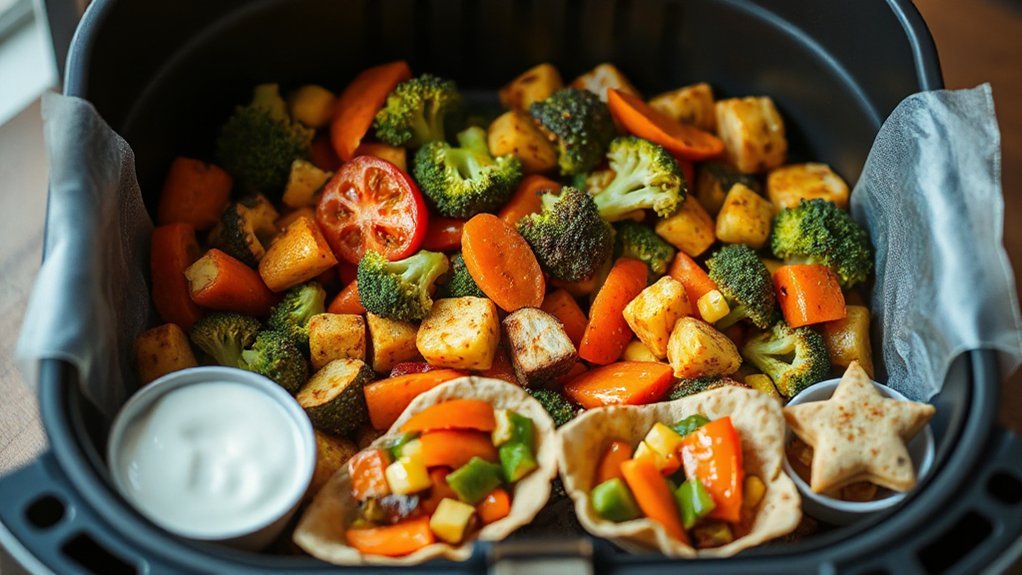
How about turning air-fried frozen veggies into fast, family-friendly sides everyone will actually eat? You can toss crisped mixed veggies with a little olive oil, grated Parmesan, and lemon zest for a bright skillet toss that pairs with weeknight proteins. For picky eaters, chop veggies and use them as Mini Pizzas—toast English muffins, spread marinara, pile veggies, sprinkle cheese, and broil a minute for melting joy. Another hit: fold warm veggies into quesadillas as Quesadilla Fillings with shredded cheese and mild salsa; cut into wedges for dipping. You’ll also love veggie-loaded pasta, stirred into mac and cheese, or nestled beside breakfast eggs. Keep flavors simple: butter and garlic, honey soy glaze, or taco seasoning. Offer dips—ranch, hummus, or Greek yogurt—so kids control flavor. These fast tweaks make air-fried frozen vegetables feel new, playful, and easy to eat without extra fuss. You’ll ask for seconds at family mealtime often.
Meal-Prep, Storage, and Reheating Guidelines

You’ll save time by batch-cooking frozen veggies on single-layer trays—season, air-fry until just crisp, then cool and portion. Store servings in airtight containers or freezer bags with labels and dates to keep quality. When reheating, use the air fryer or a hot oven for a short burst to re-crisp without getting soggy.
Batch Cooking Tips
Three simple habits will make batch-cooking frozen veggies in the air fryer fast and fail-safe. First, use consistent Portion Planning: decide servings per meal, then cook in those batch sizes so reheating is quick. Second, adopt clear Labeling Systems for containers—date, contents, and reheating time—so you grab the right box without thinking. Third, cool batches quickly on a tray before sealing to preserve texture and avoid sogginess. When reheating, toss straight from chilled to the air fryer at 350°F for a few minutes, shaking once, until hot. For meal-prep, combine veggies with grains or proteins in single-serve containers so you only reheat what you’ll eat. Label and track portions to save time and cut food costs today.
Proper Storage Methods
Storing cooked frozen veggies the right way cuts reheating time and keeps texture—cool batches on a tray, portion into shallow airtight containers or vacuum-seal bags, squeeze out excess air, and label each with the date and reheating instructions. Once sealed, keep packages flat so they stack neatly and thaw evenly in the fridge when you need them. Use vacuum sealing for longer freezer life and to prevent freezer burn. Rotate older meals forward and adopt a first-in, first-out habit. Don’t crowd your freezer; practice temperature zoning by keeping ready-to-eat items in a colder zone and raw ingredients separate. If you’re meal-prepping, portion for single meals to avoid repeated exposure. Check seals periodically and toss anything with off smells or ice crystals. Enjoy crisp veggies.
Reheating Without Sogginess
If you want crisp, not soggy, veggies after reheating, plan at every step—from cooling and packing to the actual heat-up. Let cooked veggies cool on a wire rack so steam escapes; pack in shallow containers with vents or leave lids ajar to avoid trapped moisture. When it’s reheating time, preheat the air fryer and use a light spray of oil to restore surface crispness. Listen for Auditory Indicators like sizzling; that’s a cue moisture’s evaporating. Shake the basket midway for even browning. Use Tactile Perception—gently press a piece to check firmness rather than relying only on time. Finish with a short rest so juices redistribute. With these habits you’ll get crunchy, tasty leftovers every time. You’ll save time and enjoy better texture daily too.
Troubleshooting Common Air Fryer Veggie Problems
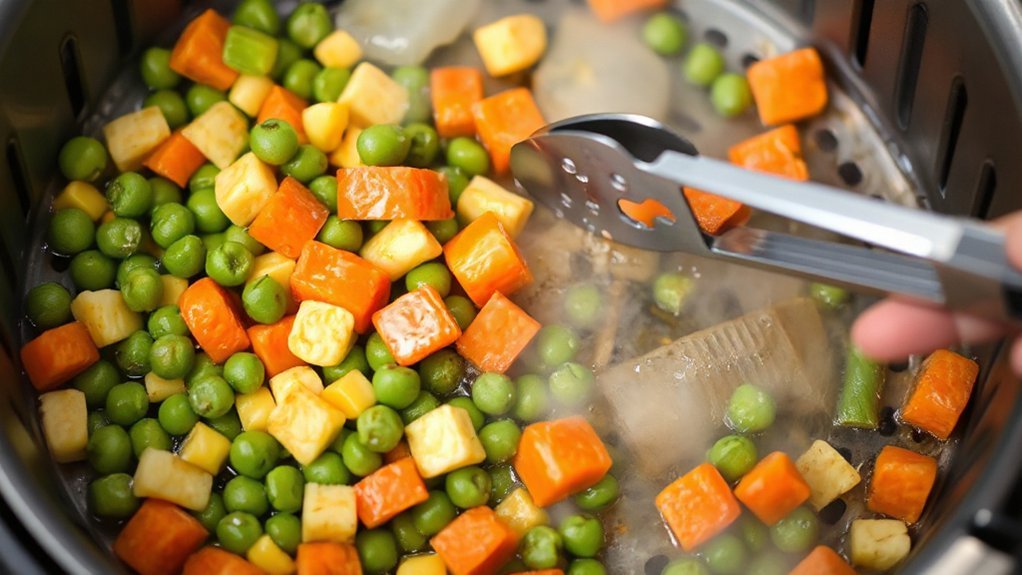
Tackle soggy, burnt, or unevenly cooked frozen veggies with a few simple tweaks you can use every time. Start by shaking the basket halfway and spreading pieces in a single layer so hot air flows, and cut large chunks smaller. Pat excess ice off—too much moisture makes sogginess. If you see smoke, check for trapped grease or crumbs; smoke causes often come from leftover bits, so clean trays and follow basic appliance maintenance. Reduce temperature by 25°F and add a minute or two for thicker veggies to avoid burning while getting tender centers.
Adjust times by veggie type: broccoli crisps faster than carrots. Use a light spray of oil for browning, but don’t drown them. If one side’s still pale, turn or stir more frequently. With small tweaks you’ll get consistent results every batch. Keep a timer handy and note favorite settings for each vegetable type for reference.
Conclusion
Think of your air fryer as a tiny, trusty lighthouse guiding frozen veggies from bland iceberg to golden shore—you’ll toss, season, and set temperatures like a captain steering. You don’t need to thaw; you just trust the process, tweak timing, and watch crisp edges appear. Keep it simple, taste as you go, and pack leftovers for later. You’re turning quick frozen into weekday hero meals everyone will actually ask for, for seconds and smiles daily.
About The Author