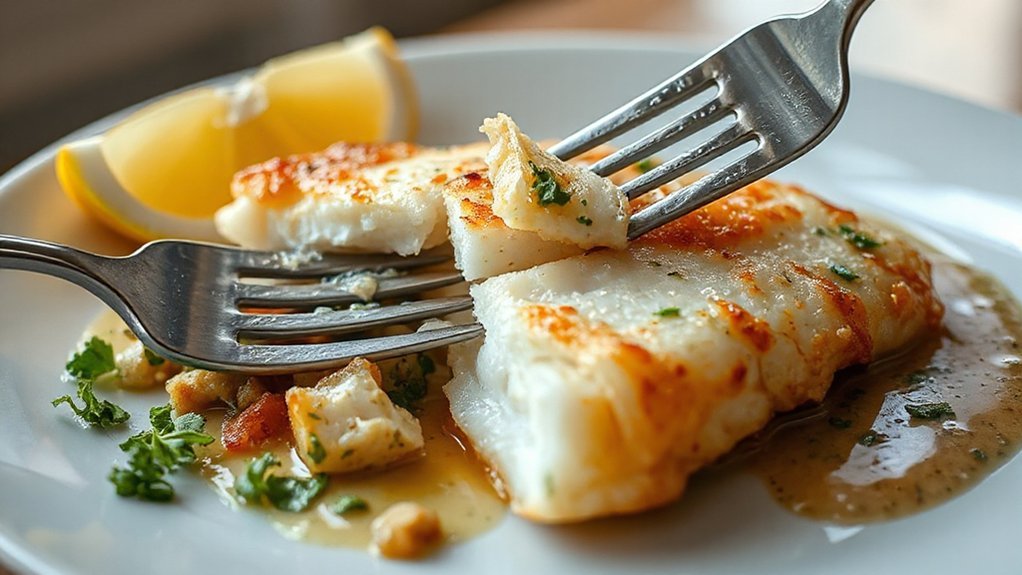
You’ll get a meaty, grill-charred swordfish steak in under 20 minutes using your air fryer. Choose 1–1.5″ steaks, pat them dry, brush with olive oil, lemon, garlic and herbs, then sear at 400°F, flip, and finish at 360°F until 125–130°F internal. Whisk warm butter with lemon juice, zest and parsley for a silky drizzle. Serve with charred veg or peas. Keep an instant‑read thermometer handy and keep going for tips on timing, sourcing and plating.
Ingredients You’ll Need
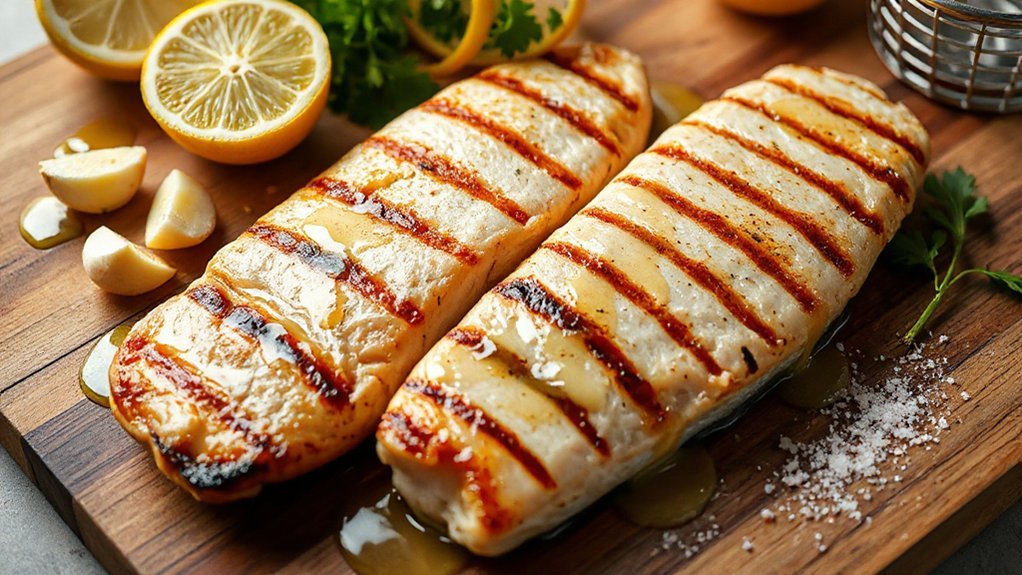
You’ll need a few simple, fresh ingredients to make this recipe sing: swordfish steaks, a bit of olive oil, kosher salt and black pepper, garlic or garlic powder, a lemon (for juice and zest), unsalted butter, and a few sprigs of fresh herbs like parsley or thyme. You’ll also want to gather Pantry staples like a pinch of sugar or a touch of honey, crushed red pepper if you like heat, and a splash of white wine or broth for the sauce. Keep Ingredient quantities straightforward: 2 swordfish steaks (6–8 oz each), 1–2 tbsp olive oil, 1 tsp kosher salt, ½ tsp black pepper, 1–2 cloves garlic or ½ tsp powder, juice and zest of half a lemon, 2 tbsp unsalted butter, and 1–2 tbsp chopped herbs. These basics’ll make the lemon butter shine and keep the fish meaty, bright, and satisfying. Serve immediately for best texture always.
Equipment and Tools
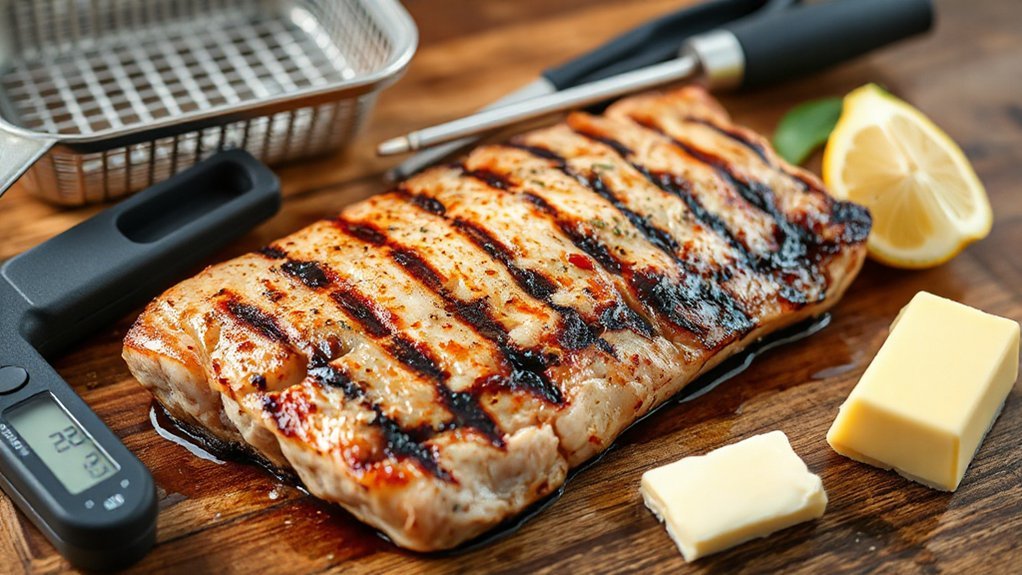
A sturdy, medium-capacity air fryer and a good set of tongs will get you most of the way there for this recipe. You’ll also want an instant-read thermometer, a silicone basting brush, and a small saucepan for the lemon butter. A nonstick spray or a little oil keeps fish from sticking and helps cleanup. Use a rimmed baking sheet or foil under the air fryer basket for easier handling of drips. Keep a pair of heat-resistant gloves and kitchen shears within reach as part of your safety equipment. A sturdy spatula helps flip delicate pieces without tearing. For tool maintenance, clean the basket and accessories after each use, dry thoroughly, and check seals and screws periodically. Store utensils where they won’t warp from heat. With these basics you’ll work efficiently, stay safe, and enjoy a simple, delicious grilling experience. Have a timer handy to prevent overcooking and ease.
Choosing the Best Swordfish Steak
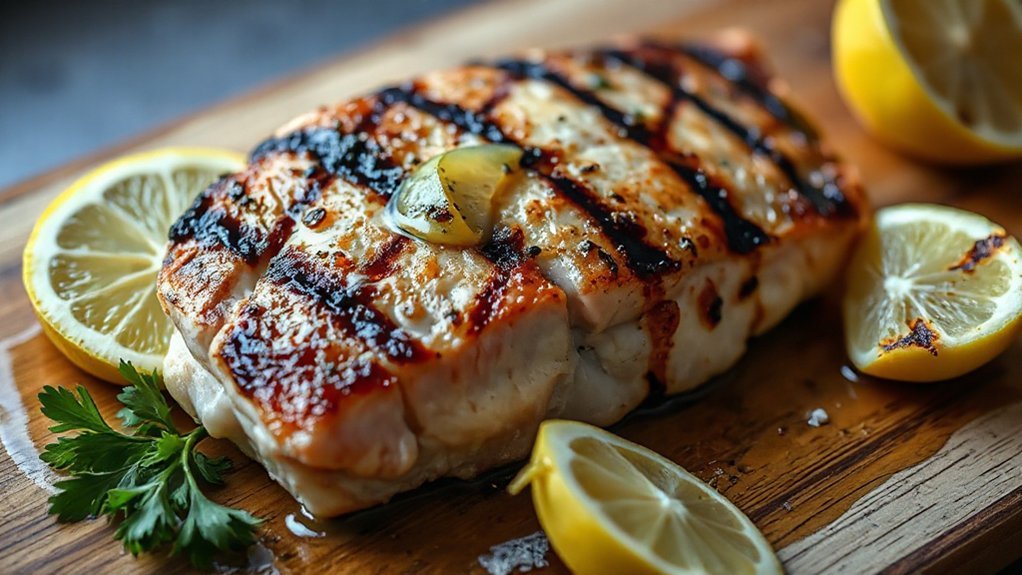
You want a swordfish steak that’s fresh and firm, with a moist, translucent look and a springy texture. Aim for steaks about 1 to 1.5 inches thick and evenly sized so they cook through without drying. Ask your fishmonger where it came from and choose sustainably caught options to support healthy oceans.
Freshness and Texture
How do you pick a swordfish steak that’s truly fresh? You trust Aroma Cues first: a clean, briny scent means it’s alive with ocean notes; a sour or metallic smell signals trouble. Look for firm, glossy flesh that springs back — that Flesh Resilience tells you it was handled well. Press gently; it should bounce, not puddle.
- Imagine cutting into a steak that smells like the sea.
- Picture firm flesh that snaps to the touch.
- Feel confident choosing fish that looks vibrant.
- Enjoy the peace of picking quality ingredients.
When you prioritize scent and resilience, you’ll end up with steaks that grill beautifully and taste like summer, no guessing.
Thickness and Size
Once you’ve confirmed freshness and resilience, think about thickness and size; they dictate cooking time and whether the steak stays moist or dries out. You’ll want steaks about one to one and a half inches thick for predictable results—those thickness standards balance quick searing and gentle finishing in the air fryer or on a grill. If steaks are thinner, they’ll cook fast and risk overcooking; if thicker, they need lower heat or a two-step method. Size variability matters too: a large, wide steak takes longer to heat through than a compact one of the same thickness. When choosing, pick pieces that match your equipment and the number of servings, and trim uniformly so every portion cooks evenly and delivers juicy, meaty flavor and satisfying.
Sourcing and Sustainability
Because where your fish comes from matters as much as how you cook it, pay attention to sourcing and sustainability when picking a swordfish steak. You want a cut that tastes great and supports healthy oceans. Look for fisheries certification and clear traceability systems on labels; they prove responsible practices and let you feel good about your meal. Ask your fishmonger questions about catch method and origin, and prioritize smaller-scale or pole-and-line fisheries when possible.
- Imagine confident choices that protect marine life.
- Picture your family enjoying seafood with pride.
- Feel relief choosing certified, traceable fish.
- Celebrate a dinner that supports better fishing.
You’ll taste the difference when quality and ethics meet on your plate, and your meal becomes a small act of stewardship today.
Marinade and Seasoning Mix
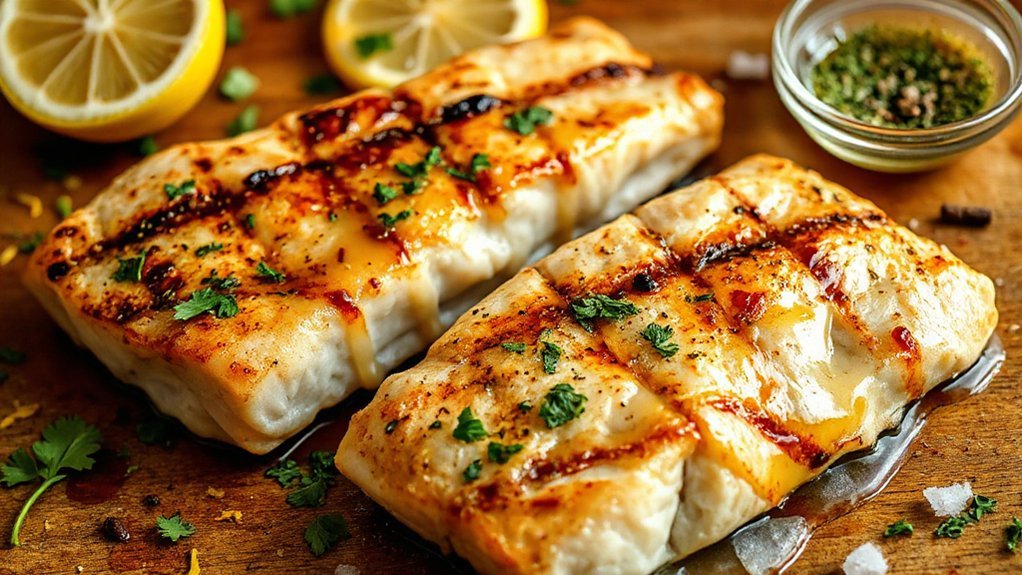
Marinating your swordfish in a zesty, olive oil–based mix will lock in moisture and give the lemon butter a brighter backdrop. You’ll want a simple combo: good olive oil, fresh lemon juice, smashed garlic, chopped parsley, a touch of Dijon, and flaky salt. Keep acid balance in mind—about 3 parts oil to 1 part acid—to avoid “cooking” the fish while still brightening flavors. For seasoning, add cracked black pepper, a pinch of smoked paprika for warmth, and a few red pepper flakes if you like heat. That gives you effective flavor layering without overwhelming the steak-like texture. If you use minced shallot or a splash of white wine, those elements stay subtle. Toss everything together, taste, and adjust salt and acid to your liking. You won’t need heavy herbs; let the lemon butter finish the dish. Use this mix sparingly so the swordfish’s natural flavor still shines today.
Prepping the Fish Step by Step
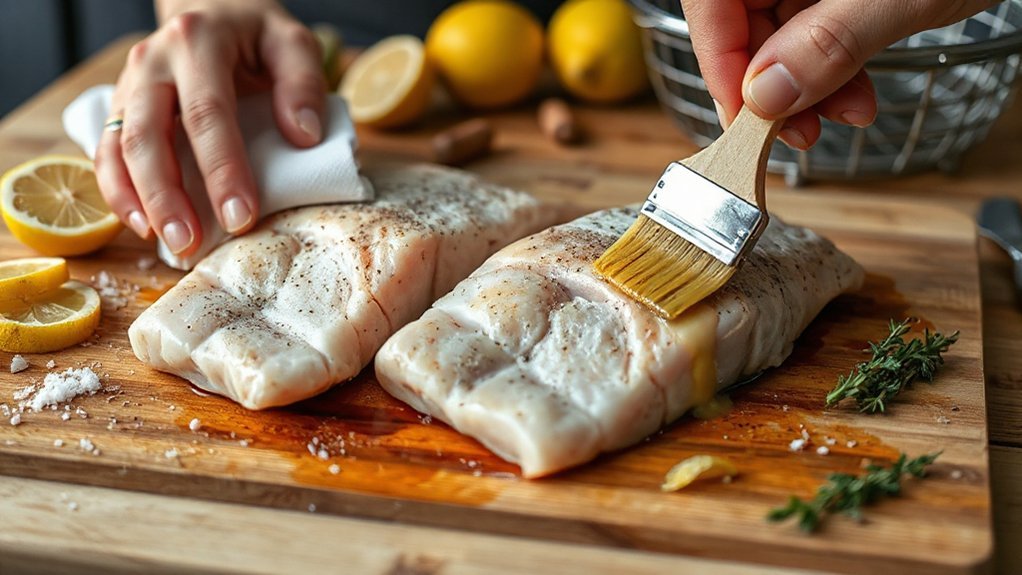

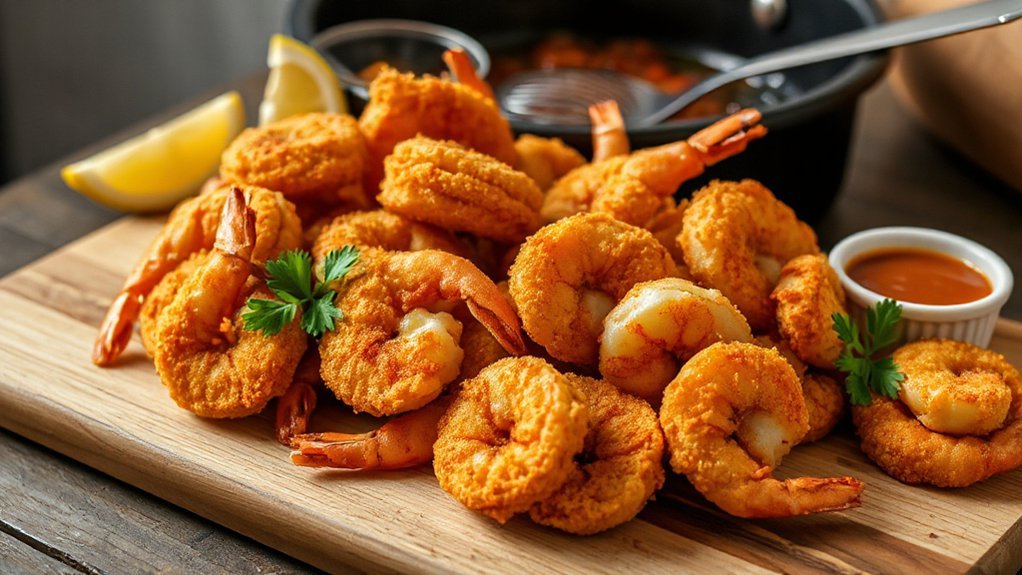
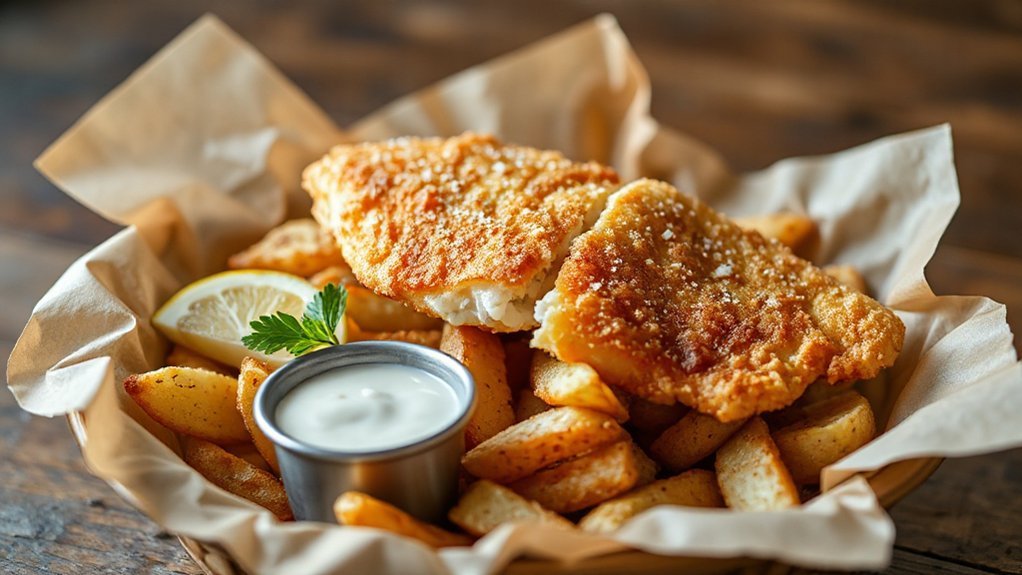
First, make sure your swordfish is fully thawed and pat it dry with paper towels so the seasoning sticks and the edges crisp. Trim off any tough skin or ragged bits, then portion the loin into evenly sized steaks for even cooking. Once it’s trimmed, portioned, and dry, you’re ready to season and air-fry.
Thawing and Drying Fish
Thawing your swordfish properly guarantees even cooking and a better texture. Follow clear Thawing Timelines so you don’t invite Bacterial Risks: plan overnight in the fridge or use a cold water method for faster, safe thawing. Pat the fish dry thoroughly with paper towels, because surface moisture blocks browning and prevents that lovely sear.
- You’ll feel confident when the fillet looks and smells fresh.
- You’ll be excited by the tight, dry surface ready for seasoning.
- You’ll relax knowing you minimized bacterial risk.
- You’ll enjoy better flavor and a prettier crust when grilling.
Work efficiently, keep everything cold, and handle the fish gently to preserve quality. Trust these simple steps and you’ll be slicing into perfectly cooked swordfish that’s moist inside with a crisp exterior.
Trimming and Portioning Steaks
Now that your fillet is dry and cold from the fridge, you’re ready to trim and portion it for even cooking. Lay the steak on a clean board, examine the edges for ragged fat or silver skin and trim with a sharp knife; this improves texture and increases trim yield. Run your fingers along the backbone area to locate any stray rib bones; quick bone removal makes eating neater and prevents surprises. Cut steaks about 1 to 1¼ inches thick for balanced cooking in the air fryer, or adjust to preference. Keep trimming minimal—preserve meaty portions while removing only what’s needed. Pat pieces dry again before seasoning so they sear and brown beautifully under the heat. You’ll get consistent results and happier diners today.
Air Fryer Temperature and Timing
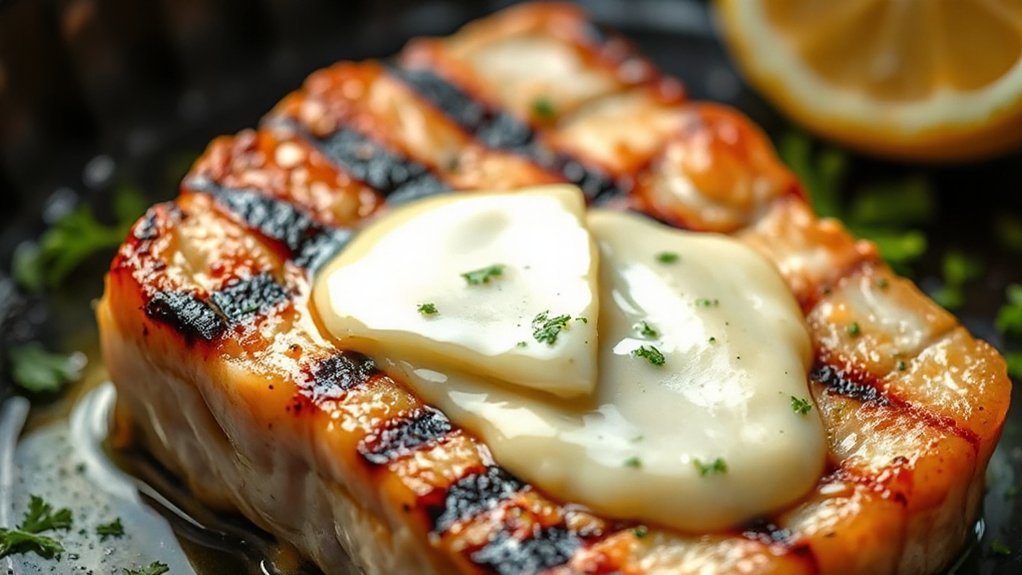
How hot should you set the air fryer for swordfish? Aim for 400°F (204°C) for a quick sear, then drop to 360°F (182°C) if your steaks are thick; use Temperature Calibration on your thermometer so readings are reliable. Preheat for 3–5 minutes, pat the fish dry, and oil the basket lightly. Cook 8–10 minutes total for 1-inch steaks, flipping once. Rely on Carryover Cooking—pull the fish at 125–130°F (52–54°C) internal, and it’ll rest to perfect doneness.
Start at 400°F, finish at 360°F for thick steaks—pull at 125–130°F and rest.
- Anticipation: you’ll smell that crust and smile.
- Confidence: accurate temps take the guesswork away.
- Relief: even timing means no overcooked flakes.
- Pride: you nailed restaurant-style swordfish at home.
Check thickness, adjust time ±2 minutes per half-inch, and always use an instant-read thermometer for consistent results. Don’t forget to note your air fryer model—fan strength and rack position change timings, so keep a simple log to refine your sequence next time and enjoy.
Making the Lemon Butter Drizzle
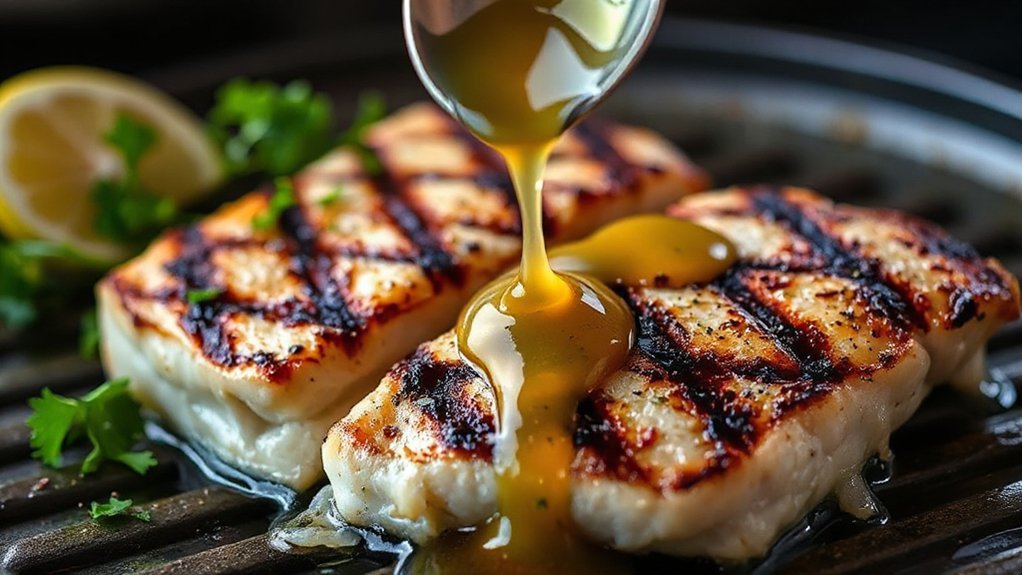
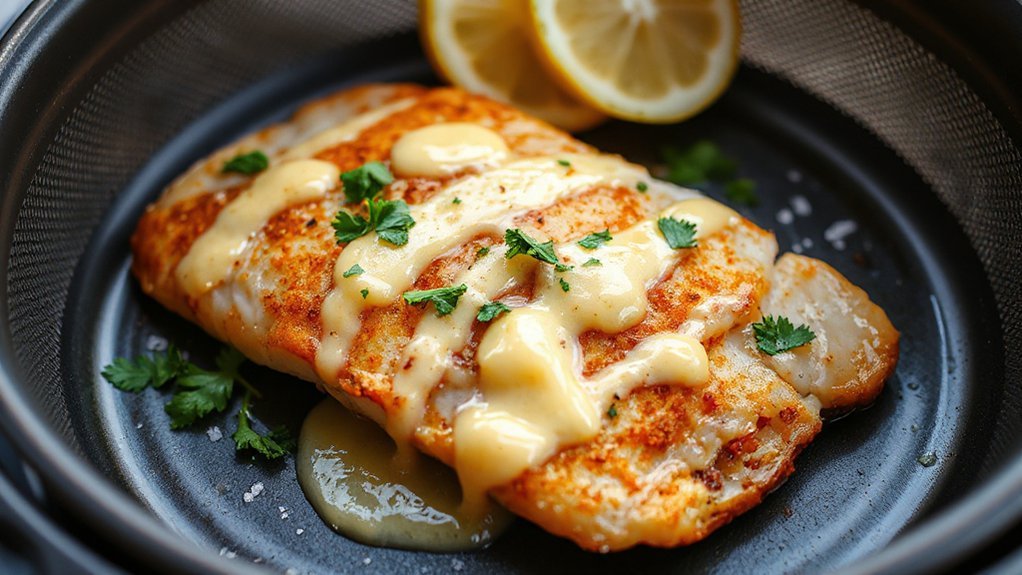
Whisk together melted butter, fresh lemon juice, a touch of zest, and a pinch of salt and pepper for a bright, silky drizzle that elevates your swordfish. Next, keep the butter warm but not scalding so it blends smoothly; that temperature control is one of the best emulsification tips you can use. Pour the butter slowly into the lemon while whisking vigorously so the sauce comes together and doesn’t split. If it does start to separate, whisk in a teaspoon of cold water to bring it back. For herb variations, fold in minced parsley or chives at the end so their color and flavor stay vibrant. Grate zest directly over the bowl to capture oils and practice zest preservation by avoiding the bitter white pith. Taste and adjust acidity or seasoning—remember a little lemon can brighten without overpowering. Keep the drizzle warm and use within minutes for silkiness.
Plating and Serving Ideas
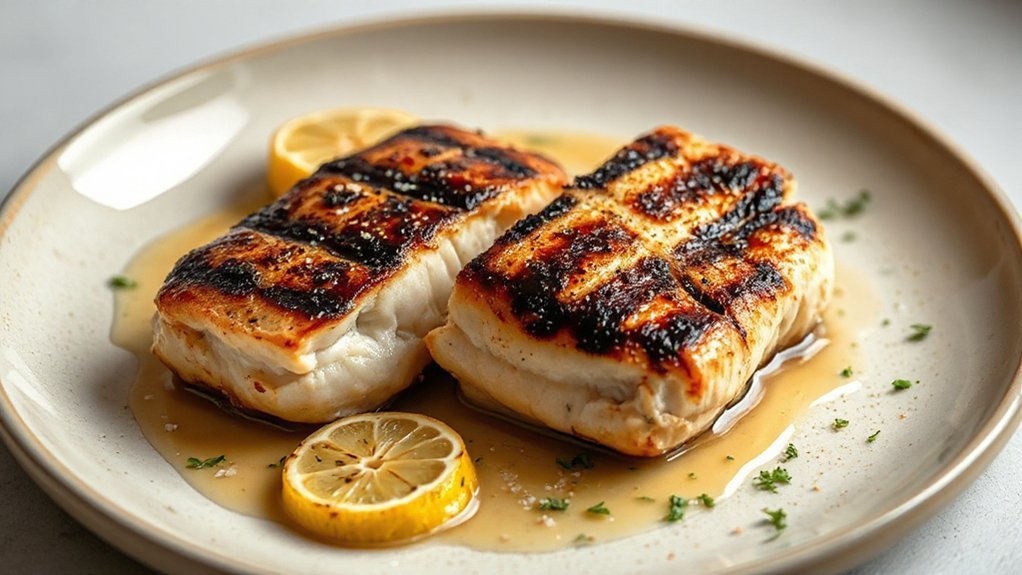
You’ll want to carry that warm lemon butter right onto the plate to keep the fish glossy and flavorful; spoon a thin ribbon over the center of each swordfish steak and let any excess pool slightly for dipping. Plate each steak on a bed of charred asparagus or creamy mashed peas to add Color contrast, then wipe the rim so the presentation stays clean. Think about Garnish pairing—sprigs of dill, lemon wheels, a scattering of capers, or a fennel frond brighten aroma and beckon. Keep portions centered and avoid overcrowding; the fish should be the hero. For emotional pop, add small intentional details:
Spoon warm lemon butter over glossy swordfish; plate on charred asparagus, garnish with dill and capers.
- A bright lemon wheel placed at 11 — cheerful and classic.
- A small pile of herbed breadcrumbs — crunchy comfort.
- Microgreens tossed with a kiss of olive oil — fresh uplift.
- A single caper or two near the edge — briny wink.
Serve immediately, smiling.
Storage, Reheating, and Leftover Tips
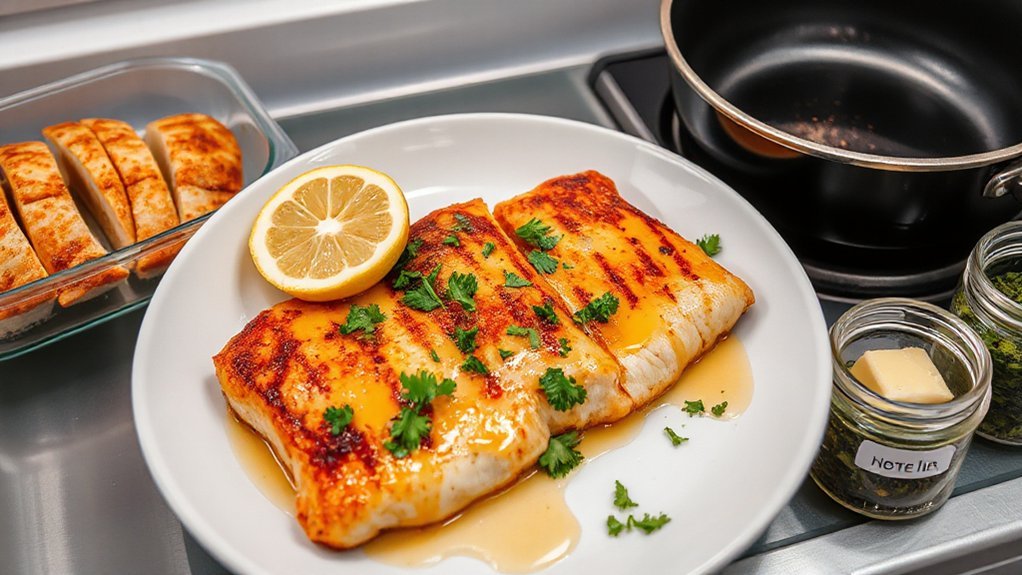
Usually, let the swordfish cool slightly, then tuck it into an airtight container with the lemon butter stored separately to keep the flesh firm and the sauce glossy. Refrigerate within two hours for safe refrigeration and eat within 3 days. For longer storage, freeze portions wrapped tightly and label with date; use within 1–2 months for best texture.
When you reheat, choose gentle reheating methods: steam briefly, warm in a low oven (250–275°F/120–135°C) covered, or use an air fryer at low temperature to revive crust without drying. Add the lemon butter afterward or melt a small spoonful over each portion. Avoid high heat and microwaving directly, which can toughen the meat. If you’re turning leftovers into salads or sandwiches, serve chilled or slightly warmed and dress right before serving. Label containers, note reheating times, and enjoy your leftovers safely today.
Conclusion
You’ve just made a bold, meaty swordfish steak that sings with lemon butter — and you nailed it. Enjoy it hot from the air fryer, paired with crisp greens or roasted veggies, and let the bright drizzle be the highlight. Don’t worry about leftovers: they reheat beautifully and taste nearly as good next day. Keep experimenting with seasonings; cooking this simple dish will become second nature before you know it and you’ll want it often
About The Author