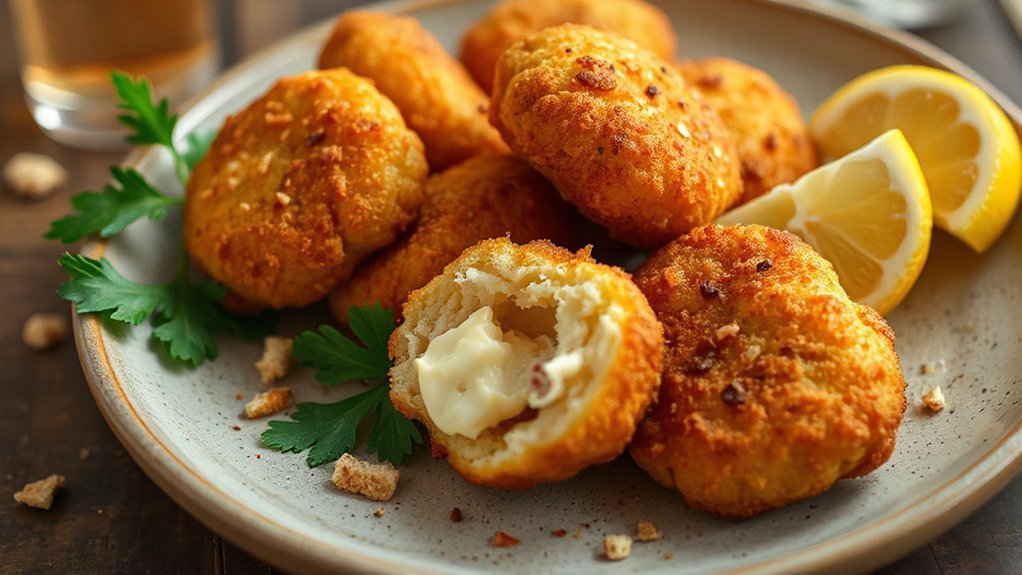
Make flaky Greek spanakopita in your air fryer with spinach (fresh or well‑drained frozen), crumbled feta, an egg or vegan binder, dill, lemon zest and crisp phyllo brushed with olive oil. Keep sheets covered, squeeze spinach dry, layer thin and preheat the basket to about 375°F. Small pieces take about eight to ten minutes; larger ones twelve to fifteen—rotate midcook and aim for a hot, golden center. Continue for swaps, timing and reheating tips, too.
Ingredients and Substitutions
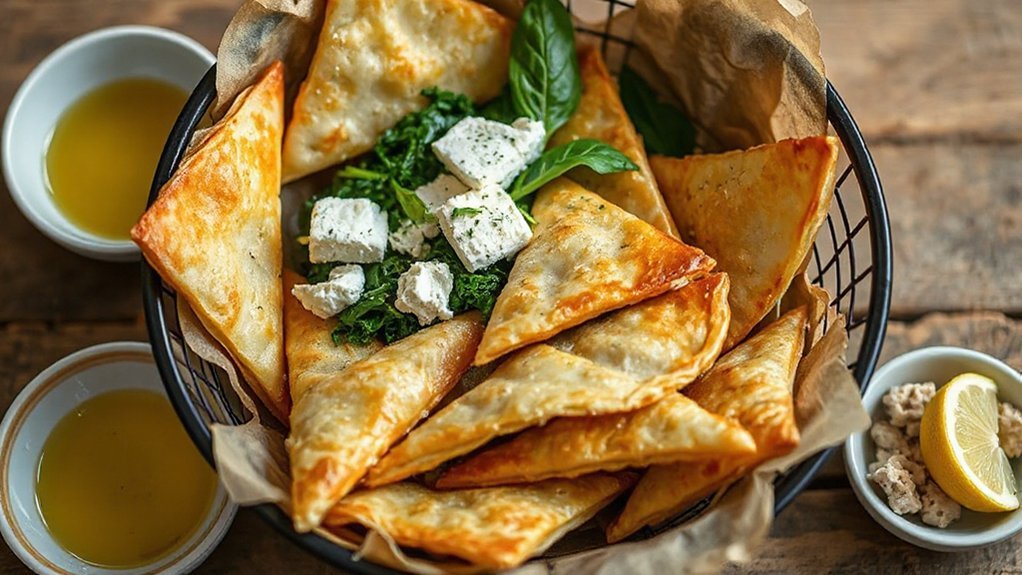
A few core ingredients make spanakopita sing: spinach, tangy feta, crisp phyllo, eggs, olive oil, and a hit of onion or garlic. You’ll keep things simple: frozen spinach (thawed and squeezed), good feta, and store-bought phyllo—Pantry Staples that save time without skimping flavor. Add eggs and a splash of olive oil to bind, and season with dill, lemon zest, salt, and pepper.
If you need substitutions, swap ingredients confidently. For a dairy-free version use firm tofu or a vegan ricotta plus nutritional yeast; for gluten-free, try filo-style gluten-free sheets or make a short crust from almond flour—Allergen Swaps that still deliver buttery crunch. Reduce the onion if you prefer mildness, or swap garlic for scallions. Measure by taste, keep textures balanced, and you’ll finish with a filling that’s bright, savory, and ready to fold into phyllo for air-frying. You’re set to customize flavors and feed your cravings daily.
Equipment and Prep Checklist
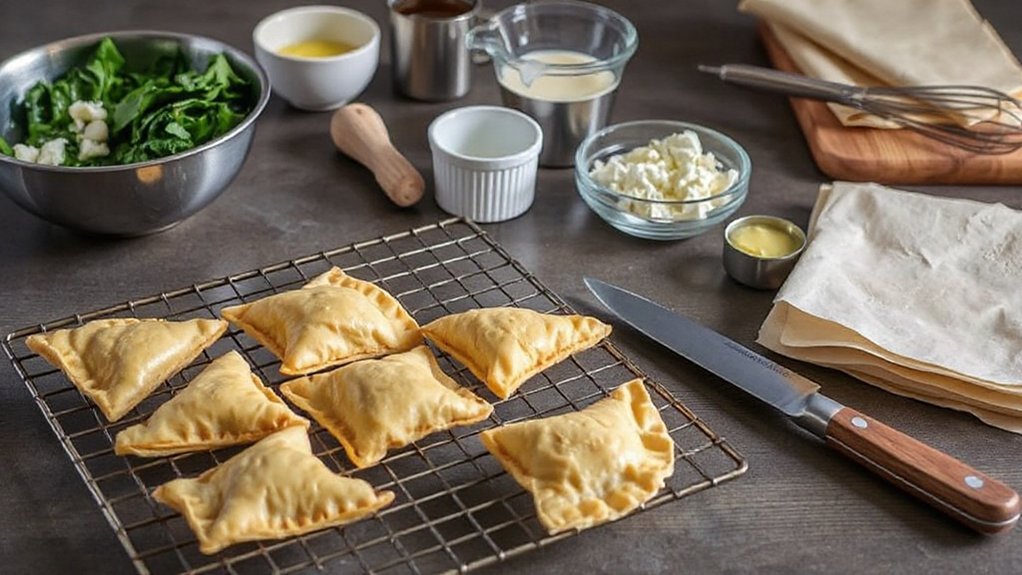
You’ll want a few air fryer essentials—basket or tray, a perforated liner or parchment, tongs, and a pastry brush—to get even, crispy spanakopita. Keep phyllo sheets covered with a damp towel and have melted butter or oil ready for brushing so they don’t dry out. Mix and drain the spinach filling thoroughly so it stays compact and doesn’t sog the pastry while cooking.
Essential Air Fryer Tools
Gather your gear before you start—having the right tools makes crisp, golden spanakopita in the air fryer much easier. You’ll want a sturdy air fryer basket or tray, perforated parchment rounds, a misting oil bottle, and nonstick silicone brushes for buttering layers. Keep long-handled tongs and a thin spatula to lift pies without tearing them. A digital instant-read thermometer helps you check internal heat quickly. Use small ramekins or weights to press edges if making triangles. After cooking, use cleaning brushes to scrub the basket and keep odor absorbers in the drawer to prevent lingering garlic or feta smells. Finally, have a cooling rack and heatproof mitts ready so you can serve immediately. Keep a timer and notepad nearby to track batches and tweaks.
Phyllo and Filling Prep
When working with delicate phyllo, set up a tidy station so nothing tears or dries out: cover the sheets with a damp towel and plastic wrap, have melted butter or oil in a shallow dish and a pastry brush ready, and keep a clean cutting board and kitchen shears handy for trimming. Prep the filling: squeeze wilted spinach dry, crumble feta, beat an egg to bind, and fold in chopped dill — use sharp Knife skills for clean herb cuts. Respect the dish’s Culinary origins by balancing lemon, nutmeg, and pepper. Equipment checklist and quick reminders live below — grab a bowl, spatula, sieve, and measuring spoons.
| Item | Purpose | Tip |
|---|---|---|
| Phyllo | Crispy layers | Keep covered |
| Butter/oil | Layering | Brush thinly |
| Spinach mix | Filling | Drain thoroughly |

serve warm now
Preparing the Spinach and Feta Filling
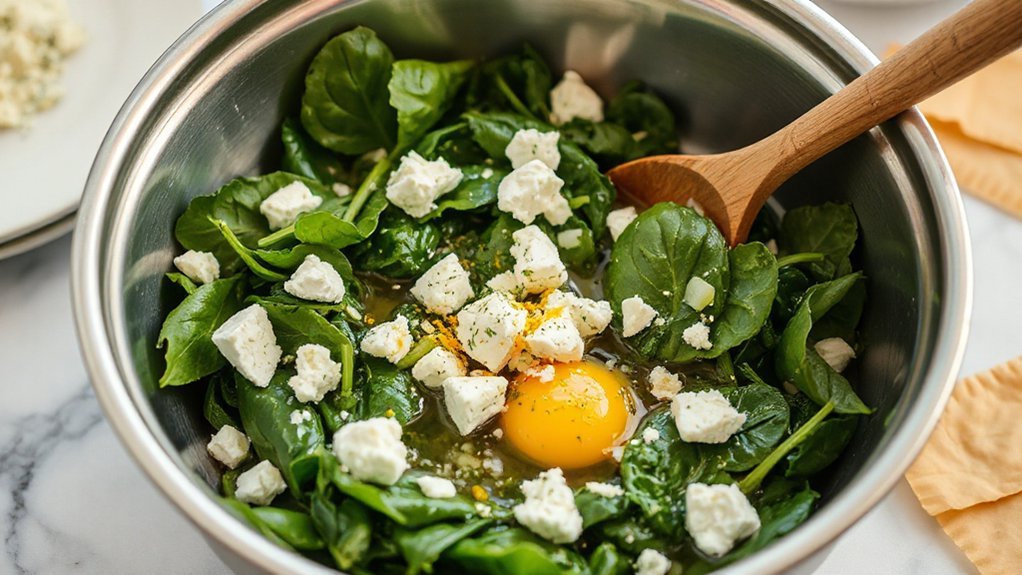
Although fresh spinach gives the best texture, frozen spinach is a great shortcut—just thaw it completely and squeeze out as much liquid as you can. Now chop or pulse the spinach so it mixes evenly with the cheese. Sauté a small onion and garlic in olive oil until translucent; that step builds flavor without adding moisture. Transfer the aromatics to the spinach, then fold in crumbled feta and a beaten egg to bind. Add a handful of chopped dill and a squeeze of lemon for brightness. Taste as you go—practice flavor layering by adjusting herbs, acid, and cheese balance in small increments. For salt calibration, remember feta is salty, so start light and tweak after mixing. If the mixture seems loose, press it in a sieve or chill briefly to firm up. You’ll end up with a well-balanced, easy-to-handle filling ready for assembly. It tastes incredible and savory.
Handling and Layering Phyllo for Flakiness
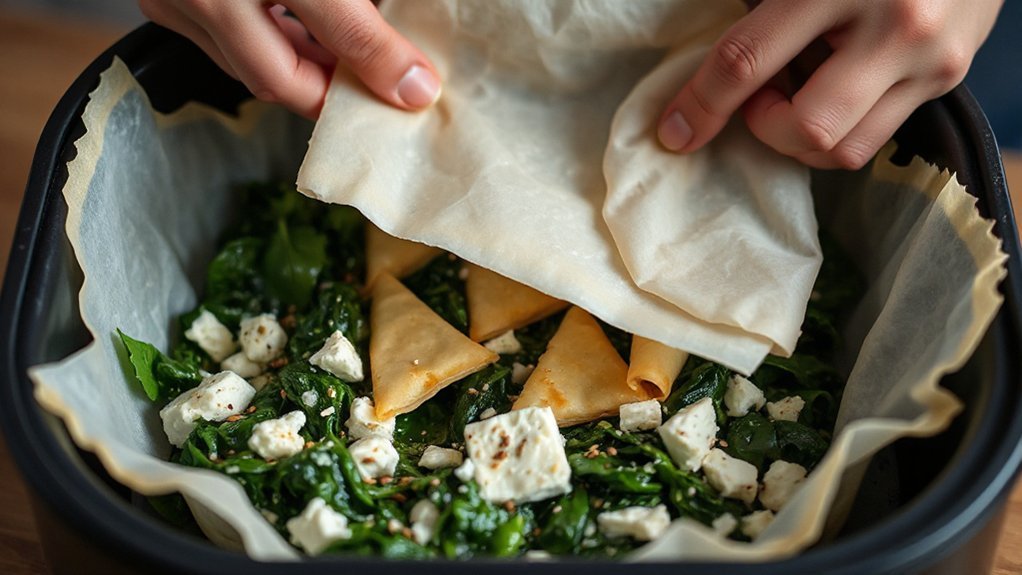
Layering phyllo properly makes the difference between soggy pastry and crisp, shattery spanakopita. You’ll work quickly but calmly: keep sheets covered with a damp towel so they don’t dry or tear, and brush each layer lightly with melted butter or olive oil to create steam barriers that separate flakes. Use two to three sheets per layer for sturdiness, alternating grain directions to encourage lift. When fitting into the pan, let edges overhang for a neat, sealed top and press gently without compacting the layers. Myth busting: you don’t need to cram in extra fat — a thin, even brush beats puddles that make layers collapse. Pay attention to climate effects; in humid kitchens phyllo softens faster, so shorten exposure and chill the stack briefly. In dry rooms, mist your towel slightly. Handle with confident, gentle motions and your spanakopita will be gloriously flaky. Ready to assemble and bake.
Air Fryer Cooking Methods and Timing

Before you start, preheat your air fryer to the right temperature—around 350–375°F—so the phyllo crisps instantly. Stack and brush those phyllo sheets strategically, tucking edges and adding thin butter or oil layers to promote even browning. Watch and adjust cooking time—check after 8–10 minutes for small pieces or 12–15 for larger ones—and rotate or lower the temp if the tops brown too fast.
Preheat and Temperature
When you preheat your air fryer to 375–400°F (190–200°C), you’ll lock in that flaky, golden crisp and avoid soggy, undercooked centers. Start with a fully preheated basket so the initial burst of heat promotes proper Heat Transfer from hot air to phyllo and filling; that immediate sear sets structure and keeps moisture from steaming. Don’t overdo temperature—too high burns edges before the center cooks. If your model runs hot, lower to 375°F and add a few minutes. Use a quick spray of oil for even browning; good Thermal Conductivity across layers helps color without oil globs. Check at the minimum time, rotate if needed, and trust the crispness as your guide to doneness. Adjust for altitude and personal preference to perfect your results consistently.
Layering Phyllo Techniques
Now that your air fryer’s hot and you’ve nailed the temperature, you’ll want to think about how phyllo layers go together for even crisping and quick, reliable cook times. Start with a lightly oiled base sheet, brush each subsequent sheet sparingly so layers separate and brown uniformly; too much oil makes them heavy, too little gives dull crunch. Fold edges neatly to trap filling without overstuffing. You’ll mix thin alternating layers with sturdier ones to mimic the flaky lift developed through Historical Evolution of recipes, while respecting Regional Variations that favor different thicknesses or butter usage. Work fast—phyllo dries—cover any unused sheets. You’ll get consistent, golden results that honor tradition and suit modern air fryer methods. Rotate the pan mid-run and for even browning.
Cooking Time Adjustments
As you adapt spanakopita to the air fryer, plan to tweak cook times based on piece size, filling moisture, and whether pastries start frozen or fresh. Start hot (370°F/188°C) and check early; smaller triangles crisp faster, large parcels need more time. Use a probe for 165°F center and watch browning. For frozen starts add 3–6 minutes; for fresh cut back 2–4. Note altitude adjustments: higher elevations may require longer times and slightly higher temps. Practice portion scaling so batches cook evenly; avoid overcrowding. Rotate basket midway for uniform color. Table below gives quick guides to tweak timing by size and state—use it, then adjust for your air fryer’s personality and your desired crispness.
| Size | Time (est) |
|---|---|
| Small | 6–8min |
| Large frozen | 14–18min |
| Medium thawed | 9–12min |
Serving Suggestions, Storage, and Reheating
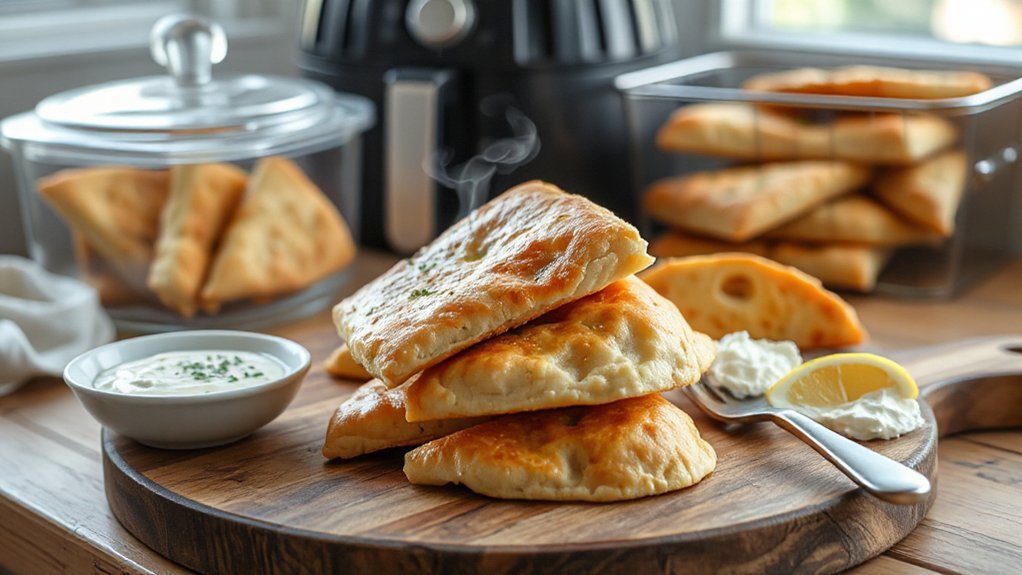
Although spanakopita’s crisp, flaky layers shine on their own, you’ll want a few quick serving ideas and storage tips to keep them perfect between bites. Serve wedges with a zippy Yogurt dip, lemon wedges, and a simple tomato cucumber salad for balance. For parties, cut into fingers and offer feta studded olives and roasted red pepper on the side.
To store, let pieces cool completely then wrap airtight and refrigerate up to three days or freeze for up to one month. For Crisp restoration, reheat at three hundred fifty degrees in the air fryer or oven until warmed through and edges pop, about five to eight minutes from chilled or twelve to fifteen from frozen. Avoid microwaving unless you’ll crisp briefly afterward. Thaw frozen pieces overnight in the fridge for even reheating, and freshen with lemon and dill before serving. Serve warm, watch everyone come back for seconds.
Conclusion
You’ve just nailed a golden, flaky spinach pie without heating the whole kitchen, and that’s worth a little celebration. You’ll wow friends with crisp phyllo and a luxuriously cheeky feta-boosted filling that whispers “homemade” while saving you elbow grease. Keep extras wrapped, reheat gently, and they’ll perk up like they’re fresh from the oven. So go on—slice, serve, and enjoy the little victory; you’ve earned every buttery, herb-scented bite and savor the applause loudly.
About The Author