You’ll make a fluffy, no-flip air fryer omelette by preheating the basket, whisking room‑temperature eggs with a splash of milk or cream until slightly frothy, and using a shallow, oiled metal or silicone pan so hot air can circulate. Use drained, pre‑sautéed fillings and fold them sparingly into the batter, then cook six to ten minutes at 350°F (adjust for size) until just set with a jiggle. Keep going—you’ll get tips, troubleshooting, and more soon.
Why This Method Works
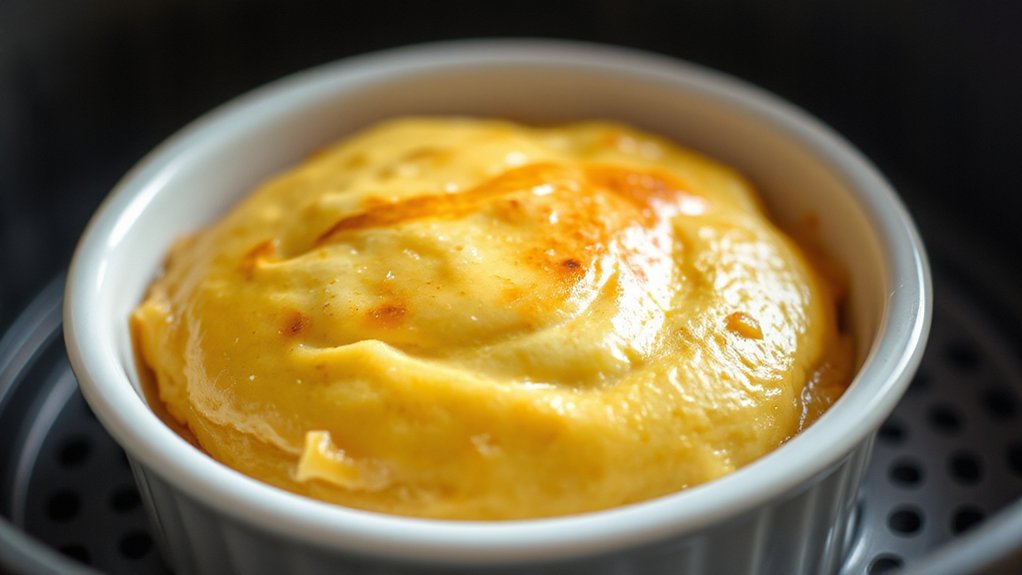
Because the air fryer circulates hot air rapidly, it gives your omelette a tender interior and lightly browned top without overcooking, so you get even results every time. You’ll notice the appliance’s airflow dynamics create uniform heat that seals edges and sets the center without constant fiddling. The compact space and directed flow reduce cold spots, so you won’t face undercooked pockets. Thermal inertia works in your favor: the basket and chamber retain heat, smoothing temperature swings and finishing the omelette gently after peak heat. You control timing and temperature, and the machine handles consistent doneness, freeing you from flipping and guesswork. That predictability makes it easy to tweak texture—shorter cycles for creamier, slightly longer for firmer—while still avoiding dryness. In short, the method turns complex stove-top timing into a straightforward, repeatable process that delivers fluffy, evenly cooked results every time. You’ll be excited to serve it today.
Ingredients You’Ll Need
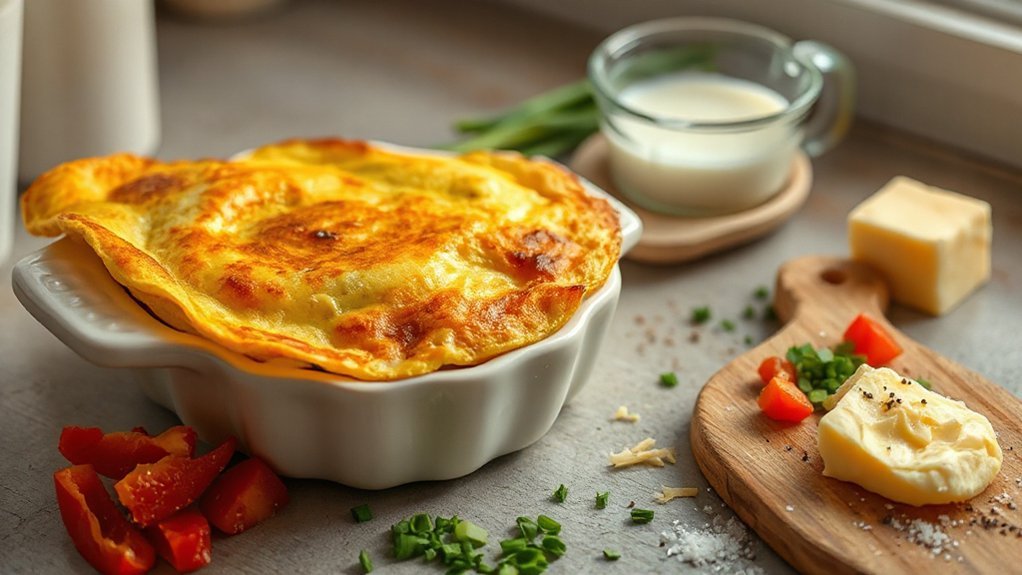
You’ll start with the basics: fresh eggs and a splash of dairy for a creamy texture. Then pick vegetables and fillings—think sautéed peppers, spinach, mushrooms, or extra cheese—to add texture and flavor. Finish with salt, pepper, herbs and a little oil or butter to prevent sticking and boost taste.
Eggs and Dairy
Whisking the egg base starts with fresh large eggs—room temperature gives the fluffiest texture—and a splash of milk or cream to make the omelette tender. You’ll crack eggs into a bowl, season, and beat until slightly frothy so air gets locked in. If you’re concerned about egg pasteurization for safety or serving elders, pick pasteurized cartons. For dairy, use whole milk, half-and-half, or cream for silkiness; swap lactose-free milk or a lactose-free cream alternative if lactose intolerance affects you. A bit of grated cheese folded in adds richness, but measure to avoid sogginess. Keep ingredients cold until the last moment, then whisk briskly and pour into your preheated air fryer pan for consistent lift and texture. Serve immediately for best rise and gentle browning.
Vegetables and Fillings
Now that your egg base is ready, pick fillings that’ll highlight its creaminess without weighing it down. You’ll want vibrant textures: quick-sautéed mushrooms, tender spinach, and small diced peppers keep the omelette airy. Think about Cultural fillings like crumbled feta with sun-dried tomatoes or a miso-savory combo for a global twist. Foraging greens — nettles, chickweed, or wild spinach — add a bright, earthy note when blanched. Keep pieces small so the air fryer cooks everything evenly.
- Thinly sliced cremini mushrooms
- Chopped bell peppers and scallions
- Crumbled feta or goat cheese with sun-dried tomato bits
- Blanched foraging greens, squeezed dry
Mix small amounts into the egg gently, spreading fillings evenly so each slice has contrast, color, and pockets of flavor without collapsing the texture.
Seasonings and Oil
When you’re seasoning the eggs, aim for a tight, balanced kit: fine sea salt, freshly cracked black pepper, and a fresh herb like chives or parsley for brightness, plus a pinch of smoked paprika or red pepper flakes for a little kick and garlic powder or a spoonful of miso for umami. Use neutral oil with a high smoke point — avocado or light olive oil — and don’t overdo it: a teaspoon or two prevents sticking and keeps edges tender. If you prefer butter, clarify it for shelf stability in the fridge and a cleaner sear. Choose pantry staples that have sustainable sourcing labels when you can; they lift flavor and ethics without extra fuss. Taste, adjust, then air fry. Enjoy your omelette.
Best Equipment and Dish Choices
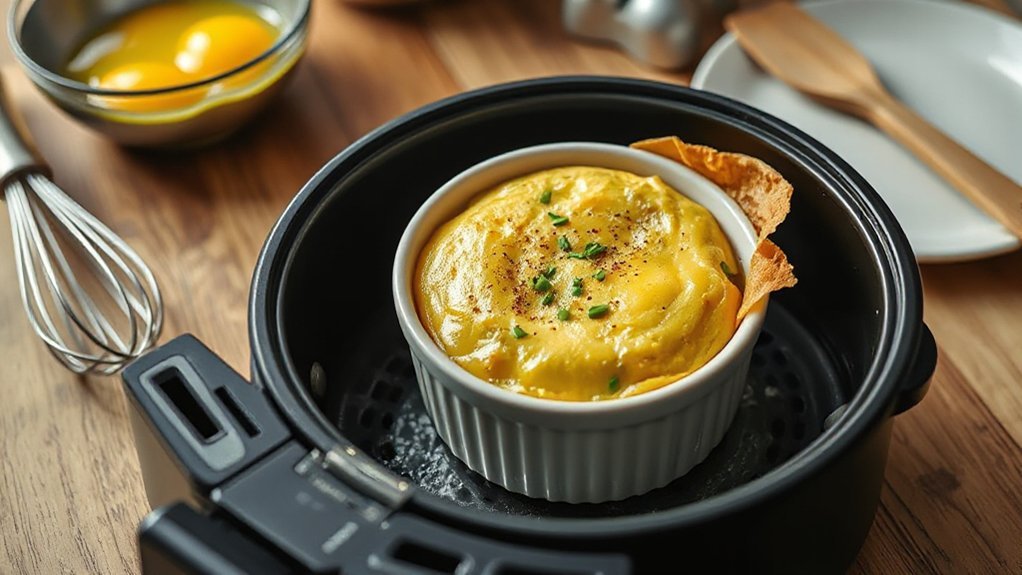
Which dish you pick will make or break your air fryer omelette — so choose smart. You’ll want cookware that fits your model and makes even cooking easy. Consider Airfryer brands’ basket shapes and compatible pans; small differences affect heat flow and browning. Think about Dish sizes: larger dishes flatten the omelette, smaller ones make it taller. Also pick materials that conduct heat evenly and aren’t too tall for circulation.
- A 6–7 inch round silicone or metal pan for single servings
- A shallow ceramic pie dish for gentle, even browning
- A small stainless steel or aluminum cake pan for quick rise
- Oven-safe ramekins for protein-packed, portioned servings
Keep handles short and avoid glass that blocks airflow. You want sturdy, easy-to-clean dishes that sit flat in the basket. Match the dish to your Airfryer brands’ specs and you’ll get consistent, fluffy results every time. You’ll love the difference, seriously.
Step-By-Step Prep
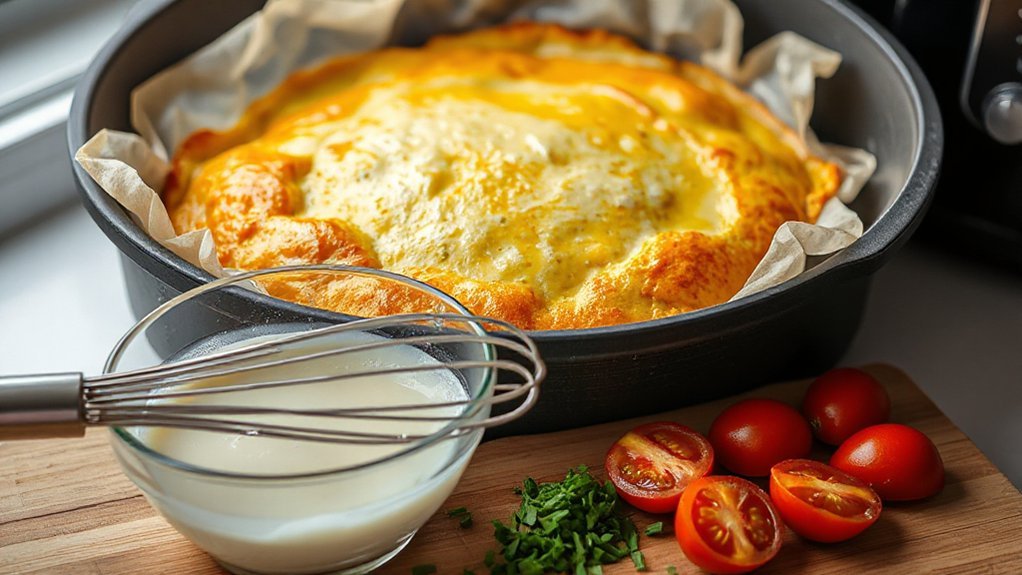
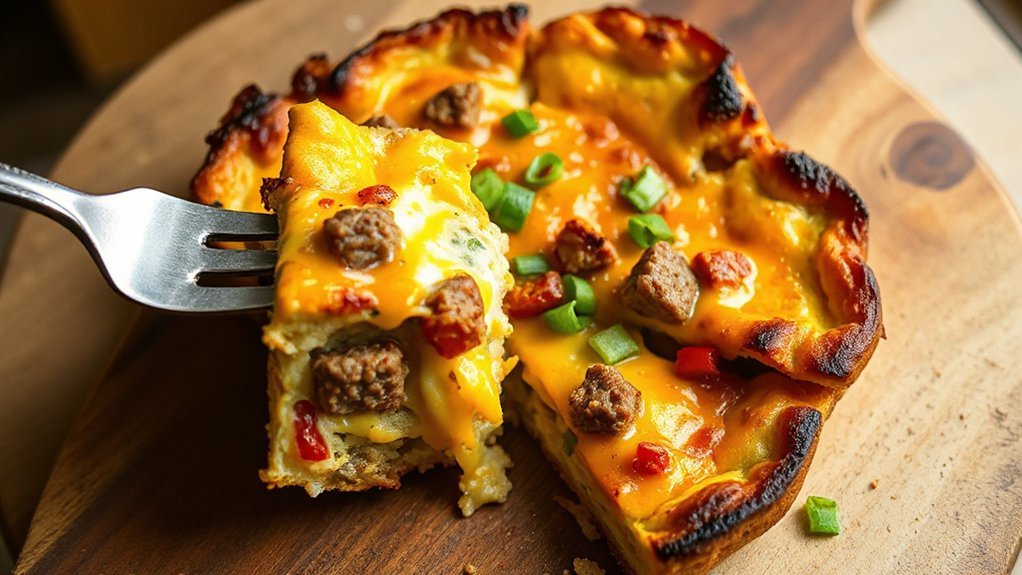
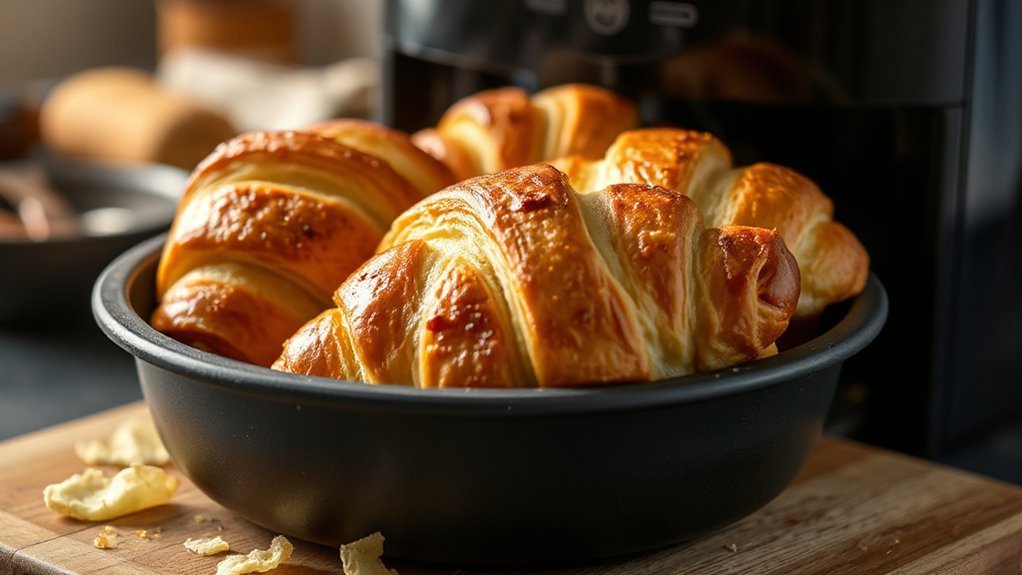
First, gather your ingredients and gear so you won’t be scrambling mid-cook: eggs, a splash of milk or cream, salt and pepper, any fillings prepped and drained, and the pan that fits your air fryer. Lay out items, follow a quick Workflow mapping to streamline steps, and run a Safety checklist—handle hot pans and preheat settings safely. Measure eggs and fillings, drain excess moisture, and oil the pan lightly.
| Item | Prep | Note |
|---|---|---|
| Eggs | Crack into bowl | Room temp helps |
| Fillings | Drain/chop | Avoid wet veggies |
| Pan | Oil/light spray | Fits basket |
| Seasoning | Mix | Taste lightly |
Set the air fryer to temperature, arrange fillings evenly, and pour calmly into the pan. You’ll move confidently through the cook because you prepared precisely and kept safety first. Keep a timer handy, note any adjustments for next time, and you’ll nail consistent results from your workflow mapping and Safety checklist every single breakfast easily.
Whisking and Aeration Technique
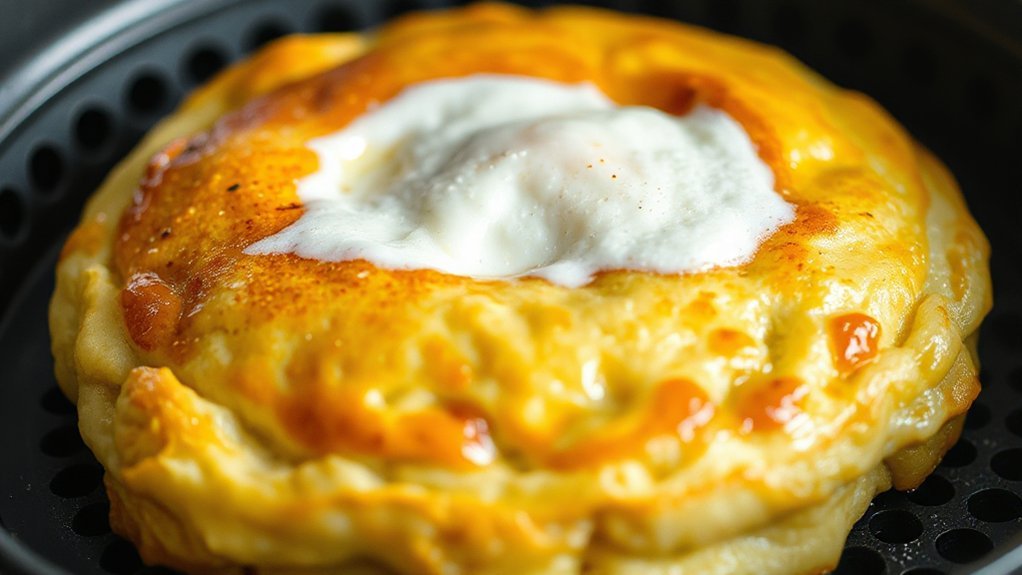
Whisking briskly gives your omelette a light, tender texture by folding air into the eggs, so grab a whisk or fork and work with purpose. You’ll watch color lighten and volume rise as you aim for uniformity without overdoing it. Use quick, controlled strokes, tilt the bowl slightly, and keep motion consistent to encourage air incorporation while breaking large pockets. Stop when mixture is smooth, slightly frothy, and cohesive, not dry or glossy. Gentle salt or a splash of water or milk helps bubble stabilization, yielding tiny, even bubbles that lift the curd.
- Whisk in one direction to build gentle volume.
- Scrape sides, fold ingredients in with a few slow strokes.
- Avoid electric beaters; they can over-aerate and weaken texture.
- Let batter rest to allow bubbles to settle before pouring.
You’ll get an airy base that sets nicely. This technique maximizes lift without collapsing the foam. Trust the process.
Air Fryer Temperature and Timing Guide
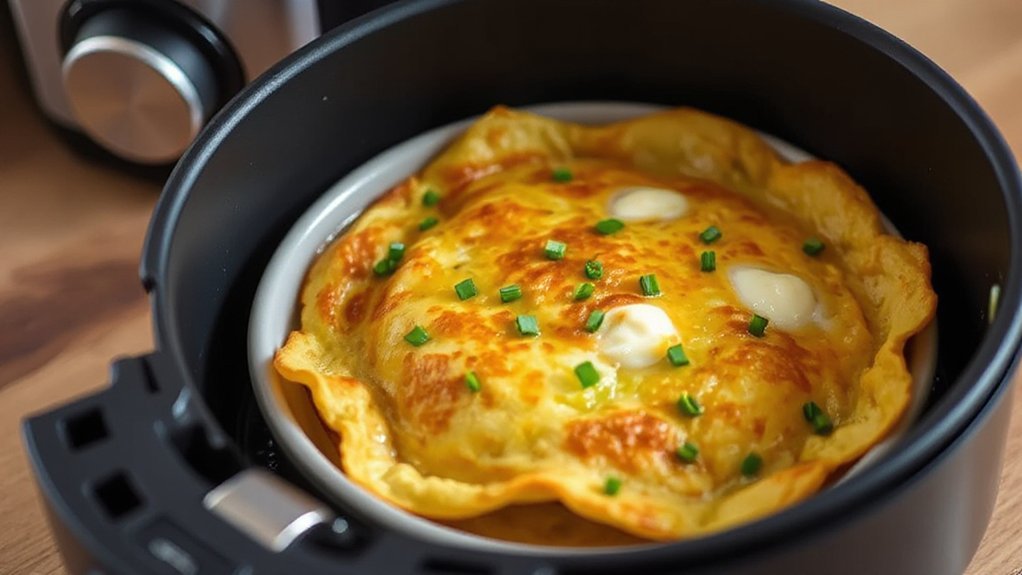
How hot should your air fryer be and for how long depends on omelette size and fillings, but a reliable starting point is 350°F for 6–10 minutes: shorter for thin, plain eggs, longer for thicker, stuffed varieties. You’ll preheat, monitor doneness, and adjust time by 1–2 minutes for altitude or extra egg whites. Use a toothpick to test center; it should come out mostly clean. Follow Safety Guidelines: don’t overload the basket, keep vents clear, and use oven mitts when removing hot pans. Also consider Energy Usage: lower temps for slightly longer runs save power compared with repeated reheats.
| Size | Time/Temp |
|---|---|
| Small | 6 min @350°F |
| Medium | 8 min @350°F |
| Large | 10 min @350°F |
| Extra | 12 min @325°F |
Trust your eye and timer, and you’ll nail consistent, fluffy results.
How to Add Fillings Without Sogginess
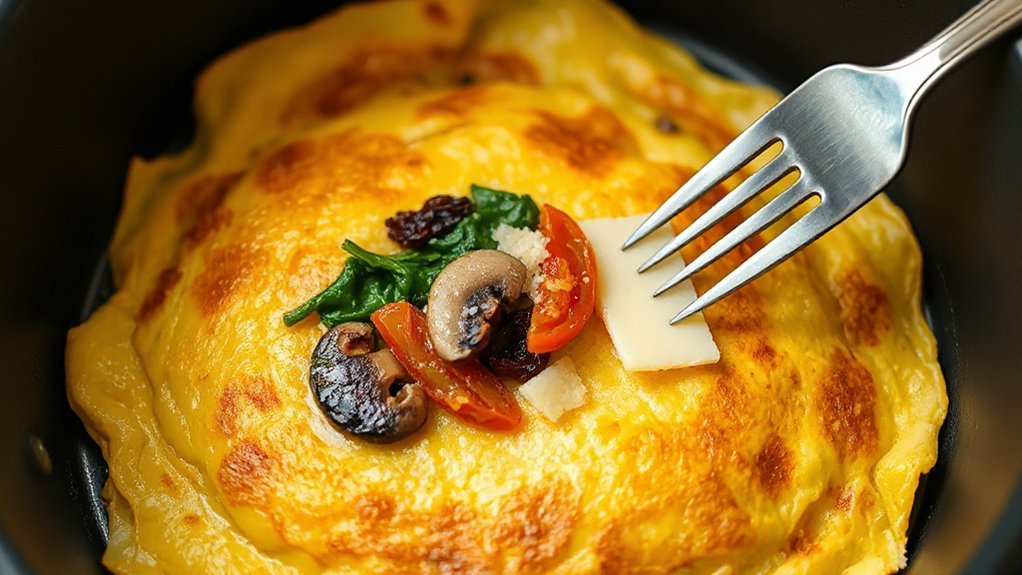
Once your air fryer timing is dialed in, you’ll want to treat fillings like partners that need a little prep to perform—wet ingredients will steam and make the omelette soggy if you don’t manage them. Start by draining and patting tomatoes, mushrooms, spinach or any juicy veg; sear or roast high-moisture items first to concentrate flavor and reduce water. Crumbled cheeses and cured meats add taste with less moisture than fresh soft cheeses. Think Presentation Styling: arrange fillings sparsely so steam escapes, and reserve a sprinkle for the top after cooking. Texture Psychology matters—contrast creamy egg with crisp or chewy bits to keep bites interesting.
- Sauté sliced mushrooms until browned and dry.
- Salt tomatoes, rest, then blot before adding.
- Blanch and squeeze spinach tight in a towel.
- Use grated firm cheese and scatter lightly.
These steps keep your air fryer omelette fluffy, visually appealing, and delightfully textured.
Serving Ideas and Make-Ahead Tips
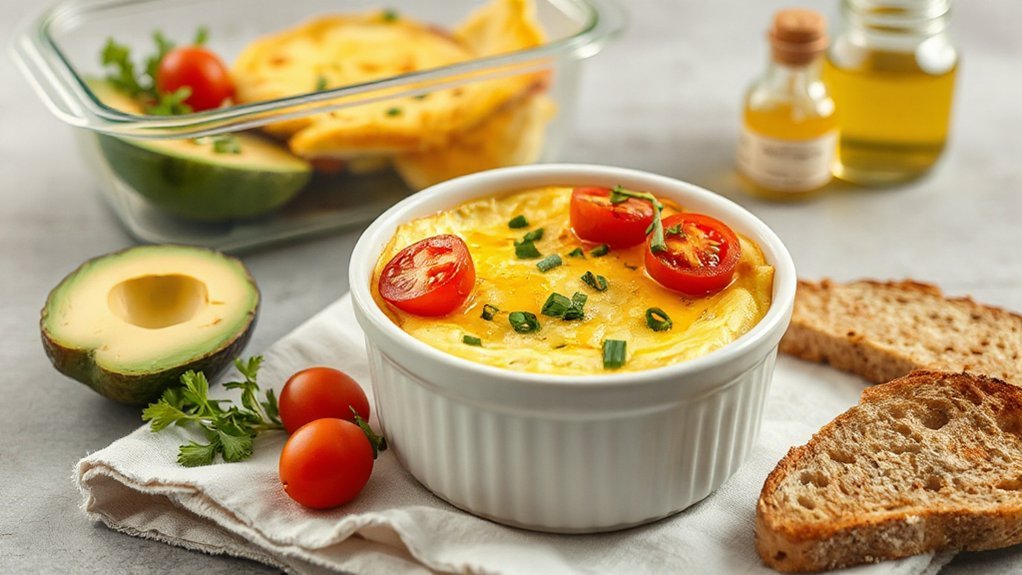
Want to plate your air fryer omelette to impress without extra fuss? You’ll keep it simple: slice into wedges, garnish with chopped herbs, a dollop of crème fraîche or yogurt, and a sprinkle of flaky salt. Serve with quick Meal Pairings like mixed greens tossed in lemon vinaigrette, garlic-roasted potatoes, or toasted sourdough for texture. For brunch crowds, stack wedges on warmed plates and offer hot sauce, pesto, and pickled onions on the side so guests customize.
Make-ahead tips save mornings and stress. Cool omelettes completely, wrap individually in parchment, then refrigerate up to 3 days. For longer storage, vacuum-seal or wrap tightly for Freezer Storage up to 2 months; thaw overnight in the fridge and reheat gently in the air fryer at low temp. Reheat wedges with a light mist of water to keep them tender. Label and date packages so you grab the right one fast.
Common Issues and Fixes
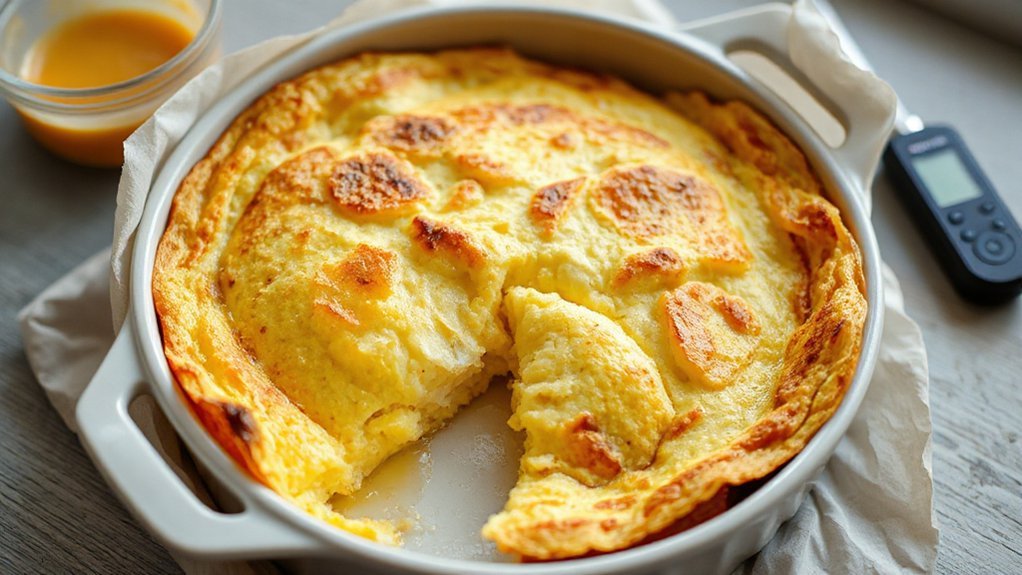
You’ll run into two common problems: an omelette that’s too dense or one with a runny center. For density, stop overmixing, whisk in a splash of milk or water, and lower the air fryer temperature slightly so eggs puff gently; for a runny center, give it a few extra minutes or a quick 30–60 second finish at higher heat and make sure the air fryer was preheated. Tweak whisking, liquid, and time based on your first try and you’ll nail the texture.
Omelette Too Dense
If your air fryer omelette feels dense instead of fluffy, it’s usually from a few simple mistakes you can fix fast. You might be overbeating, skipping air, or ignoring Kitchen Humidity and Altitude Effects that change how eggs expand. Beat eggs until just combined, fold in a splash of milk or water, and let the mixture rest so bubbles form. Use an air fryer setup that lets hot air circulate evenly. Try a slightly lower temperature and a touch more time so structure sets without squeezing out moisture. Also avoid overcrowding the basket; air needs room to move.
- Whisk gently to trap bubbles, not foam.
- Add 1 tablespoon liquid per two eggs.
- Preheat the air fryer for consistent heat.
- Avoid compacting fillings; distribute loosely.
Runny Center
While a slightly soft center can be delightful, an overly runny omelette usually means you’ve undercooked it, used too-high heat that browns the edges before the middle sets, or overloaded it with wet fillings. You’ll fix this by lowering temperature, extending time in short increments, and covering the dish for gentle steam that finishes the middle. Use a thermometer — 165°F (74°C) is safe and precise — or watch for custard-like jiggle that isn’t liquid. Drain or pre-cook wet fillings so they don’t release moisture; fold them in sparingly. Embrace basic culinary terminology when troubleshooting—set, curd, coagulation—and borrow tricks from restaurant trends like resting under a lid to carryover-cook. With small adjustments, you’ll get fluffy, set centers every time and serve immediately for best texture results.
Conclusion
You’ll be surprised when a tiny coincidence—like the timer dinging right as you crave comfort—turns a simple air-fryer omelette into your go-to hug-on-a-plate. You’ve nailed the whisk, picked the perfect dish, and let hot air do the rest, no flipping, no fuss. It feels like winning small, delicious victories; you’re feeding yourself fast, fluffy, and proud. Keep experimenting—you’ll stumble on new favorites and smile every time. Share them with someone who gets you today, often.
About The Author