You’ll get bakery-style chocolate chip cookies with crisp, caramelized edges and tender centers in your air fryer fast. Use room-temp butter, a mix of brown and granulated sugar, and chilled, scooped dough for controlled spread. Preheat briefly, space cookies well, and bake at 325–350°F for 6–9 minutes, rotating once. Try scale-measured ingredients and parchment to prevent hot spots. Keep small batches, test one tray first — keep going and you’ll fine-tune the perfect cookie every time.
Why Air Fryers Make Perfect Cookies
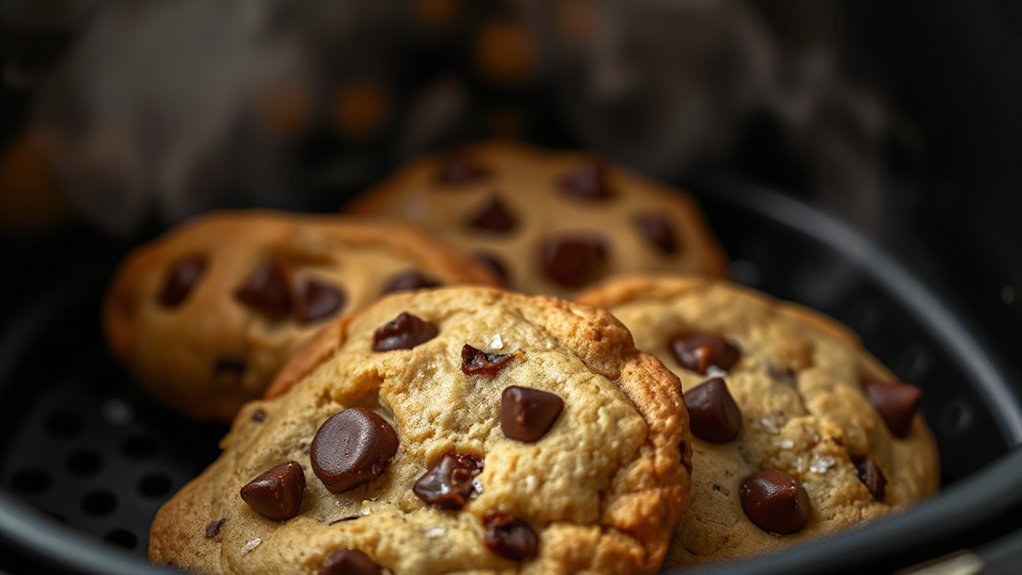
With their fast, circulating heat, air fryers give you cookies with crisp edges and tender centers every time. You’ll notice they work faster than an oven because convection circulation pushes hot air evenly around each cookie, so you get consistent browning without flipping trays. You won’t fuss with baking sheets and long preheats; the compact chamber concentrates heat, trimming time and energy. Because heat surrounds the dough, outside sugars caramelize quickly while interiors stay soft — that balance comes from quicker set-up and superior moisture retention. You can drop smaller batches and check doneness in a minute or two, learning how cook times change with basket size and dough temperature. Air fryers cut browning variability and make repeatable results easy, so you’ll bake confident, crowd-pleasing cookies every time. Try adjusting one variable at a time and you’ll dial in perfect texture fast. Enjoy fast, foolproof cookies tonight now.
Ingredients and Substitutions
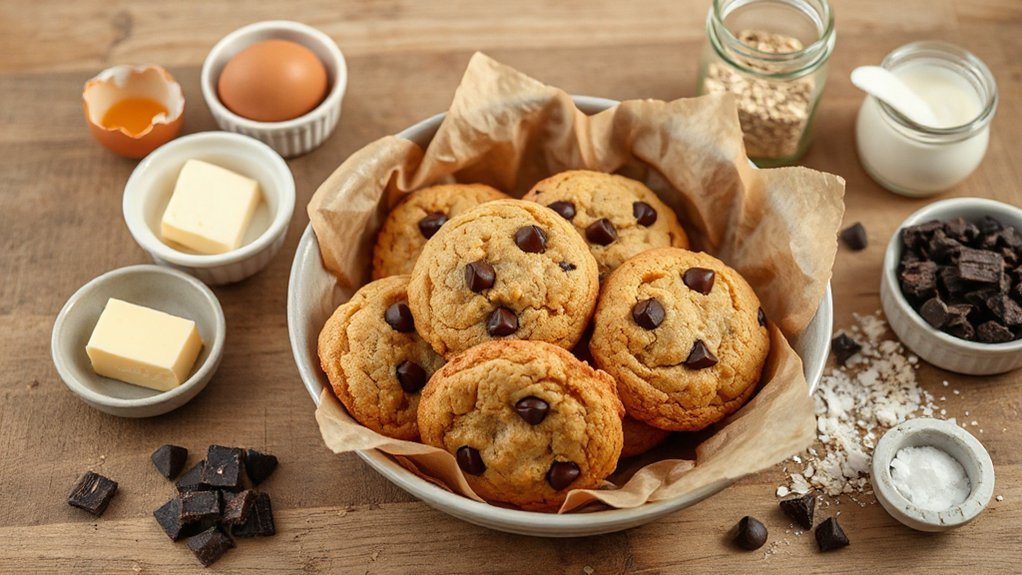
You’ll learn the essential ingredients—butter or oil, sugar, eggs, flour, leavening, and flavorings—that make cookie dough come together. You’ll find easy allergen-friendly swaps like applesauce or flax for eggs, gluten-free flours, and dairy-free fats so you can customize. You’ll also get simple measuring tips and ratio rules to keep your cookies tender and consistent in the air fryer.
Essential Ingredients
Start by gathering the basics: all-purpose flour (or a 1:1 gluten-free blend), granulated and brown sugar, butter (or a vegan shortening), an egg (or flax/chia/banana for vegan swaps), baking soda or powder, salt, and vanilla. You’ll focus on ingredient sourcing—fresh butter, quality chocolate, and correct sugars make crisp edges and chewy centers via flavor chemistry. Measure precisely; chilling dough controls spread. Use room-temperature butter for aeration or slightly cold for denser cookies.
| Ingredient | Role | Tip |
|---|---|---|
| Flour | Structure | Spoon and level |
| Sugars | Texture/Flavor | Brown for chew |
| Butter | Crispness | Cold for edges |
Balance salt and vanilla; small tweaks change texture and depth. If you’re switching sugars or flours, test small batches to see how spread and browning shift; jot notes so you tune ratios for your air fryer and get reliably crispy edges without sacrificing interior chew consistently.
Allergen-Friendly Swaps
Although allergens can feel limiting, you can easily swap common ingredients to keep cookies tasty and safe for most diets. Use gluten-free flour blends or oat flour for wheat, and swap dairy with plant-based butters or coconut oil; for eggs, try flax or chia “eggs” or commercial egg replacers. Replace nuts with seeds or toasted oats for crunch. When choosing alternatives, read allergen labeling closely and pick certified free products if needed. Prevent cross contamination by cleaning surfaces, using separate utensils, and storing substitutes apart. If you bake for others, label batches clearly and note any substitutions. You’ll still get crisp edges and great flavor while accommodating most allergies without sacrificing texture or taste. Ask guests about their needs before serving to stay considerate.
Measuring and Ratios
Swapping ingredients works best when you respect measuring and ratios, because small changes can shift texture and bake time. You’ll learn quick swaps that honor ratio visualization so cookies stay crisp at the edges and tender inside. Use measurement calibration—scale first, then adjust—for reliable results. Swap butter for oil? Reduce liquid slightly. Use applesauce? Expect denser crumb; reduce sugar a touch. Trust simple math: maintain fat-to-flour and sugar-to-flour balance. The table below helps you feel confident and creative.
| Swap | Effect | Tip |
|---|---|---|
| Butter→Oil | Softer edges | Cut liquid 10% |
| Sugar↓ | Less spread | Chill dough |
| Flour↑ | Firmer bite | Add gradually |
Follow these guides, taste as you go, and tweak confidently — your measurement calibration and ratio visualization will turn experiments into repeatable, joyful air fryer cookie moments daily.
Equipment and Prep
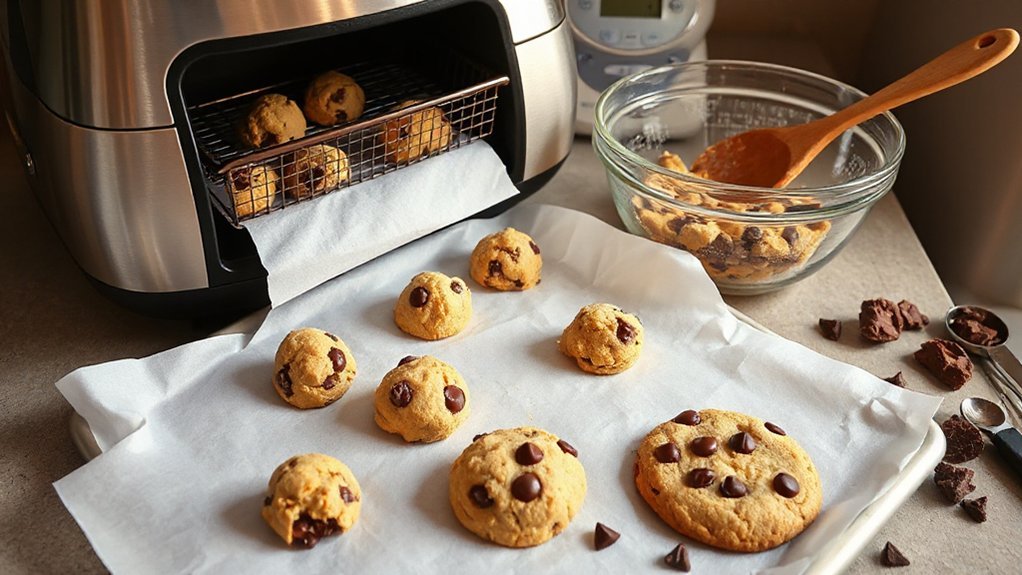
You’ll want a few key tools to make air fryer cookies turn out great: an air fryer with at least a 3–4 quart basket, a small offset spatula or flat turner, parchment rounds or a silicone liner cut to fit, a cookie scoop, and basic measuring cups and spoons. Keep Counter Organization simple: clear a dedicated space, line up your tools, and pre-measure ingredients so you move quickly. Don’t forget Safety Gear—oven mitts, a silicone mat for hot trays, and a thermometer if you’re testing temps. Prep also means checking your air fryer’s basket size and planning batches.
Gather a 3 to 4 quart air fryer, parchment rounds, spatula, scoop, and oven mitts—pre-measure and organize for perfect cookies.
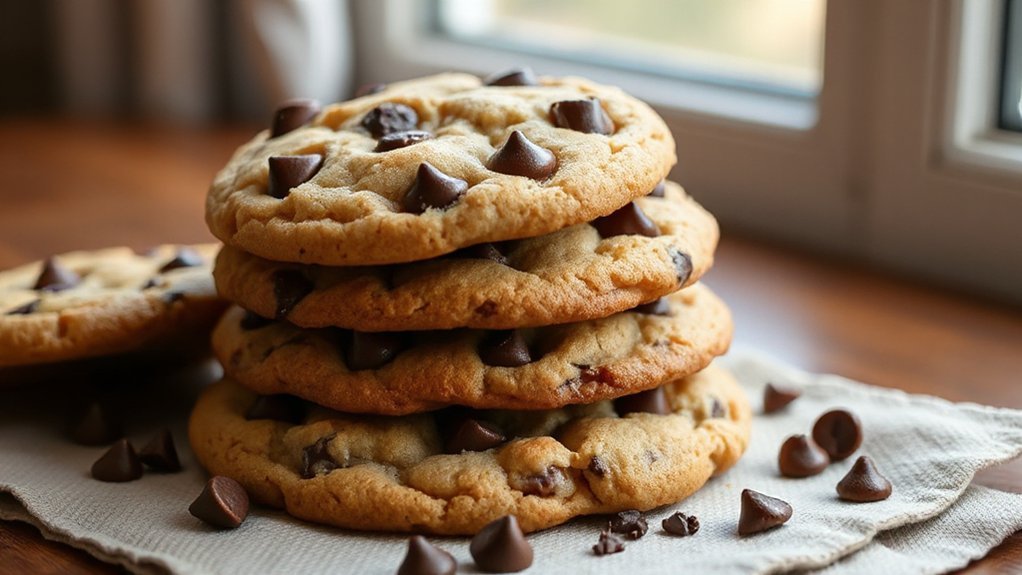
- Clear workspace and a tray for finished cookies
- Parchment or silicone liners trimmed to fit
- Small spatula or turner for transferring rounds
- Measuring tools and a scoop for consistent cookies
This setup saves time, reduces stress, and helps you get those crispy edges every time. Enjoy warm cookies straight away.
Dough Mixing Step-by-Step
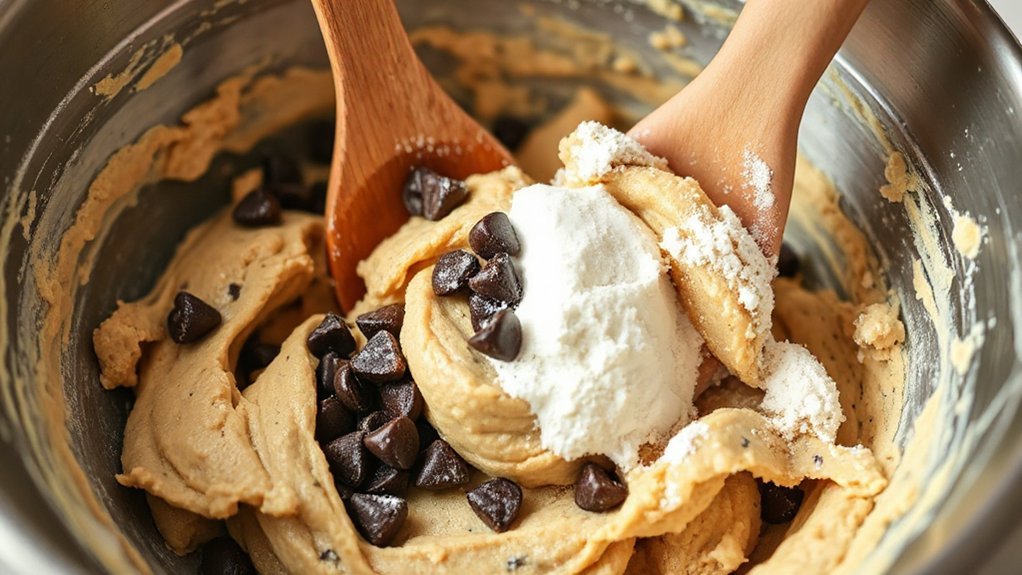
Start by creaming softened butter with brown and granulated sugar until it’s light and airy—this gives your cookies lift and those chewy edges. Next, beat in eggs one at a time and add vanilla, scraping the bowl between additions so everything blends evenly. Sift dry ingredients together, then add them in two additions to prevent overmixing. Use a gentle folding technique with a spatula on the last additions to incorporate flour without activating excess gluten development; you want a tender interior and crisp edges. Fold in chocolate chips just until evenly distributed, avoiding long strokes. If you prefer, finish with a few quick low-speed pulses in a mixer rather than vigorous beating. Watch the dough: it should hold together but still be slightly soft and shaggy. Clean edges of the bowl and resist the urge to overwork—controlled mixing gives you consistent cookies and the texture you’re aiming for.
Shaping, Chilling, and Portioning
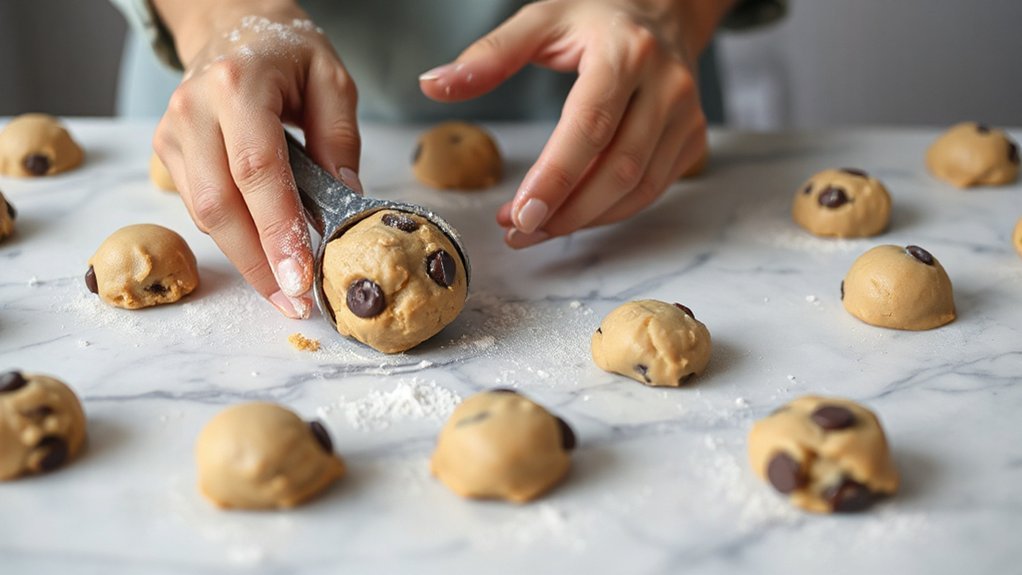
Once your dough’s soft and holding together, shaping, chilling, and portioning set you up for consistent air-fried cookies with the right chew and crisp. Use these quick habits:
- Scoop consistently for portion accuracy.
- Chill scoops to firm fats and sharpen edge definition.
- Tighten balls to encourage crisp rims.
- Weigh or label trays to track size.
You’ll shape rounds tightly so edges start to form, which improves edge definition after baking. Chill the dough; it firms fats, controls spread, and makes portions easier to handle. Roll or slightly flatten balls depending on domes or thin edges. Chill scoops before arranging them in the basket to keep shapes neat. When you portion, work quickly to keep dough cool and avoid overworking gluten. Small adjustments—tighter shaping, extra 10 minutes in the fridge, or a more precise scoop—give you repeatable cookies with crisp, defined edges and tender center.
Air Fryer Cooking Times and Temperatures
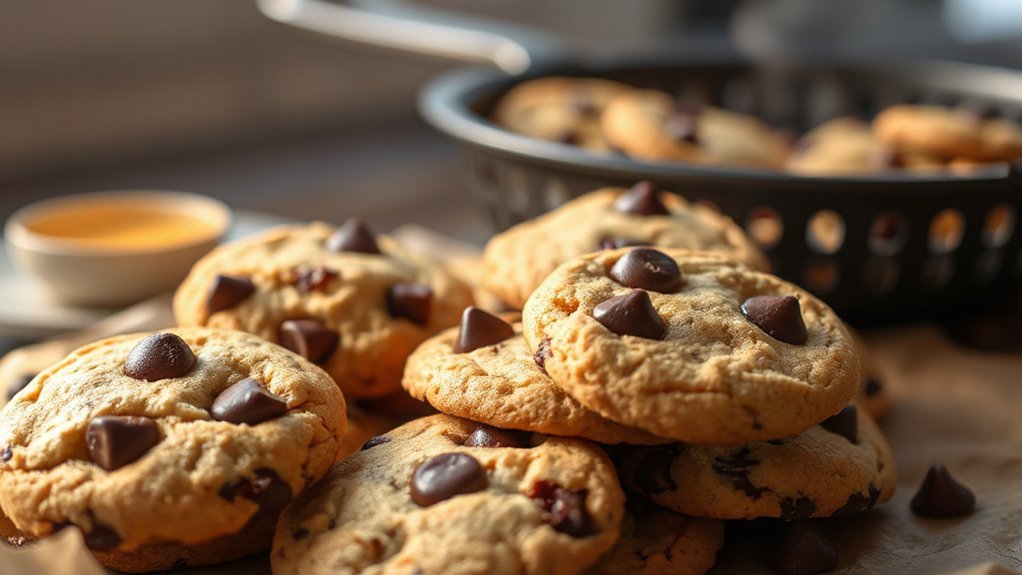
Although air fryers vary, think of them like speedier ovens and dial temps and times accordingly: for most drop cookies set 325–350°F and plan on 6–10 minutes, checking at the lower end for a tender center and a minute or two longer for crisper edges. You’ll want to preheat briefly—aim for a 3–5 minute Preheat Duration so the basket’s hot and circulation is steady before you slide in cookies. Flattening dough slightly and spacing cookies keeps airflow even, so you get uniform browning without overbaking. If you’re at elevation, factor an Altitude Adjustment: reduce time slightly or nudge temperature down 5–10°F to prevent drying. Rotate the basket halfway through to promote even color and use parchment or a perforated liner for easier handling. Start with a small test batch to dial in your exact combo of time and temp, and you’ll have reliably crisp edges with soft centers.
Troubleshooting Common Issues
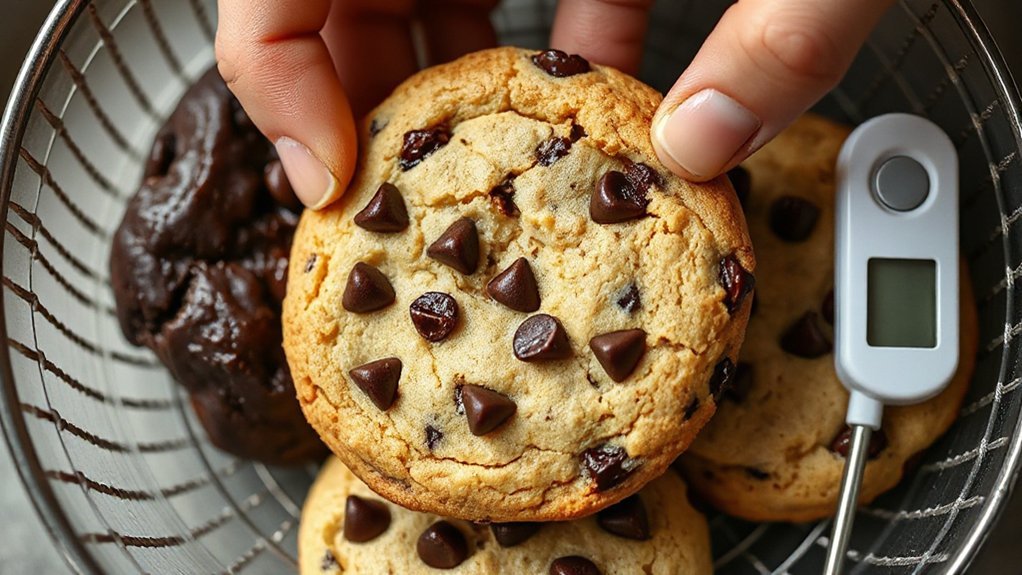
If your cookies brown unevenly, it’s usually from overcrowding or uneven air flow, and you can fix that by spacing them out and adjusting the rack. If centers come out undercooked while edges look done, try lowering the temperature slightly and adding a minute or two, or flattening thicker dough pieces. You can solve both issues with simple tweaks—spacing, rack position, preheating, and small time or temp changes—to get evenly browned, fully baked cookies.
Uneven Browning
When your cookies come out blotchy or browned on one side and pale on the other, uneven browning is usually the problem—and it’s easy to fix. You’ve likely got inconsistent Sugars Distribution or hot spots that change Surface Gloss, so the cookie top and edges don’t color evenly. You can fix this with small adjustments to placement, batch size, and dough temperature.
- Rotate the basket halfway through the bake for even airflow.
- Don’t overcrowd; give each cookie room to brown evenly.
- Chill scoops briefly to slow spread and promote uniform color.
- Use a light aluminum tray or parchment to reduce direct hot spots.
Try one change at a time and you’ll get consistent, golden cookies every batch. Small tweaks make a big difference quickly.
Undercooked Centers
Because air fryers brown the outside fast, your cookies can look golden while their centers stay soft and raw — but you can fix that with a few simple tweaks. First, lower the temperature by 10–20°F and add 1–2 minutes; that gives heat time to reach center without overbrowning edges. Use an instant-read thermometer to check Center Temperature—ideally 170–175°F for set cookies. If you prefer slightly gooey middles, pull at 165°F and rest on the tray; carryover heat finishes them. Rotate the basket midway and space cookies so air circulates. If you serve underdone cookies, remember Serving Risks: raw eggs and flour may pose food-safety concerns, so warn guests or fully bake for kids, pregnant people, and immunocompromised diners. Enjoy safer, tastier cookies today.
Storage and Reheating Tips
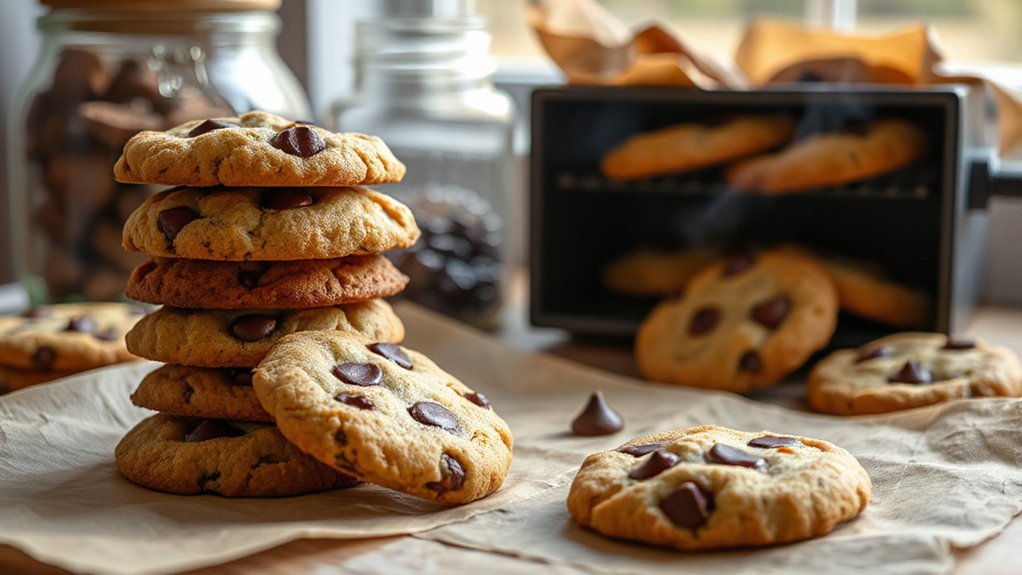
Wondering how to keep your air fryer cookies tasting just-baked? Use airtight containers and cool cookies completely before storing to lock in crisp edges and chewy centers. Freezer Storage works great: flash-freeze on a tray, then bag portions for weeks. For short-term, layer cookies with parchment in a container to avoid sticking.
- Store at room temperature up to 3 days in an airtight container.
- Freeze single cookies or dough balls for up to 3 months.
- Thaw frozen cookies at room temperature in their bag to retain moisture.
- Reheat gently to revive texture—don’t overcook.
For Reheat Methods, the air fryer shines: 2–3 minutes at 300°F revives crisp edges; an oven at 325°F for 5–7 minutes works too. Microwave only for 10–15 seconds if you’re in a rush, then let rest a minute so centers finish warming without getting gummy. Store reheated cookies briefly; enjoy within a day for best.
Variations and Mix-In Ideas
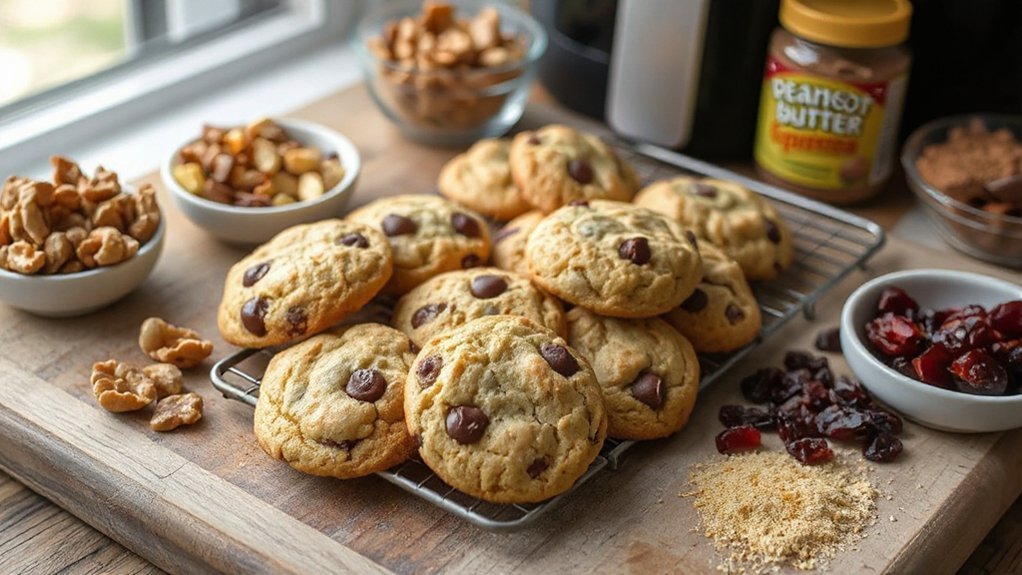
A few simple swap-ins can totally change your cookie game, and you’ll have fun mixing flavors and textures. Try swapping half the semisweet chips for white chocolate and macadamia nuts for a creamy, crunchy contrast. For spice lovers, add cinnamon, cardamom, or a pinch of cayenne. You can fold in chopped dried fruit and toasted coconut for bright, chewy notes. Embrace Regional twists by borrowing ingredients — matcha powder and black sesame for a Japanese vibe, dulce de leche swirls for Latin flair, or lemon zest with pistachios for Mediterranean character. For holidays, use Festive toppings like crushed candy canes, colored sprinkles, or a sprinkle of flaky sea salt over salted caramel chips. You’ll also enjoy savory-sweet combos: pretzel bits, cheddar chunks, or rosemary with honey. Keep mix-ins small so cookies spread evenly, and adjust bake time for denser batches. Experiment in batches until you hit the perfect combo.
Conclusion
You’ll pull warm, crackled cookies from the air fryer, edges bronzed like late-summer sand and centers gooey as melted caramel. You’ve learned simple swaps, tiny tricks, and a few timing secrets, so you’ll bake with confidence every time. Let the scent curl around your kitchen, invite happy mouths, and keep experimenting—toss in nuts, sea salt, or toffee. You’ll make magic in minutes and smile at every crisp, chewy bite and share joyous crumbs with friends.
About The Author