You’ll get perfectly crisp, herb-packed falafel from soaked dried chickpeas, fresh parsley and cilantro, toasted cumin and coriander, plus a pinch of cayenne for warmth. Blitz drained chickpeas with onion, garlic, tahini, lemon and baking powder, form compact patties, dust with flour or panko, and air-fry at 375°F until golden, flipping once. Serve in warm pita with tahini sauce and pickles. Keep a batch frozen for quick meals—keep going to learn tips, timings, and troubleshooting.
Ingredients and Pantry Staples
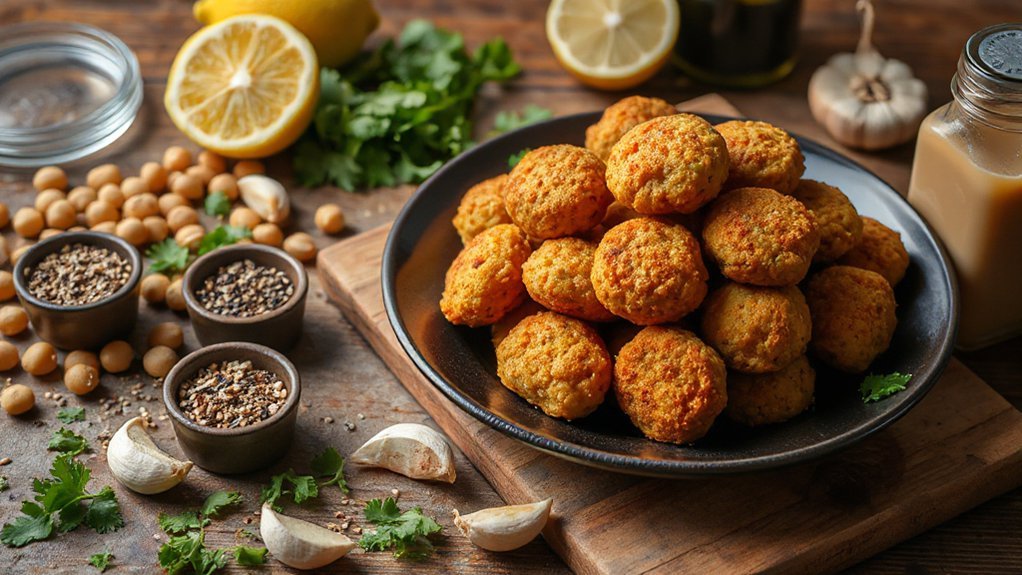
A few pantry staples turn simple groceries into crispy air-fryer falafel. You’ll want dried chickpeas (never canned) for best texture, plus tahini, garlic, onion, and lots of fresh parsley and cilantro. Ground cumin, coriander, smoked paprika, and a pinch of cayenne give that street-food punch. Salt and baking powder help interior lift while a little flour or chickpea flour binds without heaviness. Keep lemon juice or preserved lemon for brightness. These Pantry essentials offer Shelf stability, so you can stash spices and dry beans for weeks. Store tahini and flours in the fridge after opening to extend freshness; other items benefit from airtight jars to retain aroma. You’ll also want simple garnishes: yogurt or tahini sauce, cucumber, tomato, and pickles. With these ingredients on hand, you’ll assemble, pulse, season, and shape falafel that crisp outside and stay tender inside. You’ll love how quickly they become a family favorite.
Tools and Air Fryer Setup
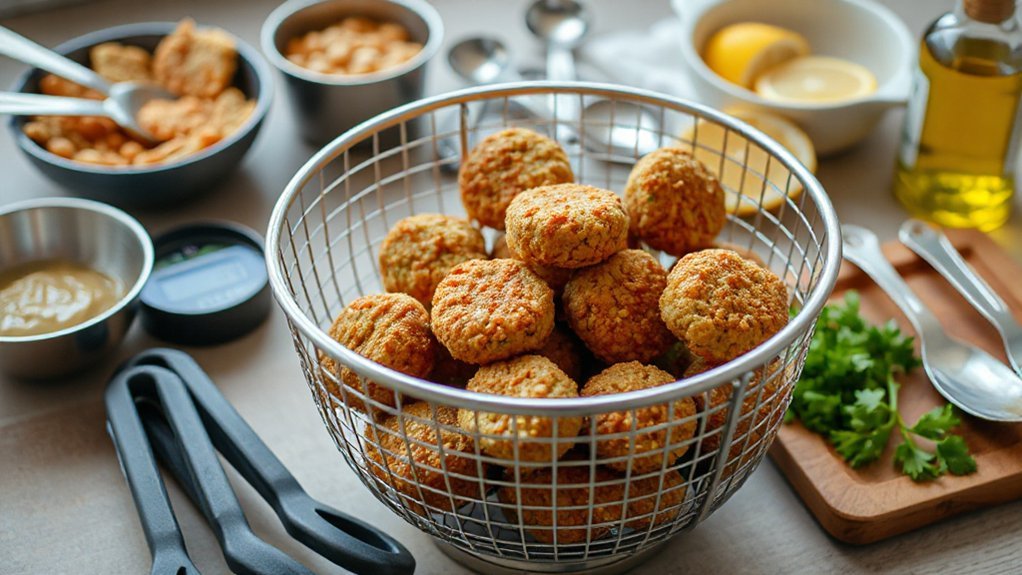
Before you fire up the air fryer, gather a few simple tools so cooking goes smoothly: a food processor for blitzing chickpeas and herbs, a set of measuring cups and spoons, mixing bowls, a sturdy spatula, and an ice-cream scoop or small cookie scoop to form even falafel. Next, pick an air fryer with good capacity—basket-style units promote crisping and let you layer patties without squashing them. For Airflow Optimization, leave space between patties and avoid overcrowding; use a perforated parchment sheet or a wire rack to boost circulation. Check your model’s temperature accuracy with an oven thermometer and adjust cooking times based on its hot spots. Accessory Recommendations: nonstick spray, silicone tongs, and a small brush for oiling falafel gently. Keep tools nearby so you can work fast, flip once midway, and serve hot, crispy falafel every time. Taste and texture improve when you tweak settings regularly.
Chickpea Soaking and Prep Timing
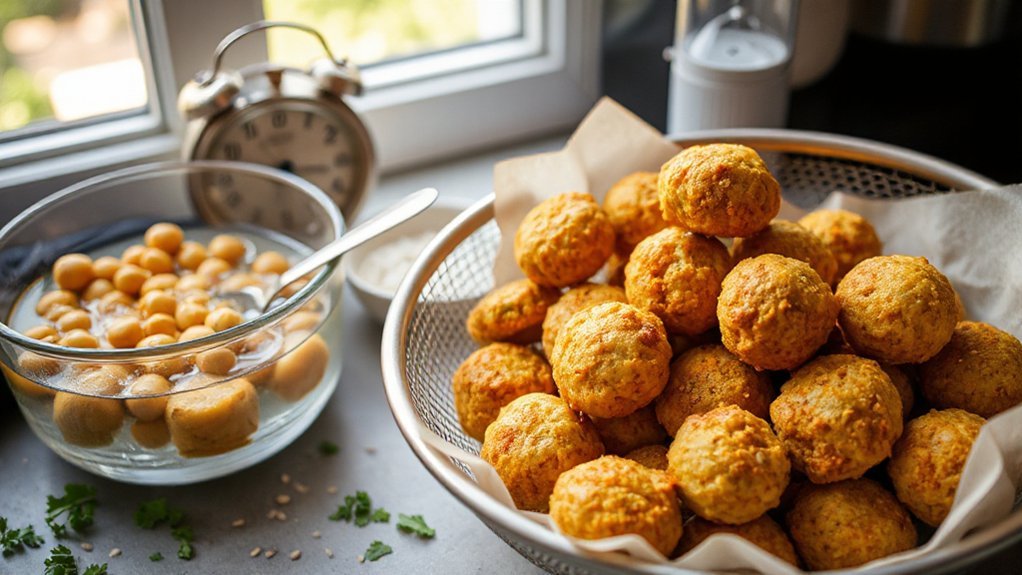
If you want tender, well-textured falafel, plan on using dried chickpeas and giving them plenty of time to soak—ideally 12 to 24 hours in plenty of cold water so they fully rehydrate and swell. You’ll rinse them, remove debris, and cover by several inches of water because they’ll double in size. Decide your soak duration based on schedule: longer gives softer interiors and easier grinding, shorter still works but risks graininess. Keep soak temperature cool — cold tap water is fine — since warm water starts fermentation and changes texture. Change water if it sits over 18 hours in warm climates. After soaking, drain thoroughly and dry on towel; excess moisture makes a gummy mixture. If you’re short on time, use dried chickpeas with a quick overnight soak plus periodic water refreshes to get close. Planning this step lets you prep ahead and keeps falafel crisp.
Herb and Spice Blend Tips
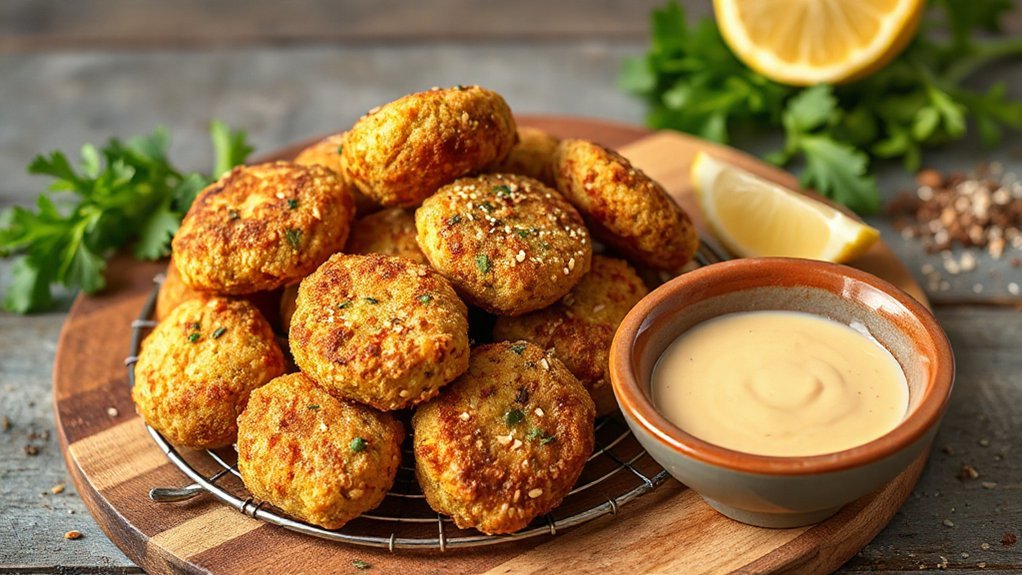
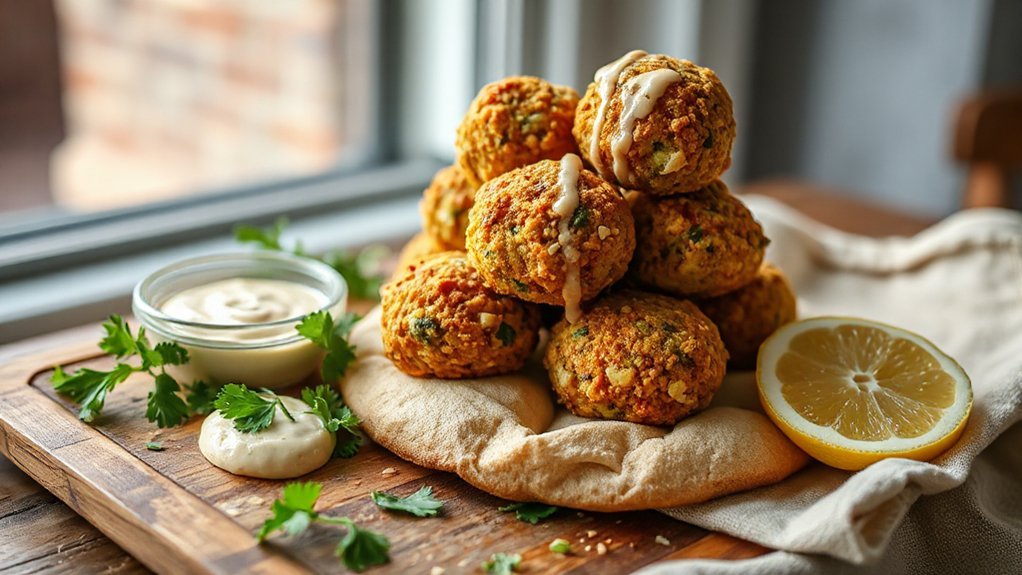
You’ll want fresh herbs when possible for bright, zesty flavor, but use dried sparingly since they’re more concentrated. Toast whole spices briefly in a dry pan to wake up their oils and add real depth before grinding or mixing. Taste as you go and tweak salt, lemon, herbs, and heat so the falafel sings without overpowering.
Fresh Vs Dried Herbs
Wondering whether to reach for fresh parsley or dried oregano for your falafel mix? You’ll usually want fresh herbs for brightness and texture — parsley and cilantro give fresh green lift and improve visual aesthetics — while dried herbs like oregano and thyme concentrate flavor without adding moisture. Use roughly three times less dried than fresh by volume, and add dried early so it rehydrates; add fresh late so it stays bright. Think about aroma chemistry: fresh oils release when chopped, dried concentrates older volatiles, so balance both for depth. If you must choose one, favor fresh for color and mouthfeel; save dried for pantry convenience or when you want a more assertive, compact herbal note. Taste as you go and adjust boldly now.
Toasting Spices for Depth
Toasting spices releases oils and deepens flavor fast, and you’ll notice the difference in your falafel from the first bite. Heat a dry skillet, toss whole cumin, coriander, and sesame, and keep them moving; you’ll smell when they bloom. Learn the aroma indicators—nutty, slightly sweet—then remove immediately. Stay below smoke thresholds by using medium heat and short contact, because burnt spices taste bitter. Let toasted seeds cool before crushing or grinding to preserve volatile oils. If you only have ground spices, toast very briefly and watch closely. Small batches work best so you control color and scent. Use freshly toasted spices in your chickpea mix for a brighter, more vibrant falafel every time. Store leftovers airtight; re-toast lightly before using to revive aroma.
Balancing Flavors and Heat
After toasting those spices and letting them cool, you’ll want to balance herbs and heat so the falafel sings instead of shouting. Start with parsley and cilantro for bright herb backbone, then add cumin, coriander, and a touch of cayenne for warmth. Taste as you go: if the mix feels flat, introduce Acid Contrast—lemon zest or a splash of vinegar—to lift the profile. If it bites too hard, use yogurt or tahini in small amounts for Fat Soothing and to round edges. Remember fresh herbs lose punch when overprocessed, so fold gently. Adjust salt last; it brings out everything. For party-ready falafel, aim for layered flavors: herbal freshness, gentle heat, sour lift, and creamy calm. That balance keeps every bite exciting. Share with hungry friends.
Forming, Breading, and Air Frying Technique
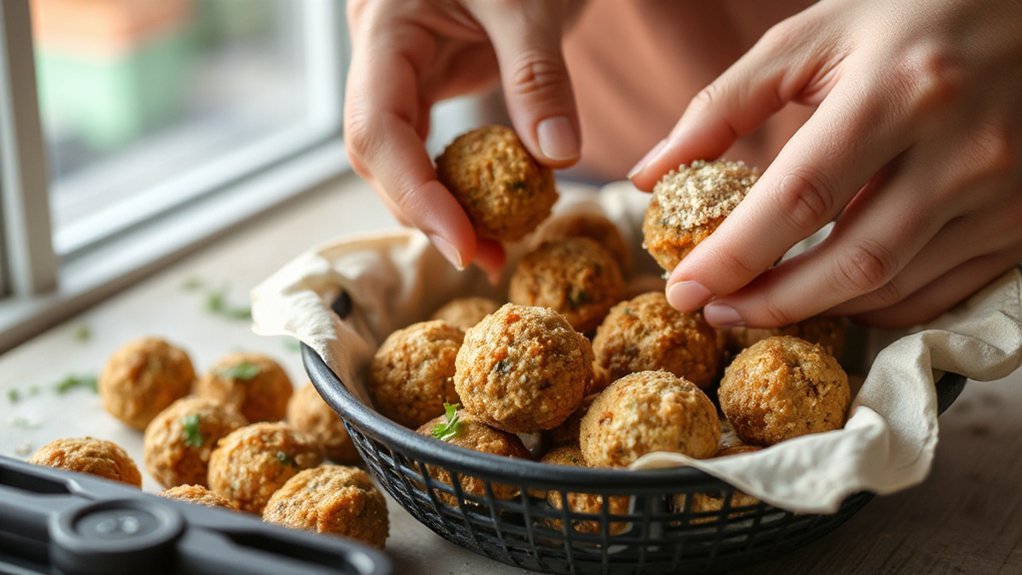
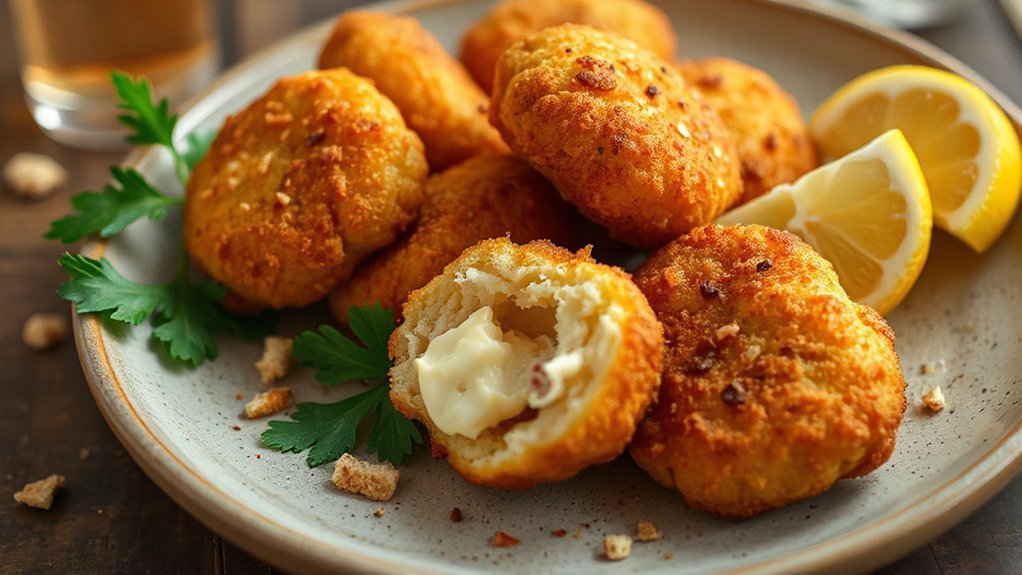
Shaping the balls or patties right makes the rest easy, so press a compact, slightly crumbly mixture into tight 1½–2 inch rounds or shallow patties—you want them to hold together without being dense. Work quickly with damp hands and a small scoop so you get shape uniformity; consistent size cooks evenly and avoids falling apart. For breading, pat on a light dusting of flour, then dip in beaten egg or a chickpea slurry if you keep it vegan-friendly and coat with breadcrumbs or panko for good crust adhesion. Don’t overload the coating — thin, even layers crisp better. Preheat your air fryer to 375°F (190°C), spray baskets lightly with oil, and space falafel so air circulates. Flip halfway after 7–8 minutes and finish at 390°F for 2–3 minutes if needed to deepen color. Rest briefly before serving to let the interior set. You’ll get reliably crisp, tender results.
Serving Ideas and Sauce Pairings
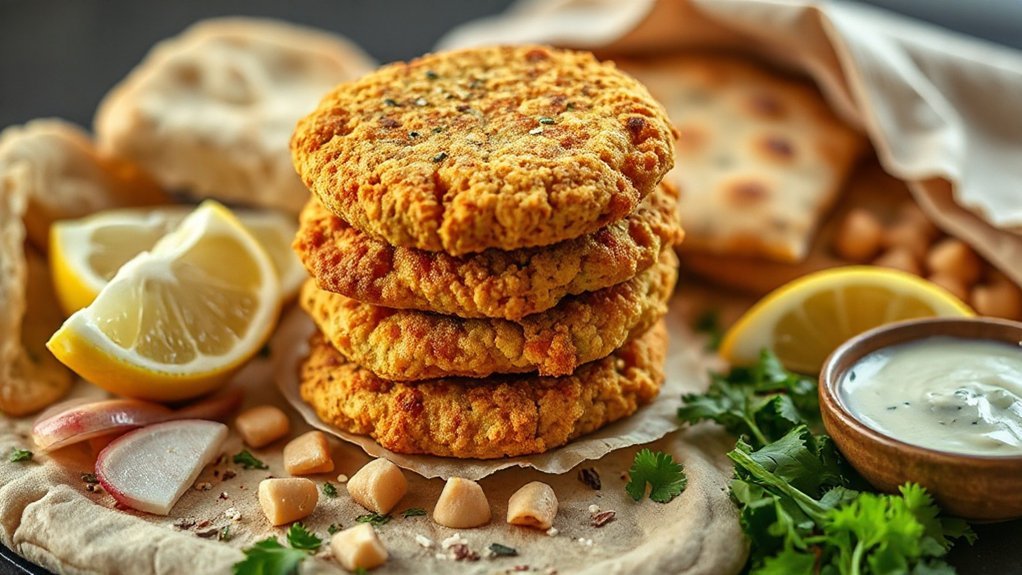
Once your falafel are crisp and resting, think about how you want to serve them so their flavors sing—whether you go casual or a bit more dressed up. You can tuck falafel into warm pita with pickled cucumbers, shredded lettuce, tomatoes, and a drizzle of lemony tahini, or build open-faced sandwiches with roasted eggplant and fresh herbs. For parties, arrange mezze platters with hummus, baba ghanoush, olives, sliced peppers, and stacked falafel for guests to graze. Offer vibrant sauce options: classic tahini, garlic yogurt, spicy harissa mayo, and a bright herb chimichurri. Try tahini pairings with pomegranate molasses or za’atar for sweet-tangy or herbal notes. Keep sauces in small bowls so people mix and match—falafel are forgiving and crave contrast. Finish with a squeeze of lemon, a sprinkle of chopped parsley, and sesame seeds. You’ll serve something dynamic and irresistible whether it’s family dinner or any casual gathering.
Storage, Reheating, and Make-Ahead Strategies
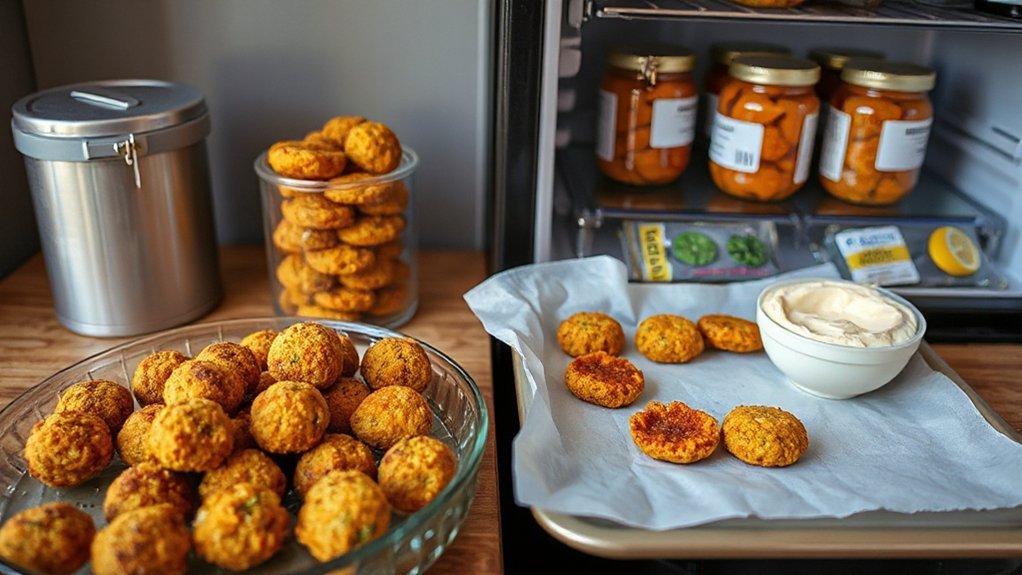
Storing your air-fried falafel properly keeps them crisp and flavorful for days and makes weeknight meals a breeze. Cool them, then arrange in a single layer on a baking sheet and freeze until firm—this prevents sticking and preserves shape. Transfer frozen balls to airtight containers or freezer bags, squeeze out air, and use clear Freezer labeling with date and contents. In the fridge, keep falafel in a shallow container lined with paper towels to absorb moisture; eat within 3–4 days.
To reheat, preheat the air fryer to 350°F (175°C) and heat for 4–6 minutes from refrigerated, or 8–10 minutes from frozen, flipping once for even browning. Don’t use microwaves if you want Crisp retention; the air fryer restores exterior crunch while warming the center. For make-ahead meals, double the batch and portion into meal-size packs. Thaw overnight in the fridge before reheating for best texture. Serve immediately afterwards.
Conclusion
You’ll love how these crispy air fryer falafel turn weeknight dinner into a little street-food celebration—each bite’s a crunchy surprise that’s actually easy to pull off. You’ll feel proud shaping, seasoning, and frying them, and you’ll find they pair with tahini, pickles, or a bright herb salad. Make a batch ahead; they reheat beautifully. Keep experimenting with herbs and spices, and you’ll never miss deep frying for that golden, satisfying crunch, and share them often.
About The Author