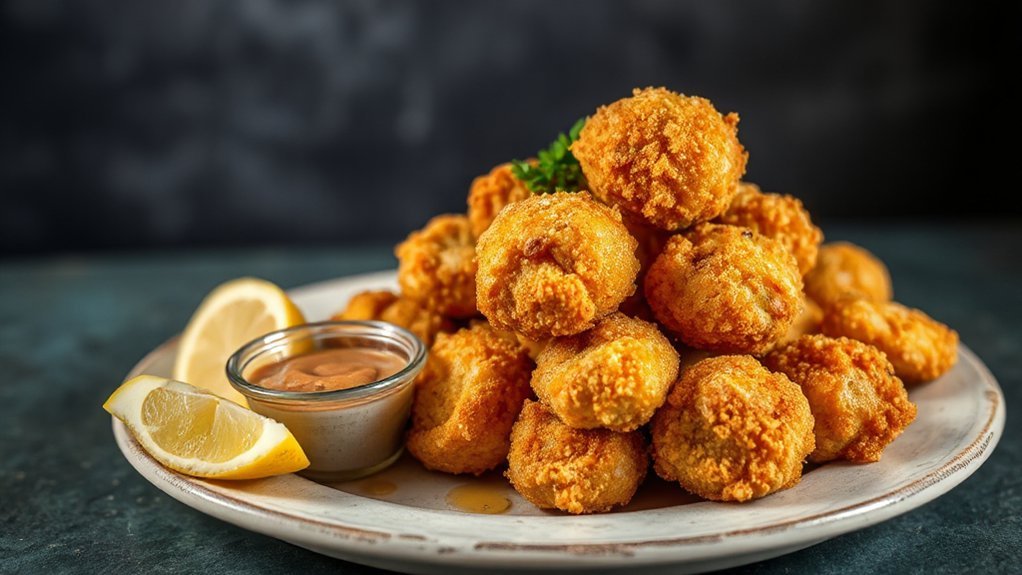
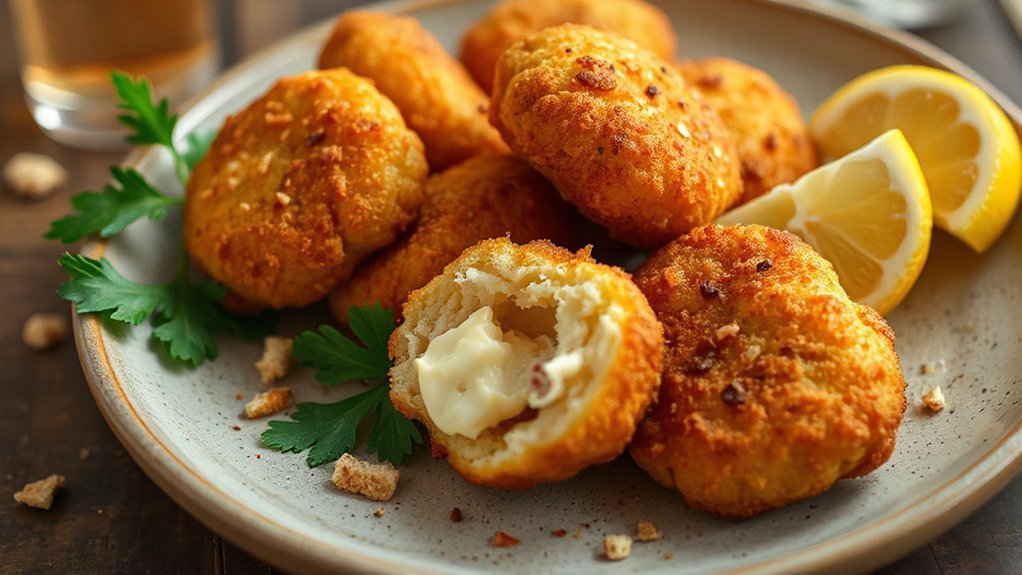
You can make restaurant‑quality, crispy cod in an air fryer using minimal oil: pat fillets dry, dust with seasoned flour or potato starch, dip in beaten egg or mustard, press on panko (or GF crumbs), then preheat the fryer to 200°C and air‑fry in a single layer 10–12 minutes, flipping once, until it flakes at 63°C. Keep chips separate, cool on a rack, and follow simple storage and reheating tips below if you want guidance.
Why an Air Fryer Is Perfect for Cod
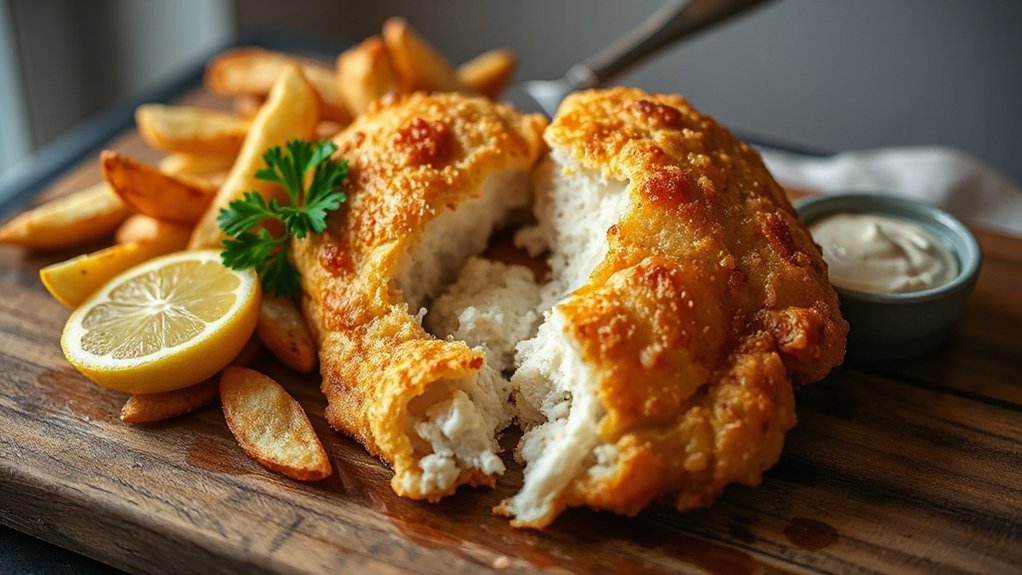
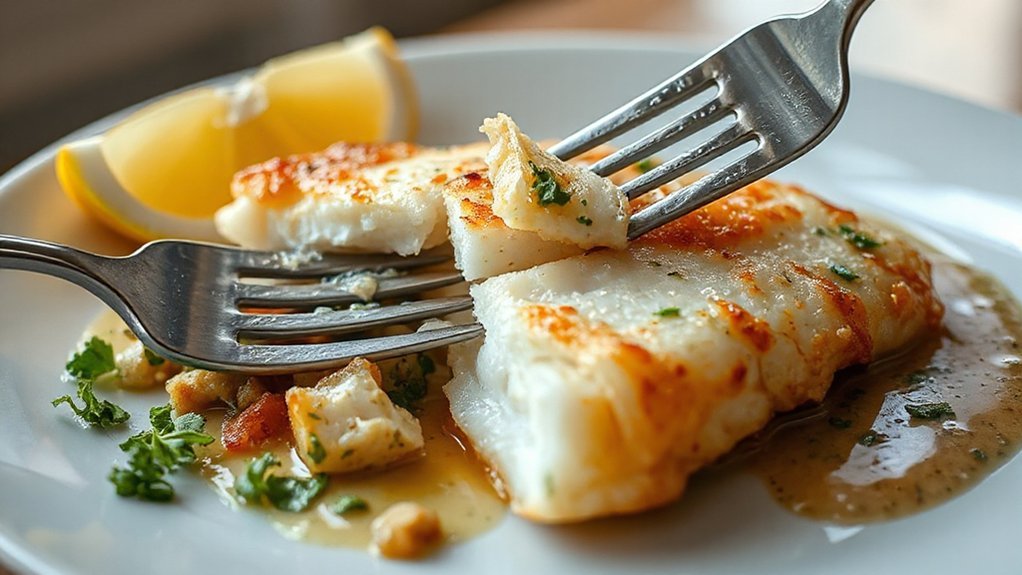
Because cod’s delicate flakes can dry out or fall apart, an air fryer is ideal: it blasts hot air for a crisp, golden exterior while keeping the inside moist and flaky. You’ll get consistent results without babysitting—hot circulating air seals edges quickly so the fish holds together and flakes neatly on your fork. You use far less oil than deep frying, so cleanup’s simpler and the dish feels lighter, with genuine Energy efficiency that shortens cook time and your kitchen’s heat load. The intense, quick heat also boosts Flavor concentration in the crust, so you taste more of the seasoning and natural cod sweetness in every bite. You’ll appreciate the speed, the predictable timing, and the reduced splatter. For classic fish & chips, the air fryer gives you crispiness, moistness, and control, all with less fuss and a brighter finish than you’d expect. Every single time you cook.
Ingredients and Smart Swaps

You’ll want pantry staples like olive oil, lemon, kosher salt, pepper, and a sprinkle of paprika and garlic powder to make the cod pop. For the classic crunch, panko works great—but if you need gluten-free, swap in crushed cornflakes or gluten-free breadcrumbs for the same crisp without the wheat. Also, a touch of Dijon mustard or a beaten egg helps the coating stick, so you get even browning in the air fryer.
Staples & Seasonings
Salt, pepper, and a crisp breadcrumb coating make or break air-fryer fish & chips. You’ll want flaky sea salt, freshly cracked black pepper, and panko or fine crumbs for that golden crunch. Keep pantry essentials stocked: olive oil spray, capers, malt vinegar, and good-quality flour for dredging. Fresh herbs lift the dish—parsley is classic—but practice herb preservation to stretch flavor: chop, freeze in little oil, or dry for quick use. Lemon zest, smoked paprika, and a pinch of cayenne add brightness and warmth; taste as you go. For salt-conscious cooks, use kosher salt and a light hand. These staples and seasonings let you tweak texture and tang fast, so every batch comes out brilliant. Serve immediately for best crunch and homemade satisfaction every time.
Gluten-Free Breading Swap
If you’re avoiding gluten, you can still get that golden, crunchy coating by swapping panko and wheat flour for a few smart alternatives. Use crushed gluten-free cornflakes, rice crumbs, or certified GF panko to mimic texture; almond flour and chickpea flour add nutty depth and crispness when mixed with a little cornstarch. Read labels carefully—label interpretation helps you avoid hidden barley or malt. For a lighter, budget-friendly option, use stale GF bread blitzed in a processor. Consider budget impact: almond flour costs more, rice crumbs are cheaper. Season each mix with salt, pepper, and a pinch of smoked paprika or lemon zest so your coating sings. You’ll get classic crunch without the gluten. Try small batches first to perfect ratios and save money today.
Step-by-Step Cooking Method
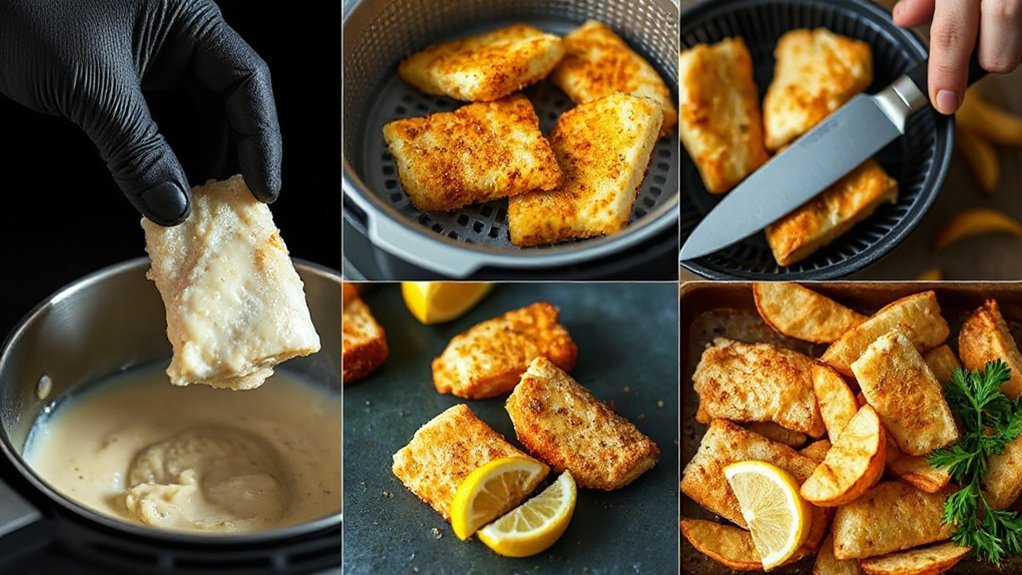
You’ll start by patting the cod dry and seasoning it simply but boldly so the flavors stick. Then you’ll bread each fillet—flour, egg wash, crumbs—and press the coating on for an even crust. Finally, you’ll air-fry at the right temperature and timing, flipping once, until the crust is golden and the fish flakes easily.
Prep and Season Cod
Before you touch the air fryer, get the cod ready: pat each fillet dry with paper towels, trim ragged edges and pin bones, then cut into even portions so they cook evenly. Use a confident fillet technique—slice toward the tail, keep the knife flat, and practice pin boning tips to remove tiny bones quickly. Lightly season with salt, pepper and lemon; let the fish rest briefly.
| Tip | Tool | Time |
|---|---|---|
| Fillet technique | Sharp knife | 2–3 min |
| Pin boning tips | Tweezers | 1–2 min |
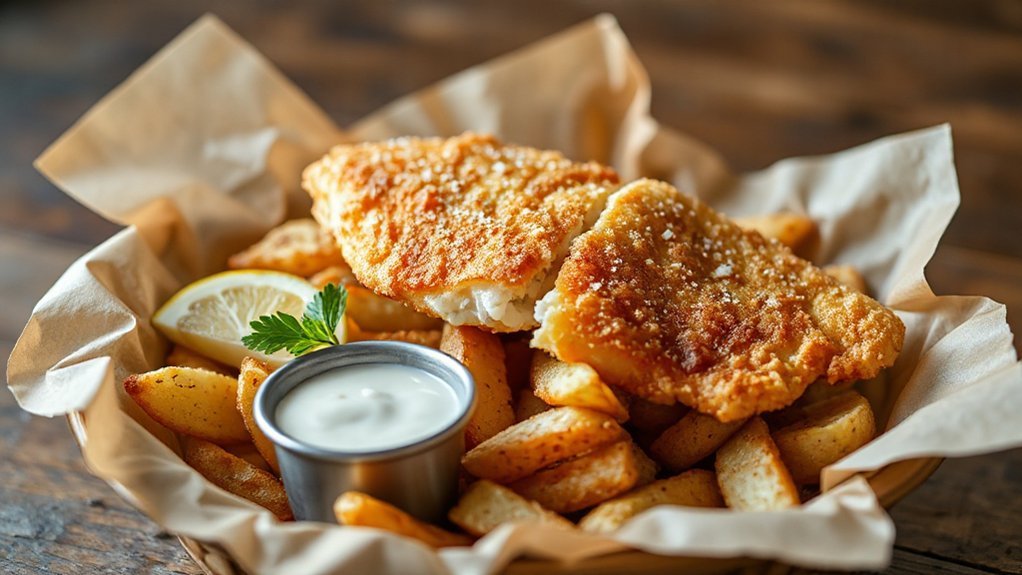

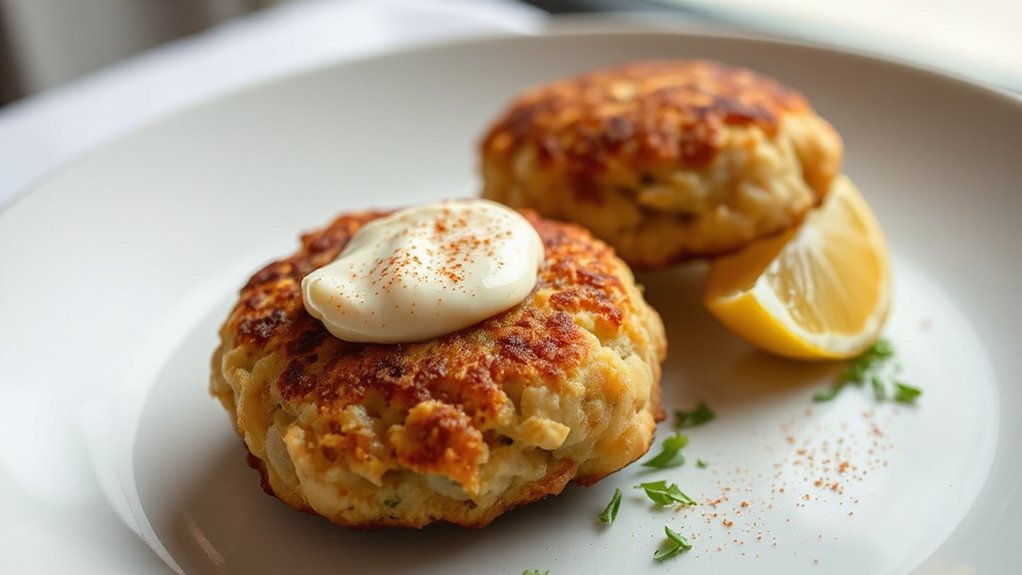
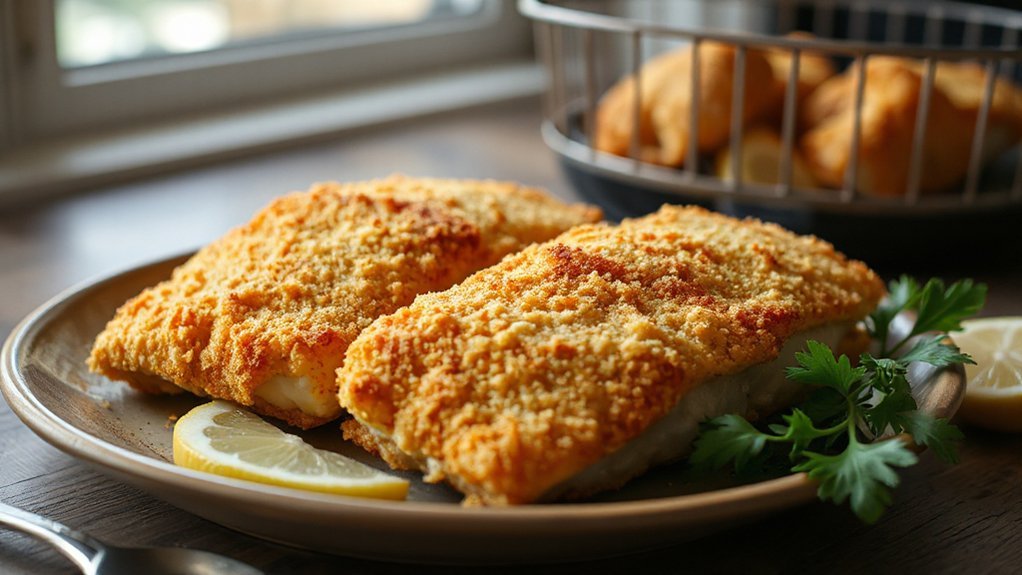
Use a gentle hand so flesh stays intact; quick checks confirm uniform thickness and similar piece size. If time allows, chill the portions briefly to firm them for easier handling and neater presentation. You’re ready for the next stage. Confident, simple, effective always.
Breading and Air-Frying Steps
Coating each fillet in a classic three-step dredge—seasoned flour, beaten egg (thin it with a splash of milk), then panko—gives you a reliably crisp, golden crust without the frying mess. Work quickly: dust, dip, press panko so it adheres. Place breaded pieces on a rack while you preheat the air fryer to 200°C (390°F). Lightly spray both sides with oil for extra color.
Use separate utensils and bowls to prevent cross contamination; never reuse a plate that held raw fish. Between batches, wipe surfaces and run through quick equipment sanitation—wash bowls, tongs, and racks with hot soapy water. Arrange fillets in a single layer, air-fry 10–12 minutes, flipping halfway, until internal temp hits 63°C (145°F). Serve with chips and lemon wedges while piping hot.
Tips for Extra Crispiness
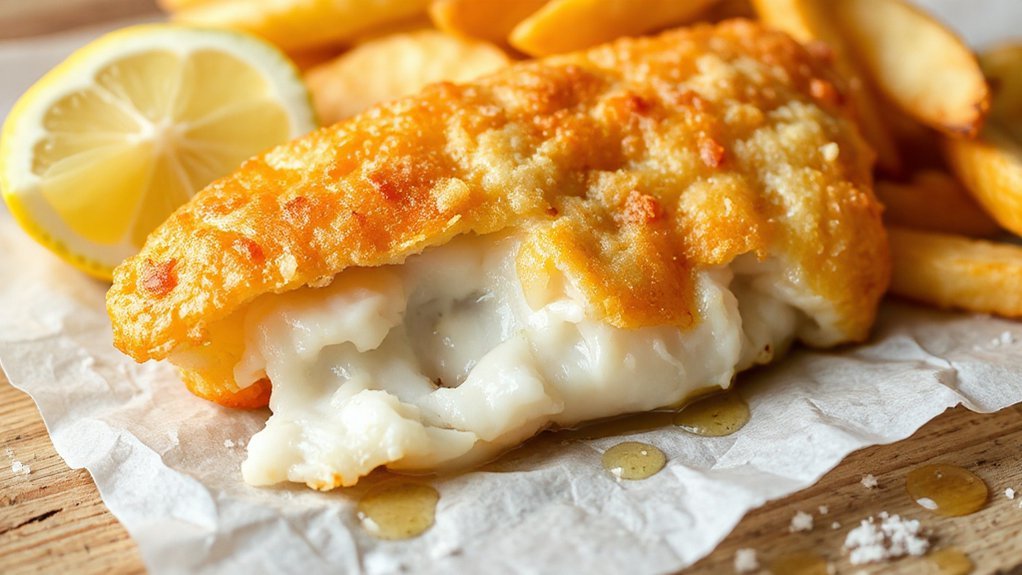
If you want seriously crisp fish, start by drying the fillets thoroughly—pat them with paper towels until they feel almost dry to the touch—because excess moisture is the enemy of crunch. Embrace Maillard principles and understand Starch behavior: let batter rest, and dust with a thin layer of potato starch to boost browning and crisping. Preheat the air fryer so the exterior seals quickly.
| Tip | Why it works | Quick action |
|---|---|---|
| Drying | Removes surface water | Pat 2 minutes |
| Starch | Improves crunch | Light dusting |
| Heat | Fast seal, less oil | Preheat 5 min |
Turn fillets halfway, spray oil sparingly, and avoid overcrowding. Finish with a short high-temp blast for blistered texture. You’ll get reliable crunch without frying, and the fish stays flaky inside. Resting briefly on a rack keeps coating intact and maximizes oven-like airflow across each piece consistently
Seasonal Serving Ideas and Plating
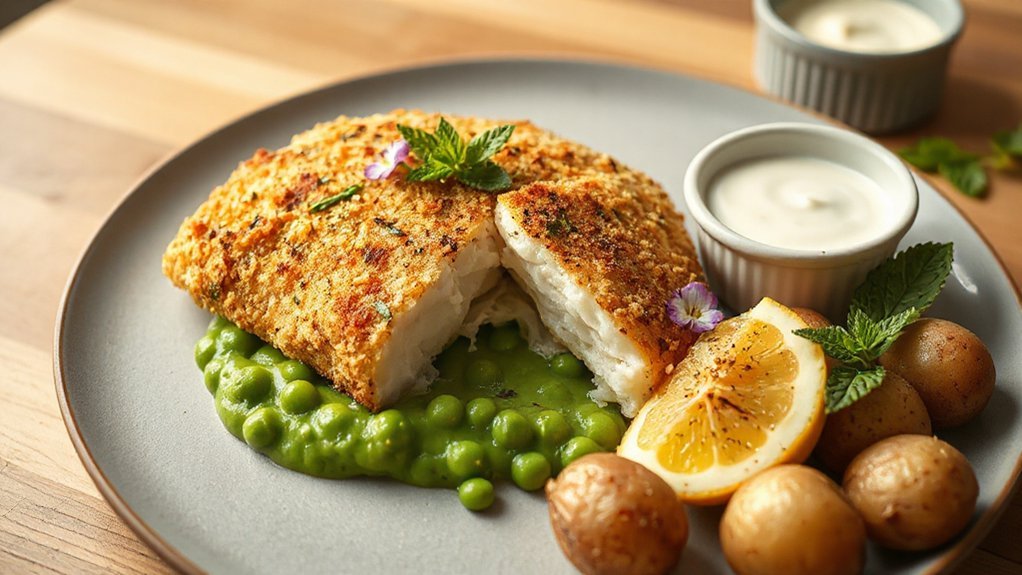
Now that you’ve nailed the crunch, think about how seasonal flavors and a thoughtful plate can lift your air-fried cod from good to memorable. In winter, brighten the dish with Winter citrus — thin slices of blood orange or grapefruit segments add color and a sharp, cleaning acid that cuts the batter’s richness. Lay fillets slightly overlapping on a warm plate, scatter microgreens and a few torn Spring herbs like chives and tarragon for freshness and aroma. Use height: prop one piece against a lemon wedge or a crisped potato twirl to create drama. Keep sauces minimal and artfully brushed rather than pooled; a light swipe beside the fish looks intentional. For casual family meals, use rustic butcher paper and a sprinkle of flaky sea salt. For guests, choose white plates to show contrast, wipe rim edges, and finish with a grind of pepper so every bite feels deliberate.
Best Sides, Dips, and Beverage Pairings
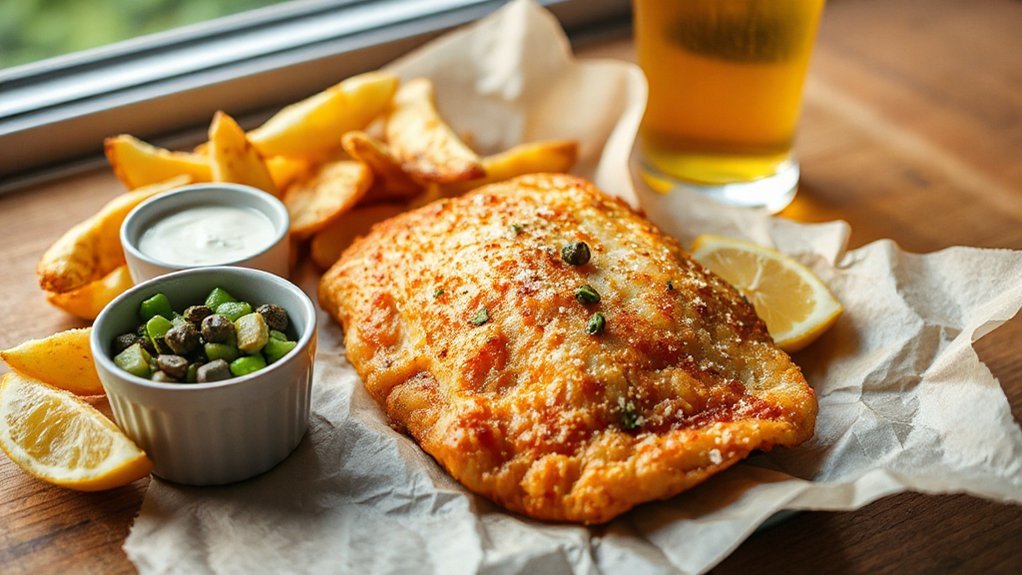
What goes well with crisp air-fried cod? You’ll want classic thick-cut chips, mushy peas, and a bright tartar sauce—simple, comforting, and texturally balanced. Add lemon wedges and a light malt vinegar drizzle for acidity. For dips, try a smoky aioli, caper relish, or curry ketchup to mix things up.
Think regionally: Regional pairings like Yorkshire gravy or Cornish brown sauce bring local character, while a Mediterranean herb salad gives a fresher twist. Pair drinks to match the crunch: a cold lager, a citrusy IPA, or a crisp sauvignon blanc all cut through oil and highlight the fish.
Finish with small Dessert matches—think lemon posset, treacle tart, or vanilla ice cream with shortbread crumbs—to echo citrus and caramel notes without weighing you down. Keep portions manageable so the meal stays balanced and every bite sings. You can also serve pickled onions or a simple slaw for extra crunch today.
Storage, Reheating, and Leftover Hacks
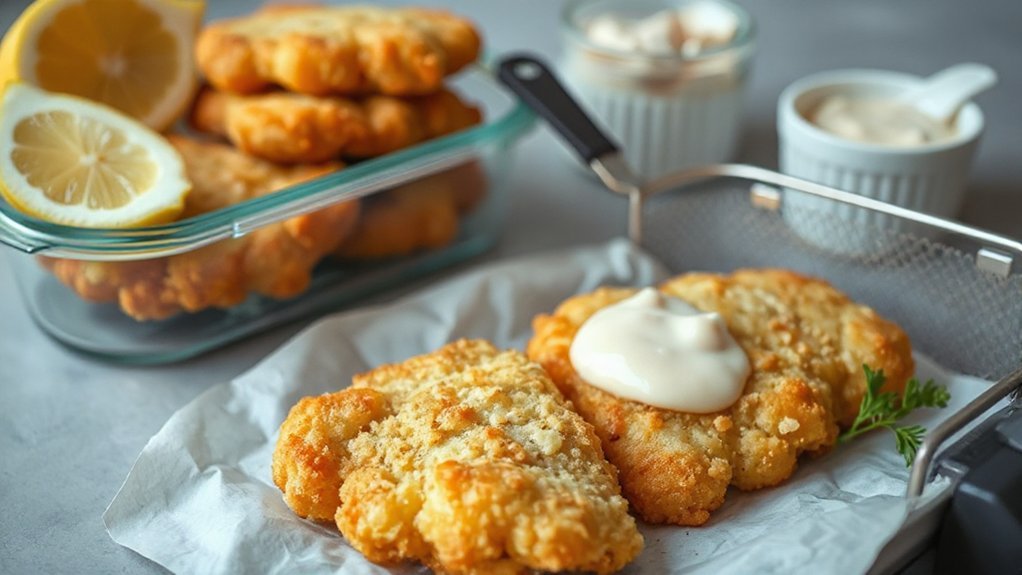
After plating those chips, peas and sauces, you’ll want to know how to keep leftovers tasting great so you can enjoy crisp cod tomorrow. Cool pieces quickly on a wire rack for no more than an hour, then transfer to airtight containers—separate fish from chips to preserve texture. For short-term storage, refrigerate up to 2 days; for longer life, use Freezing Portions: wrap fillets individually in foil and place in a freezer bag with dates, up to 1 month. To reheat, thaw overnight in the fridge if frozen, then air fry at 180°C/350°F for 6–8 minutes, flipping once, until skin crisps and interior warms to 60°C/140°F. Avoid microwaves unless you want soggy results. For tasty leftover meals, try Creative Repurposes: flake cod into fish tacos, fish cakes, or a kedgeree-style hash with peas and curry spices. Label everything and jot reheating times so next meal’s simple and delicious.
Conclusion
You hold a plate of air-fried cod like a sun-warmed map, each golden flake a marked route back to comfort. You navigate crisp edges and flaky rivers, steering with tartar and a squeeze of lemon as friendly compasses. This recipe isn’t just food; it’s a small, dependable ship that brings British fish-and-chips home every time. Keep sailing—swap, tweak, and share—so every bite feels like a bright, familiar port and sparks new memories again and again.
About The Author