We’re kicking things off with a foolproof, friendly guide—y’all will get crispy outsides and juicy centers in mere minutes.
We show the exact temps and timing so your mornings run smooth as butter on a hot biscuit. No guesswork, no stovetop splatters.
Place links or patties in a single layer, flip halfway, and cook to safe internal temps. For pork hit 160°F; for chicken or turkey aim for 165°F.
Fresh usually takes 8–10 minutes; frozen about 10–12 minutes at 375–400°F depending on model. We’ll also cover storage—fridge for 4–5 days, freezer for 2–3 months—plus quick reheats.
Short on time? We give a fast-start rundown so you can get sausage on the table in 10 minutes flat and tackle eggs or toast while things crisp up.
Key Takeaways
- Cook fresh links 8–10 minutes; frozen 10–12 minutes at 375–400°F.
- Arrange in a single layer and flip once for even browning.
- Safe temps: 160°F for pork, 165°F for poultry.
- Store cooked sausage 4–5 days refrigerated or 2–3 months frozen.
- Reheat quickly in the air fryer or microwave to keep crisp.
Why make breakfast sausage in the air fryer right now
We love a method that saves time and keeps the kitchen tidy. In about 8–12 minutes you get golden edges and juicy centers—no babysitting needed.
Faster, cleaner mornings for busy households
This is our go-to when mornings are hectic. Pop links or patties in a single batch, set the timer, and handle eggs or coffee while it cooks.
Less grease, more crisp: how circulating air helps
The steady hot flow renders fat and sends it below the basket. That reduces splatter compared to the stove and gives a crisp exterior without flipping every minute.
- Quick: fridge to plate in about ten minutes.
- Low mess: fat drips below the basket—one quick wipe and you’re done.
- Flexible: works for links or patties, fresh or frozen, so you can mix recipes and keep the stove free.
Simple, fast, and forgiving—that’s our favorite way to start the day.
What you’ll need: air fryer, basket setup, and sausage types
Let’s gather the little tools and tasty choices that make turning raw meat into golden bites a breeze. A quick setup saves time and keeps things tidy while you cook.
Equipment checklist:
- Grab your air fryer with a good air fryer basket, plus tongs and a light cooking spray.
- Keep a small container ready for cooled meat if you’re meal prepping.
- Optional: parchment or foil for easier cleanup—just know browning may be a touch lighter.

Pick the right sausage
Set items in a single layer with a little breathing room. That airflow is the trick to even browning.
Choose between sausage links or sausage patties. Go with pork for classic richness, or pick turkey or chicken for a lighter bite. If you make patties, aim for about 1/4-inch thickness so they cook evenly.
Little finishing touches
Lightly mist the fryer basket so things release clean—less sticking, prettier browning. After cooking, brush on a thin coat of maple syrup for a sweet finish if you like that salty-sweet hush of Southern flavor.
Air fryer breakfast sausages
A few simple steps make this foolproof. Preheat, give each piece room, flip once, and check the center temp.
Quick-start guide: preheat, single layer, flip, check temp
Preheat to 375–400°F depending on your model so the meat sizzles on contact. Lightly spray the basket and lay links or patties in a single layer.
Fresh sausage takes about 8–10 minutes; frozen needs 10–12 minutes. Flip at the halfway mark for even browning. Set cooked pieces on paper towels for a minute to drain without losing crunch.
The internal temperature targets you must hit
Always verify internal temperature near the center. Aim for 160°F for pork and 165°F for chicken or turkey.
- Preheat 375°F for some machines, 400°F for others.
- Cook fresh 8–10 minutes; frozen 10–12 minutes—flip once.
- Use visual cues: golden-brown exterior and clear juices.
One last tip: if your unit runs hot, shave a minute. If it’s gentler, add a minute—trust your eyes and a thermometer and you’ll be set in minutes.
Step-by-step: how to cook fresh sausage links and patties
We’ll walk you through a simple, step-by-step routine so fresh links and patties come out golden every time. Follow each short step and check temps for safe, juicy results.

Preheat guidance: 375°F vs 400°F
Preheat to 375°F if your unit runs hot. Choose 400°F if it’s gentler. Give the basket a light mist so meat releases clean and browns well.
Fresh links: timing, flipping, and browning
Arrange sausage links in a single layer. Cook 4–5 minutes, flip, then another 4–5 minutes until golden. Keep an eye near the end—casings brown fast once they crisp.
Fresh patties: thickness, doneness, and draining
Aim for about 1/4-inch thickness for even cooking. Flip at halfway so both sides get a little crust. Thicker patties need a minute or two more; thinner ones finish sooner.
| Item | Temperature | Time | Flip |
|---|---|---|---|
| Fresh links | 375–400°F | 8–10 minutes | At 4–5 minutes |
| 1/4″ patties | 375–400°F | 8–10 minutes | At halfway |
| Thicker patties | 375–400°F | 10–12 minutes | At halfway |
Always check internal temperature: 160°F for pork, 165°F for poultry. Pull cooked pieces onto paper towels to drain—just a quick blot keeps that crackle.
Love a sweet finish? Brush a thin coat of maple right after cooking while hot. This method gets your air fryer breakfast set—browned, juicy, and ready to plate.
How to cook frozen sausage without defrosting
Got frozen links or patties? We’ll get them hot and crisp without a thaw.
Quick setup: Preheat to 400°F and give the basket a light spray. No thawing needed—place the frozen pieces in a single layer so heat can move around each piece.
Adjusting time for frozen links and patties
Plan on 10–12 minutes for most frozen sausage. Thicker items or cooler units may need an extra 3–5 minutes. Flip at the halfway mark and check the center with a probe.
Preventing dry spots and ensuring even heat
Avoid crowding. Work in batches if you must—better to add minutes than stuff the basket. If you spot pale patches, rotate pieces or give them an extra minute or two.
- If surface frost shows, blot with a paper towel before cooking to reduce sputter.
- Shake the basket gently when you flip to break any frozen sides that cling together.
- Aim for 160°F for pork and 165°F for poultry—check at the center.
- Finish with a thin brush of maple for a sweet-savory kiss if you like.
| Item | Preheat | Total time | Notes |
|---|---|---|---|
| Frozen links | 400°F | 10–12 minutes | Flip at halfway; may need +3–5 min if thick |
| Frozen patties | 400°F | 10–12 minutes | Watch last minutes for color to avoid drying |
| Large or crowded batch | 400°F | 12–15 minutes | Cook in batches for even browning |
Temperatures, timing, and doneness cues
Nailing doneness comes down to a few clear cues—time, temperature, and a good look. We keep it simple so you can trust the result every morning.

- Fresh sausage: plan 8–10 minutes, flip halfway—thickness decides whether you hit closer to 8 or 10.
- Frozen items: expect 10–12 minutes; add 3–5 extra if thick or your unit runs cool.
- Use an instant-read probe in the center to check internal temperature.
| Item | Temp Target | Approx. Time |
|---|---|---|
| Fresh links | 160°F (pork) / 165°F (poultry) | 8–10 minutes |
| Frozen links | 160°F / 165°F | 10–12+ minutes |
| 1/4″ patties | 160°F / 165°F | About 10 minutes |
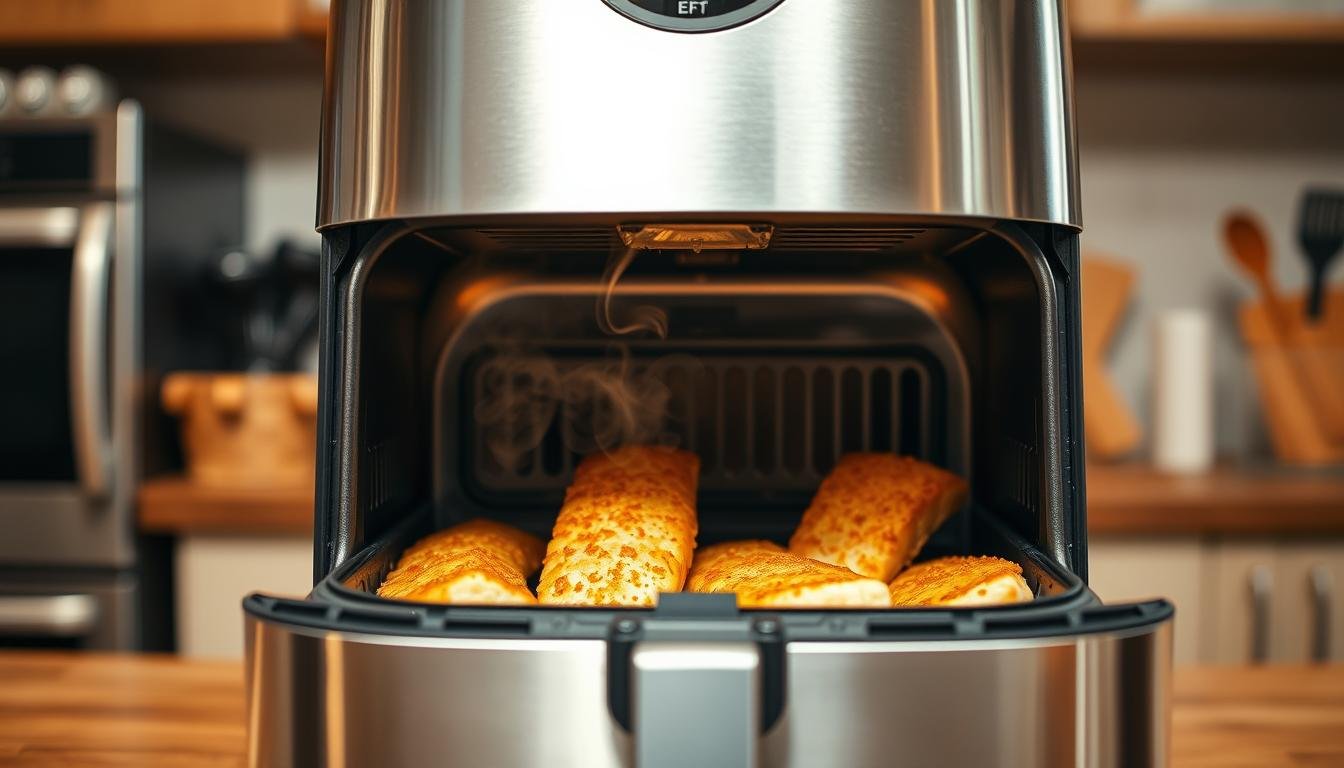

Look for a golden-brown crust and clear juices as visual cues. If color’s right but temp’s shy, lower heat slightly and add a minute or two to finish gently. Jot down your unit’s quirks so next time your cook minutes land just right.
Pro tips for crispy, evenly cooked results
We’ve learned a few little tricks that turn good links into great ones—crispy, even, and fuss-free.
Single layer and spacing: why circulation matters
Keep each piece in a single layer. Give a little elbow room so hot air can move around every side.
Don’t crowd the air fryer basket or the fryer basket. If you pack it tight, edges stay pale and soggy. Batch cooking beats crowding every time.
When to use cooking spray or parchment
Lightly mist the basket to help release and prevent sticking. Too much oil will stop the surface from browning well.
Parchment or foil makes cleanup easier. Use it on busy days—but add a minute to the time so browning gets a chance to catch up.
Flip timing, batch cook, and rest
Flip about halfway so both sides get a nice crust. Rotate the basket if your unit browns unevenly.
Drain cooked sausage on paper towels for 1–2 minutes to blot excess grease. Brush on a thin coat of maple syrup right after cooking if you want sweet-salty magic.
| Tip | Why it helps | Quick fix |
|---|---|---|
| Single layer | Even circulation for crisp edges | Cook in batches |
| Light spray | Prevents sticking without drowning browning | Use a mister |
| Parchment only when needed | Easier cleanup but softer color | Add 1 minute |
| Rest on paper towels | Removes excess grease, keeps crunch | Drain 1–2 minutes |
Storage, reheating, and meal prep for the week
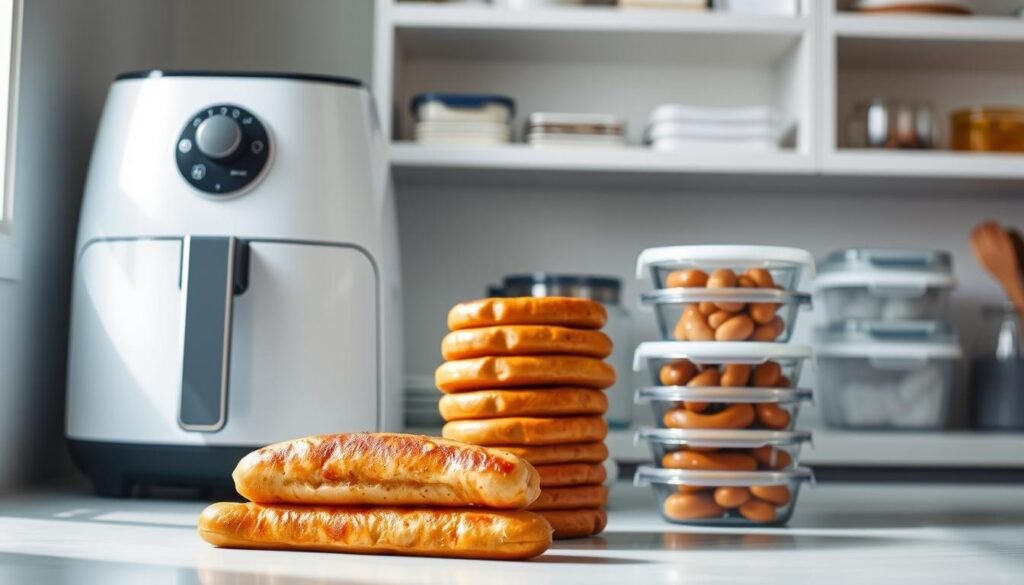
A little planning turns hectic mornings into grab-and-go joy. Keep cooked pieces ready so you can build plates, sandwiches, or burritos in a flash. This is perfect when you want a reliable breakfast sausage on busy days.
Refrigerate and freeze safely
Cool food fully, then tuck it into an airtight container. Refrigerate up to 4-5 days for easy weekday use. For longer storage, freeze up to 2-3 months and slip parchment between layers so pieces don’t cling.
Quick reheats that keep the crunch
Reheat in the air fryer at 325–375°F for 2–8 cook minutes until warmed and lightly crisp. Microwave in 30-second bursts if you’re in a hurry—texture won’t be as crisp, but it’s fast. Stovetop works, too: medium heat and a quick sear brings life back to cooled links.
Make-ahead workflow
We cook a big batch Sunday, cool and portion into a container, then label with the date. That meal prep saves time and keeps mornings calm. If reheating from frozen sausage, add a minute or two—check temp and pull when hot.
“Cook once, eat smart all week.”
- Keep a couple of favorite recipes ready—sandwiches, bowls, or plates.
- Label jars and bags so you track fridge and freezer timelines.
Serving ideas and simple variations
Here’s how to take a hot tray of links and patties and make real-deal meals fast. We keep it simple so you get big flavor with little fuss.
Breakfast plates, sandwiches, and burritos
Build a hearty plate with breakfast sausage links, eggs, hash browns, and toast for a crowd-pleasing start.
Turn breakfast sausage patties into speedy sandwiches with English muffins, melty cheese, and a fried egg. Or roll links into burritos with fluffy eggs, crispy potatoes, and a drizzle of maple syrup.
Pairings: eggs, hash browns, pancakes, and syrup
Pancakes or waffles? Yes please—dip a link in maple syrup for playful sweet-salty bites. Pair with sunny-side eggs or quick-scrambled eggs for balance.
Seasoning swaps and lighter options with poultry
For lighter plates, choose turkey or chicken and season with sage, thyme, garlic powder, or paprika. Make mini patties for biscuits or kid-friendly grab-and-go meals.
| Serving | Best form | Finish idea |
|---|---|---|
| Hearty plate | Links | Eggs, hash browns, toast |
| Sandwich | Patties (1/4″) | English muffin, cheese, fried egg |
| Burrito | Links or patties | Eggs, potatoes, maple syrup drizzle |
“Prep toppings while sausage finishes—eggs take minutes, so everything stays hot.”
Conclusion
Wrap it up: preheat to 375–400°F, lay pieces in a single layer, flip halfway, and use a probe to check the center. Fresh cooks about 8–10 minutes; frozen needs 10–12. That simple routine is the reliable way to get crisp, juicy results.
Keep a thermometer handy—160°F for pork, 165°F for poultry. Store cooked items 4–5 days in the fridge or freeze for 2–3 months. Reheat in the air fryer for a couple of minutes to restore crunch.
We’ve shown you the easy method—preheat, single layer, flip, temp check—so your breakfast sausage air routine stays fast and fuss-free. Use this recipe as your go-to playbook and enjoy more tasty mornings with less mess.
FAQ
How long does it take to cook fresh sausage links in the air basket?
Can we cook frozen links or patties without thawing first?
What internal temperature should the sausage reach?
Do we need to preheat the unit, and at what temperature?
How should we arrange links in the basket for best crisping?
Should we use cooking spray or parchment paper?
How do we avoid dry spots or uneven cooking with frozen sausages?
What are visual cues the meat is done besides temperature?
Can we make a big batch and store leftovers for the week?
Best way to reheat without losing crispness?
Any tips for serving and flavor variations?
How many links fit in a single batch?
Can we use ground sausage to form patties, and how thick should they be?
How do we drain excess grease and keep the basket clean?
What if our appliance model runs hotter or cooler than listed times?
About The Author