You can make restaurant-quality lobster tails by butter-poaching them in your air fryer for a fast, foolproof special-occasion centerpiece. Split and lift the meat onto the shell, score, then baste with garlic–lemon brown butter and poach gently at about 320°F until 135–140°F internal, 6–10 minutes depending on size. Finish with warm browned butter, flaky salt, parsley and a lemon wedge. Stick around and I’ll show timing, technique and plating tips to perfect it for dinner.
Ingredients and Measurements
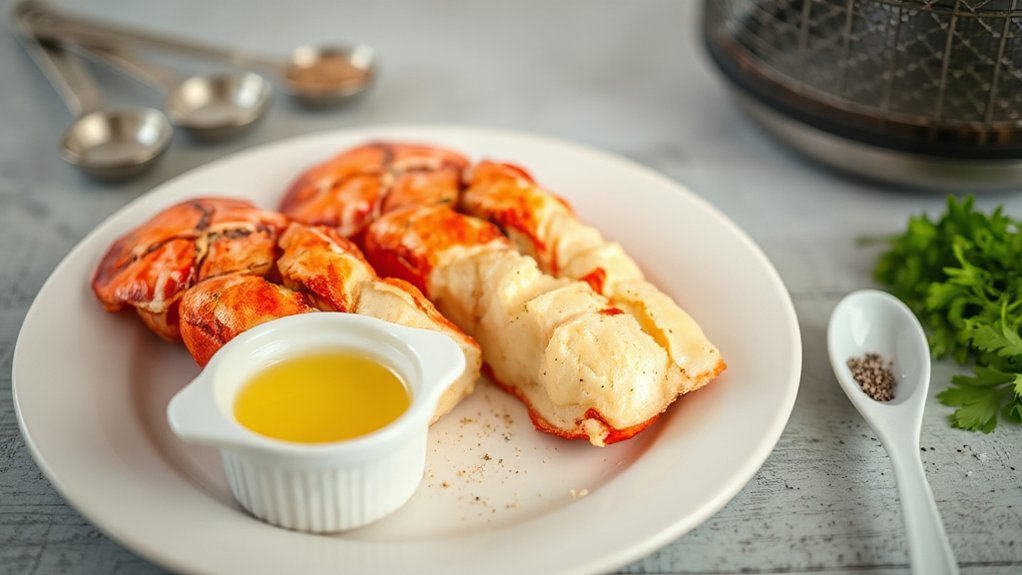
You’ll need four 6–8 oz cold lobster tails (about 1½–2 lb total), 6 tablespoons unsalted butter for the poach, 2 garlic cloves minced, the juice of half a lemon (about 1½ tablespoons), ¼ teaspoon fine sea salt, ⅛ teaspoon black pepper, and 1 tablespoon chopped fresh parsley for finishing; optionally add ¼ teaspoon smoked paprika or a pinch of cayenne for heat. Keep pantry staples simple: a splash of white wine or a teaspoon of lemon zest brightens the butter. If you’re tracking measurement conversions, note tablespoons to grams roughly translate but check a chart for accuracy. For guests with shellfish allergies, list allergen alternatives up front—think poached cauliflower steaks or king crab substitutes if tolerated. Buy tails chilled and similar in size so cooking’s even. Taste and adjust salt, pepper, and heat before serving. This ingredient set keeps flavors focused so the buttery lobster shines without fuss.
Equipment and Prep
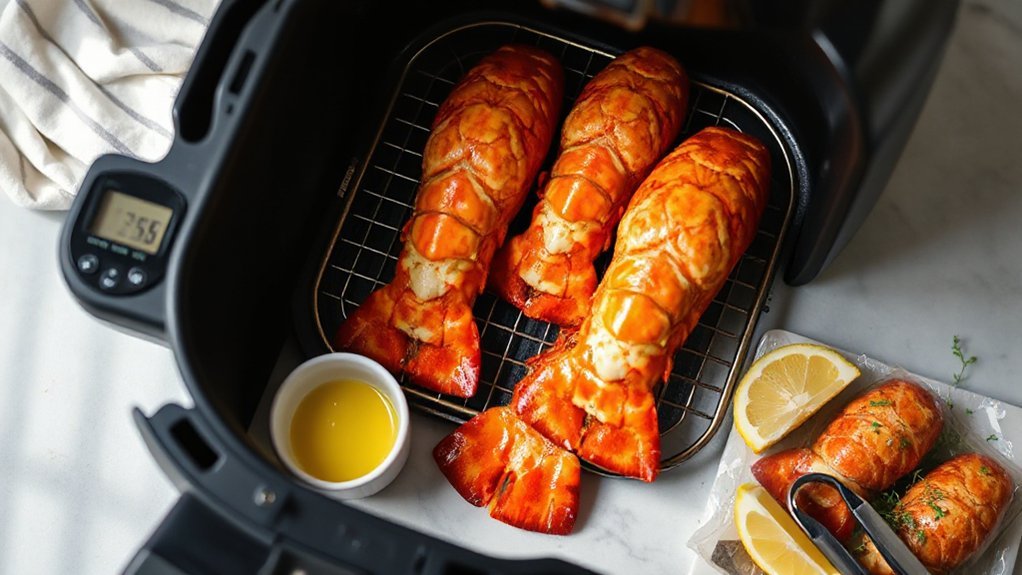
While the butter melts, gather your gear: a mid-size air fryer (basket or drawer style), a small oven-safe dish or ramekin to hold the butter for poaching, kitchen shears and a sharp knife to split the shells, a cutting board, paper towels, a basting brush, tongs, measuring spoons, and a small saucepan for melting butter if you prefer to do it on the stove. Set a clear workstation layout so everything’s within reach — ramekin at the air fryer, tools grouped by task, and a plate for finished tails. Pat lobster dry with paper towels, then use shears and a knife to expose the meat; keep your movements deliberate and confident. Sanitize tools and surfaces before and after handling shellfish; tool sanitation prevents cross-contamination and keeps the meal safe. Preheat the air fryer per the recipe, arrange tails in the dish, and you’re ready to move on.
Brown Butter Technique
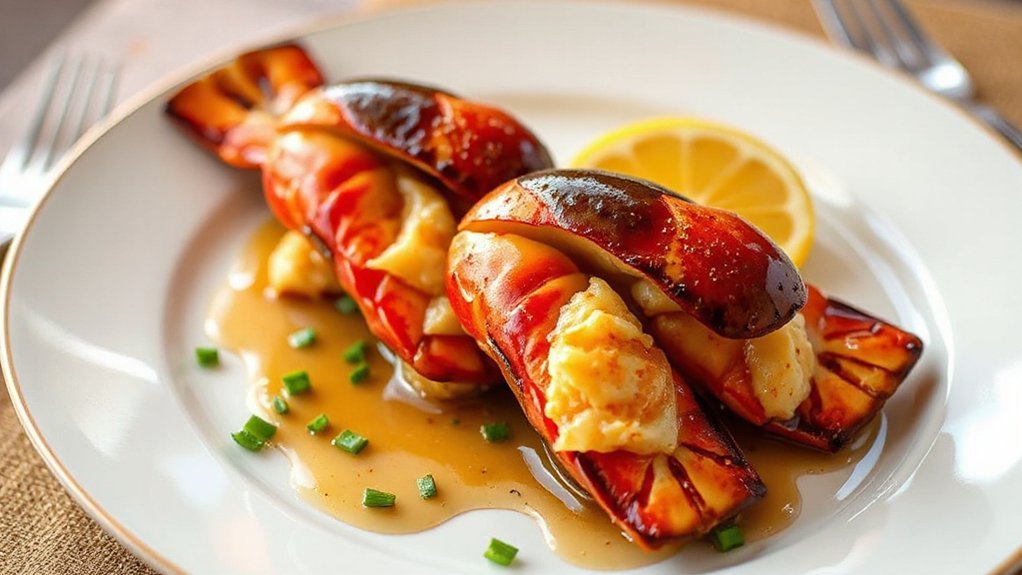
Browning butter brings a nutty, caramelized depth that’ll lift your lobster tails from good to restaurant-level—start with unsalted butter in a light-colored skillet over medium heat so you can watch the color change. You’ll let it melt, foam, then the milk solids will settle and slowly brown; watch closely because it shifts fast once it begins. That toasty aroma signals flavor chemistry at work: Maillard-like reactions and caramelization create those brown-butter notes. Stop the pan off heat as soon as you see amber flecks, or transfer the butter to a cool bowl to halt cooking. Strain if you prefer a silky texture free of solids. Use the warm brown butter to poach, baste, or finish fish, or chill and store few days in fridge. Its deep, nutty profile connects to varied cultural origins that celebrate browned fats, making it a simple technique that elevates any special-occasion dish.
Lobster Tail Prep and Seasoning
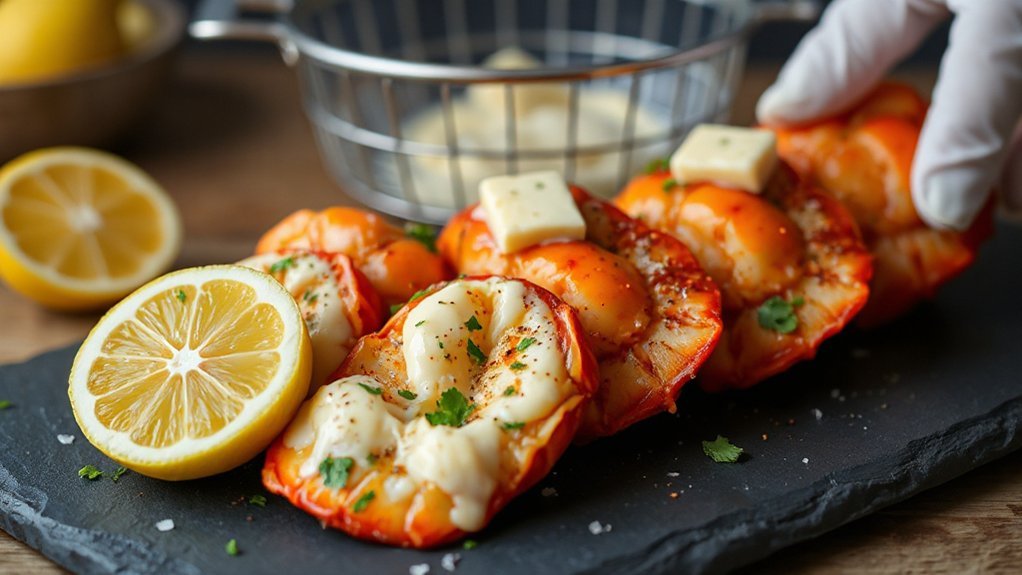
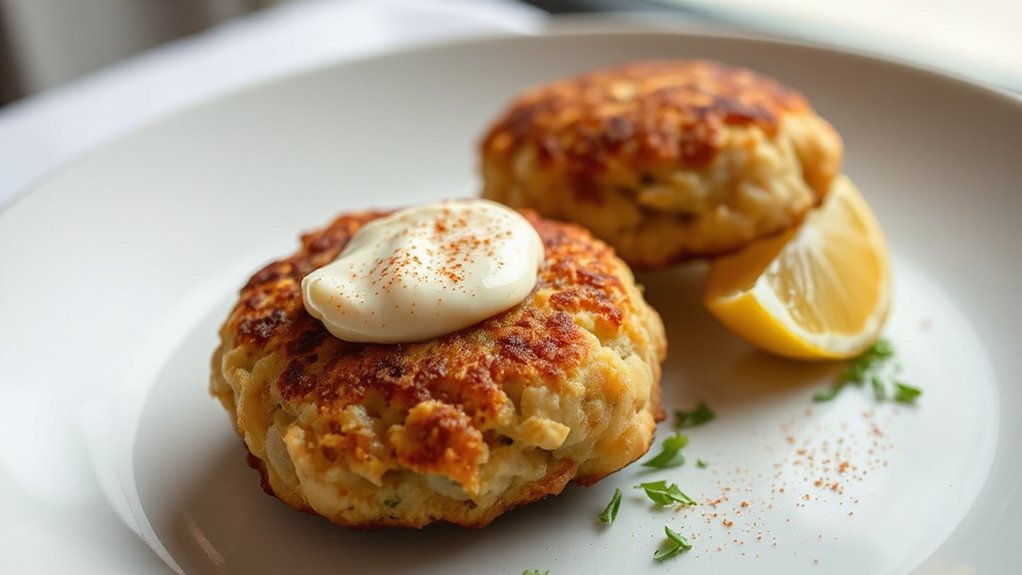
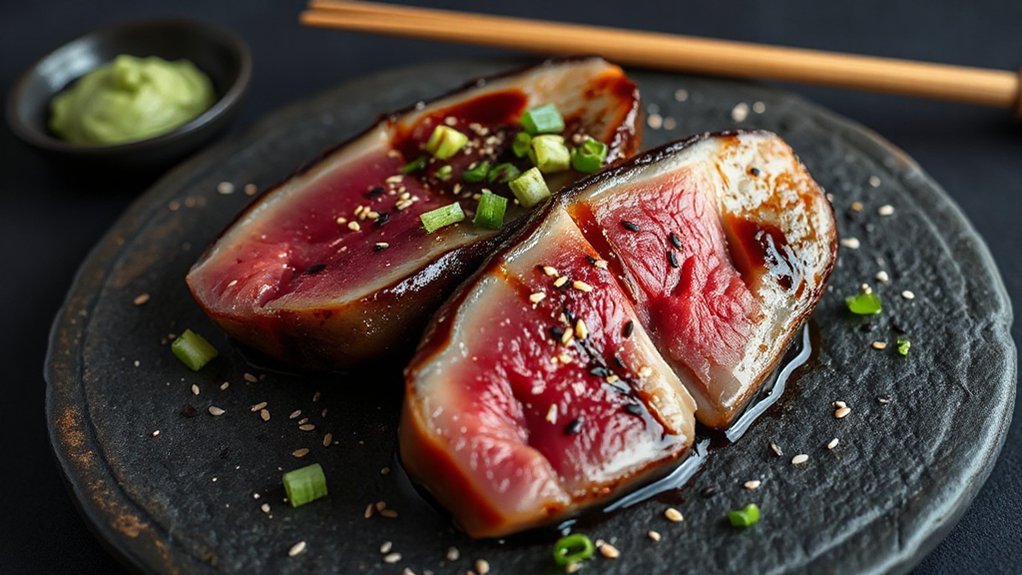
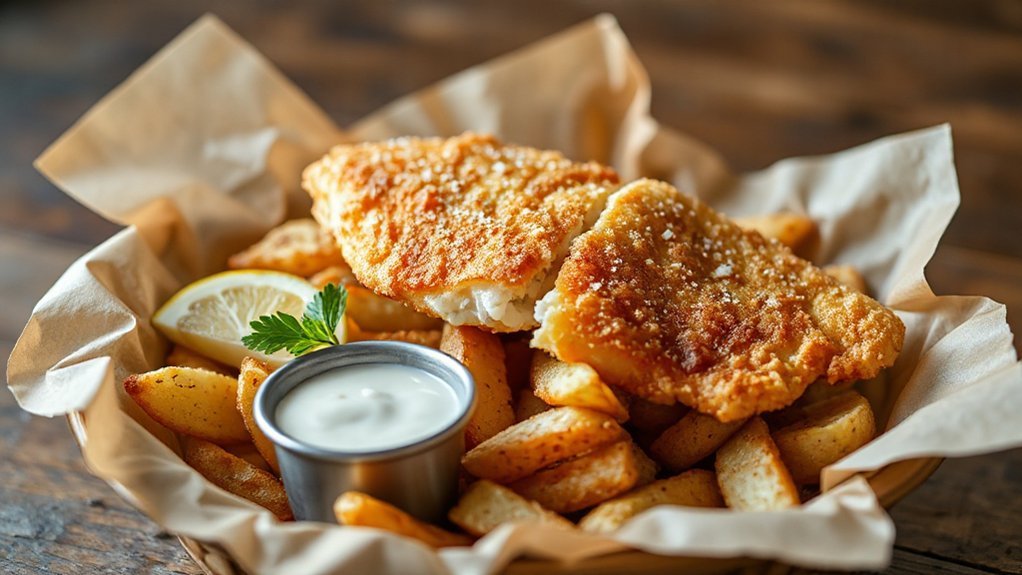
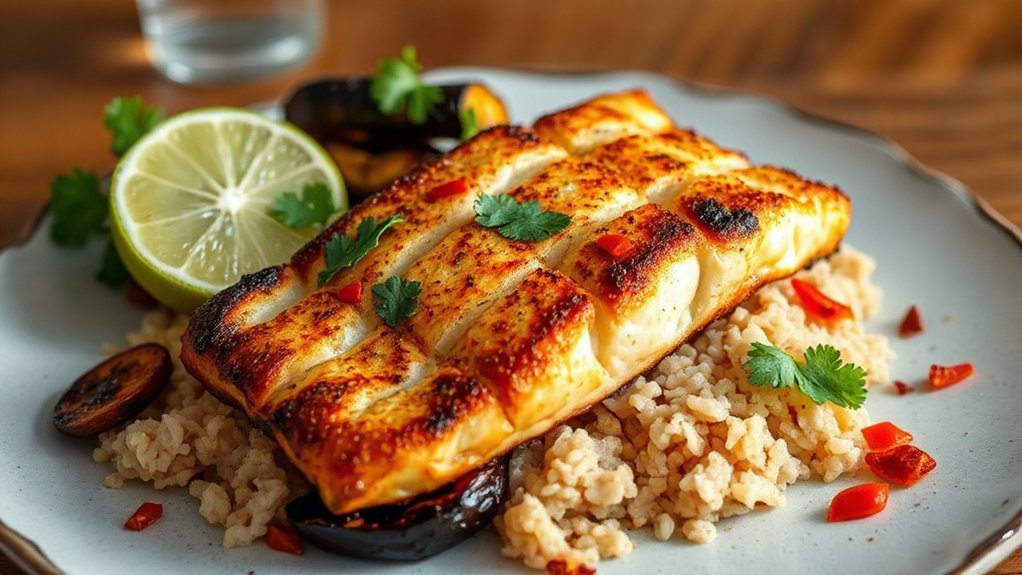
Start by thawing tails overnight in the fridge or under cold running water, then pat them dry so seasonings stick. You’ll want to split the top shell with kitchen shears, cutting through the shell but not the meat, then pry the shell open and lift the meat to rest atop it for an elegant presentation. Use simple scoring techniques—shallow crosshatches across the meat—to help flavors penetrate and to prevent curling.
Seasoning should be bold but clean: a sprinkle of flaky salt, cracked pepper, a pinch of smoked paprika, and a little lemon zest. Brush with a light garlic-butter blend, reserving some browned butter for finishing. If you prefer herbs, tuck chopped parsley or chives into the score lines. For shell removal when making lobster medallions, fully extract the tail meat, then remove the vein. Taste as you go and adjust; confident, careful prep makes the final dish sing.
Air Fryer Poaching and Timing
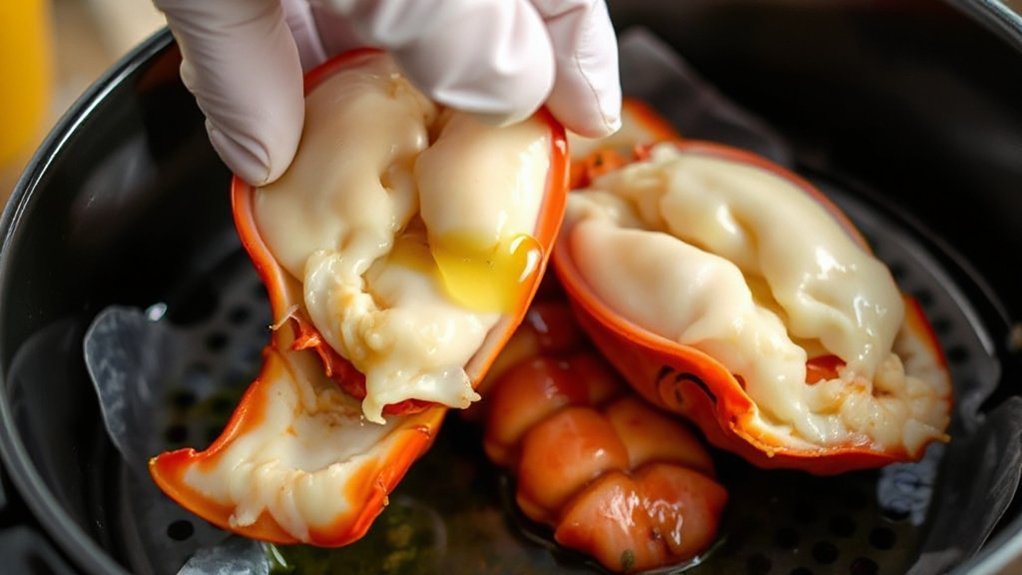
You’ll set the air fryer to a precise temperature and a short cook time so the butter can gently poach the lobster. Start at about 350°F and expect 6–10 minutes depending on tail size, checking earlier for smaller tails. It’s done when the meat turns opaque, firms slightly, and reaches about 140–145°F internal temperature, then rest briefly.
Temperature and Timing
Wondering how to get perfectly tender lobster tails in your air fryer? Set temperature to 320°F for gentle poaching in butter, and plan time in short intervals so you don’t overcook—good schedule planning prevents surprises and lets you factor in carryover cooking while the shells rest. Start with 6–8 minutes depending on tail size, then check and add 1–2 minute bursts as needed. Keep butter at a low simmer so it cushions the meat and transfers heat evenly. Use a reliable thermometer for repeatable results and note times for future batches. With controlled temp and brief monitoring, you’ll deliver restaurant-quality lobster without stress, timed to finish right when your sides are ready. Always serve immediately, garnished with lemon and herbs for maximum flavor impact.
Doneness Indicators
When your butter-poached lobster is nearing the end of its cook time, rely on clear doneness clues rather than just the clock. You’ll want to watch for texture cues: firm, springy meat that still yields slightly when pressed, not rubbery or chalky. Peek at color—opaque white with a faint translucence at the center tells you you’re almost there. Use a quick probe with an instant-read thermometer if you like; aim for 135–140°F for tender, carryover-safe doneness. Trust aroma signals too: sweet, buttery scent rising means the butter and lobster have married, while any overly sharp or sulfurous smells indicate overcooking. When in doubt, remove it slightly under and let residual heat finish gently for perfect results. Serve immediately for best texture and flavor every time.
Plating, Garnishes, and Serving Tips
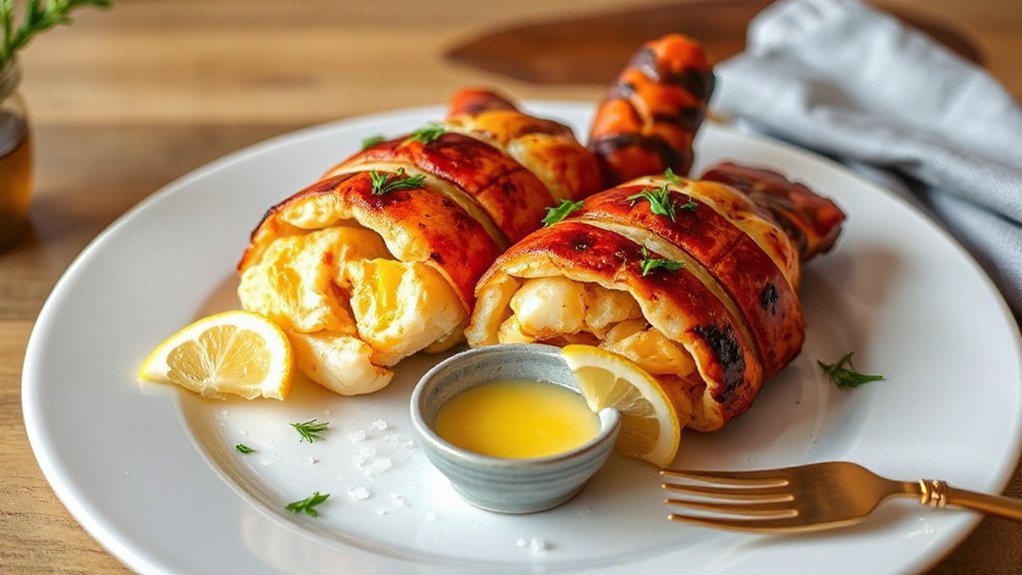
As you plate the butter-poached lobster tails, aim for contrast and balance—rich butter and sweet lobster need bright, acidic notes and a textural counterpoint. Emphasize color contrast, texture balance, and simple composition: fan the split tails over a smear of lemon-butter, add a sprinkle of microgreens, and tuck roasted fingerling potatoes to one side. Keep sauces off the shell so guests can dip.
Plate butter-poached lobster with bright acidity, crunchy herbs, and warm plates—balance color, texture, and simplicity.
- Spoon warm drawn butter with lemon zest for dipping.
- Scatter crunchy herbs and toasted breadcrumbs for bite.
- Serve with chilled, acidic white wine or a citrusy cocktail.
Finish with a wedge of lemon and flaky sea salt, and plate on warm dishes so everything stays hot. You’ll please eyes and palates by balancing richness with acidity and crunch, and by serving promptly so the lobster’s tenderness shines. Offer complementary sides like a simple arugula salad or herbed risotto for a fuller meal.
Conclusion
You’ve just elevated a simple lobster tail into a celebratory dish that feels fancy but isn’t fussy. You’ll love how browned butter adds nutty depth while the air fryer keeps meat tender and juicy. Fun fact: Americans eat about 1.5 pounds of lobster per person annually in coastal states—so you’re in good company indulging this treat. Serve it hot, smile, and enjoy every buttery, briny bite with someone special and toast to memorable meals together.
About The Author