You’ll get blackened, flaky mahi mahi with bold Caribbean spices in minutes using your air fryer. Start with a short brine, pat dry, press on a smoky rub (smoked paprika, allspice, cayenne, garlic) and air fry at 400°F, flipping halfway. Finish with citrus zest, warm butter or mango salsa, and serve with coconut-lime rice or plantains for a quick meal. Keep going and you’ll find spice tweaks, storage, reheating tips to make weeknight dinners effortless.
Why Mahi Mahi Is Perfect for Blackening
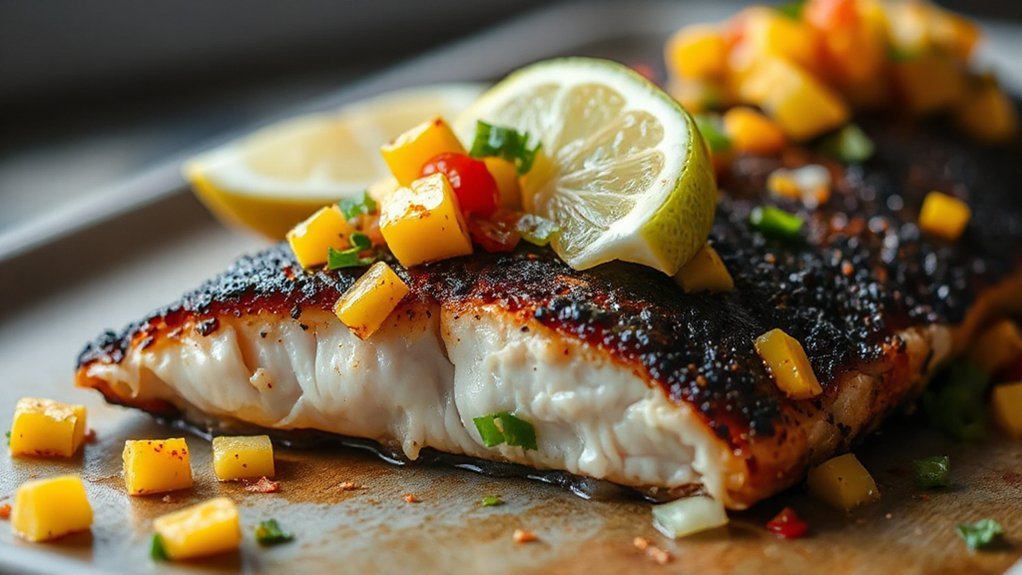
Because it’s firm and mildly flavored, mahi mahi takes the bold spices of a blackening rub without getting overwhelmed, so you’ll taste the heat and the fish in every bite. You’ll love how the Firm texture holds up in an air fryer, letting you get a crisp, caramelized crust while the inside stays flaky and moist. That Mild flavor is an advantage: it’s dependable, not distracting, so the char and smokiness sing without masking the fish. You can sear edges quickly and rely on even cooking; mahi mahi won’t fall apart the way softer fish might. When you plate it, the contrast between crunchy exterior and tender interior makes every forkful satisfying. Blackening highlights the fish’s natural appeal, and you’ll find it pairs easily with bright sides and simple sauces that let the fish shine. Serve immediately for best texture, and enjoy a restaurant-quality meal at home today.
Caribbean Spice Rub: Ingredients and Tips

When you mix a Caribbean spice rub for mahi mahi, aim for a balance of smoky paprika, warm allspice, bright lime zest, and a touch of heat from cayenne—add garlic and onion powders, dried thyme, brown sugar for caramelization, and salt and pepper to taste. Use equal parts smoked paprika and ground allspice as a base, then halve the cayenne if you prefer gentle heat. Toast whole spices like black peppercorns and coriander briefly to wake oils, then grind for fresher flavor; those toasting techniques lift the mix. For consistent results, weigh ingredients or use level tablespoons. Shop quality spices and prioritize spice sourcing—freshness beats cheap bulk jars. Store your rub in an airtight jar away from light and use within six weeks. When you apply the rub, press it gently so it adheres without overpowering the fish. That balance gives you bright, smoky Caribbean notes per bite.
Preparing the Fillets: Brining and Drying
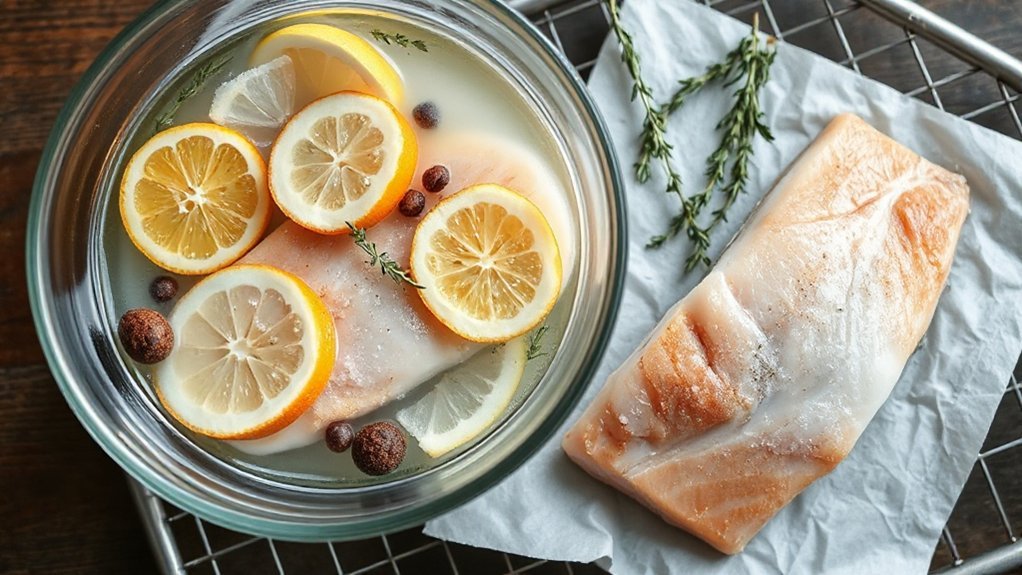
If you want juicy, well-seasoned mahi mahi, start with a short brine and a proper drying step: dissolve about 1 tablespoon kosher salt (and 1 teaspoon brown sugar, optional) per cup of cold water, submerge the fillets for 15–30 minutes, then rinse briefly and pat them dry. Brining isn’t just seasoning—brine chemistry helps proteins retain moisture and gives surface flavor that your spice rub will cling to. Don’t over-brine; 15–30 minutes is enough for typical fillets.
After rinsing, prioritize air drying in the fridge for 20–40 minutes on a wire rack, uncovered, to firm the surface and promote a better crust later. If you skip fridge time, pat very dry with paper towels and let sit at room temperature a few minutes. Always handle gently; fish flakes easily. With this simple prep you’ll set up perfect texture and seasoning balance before moving on to the next steps now.
Air Fryer Setup and Temperature Guide
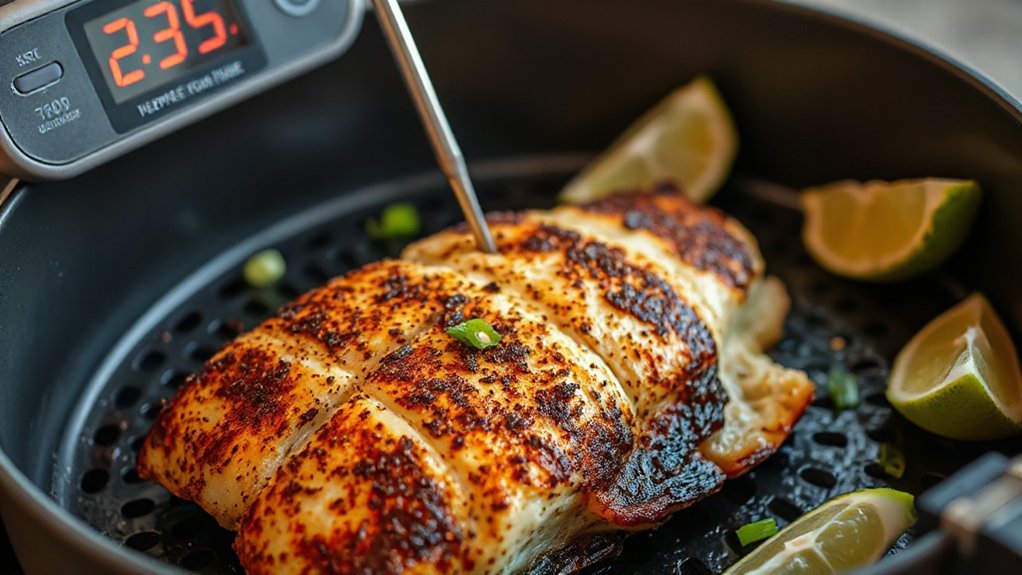
Now that your fillets are brined and dried, set up the air fryer for a quick, even sear that locks in those flavors. Begin by confirming your unit’s temperature calibration—use an oven thermometer in the basket to verify actual heat versus displayed settings. Preheat to the recommended high sear range so the crust develops without overcooking. Arrange the rack or basket so air circulates freely; airflow optimization prevents sogginess and promotes uniform browning. Lightly oil the basket or use a perforated liner to reduce sticking, but avoid overcrowding the fillets. If your model has adjustable vents or a fan speed setting, choose higher airflow for a crisper exterior and lower for gentle finish. Keep a thermometer handy to monitor internal fish temperature rather than relying solely on time. With these setup steps, you’ll create predictable, repeatable results and protect that vibrant Caribbean spice profile and enhance dining satisfaction.
Step-by-Step Cooking Instructions
You’ll start by prepping and seasoning the mahi mahi with the blackening rub so the flavors really stick. Then you’ll follow simple air fryer directions—temperature, time, and basket tips—to get a crisp exterior and flaky center. Finally, you’ll add finishing touches like a squeeze of citrus and a quick herb sprinkle to brighten the dish.
Prep and Seasoning

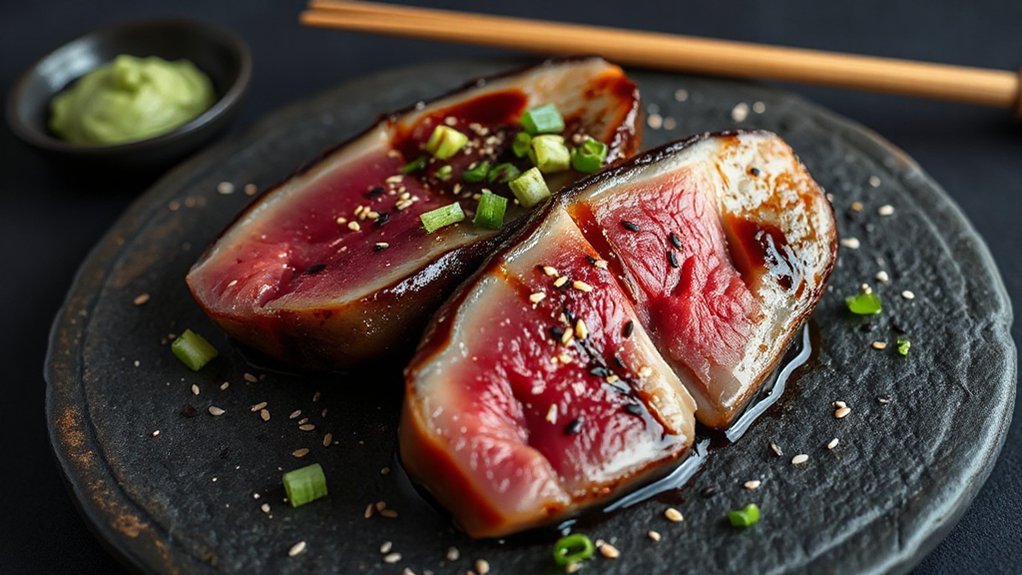
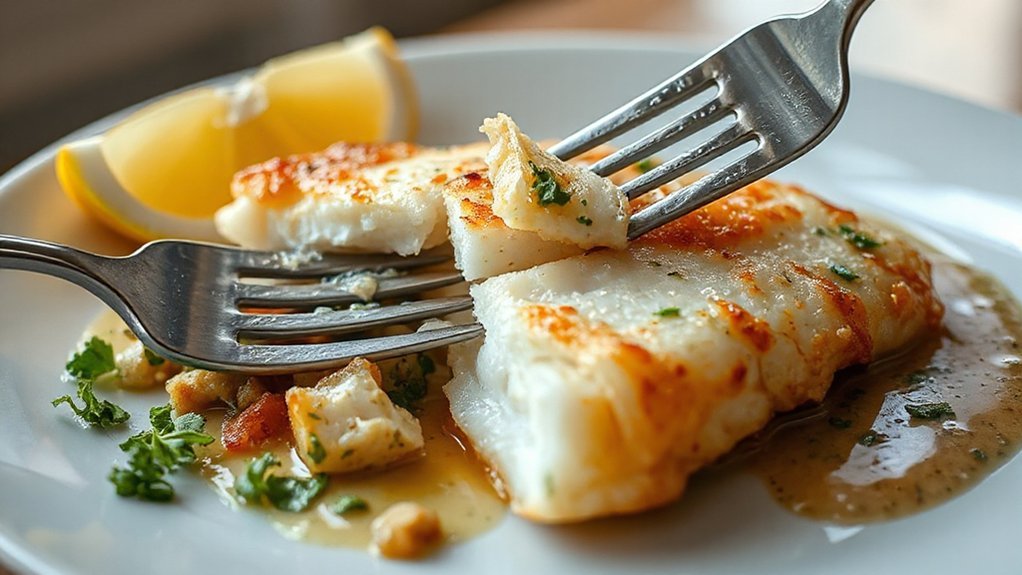
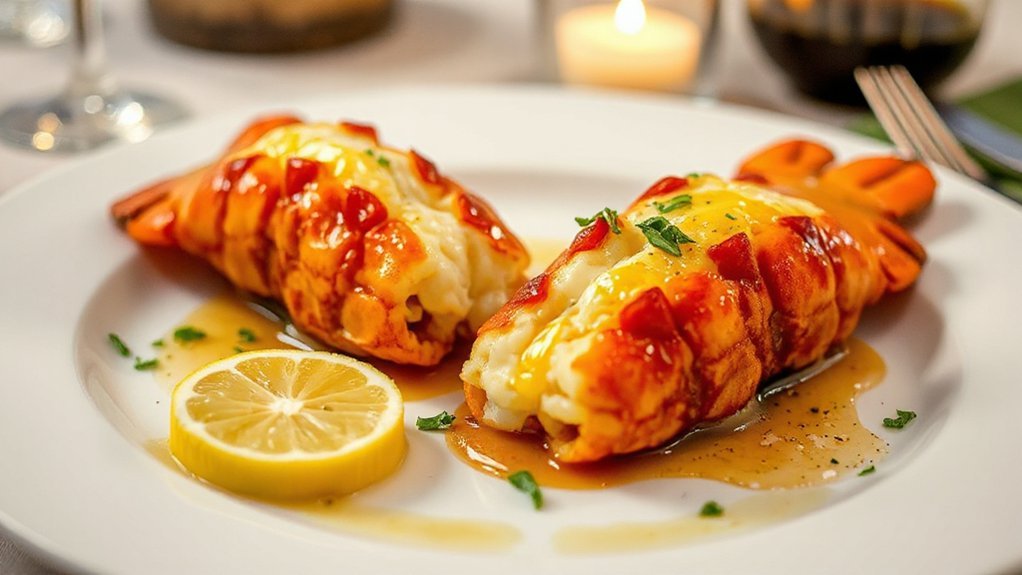
Start by patting the fillets dry so the seasoning sticks and they brown evenly. Inspect each fillet, trim ragged edges, and run your fingers for stray bones; toss any bones with the scraps. Mix your blackening blend—paprika, cayenne, garlic powder, onion powder, dried thyme, smoked salt, and a pinch of brown sugar—then taste a tiny pinch. Lightly oil the fillets, then press the spice mix onto both sides so it forms a crust. Keep seasoning modest; mahi mahi has a sweet, firm flesh that you don’t want to overpower. Think about ingredient sourcing—choose firm, fragrant fillets from a reputable vendor or certified sustainable source. Practice tool sanitation: clean boards, knives, and hands before and after handling the fish. Patience here rewards bold, crisp flavor.
Air Fryer Directions
With the fillets seasoned and patted dry, it’s time to cook them in the air fryer. Preheat your air fryer to 400°F (200°C) for 3–5 minutes, then lightly spray the basket so fish won’t stick. Place mahi mahi in a single layer, leaving space between pieces for hot air circulation. Cook for 8–10 minutes, flipping halfway, until the exterior is blackened and the internal temperature reaches 145°F (63°C). Use tongs and a meat thermometer; that’s essential for both doneness and Safety precautions against undercooking. Remove fillets and rest briefly. After the unit cools, follow Cleaning directions: wipe the basket and tray with warm soapy water or run through the dishwasher if safe. Serve with simple sides for a bright Caribbean contrast today.
Finishing Touches
Once the mahi mahi hits 145°F and you’ve let it rest briefly, take a moment to finish it off: Pat the fillets dry, then spoon a warm Butter Glaze over each piece so it melts into the blackened crust. Zest a lime and orange for a bright Citrus Finish, then squeeze a little fresh juice—just enough to lift flavors without overpowering. Garnish with chopped cilantro or scallions for color and a light crunch. If you want extra heat, sprinkle a pinch of cayenne or a few thin jalapeño slices. Serve immediately with wedges of citrus on the side and let guests add more if they like. Enjoy the aromas and eat it right away.
Flavor Variations and Spice Level Adjustments
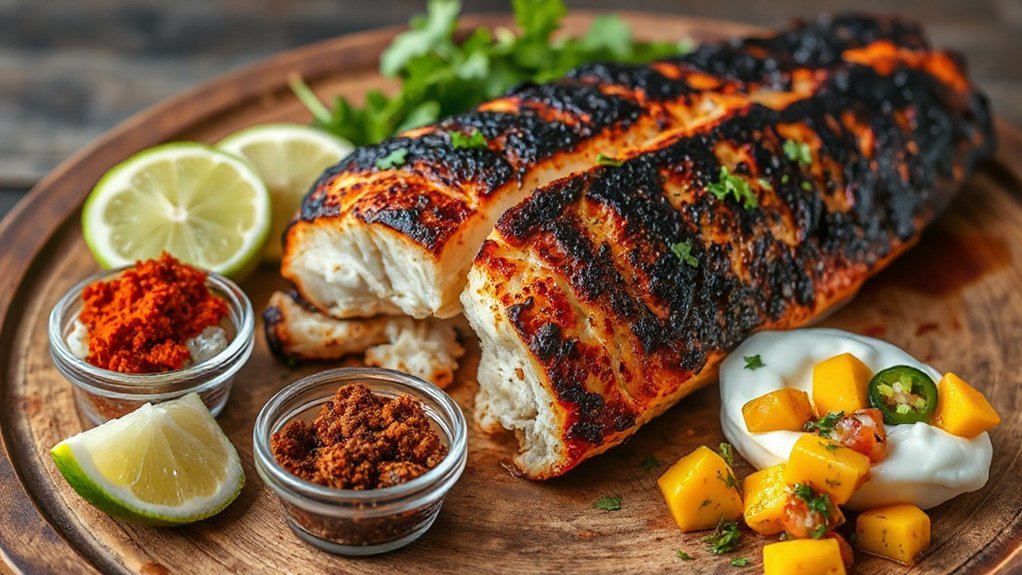
Although the classic blackened rub is bold on its own, you can easily tweak the flavor and heat to suit your taste—dial down the cayenne for a milder family-friendly version or amp it up for serious kick.
You’ll also play with herb substitutions to freshen the profile: swap thyme for oregano, add cilantro, or stir in a touch of dried basil for sweetness. For citrus notes, zest lime into the rub than adding juice. When adjusting spices, focus on heat balancing so the fish’s flavor still shines; reduce paprika if you’re upping black pepper, or add a teaspoon of brown sugar to soften an overly fiery mix. If you want smoky depth without more spice, include a pinch of cumin. Taste your dry blend before coating the fish—nose and a toasted pinch will tell you if it’s right. Cook confidently, taste frequently, and tweak the seasoning as needed.
Serving Suggestions and Side Pairings
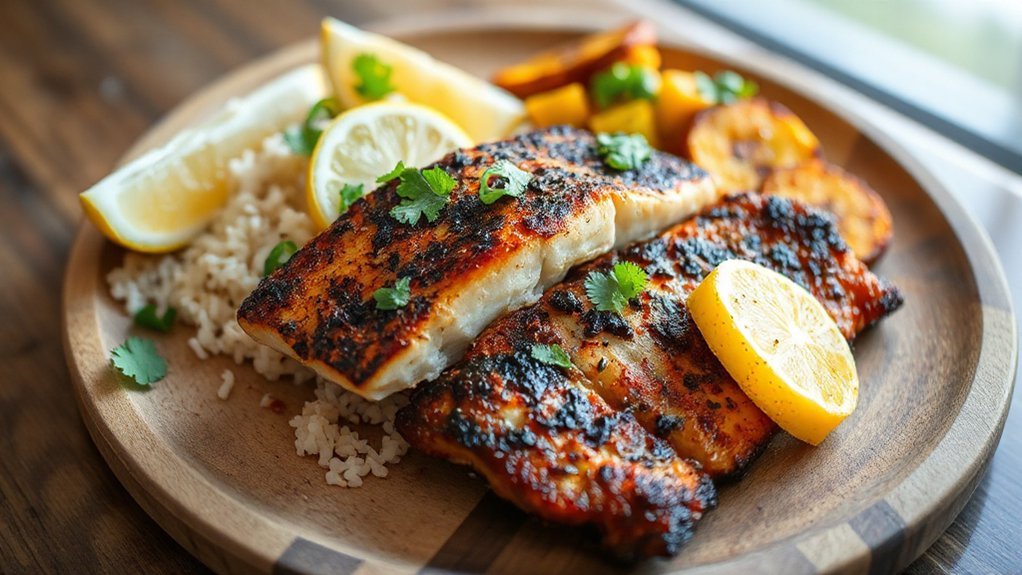
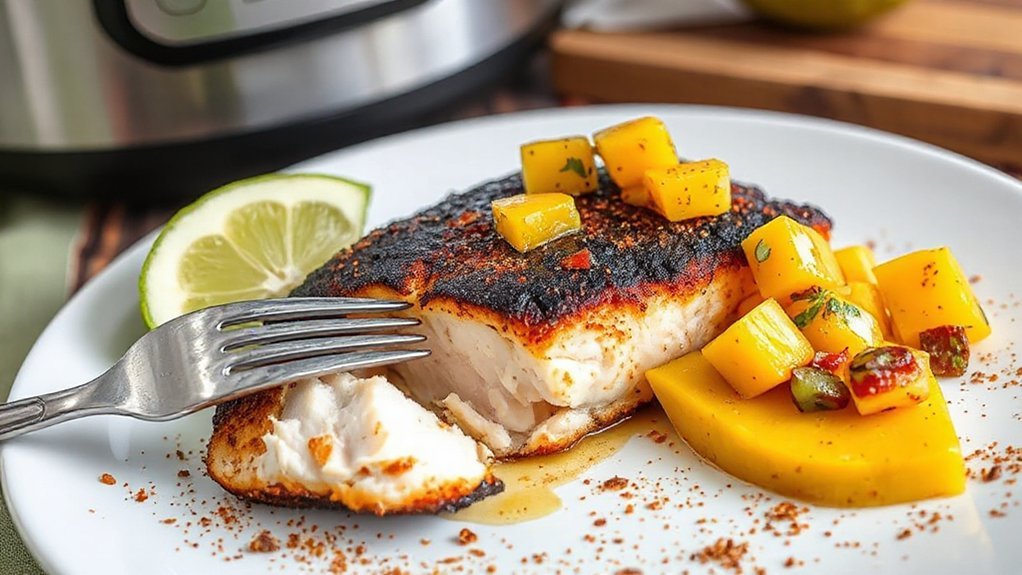
Serve your blackened mahi mahi with a bright tropical fruit salsa—mango or pineapple adds sweet heat that plays off the spices. Pair it with fluffy coconut-lime rice to soak up juices and add a creamy tang. For a touch of caramelized sweetness, add a side of fried sweet plantains and let guests mix and match.
Tropical Fruit Salsas
Balancing bright, fruity salsas with your blackened mahi mahi keeps each bite lively and invigorating, so think about textures and temperatures when you pick sides. Choose mango-pineapple salsa for sweetness and jalapeño for heat; include diced avocado for creaminess and red onion for crunch. Aim for texture variations and acid balance—lime juice or rice vinegar brightens flavors and cuts fat. Serve salsas chilled to contrast the hot, peppery fish, and spoon them just before eating so they don’t sog. If you like a smoky edge, char-pit pineapple works well. Keep portions modest so the fish stays central. You’ll find these salsas lift every forkful without overwhelming the blackened spice. Mix herbs like cilantro and mint for freshness, and always adjust heat to your liking.
Coconut Lime Rice
If you liked the bright fruit salsa, coconut lime rice makes a perfect, slightly sweet bed for your blackened mahi mahi. You’ll cook jasmine or basmati with light coconut milk, then finish with fresh lime zest and a squeeze of juice for brightness. For texture, fold in toasted coconut flakes—don’t skip toasting coconut for extra crunch and flavor. Keep the rice fluffy by fluffing with a fork and resting five minutes. If you want make-ahead ease, practice lime preservation: add a little extra zest and juice, cool, then refrigerate up to two days to let flavors meld. Serve warm beside the fish so each bite balances spice, creaminess, and citrus without overpowering the mains. Garnish with cilantro and sliced scallions for freshness always.
Fried Sweet Plantains
Pairing fried sweet plantains with savory, spicy, or tangy elements really lifts the whole plate—think blackened mahi mahi and coconut lime rice for a classic combo, or swap in grilled shrimp or roasted pork for variation. You’ll want to serve plantains hot so their sugars pop; treat dessert plantains like a flexible side or a cheeky dessert. Try light squeeze of lime, chopped cilantro, or a spicy mayo for contrast. For consistent browning, use simple caramelization techniques: medium-high oil, single-layer frying, and gentle presses to get even contact. If you prefer oven or air fryer, watch closely to avoid overcooking. Plate them alongside protein and rice, and you’ll have a vibrant, balanced Caribbean-style meal. Don’t forget a squeeze of fresh orange for bright sweetness.
Storage, Reheating, and Meal Prep Ideas
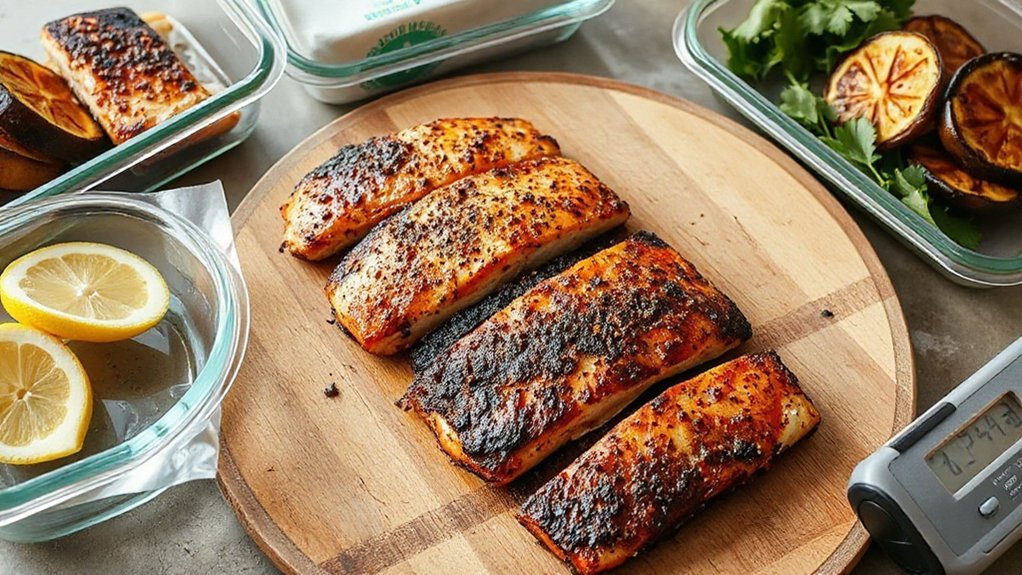
When you cook extra, store the blackened mahi mahi in an airtight container in the fridge for up to 3 days or freeze portions for up to 2 months to keep flavor and texture. Use vacuum sealing or Portion freezing to prevent freezer burn, label dates, and portion for quick meals. Reheat gently in a low oven or air fryer to preserve the crust and flaky interior.
| Meal Idea | Storage Method | Quick Reheat |
|---|---|---|
| Rice bowl with mango salsa | Fridge 3 days / Vacuum sealing for longer | Air fryer 350°F, 6–8 min |
| Salad with greens and lime | Fridge 1–2 days | Serve chilled or warm 3–4 min |
| Tacos with slaw and avocado | Portion freezing single servings | Thaw overnight, air fry 5–7 min |
Plan lunches, stack containers, and you’ll have vibrant Caribbean meals ready all week. Freeze smartly, rotate meals, and enjoy spicy, bright dinners without extra nightly effort every week.
Conclusion
Enjoy your blackened air fryer mahi mahi like a small Caribbean victory—easy, bold, and a little adventurous. You’ll savor the citrus-bright spices and crispy edges, and you’ll feel like you’ve captured a Hemingway sea breeze on your plate. Serve it with rice, plantains, or a crunchy slaw, and you’ll turn weeknight dinner into something worth celebrating. Keep experimenting with heat levels, and you’ll always have a quick, vibrant escape ready for any weeknight or celebration.
About The Author