You’ll get restaurant‑crisp, authentic falafel by soaking dried chickpeas overnight, pulsing them with parsley, cilantro, onion, garlic and cumin, then binding lightly with chickpea flour and a pinch of baking powder. Shape compact balls, preheat the air fryer to 375°F (190°C), arrange a single layer, brush or spray lightly with oil and flip once for even browning. Serve in pita with tahini, pickles and lemon, and keep going if you want tips on perfecting texture.
Ingredients and Pantry Staples
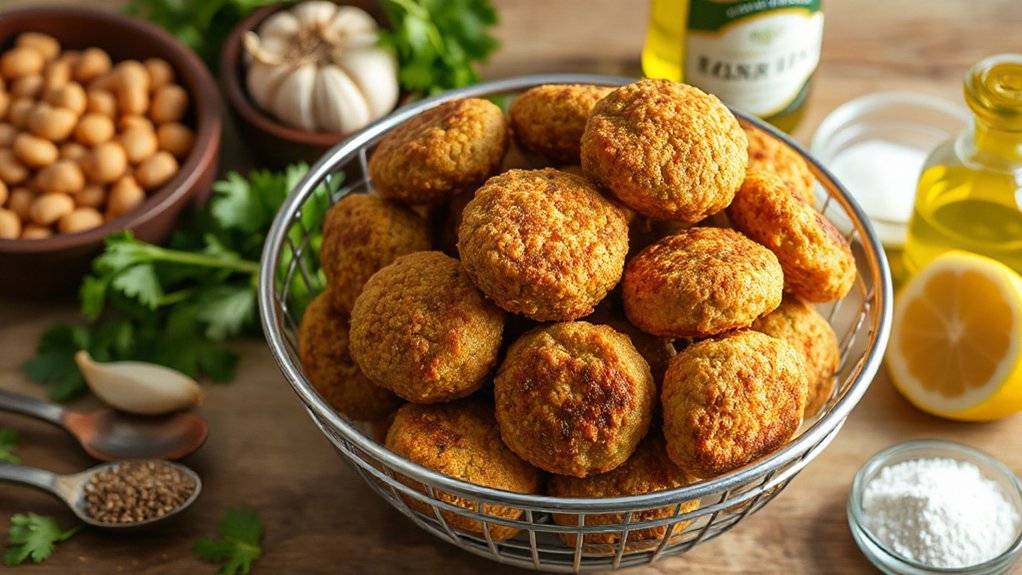
Chickpeas are your starting point—use dried (soaked) for best texture, or canned in a pinch; you’ll also want fresh herbs like parsley and cilantro, onion, garlic, and a small pile of spices: cumin, coriander, salt, and baking powder. Add a little flour or chickpea flour to bind, and a touch of lemon zest for brightness. Plus oil. You’ll keep whole spices and dried herbs in airtight jars so flavors stay sharp; good pantry organization cuts waste and makes prep faster. Buy extra chickpeas and store them cool and dry to extend shelf life; canned goods last long but check dates. Fresh herbs are best bought close to cooking time or briefly wrapped in damp paper towels in the fridge. If you like heat, keep crushed red pepper or cayenne on hand. These staples let you mix a classic falafel base quickly and consistently, without hunting for missing ingredients.
Tools and Air Fryer Setup

You’ll want a tight toolkit: a food processor for blitzing the mix, a kitchen scale or measuring cups and spoons for accuracy, a small ice-cream or cookie scoop for uniformly sized falafel, and a pair of mixing bowls and a spatula to combine and shape. Add a silicone brush for light oiling, parchment rounds or perforated liners for easy cleanup, and an instant-read thermometer to check interior temps if you like precision. Choose an air fryer with a roomy basket that lets air circulate; basket placement matters—don’t overcrowd. Run one or two short preheat cycles when you start the batch so the fryer hits steady heat and crisps promptly. Arrange scooped falafel in a single layer with space between, flip once midway, and use minimal oil sprayed rather than drenched. These tools and small setup steps save time, reduce mess, and deliver consistently crisp, golden results every run.
Soaking, Draining, and Preparing Chickpeas
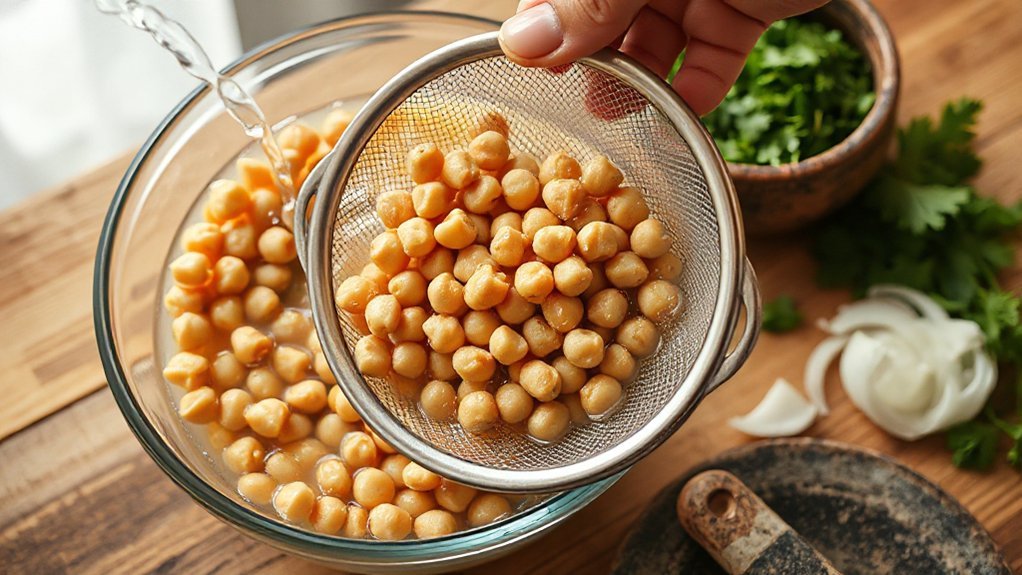
Before you blend anything, soak the dried beans in plenty of cold water for 8-12 hours (overnight works best) so they swell and soften without cooking. You’ll want them fully submerged with several inches of extra water because they’ll double in size. Soak Timing matters: stick to the window so they soften but don’t ferment.
After soaking, drain and rinse thoroughly, then spread them on a clean towel or paper to pat dry — excess surface moisture will make a loose mix. If some skins loosen, remove them for smoother texture; you can pinch and flick or sink them in water to separate.
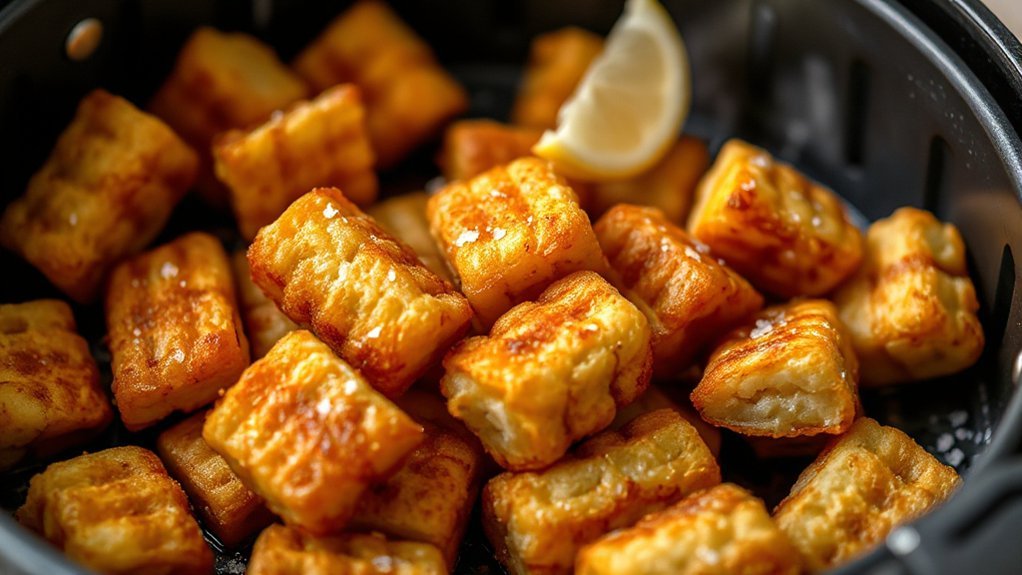
Pay attention to Sprout Management: don’t let soaked chickpeas sit at warm room temperature for long or they may sprout; keep them cool or refrigerate if you soak longer. Finally, drain again well before processing so your falafel binds properly. Then proceed with confidence, enjoy.
Herb, Spice, and Batter Assembly
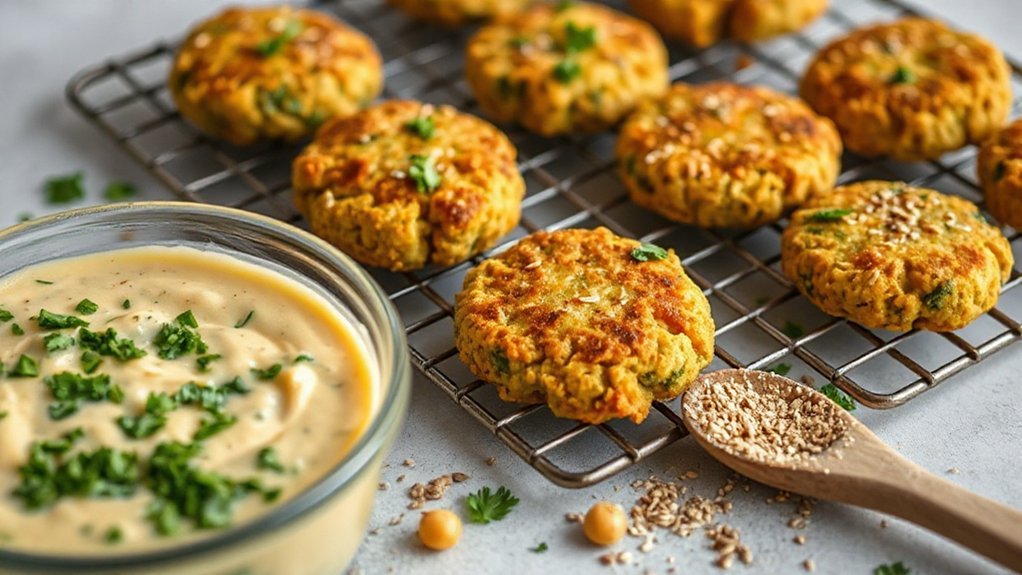
You’ll want a fresh herb ratio—about 2 parts parsley to 1 part cilantro with a small handful of mint—to keep the flavor bright without overpowering. Season with cumin, coriander, garlic, salt, and a pinch of cayenne, tasting as you go. Pulse the chickpeas with herbs and spices until coarse, then add 1–2 tablespoons of flour (or chickpea flour) and a touch of water only if needed so the batter holds together without getting pasty.
Herb Mix Ratios
For about 2 cups of processed chickpea mixture (the amount you get from roughly 1 cup dried, soaked chickpeas), aim for a fresh-herb-forward balance: 2 tablespoons each chopped parsley and cilantro (or swap mint for one tablespoon if you like); then add 2 teaspoons ground cumin, 1 teaspoon ground coriander, 1/2–1 teaspoon kosher salt, and 1/4 teaspoon black pepper. Taste as you go, adjusting herbs for brightness and salt for Pungency Balance. If you want more earthiness, nudge up coriander by 1/4 teaspoon; for warmth, add a pinch of cayenne. Pulse your herbs evenly so leaves distribute without turning into paste — that preserves Aroma Layering. These ratios give you a lively, fragrant falafel base you can tweak confidently to match your palate easily.
Batter Consistency Tips
While you’re mixing herbs, spices, and the chickpea base, aim for a damp, slightly coarse batter that holds together when pressed but isn’t pastey — think wet sand, not cookie dough. Use a light pulse in your food processor and scrape down the bowl; overworking makes gluey falafel. Check moisture balance: add a teaspoon of water or lemon juice at a time, never a splash. Fold in parsley and cilantro last so they stay bright. For texture testing, form a small ball and fry or air-fry a test patty to confirm crisp outside and tender interior. If it falls apart, add a bit more binder like chickpea flour. Adjust seasoning after the test and proceed confidently. Keep notes so you reproduce your perfect batch consistently.
Shaping and Air Frying for Crispness
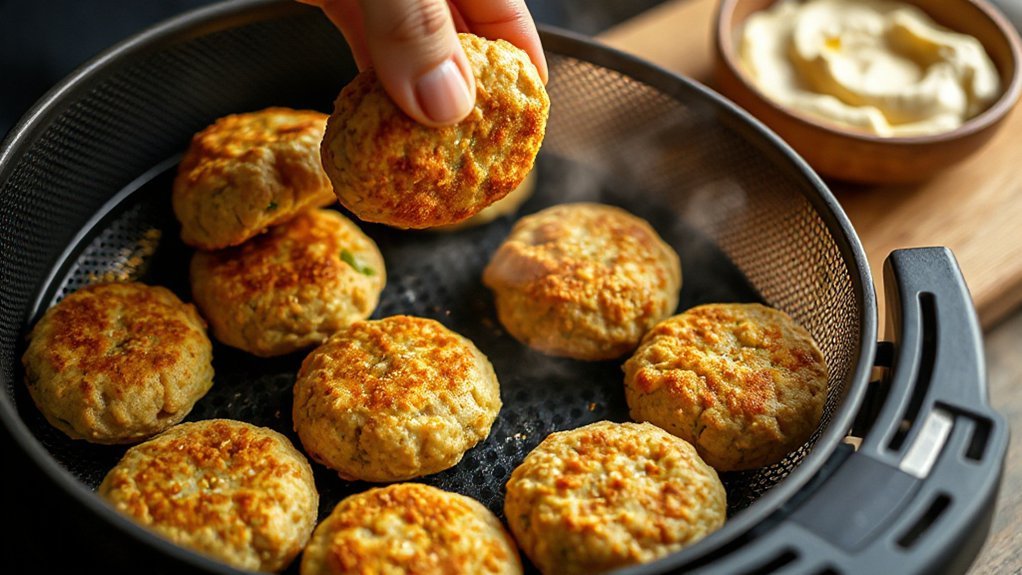
Shaping falafel into compact, evenly sized patties or balls makes the difference between a tender center and a crisp crust, so aim for pieces about 1–1.5 inches wide and press them firmly to remove air pockets. You’ll use compact shaping and surface texturing to control moisture and airflow: roll tight, then press shallow ridges or dimples so hot air hits more surface area. Preheat your air fryer to 375°F (190°C), spray or brush oil lightly, and arrange pieces with space around each. Flip halfway and cook 10–12 minutes until golden. Let rest briefly to set the crust. Adjust cook time for size and your fryer model; smaller pieces crisp faster. Monitor and tweak accordingly.
| Tip | Why it helps |
|---|---|
| Compact shaping | Promotes even cook |
| Surface texturing | Increases crispness |
| Space pieces | Promotes airflow |
Serving Suggestions and Storage Tips
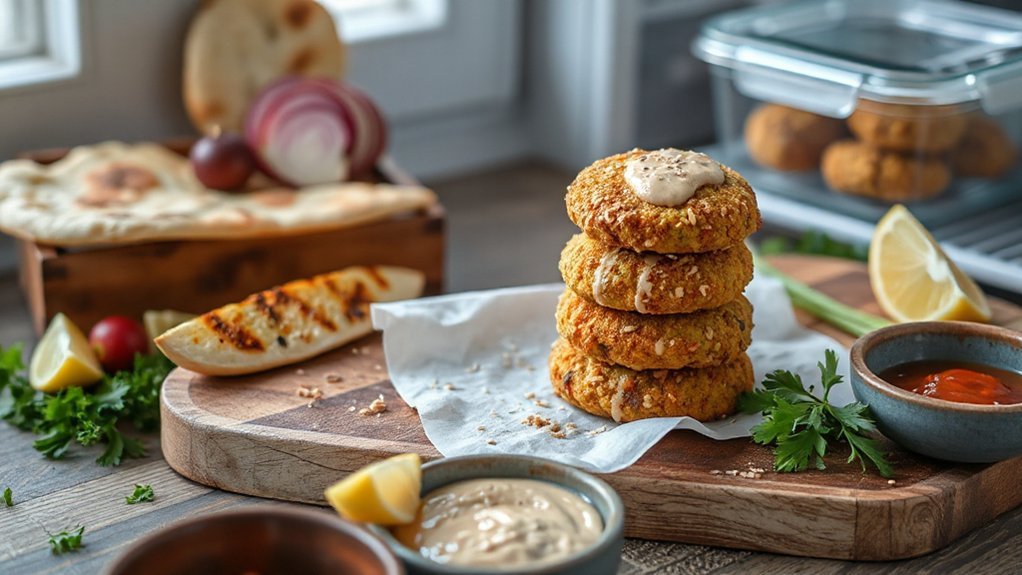
Serve your air fryer falafel stuffed in warm pita with hummus, tahini, and fresh veggies, or toss them on a salad for an easy meal. To store, let falafel cool completely, then keep them in an airtight container in the fridge for up to 4 days or freeze for up to 3 months. Reheat in the air fryer at 350°F for 3–5 minutes (6–8 minutes from frozen) to bring back the crispness.
Serving Ideas
How will you eat them—stacked in a pita, tossed in a salad, or piled on a grain bowl? Serve falafel with bright toppings: chopped cucumber, tomato, pickles, and tahini drizzle. For Platter Presentation, arrange falafel rounds on a bed of greens with small bowls of hummus, labneh, and hot sauce so guests can assemble. Add lemon wedges and fresh herbs for color. For Beverage Pairings, try mint tea, crisp lager, or a dry rosé to cut richness. Offer warm pita and roasted vegetables for heartier plates. If you want a lighter bite, nest falafel atop shredded cabbage with yogurt sauce. Keep portions small for parties, label sauces, and provide tongs so people can build their own perfect bites. Serve immediately for best crunch, always.
Storage and Reheating
When you’re saving falafel for later, pack cooled rounds in an airtight container with a paper towel to absorb moisture so they stay crisp—store in the fridge for up to 3–4 days. When it’s time to eat, you’ve got two good options: oven revival at 375°F for 8–10 minutes crisps evenly without drying, or a quick air fryer touch-up for 3–5 minutes. Avoid microwave pitfalls—microwaving makes falafel soggy and chewy. If you must microwave, do short bursts and then finish in a hot pan to restore texture. For freezing, flash-freeze on a tray, then transfer to a bag for up to three months; reheat from frozen using the oven revival method. Serve immediately for best crunch. Pair with warm pita, tahini, and fresh parsley.
Conclusion
You’ve nailed authentic air fryer falafel that’s crispy as autumn leaves on the outside and tender inside, and you’ll keep coming back because it’s fast, forgiving, and full of flavor. Store leftovers in the fridge for 3–4 days or freeze for up to 2 months. Reheat in the air fryer to revive the crunch. Serve with tahini, pickles, or pita and a bright salad — simple, satisfying, and ready whenever you are for weeknight meals.
About The Author