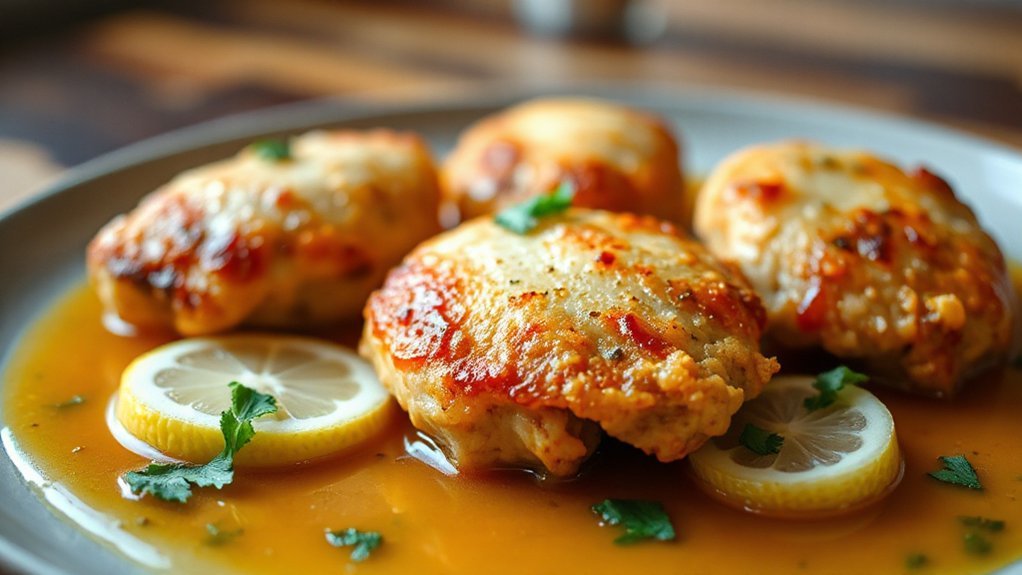
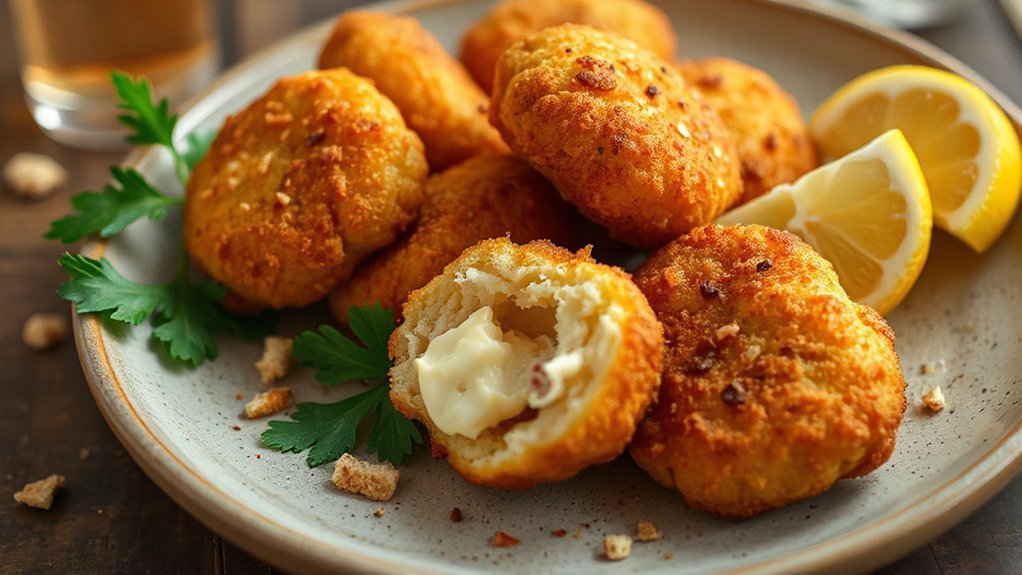
You can make an authentically crispy Austrian-style chicken schnitzel in your air fryer with far less oil and fuss. Pound thin, season, then flour, egg, and panko (or fine crumbs with Parmesan) for golden crust. Preheat the basket, single-layer the cutlets, spray lightly with oil, and air-fry at 375–400°F, flipping once until 165°F. It keeps a tender interior and bright finish with lemon and parsley — keep going; you’ll pick up simple tips, timings, tweaks.
Why This Air Fryer Schnitzel Works
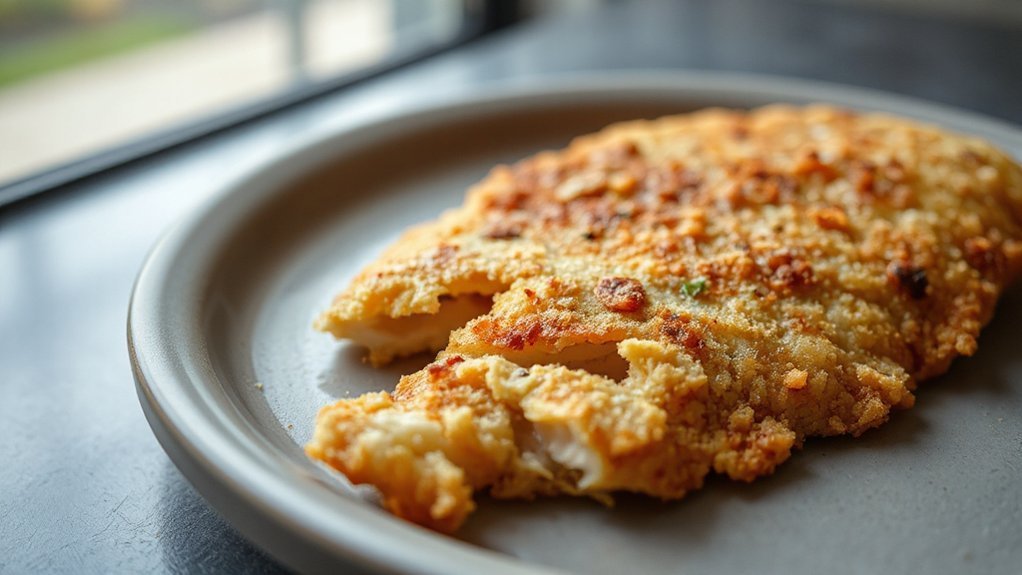
Because the air fryer circulates hot air at high speed, you get that golden, crunchy crust without drowning the cutlets in oil. You’ll appreciate how efficiently it mimics the shallow-frying technique that made schnitzel a beloved dish in Vienna, connecting to its Cultural context without the mess. The device gives you reliable, even browning so your dinner comes out consistent every time. You’ll notice the Sensory appeal immediately: crisp exterior, tender interior, and that toasty aroma that invites everyone to the table. Cooking this way saves time and reduces fat, so you can serve a lighter version that still honors tradition. You’ll find cleanup quicker and portions easier to manage, which makes weeknight hosting realistic. Temperature control and rapid airflow mean you don’t guess doneness; you’ll monitor color and feel for the same cues you’d use in a pan. In short, it’s practical, respectful of tradition, and satisfying.
Ingredients You’ll Need

You’ll need a few simple staples: boneless skinless chicken breasts (pounded thin into cutlets), all-purpose flour, a couple of eggs beaten, and breadcrumbs (panko gives extra crunch but plain fine crumbs work too). Add salt, pepper, and a squeeze of lemon for brightness. You can choose organic options for produce and eggs, or pick budget alternatives without sacrificing flavor.
| Item | Amount | Note |
|---|---|---|
| Chicken | 4 cutlets | Thin for quick cooking |
| Breadcrumbs | 1.5 cups | Panko or fine crumbs |
| Eggs/Flour | 2 eggs, 1 cup flour | For dredging |
You’ll want a few pantry staples: neutral oil spray, paprika or nutmeg for a touch of warmth, and parsley for serving. Measure portions to keep coating consistent. These ingredients keep prep simple and let the schnitzel shine. If you want extra flavor, add mustard to the egg wash and a little parmesan to crumbs—small tweaks give big results without complicating prep or budget either.
Equipment and Air Fryer Tips

Pick an air fryer big enough so the schnitzels lie in a single layer without crowding. Position any rack or tray so hot air can circulate—middle or upper-middle usually works best. You’ll get crisp, even browning when you leave space between pieces and avoid blocking the fan.
Choose the Right Size
How big is your air fryer basket and will the schnitzels fit in a single layer? Think about size before you start: overcrowding ruins crispness and forces you into batches. If you’ve got a compact fryer, cook fewer pieces and stagger service — that’s good portion control and keeps everything hot. A larger basket lets you finish the whole family at once, which simplifies meal planning. Measure your chicken against the basket diameter; trim or butterfly breasts so they lay flat. Use a thermometer to avoid overcooking when you reduce batch size. Remember pans or liners cut usable space, so factor them in. Pick a fryer size that matches your usual servings and routine, and you’ll get reliably consistent, crispy schnitzel every single time.
Rack Positioning and Airflow
Rack position makes a bigger difference than most home cooks expect—once you know where to place the rack, airflow and browning fall into place. Place schnitzel on the middle or upper-middle rack so hot air circulates evenly and the crust crisps without burning. Avoid overcrowding; leave gaps for air to move around each piece. If your model has a dedicated rack, use it to stack single layers, not piles. That preserves texture and aids Noise Reduction by preventing the fan from working harder. Better airflow shortens cook time, improving Energy Efficiency. Check halfway, rotate if needed, and trust the rack to deliver uniform color and crisp edges—no guesswork, just reliable results. You’ll get consistent schnitzel every time with minimal fuss and great flavor too.
Preparing the Chicken
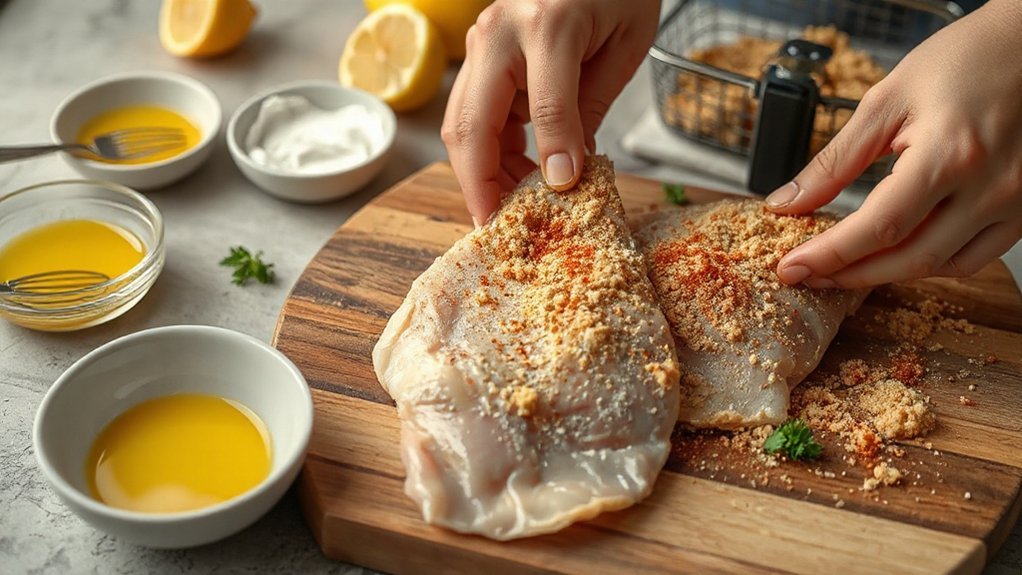
Start by trimming any fat and tendons, then butterfly or halve thicker chicken breasts so each piece’s about 1/4 inch thick—you’ll get even, fast cooking and a crispier crust. Next, decide whether to use a quick brine; Brining benefits include juiciness and seasoning through the meat, especially if you’ll cook at high heat. If you prefer not to brine, use Tenderizing methods like a few gentle pounds with a meat mallet to equalize thickness and break fibers for a tender bite. Pat the cutlets dry with paper towels—dry surfaces brown better and help coatings stick later. Season lightly with salt and pepper, and let the pieces rest on a wire rack in the fridge for 15–30 minutes to firm the surface. Keep everything cold until you bread and air fry; chilled, well-prepped chicken seals faster and yields a crispier final schnitzel. Work confidently and enjoy the process today.
Breading Technique for Perfect Crunch
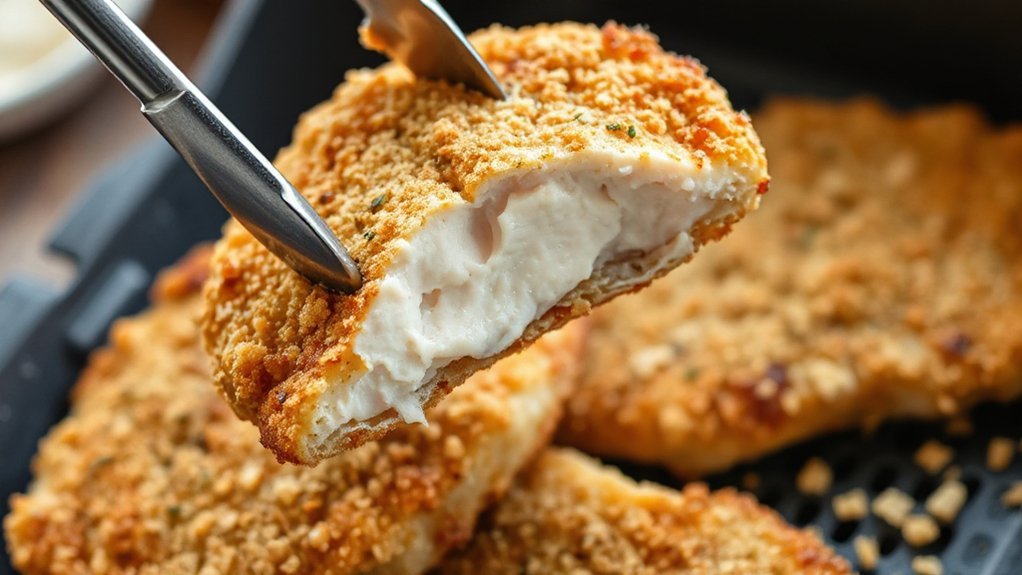
Start by giving the chicken a light flour dredge to help the egg stick, and season it so each bite has flavor. Make your egg wash slightly runny so it coats evenly—thick clumps lead to uneven breading. Choose panko for big crunch or regular breadcrumbs for a finer, more compact crust.
Flour Dredge Basics

Crispness comes from a dry, well-seasoned flour dredge that creates the foundation for your schnitzel’s crust. You’ll pick the right flour using simple flour classification—lower protein flours limit gluten development so coatings stay tender. Season generously with salt, pepper, and a pinch of paprika. Keep dredge dry and use a shallow pan for even coating. Pat chicken dry first, press into flour, shake off excess; repeat only if needed. Rest briefly on a rack so the surface dries before breading. Below is a quick reference to keep you on track.
| Step | Tip |
|---|---|
| Pat | Dry chicken, press flour, shake off excess |
| Season | Salt, pepper, paprika for flavor |
| Flour choice | Use lower protein for minimal gluten development |
| Rest | Let surface dry briefly before continuing |
| Ratio | Light dusting, shake extra |
Egg Wash Consistency
After your flour dredge has dried a bit, the egg wash is what makes the crumbs stick and builds that crunchy shell you want. You’ll whisk eggs with a splash of milk or water until the mixture reaches a glossy, slightly thick ribbon—think pourable custard; that’s your quick viscosity measurement in practice. Don’t over-thin: run your finger through the stream to judge flow using simple sensory descriptors like slick, viscous, or runny. Dip each cutlet, let excess drip off for a couple seconds, then press crumbs on. If the wash’s flow is too slow, it gums; too fast, crumbs won’t adhere. Adjust small amounts of liquid, keep it at room temperature, and you’ll get consistent adhesion and crisp, golden results. Serve immediately for crunch.
Panko Vs Regular
Why pick panko instead of regular breadcrumbs? You’ll notice immediately: panko gives a lighter, airier crunch while regular crumbs create a denser crust. For texture comparison, panko’s larger flakes trap pockets of air, so your air-fried schnitzel stays crisp without excess oil. Regular breadcrumbs brown evenly and cling well, so they suit thinner coatings or seasoned mixes. Consider a nutritional comparison too: both are similar calorie-wise, but panko often has less fat if you avoid extra oil; whole-grain crumbs can add fiber. For best results, press the coating firmly, shake off excess, and spray lightly with oil to promote even browning. Try mixing both for balanced crunch and flavor.
Air Frying: Time and Temperature
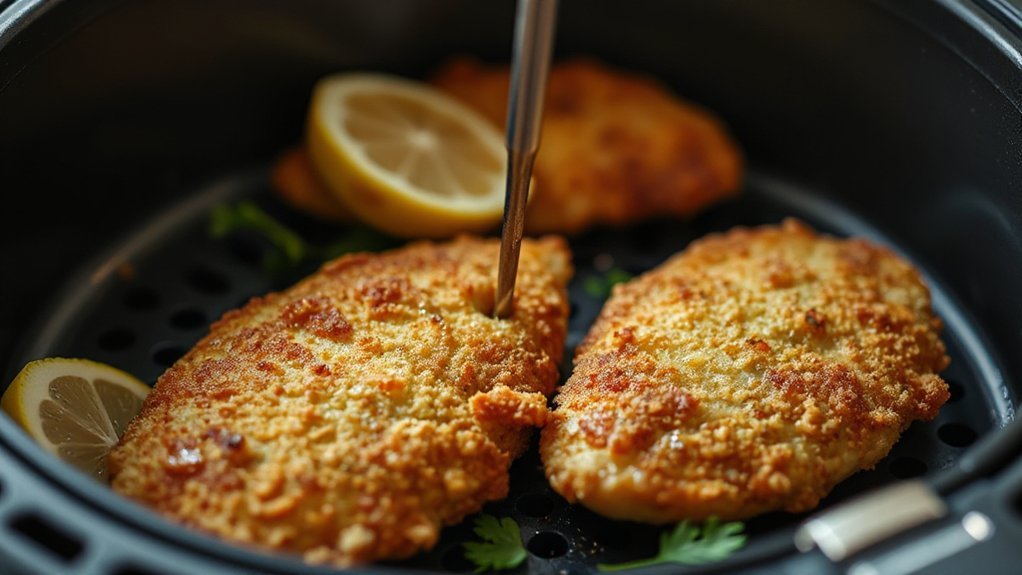
When you set the time and temperature for air frying chicken schnitzel, aim for 375–400°F and 8–12 minutes total, flipping once halfway so both sides brown evenly. You’ll preheat the basket for a few minutes, then arrange schnitzels in a single layer without overcrowding. For thin cutlets 8 minutes usually suffices; thicker ones need up to 12. Watch for golden-brown crust as your cue — that’s Maillard Development happening. Use a digital instant-read thermometer to confirm 165°F internal temperature, then remove earlier if you like a touch of pink in the center for juicier results; Carryover Cooking will raise the temp a few degrees while resting. Lightly spray oil before cooking to promote crispness without deep frying. If pieces touch or darken too quickly, lower temp by 10–15°F and extend time. You’ll get consistent, crunchy schnitzel by adjusting based on thickness and your air fryer’s hot spots regularly.
Serving Suggestions and Sides
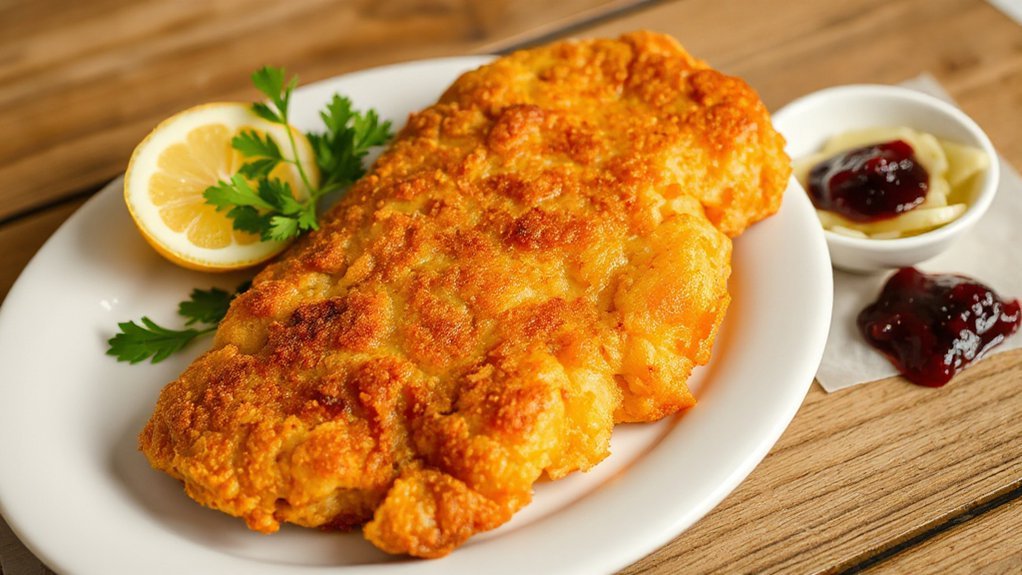
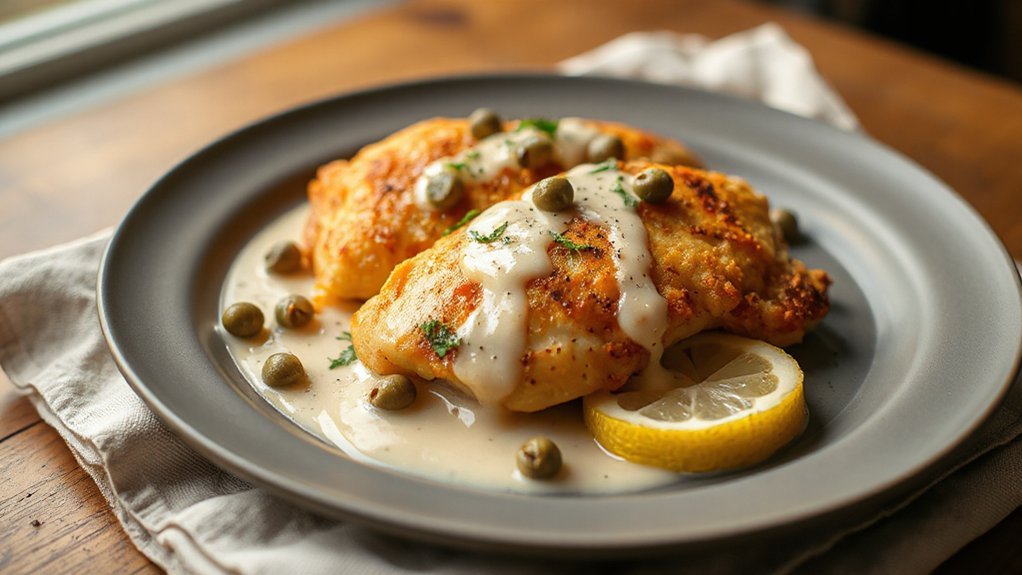
If you’re aiming for a classic plate, serve the schnitzel with lemon wedges and a scattering of parsley to cut the richness and brighten each bite. Add a crisp cucumber-dill salad or simple cabbage slaw for crunch and acid, and offer a warm scoop of buttered spaetzle or brown-buttered capers for comforting carbs. If you want lighter Potato Alternatives, try roasted baby carrots, cauliflower mash, or herb-tossed fingerling potatoes. Steamed green beans or sautéed spinach make easy, colorful vegetables. For a touch of sweetness set out lingonberry jam or a grainy mustard for dipping. When it comes to Wine Pairings, pick a dry Riesling or Grüner Veltliner to match the schnitzel’s crispness; a light Pinot Grigio or a chilled rosé also works nicely. Plate simply, keep portions balanced, and let guests mix flavors so everyone gets their preferred combination. Serve immediately for best texture and communal enjoyment tonight.
Storage and Reheating Tips
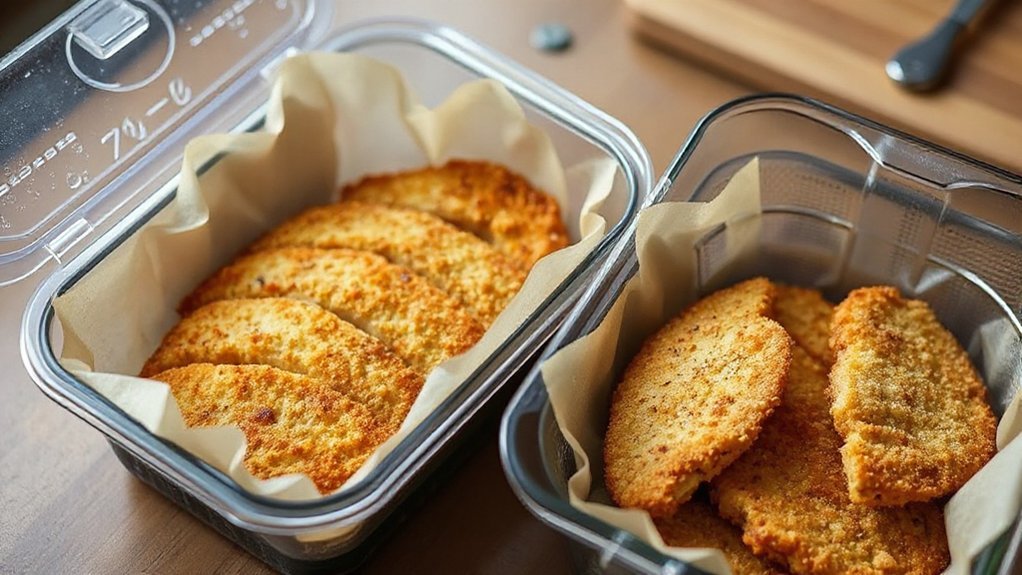
After plating and pairing, you’ll likely have leftovers—here’s how to keep them tasting great. Cool schnitzel to room temp no more than two hours, then use airtight containers for Fridge Storage; they’ll stay crispish for 2–3 days. For longer life, wrap pieces individually and freeze. When you plan ahead, use Freezer Thawing in the fridge overnight, not on the counter. Reheat in the air fryer at 350°F (175°C) for 5–8 minutes to revive crunch and avoid soggy microwave shortcuts. Use a meat thermometer to make sure 165°F (74°C) internal temp.
Keep leftovers crisp: cool quickly, refrigerate or freeze, and reheat in the air fryer to 165°F for best results.
- Cool completely before storing to prevent sogginess.
- Label containers with date so nothing lingers.
- Reheat from frozen: add a few extra minutes.
- Refresh with a quick spray of oil for crispness.
- Serve immediately after reheating; don’t reheat twice.
These steps keep texture and safety top‑notch without fuss. Store promptly and enjoy every crispy bite.
Variations and Flavor Twists
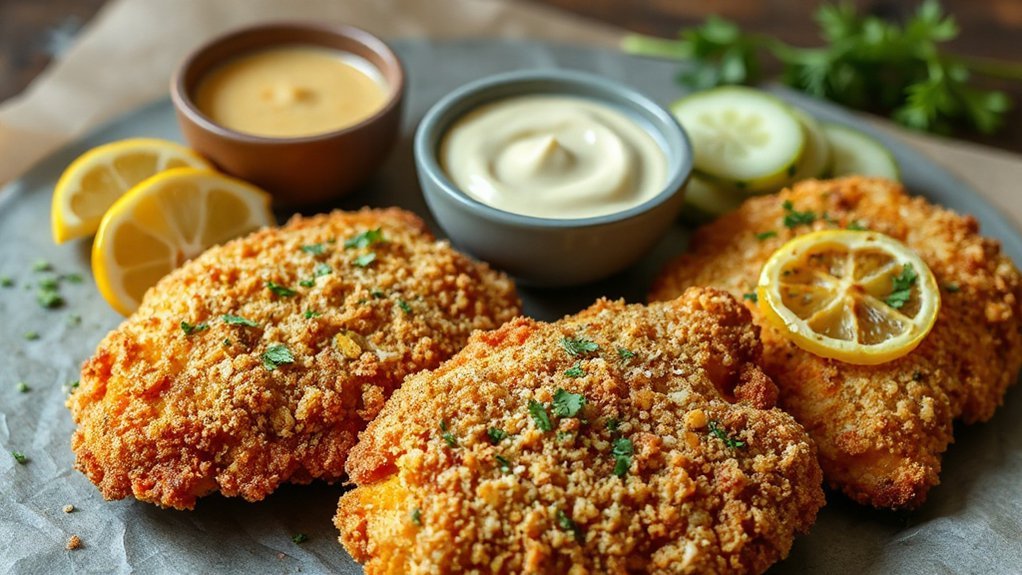
Because schnitzel is a crispy canvas, you can riff on coatings, seasonings, and sauces to match your mood. Try swapping plain breadcrumbs for panko mixed with grated Parmesan and lemon zest for extra crunch and brightness. For a spicier edge, dust flour and crumbs with smoked paprika, cayenne, or a blend of regional spices like za’atar or berbere to echo nearby cuisines. If you’re craving herbs, press chopped parsley, chives, or tarragon into the crumbs before air frying. Swap chicken for pork or turkey the same way, adjusting cooking time slightly. Finish with global sauces: tangy mustard-dill, creamy aioli, chimichurri, or a sweet-and-spicy mango chutney to transform the plate. Serve with simple sides—potato wedges, a crisp salad, or pickled veg—to balance richness. Keep notes on combos you love so you can repeat winning flavor twists without guessing. Rotate themes weekly to keep family meals exciting and easy.
Troubleshooting Common Issues
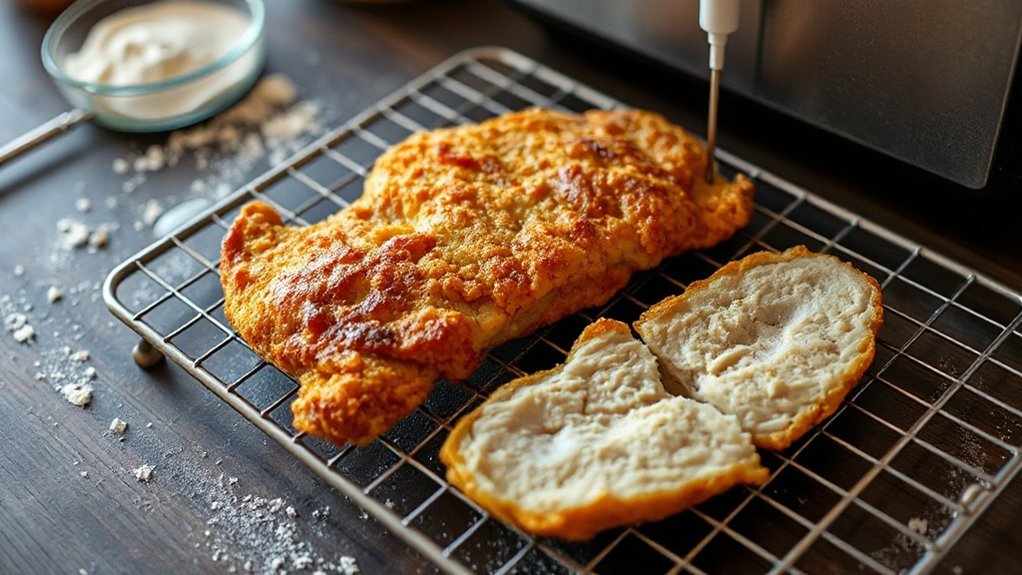
You’ll get quick fixes for soggy breading — pat the chicken dry, use a light spray of oil, and make sure the air fryer is preheated. For uneven cooking, flip the schnitzel halfway, don’t overcrowd the basket, and check doneness with an instant-read thermometer. Small tweaks like lowering the rack or cooking a bit longer at a slightly lower temp can give you crisp, evenly cooked schnitzel every time.
Soggy Breading Fixes
We’ve all pulled a promising schnitzel from the air fryer only to find limp, soggy breading — but it’s fixable. In high kitchen humidity it’s easy to lose crunch; prioritize crumb salvage by reheating properly and drying components before breading. Try these quick fixes to rescue your schnitzel and keep dinner on track:
- Pat chicken dry and chill briefly so coating adheres.
- Double-dip with beaten egg then panko for sturdier crust.
- Spray oil lightly and finish at high heat for 2–4 minutes.
- Use a wire rack in the basket for airflow under crust.
- If soggy, pop pieces back in at 400°F until crisp.
Stay practical: small tweaks give crunchy results fast. You’ll be serving golden schnitzel in minutes again.
Uneven Cooking Solutions
Fixing soggy breading is great, but if the crust looks perfect and the interior’s underdone (or the outside is overcooked while the middle’s fine), you’ve got an uneven-cooking problem to solve. First, check thickness: pound cutlets uniformly so each cooks at the same rate. Use visual cues—golden edges, bubbling juices—and a meat thermometer to confirm doneness; 165°F (74°C) in the thickest part is your target. Adjust rack position and lower temperature so heat penetrates without burning the crust. Flip midway for even airflow and avoid overcrowding the basket. Treat each batch as a mini test: tweak time or temp, observe results, and create simple feedback loops so you learn what your air fryer does. You’ll nail it much faster.
Conclusion
You’ve nailed a crispy, golden schnitzel that tastes like Austria but fits your modern, busy life. You’ll love how quick the air fryer is — no deep-fryer drama — and you’ll impress friends, even the neighbor with a Victorian telegram-worthy compliment. Keep the breading dry and the oil light, reheat gently, and experiment with lemon and herbs. You’ve got a reliable, tasty weeknight winner that becomes comfort food fast. Go serve it hot and smile proudly.
About The Author