You’ll get crispy, golden turkey meatballs with juicy centers and a bright marinara that clings, all with minimal fuss. I’ll show you the exact ratios, temps, and timing to avoid dryness and soggy sauce. Follow a few simple techniques and you’ll have weeknight-worthy results that also work for meal prep…
Why You’ll Love This Recipe

Although it cooks fast, you won’t sacrifice flavor or texture: these air fryer turkey meatballs get a crisp exterior and stay juicy inside, use far less oil than frying, and cut cook time compared with the oven.
You’ll appreciate the health benefits of lean turkey combined with controlled fat from minimal oil, which supports calorie-conscious and protein-forward eating. You can scale batches for efficient meal prep, freezing portions or pairing with salads and grains to simplify weekly planning.
The air fryer delivers repeatable results with less oversight, so you innovate without trade-offs. Follow precise timing and brief flipping to maintain consistency.
You’ll serve a dependable, modern dish that elevates weeknight dinners and meets goals for flavor, nutrition, and convenience, and optimized home cooking performance.
Ingredients You’ll Need
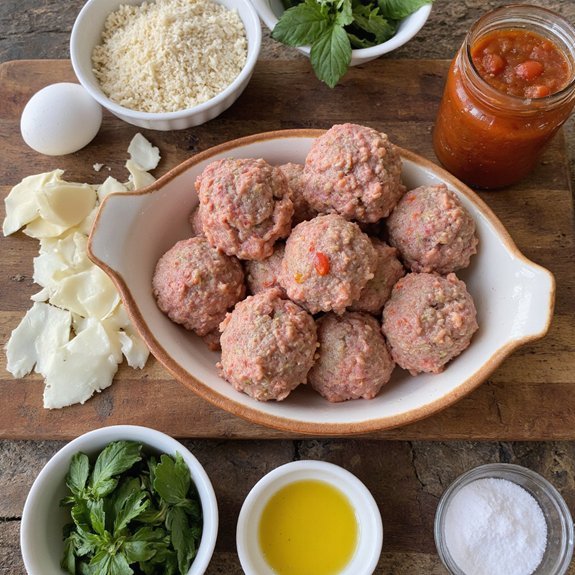
You’ll start with lean ground turkey as the primary protein and add binders like egg and breadcrumbs to guarantee tender, cohesive meatballs.
For flavor, select a sauce—marinara or a sweet-spicy glaze—and build seasonings with garlic, onion, salt, pepper, and herbs.
Measure ingredients precisely and taste-adjust the seasoning before you air fry.
Protein and Binders
When choosing proteins and binders for air fryer turkey meatballs, pick a moist, flavorful ground turkey (a 85/15 or 93/7 blend depending on your fat tolerance) and pair it with a reliable binder like an egg and fine breadcrumbs or panko to give structure without weighing the meatballs down. You’ll favor lean meats for texture and health, but balance juiciness and binding agents, keeping mixtures loose enough to form yet firm enough to hold. Use a bit of grated onion or soaked breadcrumbs for moisture control. Table below compares options and expected outcomes.
| Protein | Binder | Result |
|---|---|---|
| 85/15 turkey | Egg + panko | Tender, holds shape |
| 93/7 turkey | Egg + fine crumbs | Leaner, slightly drier |
| Turkey + fat | Extra binder | Juicier, denser |
Sauce and Seasonings
What seasonings and sauces should you have on hand? You’ll want a robust marinara base (canned crushed tomatoes, tomato paste) plus balsamic or red wine vinegar to brighten flavors.
Keep olive oil, garlic, and shallot for sautéing, and add a touch of honey or sugar to control acidity. For herbs and spices, stock dried oregano, basil, crushed red pepper, smoked paprika, kosher salt, and black pepper—these let you achieve precise seasoning balance.
For innovation, include anchovy paste or miso for umami and a splash of cream or mascarpone for richness. Finish with fresh basil and grated Parmesan.
Measure components to maintain sauce consistency that coats meatballs without becoming gummy or runny. Adjust seasoning levels as you go, tasting frequently to refine your final sauce.
Equipment and Prep
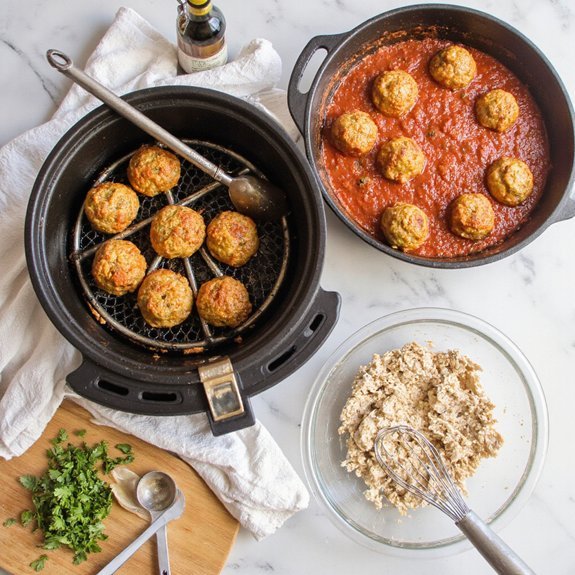
Two essential pieces of equipment are an air fryer and a reliable instant-read thermometer to guarantee safe internal temperature.
You’ll also assemble essential kitchen tools: a mixing bowl, digital scale, silicone spatula, cookie scoop, and nonstick spray.
For clean flavors use fine-grate cheesecloth or paper towels to blot excess moisture from turkey. Line the air fryer basket with perforated parchment when recommended, and keep a rimmed tray ready to transfer meatballs.
For efficient meal prep you’ll portion and chill formed meatballs 15–30 minutes to firm them and reduce splatter. Set out plates, tongs, and a thermometer within reach so you won’t interrupt cooking.
Finally, sanitize surfaces and keep ingredients chilled until assembly to maintain food safety and consistent texture. Then proceed with confident timing.
Step-by-Step Cooking Method
Preheat your air fryer to 375°F (190°C), then place the chilled meatballs in a single layer with at least ½ inch between them so hot air can circulate; lightly spray the tops with oil to promote even browning.
Cook for 10 minutes, flip once, and continue for 4–6 minutes until an internal temperature of 165°F (74°C) is reached. Use a digital probe to verify doneness rather than relying on appearance alone.
Let meatballs rest briefly before saucing to stabilize juices.
These step-by-step instructions integrate preparation techniques with precise cooking times so you can iterate and innovate recipes confidently.
If you’re scaling batches, stagger cycles to avoid overcrowding and adjust cooking times proportionally to maintain consistent results.
Document variations to refine your signature meatball profile.
Tips for Perfect Texture
One key to tender, moist turkey meatballs is balancing binders and fat: use just enough breadcrumbs moistened with milk and a single egg, fold ingredients gently to avoid overworking the meat, and add grated onion or a tablespoon of olive oil for extra juiciness.
You’ll also calibrate seasoning and texture by testing a small pan-fried sample before shaping the entire batch. Adjust salt, herbs, and the hydration of the meat mixture until the sample holds together but yields easily.


In the air fryer, monitor baking time closely — undercook and they’ll be dry; overcook and they’ll toughen. Aim for a final internal temperature of 165°F and check several meatballs to account for size variance.
Rest briefly to redistribute juices. Use an instant-read thermometer for precision.
Serving Ideas and Pairings
You’ll find turkey meatballs versatile across pasta and grain bowls—toss them with marinara over spaghetti or serve on quinoa or brown rice for a lighter grain option.
You can pile them into sandwiches and subs with melted provolone, pickled peppers, and a smear of pesto or marinara for a hearty handheld.
For a lighter plate, pair them with roasted or steamed vegetables, a crisp salad, or simple sides like garlic‑sautéed greens or lemony couscous.
Pasta and Grains
When paired with the right pasta or grain, air fryer turkey meatballs become a complete, balanced meal that’s easy to customize.
You’ll select pasta types that match texture and sauce—rigatoni or pappardelle for hearty bites, or whole grain spaghetti for lighter strands—and layer meatballs over al dente pasta to preserve bite.
For grain-forward plates, choose farro, freekeh, or quinoa for chew and nutrient density; you’ll toss grains with herbs and a splash of reserved marinara.
Prioritize grain nutrition when planning portions and combine with roasted vegetables for color and micronutrients.
You can also experiment with cauliflower rice or lentil-based pastas for innovation.
Finish with a controlled drizzle of olive oil, fresh basil, and grated Parmesan to unify flavors.
Serve immediately for peak texture, always.
Sandwiches and Subs
A hearty turkey meatball sub transforms leftovers into a portable, satisfying meal. You’ll assemble balanced sandwich fillings by layering warm meatballs with marinara and meltable cheese like mozzarella or provolone for structure and flavor.
Choose a sturdy roll that resists sogginess and slice it to cradle each meatball. For inventive sub toppings, pick quick pickled peppers, caramelized onions, or garlic crumb breadcrumbs to add texture and brightness. You’ll control moisture with a light spread of herbed ricotta or olive oil to prevent saturation.
Build sandwiches to serve immediately or wrap tightly for transport; reheating briefly revives sauce and cheese without breaking the bread. These methods keep your subs consistent, portable, and optimized for bold, modern tastes.
You’ll impress guests and elevate everyday convenience effortlessly.
Veggies and Sides
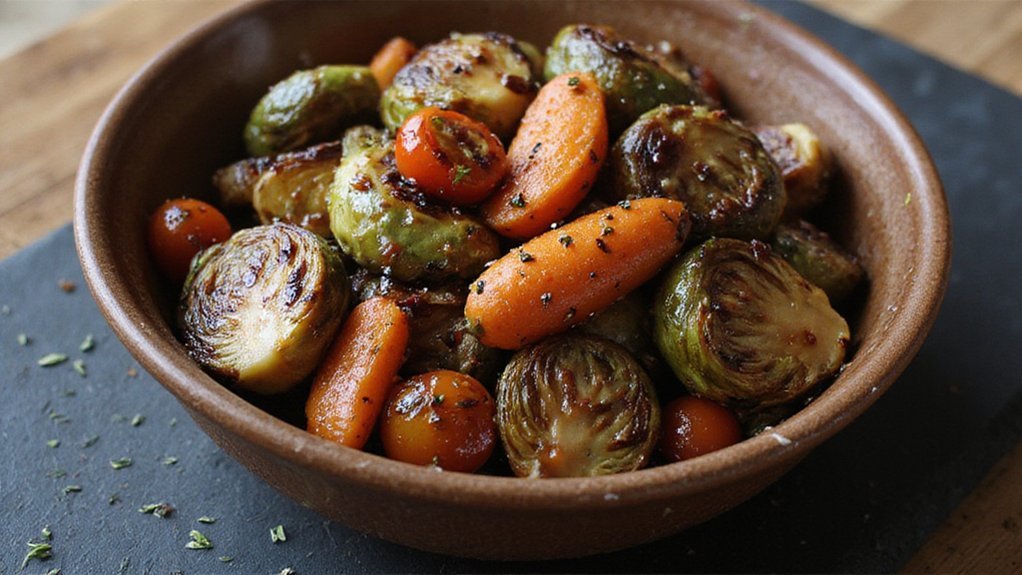
While rich marinara and melted cheese anchor the meatballs, pair them with bright, crunchy, or starchy sides to balance texture and cut richness. You’ll elevate the plate with intentional veggie sides — blistered asparagus, lemon-dressed green beans, or quick-pickled carrots — and Salad options that contrast warmth: arugula with shaved fennel, or a citrus kale slaw.
Favor Healthy pairings: quinoa grain bowls studded with herbs and roasted chickpeas, or cauliflower mash for lower carb comfort. For colorful accompaniments, roasted vegetables like tomatoes, peppers, and zucchini caramelize.
Serve family-style with garlic-roasted potatoes or polenta for starchy heft. These combinations let you innovate while keeping the meatballs central, offering balanced flavors, varied textures, and confident, restaurant-quality presentation.
Plate to preserve texture and finish with fresh herbs.
Make-Ahead, Freezing, and Storage
Although you can serve meatballs right away, planning ahead lets you lock in flavor and streamline meal prep. Prep and portion meatballs on a sheet, flash-freeze until firm, then transfer to labeled bags — that’s a core make ahead tips step.
For long-term storage, keep meatballs frozen up to 3 months; thaw overnight in the fridge before reheating. Use marinara-packed jars or vacuum seals to prevent freezer burn and preserve texture. Reheat from frozen in simmering sauce, or bake at 350°F until internal temp reaches 165°F.
For refrigerator storage, hold cooked meatballs in airtight containers for 3–4 days. Track dates, rotate stock, and portion servings to accelerate weeknight dinners while maintaining quality. You’ll save time and consistently serve restaurant-quality meals with minimal effort plus planning.
Flavor Variations and Add-Ins
If you want to shift the flavor profile, add bold ingredients like sun‑dried tomatoes, chopped olives, or capers for Mediterranean notes, or swap in grated Parmesan and Italian herbs for a classic profile.
You can push boundaries with spice combinations — smoked paprika and cumin for warmth, fennel and red pepper flakes for an Italian‑Spanish hybrid, or za’atar and lemon zest for Levantine brightness.
For texture and nutrition, fold finely diced mushrooms, grated zucchini, or shredded carrots as purposeful veggie add ins rather than filler.
Adjust moisture with an extra egg or panko as needed.
Test small batches, note salt balance, and record successful variants. This methodical experimentation keeps your Air Fryer Turkey Meatballs inventive, consistent, and restaurant‑quality.
Reuse favorites to streamline future menus.
Conclusion
You’ll love how quickly you can make air fryer turkey meatballs in marinara without sacrificing flavor or texture. Use lean turkey, binders, and hot air to get crisp exteriors and juicy centers, then simmer briefly in quality marinara. Follow the tips for seasonings and doneness, and you’ll consistently get restaurant-worthy results for weeknights or meal prep. Store or freeze portions for convenience, and vary herbs or cheese to suit your menu and preferences with confidence.
About The Author