We’re fixin’ to show you how to get buttery tuna with a kiss of crust — fast, tidy, and weeknight-easy. We cook with simple temps and times so you hit the right doneness every single time.
Our method gives an even sear with less mess than pan searing. Try 360°F for a quick 2–3 minutes per side for medium-rare, or 400°F for a bit longer if your cut is thick. We’ll explain rare, medium-rare, and well targets so you don’t guess.
We’ll cover choosing good steaks — what “sushi-grade” means — plus a pantry-friendly marinade: olive oil, lemon, soy, and herbs. Tools are simple: basket, tongs, and a quick-read thermometer. Short work, big flavor — y’all are gonna love it!
Key Takeaways
- Fast, low-mess method for perfect doneness.
- Clear temp and minutes guide for rare to well done.
- Simple marinades yield big flavor with little fuss.
- Minimal tools: basket, tongs, and a thermometer.
- Hands-off sear that keeps the center juicy.
Why Make Air Fryer Tuna Tonight
Want restaurant‑quality fish on the table faster than takeout? We sure do — and the air fryer is the shortcut. It gives a quick, even sear with way less mess than pan work. That means dinner ready in under 15 minutes, and more family time at the table.
We love it for weeknights. The hot air circulation builds a beautiful crust without the oil splatter drama. The cook stays consistent, so your tuna steaks go from dreamy to done, not rubbery.
Beginners, this one’s for you — press a couple buttons, flip once, and you’re basically a restaurant. Meal‑prep fans: cook what you need now and save the rest for salads tomorrow. Healthwise, you use minimal added oil and keep big, clean flavor.
| Benefit | Air Method | Pan/Oven |
|---|---|---|
| Speed | 10–15 minutes | 15–25 minutes |
| Cleanup | Minimal — basket only | Grease splatter, pans to scrub |
| Consistency | Even sear, steady temps | Hot spots, harder to control |
| Best for | Quick weeknights & meal‑prep | Large roasts or slow cooking |
“Restaurant-quality tuna in under 15 minutes at home is achievable with air fryer control.”
Choosing the Best Tuna Steak (Ahi, Yellowfin, and More)
Good results begin with good fish: choose firm, center-cut pieces for steady cooking. We’re lookin’ for bright color, no strong odor, and a meaty feel — that tells you the catch is fresh.

What “sushi‑grade” means and when to use it
“Sushi‑grade” isn’t a legal stamp. It’s a dealer’s way of saying the fillet was handled for raw or rare service. If you plan to serve rare or medium‑rare, buy sushi‑grade or frozen‑then‑thawed from a trusted fishmonger.
“Buy high quality and handle gently — it keeps flavor and texture top-notch.”
Thickness matters: ideal cuts for even air frying
We like about 1 to 1½ inches for predictable timing and an even sear. Center‑cut pieces avoid thin tails that overcook fast. Thicker cuts need more minutes; thin cuts need less.
| Trait | What to look for | Why it matters |
|---|---|---|
| Species | Yellowfin / Ahi / Bigeye | Meaty bite, holds up to high heat |
| Cut | Center‑cut, 1–1½” thick | Even cooking, no thin ends |
| Handling | Sushi‑grade or previously frozen | Safer for rare service; parasite reduction |
| Prep | Pat dry; gentle handling | Prevents tearing; better sear |
If ahi isn’t available, try other firm species such as bigeye or swordfish and tweak times. When unsure, buy frozen and thaw overnight in the fridge — texture stays lovely and cooks evenly.
Ingredients You’ll Need (Simple Pantry Staples, Big Flavor)
You don’t need a long shopping list to make big flavor — promise. We keep this recipe pantry-friendly so you can plate dinner fast. A few staples give a bright, savory profile that pairs perfectly with a quick cook time.
Core flavors
Olive oil, fresh lemon juice, soy sauce, salt, and pepper are the backbone. Drizzle olive oil so spices cling and you get that edge-to-edge crust while cooking. Use light measures — this steak is rich and forgiving.
Optional seasonings
Add basil, oregano, and garlic powder for a Mediterranean vibe. Smoked paprika brings color and depth. Lemon zest and red pepper flakes lift and wake the whole plate — sprinkle to taste!
Swaps and additions
No soy? Reach for tamari or coconut aminos for a milder, gluten-free swap. Worcestershire adds umami; a touch of balsamic glaze gives tangy-sweet shine. Keep salt low if your sauce is salty — taste and adjust.
| Use | Why | Amount to Start |
|---|---|---|
| Olive oil | Helps spices stick and aids browning | 1–2 tsp per steak |
| Lemon juice + zest | Brightens flavor and cuts richness | 1 tbsp juice; ½ tsp zest |
| Soy / Tamari | Salty, umami boost without heavy sugar | 1 tsp |
| Smoked paprika / Red flakes | Color, smoke, and heat — optional | Pinch to ¼ tsp |
“Measure light — a little goes a long way with this rich fillet.”
Essential Tools: Air Fryer Basket, Tongs, and Thermometer
We’ll keep this short and handy. A tidy tool kit makes for an easy, confident cook. You only need three stars: an air fryer basket, soft‑tip tongs, and an instant‑read thermometer.
Preheat matters for most runs. We like to preheat air fryer 3–5 minutes for a quick sear and less sticking. No‑preheat can work for ultra‑thick cuts, but for a standard 1–1½” tuna steak, a short warmup gives the best edge-to-center color.

Keep the basket single layer — no overlap. A perforated liner helps cleanup and keeps air flow free. Tongs with silicone tips stop tearing. The thermometer is your peace of mind; check temperature fast so you don’t guess the doneness.
- Don’t crowd the fryer basket — one piece per layer.
- Start low on time if your model runs hot; the Instant Vortex Plus XL is known to run fast.
- Clean the basket after each use — residue burns and spoils flavor next round.
- Set a resting plate by the unit so you can move the fish quickly and avoid carryover overcook.
How to Cook Tuna Steaks in Air Fryer (Step-by-Step)
Let’s walk through a simple, no-fuss method that gives a crisp edge and a tender center. Quick prep and the right temps are our two secrets. Follow these steps and you’ll have a solid tuna steak recipe for weeknight dinners.
Prep the fish
Pat each piece dry with paper towels so seasoning clings and the surface browns fast. Lightly brush with olive oil, then season with salt and pepper. If you’ve got time, marinate 15–30 minutes — then shake off excess.
Air frying basics
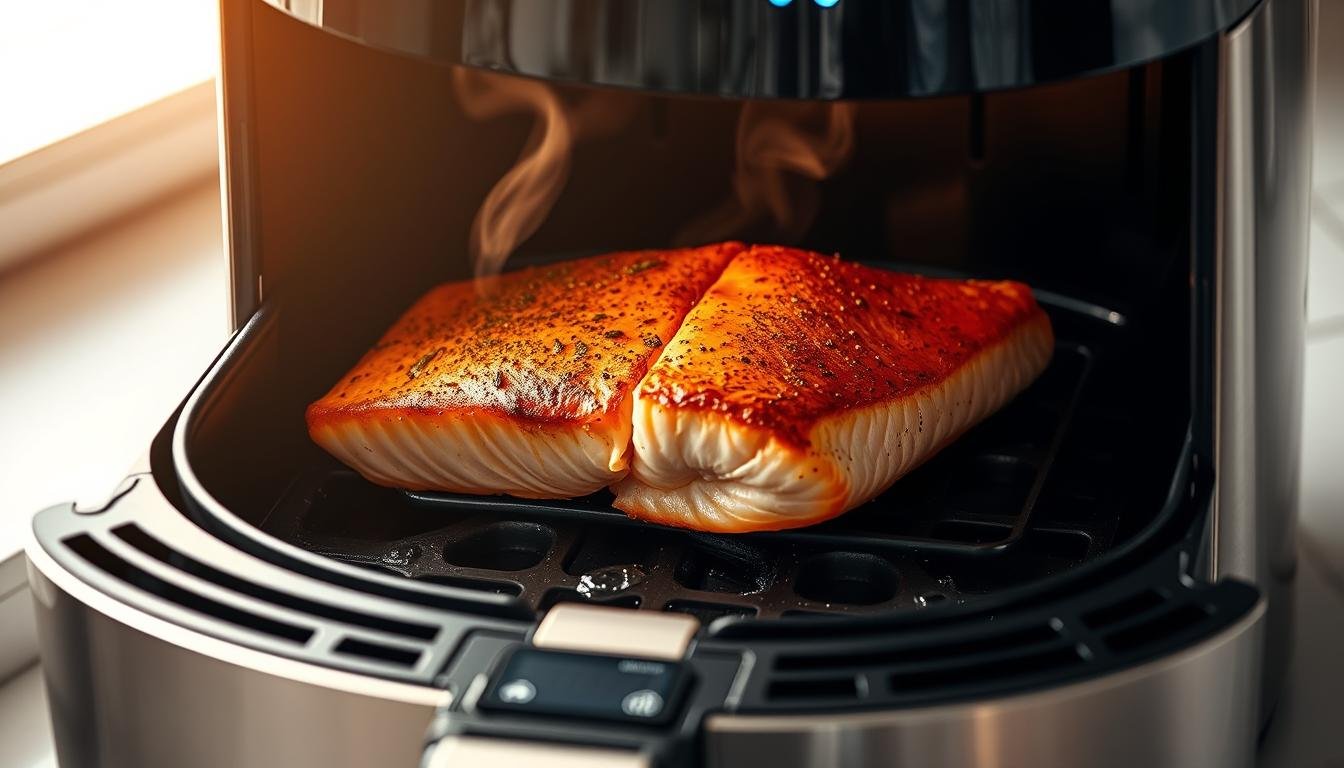
Preheat air fryer to your chosen temperature: 360°F for delicate control, 380°F for a balance, or 400°F for a quick sear. Arrange a single layer in the basket with space around each steak. Cook 360°F about 2–3 minutes per side for medium-rare; 380°F about 5–7 minutes total; 400°F about 8–10 minutes total — adjust by thickness.
Flip gently once with tongs. Check center with an instant-read thermometer and pull at your target. Rest 2–3 minutes before slicing against the grain.
Weeknight time-savers
Whip a quick pantry marinade while the unit preheats and prep sides while it cooks. Thawed frozen tuna needs extra drying — start on the shorter end of listed minutes and add 1–2 minutes only if needed.
Cooking Time and Internal Temperature Guide
If you want that melt-in-your-mouth center, precise temps do the heavy lifting. We’ll give clear targets so you can hit the doneness you like — every time.

Use an instant-read thermometer. Stick it into the thickest part to check the internal temperature. Pull just short of your target; a 2–3 minute rest finishes the job by carryover heat.
Rare — tender and ruby
110–115°F — roughly 2 minutes per side at 360°F for a 1–1½” cut. Perfect if you love a sashimi-style center.
Medium-rare — buttery and sliceable
125–130°F — about 3 minutes per side. This is our favorite for a balance of crust and plush interior.
Medium and well
135–145°F — plan for ~4 minutes per side for medium. For well-done, aim for 145°F and above. The FDA recommends 145°F for seafood, but expect drier texture as you go higher.
- Thickness rules timing — thicker cuts need more minutes; thin cuts need less.
- If you’re cooking multiple pieces, check the thickest one first — it sets the pace.
- At higher temps (for example 400°F), total time can reach ~8–10 minutes — watch that center closely.
“Pull a touch early and rest — carryover finishes the cook and keeps the center juicy.”
Dialing In Heat: 360°F vs. 380°F vs. 400°F
Let’s compare three common temps so you can pick the one that fits your taste and schedule. Small temp changes change texture fast. We’ll keep it simple and practical.
Which temp does what
360°F gives gentle control — think rare to medium-rare with crisp edges. Aim ~2–3 minutes per side for a 1–1½” cut.
380°F is the middle lane — balanced browning and a tender center. Expect about 5–7 total minutes.
400°F is the expressway — a fast sear that can push toward medium if you’re not watching. Plan ~8–10 minutes total and check early.
Model quirks and a quick test

Air units vary by wattage and basket size. Some run hot — the Instant Vortex Plus XL, for example, tends to cook faster.
- Preheat for better crust, especially at 380–400°F.
- Flip halfway — even browning matters.
- If edges brown too fast, drop temp 10–20°F and add a minute.
- Cook one piece as a test to learn your unit’s rhythm before cooking a crowd.
“Run a single test steak first — you’ll save time and avoid surprises.”
Flavor Roads: Marinades, Rubs, and Variations
Let’s wander down a few flavor paths that turn a simple fillet into a weeknight showstopper. Pick a mood and we’ll show you quick mixes that play nice with a hot basket and short cook times.
Mediterranean herb blend
Olive oil, lemon, basil, oregano, and a pinch of garlic powder — that’s our bright, clean combo. Add smoked paprika and lemon zest for a smoky-citrus pop that loves to brown. Light pepper finishes it off.
Asian-inspired umami
Mix soy or tamari with a splash of sesame oil, grated ginger, and minced garlic. A touch of honey or mirin lifts the sweet-salty balance. Worcestershire adds depth if you want it richer.
Dry rub vs. wet marinade
Go dry when you need speed — no wait time and a crisp crust that’s perfect for thinner cuts. Use a wet marinade for perfume and penetration; 15–30 minutes is plenty. Shake off excess marinade before cooking so the meat sears, not steams.
“For ahi tuna, lighter hands with seasoning let the fish’s natural flavor shine.”
Serving Ideas and Sides That Shine
A few simple toppings turn a quick cook into a dinner that looks like you fussed all evening. Slice across the grain, squeeze fresh lemon, and sprinkle sesame seeds and green onions for a classic finish. Slice-and-serve is quick and stunning.
Lay a warm tuna steak over mixed greens tossed with a citrus vinaigrette for a bright plate. For heartier meals, pair with jasmine rice, quinoa, or garlicky roasted asparagus and bell peppers. These sides add texture and balance the fat and protein.
Want bold flavor? Drizzle an Asian-style soy-sesame-ginger sauce or top with a fresh salsa fresca — tomato, onion, cilantro, jalapeño, and lime. Build power bowls with grains, greens, and a creamy yogurt-lemon dressing.
Leftovers and plating tips
Leftovers shine cold—toss slices into a high-protein salad for lunch. Balance richness with crisp cucumbers, radishes, and citrus segments. For date night, plate with charred lemons and flaky salt — fancy without the fuss.
“Keep portions mindful — a few thin slices go a long way.”
Storage, Reheating, and Food Safety
Leftovers are gold — but only if you store and reheat them right. Cool your cooked pieces quickly, then tuck them into an airtight container. That keeps flavor and texture and keeps the fridge tidy.

Short-term storage
Chill cooled fish in an airtight container and use within 2–3 days. Label the container with the date so you don’t lose track.
If you plan to serve slices cold on a salad, they hold up nicely and save time the next day.
Reheating tips
Reheat gently at about 300°F, loosely covered, just until warmed through — this keeps the center tender. Don’t blast it in a microwave on high; that’ll toughen the flesh in minutes.
When reheating, work with small portions so each piece warms fast and stays moist. If juices collect, pat gently before placing items in the fryer basket to avoid steaming.
Food safety notes
The FDA recommends cooking seafood to an internal temperature of 145°F. If you like lower doneness, buy reputable sushi‑grade or previously frozen ahi tuna and handle it carefully.
“Don’t refreeze cooked fish for best texture — reheating keeps it tastier than thawing twice.”
- Cool, then store in an airtight container for 2–3 days.
- Lovely cold on salad — great for quick lunches.
- Reheat low and slow (≈300°F), loosely covered.
- Don’t refreeze cooked pieces; texture suffers.
Pro Tips for Perfect Air Fryer Tuna Every Time
We’ve got a handful of little habits that turn a good cook into a great one—no fuss, just smart moves. These tricks help with color, texture, and steady results every run.
Don’t crowd the basket
Give those pieces breathing room. Overcrowding steals heat and makes uneven cook time. Use a single layer in the air fryer basket so hot air can do its job.
Flip, rest, and slice
Flip halfway for an even crust. Rest 2–3 minutes before slicing—juices settle and texture relaxes. Always slice against the grain for tender bites.
Prep and measure
Pat dry with paper towels so the surface browns fast. Dab a little oil on the steak, not the basket, to prevent sticking. Preheat the unit for a reliable sear.
- Keep a quick log of thickness and minutes for future runs.
- If edges brown too fast, drop temp and add a minute.
- Use an instant-read thermometer to hit your target every time.
| Tip | Why it helps | Quick action |
|---|---|---|
| Single layer | Even heat and browning | One piece per basket |
| Pat dry | Better sear, less steam | Use paper towels |
| Short rest | Juices redistribute | 2–3 minutes before slicing |
“Small steps—flip, rest, and a dry surface—make big flavor and texture gains.”
Conclusion
Simple habits turn a quick cook into a dinner folks ask for again and again.
We’ve given you everything to make tender, juicy tuna steaks at home — fast, tidy, and mighty tasty. From picking good cuts to nailing temps and minutes, you’re set to cook with confidence.
Mix marinades or dry rubs to keep weeknights fresh. Use the air fryer for a clean sear, then rest and slice against the grain for the best bite. This recipe and these recipes fit busy schedules and bold flavors.
Save this tuna steak recipe, hit print, and keep it handy. Y’all come back and tell us how your steak turned out — we’re cheering you on from our kitchen!
FAQ
What’s the quickest way to start cooking tuna steaks in my air fryer?
Do we need to preheat the air fryer every time?
How do we tell when the center is done without overcooking?
Can we cook frozen fillets directly from the freezer?
What oils and seasonings work best for air frying?
Should we marinate or dry-rub before air frying?
How many fillets fit in the basket at once?
What sides pair well and how can we use leftovers?
How do we reheat without drying out the fish?
Any safety tips we should follow?
What if our air fryer model runs hot or cold?
Can we get a seared crust without a grill or pan?
What cut should we buy for best results?
About The Author