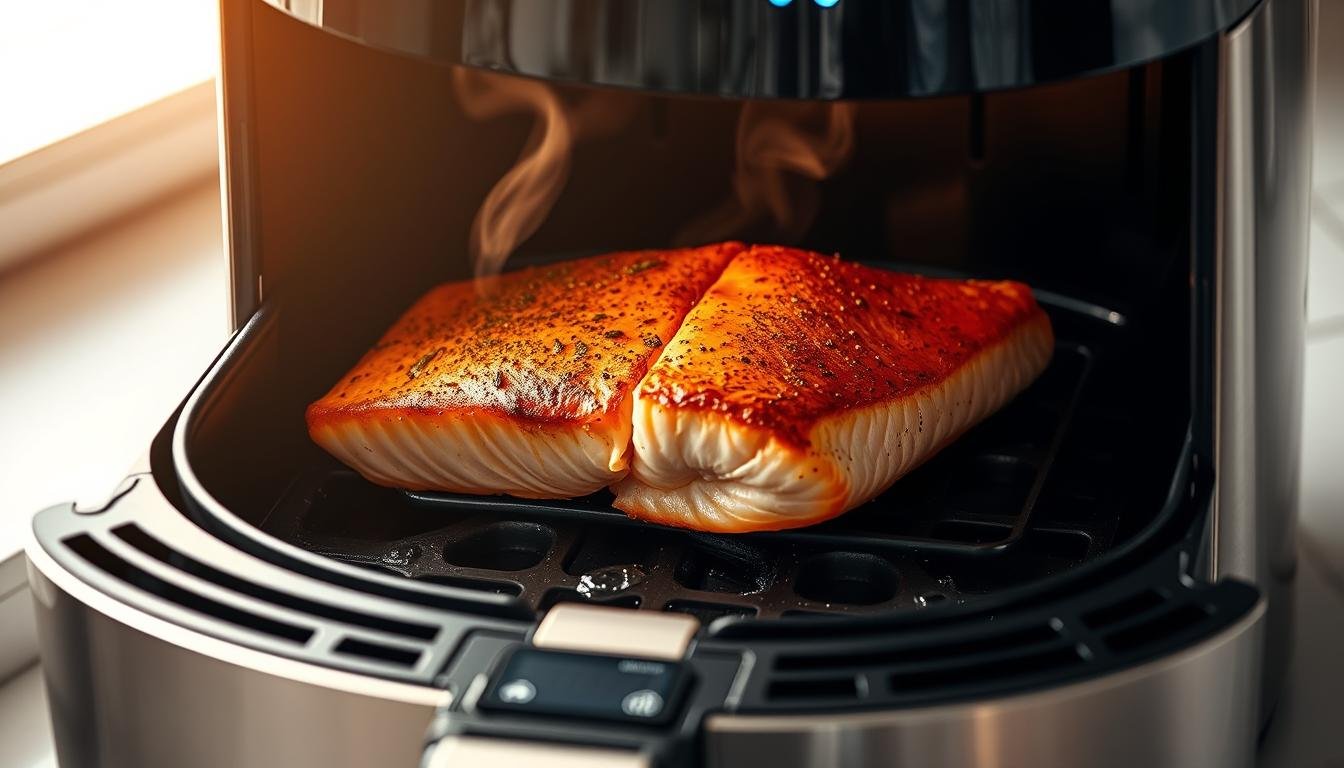
We’re fixin’ to show y’all how to get dinner on the table fast — this air fryer teriyaki dish is juicy, flaky, and glossy with a lick-your-spoon glaze.
Marinate a smidge — just 10–15 minutes — then cook at 400°F skin-side up, flip, and brush on that hot glaze. Finish when the inside hits 140–145°F for perfect doneness.
We use simple ingredients you know and love — low-sodium soy sauce, brown sugar, fresh garlic and ginger — to make a homemade teriyaki sauce that clings like a dream.
Gear talk is quick: we trust Cosori and other 5.8-qt baskets for steady results. Serve over steamed rice with sesame and green onion, and pair with air-fried broccoli for an easy, cozy meal.
Fast, family-friendly, and full of protein and good fats — this recipe is made for busy weeknights and fuss-free cleanup.
Key Takeaways
- Marinade: 10–15 minutes for big flavor in minimal time.
- Cook: 400°F—skin-side up first, then flip and glaze to finish.
- Target temp: remove at 140–145°F for juicy results.
- Homemade sauce: low-sodium soy, rice vinegar, brown sugar, garlic, ginger, cornstarch.
- Serve: over white rice with sesame and green onion; stores up to 3 days.
- Reheat: a few minutes at 350–390°F to refresh texture.
Quick intro: a speedy weeknight teriyaki salmon you’ll actually make
Got twenty minutes? You’ve got a juicy, glaze-ready teriyaki salmon dinner. We keep things short and friendly so supper actually happens on busy nights.
Marinate for 10–15 minutes while you tidy the counter. Then a handful of minutes in the air fryer and you’re nearly done. Total cook + sides is under 30 minutes — rice and veg included.
The sauce brings big flavor with a savory-sweet pull and a little gingery warmth. Each bite delivers satisfying protein, so it’s filling and family-ready.
Short on soy or out of ginger? We’ve got easy swaps so supper still happens. We aim for simple cleanup, too — liners and one pan for the sides make life easier.
- Fast marinade, fast cook — real weeknight magic.
- Clear time windows so you’re never guessing.
- Reliable method you’ll use again and again.
| Step | Minutes | Note |
|---|---|---|
| Marinate | 10–15 | Quick soak for big flavor |
| Cook in fryer | 7–10 | Skin up, flip, glaze to finish |
| Total with sides | Under 30 | Rice or broccoli makes a full plate |
Why you’ll love this air fryer teriyaki salmon
Dinner comes together fast with this glossy, weeknight-ready dish that nails crisp skin and juicy flesh. We keep steps simple so you get big payoff in just a few minutes.

Ready in minutes with flaky, juicy fish
We pat the fillets dry, start skin-side up to crisp, then flip and brush on glaze. That quick routine locks in moisture so the fish stays flaky and tender.
Sweet-savory flavor with crispy skin
The glaze clings to every nook — salty, slightly sweet, with fresh ginger and garlic notes. Starting skin-side up gives you fast, crackly skin you can sink your fork into.
Balanced, weeknight-friendly protein for the whole family
This dish delivers good fats and solid protein without being heavy. It’s mild enough for kids yet bold enough to satisfy grown-ups. Serve with rice and greens and supper’s set.
Temp tip: Aim for 140–145°F for FDA-safe doneness. If you like it a bit rarer, 125–130°F works for some folks.
- Flaky texture that stays juicy — no dry fish here.
- Crisp skin fast — skin-side up first, then flip and glaze.
- Family-friendly balance of protein and fat — filling but light.
| Feature | Why it matters | Quick note |
|---|---|---|
| Skin-side up first | Gets skin crisp without overcooking | Start this way, then flip to glaze |
| Glaze finish | Builds glossy, clingy flavor | Brush after flip, finish hot |
| Target temperature | Consistent doneness every time | Aim 140–145°F; 125–130°F for less done |
teriyaki salmon air fryer
Let’s get the basket hot and the glaze ready—this method makes crisp, glossy fillets every time. Preheat to 400°F so the hot air browns fast and keeps the inside tender.
Line the air fryer basket if you want easy cleanup—parchment or silicone works just fine. But don’t crowd it. Place salmon pieces in a single layer so the breeze can do its job.
Start skin-side up to crisp quickly, then flip and brush on glaze. A quick brush after the flip locks in shine and flavor—keep that soy sauce nearby for the sauce base.
- We preheat so cooking times are steady and predictable.
- Cosori 5.8-qt baskets fit family portions—cook in batches if needed.
- Peek once, flip once, then pull when the flesh flakes easily.
| Step | Tip | Why |
|---|---|---|
| Preheat 400°F | Hot air for browning | Faster cook, crisper skin |
| Single layer | Space pieces | Prevents steaming |
| Glaze after flip | Brush quick | Gloss and flavor cling |
Follow these cues and you’ll cook salmon evenly, fry smart without drying the fish, and end up with a family-friendly plate that tastes like you fussed—without the fuss.
Ingredients you’ll need
Before we heat anything, grab these simple ingredients so you’re not scrambling mid-recipe. Keep things pantry-friendly and pick fresh garlic and ginger if you can — they make a big difference.

Protein and basic produce
Salmon filets — skin-on is best for crispy edges. Fresh or thawed frozen both work great. We like 4 even portions for a hearty family meal.
The glaze and marinade base
- Low-sodium soy sauce (or tamari/coconut aminos for gluten-free).
- Rice vinegar and about a cup total of liquid components for four portions.
- Brown sugar — adjust to taste for stickier glaze.
- Fresh garlic and ginger, grated fine so they melt into the sauce.
- Cornstarch (or tapioca/cornflour) to thicken and give that silky cling.
Optional add-ins and garnishes
Sesame seeds and sliced green onions finish the plate. Add red pepper flakes if you want a little kick.
| Ingredient | Amount (for 4 portions) | Why we use it |
|---|---|---|
| Skin-on filets | 4 pieces (6 oz each) | Crispy edges and even cooking |
| Low-sodium soy / tamari | 1/2 cup | Salty backbone without overpowering |
| Brown sugar | 2–3 tbsp | Sweetness and glossy finish |
| Garlic & ginger | 2 cloves + 1 tbsp grated | Fresh brightness and warmth |
| Cornstarch (or tapioca) | 1 tsp slurry | Thickens glaze to cling to the fish |
Quick note: We’ll use the same base for a short marinade and a stovetop-thickened glaze. Everything’s available at your regular grocery — no wild goose chase needed.
Gear check: your air fryer, basket liners, and a thermometer
Let’s talk gear — the right kit makes this whole dinner trick feel easy as pie. Good tools cut stress and help you get that glossy finish without guesswork.
Pick the right unit and capacity
Pick an air fryer that fits your crew. The Cosori 5.8-qt basket is roomy for family portions. Ninja Foodi and toaster-oven styles work great if you want larger batches.
Linings for easy cleanup
Use silicone or parchment liners to keep glaze from sticking to the basket and messing up the grates. Liners save time and cut down on lingering odors.
Thermometer and handling
An instant-read thermometer is our best friend — pull the fish at about 140–145°F for juicy, safe results.
- If your fryer basket is small, cook in batches — better texture beats speed.
- Preheat so hot air sets the skin fast.
- Use tongs or a spatula to flip gently and wash the machine soon after cooking to tame smells.
| Gear | Why it matters | Quick tip |
|---|---|---|
| Cosori 5.8-qt | Family-friendly capacity | Fits 4 portions |
| Silicone/parchment | Less sticking, easier cleanup | Place under grates |
| Instant-read thermometer | Consistent doneness | Check 140–145°F |
Step-by-step: from marinade to the air fryer basket
Follow this little roadmap from bowl to basket and dinner’s practically done. We keep each move small and sure so the glaze clings and the skin crisps without overcooking.
Mix and marinate: Whisk soy, rice vinegar, brown sugar, grated garlic, and ginger in a small cup or bowl. Add the salmon filets and let them soak for 10–15 minutes. If you’ve got time, slide it to 30 minutes for extra depth — just don’t overdo it or the texture can go soft.
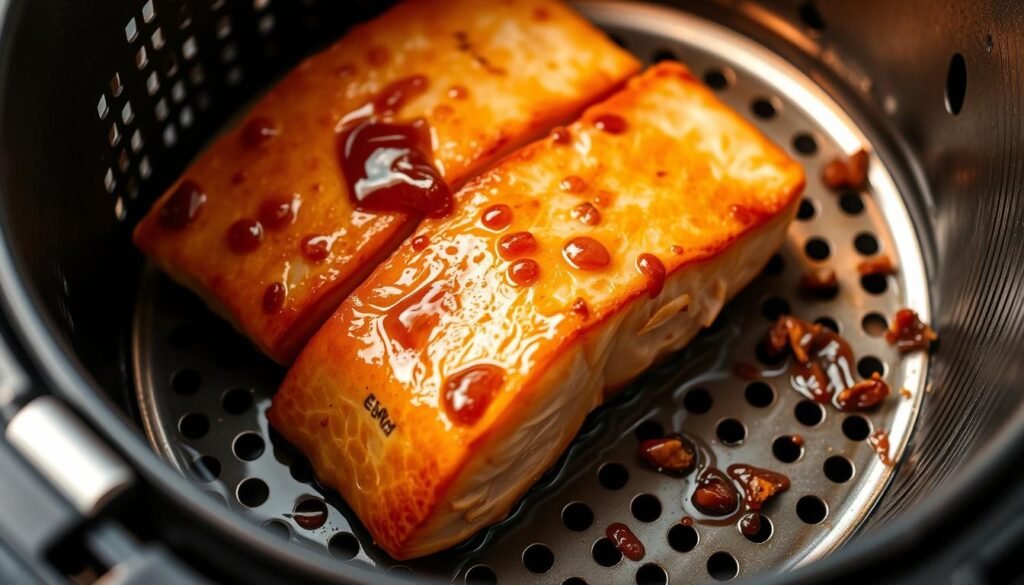
Preheat and place: Preheat to 400°F so the basket is nice and hot. Place salmon in a single layer, skin-side up first. This gets that quick browning we love.
Thicken, flip, brush, and finish
While the fish cooks 6–7 minutes, simmer the remaining marinade over medium heat until it thickens. Flip gently, brush the glaze on, and return to cook 2–3 more minutes.
Finish when the thermometer reads 140–145°F in the thickest part. Let the fillets rest a minute so juices settle and the sauce sets nice and glossy.
- Don’t overcrowd the fryer basket — cook in rounds if needed.
- Watch the sugar in the sauce — it browns fast, so keep an eye during the last minutes.
- Any extra glaze can be brushed on after cooking for extra shine.
| Action | Time (minutes) | Why it matters |
|---|---|---|
| Marinate | 10–15 (up to 30) | Builds flavor without mushy texture |
| Air fry—skin-side up | 6–7 | Fast browning, crisp skin |
| Finish after glazing | 2–3 | Sets glaze and reaches 140–145°F |
Time, temperature, and how to know when to cook salmon perfectly
Cook time plus temp equals confidence — here’s how to hit both without guesswork.
We like 390–400°F for about 7–10 minutes total, depending on thickness. Smaller filets cook faster, so start checking early. Carryover heat will raise the internal temp a few degrees after you pull them.
Target temps and safe doneness


Use an instant-read thermometer. The FDA recommends pulling at 140–145°F for safe doneness. If you prefer a softer, silky bite, some folks aim for 125–130°F.
Adjusting for size, pieces, and frozen fish
Bites or 2-inch cubes? Think 5–7 minutes at 400°F with a mid-cook flip for even edges. If you start from frozen salmon, add a couple minutes and check the thickest spot.
- Oven: plan ~12–15 minutes at 375–400°F.
- Skillet: about 4 minutes per side over medium-high heat.
- Place salmon pieces apart so hot air can circulate — even spacing equals even cooking.
| Method | Temp | Typical minutes |
|---|---|---|
| Air fry | 390–400°F | 7–10 |
| Oven | 375–400°F | 12–15 |
| Skillet | Medium-high heat | ~4 per side |
Tip: brush a light layer of sauce near the end to avoid burning sugars. Tail pieces cook quicker than center cuts — pull them as they’re ready. If you’re unsure, cook one test piece to lock the perfect time for the rest.
Pro tips to nail texture and flavor every time
A few smart moves will lock in crisp skin and deep glaze flavor every single time. We keep these tips short and sweet so supper stays easy and relaxed.
- Give each fillet elbow room — a crowded basket steams and softens the skin.
- Pat the fish dry before marinating so the glaze sticks and browning comes easier.
- Preheat the air fryer so hot air seals in juices and crisps edges fast.
- Make extra sauce on the stove and drizzle it over rice and greens when serving.
- Use an instant-read thermometer — pull at your preferred temp for perfect texture.
- Flip gently with a thin spatula so glaze and skin stay put.
- If you spot hot spots, rotate the fryer basket halfway through the cook.
- Silicone or parchment liners help with sticky glazes — no tearing, no fuss.
| Tip | Why it matters |
|---|---|
| Space pieces | Prevents steaming, keeps skin crisp |
| Preheat | Faster browning, less sticking |
| Double the sauce | Adds extra flavor for rice and veggies |
Smart swaps and dietary tweaks
Swap smart — small ingredient changes, same craveable results. We keep it simple so you can tailor the dish to your pantry and needs without losing that glossy glaze.
Gluten-free? Use tamari or coconut aminos for the same umami hit. Want less sugar? Swap in a keto-friendly sweetener like Swerve and simmer until thick.
Vinegar, thickeners, and little extras
Rice vinegar is classic, but white vinegar works in a pinch — use a touch less. Swap cornstarch for tapioca flour if that’s what’s on hand. A tiny drizzle of sesame oil adds nutty fat and depth.
- Tone salt with low-sodium soy sauce or dilute with a splash of water.
- Love garlic? Add an extra clove for a bolder punch.
- Keep the marinade separate from serving sauce for safety.
- The air fryer method stays the same with these swaps—no fuss.
| Swap | Why | Quick tip |
|---|---|---|
| Tamari / Coconut aminos | Gluten-free umami | Use 1:1 for soy sauce |
| Swerve or erythritol | Lower sugar, keto-friendly | Simmer to thicken the sauce |
| Tapioca flour | Thickens like cornstarch | Use same slurry ratio |
| Sesame oil | Adds nutty fat | Drop in just 1/4 tsp to start |
How to serve: bowls, rice, veggies, and beyond
Turn those hot filets into bowls, wraps, or salads — versatility that makes weekday cooking easy.

Build cozy rice bowls: Spoon fluffy basmati rice, add greens, then top with glossy teriyaki salmon filets. Drizzle extra sauce for big impact and a cozy finish.
Rice bowls and cauliflower options
Want lighter? Swap regular rice for cauliflower rice and keep all the same toppings. It’s quick, light, and holds the glaze well.
Broccoli, roasted veg, and greens
Air fryer broccoli or roasted vegetables make an easy side. Toss them with a bit of soy and leftover glaze for extra flavor.
Salads, wraps, and make-ahead meal ideas
Flake the fish into wraps or toss over a salad for a protein-packed meal. Add crunch, a tangy dressing, and a sprinkle of sesame.
“Keep a small bowl of extra sauce on the table — folks can add a bit more if they like it saucy.”
- Short on time? Use bagged greens and microwave rice for a deconstructed bowl fast.
- Filets reheat well — pop them in the air fryer a couple minutes to refresh texture.
- Leftovers work great in noodles, wraps, or cold salads the next day.
| Serve | Why | Quick tip |
|---|---|---|
| Basmati rice bowl | Comforting base | Spoon hot rice first |
| Air fryer broccoli | Easy side | Drizzle glaze before serving |
| Wraps & salads | Meal on the go | Add crunch and a squeeze of lemon |
Storage, reheating, and meal prep
Store, reheat, and plate smart so dinner feels like you spent way more time on it than you did. Keep things simple and tidy — that’s our goal. A few easy moves make leftovers sing.
Fridge storage: Place cooled filets in an airtight container and keep them in the fridge for 3–4 days. Label the container so future you isn’t guessing.
Reheat tips: Heat the pieces in the air fryer at 350–390°F for 2–5 minutes to refresh the glaze and crisp the skin. A short reheat keeps the fat and texture tasting right — way better than a microwave.
- Keep sauce separate for meal prep and brush it on after reheating to restore shine.
- Marinate filets in the morning or overnight for easy night-of cooking.
- Portion rice and veggies into a cup or meal box for grab-and-go lunches.
- If you start from frozen salmon, thaw in the fridge overnight for best texture.
- For batch nights, place salmon in rounds in the fryer basket and rotate trays so everything cooks evenly.
- Finish with a sprinkle of sesame and sliced scallions to brighten the plate.
| Action | Temp | Minutes |
|---|---|---|
| Fridge storage in container | Cold | 3–4 days |
| Reheat in the air fryer | 350–390°F | 2–5 minutes |
| Marinate ahead | Room or fridge | Morning to overnight |
Variations and alternative cooking methods
Let’s play with formats—bites, sheet-pan, or skillet—so you can match the meal to your night. We’ll keep the same glaze idea and share quick timing and temp cues you can trust.
Air fryer teriyaki bites
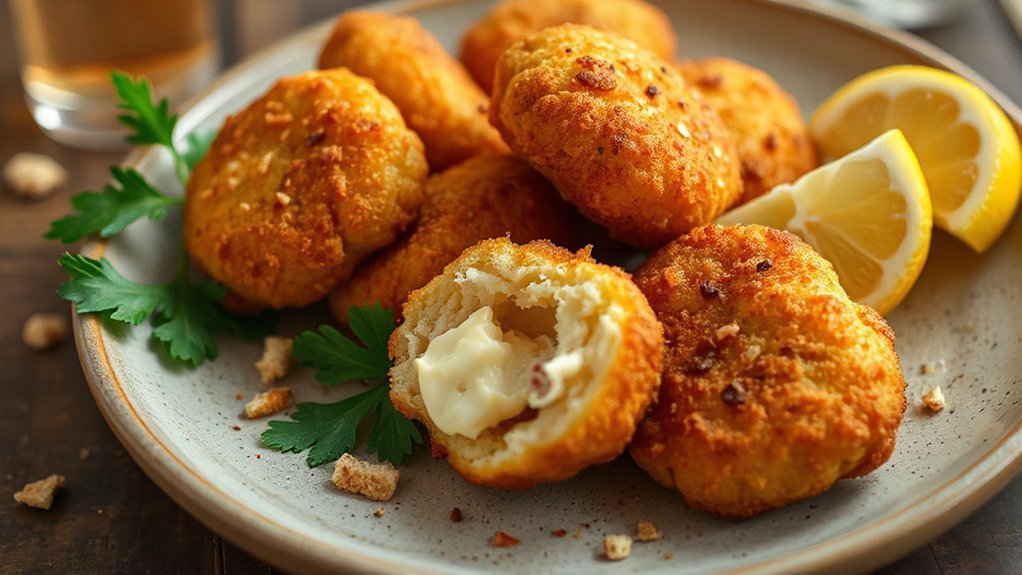
Cube the fillets into 2-inch pieces and toss in the marinade. Cook at 400°F for 5–7 minutes, flipping once. These little bites make great party trays and snackable recipes for busy nights.
Oven-baked and skillet options
Prefer the oven? Roast at 400°F for 12–15 minutes on parchment, brushing on glaze near the end.
Skillet lovers, heat a pan to medium heat and sear about 4 minutes per side, then finish with a quick brush of sauce.
Flavor pivots
- Honey-garlic: Add a spoon of honey and extra garlic for crowd-pleasing sweet heat.
- Lemon-dill: Swap ginger for fresh dill and a lemon squeeze for bright, springy notes.
- BBQ-teriyaki: Mix your favorite BBQ sauce with a splash of soy for smoky depth.
| Method | Temp | Minutes |
|---|---|---|
| Bites (air fryer) | 400°F | 5–7 |
| Oven | 400°F | 12–15 |
| Skillet | Medium heat | ~4 per side |
Troubleshooting, frozen salmon, and eliminating air fryer fish smell
When time’s tight and the fish is frozen, small tweaks give you great texture and no drama. We’ll walk through quick fixes for cooking from frozen and how to keep your basket and kitchen smelling sweet.
Cooking from frozen and adjusting time
Start by adding a minute or two to the cook time and check the thickest part with a thermometer. Pat the fillets dry after a quick fridge thaw if you can — that helps browning and cuts strong odors.
Prevent sticking and odors with liners and a quick wash
Line the air fryer basket with parchment or silicone to stop sticking. Don’t crowd the basket — air needs room or the fish will steam and get soft.
- Rotate the basket if you see hotspots.
- Keep sauce off heating elements to prevent smoke.
- A short fridge thaw overnight gives the best texture when possible.
“We like a quick spray, warm soak, then handwash or dishwasher run as soon as the unit cools — smells vanish fast.”
| Issue | Fix | Why it works |
|---|---|---|
| Frozen fillets | Add 1–2 minutes; check thickest part | Prevents undercooking |
| Sticking | Use parchment or silicone liner | Makes cleanup easy |
| Lingering smell | Spray, soak warm water, then wash | Removes oils before they set |
Trust your senses — sight, touch, and temp checks keep you right on time. With these small moves, your fryer teriyaki salmon will come out neat, and your kitchen will stay fresh.
Conclusion
All set — a simple marinade, a hot basket, and a few focused minutes gets dinner done right. Marinate 10–30 minutes, cook at 390–400°F for about 7–10 minutes, and pull at 140–145°F (or 125–130°F if you like it silkier).
Store cooled pieces in a tight container in the fridge for 3–4 days. Reheat 2–5 minutes at 350–390°F to refresh texture and shine. Make extra teriyaki sauce for rice and for drizzling at the table.
We love how this recipe fits busy weeks — quick to cook, easy to store, and flexible for swaps like lower sugar or extra sesame. Stick these tips nearby and you’ll fry with confidence. Now grab a bowl, add a bit of sauce, and dig in — supper’s served, friends!
FAQ
Can we use frozen fillets straight from the freezer?
How do we know when the fish is done?
What temp and time should we use in a basket-style machine?
How do we get the skin crisp without drying out the meat?
Can we make the sauce ahead and store it?
What are good gluten-free swaps for the sauce?
Can we reduce sugar for a lower-carb version?
How do we avoid lingering fish smell in the basket?
Is it okay to make extra glaze and use it as a finishing sauce?
What sides pair best for a quick family meal?
Any tips for avoiding sticky glaze in the basket?
About The Author