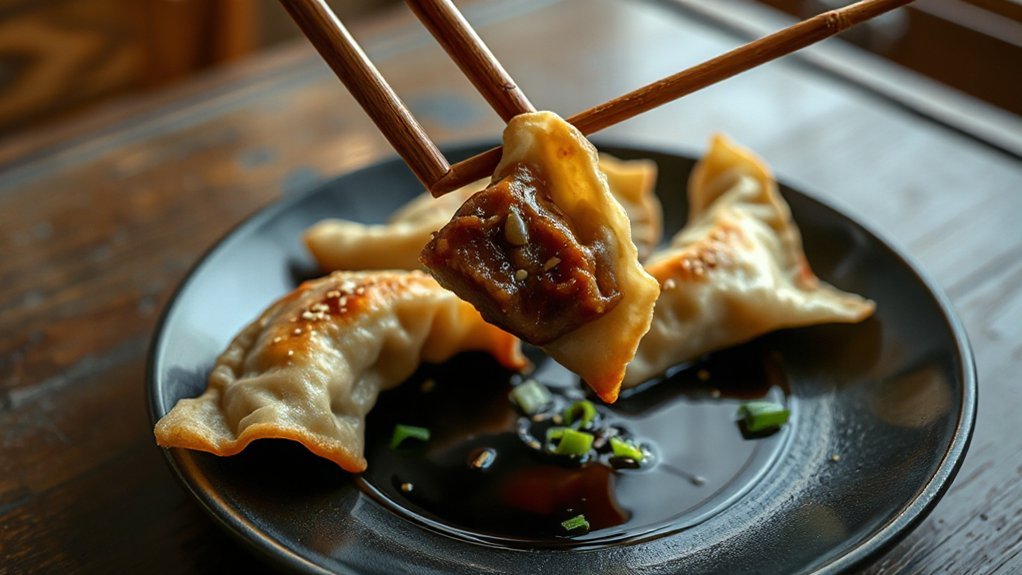
We’re makin’ supper simple—a weeknight wonder that gets tender, flaky fish on the table fast. Pat the fillets dry, give ’em a quick marinade, preheat to 390°F, and cook about 10 minutes until the center hits 140–145°F. You’ll see lightly charred edges and flakes that fall apart like a dream.
This is a no-fuss dish. Plug the machine in, set the time, and let it do its thing. The salty-sweet-tangy sauce hugs every bite so the flavor pops—serve with green onions and sesame seeds for that final touch.
We’ll walk you through temps, timing, and handy tips—parchment, spacing, and swaps for gluten-free or low-carb. It’s a quick easy recipe that’s cozy, reliable, and kid-friendly. Leftovers reheat great, too—tomorrow’s lunch is already planned.
Key Takeaways
- Quick weeknight meal with crisp edges and juicy centers.
- Pat dry, marinate briefly, cook to 140–145°F for best results.
- Salty-sweet sauce delivers big flavor with little fuss.
- Simple swaps make this friendly for gluten-free or low-carb diets.
- Easy cleanup and great leftovers for next-day lunches.
Quick, flavorful, and weeknight-friendly
Get ready: this cozy weeknight meal comes together in roughly 30 minutes. We keep things simple—short prep, a fast sear, and big payoff on flavor.
Plan for a 5–15 minute marinade, a 4–5 minute preheat to 390–400°F, and about 8–10 minutes of cook time for 6–8 oz fillets to reach 140–145°F. That timing gives you caramelized edges and tender centers every time.
- Weeknight-fast: short marinade, hot preheat, quick cook.
- Bold taste: garlic and ginger bring depth so the teriyaki shines fast.
- Flexible: short marinate works; extra minutes deepen the flavor.
- Family-friendly: kid-approved sweetness, grown-up balance.
- Easy clean: liner or parchment keeps the basket tidy.
We promise you’ll spend more time setting the table than cooking. Give this recipe a try tonight — it’s a real weeknight win.
Why you’ll love this recipe
In roughly 30 minutes we turn a few pantry staples into a dish everyone asks for again. It’s simple, comforting, and built for busy nights—no fuss, no special shopping run.
From fridge to plate in about 30 minutes
Quick timeline: pat the fillets dry, marinate 10–15 minutes, preheat the air fryer to 390–400°F, then cook about 8–10 minutes until the center reads 140–145°F with an instant-read thermometer.
Why this works: high, even heat gives caramelized edges while the center stays moist and flaky. A short marinate—garlic, ginger, soy, and a touch of sweet—does the heavy lifting so flavor shows up fast.
- Dinner in half an hour — real-deal flavor with minimal effort.
- Short marinade, big taste — garlic and ginger shine.
- Reliable results — temp checks make this foolproof.
- Versatile — serve over rice, brown rice, or cauliflower rice with bright veggies.
- Scales easily — cook for two or a crowd without losing quality.
“Make-ahead sauce keeps weeknights calm and tasty.”
Ingredients for salmon and teriyaki sauce
We’re starting at the basics: pick bright, firm pieces and a homemade glaze that sticks to every bite. Good ingredients make this easy and forgiving.
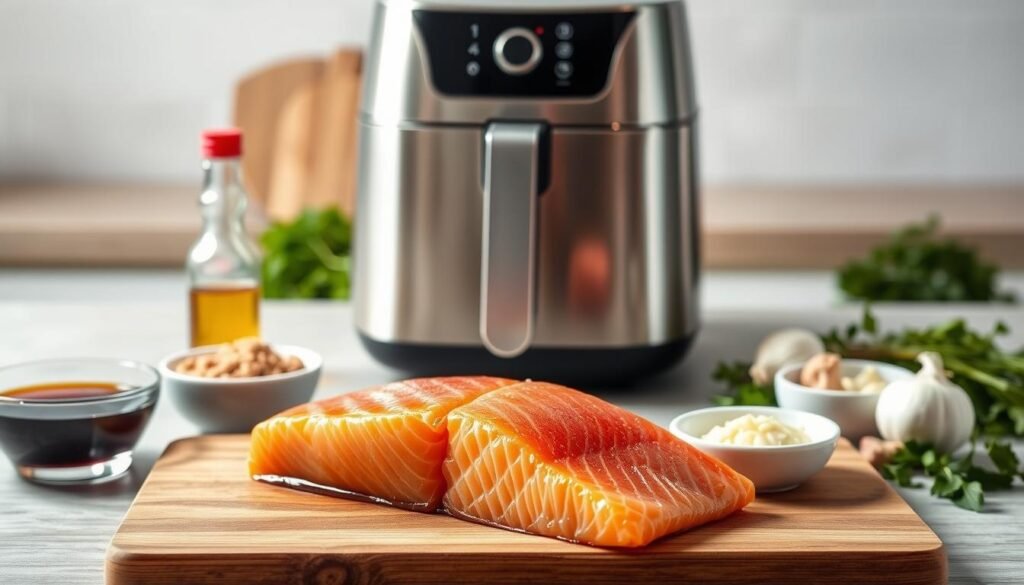
Choosing the fillets
Pick 6–8 oz salmon fillets for even cooking and flaky results. Pat them dry so the skin crisps and the glaze clings.
Skin-on gives crispy edges and easier handling. Skin-off works fine too—your call.
Homemade teriyaki sauce staples
- Soy sauce or tamari for gluten-free swaps.
- Rice vinegar, a touch of sweet (honey or brown sugar), minced garlic, and grated ginger.
- Sesame oil for depth, a splash of vegetable oil, water, and cornstarch to thicken.
- Simmer five minutes until the sauce coats a spoon—then you’re golden.
Optional garnishes
Finish like a pro: sprinkle sesame seeds and sliced green onions. Make extra sauce for drizzling over bowls.
Air fryer setup and tools
A little prep gear goes a long way—here’s what we reach for every time. Get your station ready and you’ll breeze through this recipe with less mess and more confidence. A standard 5.8–6 quart basket-style air fryer gives roomy space so fillets don’t crowd.
Must-have gear
Basket and liners: Use a 5.8–6 qt basket to fit 2–3 fillets without overlap. Line with a single sheet of parchment paper to cut sticking and cleanup.
Check doneness: An instant-read thermometer is essential—aim for 140–145°F internal temperature for perfect finish.
Extras that make life easier
- Precut parchment keeps paper flat so hot air circulates freely.
- Light oil spray if you skip paper—just a quick mist.
- Tongs or a thin spatula for gentle transfers.
- Small saucepan for the glaze and a sharp knife for portioning.
- Clear a tidy counter space and use oven mitts—hot basket, hot air, so safety first.
Step-by-step: air frying teriyaki salmon
Let’s break this down step by step so your fish comes out flaky, glossy, and just-right every time. We keep it simple—small moves, big payoff.
Prep: Pat the salmon dry and portion into even 6–8 oz pieces. Drying helps the glaze stick and the edges crisp.
Marinate: Toss fillets in the teriyaki mix for 10–15 minutes. That short soak gives a lot of flavor without slowing supper.
Preheat: Preheat air fryer to 390–400°F for 4–5 minutes. Line the air fryer basket with parchment or spray lightly so nothing sticks.
Air fry: Place salmon in a single layer with space between each piece. Avoid overcrowding the fryer basket—cook in batches if needed.
Check doneness: Start checking at 8 minutes. Cook salmon 8–10 minutes for 6–8 oz fillets. Aim for an internal temperature of 140–145°F. Look for opaque, flaky flesh and lightly charred edges. Rest a couple minutes before serving.
“Start checking at eight minutes—thicker pieces may need a touch more time.”
| Fillet Size | Preheat | Cook Time |
|---|---|---|
| 6–8 oz | 390–400°F (4–5 min) | 8–10 minutes (140–145°F) |
| Thicker (10+ oz) | 390–400°F (4–5 min) | 10–12 minutes (check temp) |
| Small portions (4 oz) | 390–400°F (4–5 min) | 6–8 minutes (start checking early) |
Homemade teriyaki sauce, fast and delicious
Here’s a speedy stovetop sauce that turns simple ingredients into pure comfort. It’s quick, glossy, and clings to rice and veggies like a charm — perfect for weeknights when we want big flavor with small fuss.
What you’ll need
- Soy sauce (or tamari), water, and a splash of rice vinegar.
- Honey or brown sugar, a teaspoon each of sesame and vegetable oil.
- Minced garlic, grated ginger, and a teaspoon of cornstarch mixed with a cup of water for thickening.
Stovetop method
Combine everything in a small saucepan over medium heat. Whisk until the cornstarch dissolves, then simmer about 5 minutes.
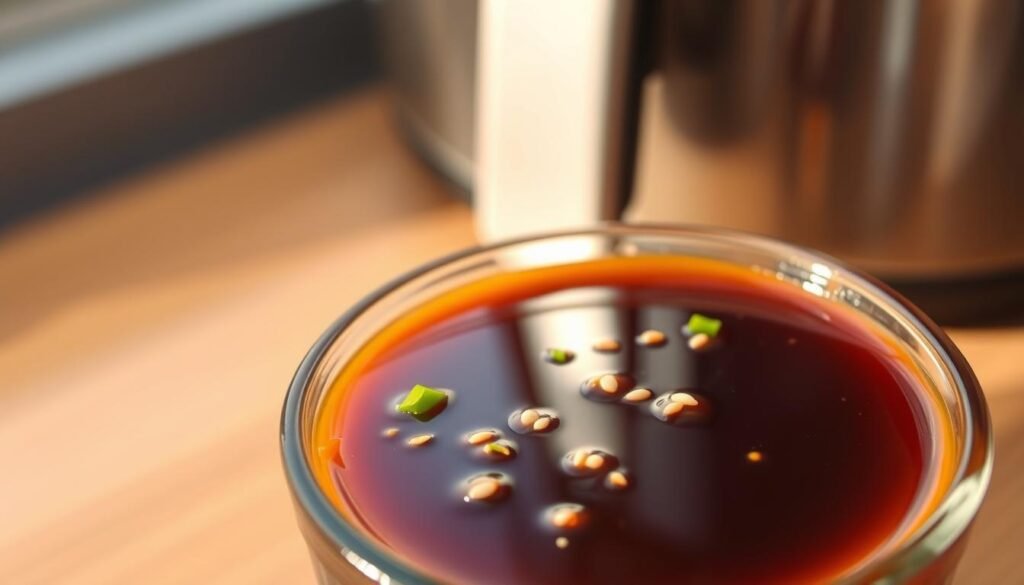
Watch for a glossy, pourable finish that coats the back of a spoon. Taste and tweak—more sweet, more salty, or a touch more vinegar if you like tang.
Make ahead and uses
Make extra and keep a cup in the fridge for the week. Drizzle over bowls of rice, roasted veggies, or warm fillets straight from the basket.
Gluten-free? Use tamari. Keto? Swap the sugar for a low-carb sweetener. We always keep a backup cup—no regrets.
Time and temperature guide for perfect results
A few smart minutes and the right heat turn ordinary fillets into something special. We want you to trust the clock and the thermometer—those two make this recipe repeatable and relaxed.
Standard fillets: 6–8 ounces at 390–400°F for 8–10 minutes
For 6–8 oz salmon fillets, set your unit to 390–400°F and cook about 8–10 minutes. Start checking at eight minutes for smaller pieces.
Tip: Preheat the basket so the surface sears quickly—preheat saves time and gives consistent results.
Adjusting for thickness and larger fillets
Thicker pieces need a smidge more time. Check at 10 minutes, then open and test every 1–2 minutes until the internal temperature reads 140–145°F.
Smaller portions finish faster—peek at 6–7 minutes to avoid overcooking. Skin-on pieces can char at the edges sooner, so watch those bits closely.
- Standard: 6–8 oz → 8–10 minutes at 390–400°F.
- Thicker: check at 10 minutes, then 1–2 minute nudges.
- Target temp: 140–145°F for juicy, safe results.
- Preheat: hot basket = repeatable time and texture.
- Batching: pair similar fillets so timing stays consistent.
“Start checking at ten minutes for thick pieces—small steps win every time.”
air fryer teriyaki salmon
A quick soak in the sauce and a hot basket are all it takes to get beautifully caramelized fillets tonight. We marinate the fish briefly so flavor sticks without slowing dinner down.
Place salmon in a single layer in the preheated basket—space is flavor. Don’t crowd the basket; work in batches for even browning.
The glaze will caramelize at the edges while the center stays tender and flaky. Use an instant-read thermometer to hit a safe, juicy 140–145°F. That little tool saves guesses and keeps the texture perfect.
- Marinate briefly: quick soak for big taste.
- Preheat the basket: hot start = glossy finish.
- Finish: drizzle extra sauce and garnish with sesame and scallions.
“Serve straight from the basket—fast, steamy, and sure to make folks line up.”
Cooking from frozen salmon
No thaw? No problem — we’ll show how to get terrific results straight from the freezer. We prefer thawed for the best texture, but frozen salmon saves dinner when life happens.
Quick how-to: Preheat your unit, then add a couple extra minutes to cook time. Start checking the thickest part early and confirm the temperature hits 140–145°F for safe, juicy fish.
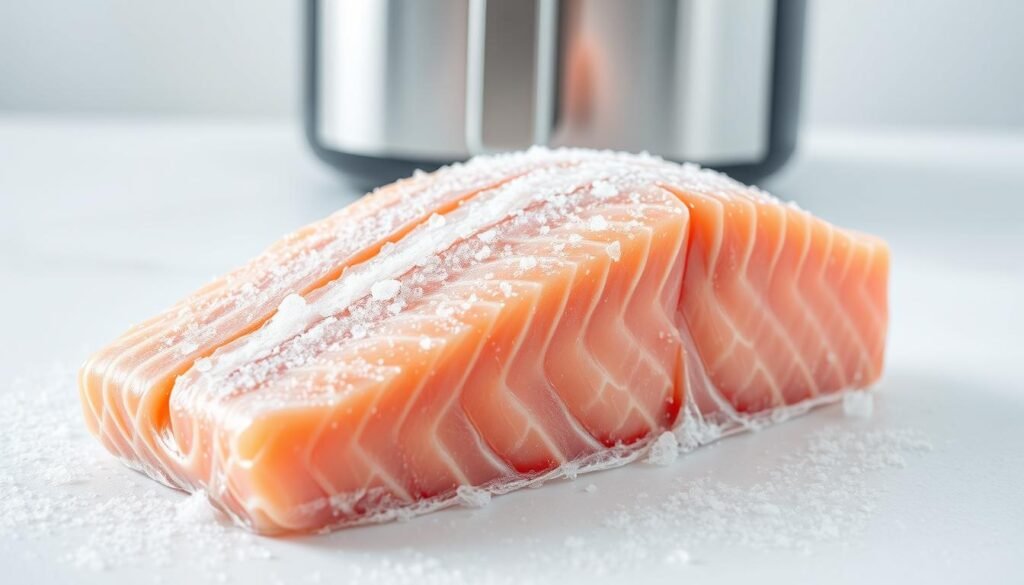
- As the surface thaws, blot moisture — less steam, better browning.
- Season or glaze once the frost is gone so flavors actually stick.
- Use a sheet of parchment in the fryer basket to reduce sticking on icy pieces.
- Cook smaller batches — cold fillets drop heat and stretch cooking minutes.
- If glaze dilutes, sauce after cooking and pop back in 1 minute to set.
“Plan a longer rest — carryover heat evens out the center.”
Next time, thaw overnight in the fridge for the easiest ride. And if you’re wondering about tools — a reliable instant-read helps more than guesswork when cooking frozen salmon in a salmon air fryer setup.
Variations and smart substitutions
Want to mix things up? Here are easy swaps that keep the flavor big and the fuss small.
Bottled teriyaki sauce saves time. If it’s too thick for a quick marinade, whisk in 1–2 tablespoons of water. Use the leftover sauce warmed on the stove to make a shiny glaze.
Make store-bought taste homemade: stir in grated garlic and a splash of vinegar. Add a teaspoon of sesame oil for toasty depth.
Soy and gluten-free swaps
Low-sodium soy keeps salt in check. Tamari is our go-to for gluten-free folks. Coconut aminos gives a sweeter, milder profile—cut back on added sweetener when you use it.
Sweeteners and thickeners
Sweeten with honey, brown sugar, or a keto-friendly option. Cornstarch works fine, but tapioca flour is a great swap if you prefer it.
- Measure a cup of sauce portions when batching.
- Taste as you go — add salt or sweetness last.
- Warm glaze for one minute after glazing to set the shine.
| Substitution | Use | Quick Tip |
|---|---|---|
| Low-sodium soy | Reduce salt | Season at the end |
| Tamari | Gluten-free swap | Same ratio as soy sauce |
| Coconut aminos | Lower sodium, sweeter | Cut added sugar by half |
| Tapioca or cornstarch | Thicken glaze | Mix 1 tbsp with cold water before adding |
“Measure once, taste twice — little tweaks make a big difference.”
Serving suggestions and side dishes
Let’s build a simple plate that balances taste, color, and speed. We want dinner to be easy and satisfying.
Serve the fish over a bed of warm rice or opt for brown or cauliflower rice when you want lighter carbs. A scoop of fluffy rice makes the sauce sing with every bite.
Veggie pairings bring texture and brightness. Steam or roast broccoli until tender. Blister baby bok choy quickly for a sweet char. Sauté green beans with garlic for a crisp, garlicky side.

Extra sauce is your friend—drizzle it over the whole plate. Add a squeeze of lime and sprinkle sesame seeds for zippy contrast. Pickled cucumbers or quick pickled carrots add crunch in just a few minutes.
Easy ideas to mix and match
- We love it over fluffy rice, nutty brown rice, or light cauliflower rice—choose your lane.
- Steam or air fryer broccoli, sauté garlicky green beans, or blister baby bok choy.
- Drizzle extra sauce over the whole plate—instant bowl bliss.
- Add a squeeze of lime and a sprinkle of sesame seeds for brightness.
- Toss cucumbers with rice vinegar for a crisp, refreshing side.
| Side | Prep time (minutes) | Quick tip |
|---|---|---|
| Steamed broccoli | 6 | Steam until bright green; finish with a pat of butter |
| Blistered bok choy | 5 | Quick high heat sear; finish with soy or tamari |
| Garlicky green beans | 7 | Sauté with minced garlic and a squeeze of lemon |
| Pickled cucumbers | 10 | Toss with rice vinegar and pinch of sugar for 10 minutes |
“Make it a bowl bar—rice, veggies, fish, sauce—everyone builds their own.”
Storage and reheating
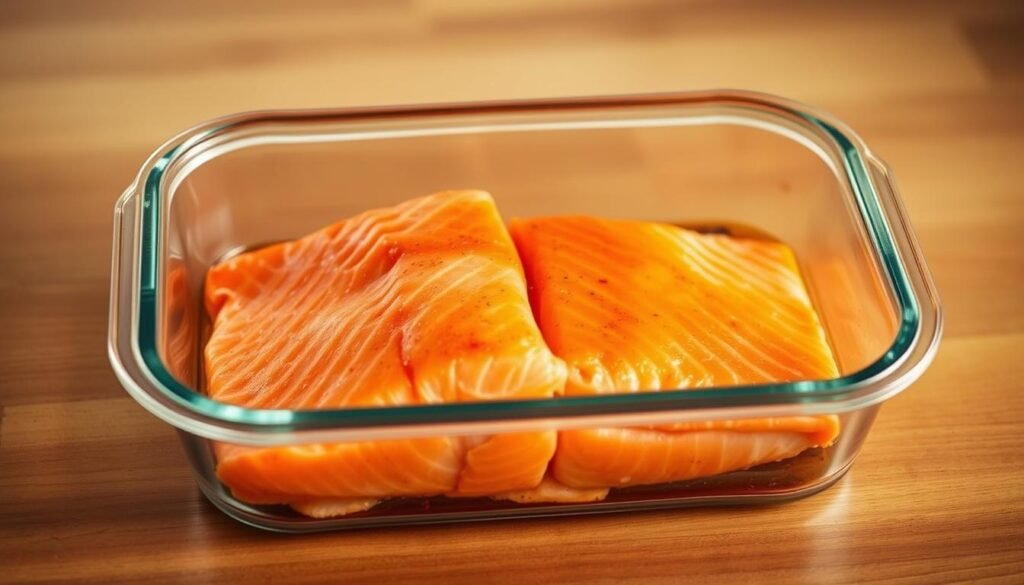
After supper, treat the leftovers right so tomorrow’s meal tastes just as good. Let the cooked salmon cool to room temp before you tuck it away. This keeps the texture and sauce from turning soggy.
Refrigeration window and airtight containers
Cool first: blot excess sauce, then pack pieces into airtight containers. Seal tight to lock in flavor and stop fridge odors.
Fridge time: keep for 2–3 days—use sooner for best texture. Label and date so future you won’t guess.
Reheat in the air fryer at 350°F
Set your air fryer to 350°F and warm leftovers for about 3-5 minutes. Check the internal temperature and stop when the fish is warmed through.
- Line the basket with parchment paper to prevent sticking.
- Add a spoonful of extra sauce before reheating to keep things moist.
- Skip the microwave when you can—hot air keeps the edges pleasant and the glaze glossy.
- Flake leftovers into rice bowls or salads for easy next-day lunches.
“Freeze any extra teriyaki sauce separately — it saves dinner on busy nights.”
One last tip: clean the basket right after reheating. It tames smells and keeps your unit ready for the next cozy meal.
Troubleshooting and pro tips
When things go sideways in the kitchen, a few clever fixes get dinner back on track fast. We’ll keep it short and useful so you can get plates out and smiles on faces.
Give the fillets room. Crowding traps steam and dulls edges. Drop pieces into the air fryer basket in a single layer. If needed, cook in batches — it takes only a few extra minutes and the results pay off.
Stop sticking before it starts. Line the fryer basket with a sheet of parchment paper or mist the skin with a light oil. Preheat air fryer so the sauce sets quickly and the glaze won’t cling to the paper.
Minimize smell and keep cleanup easy
Pat the salmon dry — less moisture means less steam and less odor. After cooling, soak the basket in warm soapy water to lift grime and smells. If anything lingers, run a short empty cycle to freshen the unit.
- Elbow room: avoid crowding; cook in batches.
- Paper or oil: use parchment paper or a light spray.
- Quick checks: peek early so you don’t overcook — pull when it flakes.
“Keep a spare liner on hand — cleanup stays sweet and simple.”
Nutrition and dietary notes
Let’s talk nutrition—what this dish brings to your plate and how to tweak it for goals. We keep it simple so you can eat well without fuss. Below we cover protein, healthy fats, and easy swaps for low-carb or gluten-free needs.
High-protein, omega-3 rich, low-carb friendly
Quality protein: A typical 5–6 oz serving delivers about 23g protein. That helps keep you full and fuels busy evenings.
Good fats: This fish is rich in omega-3s—heart-healthy and anti-inflammatory. Small changes make it lower in carbs too.
Low-carb tip: Use a sugar-free sweetener in the sauce to keep carbs minimal while keeping the glaze glossy and tasty.
Gluten-free options with tamari and label checks
Go gluten-free: Swap soy sauce for tamari and read labels on thickeners. Hidden gluten can hide in bottled sauces and mixes.
Sodium watch: Choose low-sodium soy or tamari and season at the end so you control salt without losing flavor.
- Portion guide: 5–6 ounces per person is a good target.
- Balance the plate: veggies plus a smart carb like brown rice or cauliflower rice.
- Sesame seeds add minerals and a nice crunch for very few calories.
- Dairy-free by default—easy for most diets.
- Track your macros if you count—brands and sauces vary.
| Measure | Example | Quick tip |
|---|---|---|
| Protein | ~23 g per 5 oz | Weigh fillets for accuracy |
| Carbs | Low with sugar-free sauce | Swap sweeteners to cut carbs |
| Sodium | Varies by sauce | Use low-sodium options |
“Nourishing and doable—healthy doesn’t have to be hard.”
Scaling up and batch cooking
Scaling this recipe up is easier than you think—grab a large tray and keep a steady rhythm. Double the teriyaki sauce for four fillets so every plate gets that glossy drizzle.
Work in batches so pieces don’t touch. Crisp edges beat steamed fish every time. Keep the same temp and timing; most batches finish in under 10 minutes. Check doneness at 140–145°F so each serving stays juicy.
Double the sauce and keep things moving
- Stash cooked fillets in a warm oven while the next round finishes.
- Re-whisk the sauce between batches so it stays silky.
- Refresh parchment for each round—no sticky carryover.
- Label portions by size and serve thinner pieces first.
- Use a large tray to stage fillets and speed assembly.
“Batch once, feast twice—leftovers make stellar lunch bowls.”
| Step | Why it matters | Quick action |
|---|---|---|
| Double sauce | Enough glaze for four fillets | Mix twice the ingredients before cooking |
| Cook in batches | Avoid crowding; better caramelization | Two to three fillets per basket works well |
| Hold warm | Keep finished pieces hot while finishing others | 200°F oven on a tray keeps texture |
Conclusion
This little dinner delivers big taste and gets from fridge to table in about thirty minutes. We keep it simple so you can relax and enjoy supper.
Here’s what you get: tender, flaky salmon cooked to 140–145°F and a glossy homemade sauce that simmers for about five minutes. The heat gives those caramelized edges while the center stays juicy.
Serve it over rice with bright green veggies. Sprinkle sesame seeds and sliced scallions for that final, cheerful touch. Store leftovers in airtight containers and reheat gently to keep texture.
- Fridge-to-fork in ~30 minutes — easy and reliable.
- Quick glaze brings bold flavor with pantry staples.
- Hot basket cooking yields consistent, flaky results.
- Garnish with sesame and scallions for a “ta-da!” moment.
- Batch-friendly — double the sauce and reheat gently.
“Trust your thermometer—140–145°F is the sweet spot for juicy fish.”
We tucked our best tips into this one because we want you to cook with confidence. Now y’all go on—set the table and dig in. Supper’s ready!
Air fryer setup and tools (Addendum)
Good setup makes dinner feel easy — get your gear in place and you’re halfway there.
We like a 5.8–6 qt basket-style model like Cosori or Ninja. That roomy air fryer basket gives fillets space so they brown instead of steam.
Line the basket with parchment paper for quick cleanup and less sticking. If you’re out of paper, a light oil mist works just fine.
- Choose a roomy model so pieces don’t crowd.
- Use parchment paper to prevent sticking and ease cleanup.
- Use silicone tongs or a soft spatula so glaze stays put.
- Organize tools before preheating for a smooth flow.
- Keep a thermometer handy for fast checks.
- Clean the basket right after cooling to cut lingering aromas.
- Mind the hot fryer — use mitts and a heat-safe mat.
- Store liners and the thermometer with your unit for grab-and-go.
“A tidy setup means dinner’s done with less fuss.”
| Tool | Why it matters | Quick tip |
|---|---|---|
| 5.8–6 qt basket | Roomy cooking space | Fits 2–3 fillets without crowding |
| Parchment paper | Prevents sticking | Cut to fit; leave vents for air flow |
| Silicone tongs | Protects glaze and finish | Grab gently—no scraping |
| Instant-read thermometer | Ensures perfect doneness | Check at the thickest part |
Step timing snapshot (Addendum)
A quick timing snapshot keeps everything humming—from sauce to plate.
Follow these minutes and the rhythm of dinner is easy:
- Sauce simmer: about 5 minutes — it should coat the back of a spoon.
- Marinate: 10–15 minutes — a weeknight-friendly window that still tastes bold.
- Preheat: 4–5 minutes at 390–400°F temperature — preheat air for a hot basket and better sear.
- Cook: 8–10 minutes — start checking early; aim to air fry until done by temp.
- Rest: 1–2 minutes — juices settle and texture evens out.
- Reheat leftovers: 3–5 minutes at 350°F — warm without drying out.
Total time from start to table lands right around a half-hour. Jot your model’s best times so you get repeatable wins every time.
Keep sides simple — fluffy rice and quick veggies match the pace. With a smidge of planning, busy nights turn into breezy supper wins using your trusted air fryer.
Keyword-integrated FAQs (Addendum)
Got a minute? These quick FAQs fix the little worries that pop up at dinnertime.
How long to marinate? Ten to fifteen minutes does the job on busy nights. Up to 30 minutes deepens the flavor.
What temperature and finish? Preheat to 390–400°F and cook to 140–145°F for juicy results. Let pieces rest a minute.
Bottled sauce? Yep. Thin thicker teriyaki sauce with a splash of water, then glaze after cooking for shine.
Swaps and sides? Use tamari or coconut aminos for soy-free options. Serve over rice or cauliflower rice with bright veggies.
Storage and reheat? Keep leftovers 2–3 days. Warm gently at 350°F for 3–5 minutes. And always place salmon in a single layer in the basket—no crowding.
Garnish tip: Sprinkle sesame seeds and sliced green onions right before serving for extra crunch and color.
FAQ
How long do we cook a standard fillet at 390–400°F?
Do we need to preheat the unit and the basket?
Can we cook frozen fish straight from the freezer?
Should we use parchment paper in the basket?
What’s the easiest homemade sauce that still tastes restaurant-ready?
How long should we marinate for good flavor?
Can we use bottled sauce instead of making our own?
What sides pair best with this dish?
How do we reheat leftovers without drying them out?
Any tips to avoid a strong fishy smell?
What swaps work for gluten-free diets?
How do we scale this recipe for guests?
Can we finish the glaze on the stovetop instead of in the unit?
What internal temp should we aim for and why?
Any quick swaps for sweeteners if we’re low on honey or sugar?
About The Author