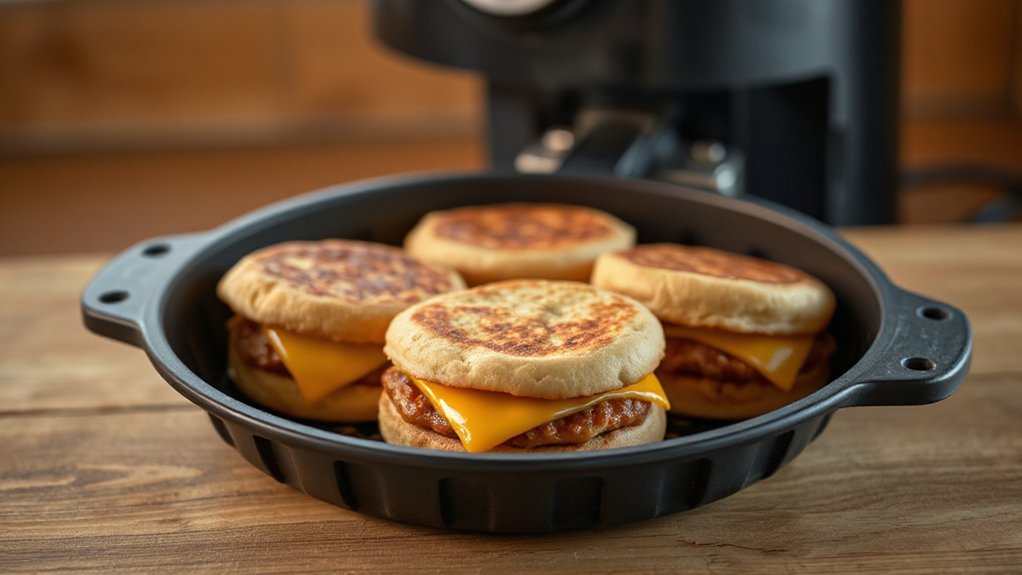
You’ll make golden‑brown sausage links or patties in the air fryer in under 12 minutes for a fast, protein-packed breakfast. Pick pork, poultry, or plant-based based on fat and spice; thaw frozen to cut time. Pat them dry, score if thick, and arrange in a single layer. Cook 350–375°F for 8–12 minutes, flip once, and check for 160°F (165°F poultry). Keep them rested a few minutes, and scroll on for simple tips and serving ideas.
Why Choose an Air Fryer for Sausages
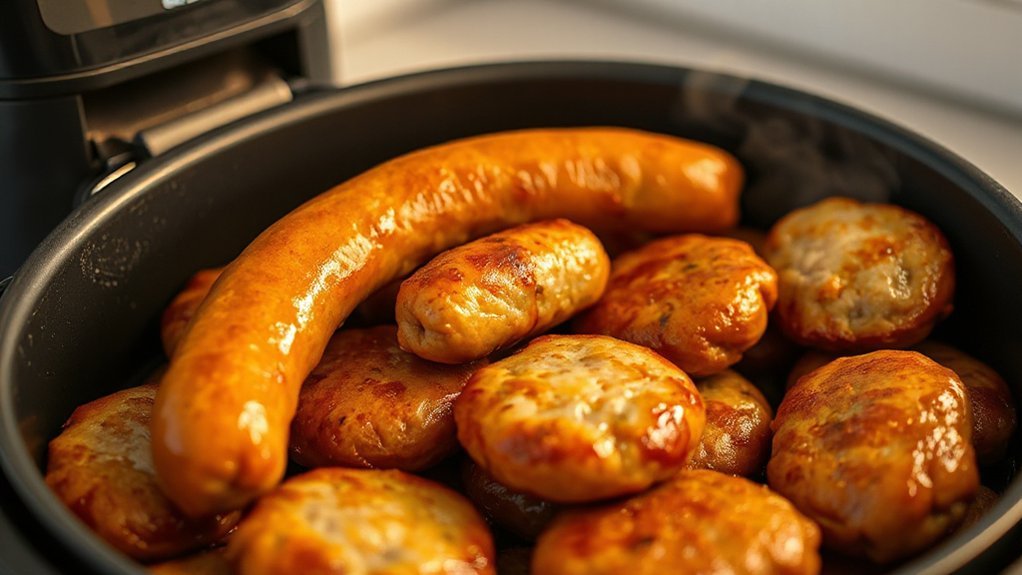
Because an air fryer circulates hot air around the sausages, you get a crisp exterior and juicy interior without drowning them in oil. You’ll save time: preheat is quick, and cook cycles are shorter than using an oven or stovetop, so you’ll have breakfast on the table faster. The basket keeps fat away from the meat, which trims calories without sacrificing flavor. You’ll also benefit from Energy efficiency — the compact chamber uses less power and heats evenly, lowering run time. Cleanup’s a breeze: remove the basket, give it a quick wash or pop it in the dishwasher, and you’re done; that Minimal cleanup makes morning routines smoother. You’ll control browning and doneness with simple adjustments, and the air fryer handles links and patties consistently. If you want a reliable, hands-off method that still delivers texture and juiciness, this appliance fits the bill every single morning, too, reliably.
Selecting the Best Sausage Types and Brands
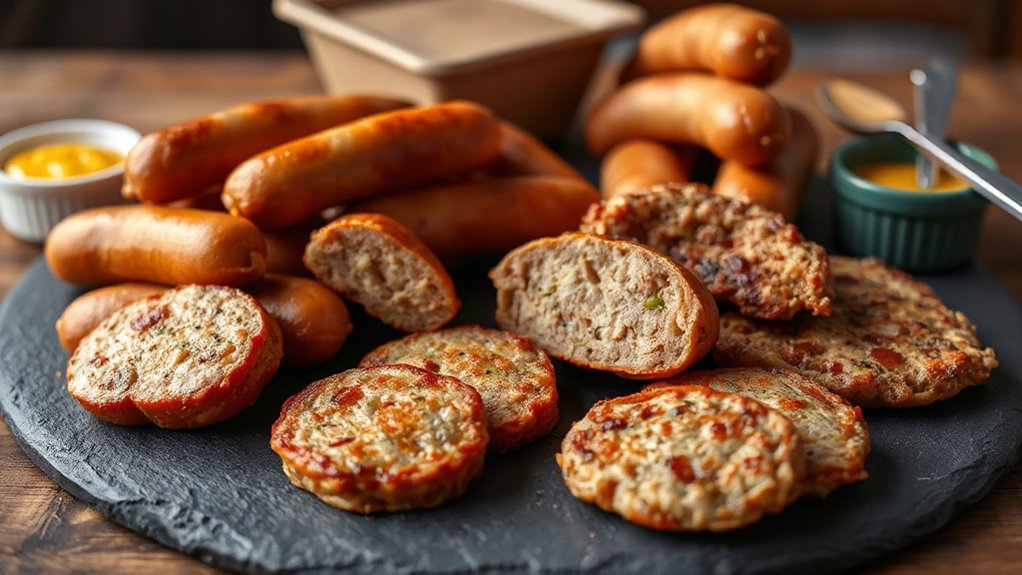
When picking sausages for the air fryer, think about meat type and texture—pork, chicken, or plant-based will crisp and behave differently. Check seasoning and fat content, since spicier blends and fattier links brown faster and stay juicy. Also consider heat level and brand reliability—look for trusted sourcing and clear labels so you’re confident about what you’re cooking.
Meat Type and Texture
Texture matters — pick a sausage with the right fat content and grind for the outcome you want: choose coarse grind for a meatier bite or finer grind for smooth, cohesive patties. Think about protein source — pork, chicken, turkey, or plant-based — and compare Protein Profiles to match your goals. If you want firmer links, look for blends that include connective tissue; for tender results, choose higher-quality cuts and minimal processing. Check labels for Allergen Concerns like soy, dairy, or gluten, and opt for certified allergy-friendly or single-ingredient options if needed. Try a few brands to learn how their texture behaves in your air fryer; you’ll quickly find which bite you prefer. Swap between links and patties to notice textural differences and pick confidently every time.
Seasoning, Fat, Heat Level
Now that you’ve figured out the texture and protein, let’s talk seasoning, fat and spice so you get the flavor and cooking behavior you want. You’ll choose sausages by seasoning profiles and fat content: Italian or breakfast blends lean on herbs and garlic, while chorizo and spicy varieties pack more heat. Think spice layering—surface rubs plus internal blend—to build depth without overpowering. Fat emulsification matters for juiciness and browning; emulsified sausages hold together and release predictable fat, improving crisp in the air fryer. If you want milder heat, pick lower chile content or mix with sweeter ingredients; for bold bites, choose varieties with cayenne or smoked paprika. Match heat level and fat to your preferred cooking time for consistent results. Adjust as you like.
Brand Reliability and Sourcing
Because consistency matters, you’ll want brands that deliver predictable seasoning, fat content, and casing quality so your air-fryer results don’t vary every time. Look for labels and websites that offer supply transparency—clear answers about where animals were raised, processing dates, and ingredient origins. You’ll appreciate brands that test fat ratios and list cook times so links and patties crisp evenly. Prioritize ethical sourcing if animal welfare and worker conditions matter to you; certifications and third-party audits make claims verifiable. Try a few trusted brands in small packs, note texture and shrinkage, then stick with ones that match your taste and air-fryer performance. Reliable brands save time and reduce guesswork, helping you get a perfect quick protein breakfast more often. You’ll thank yourself every morning.
Fresh vs. Frozen: What to Know
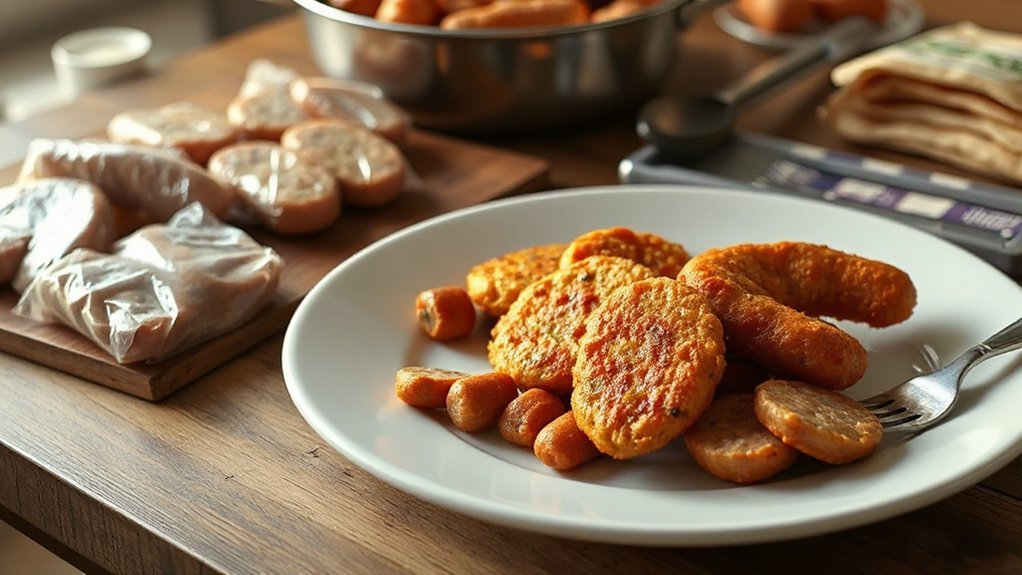
When you’re choosing fresh vs. frozen sausages, expect fresh to give a juicier texture and brighter flavor while frozen can still be tasty if handled properly. You’ll also notice fresh cooks faster in the air fryer, whereas frozen needs extra time and a bit more attention to avoid uneven cooking. Finally, keep storage and safety in mind—freeze promptly for long-term storage and always cook to the right internal temperature to make sure it’s safe to eat.
Texture and Flavor
Although frozen links can be convenient, fresh sausages usually deliver a juicier bite and livelier seasoning when you air-fry them. You’ll notice mouthfeel contrast instantly: fresh gives tender, juicy flesh; frozen can be firmer. Aroma complexity pops from fresh spices and rendered fat, so your kitchen smells irresistible. Use the table below to compare quickly.
| Type | Texture | Flavor cue |
|---|---|---|
| Fresh | Juicy, tender | Bright spices, fat bloom |
| Frozen | Firmer, denser | Muted seasoning, reheated oils |
When you pick fresh, you’ll get immediate flavor and better bite. If you choose frozen for convenience, let them thaw slightly for improved texture and taste. Try scoring casings and brushing with a touch of oil or glaze to boost browning and highlight those savory notes; small tweaks make big differences.
Cooking Time Differences
Fresh sausages will usually cook faster than frozen ones, so plan for shorter air-fry runs and less poking around. You’ll cut frozen time by about 30–50% after thawing, but if you cook from frozen add extra minutes and check internal temperature more often. Expect batch variability: thinner links finish quicker, crowded baskets slow browning. Start at the recipe’s recommended temp, then adjust cook time in small increments for your size and air fryer model. If you live at high elevation consider an altitude adjustment—drier air and lower pressure can alter cooking speed—so add a minute or two and monitor doneness. Keep notes on times for each sausage type so you nail it every breakfast. Adjusting once builds confidence and consistency quickly for future cooks.
Storage and Safety
Because proper storage affects both flavor and safety, you should treat fresh and frozen sausages differently to avoid waste and foodborne illness. Store fresh links in the fridge for 1–2 days, wrapped tightly; freeze for up to 2 months. Label packages with dates and check recall alerts before use. Thaw in the fridge, not on the counter, to limit bacterial growth and allergen risks cross-contact.
| State | Tip |
|---|---|
| Fresh | Use within 48 hrs |
| Frozen | Freeze 2 months |
| Thawing | Fridge overnight |
| Leftovers | 3–4 days fridge |
When reheating, reach 160°F for pork or beef; 165°F for poultry. Toss anything with off smells. Always inspect packaging for punctures, follow use-by dates, separate raw from ready-to-eat foods, and report concerns to retailers if you see safety issues. Stay safe, enjoy.
Prepping Sausages for the Air Fryer
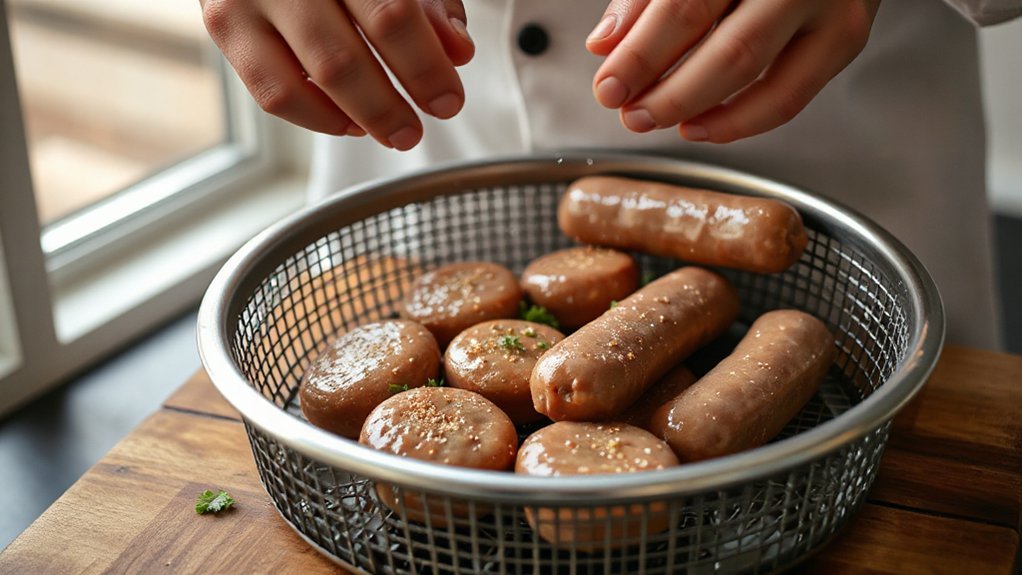
Trimming and patting your sausages dry before air frying makes them crisp up better and reduces excess splatter. You’ll remove casings or trim fat where needed, score thicker links lightly for even cooking, and toss patties with a light brush of oil so they brown evenly. Season simply: salt, pepper, and a pinch of smoked paprika. Arrange sausages in a single layer with space to breathe; that helps texture without fuss. As you prep, set a relaxed scene: low ambient lighting, a tidy counter, and simple cleanup rituals to keep the process joyful.
- Warm anticipation as flavor fills the kitchen
- Comfort in familiar, hands-on prep
- Pride when your station looks neat
- Excitement at sizzling promise
- Calm in predictable, easy cleanup
You’ll move efficiently, enjoy the ritual, and finish ready to cook without stress. Then plate confidently and savor every bite with happy company.
Cooking Times and Temperatures for Links
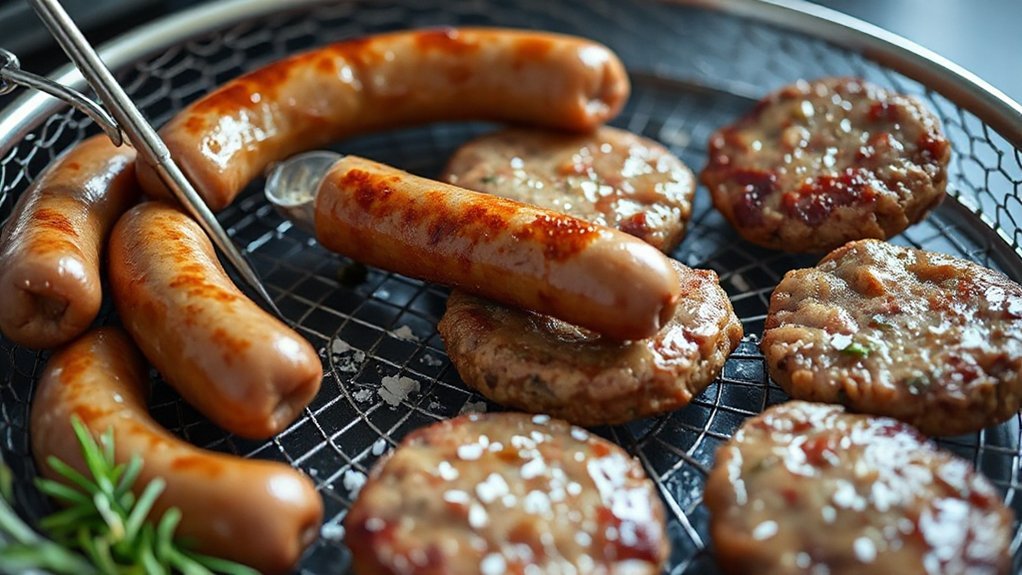
When you set the air fryer to 350–375°F, you’ll get juicy, evenly browned links without burning the outside, so aim for about 10–12 minutes at 350°F or 8–10 minutes at 375°F, flipping once halfway through; thinner breakfast links may finish in 6–8 minutes at 400°F. Stick to a single layer, leave space for airflow, and preheat for 2–3 minutes so timing stays consistent. Use an instant-read thermometer—internal temperature should reach 160°F for pork or beef, 165°F for poultry. If you’re short on time, slightly raise temp and cut minutes, but watch closely to avoid drying. Note energy consumption: shorter, hotter cycles use more power but save total run time; moderate temps are often most efficient. Make simple altitude adjustments—add 1–2 extra minutes above 3,000 feet and check doneness earlier at sea level. Flip once, rest briefly, and enjoy reliably cooked links every time. Serve right away; enjoy hot.
Cooking Times and Temperatures for Patties
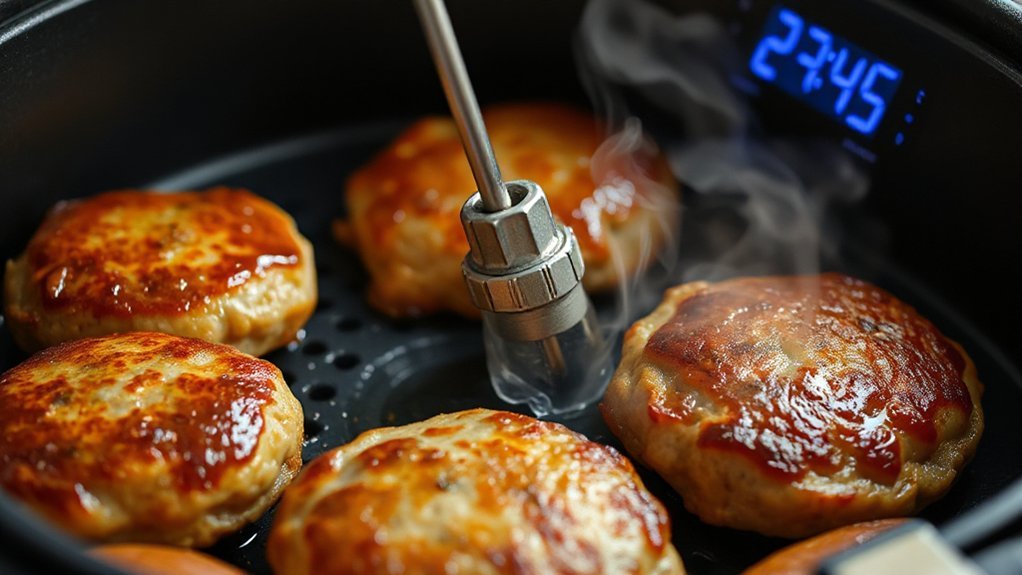
If you want juicy, evenly browned patties, set the air fryer between 350–400°F and plan on roughly 8–12 minutes depending on thickness and meat type, flipping once halfway through; thinner breakfast-style patties may finish in 6–8 minutes at 400°F while thicker burger-style patties often need the full 10–12 minutes at 350–375°F. You’ll adjust time for pork, turkey, or plant-based patties and for frozen versus fresh. Keep a single layer with thoughtful rack positioning so airflow patterns remain unobstructed; that gives even cooking without overcrowding. Flip once to promote uniform color and target internal temps: 160°F for pork/beef, 165°F for poultry, or follow package guidance for alternatives. Let patties rest a few minutes before serving.
- Cozy satisfaction when breakfast smells amazing
- Proud moments serving a perfect stack
- Quick relief on busy mornings
- Warm nostalgia in every bite
- Bright excitement for a tasty, protein-packed start
Enjoy the comfort and convenience.
Tips for Crispy Exterior and Juicy Interior
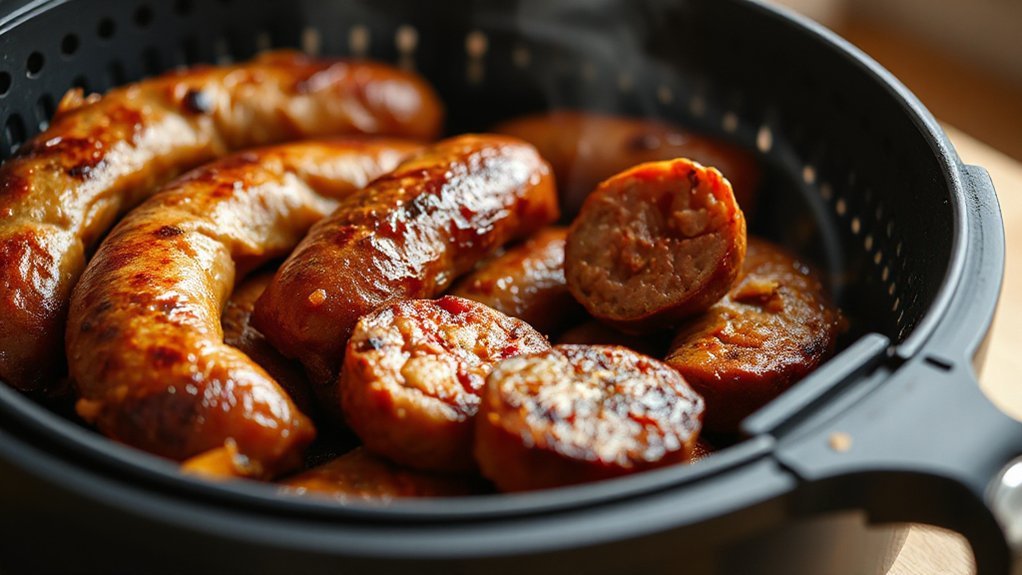
To get a crunchy outside and a juicy inside, start by patting patties dry and giving them a light coat of high-smoke-point oil so they brown quickly without smoking; you’ll still follow the timing and single-layer spacing from above, but these small steps make a big difference. Let the oil help surface temps hit Maillard Chemistry thresholds faster, creating that caramelized crust while locking juices. Preheat the air fryer briefly so heat is steady, then arrange patties in a single layer to preserve Airflow Dynamics; crowded baskets trap steam and soften exteriors. Flip once halfway to promote even browning and check internal temp with an instant-read probe—remove a few degrees early, carryover will finish them. For extra crispness, give a short blast at the end on a higher temp, watching closely. Rest patties a couple minutes before serving so juices redistribute; you’ll get consistent, restaurant-style results every time.
Make-Ahead Meal Prep and Storage Guidelines
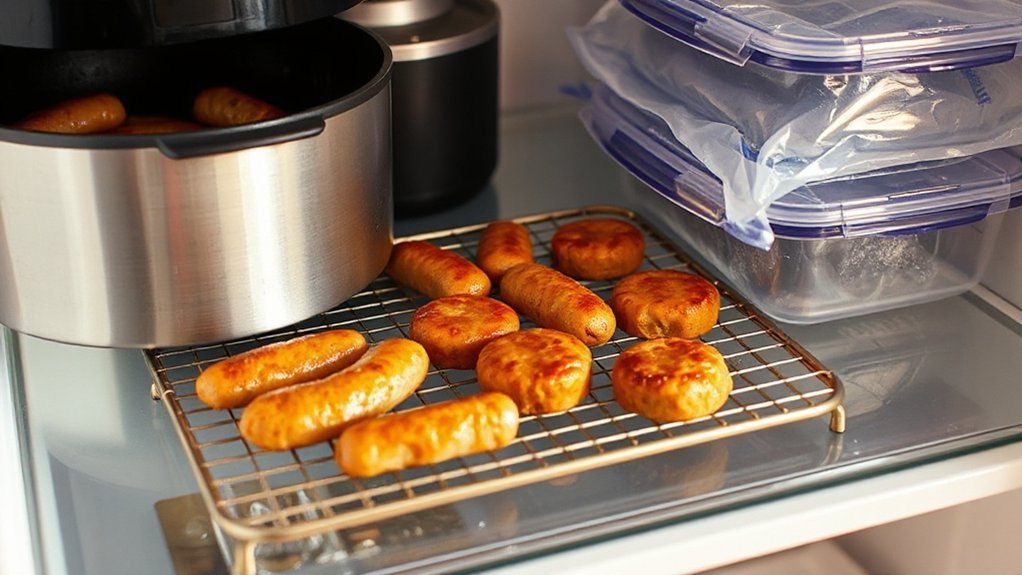
Because you’ll want quick, reliable meals all week, cook your sausages ahead, cool them quickly, and get them into airtight containers within two hours; they’ll keep in the fridge for 3–4 days or frozen for 2–3 months for best quality. Plan simple prep workflows: batch-cook links and patties, label portions, and note reheating times so mornings feel effortless. Use shopping templates to buy only what you need and avoid waste. Cool on a rack to prevent sogginess, then wrap or seal in single‑serving packs. When reheating, use the air fryer or a skillet for best texture; thawed frozen sausages reheat evenly.
- You’ll feel proud opening a fridge full of ready breakfasts.
- You’ll save time and dodge morning stress.
- You’ll enjoy consistent texture every day.
- You’ll cut food waste and save money.
- You’ll love how simple routines boost your week.
Keep labels clear and dated.
Easy Serving Ideas and Low-Carb Pairings
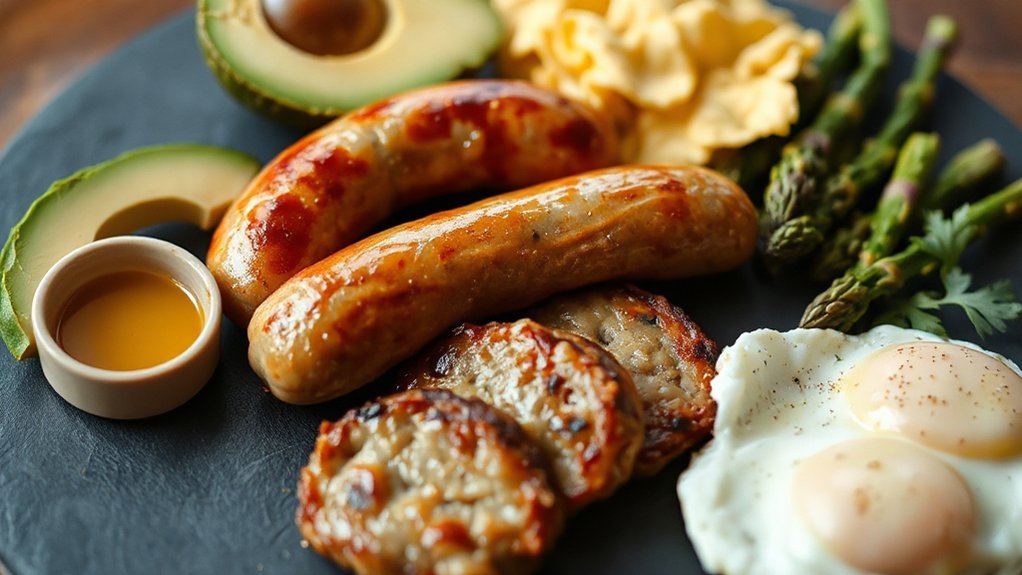
Now that you’ve got ready-made links and patties on hand, serving them up low-carb is fast and fun. Heat a patty, slice it, and tuck into lettuce wraps with crunch—thinly sliced cucumber, bell pepper, a drizzle of mustard, and a spoonful of Avocado Salsa for creaminess. Turn links into skewers with cherry tomatoes and zucchini, then grill briefly to char and finish with fresh herbs. For a cozy breakfast plate, make Cauliflower Hash: sauté riced cauliflower with onion, garlic, and smoked paprika, then top with sliced sausage and a runny egg.
Keep things simple for meal prep: portion sausages over mixed greens, add olives, feta, and a lemon-olive oil dressing for quick lunches. Pack separate Avocado Salsa containers for dipping. These combos stay satisfying, low-carb, and ready in minutes. Swap condiments: spicy mustard, sugar-free ketchup, or herbed mayo keep flavors bright without adding carbs and save time daily.
Conclusion
You’ll love how the air fryer turns humble sausages into something special: crispy outsides and juicy insides, fast. You’ll mix convenience with care — five minutes of prep, restaurant-style flavor. Whether you’re rushing to work or savoring a lazy weekend brunch, you’ll get consistent results every time. Keep a few links in the freezer and you’ll always have a quick, satisfying protein that’s both simple and impressive. You’ll feel proud, eating well without any fuss daily.
About The Author