You’ll crisp skin-on salmon at high heat in the air fryer and finish it with a lemon-herb butter made from unsalted butter, lemon zest, chopped parsley and dill, and a touch of minced garlic. Pat fillets dry, oil lightly, season with kosher salt and cracked black pepper, then set a precise temp and time for flaky doneness and a glossy butter finish—keep going to get exact timings and ratios.
Why This Recipe Works

Because the air fryer delivers rapid, convective heat, it crisps the salmon’s exterior while keeping the interior moist. You’ll exploit short cook times, high heat, and minimal oil to create a Maillard-seared surface without drying flesh.
Pat the fillet dry, score skin, and apply a thin compound of lemon-herb butter at finish for targeted flavor enhancement. Use skin-on fillets and a calibrated 400°F (200°C) cycle for consistent crust and translucent center. Flip only if necessary; the fryer’s circulation cooks evenly.
Rest briefly so residual heat redistributes. These cooking techniques prioritize texture contrast and allow precise timing adjustments for thickness. The result is reproducible: a juicy interior, crisped skin, and layered citrus-herb complexity.
You can tweak salt and acidity to amplify balance without masking freshness.
Ingredients You’ll Need

Select skin-on salmon fillets (about 6–8 oz/170–225 g each) and bring them to room temperature, then pat dry; you’ll season simply with flaky or kosher salt and freshly cracked black pepper, lightly coat the flesh with a high-smoke-point neutral oil (avocado, grapeseed, or light olive oil) to promote browning, and finish with a bright lemon and a small handful of fresh herbs (dill, parsley, or chives) plus 1–2 tablespoons of softened unsalted butter to make a quick lemon-herb compound for finishing; optionally have one small garlic clove minced and a pinch of smoked paprika or a touch of maple/brown sugar if you want a sweet-savory glaze.
| Ingredient | Purpose |
|---|---|
| Salmon | Browning |
| Lemon, herbs | Brightness |
| Butter | Richness |
| Oil | Maillard |
Prioritize ingredient sourcing; explore bold flavor combinations.
Equipment and Tools

A reliable basket-style air fryer with a removable tray and a 3–6 quart capacity gives you consistent air circulation and lets salmon fillets lie flat for even browning.
Choose an air fryer with adjustable temperature and a crisping function so you’ll target 375–400°F and produce a tight, caramelized exterior precisely without overcooking.
Pair it with precise kitchen tools: an instant-read probe thermometer, a small offset spatula for gentle transfer, silicone-tipped tongs, and a nonstick perforated liner or parchment cut to size.
Keep a microplane for zest, a small whisk for emulsifying lemon herb butter, and a kitchen scale to portion fillets uniformly.
These items let you innovate with consistent technique and repeatable results. Store them within reach to streamline your workflow and timing consistently.
Preparing the Salmon
Pat the fillets dry with paper towels, then portion them into even 6–8 oz pieces so they cook uniformly. Inspect each for pin bones and remove with fish tweezers; leave skin on unless you prefer otherwise. Score the skin lightly to prevent curling.
Brush both sides with a thin coat of high-smoke-point oil—avocado or refined olive oil—so seasoning adheres. For salmon preparation, season immediately with kosher salt, cracked black pepper, and a touch of smoked paprika for depth. Press a fine zest of lemon and minced garlic into the flesh for direct flavor infusion.
For innovative seasoning techniques, try a quick dry-brine of salt and sugar for 15 minutes or a light herbaceous dusting of dill and fennel pollen. Pat gently before air frying.
Making the Lemon Herb Butter
Softened unsalted butter forms the base for this lemon-herb compound; you’ll want about 4 tablespoons (½ stick) for two 6–8 oz fillets. Measure the butter at room temperature so it’s pliable but not greasy.
Add 1 teaspoon finely grated lemon zest and 1 tablespoon fresh lemon juice for brightness. Mince 1 tablespoon each of parsley and chives, or choose a combination from your herb choices—tarragon for anise notes, dill for floral lift—keeping total herbs around 2 tablespoons.
Stir in ¼ teaspoon fine sea salt and a pinch of white pepper. For texture contrast, fold in 1 teaspoon capers, drained and chopped. Taste and adjust acid or salt; refrigerate briefly to firm before slicing or dolloping onto cooked salmon.
Keep chilled until ready to use.
Air Frying Instructions
Before you start, preheat the air fryer to 400°F (200°C) for 3–5 minutes so the basket’s hot and the skin crisps immediately; meanwhile, lightly brush each 6–8 oz salmon fillet (skin-on preferred) with ½ teaspoon olive oil and season with ¼ teaspoon fine sea salt and a pinch of white pepper.
| Time | Temp | Result |
|---|---|---|
| 7–9 min | 400°F | Medium-rare |
| 10–12 min | 400°F | Medium |
Place fillets skin-side down in a single layer, leaving space for airflow. Cook at 400°F (200°C) for 7–9 minutes for medium-rare; avoid flipping to protect the skin. Use an instant-read thermometer: 120–125°F target. Rest 3 minutes. Focus on air frying techniques and salmon cooking fundamentals: minimal oil, skin crisp, even spacing, and timed carryover heat. Finish brushing lemon herb butter briefly once.
Serving Suggestions

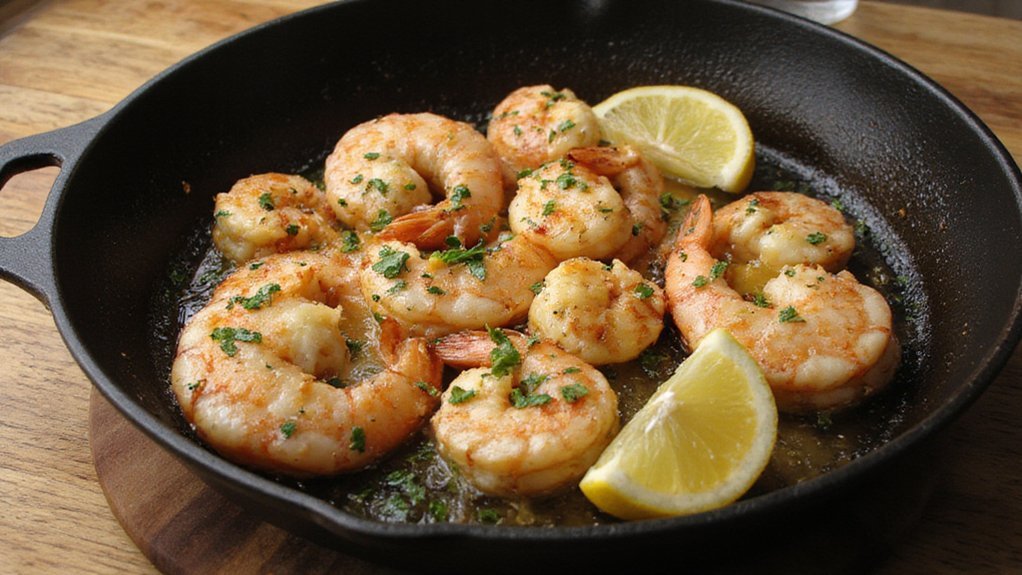
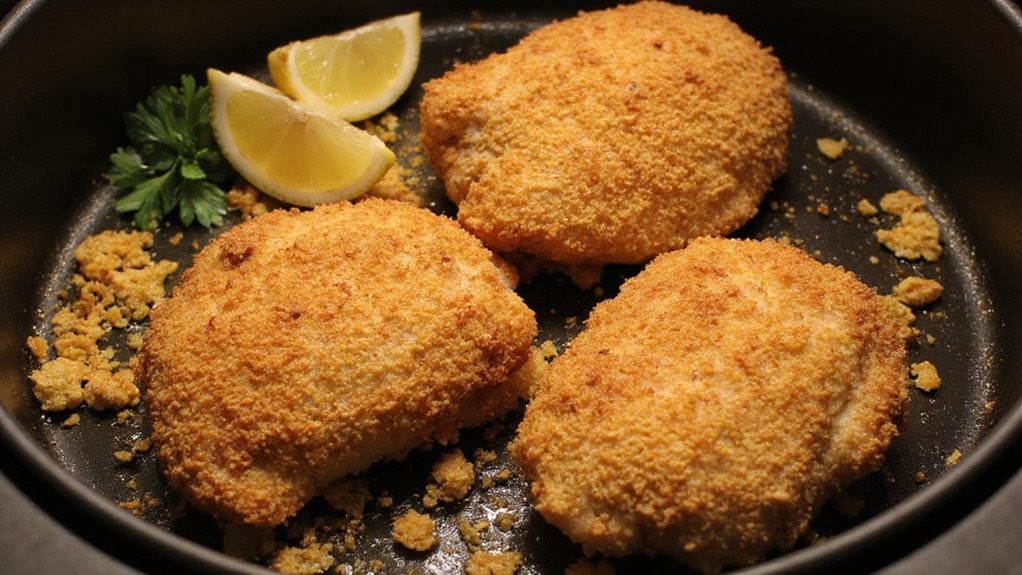
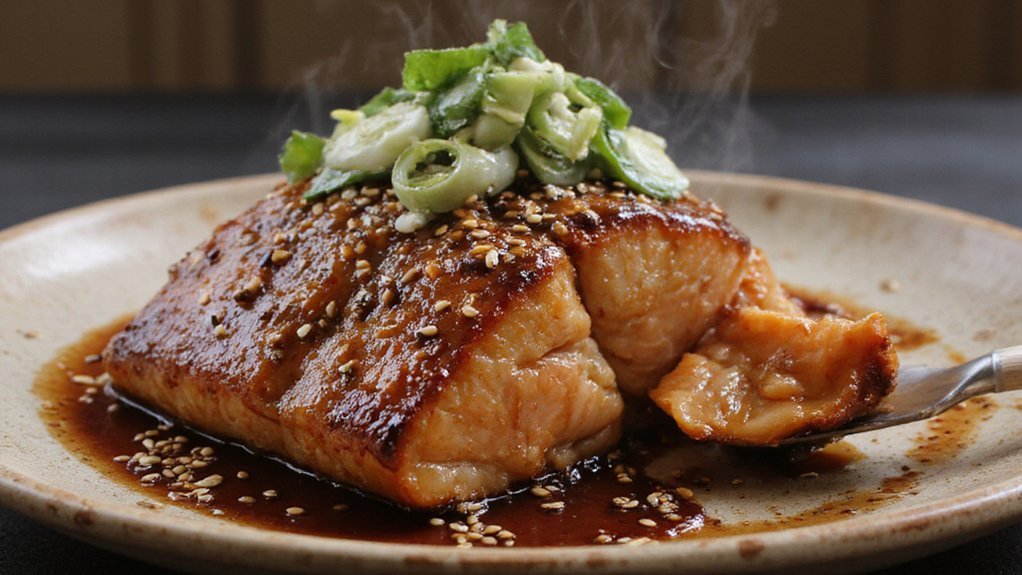
If you want bright contrast and balanced texture, plate the 6–8 oz air-fried salmon fillet (rested 3 minutes) atop a spoonful of lemon-herb butter, scatter shaved fennel or quick-pickled cucumber for acidity, and add a starchy element like herbed quinoa or creamy mashed cauliflower to absorb juices.
For refined plating techniques, use tongs to set the fish at a slight angle, wipe edges, and spoon sauce in a thin arc rather than pooling.
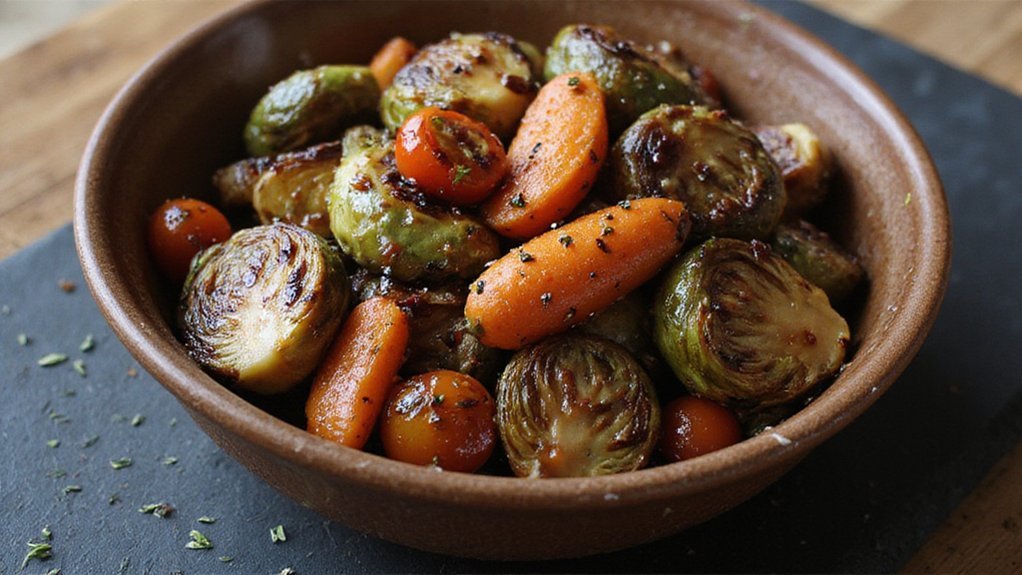
Offer side dishes that vary temperature and mouthfeel: charred broccolini for crunch, a warm pea-mint purée for sweetness, or roasted baby carrots glazed with citrus.
Finish with microgreens, a light flake of Maldon, and a precise final squeeze of lemon to sharpen flavors.
Plate immediately; guests appreciate calculated contrasts and restraint.
Storage and Reheating
Let cool no longer than 1 hour, then pat fillets dry, place them skin-side down in a single layer in an airtight container lined with a paper towel to absorb moisture, and refrigerate at 40°F (4°C) for up to 3 days (or vacuum-seal and freeze at 0°F/-18°C for up to 1 month).
For chilled salmon, add a thin lemon-herb butter pat on top before sealing to protect surface flavor and fat.
For frozen portions, flash-freeze on a tray 30 minutes before vacuum sealing to prevent deformation.
Storage tips: label with date and don’t stack warm pieces.
Reheating methods: gently warm in a 275°F (135°C) oven 8–12 minutes, or use an air fryer at 300°F (150°C) 4–6 minutes, skin-side down, until internal 120–125°F (49–52°C).
Tips and Variations
For seasoning, you can use a lemon-pepper rub, miso glaze, or simply finish with flaky sea salt and olive oil to highlight the salmon.
Adjust cook time and temp by thickness: air fry at 400°F for 7–9 minutes for 1-inch fillets, and lower to 375°F plus 2–3 extra minutes for 1.5–2-inch pieces to prevent overcooking.
Serve with acid (lemon wedges or yuzu), a herb oil or soy-based dressing, and pair with steamed rice, roasted asparagus, or a crisp green salad.
Seasoning Ideas
Start by patting salmon dry and using a light brush of neutral oil (avocado or grapeseed) so salt and spices adhere evenly.
For bright profiles, press lemon zest with flaky salt and cracked white pepper into the flesh; finish with chopped dill or chives.
Try spice combinations like smoked paprika + coriander + brown sugar for a caramelized crust, or za’atar for tangy, herbal crunch.
For butter-forward builds, fold minced tarragon and lemon juice into softened butter and dollop after cooking.
To push savory depth, rub in a mix of toasted fennel seed, garlic powder, and a pinch of sumac.
For herb blends, dehydrate rosemary and thyme briefly, then crush for even distribution.
Pat, press, and don’t overload — let the fish shine beautifully.
Time and Temp Tweaks
When you adjust time and temperature, match them to the fillet’s thickness and surface treatment: cook skin-on fillets at 400°F for 7–10 minutes per inch of thickness for a crisp skin and flaky interior, reduce to 350–375°F for sugary glazes to prevent burning, and push to 420°F for a quick 4–6 minute sear on thin cuts.
For medium-rare aim for an internal 120–125°F; carryover will reach 125–130°F. For well-done target 145°F. If you brine or oil heavily cut 1–2 minutes from cooking times to avoid oil smoke.
Use an instant-read probe and note each fillet’s weight to refine cooking times. When testing new coatings, document the temperature adjustments and surface prep so you can replicate creative textures precisely and tweak air circulation patterns consistently.
Serving and Pairing Options
After dialing in the time and temperature for ideal doneness and crust, plan sauces, sides and garnishes that balance fat, salt and acidity so each bite stays lively. Serve salmon topped with lemon-herb butter; spoon warm beurre monté for gloss, or a caper-chili salsa for contrast. For side dishes, you choose roasted asparagus tossed with lemon zest and olive oil, or a chilled fennel-citrus salad to cut richness. For wine pairings favor unoaked Chardonnay or dry Riesling; for bolder herb rubs try Pinot Noir. Plate with precision: rest fish two minutes, lacquer with butter, finish with microgreens.
| Sauce | Side | Wine |
|---|---|---|
| Beurre monté | Roasted asparagus | Unoaked Chardonnay |
| Caper-chili salsa | Fennel-citrus salad | Dry Riesling |
Experiment portion sizes and seasoning concentrations to refine texture and intensity consistently.
Conclusion
You’ll finish with crisp-edged, skin-on salmon seared by the air fryer’s 400°F blast, its interior flaky and moist. Spoon the lemon-herb butter—softened butter whipped with finely grated lemon zest, minced parsley, chives, and a pinch of sea salt—over hot fillets so it melts into the flesh. Rest three minutes, then serve immediately to preserve texture and bright citrus-herb notes; refrigerate leftovers within two hours. Reheat gently at 300°F for four minutes to avoid drying later.
About The Author