You can turn radishes into potato‑like bites in the air fryer with far fewer carbs and calories. They soften inside and caramelize outside, giving a tender, slightly sweet mouthfeel that mimics roasted potatoes. Pick milder, sturdy varieties, dry and toss evenly with a little oil and seasoning, avoid overcrowding and blast with high heat at the end for color. They’re great as a low‑carb side — keep going to learn tips, timings, and seasonings soon.
Why Radishes Work as a Potato Substitute
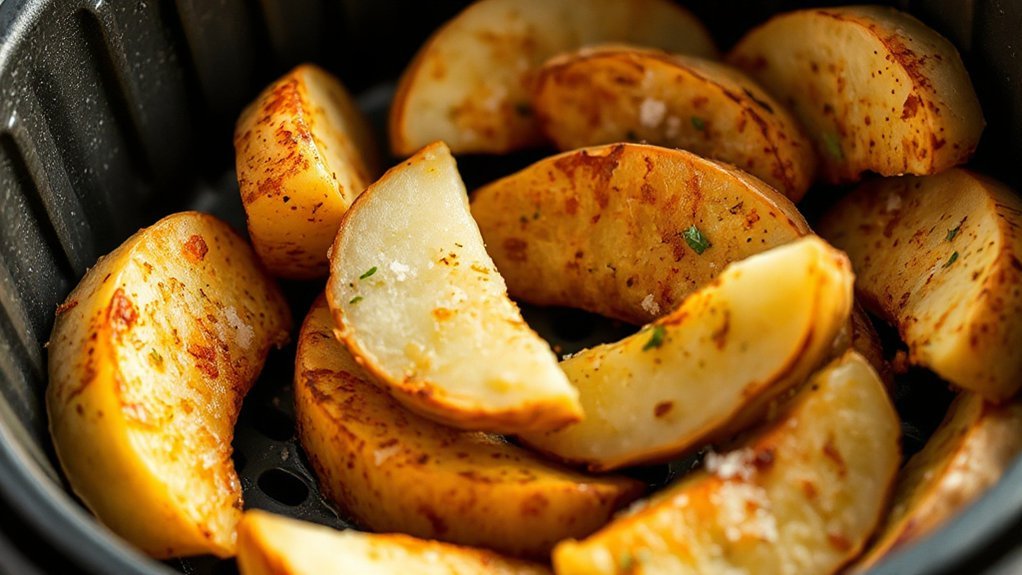
Swapping potatoes for radishes gives you that roasted, tender bite with fewer carbs and calories, so you get the comfort-food vibe without the heaviness. You’ll notice radishes crisp at the edges yet soften inside because their Cellular Structure collapses and releases moisture differently than tubers, creating a light, pillowy interior. When you air fry, mild heat and circulating air coax sugars and water to transform texture, and smart seasonings push flavor into the flesh. Think of Starch Mimicry: although radishes aren’t starchy like potatoes, their softened fibers absorb oil and aromatics, simulating that satisfying mouthfeel. You’ll appreciate the quick cook time—radishes need less hand-holding—and the forgiving nature; they won’t turn gluey if you don’t overwork them. Use similar cuts and temperatures you’d pick for potatoes, and you’ll get a familiar, comforting result that keeps weeknight cooking simple and fresh. Enjoy experimenting until you nail your favorite version today.
Nutritional Comparison: Radishes vs. Potatoes
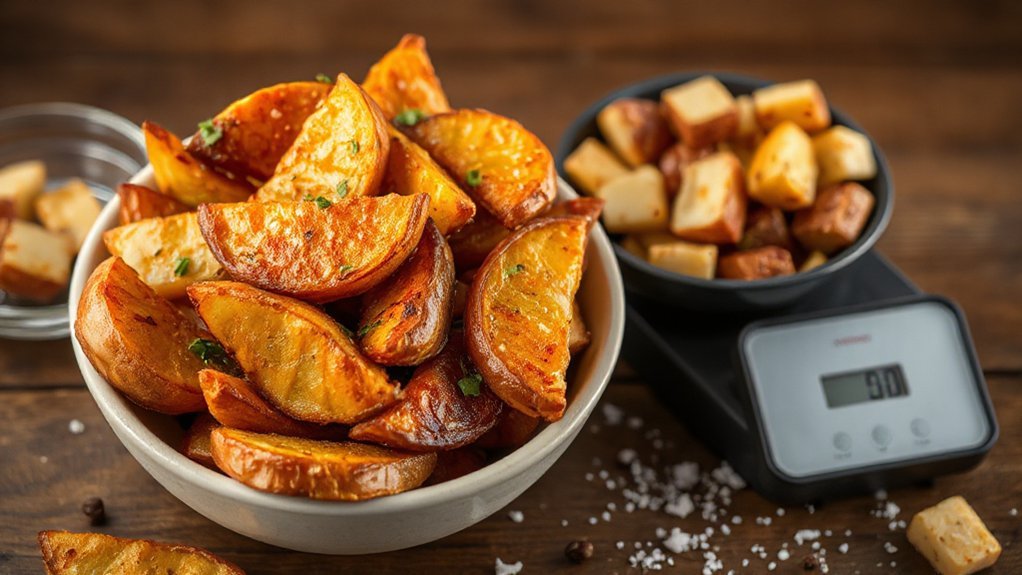
In terms of calories and carbs, radishes give you a much lighter plate than potatoes: radishes clock in at roughly 15–20 kcal and about 3–4 g carbs per 100 g, while starchy potatoes sit closer to 70–80 kcal and 15–20 g carbs per 100 g. That gap matters when you’re trimming carbs or watching Glycemic Load; radishes typically cause smaller blood sugar spikes, so you can enjoy roast-like texture with less impact. Potatoes deliver more energy, which is great if you need calories, but they’ll raise your carb load faster. You’ll also notice differences in Vitamin Density: radishes offer vitamin C and some folate per calorie, while potatoes provide potassium and B6 in larger absolute amounts. When you pick one or the other, consider portion, satiety, and how it fits your goals—radishes for low-carb swaps, potatoes when you want more starch and sustained fuel. Choose based on preference.
Choosing the Best Radish Varieties
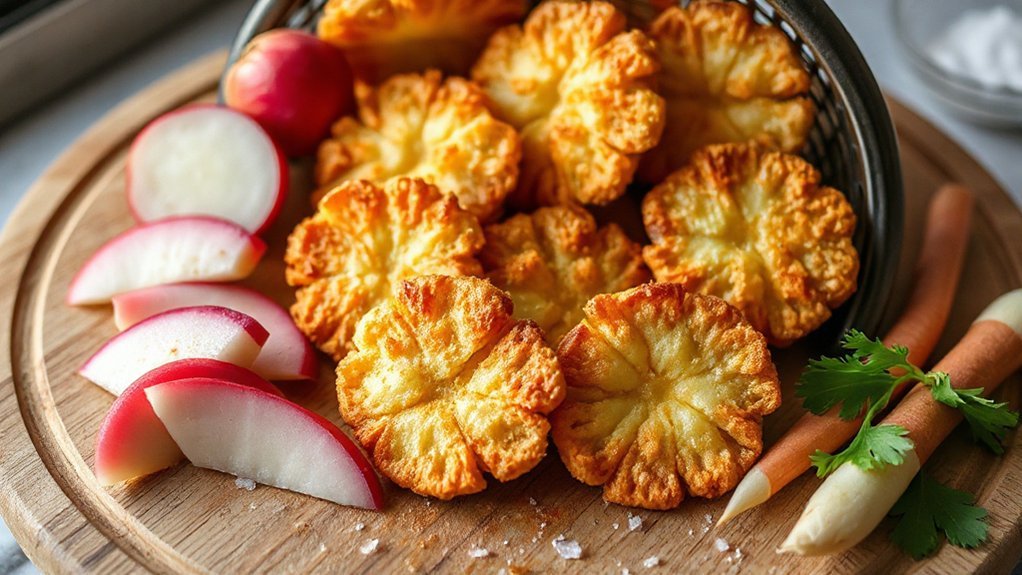
When you want tender, caramelized radishes from the air fryer, choose varieties known for roasting well—try small, sweet types for quick browning and larger ones for substance. Mild, large radishes like daikon and watermelon hold up to heat and mellow into a potato-like texture you’ll enjoy. Mix sizes so you get both fast-crisp bites and heartier, creamy pieces in the same batch.
Best Roasting Radishes
Although radishes are often eaten raw, you’ll get the best roasted results by picking the right variety—look for larger, milder types like French breakfast, watermelon, or daikon that hold shape and caramelize without turning mushy. For oven roasting or charcoal grilling, choose firm roots, trim greens, halve or quarter, and toss with oil, salt, and pepper. Below is a quick reference to help you pick:
| Variety | Roast Traits |
|---|---|
| French Breakfast | Mild, holds shape, quick caramel |
| Watermelon | Sweet center, colorful, crisp |
| Daikon | Sturdy, earthy, long roast time |
| Icicle | Delicate, thin skinned, fast cook |
Happy roasting—these choices make radishes sing like potatoes when browned. You’ll get a crisp exterior and tender center if you space pieces, shake pan midway, and avoid overcrowding the tray every time.
Mild Large Varieties
If you want radishes that roast, grill, or air-fry into tender, potato-like bites, pick mild, larger varieties—think French breakfast, watermelon, or daikon—because they hold their shape, caramelize nicely, and carry a gentle flavor instead of a sharp bite. You’ll prefer these when you want a low-carb stand-in for potatoes; they crisp edges while staying creamy inside. Choose daikon for neutral starchiness, watermelon for color and subtle sweetness, French breakfast for compact tenderness. Pay attention to how local growers select types — regional preferences influence availability and freshness. A bit of culinary history explains why some cultures favored large roots for cooking. Try a few varieties side-by-side to decide which texture and flavor match your air-fryer routine. Rotate seasons and suppliers to find peak specimens.
Prepping Radishes for the Air Fryer
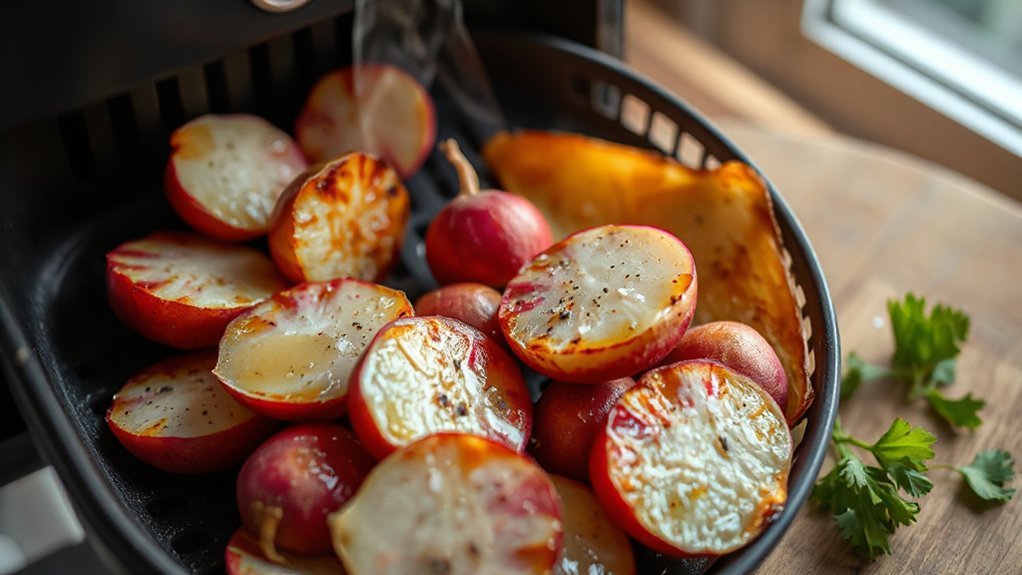
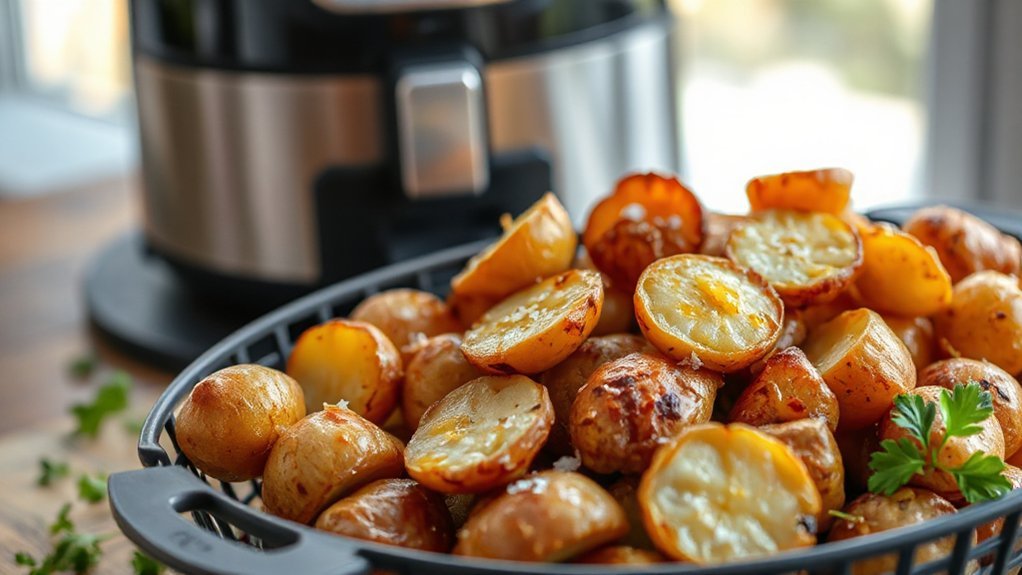
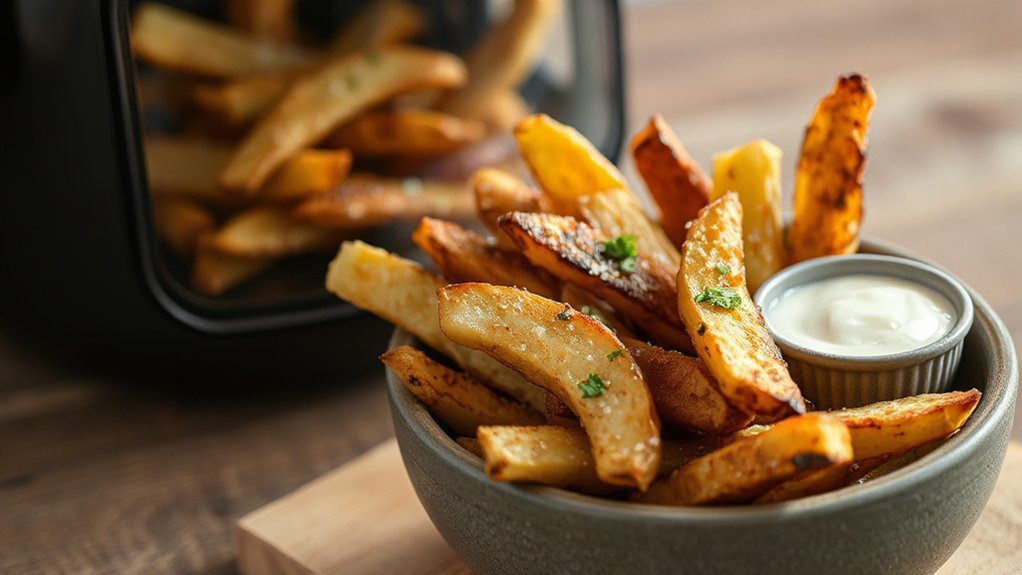
Before tossing them into the basket, trim the greens and slice larger radishes in half so they cook evenly and crisp up. You’ll want to focus on stem trimming and decide quickly on the peeling debate: leave skins for texture and nutrients or peel for extra tenderness. Rinse and pat dry; moisture prevents browning and keeps them crisp.
| Prep Step | Why it matters |
|---|---|
| Trim stems | Reduces bitterness, improves appearance |
| Slice larger ones | Promotes even cooking |
| Rinse & dry | Removes dirt, promotes crisping |
Season lightly—oil, salt, and any spice you like—then arrange radishes in a single layer when you’re ready. Keep portions similar in size so everything finishes together. This prep keeps things simple and reliable, so your air-fried radishes come out tender inside and delightfully crisp outside. Try mixing small and halved large radishes for variety, but keep seasoning consistent so flavors stay balanced and predictable every time.
The Simple Air Fryer Technique Step-by-Step
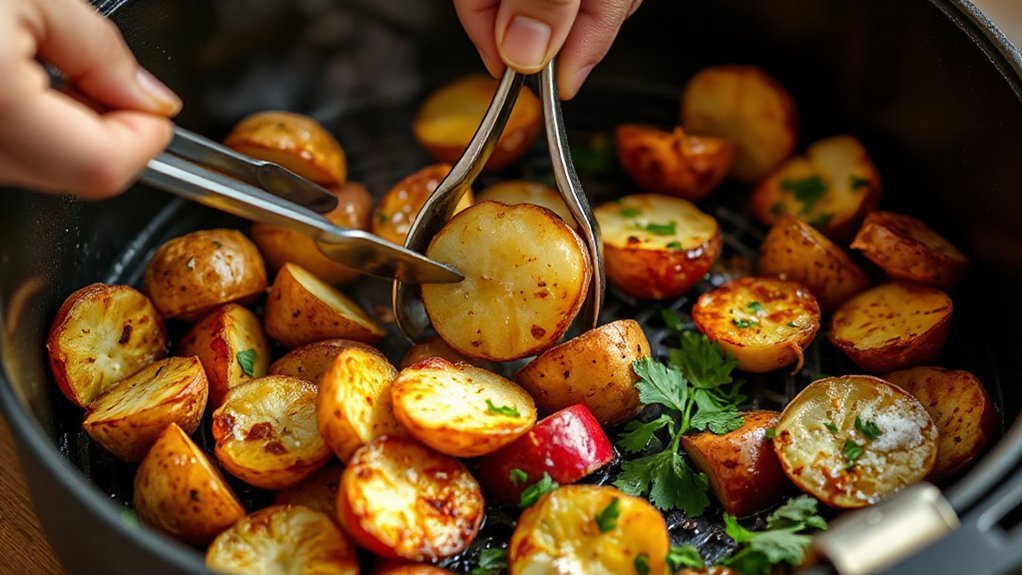
Start by trimming and halving your radishes, tossing them with oil and your favorite seasonings so they’re evenly coated. Preheat the air fryer and spread the radishes in a single layer to guarantee even crisping. Cook at 400°F for about 10–12 minutes, shaking the basket halfway through and adjusting for your preferred tenderness.
Prep and Season
Grab your radishes, give them a quick rinse, trim the stems and roots, and cut them into uniform halves or quarters so they cook evenly. Pat them dry; excess moisture prevents browning. Keep a sharp blade—good knife maintenance makes slicing effortless and safer. If you like wedges, quarter; for bite-size, halve. Toss the pieces in a bowl with a splash of oil so seasonings stick.
Season simply: salt, pepper, garlic powder, and a pinch of smoked paprika for warmth. Measure spices from fresh jars and rotate based on spice storage dates to maximize flavor. Shake or toss until each piece’s coated. Taste a tiny piece before serving to adjust seasoning. You’re ready for the air fryer step. You’re set to enjoy that potato-like crunch.
Cook Time & Temp
When air frying radishes, set the basket to 375°F and cook for about 10–12 minutes for tender insides and nicely browned edges—you can crank to 400°F for 8–10 minutes if you want more char. Check halfway, shake the basket, and probe a larger radish for doneness; they should be fork-tender with crisped edges. If you prefer softer, extend by 2–3 minutes, remembering carryover cooking will soften them further after you pull them. At high altitude adjustments, increase time slightly or raise temp by 10–15°F to compensate for lower air pressure. Use a light spray of oil for even browning and avoid overcrowding so air circulates. Let them rest a minute before serving. Season to taste with salt, pepper, and a squeeze of lemon, too.
Seasoning Ideas and Flavor Variations
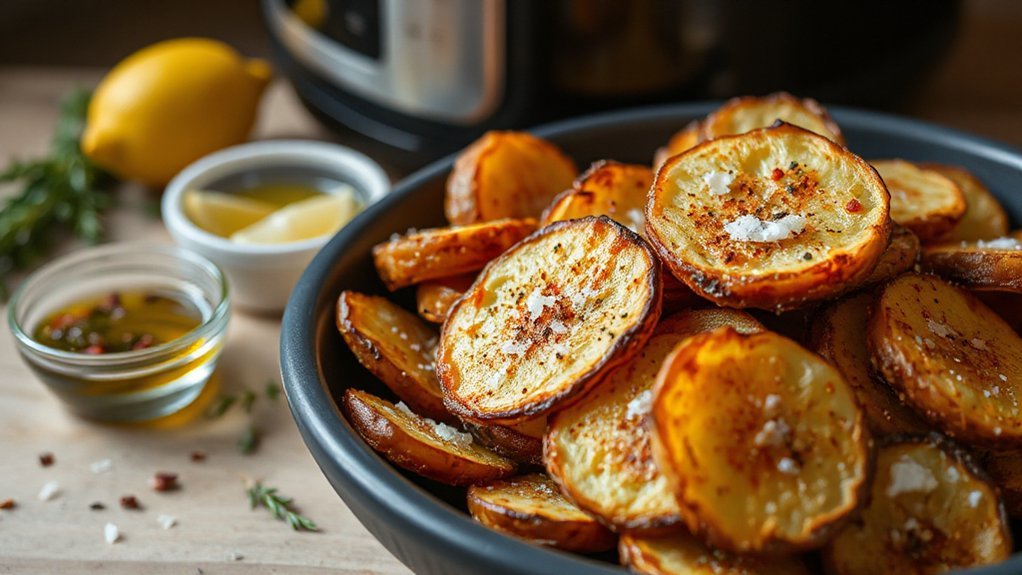
Curious how to make humble radishes sing in the air fryer? You’ll love simple seasoning: toss halved radishes with oil, salt, pepper, and try asian glazes or bright citrus zests for pop. For savory depth, add smoked paprika, garlic powder, and a pinch of cumin. If you want herb freshness, toss in chopped thyme or rosemary after cooking so leaves don’t burn. For heat, use crushed red pepper or a drizzle of chili oil post-cook.
| Flavor Profile | Quick Tip |
|---|---|
| Asian-inspired | Brush with sesame oil and soy-based asian glazes before air frying |
| Bright & Zesty | Add lemon or lime citrus zests and finish with a splash of juice |
| Smoky & Spicy | Mix smoked paprika and chili flakes into the oil coating |
Experiment in small batches so you can find the combo that feels like comfort food without carbs. Swap herbs and spices to suit cravings and keep it fun.
Serving Suggestions and Recipe Pairings
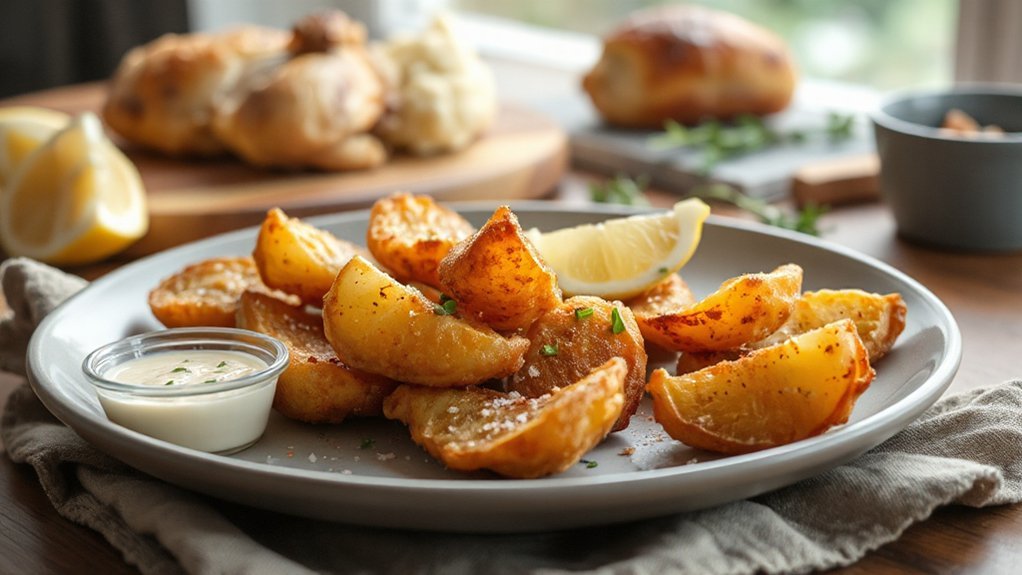
Although small, air-fried radishes pack bright texture and flavor, and you can pair them a dozen ways: serve them beside roasted chicken or grilled fish, toss them into grain bowls or salads for peppery crunch, slide them onto tacos or sandwiches for a fresh bite, or add them to a cheese board or charcuterie spread as a low-carb contrast. Use them as a crispy breakfast potato stand-in—toss with smoked paprika and scallions for Brunch Pairings with eggs and avocado toast. For dinners, combine with roasted carrots and a mustard vinaigrette as a simple side that feels elevated. You can also fold warm radishes into pasta salads or top baked fish with a radish relish for texture. Thinking cocktails? Try Cocktail Pairings that echo citrus and herb: a gin gimlet with a radish and mint salad brightens the palate. Keep portions small; balance flavors so radishes complement your mains.
Troubleshooting Common Texture and Taste Issues
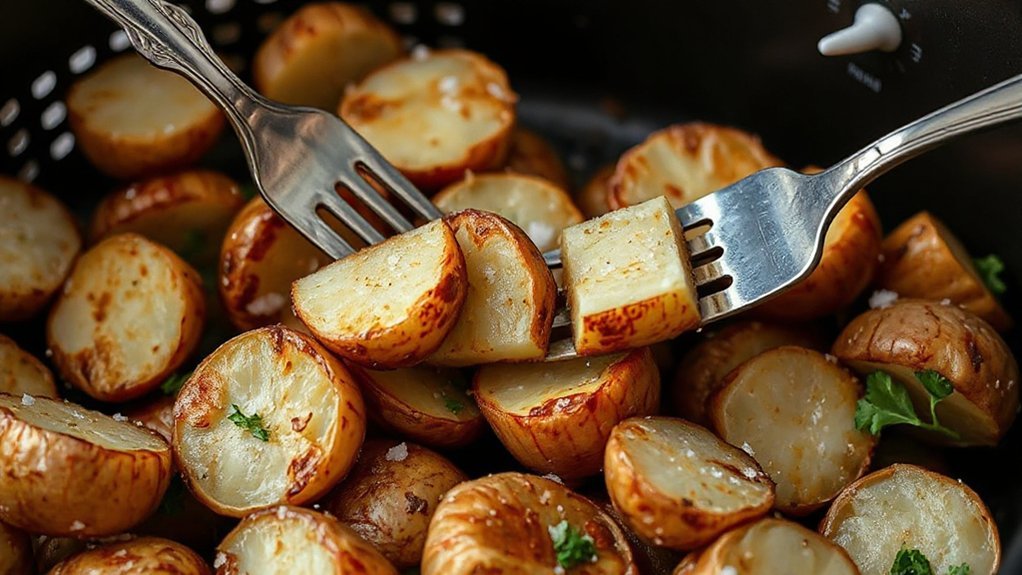
Ever had your air-fried radishes turn out soggy, bitter, or oddly bland? You’re not alone. If you get soggy centers, it’s often from overcrowding or cutting pieces too large; give them space, dry them thoroughly, and slice uniformly so hot air circulates. If they taste watery or bland, add salt earlier to draw out moisture, then finish with a sprinkle of acid—lemon or vinegar—to brighten flavors. A bitter aftertaste usually comes from overcooking or using older, pithy radishes; trim tops well and choose firm, young radishes. Don’t pile on oil; a light misting crisps without greasiness. Shake the basket halfway through for even browning, and use a higher temperature for a short burst at the end to caramelize surfaces. Taste as you go so you can tweak seasoning. With small adjustments you’ll get that potato-like texture and satisfying flavor every time. Enjoy crisp radishes without any more guesswork.
Meal-Prep Tips and Storage Instructions
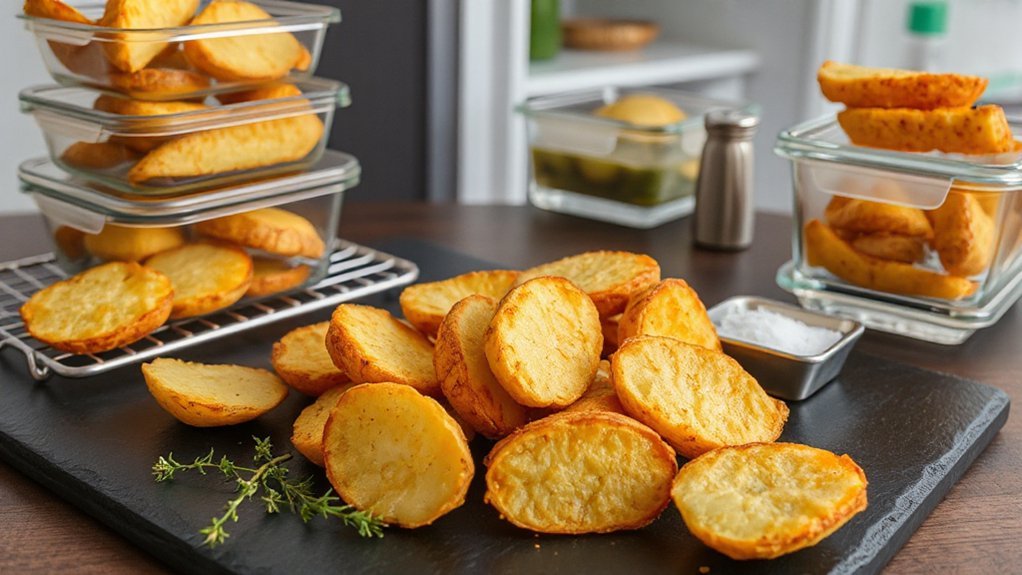
Prepping air-fried radishes ahead saves time and keeps weeknight meals easy: cook them just shy of fully crisp, let them cool on a rack so steam escapes, then tuck them into a shallow airtight container lined with a paper towel to absorb extra moisture. When you reheat, finish in the air fryer for a few minutes to restore crispness for best results and flavor. For longer storage, use vacuum sealing to lock in flavor and prevent freezer burn; flash-freeze on a tray so pieces don’t stick. Think portion sizing before you seal: pack single servings for lunches or larger packs for dinners. Label containers with date and portion to avoid guessing. In the fridge they’ll keep about four days; frozen, expect two to three months. Thaw in the fridge or reheat straight from frozen at lower temperature to crisp. Rotate stock—oldest first—and don’t overcrowd containers to maintain texture.
Conclusion
Now you know how air-fried radishes can moonlight as potatoes, so you can enjoy fluffy, golden bites without derailing low-carb goals. Try the simple prep, tweak seasonings like a kitchen DJ, and air-fry until tender-crisp. You’ll fool your own taste buds and surprise dinner guests, turning humble radishes into comforting stars. Store leftovers for quick meals, and don’t be afraid to experiment—you’ve got a kaleidoscope of flavors waiting for weeknight wins and cozy mornings ahead.
About The Author