You’ll get juicy, golden-brown chicken sausages in about 12–14 minutes at 375°F (190°C) in a preheated air fryer; flip once, pull at 160°F and rest to reach 165°F. Pat links dry, brush lightly with oil, avoid crowding, and add 4–6 minutes for frozen or 2–4 minutes for thicker links. Try maple‑Dijon or honey‑soy glazes and slice for bowls, rolls, or salads—keep going for tips, timing tweaks, and serving ideas, plus storage and reheating tricks too.
Ingredients and Measurements
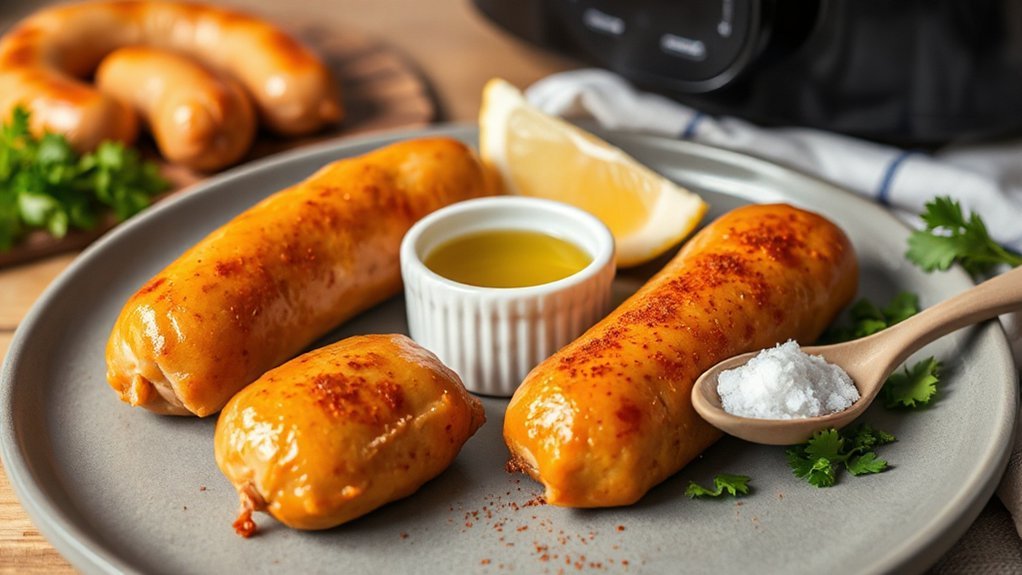
You’ll need a short, specific ingredient list to get consistent results, and we’ll give exact measurements so nothing’s guesswork. Use 1 lb (450 g) ground chicken, 1 tsp kosher salt, 1/2 tsp black pepper, 1 tsp smoked paprika, 1/2 tsp garlic powder, 1/4 tsp onion powder, 1/4 tsp crushed red pepper (optional), 1 tbsp cold water, and 1 tsp olive oil to help bind. If you prefer links, swap for four 4-oz (115 g) chicken sausages with similar seasoning.
When you buy pre-made sausages, practice label reading—check sodium, fillers, and sugar. Look for simple ingredient lists and clear allergen info like soy, egg, or dairy warnings. If someone has allergies, choose plain ground chicken and season yourself so you control potential triggers. Measure with teaspoons and a kitchen scale for repeatable texture and flavor. That’s all you need to start with reliable, tasty chicken sausage every time. Enjoy.
Equipment and Air Fryer Tips
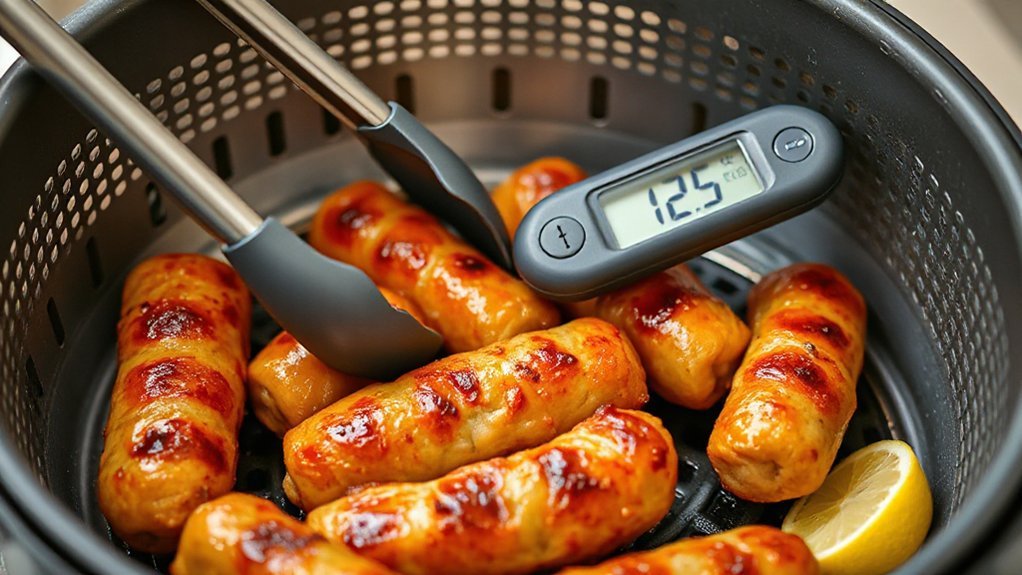
Although air fryers simplify cooking, having the right tools makes your results consistent and stress-free. Choose a model with a roomy basket so sausages don’t overcrowd; you’ll get even browning and crispness. Check accessory compatibility—racks, pans, and silicone liners vary by brand, and using the wrong insert can block airflow. A small nonstick spray or brush keeps food from sticking without gunking up surfaces. Keep tongs and a meat thermometer handy so you can handle and check sausages quickly. Clean the basket and drip tray after each use to prevent smoke and flavor transfer; regular filter maintenance is essential if your unit has a charcoal or grease filter. Wipe the heating element gently when cool. Store trays and accessories together so you’re ready to cook. With these tools and habits, you’ll save time, avoid surprises, and enjoy reliable breakfast or dinner results every time. You’ll love the outcome.
Step-by-Step Cooking Instructions
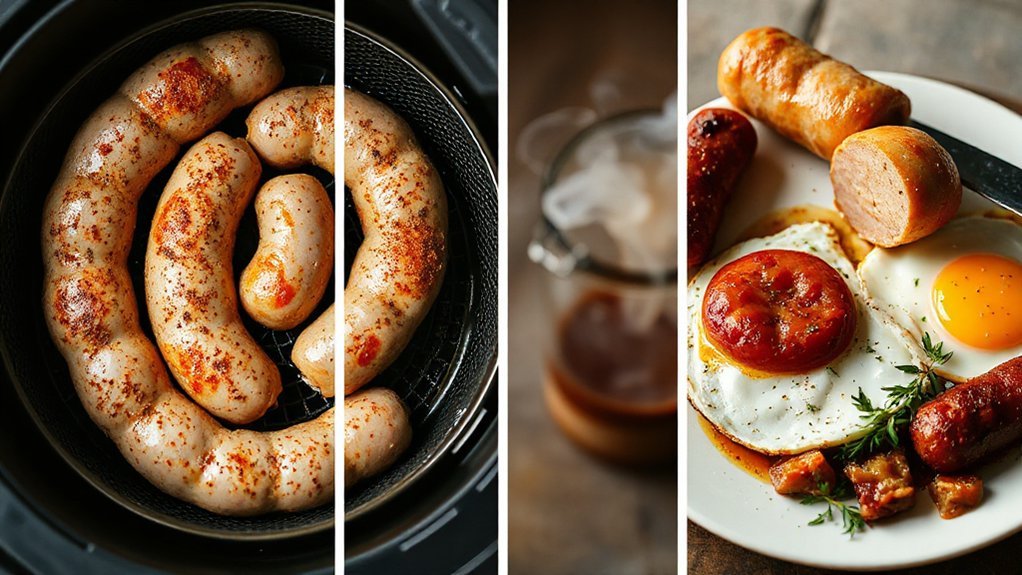
You’ll start by prepping and seasoning the sausages so they’re evenly coated and ready to cook. Set your air fryer to the recommended temperature and time, flipping or shaking halfway for even browning. When they’re done, let them rest a few minutes before slicing and serving to keep them juicy.
Prep and Season
Start by patting the sausages dry and trimming any loose casing so seasonings stick and they brown evenly. You’ll want to decide whether to marinate briefly or just season; marinade timing of 15 to 30 minutes adds flavor without sogginess. Lightly score casings to help spices penetrate. Combine olive oil, garlic, smoked paprika, salt, pepper, and a touch of lemon zest — zest incorporation brightens the profile. Toss sausages to coat, then rest on a tray while you prep sides. When ready, arrange them with space so air circulates.
- Score lightly and season evenly.
- Apply oil-based rub; wait 15 to 30 minutes.
- Add zest just before cooking for freshness.
Give them a final turn halfway through for even color and caramelization.
Air Fryer Settings
Once sausages have rested and are arranged with space on the tray, preheat your air fryer to 375°F (190°C). Set the timer for 12 to 14 minutes, flipping once at the halfway mark so they brown evenly. If your model has presets, note preset differences: some “poultry” or “sausage” modes shorten time or boost fan speed. Use the manual temperature if you want crispier skin. Check internal temp to confirm 165°F (74°C). Listen for noise levels—louder fans can mean quicker air circulation, so trim a minute or two on time if it seems aggressive. For quieter units, add a minute for comparable crispness. Adjust based on real-time browning and your machine’s quirks; you’ll get consistent results fast. Make small tweaks and note them regularly.
Resting and Serving
Letting the sausages rest for 3–5 minutes keeps them juicy and lets carryover heat even out so the centers finish cooking without drying. While they rest on a warm plate in a calm resting environment, you can prep sides and sauces. Use a tented foil if your kitchen is cool; don’t crowd the sausages.
- Slice on a bias for quick cooling and attractive serving aesthetics.
- Arrange with colorful sides—eggs, greens, roasted peppers—to contrast textures and colors.
- Spoon pan juices or mustard over links for shine and flavor; offer condiments separately.
Serve immediately after plating so textures stay crisp. You’ll enjoy juicier bites and a more polished presentation with minimal fuss. Timing matters—coordinate sides so every plate hits the table hot now.
Timing and Temperature Adjustments
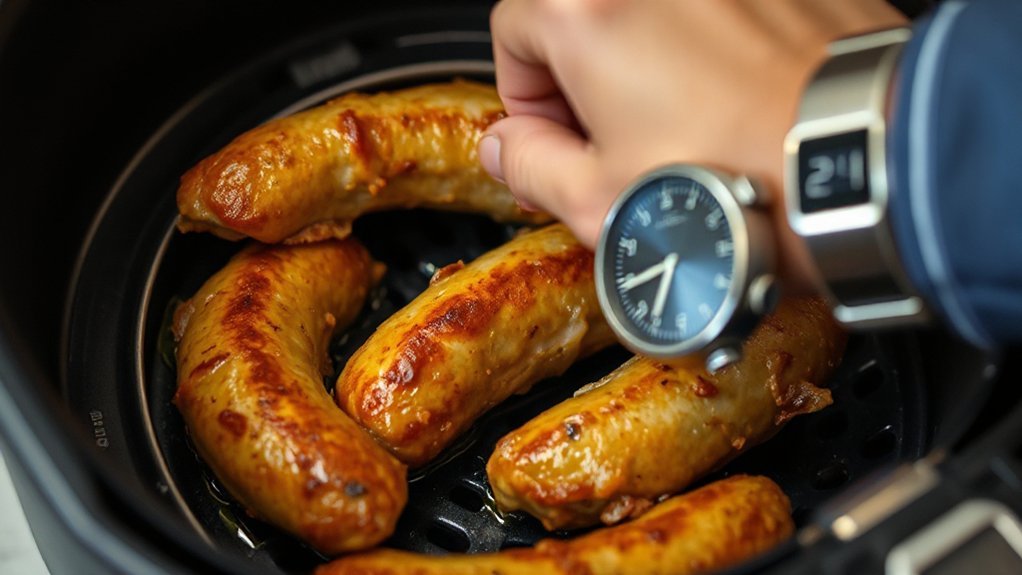
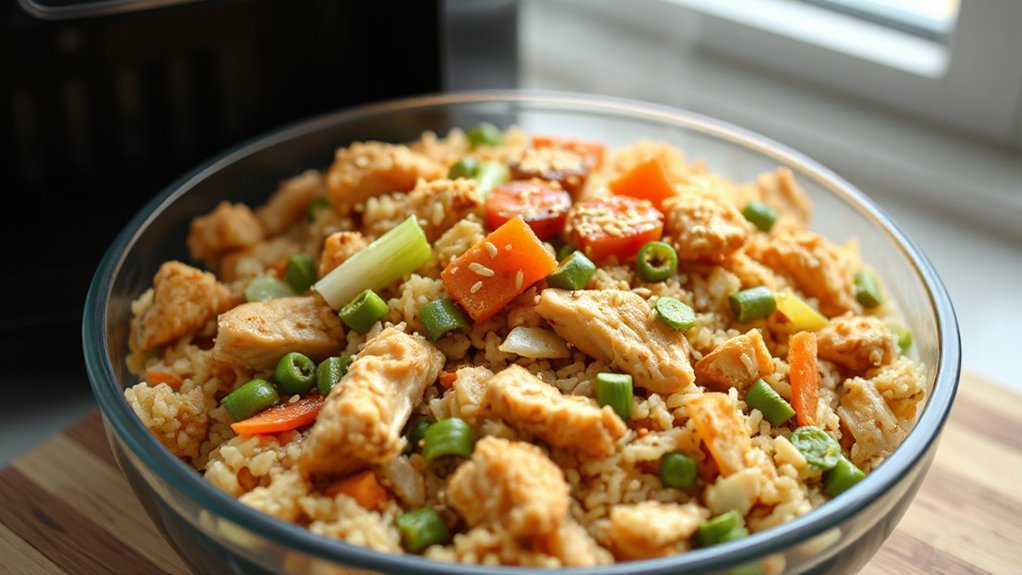
When you tweak timing and temperature, you’ll get evenly browned, juicy chicken sausages without guesswork. Start at 375°F for 10–12 minutes for standard links, flipping once halfway. If you like a crisper exterior, raise to 400°F and cut 1–2 minutes, watching closely. For thicker sausages add 2–4 minutes at the same temp instead of overcooking. Remember Altitude adjustments: at high elevations increase time slightly (about 10%) or raise temp 10–15°F to compensate drier air. For frozen sausages, add 4–6 minutes at 375°F and check internal temp.
Use a meat thermometer — target 165°F — rather than relying on color alone. If you prefer oven equivalents, set a conventional oven to 400°F and roast on a sheet for 18–22 minutes, flipping once. Make small test batches when trying new brands; their fat content changes timing. With these tweaks you’ll get consistent results every time. No guesswork, just steady practice.
Flavor Variations and Glaze Ideas
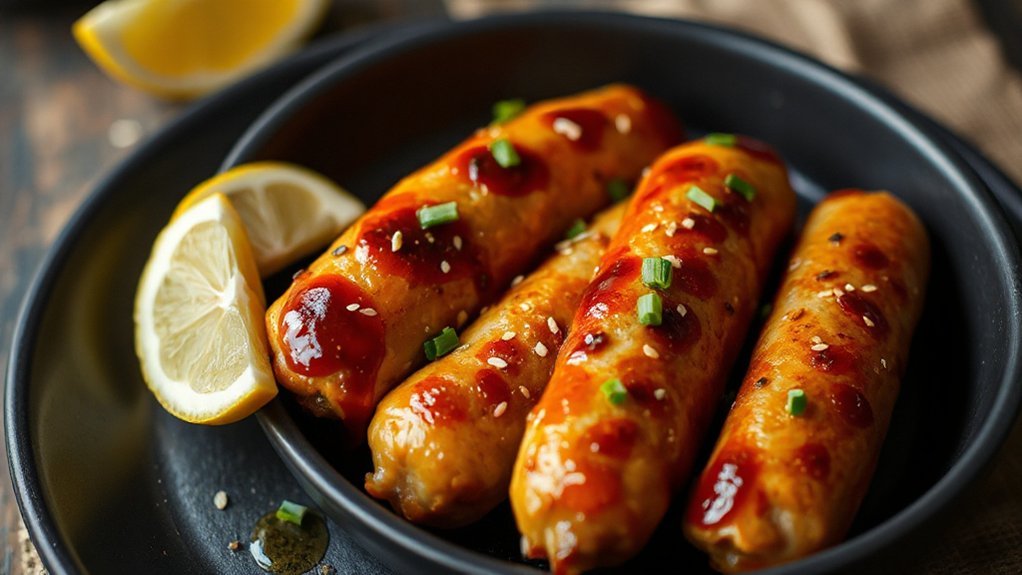
Experimenting with flavors turns basic chicken sausages into something exciting and dinner-ready. You can swap spice blends, brush on finishes, or stuff links for new textures. Try bold mixes and quick glazes that caramelize in the air fryer, and focus on balance: acidity, heat, and a hint of sweetness.
Turn plain chicken sausages into dinner-worthy bites with bold spice swaps, quick glazes, and bright citrus
- Maple-Dijon glaze: mix maple syrup, Dijon, a splash of apple cider vinegar; brush in the last 2–3 minutes for Sweet glazes that shine.
- Mediterranean rub: oregano, lemon zest, smoked paprika and a drizzle of olive oil for International twists without fuss.
- Asian-style glaze: soy, honey, garlic, and a touch of chili; apply thin coats between short re-heats to build sticky layers.
Rotate these ideas, adjust heat to taste, and keep sauces light so they caramelize instead of burning. You’ll get variety with minimal extra effort. Experiment with herbs and citrus for brightness; small changes make a big flavor difference, indeed.
Serving Suggestions and Meal Ideas
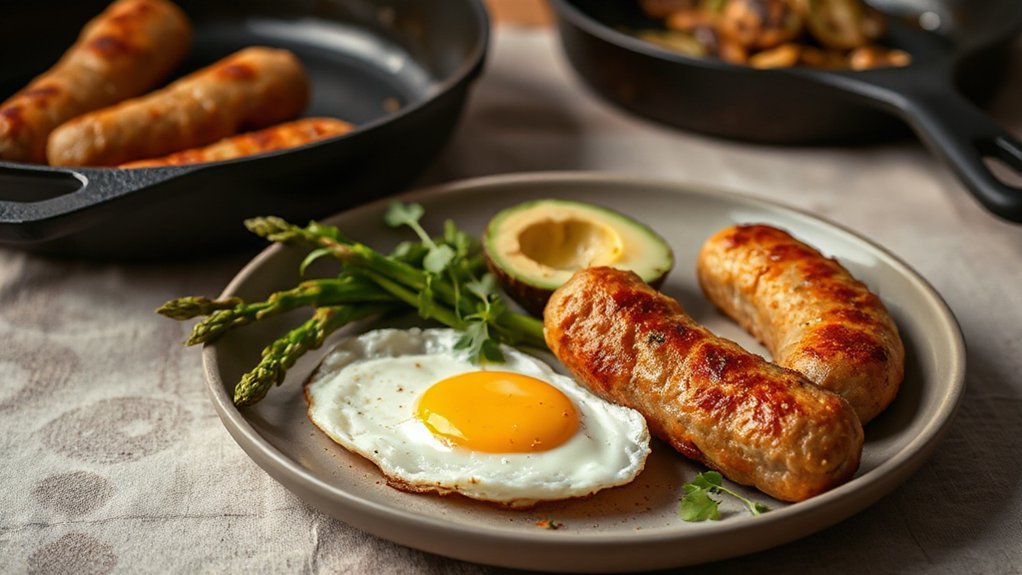
Because air-fried chicken sausages cook quickly and hold flavors well, you can toss them into a range of meals from breakfast to weeknight dinners—slice them into scrambles or breakfast bowls, tuck them into crusty rolls with peppers and onions, or chop and stir them into pasta, grain bowls, or salads for extra protein. Pair with roasted veggies and simple grains for quick Family Platters, or arrange a colorful spread for Brunch Pairings with fresh fruit, yogurt, and honey. Use sliced links on pizzas, in shakshuka, or folded into omelets for speed and texture.
| Meal Type | Quick Idea | Serve-With |
|---|---|---|
| Breakfast | Sausage scramble | Toast, salsa |
| Dinner | Sausage pasta | Parmesan, greens |
Finish: Keep portions flexible and swap sauces to match taste. You can double batch sausages, freeze extras in slices, then reheat for instant meals, or cube them for kid-friendly skewers, sheet-pan dinners, and quick picnic boxes, and flavor boosters too.
Troubleshooting and Pro Tips
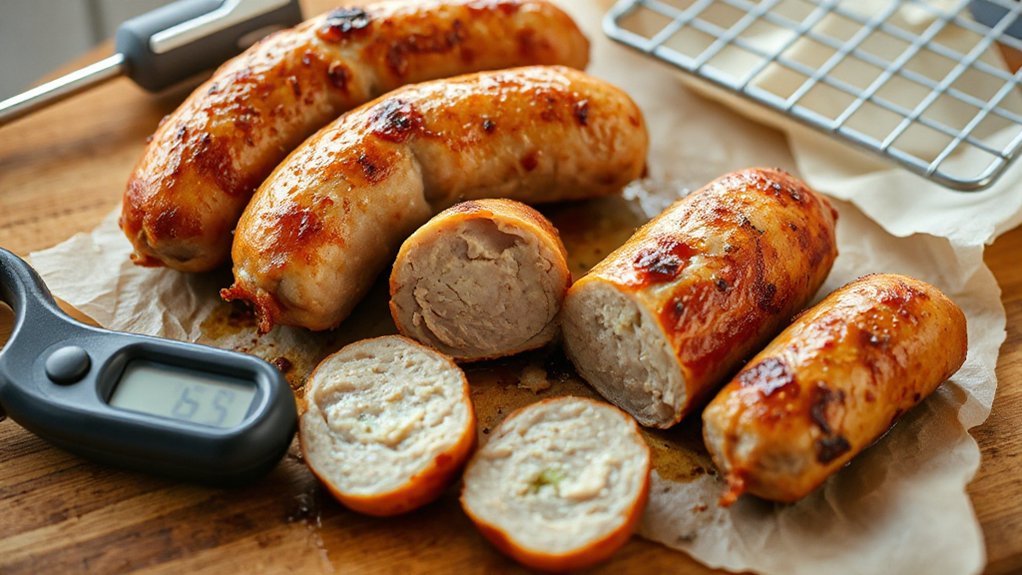
To prevent dry sausage, don’t overcook; give your links a light brush or spray of oil before air frying. For even browning, arrange the links in a single layer, turn them halfway, and avoid crowding your basket. Always check the internal temperature with an instant-read thermometer—pull sausages at 160°F (71°C) so they’re juicy and safe.
Preventing Dry Sausage
If you want juicy, tender chicken sausage every time, a few simple tweaks will stop it from drying out in the air fryer. Pay attention to how sausages are made — Packaging Innovations and smart Processing Methods can preserve moisture, but you also control temperature, timing, and handling. Quick checkpoints keep you on track:
- Cook to 160°F (71°C); use a probe and avoid overcooking by checking early.
- Add a light oil spray or a splash of broth before cooking to lock in moisture.
- Let sausages rest 3–5 minutes after cooking so juices redistribute before slicing.
Follow these steps, adjust for size and filling, and you’ll get consistently moist, flavorful results without fuss. Tweak timing based on casing type and avoid prolonged high heat for best.
Even Browning Tips
After you let sausages rest and lock in juices, you’ll want their outsides to look as good as they taste — even, golden, and not patchy. Aim for consistent contact and dry skin before cooking; moisture disrupts Maillard chemistry and leaves pale spots. Rotate and space links so hot air circulates; don’t crowd. Brush lightly with oil to improve Surface conductivity and encourage uniform color. Use a quick spray mid-cycle if needed.
| Tip | Why |
|---|---|
| Space sausages | Even airflow |
| Flip halfway | Balanced browning |
| Light oil coat | Better heat transfer |
| Preheat air fryer | Stable temperature |
Watch color, not time, and tweak based on your fryer. If you see uneven spots, raise temperature slightly for a minute and then reduce to finish cooking evenly and avoid burning.
Checking Internal Temperature
When you check internal temperature, don’t rely on touch—grab a reliable instant-read or leave-in probe and stick it into the center of the thickest part of the sausage, not the end. Aim for 165°F (74°C); poultry safety and juicy texture depend on accuracy. Remember Color Misconceptions: browned exterior or pinkish hues don’t guarantee doneness. Also factor Carryover Heat—sausages can rise a few degrees after removal, so you can pull them at about 160°F if you’ll let them rest briefly.
- Insert probe perpendicular to casing for a true center reading.
- Calibrate your thermometer occasionally and avoid touching bone or foil.
- Rest sausages 3–5 minutes to allow temperature to even out and juices redistribute.
You’ll get consistent, safe, delicious results every time, guaranteed.
Conclusion
You’ll love how easy this air fryer chicken sausage is — you’ll crisp, you’ll caramelize, you’ll savor. You’ll save time on busy mornings, you’ll feed a crowd for casual dinners, you’ll mix and match flavors without fuss. You’ll try glazes today, you’ll explore spice rubs next week, you’ll make leftovers taste as good as fresh. Keep it simple, keep it flexible, keep it delicious — and enjoy every quick, tasty bite, always too, every time.
About The Author