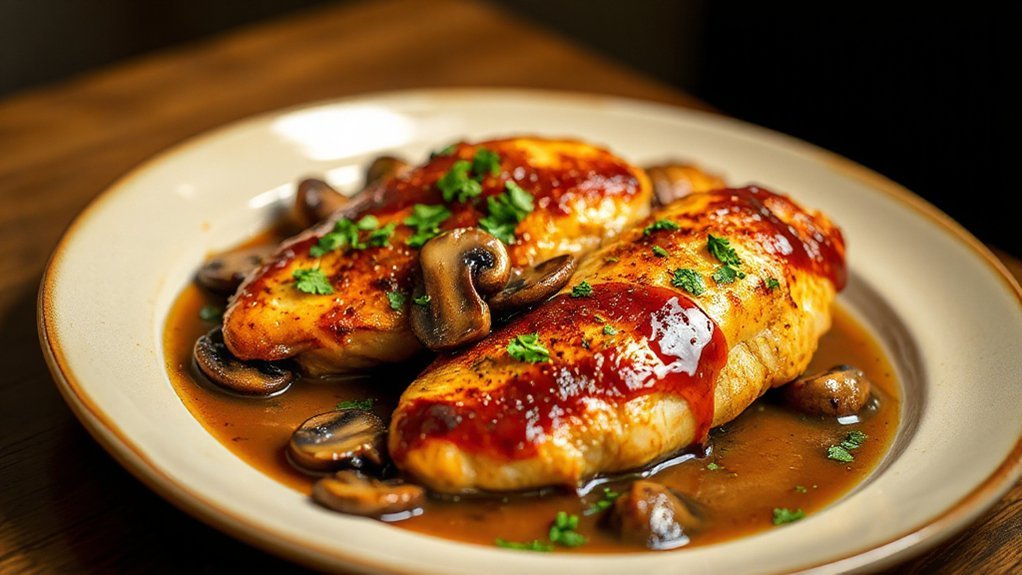
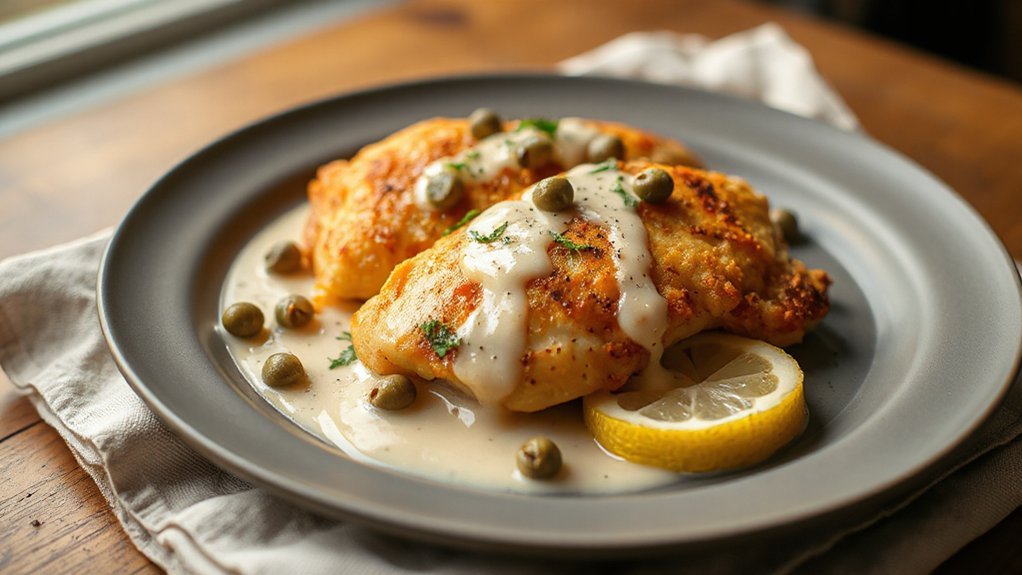
You’ll get restaurant‑style, lemony Chicken Francese in about 20 minutes using your air fryer, cutting oil by up to 70% while keeping the crust crisp and the meat juicy. Pound thin, quick‑brine or dry‑salt, dredge in flour, egg, Parmesan‑spiked panko, then air‑fry at 360–380°F, flipping once. Finish with lighter lemon‑butter broth or wine reduction whisked with olive oil. Keep going for timing, sauce tips, and reheating tricks plus make‑ahead, storage, and quick‑serve ideas for weeknights.
Ingredients
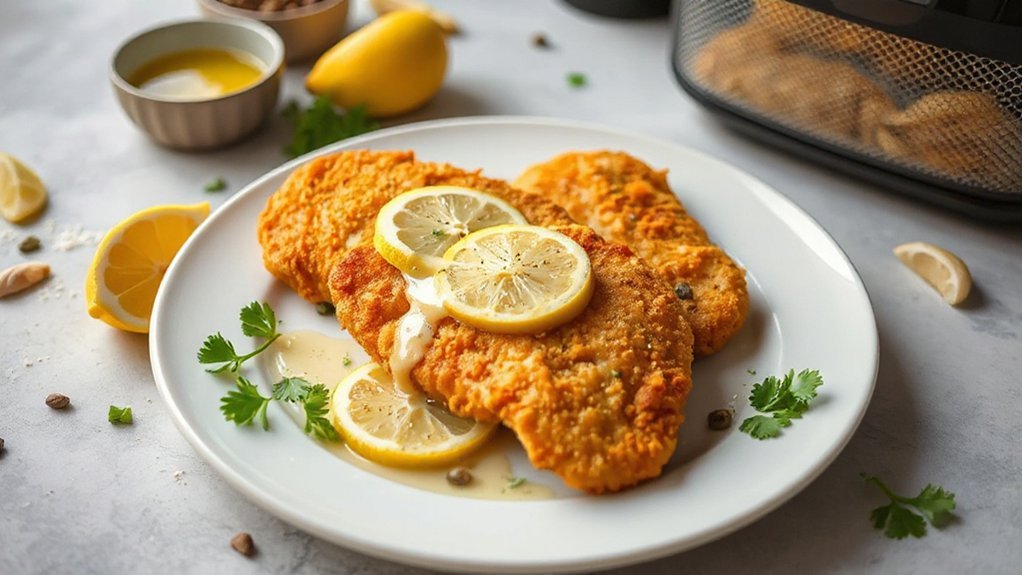
Start with a handful of simple, fresh ingredients you’ll actually want to cook with. You’ll need boneless, skinless chicken breasts or cutlets—aim for even thickness so they cook uniformly. Grab eggs, all-purpose flour, and a light dusting of fine breadcrumbs or panko if you like extra crisp. Lemons are essential: zest and juice for brightness. Use low-sodium chicken broth and a touch of white wine or extra broth for the sauce. Butter and a neutral oil keep the sauce silky; fresh parsley finishes the dish. Salt and black pepper are mandatory; add a pinch of crushed red pepper if you want heat. For Nutrition facts, consider lean chicken portions and modest butter to control calories. Check Freshness indicators: firm flesh, mild smell, bright lemon skin, and vibrant herbs. Measure portions so you’re not over-serving, and you’ll keep flavors balanced and simple. Prep ingredients before you start cooking today.
Equipment and Tools
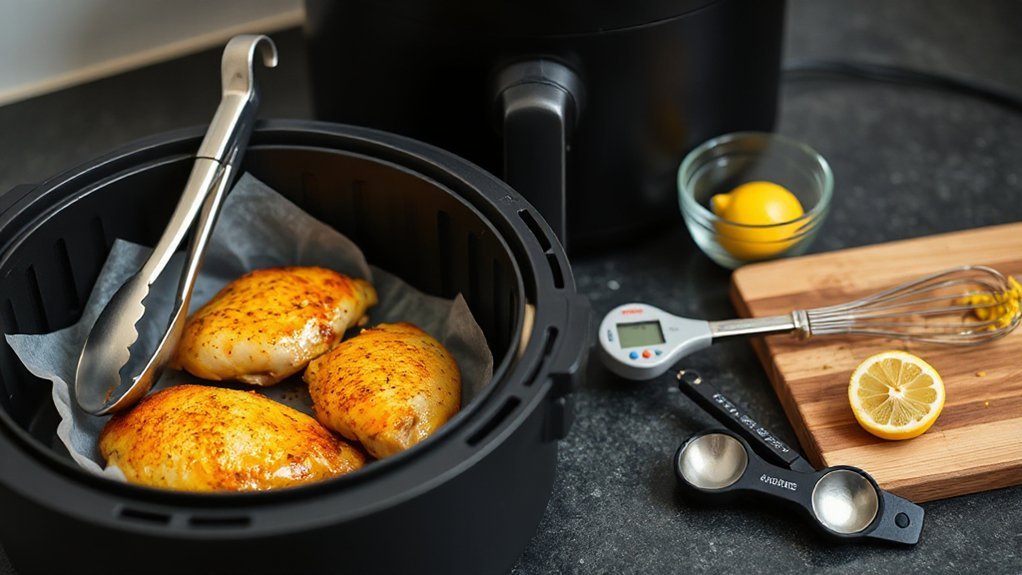
You’ll want an air fryer with good airflow and the right capacity so the cutlets cook evenly. Gather your coating and dredging tools (shallow bowls or plates and a fork), a quick-read thermometer, plus sturdy tongs. Add a thin spatula for gentle flipping and transfer—those few tools keep the recipe simple and reliable.
Air Fryer Selection
Pick an air fryer that’s a countertop workhorse with accurate temperature control and enough capacity to hold your chicken Francese without crowding. You want one with clear presets and an adjustable thermostat so you can crisp breasts at precise temps. Consider basket size — a 5–6 quart unit suits two to four servings; go larger for family portions. Check build quality, easy-clean nonstick baskets, and a reliable timer. Pay attention to Noise Level; quieter motors make kitchen prep more pleasant. Look for Smart Features you’ll actually use, like app control or integrated presets, but don’t pay extra for gimmicks. Prioritize consistent heat circulation and dependable safety cutoffs. A compact, well-made air fryer makes this dish fast, juicy, and lemon-bright every time with minimal fuss.
Coating and Dredging Tools
Once you’ve chosen a reliable air fryer, the next set of tools you’ll want are those that handle the coating and dredging—because sloppy prep ruins even the best appliance. Use three shallow dishes or rimmed pans for flour, beaten eggs, and breadcrumbs; they speed assembly and keep coatings tidy. A flat resealable bag works if you’re shaking crumbs onto cutlets without extra mess. A meat mallet or rolling pin evens thickness for uniform cooking. Wire cooling racks and a rimmed sheet hold coated pieces while you finish the batch and prevent sogginess. Small whisks or forks beat eggs quickly; silicone brushes help calm excess egg or oil. Understanding Historical origins and Cultural variations of breading helps you experiment confidently with panko, semolina, regional crumbs.
Thermometer, Tongs, Spatula
A quick-read thermometer, a pair of sturdy tongs, and a thin turner are the trio that’ll save your Chicken Francese from under- or overcooking. You’ll use the thermometer to confirm 165°F safely, and you should learn simple calibration techniques so readings stay true; drop it in boiling water or an ice bath to check. Use the tongs to flip without tearing the dredged crust and the thin turner to slide under delicate fillets. Choose tools with solid grips and stainless or silicone heads for durability and easy cleanup, and consider material sustainability—look for recycled metals or BPA-free silicone. These handhelds speed cooking, reduce waste, and make plating precise, so you’ll finish faster and tastier. Keep them within reach during prep and service for best results.
Prep and Brining Tips
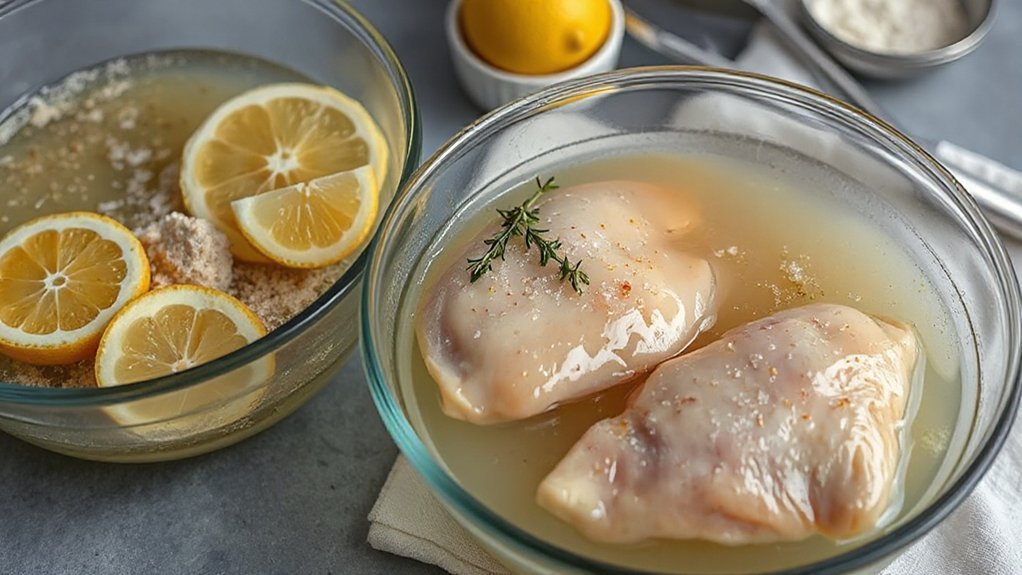
While you can skip brining, a quick brine really lifts juiciness and seasoning—especially for thin chicken cutlets. You’ll dissolve kosher salt and a bit of sugar in cold water, add aromatics if you like, and submerge the cutlets for 15–30 minutes. Keep Salt Ratios simple: 1 tablespoon kosher salt per cup of water is a reliable starting point for quick brines. Rinse and pat dry before proceeding so surface salt doesn’t overpower the lemon sauce.
Mind Brine Safety: always chill the brine and chicken, use nonreactive containers, and never reuse brine without boiling it first. If time’s tight, a quick dry brine—seasoning the cutlets and letting them rest uncovered in the fridge for 30–60 minutes—gives similar benefits. Trim any excess fat and pound evenly for uniform cooking. Prep mise en place so you can move straight into cooking without pauses. Quick prep cuts stress and improves final results.
Breading and Egg Batter Technique
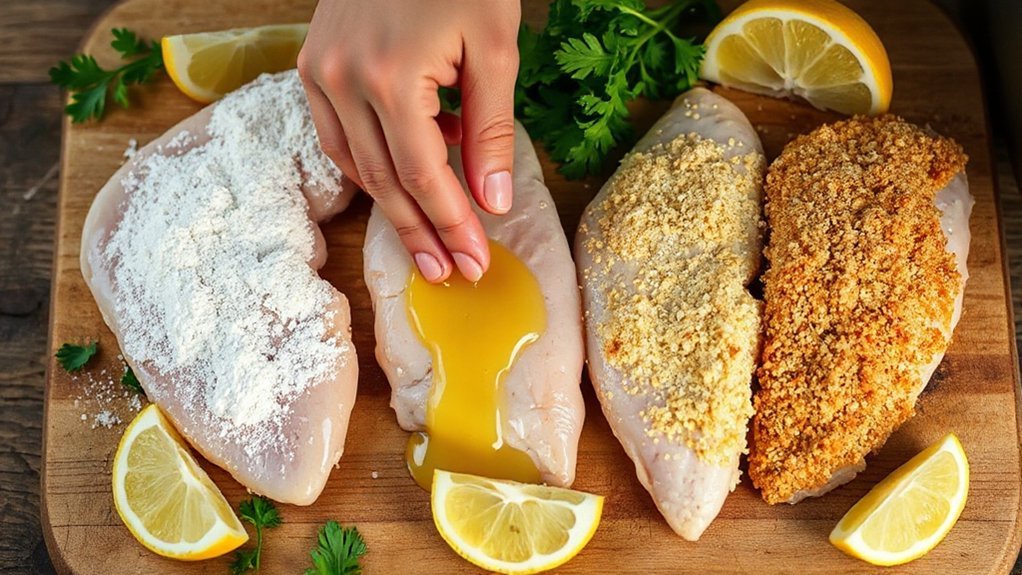
If you’re aiming for an even, crisp coating, set up a simple assembly line: flour, beaten eggs (mixed with a splash of milk or water and a pinch of salt), then panko or breadcrumbs seasoned with lemon zest and grated Parmesan. Work breast at a time: dredge in flour, shake off excess, plunge into the eggs and let surplus drip. The trick is Batter Consistency — not so thin it runs off, not so thick it gobs. Aim for ribboned, clingy batter that coats. Press the crumbs gently so Coating Adhesion is firm, but don’t compact them into a paste. If the crumbs won’t stick, blot the chicken lightly with a paper towel and re-dip in egg. Keep chilled pieces on a rack while you finish to help the coating set. Finish by patting edges for coverage. You’ll get a bright, lemony crust that crisps beautifully.
Air Fryer Settings and Timing
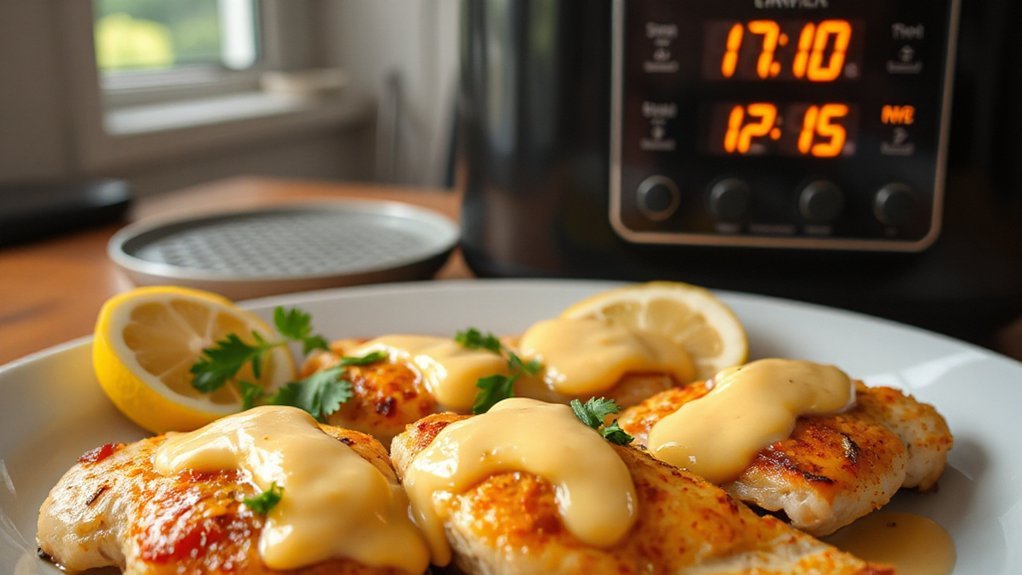
Set your air fryer between 375–400°F to get a golden, crisp crust without drying the chicken. You’ll cook boneless cutlets about 8–10 minutes, flipping halfway, while thicker pieces may need 12–14 minutes. Adjust time by 2–3 minutes per side for very thick or thin cuts and always verify the internal temperature reaches 165°F.
Ideal Temperature Range



How hot should your air fryer get for perfect Chicken Francese? You’ll want a balance: hot enough to crisp the light, lemon-kissed batter but not so hot that the crust browns before the interior sets. Aim for a steady moderate-high range and monitor factors like ambient humidity and your appliance lifespan, which can affect consistency. Follow these temp checkpoints:
- 360–380°F for reliable crust development without burning.
- Slightly lower for thinner cutlets; slightly higher for thicker pieces.
- Reduce temp briefly if you notice smoking or uneven browning.
Keep the basket single layer, preheat briefly, and avoid overcrowding. You’ll get a tender, crisp result by controlling temperature rather than rushing the process. Trust your thermometer and adjust in small increments as needed regularly.
Cooking Time Guidelines
When you’re timing Chicken Francese in the air fryer, plan on 8–12 minutes total at 360–380°F for typical cutlets, flipping once halfway to achieve even browning; thinner slices need about 7–9 minutes, thicker pieces 11–13. Use a quick probe thermometer to hit 160°F in the thickest part, because carryover cooking will bring it to a safe 165°F as it rests. Don’t overcrowd the basket — leave space so hot air circulates and browning is consistent. If pieces finish early, remove them to a warm plate; if one lags, give it another minute or two and recheck. Follow simple resting guidelines: tent loosely with foil for 3–5 minutes before saucing to lock juices and finish cooking. You’ll get crisp, juicy slices with reliably golden crust.
Adjustments for Thickness
Although cutlet thickness changes how long and hot you should run the air fryer, you can dial it in with a few simple rules. Aim for uniform slices or use the butterfly technique so pieces cook evenly; uneven thickness causes dry edges or underdone centers. For thin cutlets (1/4 inch), crank to 400°F and check at 6–7 minutes. For medium (1/2 inch), 380°F for 8–10 minutes works well. For thicker (3/4–1 inch) pieces, lower to 360°F and extend to 12–15 minutes, flipping halfway.
- Thin: 400°F, 6–7 min, flip once.
- Medium: 380°F, 8–10 min, flip halfway.
- Thick: 360°F, 12–15 min, flip and probe.
Always rest briefly and verify 165°F internal temp. A quick poke and thermometer will give you confident, juicy results.
Lemon-Butter Pan Sauce (Healthier Method)
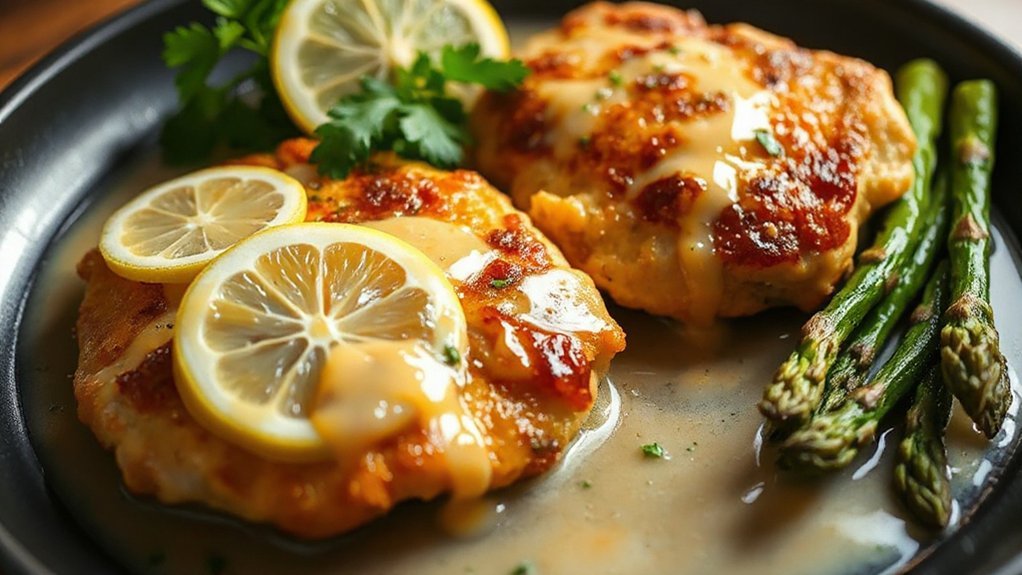
If you want the bright, silky sauce that makes Chicken Francese sing without piling on saturated fat, trim the butter and lean on lemon, white wine or low‑sodium chicken broth, and a splash of extra‑virgin olive oil for richness. Start by deglazing the air fryer pan drippings with wine or broth, scraping up browned bits, then reduce slightly. Finish with a whisked olive emulsion—join a bit more EVOO to the reduction off heat while whisking to thicken and gloss. For creaminess without heaviness, stir in a spoonful of Greek yogurt to make a quick yogurt beurre, tempering yogurt with a ladle of hot sauce first so it won’t break. Taste, then brighten with more lemon, a pinch of salt and cracked pepper. You’ll get a zesty, velvety finish that clings to the chicken but keeps the overall dish lighter and more vibrant. Store leftovers refrigerated for easy reheating.
Assembly and Serving Suggestions
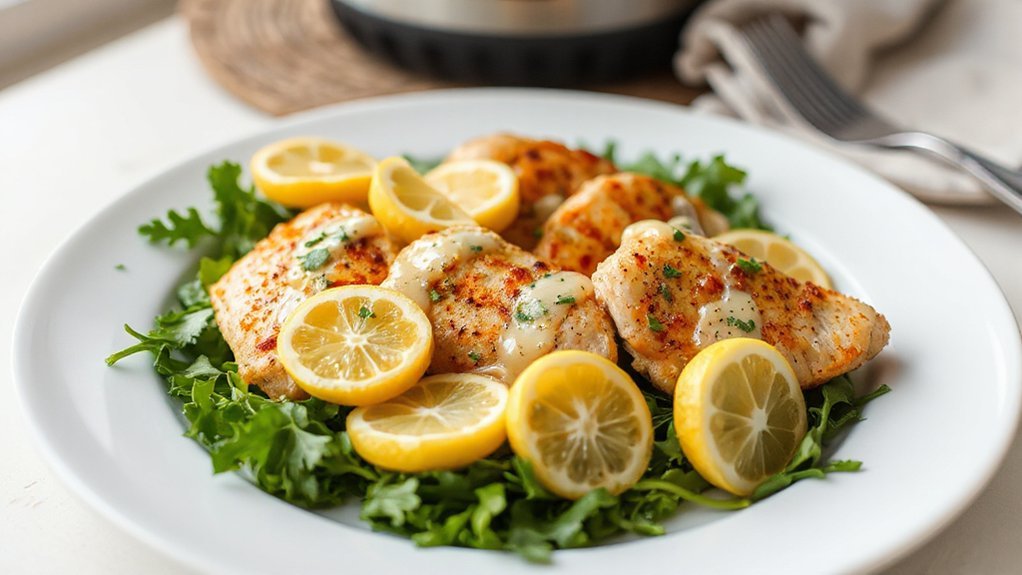
Spoon the lemon‑butter sauce over the hot chicken, then plate with simple sides that soak up every drop — you want the sauce to be the star. Arrange pieces so each person sees a golden crust and a glossy sauce pool; that’s plating aesthetics in action and it elevates dinner without fuss. For Family style service, bring platters to the table so everyone helps themselves and enjoys the ritual.
- Stack slices slightly overlapping to show texture and keep warmth.
- Place a wedge of lemon and fresh parsley for contrast and aroma.
- Offer a shallow bowl of extra sauce for dipping and spooning.
Keep sides basic: buttered pasta, roasted asparagus, or crusty bread — they’ll catch the sauce and balance the brightness. Serve immediately so the sauce stays glossy and the crust stays crisp. Encourage guests to spoon sauce over their portions for an approachable, shareable finish and enjoy today.
Make-Ahead, Storage, and Reheating
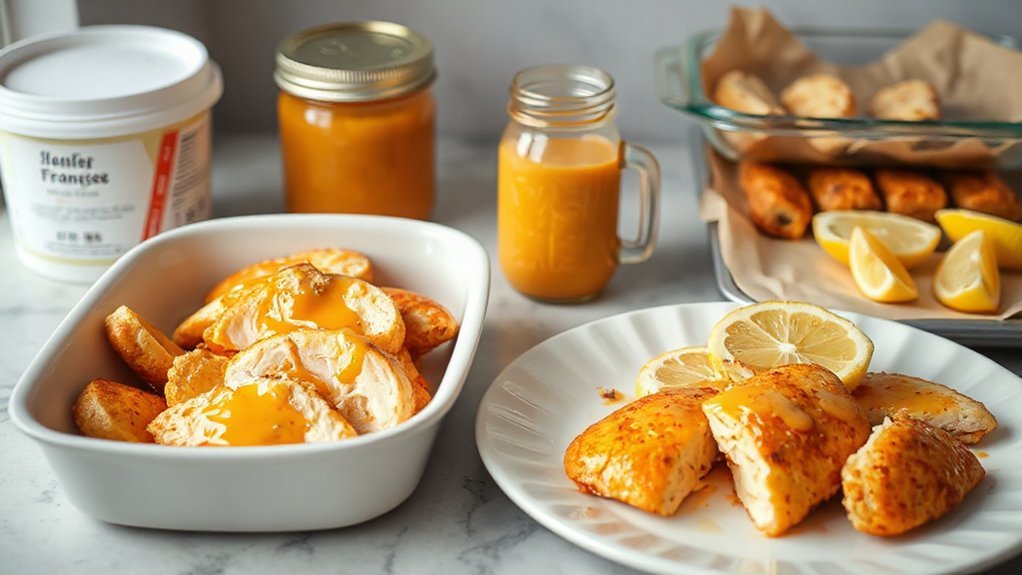
You can make Chicken Francese ahead and still get a crisp, saucy result—just keep the components separate and cool them quickly. Pack cooked cutlets, sauce, and sides into airtight containers; chill within two hours. For Batch Freezing, flash-freeze cutlets on a tray before bagging to prevent sticking. Label with date.
| Component | Storage | Reheat Tip |
|---|---|---|
| Cutlets | Fridge 3 days / Freezer 2 months | Reheat in air fryer 350°F, 5–7 min |
| Sauce | Fridge 4 days / Freezer 2 months | Warm gently on stove, whisk |
| Complete meal | Fridge 2 days | Reheat covered in oven 325°F |
Thawing Safety matters: thaw in fridge overnight or use cold-water method in sealed bag. Reheat cutlets to 165°F, add sauce at the end to preserve crispness. For quick weeknight meals, defrost only what you’ll use and avoid refreezing. Cool leftovers rapidly, date containers, and rotate stock so your Francese stays fresh and ready every week period.
Variations and Flavor Boosts
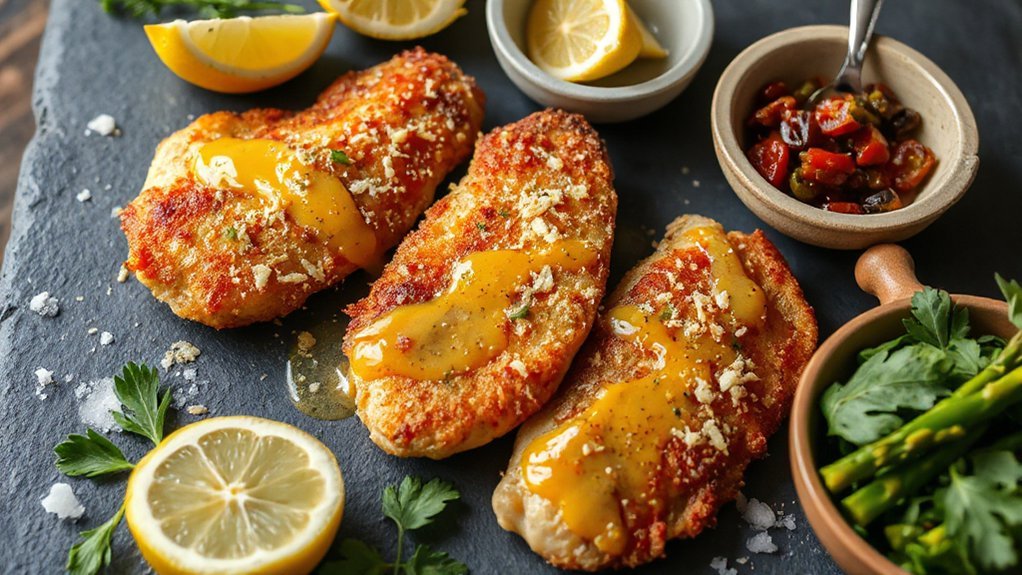
When you’re ready to mix things up, small swaps and bold finishes will take your Air Fryer Chicken Francese from classic to memorable without adding fuss. Try Global Twists like lemon-ginger for an Asian lift, rosemary-lemon for Provençal notes, or drizzle mango-chili salsa for brightness. You can also swap pasta for hearty farro or baby potatoes to change texture. For quick depth, use Spice Rubs—smoked paprika and garlic or za’atar—rubbed on before dredging to complement the lemon-butter sauce. Finish with crunchy elements and herbs to elevate each bite.
Small swaps and bold finishes turn Air Fryer Chicken Francese into an unexpected weeknight star.
- Crisp capers and toasted almonds for texture.
- A hit of red pepper flakes or preserved lemon for zip.
- Finish with fresh basil or cilantro and a splash of good olive oil.
These tweaks keep prep simple, let you play with flavor profiles, and make weeknight dinners feel special without extra steps. Give them a try tonight too.
Conclusion
You’ve just made a lighter, lemony chicken francese that’s crispy and bright — and you didn’t skimp on flavor. You’ll find the air fryer keeps it juicy while the quick lemon-butter sauce ties everything together. Serve it over pasta, rice, or greens; it’ll be a hit and easy as pie. Leftovers reheat well, so keep some for lunches. With these simple steps, you’ve got a weeknight winner you’ll reach for again and again every time.
About The Author