You want crisp, saucy cauliflower that holds up like wings — and you’ll get it without deep frying. I’ll show the batter, coating, air-fryer timing, and buffalo sauce ratios that deliver reliable crunch and tang. You’ll also get serving ideas and smart tweaks for texture and heat, so your next appetizer lands exactly as intended…
Ingredients

Start with one medium head of cauliflower, cut into even florets so they cook uniformly. You’ll need 4 tablespoons neutral oil, 1/2 cup buffalo sauce, smoked paprika, garlic powder, onion powder, kosher salt and cracked black pepper. For finishing, have lemon wedges, chopped parsley and a few dashes of hot sauce handy. Include dipping options: blue cheese or ranch and a vegan cashew-based dip if you want plant-forward choices. Note cauliflower benefits: fiber, vitamins and a firm texture that crisps beautifully in the air fryer. Plan ingredient substitutions to suit diet or pantry limits — use avocado oil for higher smoke point, maple syrup to balance heat, or tamari for depth. Measure precisely; innovation thrives with restraint. Trust technique, iterate boldly, and note results.
Batter and Coating

You should start by mastering a wet batter that clings—use all-purpose or chickpea flour with water or beer, a bit of cornstarch and seasoning to achieve the right viscosity and binding.
Then pick a dry coating: panko for pronounced crunch, crushed cornflakes or seasoned flour for rustic bite, or tempura for a lighter shell.
To get extra crisp, double-dip and press the coating on, air-fry in a single layer with a light oil mist and high heat to set the crust quickly.
Wet Batter Basics
When you’re making a wet batter for air-fried buffalo cauliflower, think of it as the glue that both protects the florets and delivers crispness and flavor. You balance batter consistency—thin enough to cling, thick enough to build crust—while engineering flavor infusion through spices, vinegar, and a touch of oil.
| Component | Purpose |
|---|---|
| Flour | Structure |
| Acid | Brightness |
Whisk cold liquid into dry ingredients, rest briefly, then coat evenly. Patience yields uniform frying and bold bite. Use minimal batter per floret to avoid sogginess. Innovate with umami boosters, but stay precise: weights, temperatures, and timing govern success. Adjust salt and heat to complement your buffalo sauce; test one floret, tweak batter, then scale. This iterative approach refines texture and amplifies sauce adhesion for consistent restaurant-quality results daily.
Dry Coating Varieties
Several dry coatings can complement a wet batter for air-fried buffalo cauliflower, from seasoned panko to gluten-free cornmeal blends. You’ll select a coating that layers texture and flavor without overpowering the batter’s tang.
Try seasoned panko mixed with smoked paprika, garlic powder and custom spice blends for smoky heat, or swap in crushed rice cereal for a lighter crunch. For gluten free options, use fine cornmeal, chickpea flour with nutritional yeast, or ground almonds to add body and a toasty note.
Press each floret gently into the dry mix so particles adhere evenly. You’ll experiment with ratios—more coating for pronounced crust, less for delicate mouthfeel—while keeping the buffalo sauce profile front and center.
Adjust seasoning levels to match your heat tolerance and culinary goals.
Achieving Extra Crisp
Build up a shimmering, shatter-ready crust by engineering both the batter and the dry layer to work together.
You’ll start with a thin, seasoned batter, equal parts flour and cornstarch, cold water, a splash of vinegar for adhesion, that clings without drowning the florets.
Dredge immediately in a panko-crumb mix blended with finely ground cornmeal and a touch of nutritional yeast for savory lift. Press coating lightly so it nests in batter crevices.
Use a light oil mist and high-heat air fryer cycles, flipping once, to maximize Maillard and guarantee even crispy texture.
These cooking techniques emphasize contrast: crisp exterior, tender interior.
Iterate ratios and timing to innovate and lock in repeatable crunch. Adjust airflow and basket loading to prevent steam, preserving peak crunch.
Air Fryer Instructions
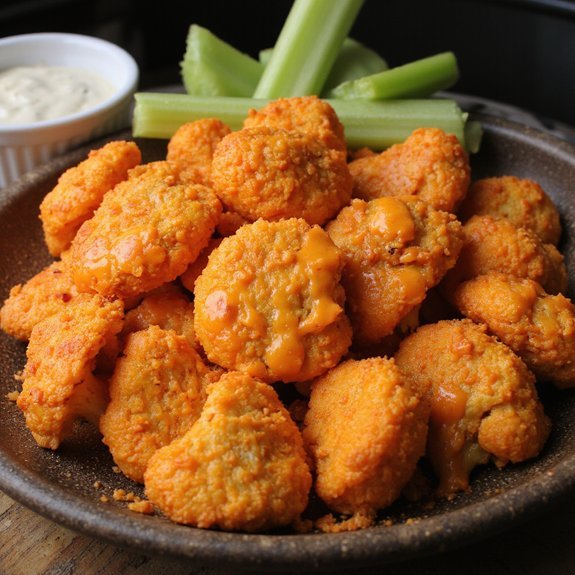
Although air fryer models differ, preheat yours to 400°F (200°C) so the florets develop a crisp, golden exterior while staying tender inside.
Pat cauliflower dry, toss in a light coating so batter adheres, and space pieces in a single layer to promote airflow. Use minimal oil spray and set the cooking time for 12–15 minutes, checking at 8–10 minutes to prevent overbrowning.

Flip or shake the basket halfway to guarantee even color. If pieces vary, stagger batches or adjust temperature settings down 25°F for delicate bites.
Rely on visual cues—deep golden edges and tender centers—rather than rigid timing alone. Finish with a short rest to let steam escape and keep the exterior crisp.
For large florets, add two minutes; for tiny pieces, subtract one minute.
Buffalo Sauce and Tossing
Aim for a pourable but clingy buffalo sauce — thin with a little melted butter or hot water if it’s too thick, or reduce briefly if it’s too thin.
Pat the florets dry, then toss in a large bowl or seal them in a zip-top bag and shake so every piece gets an even, light coating.
If you want the sauce to set, give the coated cauliflower 1–2 minutes back in the air fryer on high to firm the glaze without making them soggy.
Sauce Consistency Tips
One firm rule: your buffalo sauce should cling to the cauliflower rather than pool on the plate.
You’ll control sauce thickness by balancing butter (or vegan butter) with hot sauce; emulsify briefly with a whisk or immersion blender so it adheres.
If it’s too thin, reduce heat gently or whisk in a touch of cornstarch slurry; if too thick, thin with lemon juice, vinegar, or a splash of aquafaba.
For creative sauce alternatives, consider miso-harissa blends, yogurt-hot sauce hybrids, or smoked paprika–chipotle purées to reimagine heat and umami.
Toss cauliflower off-heat so the crust stays crisp and the glaze sets without steaming.
Taste, adjust acidity and salt, and aim for a glossy, clingy finish that elevates texture and flavor, keeping presentation modern and intentional.
Even Coating Technique
Now that your sauce has the right cling, getting an even coating on each cauliflower floret comes down to technique and timing. You’ll want to work hot-to-hot: toss air-fried florets while both sauce and cauliflower are warm so the glaze adheres.
Use a wide, shallow bowl or lidded container for agitation — these coating tools let you flip quickly without smashing pieces. Start with a light pour, toss, then add more sauce in short bursts; that layering prevents sogginess and builds flavor.
For uniform results, rotate batches and use tongs or a silicone spatula to expose all surfaces. If you innovate, try a brief return to the air fryer for two minutes to set the glaze. Document your sequence; adjustments refine even coating methods.
Serving Suggestions and Dips
When serving buffalo cauliflower bites, balance their spicy, tangy punch with cooling, textured dips and a few crisp accompaniments. You’ll lean on dipping sauces, side dishes that contrast texture, and a herb-forward garnish to elevate each bite. Offer blue cheese crema, green goddess yogurt, smoky chipotle aioli — label jars for guests. Present on a platter with celery, carrot ribbons, and charred lemon wedges for brightness.
| Dip | Texture | Pairing |
|---|---|---|
| Blue cheese crema | creamy | classic |
| Green goddess yogurt | herbaceous | fresh |
| Chipotle aioli | smoky | bold |
| Honey mustard | sweet-tangy | mellow |
Choose smart plating: keep sauces chilled and bites crisp for peak contrast. Scale portions for sharing, arrange varied heights and colors, and offer small tongs so guests can mix flavors without crowding the board for effortless grazing. always.
Tips, Variations, and Storage
Carry the same attention to contrast and timing from plating into how you cook, vary, and store these bites. Treat cauliflower pieces uniformly so they crisp evenly: dry, coat sparingly, and give space in the air fryer basket.
Rotate midway and adjust temp for size. For boldness, try recipe variations like miso-buffalo, maple-sriracha, or a smoky chipotle rub; swap panko for almond flour to lower carbs.
When cooling, don’t let sauces sit soggy—toss just before serving.
Storage tips: refrigerate cooled bites in a single layer with parchment for up to 3 days or freeze flat up to one month; reheat in the air fryer at 375°F until crisp.
Label, rest after reheating, and finish with a squeeze of acid to revive brightness immediately after.
Conclusion
You’ve mastered air fryer buffalo cauliflower bites and can confidently deliver crisp, spicy appetizers any night. Coat florets evenly, preheat the fryer, and shake halfway to guarantee golden crunch without sogginess. Toss in bright buffalo sauce and rest briefly so flavors cling. Serve with chilled ranch or blue cheese and lemon wedges for balance. With these techniques, you’ll consistently get restaurant-worthy results that impress guests while staying lighter than fried wings and save cooking time.
About The Author