You’ll transform pork belly into crisp, tender bites with a controlled air fryer method and a balanced bourbon glaze. You’ll trim and score for even render, apply a precise rub, then time the glaze to caramelize without flare-ups. Follow the steps that nail texture and flavor—and master the finishing touch.
Ingredients and Measurements

You’ll need 2 lb (900 g) skin-off pork belly, cut into 1‑inch slabs; measure precisely and pat pieces dry. For glaze, gather 1/2 cup bourbon, 1/4 cup dark brown sugar, 2 tbsp soy sauce, 1 tbsp apple cider vinegar, 1 tsp smoked paprika, 1/2 tsp chili flakes and 1/4 tsp black pepper. Use 2 cloves garlic, minced, and 1 tsp fresh grated ginger. Reserve 1 tbsp neutral oil for brushing. For finishing, plan 1 tbsp honey and 1 tsp toasted sesame seeds. Salt to taste—about 1 tsp coarse kosher salt total. Prioritize ingredient sourcing: choose pasture-raised pork belly and a quality bourbon; prefer local suppliers and transparent labels. You’ll assemble ingredients measured and ready before cooking. Label containers and time-stamp each prep batch now.
Equipment and Air Fryer Tips
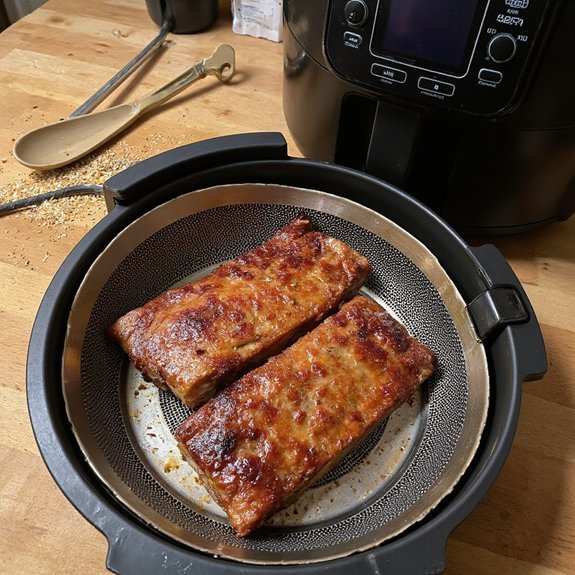
Before you start, gather a few key pieces of equipment so the cook goes smoothly: a capacity-appropriate air fryer (make sure the basket fits your 2 lb of pork belly without crowding), a small wire rack or perforated parchment to keep pieces elevated, an instant-read thermometer, heatproof tongs, a silicone brush for glazing, and two small bowls for sauce staging.
Inspect your unit’s air fryer features—temperature range, preheat capability, and airflow design—and adapt placement to maximize crisping. Follow strict cooking guidelines: leave space for circulation, preheat to specified temp, monitor internal temperature rather than time, and flip only if airflow requires.
Use the thermometer to confirm doneness and the brush for controlled glazing in final cycles. Maintain safety: hot oil splatter protection and stable.
Preparing and Scoring the Pork Belly

Trim any excess fat so you leave a thin, even layer for flavor and crisping.
Score the skin in shallow parallel or crosshatch cuts, keeping the blade just through the rind and not into the meat.
Season evenly beforehand, rubbing salt and spices into the scores so the seasoning penetrates.
Trim Excess Fat
Start by removing any overly thick fat caps while leaving a thin, even layer—about 1/8–1/4 inch—to render and crisp during cooking. You’ll trim using a sharp knife, pressure, and measured strokes; keep fat trimmings techniques intentional to avoid overparing. For efficient pork belly preparation, work cold, secure the slab, and remove excess. Clean edges improve glaze adhesion and reduce flare-ups in the air fryer. Aim for uniformity: a consistent layer renders evenly and crisps. Preserve trimmings for creative uses and sauces. Table below contrasts outcomes and decisions to help you innovate.
| Decision | Outcome |
|---|---|
| Trim to 1/8–1/4″ | Even render, crisp skin |
| Leave thicker cap | Slower render, greasy bite |
Score the Skin
Use a very sharp knife and a steady hand to score the skin in parallel lines about 1/4″ apart; you want to cut through the rind and fat but not into the meat, and make clean, consistent strokes to avoid ragged edges.
Start shallow, deepen only to expose fat layers, and vary the angle to create a subtle crosshatch that speeds rendering and enhances skin crispiness. Use measured scoring techniques: consistent depth, equal spacing, minimal cross-cuts. Avoid slicing to the meat to preserve texture.
Dry and open the cuts so air penetrates. This controlled method guarantees predictable rendering, maximized crackle in the air fryer, and a reliable canvas for bold bourbon glazes and innovative finishing, and repeatable results for creative, restaurant-quality presentations every time.
Season Evenly Beforehand
While the rind is dry and your scoring is complete, you’ll want to season the pork belly evenly so every bite balances salt and spice; work quickly to get the rub into the cuts and across the entire surface.
Use tactile pressure to press a coarse salt base into the scores, then layer complementary spices—black pepper, smoked paprika, a touch of brown sugar—for controlled browning.
Experiment with modern seasoning techniques: a spritz of citrus or a fine mist of bourbon before air frying adds surface tension and volatile aromatics.
Let the seasoned belly rest uncovered in the fridge 30 to 60 minutes to consolidate flavor and dry the skin.
These steps maximize flavor enhancement, guarantee crisping, and keep your bourbon glaze from overpowering pork.
Seasoning Rub and Marinade Ideas
You can build layers of flavor with a savory dry rub—kosher salt, cracked black pepper, smoked paprika, garlic powder, and a touch of cumin will crisp the skin and season the meat.
For marinades, use an acidic base like apple cider vinegar or orange juice with soy, mirin, minced ginger, and a splash of bourbon to tenderize and penetrate overnight.
Finish with a sweet smoky glaze—brown sugar, bourbon, molasses and a hint of chipotle or liquid smoke brushed in the last 5–8 minutes for a caramelized shine.
Savory Dry Rubs
Because the right dry rub builds the foundation beneath a sweet bourbon glaze, treat it as precision seasoning: balance kosher salt for flavor enhancement, brown sugar for caramelization, and a few bold spices (smoked paprika, ground coriander, black pepper) for savory depth.
You’ll layer texture and contrast by adding crushed fennel seed for anise notes, ground cumin for earthiness, and a touch of cayenne to lift richness. For experimentation, blend coffee grounds or cocoa nibs into spice blends to amplify smoky flavors and create savory complexity.
Massage the rub into scored pork belly, refrigerate uncovered to firm the fat, and let flavors concentrate for at least four hours.
Trim excess before air frying so the crust crisps evenly and the glaze adheres predictably consistently.
Liquid Marinade Ideas
Once the rub has set, liquid marinades will penetrate deeper and balance surface seasoning, giving pork belly flavor and tenderness you can’t achieve with dry rub alone. You’ll choose liquid marinade variations that amplify texture: acidic bases, enzymatic juices, light oils and spirits. Prioritize citrus flavor profiles for brightness; pair grapefruit or yuzu with soy, mirin, garlic and touch of bourbon for complexity. Marinate 2–6 hours refrigerated; longer risks texture change. Finish by patting surface dry before air frying to promote crisping. Below is a reference to guide combinations and intent.
| Marinade | Purpose |
|---|---|
| Citrus + Soy | Brightness, umami, tenderize |
| Enzymatic (pineapple) | Softens, tropical lift |
| Bourbon + Oil | Fat carry, depth, sheen |
Sweet Smoky Glazes
When you want a sweet smoky glaze that sings against rich pork belly, balance sticky sugars with assertive smoke and a touch of acid so the finish isn’t flat.
You’ll build layers: a honey garlic base for glossy sweetness and savory bite, then anchor with bourbon or soy for depth.
Add chipotle maple for smoky heat and caramel complexity; use measured heat—too much overwhelms fat.
Include citrus or rice vinegar to cut heaviness and brighten each bite.

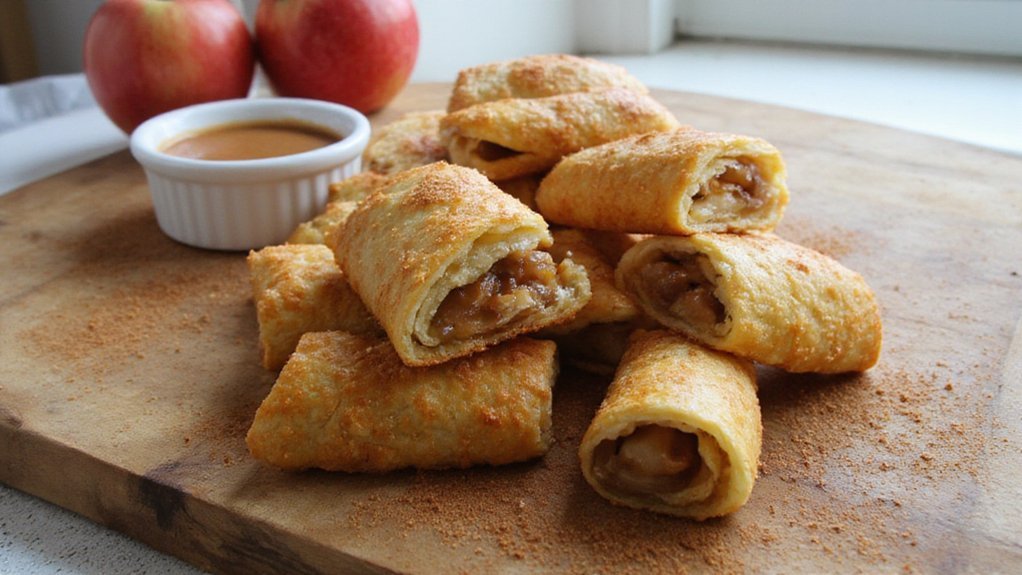


Apply glazes near end of air frying, basting in short bursts to avoid burning while developing lacquered crust.
For innovation, experiment with toasted spices or a fraction of smoked tea.
Record ratios so you can repeat successful variations and adjust sweetness to complement the bourbon each time.
Air Fryer Temperature and Timing Guide
How hot should you set the air fryer to get tender, rendered pork belly with a glossy bourbon glaze? Start at 375°F for 25 to 30 minutes to render fat efficiently, flipping at 15 minutes to promote even browning; this leverages air fryer efficiency and minimizes flare-ups.
For crisper skin, raise to 425°F for the final 4 to 6 minutes. If pieces are thicker than 1 inch, reduce initial temp to 350°F and extend to 35 to 40 minutes.
Use an instant-read thermometer: pull at 145 to 150°F internal, rest 8 to 10 minutes—carryover will finish cooking.
Make small temperature adjustments in 10 to 15°F increments for altitude. Time, temp, and monitoring are your control points; follow them and you’ll get consistent, reliable results.
Making the Bourbon Glaze
Pick a bourbon with bold caramel and oak notes—you’ll want enough backbone to stand up to pork belly without overpowering it.
Balance sweetness (brown sugar or maple) with savory elements (soy, Dijon, or a pinch of smoked salt) so the glaze enhances rather than masks the meat.
Simmer the mixture until it reduces to a glossy, syrupy consistency that coats the back of a spoon, stirring and skimming as needed.
Choosing the Bourbon
Although any bourbon will add caramelized warmth, you should choose one with moderate proof and a balanced flavor profile—vanilla, caramel, and a touch of oak—to complement the pork belly; high-proof bottles can make the glaze too boozy and aggressive, while overly smoky or spiced bourbons will clash with the pork’s richness.
You’ll sample bourbon varieties to map their flavor profiles: pick a mid-proof American bourbon with soft corn sweetness and restrained rye spice.
Avoid intensely peated or barrel-aged cask-strength expressions. For innovation, consider small-batch or finished bottlings that add subtle layers without dominating fat.
Taste the bourbon neat, imagine it reduced, and choose the bottle that amplifies, not overwhelms, the pork belly. Trust your palate and document choices for repeatable, creative results later consistently.
Sweet and Savory Balance
Balance dictates a successful bourbon glaze: you’ll marry sweetness, acidity, salt, and umami so the glaze brightens the pork belly without becoming cloying or one-note. You’ll calibrate sugar and bourbon, add vinegar for sweet acidity, soy for umami, and a pinch of salt to anchor. Aim for flavor harmony: each component should assert but not dominate. Taste as you combine; adjust in small increments. Use heat to marry elements but stop before caramel overwhelms. Think innovation: swap maple or smoked sugar, or add citrus zest for contrast. The table below captures the emotional intent behind each choice. You’ll prefer subtlety; bold choices should enhance texture and aroma while preserving the pork’s rich, silky mouthfeel and subtle heat balance.
| Element | Emotion |
|---|---|
| Bourbon | Warmth |
| Vinegar | Brightness |
Reducing to Glaze Consistency
Now that you’ve dialed in the sweet, acidic, and umami elements, bring them together over medium-low heat and reduce until they reach a glossy, ribbon-like consistency.
Monitor temperature and stir intermittently to prevent burning; you’ll want a slow simmer that concentrates aroma without caramelizing too aggressively. Measure by coat-on-spoon: the glaze should cling and form a clean ribbon for ideal glaze thickness.
Taste as you go to judge flavor concentration — adjust with a splash of bourbon, a pinch of salt, or a touch of acid if necessary.
Cool briefly; carryover will thicken the glaze further. Use immediately to baste pork belly in final minutes, repeating short reductions if you need more glaze, ensuring gloss and balanced intensity.
Reserve excess for serving alongside roasted vegetables.
Glazing Technique and Finishing Steps
The glaze is your last chance to build glossy flavor, so apply it deliberately and in stages. You’ll brush a thin initial coat, return the pork belly briefly to the air fryer to set, then repeat with progressively thicker layers until the surface shines and resists sticking.
Use a silicone brush and keep residual glaze warm—cold glaze breaks adhesion. For targeted caramelization, pulse short high-heat intervals while watching closely; sugars can go from amber to burnt fast.
Rest the pork belly five minutes to let the glaze stabilize and redistribute juices. For presentation-aligned finishing touches, use a light score pattern with a sharp knife to reveal crosshatch crispness and sprinkle micro-salted flakes to lift sweetness.
Execute these glazing techniques with confidence. Finish with restraint.
Serving Suggestions and Side Dishes
After the glaze has set and the pork belly has rested, plan sides that cut through the richness and echo the bourbon’s sweet-smoky notes. You’ll balance texture and acidity: bright vinegar slaw, charred greens, or a crunchy apple-fennel salad. Keep sauces minimal to let glaze sing.
| Contrast | Texture | Herb note |
|---|---|---|
| Pickled slaw | Crisp | Cilantro or mint |
| Charred broccolini | Firm | Lemon zest |
| Roasted sweet potato | Creamy | Thyme |
For serving ideas, plate slices thinly, drizzle glaze sparingly, and garnish microgreens. These side dishes and flavor pairings sharpen the profile and keep the dish modern and memorable. Consider contrasting temperatures—cold slaw against warm pork belly—and introduce one bold companion (smoked manchego, miso corn puree) to elevate complexity without stealing the spotlight. Execute with intent and precise timing.
Storage, Reheating, and Leftover Ideas
When you store pork belly, cool it at room temperature no longer than two hours, then wrap tightly or seal in an airtight container to preserve the glaze and keep fridge odors out; use within 3–4 days or freeze for up to 2 months.
For refrigeration, use shallow storage containers so meat chills quickly and glaze stays intact; label with date.
To reheat, defrost overnight if frozen, then crisp skin in the air fryer at 375°F for 4–6 minutes and finish at 400°F 1–2 minutes for snap; tent if you need gentler heat to avoid dryness.
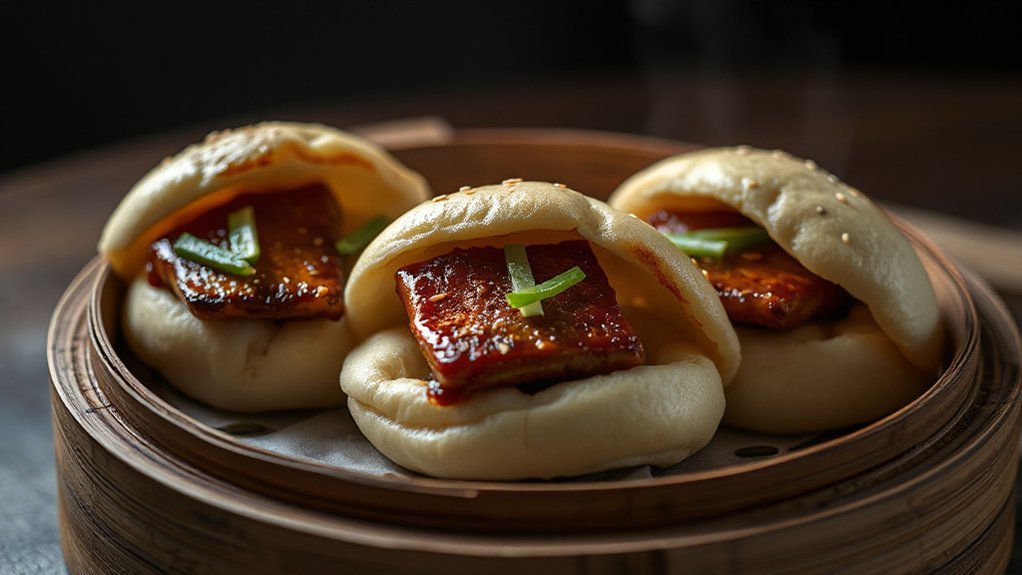
Repurpose slices in innovative leftover recipes: bao buns, grain bowls, fried rice, or glazed sliders.
Freeze portions in single-serving packs for efficient future meals. Reheat only what’s needed.
Troubleshooting and Common Mistakes
If your stored or reheated pork belly loses its crisp or develops off flavors, you’ll need to isolate the likely causes before reheating or serving. You should identify moisture, oil breakdown, and glazing mistakes quickly. Prevent overcooking issues by monitoring internal temperature and brief high-heat refresh cycles. Rebalance seasoning balance after reheating; acid or smoke can renew flavors. Use the table below to diagnose and correct.
| Problem | Fix |
|---|---|
| Soggy crust | Re-crisp 200°C/400°F for 5–8 min |
| Off flavors | Trim rancid fat; use fresh glaze |
| Dry meat | Lower initial temp; finish high |
| Too salty | Rinse glaze edges; add neutral starch |
Test methodically; iterate improvements and document results. Record timings, temperatures, and ingredient sources so you can innovate reliably and reduce repeat mistakes for next attempts consistently.
Conclusion
You’ve mastered air fryer bourbon-glazed pork belly: trim and score for even rendering, season confidently, and monitor temperature for crisp, tender results. Rely on the glaze’s balance of bourbon, brown sugar, and soy to finish—apply thin coats and caramelize briefly to avoid burning. Rest before slicing to preserve juices. Store properly and reheat gently. Follow these steps precisely, and you’ll consistently deliver a restaurant-quality, sweet-savory centerpiece. Trust technique over guesswork for repeatable perfection every time.
About The Author