You’ll marinate salmon in a balanced teriyaki mix, then air-fry it to get a crisp, caramelized exterior and a tender interior. Follow clear timing and temp guidelines, plus a simple glaze technique that prevents burning while intensifying flavor. Keep a thermometer handy—a few targeted tips will guarantee perfect results every time, so keep going to learn them.
Equipment and Prep
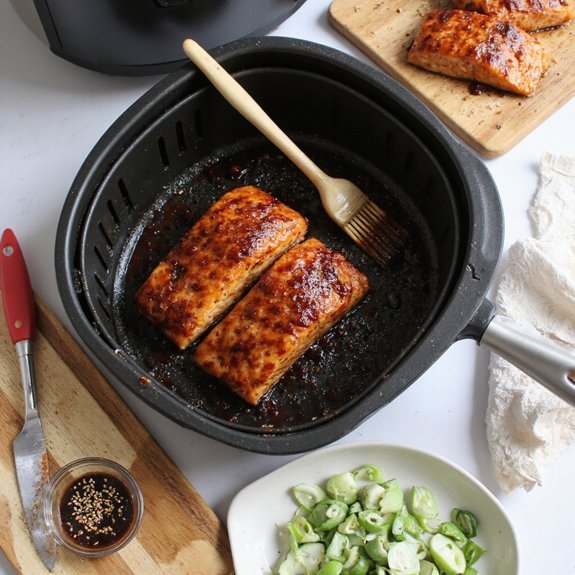
Before you begin, gather the essential tools so the cook process stays efficient and safe. You’ll need specific equipment types: a reliable air fryer with adjustable temperature, a small brush for glazing, a digital instant-read thermometer, and nonstick tongs. Include a shallow tray or parchment for transfer and a silicone mat for resting.
For prep essentials, set up a clean cutting board, sharp fillet knife, and separate bowl for sauce staging. Arrange everything within arm’s reach, wipe surfaces, and preheat the air fryer to shave minutes and guarantee consistent results.
Follow a workflow: pat fillets dry, brush with oil to prevent sticking, and position racks for ideal airflow. That regimen keeps the technique repeatable and ready for innovation. Document adjustments to refine future batches.
Ingredients You’ll Need
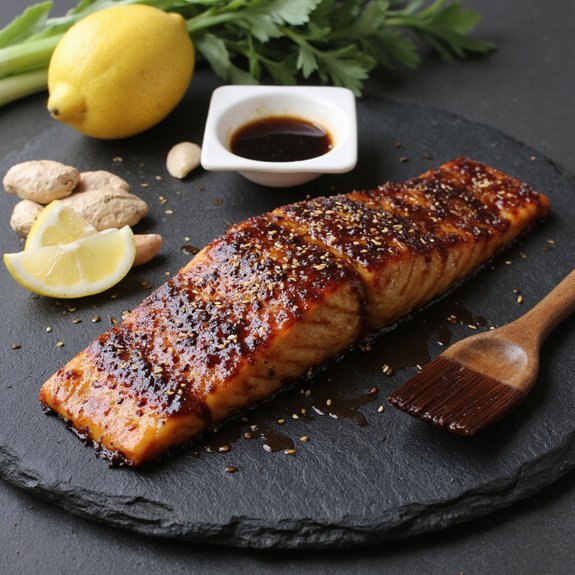
Gather fresh salmon fillets, salt and pepper, and a neutral oil as your main ingredients.
For the teriyaki sauce you’ll need soy sauce, mirin or rice vinegar, brown sugar or honey, garlic, and ginger.
Optional garnishes like sesame seeds, sliced scallions, and lime wedges brighten the finished dish.
Main Ingredients
Once you choose fresh, skin-on salmon fillets and a balanced teriyaki base—soy sauce plus mirin or rice vinegar, a sweetener like brown sugar or honey, minced garlic and ginger—you’ll have the core ingredients for a flavorful air-fried teriyaki salmon; also keep toasted sesame oil, a light neutral oil for the air fryer, and optional garnishes (scallions, sesame seeds) on hand. Choose salmon varieties intentionally (Atlantic, sockeye, coho) to control fat and flavor. Select firm, even-thickness fillets for consistent cooking. Below is a concise ingredient roadmap.
| Ingredient | Purpose | Tip |
|---|---|---|
| Salmon | Protein | Room temp, dry skin |
| Oil | Crisping | Light brush on skin |
| Garnish | Finish | Add after cooking |
Measure portions per person, plan resting time, and let the glaze set briefly before serving for ideal texture results.
Sauce Components
Now focus on the teriyaki sauce components that will define the fillet’s flavor and glaze.
You’ll need soy sauce (or tamari for gluten-free), mirin or dry sherry, rice vinegar, brown sugar or honey, fresh ginger and garlic, and a touch of sesame oil.
Use cornstarch slurry or arrowroot to thicken if you want a glossy cling. Measure precisely: balance sweet, salty, acidic, and umami to achieve consistent flavor balance.
For innovation, experiment with citrus zest, toasted sesame paste, or a small chile for heat—these sauce variations transform the profile without overpowering the fish.
Whisk ingredients cold, then simmer briefly until syrupy. Cool slightly before glazing to control caramelization and prevent burning in the air fryer.
Store leftovers refrigerated; reheat gently to preserve the sheen.
Optional Garnishes
Someone looking to finish the fillet will want a short, focused set of garnishes: thinly sliced scallions (1–2 tbsp per fillet), toasted white or black sesame seeds (½–1 tsp), lemon or lime wedges for brightness, and a small pinch of flaky salt or toasted nori strips for umami.
Use sesame seeds sparingly for texture, and scatter green onions just before serving so they stay crisp.
Position lemon wedges to allow diners to control acid and to brighten the teriyaki glaze.
Sprinkle a minimalist cilantro garnish if you want herbal lift; chop finely and add last.
For a modern finish consider a light sesame oil drizzle or microgreen scatter.
Measure, arrange, and serve with intent.
Taste and adjust immediately — don’t overcomplicate the clean flavors ever again.
Marinating and Glazing the Salmon
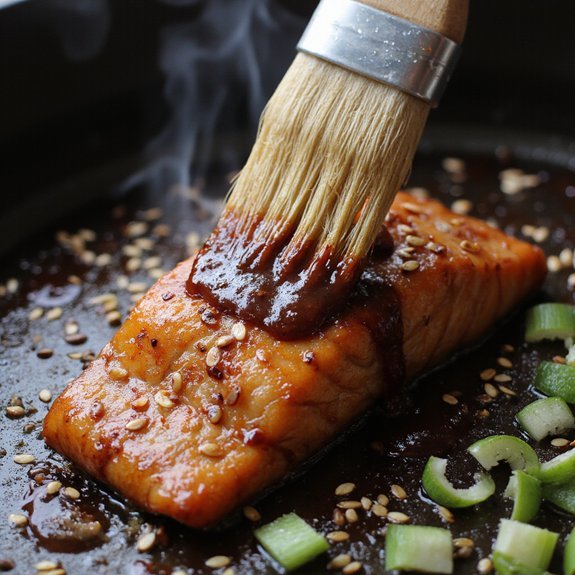
Before cooking, you’ll marinate the fillets for 20–30 minutes in a balanced teriyaki mix—soy sauce, mirin or rice wine, a little honey or brown sugar, grated ginger and garlic, and a dash of sesame oil—to build flavor without curing the fish.
Pat the fillets dry, reserve the marinade, and set aside one tablespoon for finishing.
Explore marinade variations: add yuzu, gochujang, or toasted sesame for bright, spicy, or nutty profiles. Use a shallow dish or resealable bag so the glaze contacts the flesh evenly.


For glazing techniques, brush thin layers during the last minute of resting and again immediately before serving to avoid sogginess.
Heat the reserved marinade to a simmer to thicken if you want a glossy finish. Taste for balance, then plate.
Cooking the Salmon in the Air Fryer
Preheat your air fryer to 400°F (200°C) and pat the marinated fillets dry, leaving a light oil coating to prevent sticking.
Cook the salmon skin-side down at 400°F for about 8–10 minutes, adjusting time for thickness and preferred doneness.
Brush on the teriyaki glaze and air-fry for an additional 30–90 seconds to set and caramelize the surface.
Preheat and Prep
While the air fryer comes to temperature, pat each salmon fillet dry and brush both sides lightly with oil to promote even browning and prevent sticking.
Use efficient preheating techniques: set the fryer empty for a brief cycle, then let it rest for a minute before loading.
Follow these preparation steps: season fillets lightly, apply teriyaki glaze sparingly to avoid burning, and allow a short sit time so flavors adhere.
Arrange fillets skin-side down in a single layer with space between pieces for airflow. Don’t overcrowd; work in batches if needed.
Use a perforated liner or light spritz of oil on the basket to simplify release. Monitor visually; clean basket between batches to maintain consistent cooking performance and flavor.
Embrace small adjustments for perfection.
Cooking Time and Temp
Although models vary, set the air fryer to 375°F (190°C) for teriyaki salmon to avoid glaze burning, and cook 1‑inch fillets for 8–10 minutes skin‑side down.
You’ll monitor internal doneness rather than rely solely on time: aim for 125–130°F (52–54°C) for medium-rare, 140°F (60°C) for well done. Use an instant-read thermometer inserted into the thickest part to verify.
Maintain space between fillets for even airflow; don’t overcrowd the basket. For thicker cuts, increase cooking duration by 2–4 minutes per additional half-inch.
Test one fillet first to calibrate your model’s actual cooking temperatures and cooking duration. Adjust future runs based on that trial to achieve consistent texture and controlled browning.
Record settings and results to iterate quickly and push inventive tweaks safely for repeatability regularly.
Finishing and Glazing
After you’ve confirmed doneness with an instant‑read thermometer, finish the fillets with the teriyaki glaze to build shine and concentrated flavor without burning the sugars.
Use thin, even coats applied with a silicone brush so sugars caramelize rather than char. Return salmon to the air fryer at 400°F (200°C) for 1–2 minutes, watching closely; this sets the glaze and preserves moisture.
For deeper gloss, repeat a second light coat and 30–60 seconds more. Reserve a small amount of glaze for plating to avoid sogginess. Use glazing techniques that favor speed and temperature control; avoid heavy layers.
Let the fillets rest one minute; add microherbs or toasted sesame as finishing touches and serve immediately. Adjust timing for fillet thickness and your air fryer’s variability settings.
Tips for Perfect Texture and Flavor
For perfect texture and balanced flavor, treat preparation, temperature, and timing as equally critical: pat fillets dry, bring them nearly to room temperature, season or glaze at the correct stage, and preheat the air fryer so cooking is even.
To achieve consistent doneness, monitor internal temperature and remove salmon at 120–125°F for medium-rare; carryover heat hits target while resting.
For texture improvement, introduce short high-heat blasts at the end to crisp edges without overcooking the center.
For flavor balancing, taste your teriyaki concentrate and adjust acidity, salt, and sweetness before glazing; a drop of rice vinegar can sharpen glossy glazes.
Use minimal handling, space fillets for airflow, and test one piece before committing to scale.
You’ll refine outcomes faster by documenting adjustments each cook.
Serving Suggestions and Storage
With texture and glaze perfected, plan both how you’ll present the salmon and how you’ll preserve its quality.
| Mode | Suggestion |
|---|---|
| Serving ideas | Warm plates |
| Innovative bowls | Microgreens |
| Meal prep | Airtight storage |
Serve on warm rice, roasted vegetables, or citrus salads; drizzle reserved teriyaki. Build bowls or lettuce wraps for fresh contrast. For meal prep, cool fillets quickly, wrap tightly, and chill within two hours. Store in airtight containers up to three days; freeze portions up to one month, sealing to prevent freezer burn. Reheat gently in the air fryer at low temperature to restore crisp edges without drying. Label containers with date and use-by guidance. Follow these steps and you’ll deliver consistent, inventive servings with preserved texture and flavor. Maintain records for recipe refinement.
Conclusion
Now you’re ready to serve your air fryer teriyaki glazed salmon fillet. Let it rest two minutes, then spoon reserved glaze over the top for shine and extra flavor. Plate with rice or roasted vegetables, garnish with sesame seeds and scallions, and enjoy immediately. Refrigerate leftovers within two hours in an airtight container for up to three days; reheat gently to preserve texture. Follow these steps and you’ll get consistent, restaurant-quality results every time consistently.
About The Author