You’ll marinate wings in gochujang, soy, garlic, and ginger, then air fry them until the skin is crackling and the meat stays juicy. Drying, spacing, and temp control are key for an even crust. Finish with a glossy sweet‑spicy glaze for punchy umami. Keep going to get exact times, ratios, and plating tips that elevate them.
Ingredients
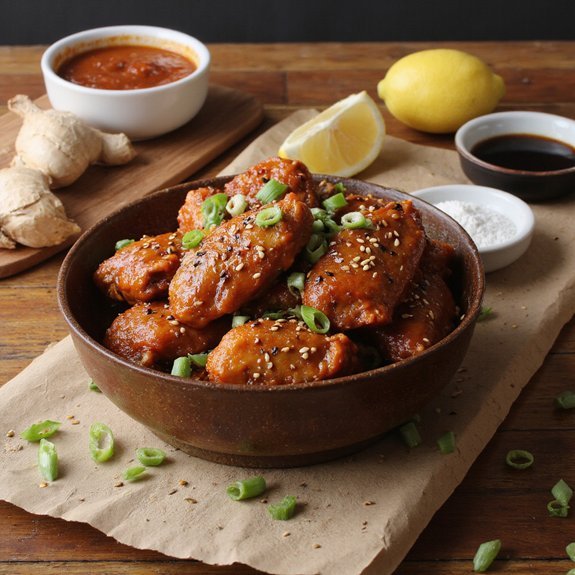
You’ll need bone-in or drumette-style chicken wings (about 2–3 pounds) for best texture, kosher salt and freshly ground black pepper for seasoning, and cornstarch to crisp the skin in the air fryer.
Gather ingredients that balance sweet, savory, and spicy: gochujang for depth, soy sauce for umami, brown sugar or honey for caramelization, rice vinegar for brightness, sesame oil for aroma, garlic and ginger for bite.
Consider chicken types when sourcing—mix wings and drumettes for varied mouthfeel. Measure sauces precisely to control glaze thickness and adjust heat with gochugaru or chili flakes.
Taste components individually to refine acidity and salt. This lets you layer bold flavor profiles while keeping each wing evenly coated and intensely flavored.
Reserve extra glaze for finishing and serving later.
Equipment and Prep

With your sauces measured and flavors balanced, get your mise en place so the cooking goes smoothly: an air fryer large enough to hold a single layer of wings (6–8 qt or similar), a wire rack or perforated basket to let hot air circulate, tongs for turning, a shallow bowl for cornstarch, a mixing bowl for the glaze, and a silicone brush for finishing.
Choose an air fryer selection that offers convection and adjustable temps; a basket prevents overcrowding and guarantees crisp skin. Arrange tools within reach and preheat the unit.
Use Kitchen tooltips: weigh wings for even batches, line a tray with foil for easy cleanup, and test your silicone brush for heat resistance.
You’ll work faster and deliver consistent, intensely flavored wings.
Marinating the Wings

Anyone aiming for fully flavored wings should marinate them long enough to let the soy, garlic, ginger, sesame, and a touch of rice vinegar penetrate the skin—plan for at least 1 hour, ideally 4–12 hours (no more than 24 to avoid mushy texture).
You’ll combine equal parts soy and mirin or honey, minced garlic, grated ginger, toasted sesame oil, rice vinegar, gochujang or Korean chili flakes, and citrus brightness. Use a zip-top bag to distribute marinade flavors evenly and press out air so every surface contacts the liquid. Turn the bag every few hours.
For best wing tenderness, add a small amount of baking soda or enzyme-rich pineapple juice only if you’ll limit marinating to under four hours. Pat wings dry before carefully proceeding.
Air Frying Steps
Preheat your air fryer to 380°F and pat the marinated wings dry so they crisp evenly; arrange them in a single layer with space between pieces.
Cook at 380°F for about 20 minutes, flipping halfway through to guarantee even browning and doneness.
For finishing crispy touches, brush with Korean BBQ sauce and air-fry an extra 2–3 minutes at 400°F to caramelize the glaze and sharpen the edges.
Preheat and Prep
Before you arrange the wings in the basket, pat them very dry with paper towels so the skin can crisp and the glaze will stick. For efficient wing preparation, rub a thin coat of oil and your dry spices, then let the air fryer reach its Preheat temperature so the surface sears on contact. Arrange wings single layer with space between pieces to maximize airflow. Flip halfway for even color and avoid overcrowding; crispness depends on exposed skin. Finish by tossing in Korean BBQ glaze immediately after air frying to preserve crunch.
| Step | Purpose |
|---|---|
| Dry wings | Promotes crisping |
| Oil & spice | Enhances crust |
| Single layer | Air circulation |
| Flip once | Even browning |
| Glaze after | Maintains crunch and flavor |
Time and Temperature

With the wings dry and spices sealed in, set your air fryer to 400°F (204°C) and cook them skin‑side up for 10–12 minutes to jump‑start browning.
Flip once halfway, reduce to 360°F (182°C), and continue for 8–10 minutes to render fat without burning.
These cooking times balance blistering skin and tender meat; adjust by wing size.
Use a thermometer: target internal 165°F (74°C).
Note ideal temperatures for each phase — high heat to crisp, moderate heat to finish — and experiment with brief boosts for extra char.
Keep single layer spacing for even airflow.
You’ll record and refine your cooking times and temp tweaks, iterating until the flavor and texture meet your innovative expectations.
Make notes after each batch to dial in final results.
Finishing Crispy Touches
When you want that final blistered, shatter‑crisp skin, give the wings short high‑heat bursts: increase the air fryer to 400–420°F (204–216°C) and cook skin‑side up for 2–4 minutes, flip, then blast the other side 1–3 minutes more so the exterior crisps without overcooking the meat.
After the blast, rest wings briefly five minutes to let carryover heat settle and juices redistribute. For extra crunch, spray a light mist of neutral oil before the final burst; salt immediately to draw flavor into fissures.
Experiment with crisping techniques like staggered bursts or a single intense blast to match texture preference.
Finish with selective glaze options — a sticky gochujang-honey or sesame-soy-scorch — and serve hot for maximal contrast. Garnish with scallions and toasted sesame seeds now.
Making the Gochujang Glaze
Although gochujang is the backbone, you’ll build the glaze by balancing its spicy-fermented depth with a sweetener (honey or brown sugar), salty soy, a splash of rice vinegar for brightness, and toasted sesame oil for aroma.
Start with 3 tablespoons gochujang, 1-2 tablespoons honey, 1 tablespoon soy sauce, 1 teaspoon rice vinegar, 1 teaspoon sesame oil, and a pinch of garlic powder. Whisk until smooth; assess gochujang flavor and adjust sweetness or acidity.
For thinner glaze consistency, add warm water a teaspoon at a time; for thicker cling, simmer gently for one minute. Finish with a squeeze of lime or a dash of toasted sesame seeds if you want a modern touch.
Keep tasting and tweak to suit heat preference and balance to preference.
Serving Suggestions and Storage
If you want the wings to shine, serve them hot and glossy—toss or brush them with a little extra gochujang glaze right before plating so the sauce clings and the flavors stay bright.
For Serving options, arrange wings on a warmed platter with contrasting elements: pickled daikon or cucumber for acidity, sesame scallion relish for freshness, and a citrusy soy dip to play against heat.
Offer steamed rice or crisp lettuce leaves for wrapping to let guests customize texture.
For storage, cool wings to room temperature, then refrigerate in an airtight container up to 3 days or freeze flat for up to 2 months.
Reheating tips: thaw overnight, re-crisp in the air fryer at 375°F for 6–8 minutes, and glaze once more, then serve.
Conclusion
Take the wings straight from the air fryer, let them rest two minutes so juices settle, then brush each piece with the warm gochujang glaze for a sticky, glossy finish. Taste for balance and add a squeeze of lime or a sprinkle of toasted sesame if you want brighter notes. Serve immediately on a platter with pickled daikon or lettuce wraps, and store leftovers in an airtight container; reheat briefly to reclaim crispness for crunch.
About The Author