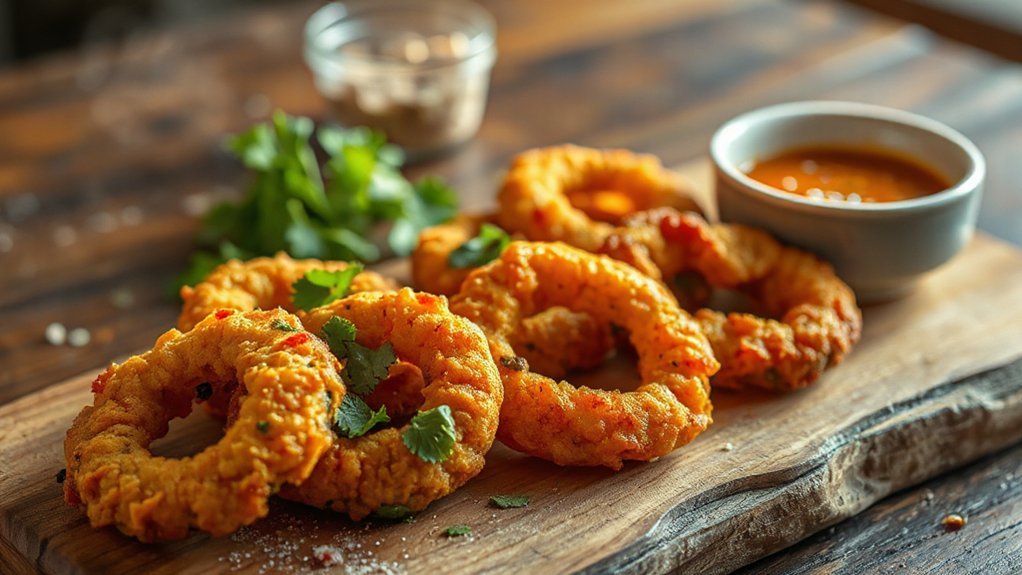
You’ll start with soaked chickpeas, fresh parsley and cilantro, garlic, cumin, and coriander, then pulse them to a coarse, gritty texture. You’ll season precisely, press patties tight, chill to firm, and brush lightly with oil before the air fryer. I’ll show timing, temperature, and crisping tricks that make them hold together and stay tender while…
Ingredients You’ll Need

You’ll need a base of dried chickpeas (soaked overnight and well-drained) plus fresh herbs—parsley and cilantro—for brightness, and aromatics—onion and garlic—finely chopped or pulsed.
Measure chickpeas by weight for consistency (about 300g dry yields 12–14 patties). Add ground cumin, coriander, baking powder, salt, and a pinch of cayenne; toast whole seeds first for depth.
Include fresh lemon zest and a tablespoon of tahini for emulsification. Use a binder like chickpea flour or gluten-free breadcrumbs to test texture—adjust in tablespoons until mixture holds when pressed.
For inventive cooks, experiment with falafel variations: roasted beet, herb-forward green, or spicy harissa.
Note dietary needs by labeling gluten-free options explicitly and testing batch integrity before air frying.
Reserve chopped herbs for garnish and adjust seasoning after resting.
Equipment and Prep

Before you begin assembling the mix, gather and set out a digital scale, a high‑speed food processor fitted with the steel blade, measuring spoons, a microplane for zesting, a sharp chef’s knife and cutting board, a fine‑mesh sieve or kitchen towel for draining and drying soaked chickpeas, and two mixing bowls (one for the processed base, one for testing and adjusting texture). Lay out fresh herbs, garlic, spices, baking powder, and a neutral oil near your work area so you can adjust ratios quickly. Confirm your air fryer selection fits the batch size and has a basket or rack to allow circulation. Calibrate your kitchen setup for workflow: mise en place, chilled bowl for shaping, parchment or perforated tray, and a timer for trials.
Soaking and Preparing Chickpeas

With your scale, sieve and bowls in place, weigh the dried chickpeas (about 250 g for a small batch) and cover them with at least three times their volume of cold water so they can fully rehydrate.
Drain any damaged peas, rinse under cold running water, then transfer to a fresh bowl and refrigerate for 12–18 hours; you’ll notice the soaking benefits in texture and grindability.
Choose chickpea varieties with intent—Kabuli for creamier interior, Desi for nuttier density—and note size differences when portioning.
After soaking, drain thoroughly, pat dry with kitchen towels, and pulse-test a few beans: they should compress but not collapse.
Keep excess moisture low to avoid pasty mixture and variable air-fryer performance.
Measure final moisture; aim for crumbly, not slurry, texture consistency.
Building the Herb and Spice Mix
Choose bright, tender parsley and cilantro and strip stems close to the leaves so the blend stays vibrant.
Toast coriander and cumin seeds in a dry skillet until fragrant and slightly darker—about 1–2 minutes—then grind fine for maximum aroma.
Measure chili, smoked paprika, and a pinch of toasted cumin to balance heat against the chickpeas’ earthiness, tasting as you go to reach a steady, savory finish.
Choosing Fresh Herbs
Although fresh herbs are often underestimated, they deliver the falafel’s signature brightness and control moisture and texture. You’ll prioritize choosing cilantro for its citrus lift and fresh oregano for savory depth, trimming stems to avoid excess water. Chop herbs coarse to retain air pockets, fold into batter last to preserve structure, and weigh leaves to keep hydration consistent. Use ice water briefly if herbs wilt; spin dry thoroughly. Small-scale experiments reveal herb ratios:
| Herb | Role |
|---|---|
| Cilantro | Brightness |
| Oregano | Savory backbone |
| Parsley | Binder |
Adjust ratios: start with 50% cilantro, 30% parsley, 20% oregano by weight, then tweak for acidity, mouthfeel, and frying behavior; document each trial. Record humidity and bean grind for reproducible crisps. Trust small batches; adjust after testing.
Toasting Whole Spices
Start by heating a dry skillet over medium heat until it’s just shimmering; add your whole spices in a single layer and keep them moving so they toast evenly.
You’ll use coriander seeds, cumin seeds, coriander, nigella, and whole peppercorns — weigh small batches (5–10 g each) to control intensity.
Toast 1–2 minutes until you smell bright, nutty spice aromas and seeds darken slightly; don’t let them smoke.
Transfer immediately to a plate to halt cooking.
Grind just before mixing with chopped herbs to preserve volatile oils and maximize spice aromas and health benefits like antioxidant polyphenols.
Use a fine microplane or small spice grinder, pulse briefly, then sieve for uniform texture.
This focused technique sharpens flavor and optimizes the mix for innovative falafel.
Balancing Heat and Earthiness


With your spices freshly ground, marry them to bright, leafy herbs to balance heat and earthiness: aim for roughly 3 parts chopped fresh parsley/cilantro (by weight) to 1 part toasted-spice blend so the herbs tame the warm, roasted cumin and coriander without getting lost.
You’ll measure by weight, pulse parsley and cilantro briefly to avoid bruising, then fold the spice blend in stages to assess aroma and bite.
Add a pinching strategy for cayenne and smoked paprika to modulate perceived heat. Squeeze in lemon zest for lift and tiny ice shards of chickpea paste to maintain texture contrast during mixing.
Taste-then-adjust: target precise flavor balancing rather than approximation, and document proportions for repeatable, innovative batches. Record adjustments to scale and air-fry timing per batch.
Processing the Falafel Mixture
You’ll soak dried chickpeas 8–12 hours, drain thoroughly and pat dry to remove excess moisture.
Pulse the chickpeas with the herb-and-spice mix in short bursts until you have a coarse, grainy texture—avoid overprocessing into a paste.
Then chill the mixture 30–60 minutes so it firms up, making shaping and air frying much cleaner.
Soak and Drain Chickpeas
If you want crisp, airy falafel, use dried chickpeas soaked until plump and tender — typically 8–12 hours or overnight.
Choose chickpea varieties deliberately: Kabuli for a smoother, milder bite or Desi for nuttier, denser flavor; both respond differently to soaking.
Measure beans and water (3:1) ratio and add a pinch of baking soda if you’re testing accelerated soaking duration. Check for uniform softness by pressing a bean between thumb and forefinger; no split skins, just yielding flesh.
Drain thoroughly in a fine mesh sieve, then spread on a clean towel and pat dry to remove surface moisture. Proper drainage prevents sogginess and concentrates starches for better binding without relying on extras.
You’ll reserve soaking liquid for experiments, yet typically discard it before processing.
Pulse to Coarse Texture
Start by fitting the food processor with the metal blade and add the drained chickpeas, aromatics, herbs, salt, and any dry binders in even layers so the blade can work efficiently.
Pulse in short bursts—three to five quick pulses—then scrape down the bowl; repeat until mixture reaches a coarse, sandy grain that still binds when pressed. Aim for Texture variations: visible flecks of herb and small chickpea fragments deliver contrast and structural integrity.
Avoid pureeing; overprocessing yields pasty falafel. Adjust pulse length and resting pauses as blending techniques to control moisture release and particle size. If bits stick, pause and redistribute.
Test by compressing a spoonful: it should hold shape but show distinct granules, ready for shaping and frying for maximum crispness and flavor.
Chill Before Shaping
After pulsing, chill the mixture to firm up the chickpea bits and let the flavors meld: transfer it to a covered bowl or shallow pan and refrigerate for 30–60 minutes (or pop it in the freezer for 10–20 minutes for a quicker firming), which tightens the gluten-free binders and reduces surface moisture so the falafel holds shape and crisps evenly. You’ll notice Chilling benefits: texture firms, herbs settle, moisture concentrates, letting you execute Shaping techniques. Work chilled mixture with pressure; use a scoop or damp hands to form balls or patties. Hold formed falafel on a lined tray in the fridge as you preheat the fryer; cold cores equal crisper exteriors and cook times.
| Ingredient | Role |
|---|---|
| Chickpeas | Structure |
| Herbs | Flavor |
| Binder | Cohesion |
| Oil | Browning |
Shaping and Chilling the Patties
When the blended chickpea-herb mix feels tacky but holds together, portion it with a 2-tablespoon scoop (about 30–35 g) for small patties or 3 tablespoons (45–50 g) for sandwich-sized ones. Press each into a compact ¾–1-inch thick disk so the center and edges cook evenly. Use light pressure to avoid over-densifying; aim for a slightly rough exterior so coatings or oil cling.
Adopt consistent shaping techniques: measure, compress, and smooth the rim to prevent cracking. Transfer patties to a parchment-lined tray, cover loosely, and chill at least 30 minutes—the chilling importance is real: it firms fats and binds proteins, reducing breakdown during handling and concentrating flavors for cleaner, crisper results and improving mouthfeel overall and texture while making handling and assembly easier too.
Air Fryer Temperature and Timing
Although chilling firms the patties, you’ll still need precise heat and timing in the air fryer to get crackling edges and a tender interior: preheat the basket 3–5 minutes, set 375°F (190°C) for smaller 2-tablespoon patties and 380–400°F (195–205°C) for sandwich-sized patties, and cook in a single layer without crowding.
Apply a light oil mist to bind herbs and ground chickpeas, and monitor color at 6–8 minutes, flipping once for even browning. For denser mixes add 1–2 minutes and reduce temperature 5–10°F; for drier, crumbly batters increase humidity with a brief oil brush.
These air fryer adjustments stem from iterative cooking techniques: weigh portions, test one patty, record times, and refine until texture and crust meet your ingredient goals.
Adjust confidently and document results.
Serving Ideas and Dips
Let the rested, crisped falafel carry bold, contrasting sauces and fresh, textural components so each bite balances herb, acid, fat and crunch. You’ll plate with intention: warm pita, crisp greens, quick-pickled cucumbers, and an herbed yogurt drizzle. For innovation, swap tahini for roasted red pepper romesco or zhug for heat. Focus on ratios—one part acid to two parts fat for dressings—and crisp-to-sauce contrast. Below are serving suggestions and precise flavor pairings to test.
| Component | Idea |
|---|---|
| Sauce | Tahini-yogurt with lemon |
| Crunch | Fried chickpea skins |
| Herb | Mint-cilantro chimichurri |
| Acid | Quick-pickled shallots |
Test hot-and-cool contrasts, varying salt and smoke, and note preferred textures; record wins. Try grain bowls, lettuce wraps, or grain-free cauliflower tabbouleh to broaden contexts and note best pairings. Share your tweaks. Refine and repeat.
Storage, Freezing, and Reheating Tips
Cool falafel completely on a wire rack before storing to keep exterior crisp and prevent steam sogginess.
When you package batches, choose airtight storage containers, glass jars, or vacuum-sealed bags to limit moisture and odor transfer. Layer falafel with parchment to avoid sticking; press gently to preserve shape.
For longer storage, flash-freeze on a tray until firm, then transfer to labeled bags — freezing tips include removing excess air and freezing flat for efficient stacking.
To reheat, preheat the air fryer 180°C (350°F), spray lightly with oil, and crisp 3–5 minutes, flipping once for even browning. If thawed in fridge overnight, shorten time to 2–3 minutes. Reheat only once to maintain texture and food safety.
Freeze portions sized for single meals to reduce waste.
Conclusion
You’ll love how the soaked chickpeas, bright parsley and cilantro, garlic, cumin and coriander crisp up in the air fryer with just a light brush of oil. Keep the mixture coarse, pulse briefly, chill the patties to hold shape, and spray before cooking to get even browning. Use 375°F for 10–12 minutes, flipping once. Mastering these steps guarantees reliable, flavorful, crunchy falafel every time and rest them briefly before serving hot.
About The Author