You can turn a personal frozen pizza into a restaurant‑crisp pie in minutes with your air fryer. Preheat to about 375°F, give the crust direct hot air on a rack or perforated tray, and cook 8–12 minutes depending on thickness. Pat wet toppings, don’t overcrowd the basket, and brush the edge with oil for extra browning. Rotate once if needed and cool on a rack to avoid steam sogginess. Keep going for pro tips and troubleshooting.
Why the Air Fryer Works for Frozen Personal Pizzas
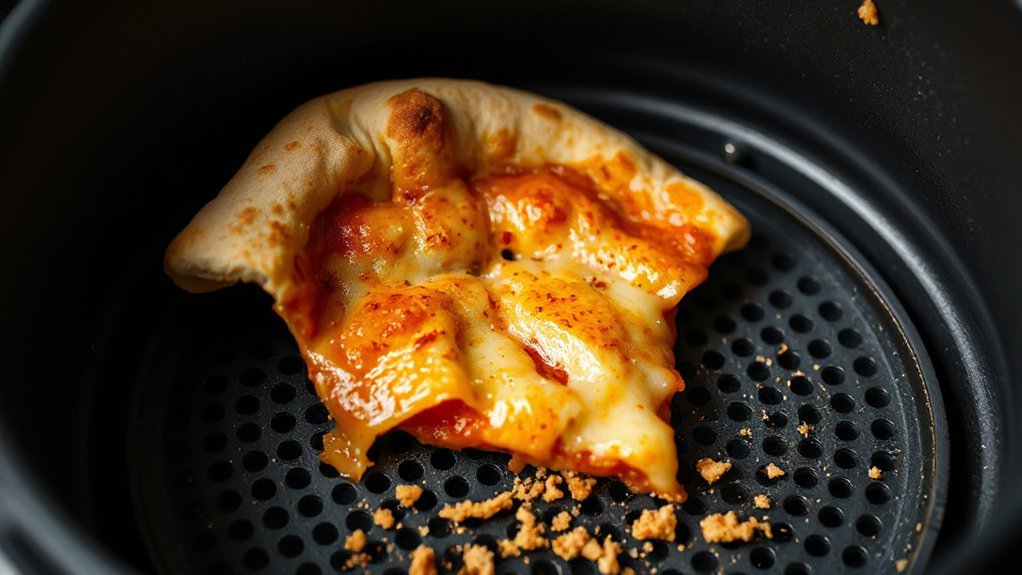
Because the air fryer surrounds your pizza with fast, circulating hot air, it crisps the crust and melts the cheese far quicker than a conventional oven. You get a restaurant-quality result without babysitting: rapid convection concentrates heat at the crust, boosting browning reactions and creating that satisfying crunch. The basket design exposes dough on both sides, so surface dehydration happens efficiently, preventing soggy middles and leaving a light, airy crumb. You’ll notice edges blister and cheese bubble in minutes, not half an hour. Temperature control and short cook times preserve toppings’ texture and keep flavors bright. You can tweak time by a minute or two to chase extra crispness, but you’ll find the sweet spot fast. Overall, the air fryer turns frozen personal pizzas into crisp, hot bites through focused airflow and quick moisture removal—it’s fast, predictable, and totally tuned for small, single-serving pies. every time, no fuss.
Choosing the Right Personal Pizza for Air Frying
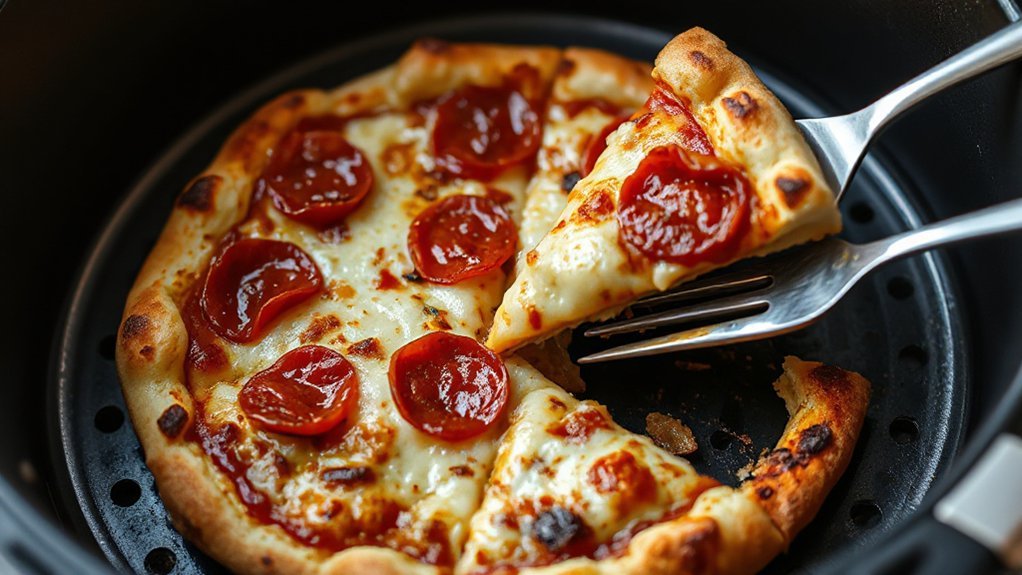
You’ll want a crust that crisps up quickly—thin or par-baked crusts usually finish beautifully in an air fryer. Stuffed or super-thick crusts often stay doughy, so save those for the oven. Also check the pizza’s size so it fits flat in the basket with a little airspace around the edges for even browning.
Crust Type Matters
When you pick a personal pizza for the air fryer, the crust decides whether you get a perfect crisp, a chewy center, or a limp, soggy mess. Look for crusts labeled thin or stone-baked if you want fast, crunchy results; thicker, doughier crusts will need more attention and can stay doughy inside. Pay attention to fermentation effects—longer-fermented doughs often brown better and develop complex flavor, while industrially fast doughs can be bland. Fat content matters too: higher fat in the dough or brushed oil promotes browning and crispness. Par-baked or pre-crisped crusts are your safest bet for reliable texture. You’ll learn to choose by reading labels and imagining the outcome before you press start. Trust small cues on packaging to guide your crispness expectations.
Size and Fit
How big is your air fryer basket and will that pizza actually fit? You should measure the basket diameter, check hinge clearance, and pick a pizza that leaves room for air circulation. Small personal pies (6–8″) work in most units; 10″ often won’t unless your basket is roomy. Use this quick guide to match pie size to your fryer:
| Pizza Size | Typical Diameter | When to Use |
|---|---|---|
| Personal | 6–8 in | Fits most baskets |
| Medium | 9–10 in | Check basket diameter |
| Large | 11+ in | Rarely fits; check hinge clearance |
Measure once, cook confidently, and avoid smashed toppings or blocked airflow. If your pizza brushes the sides, reduce size or rotate during cooking; leaving a half-inch gap promotes crisp crust and even browning every time. No exceptions. Seriously.
Preheating and Air Fryer Rack Placement
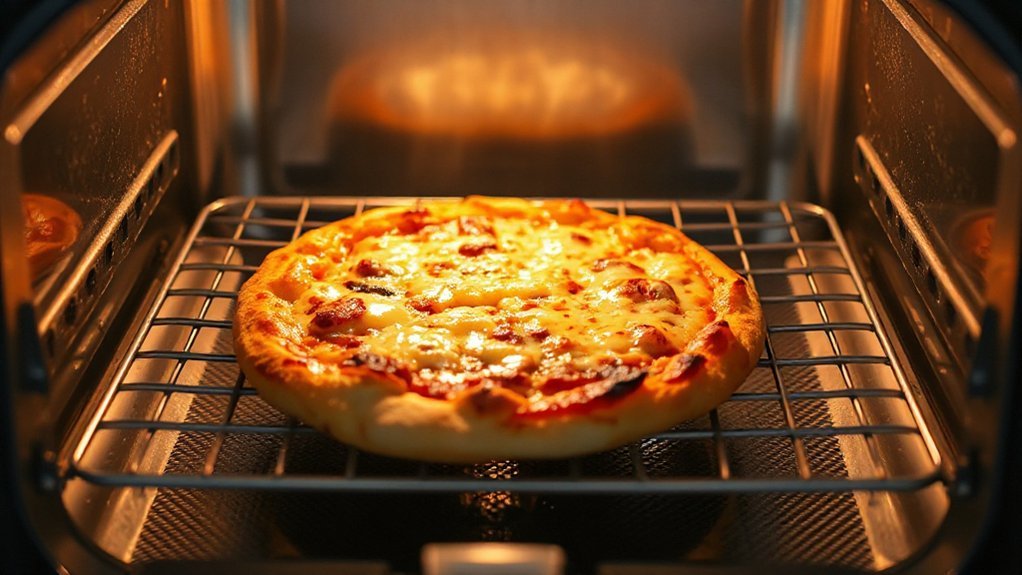
Before you pop your frozen pizza in, preheat the air fryer to about 375°F—this gives a crispy crust without burning the toppings. You’ll usually want the middle rack for even cooking, but move it higher for extra browning or lower for a softer crust. Small adjustments to temp and rack placement let you fine‑tune results for different crust types.
Ideal Preheat Temperature

While you might be tempted to toss a frozen pizza straight into the basket, preheating your air fryer to the right temperature and picking the proper rack position gives you a crisp crust and evenly melted cheese. Aim for 375–400°F (190–205°C) for most personal frozen pizzas; that sweet spot browns crust without burning toppings. Preheat for three to five minutes so the chamber reaches steady heat—this boosts Energy Efficiency because shorter cook times start from optimum conditions. Check your unit’s Temperature Calibration with an oven thermometer if results vary; a miscalibrated fryer needs adjustment or slightly altered temps. Once you dial in temperature and timing, you’ll get consistent, restaurant-style results without guesswork. Trust this approach and tweak small variables for perfect slices every time.
Rack Placement Guide
If you want even browning and melty cheese, preheat your air fryer and pick the right rack position—middle gives balanced results, lower crisps the crust more, and top speeds up cheese browning. You’ll want to check Basket Clearance before you slide in your pizza; some racks reduce usable height and crowd toppings. If your model has adjustable shelves, experiment with a quick test slice to find the sweet spot. Remember Model Variations affect airflow patterns, so consult your manual and note whether fans sit high or low. For thinner personal pizzas, lower rack plus a short preheat crisps fast; for loaded pies, use middle to finish toppings without burning edges. Keep notes so you repeat what works. You’ll nail perfect slices every time.
Ideal Temperature and Time Settings (2026-tested)
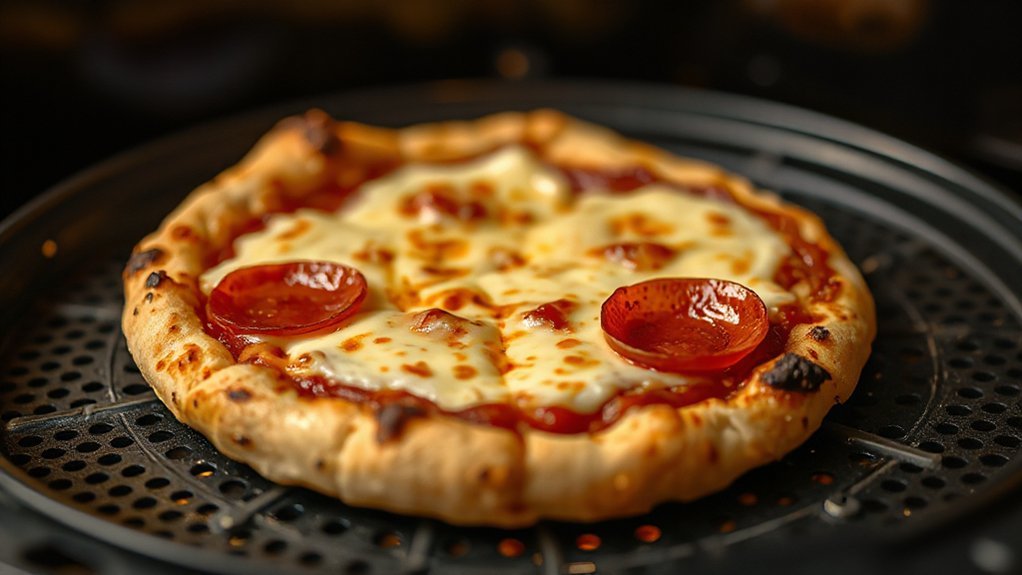
Because air fryers differ in wattage and airflow, we’ve tested dozens of frozen pizzas in 2026 to pinpoint the best temperature and time combos you’ll actually use—typically 350–400°F for 8–12 minutes based on crust, toppings, model variability, and humidity effects. You’ll dial toward 350°F for thin crusts and delicate toppings, 375°F for standard personal pies, and 400°F when you want blister and crunch on thicker crusts. Model variability matters: higher-watt units hit target temps faster, so trim 1–2 minutes; lower-watt models may need the full time. Pay attention to humidity effects in your kitchen—humid air can slow browning, so you might nudge temp up 10–15°F or add a minute. Start checking at the lower end of the range so you don’t overcook. Use these tested ranges as a reliable starting point, then adapt by increments so every personal pizza comes out just the way you like it each time.
How to Avoid a Soggy Middle
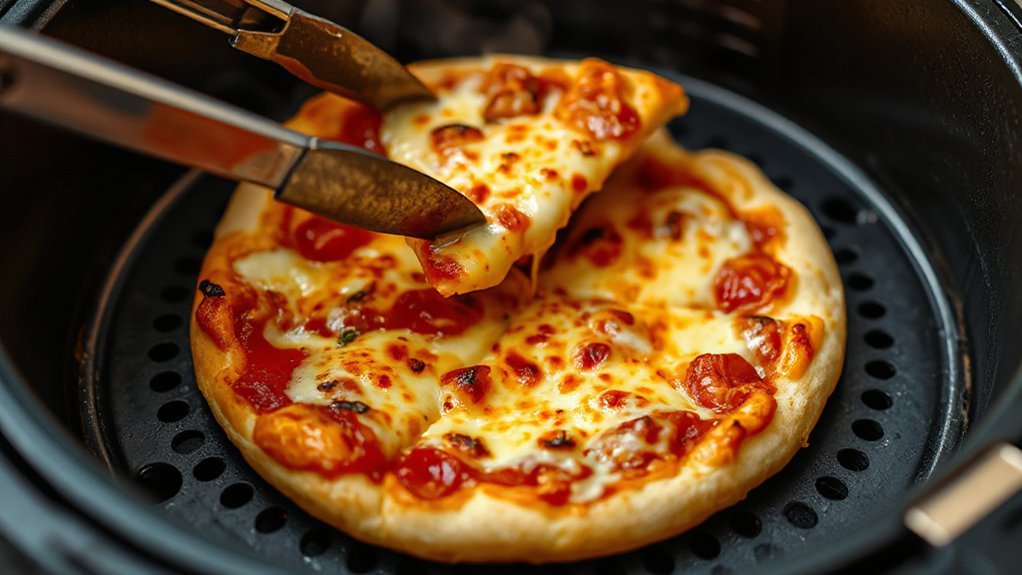
When you want a crisp center, fight moisture and promote steady airflow from the start. Preheat your air fryer so the crust hits hot metal immediately — that jump in heat seals edges and reduces soggy spots. Pat any soggy toppings dry; extra wet sauce or thawed vegetables release steam that pools under the crust. Use a perforated tray or a wire rack to keep air circulating; mounting the pizza above the basket floor prevents trapped condensation. Don’t overload the surface with cheese or sauce; lighter toppings brown faster and let steam escape. After cooking, resist temptation to leave the pizza in the basket — transfer it to a cooling rack for a minute so residual steam dissipates before you slice. If you’ll eat right away, serve promptly to keep textures crisp. These small moves help you tackle steam and lock in firm, not floppy center every time.
Extra Crispy Crust Tricks and Toppings Tips
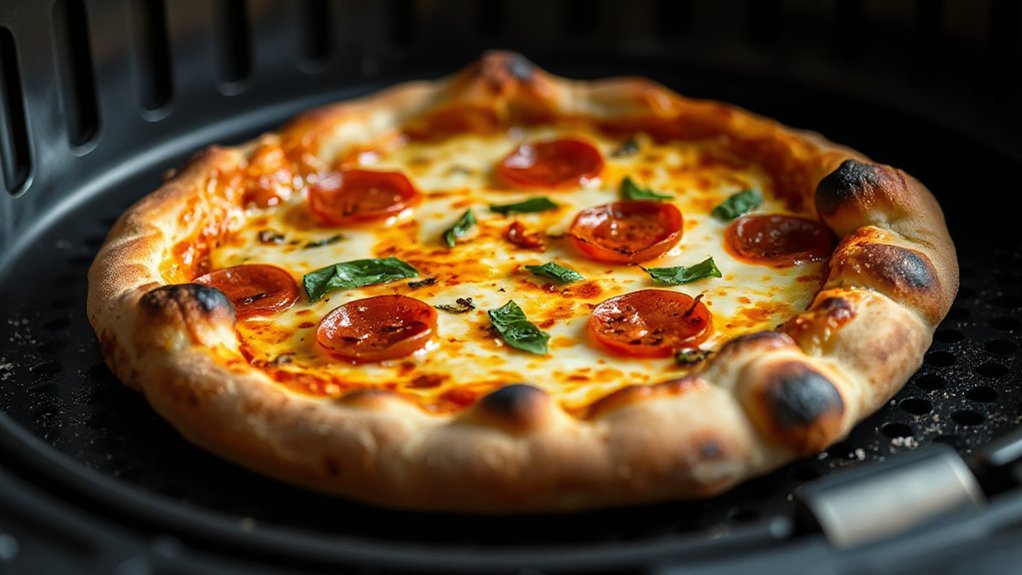
Although air fryers already crisp quickly, you can boost crunch with a few simple tweaks that keep toppings tasting great. Brush the crust edge with a thin layer of compound butter or olive oil before cooking; that fat helps brown and creates a golden, shatterable rim. Par-bake for two to three minutes, then add toppings so moisture doesn’t steam the base. For cheese crisping, sprinkle a little extra around the outer edge to form crunchy frico that locks in texture.
Tiny tweaks—oil the rim, par-bake briefly, and add extra cheese for crispy frico
- Use a light dusting of semolina or cornmeal under the crust.
- Dock the center lightly and preheat the basket for a hot start.
- Choose low-moisture toppings and blot wet ingredients.
You’ll end up with a toothsome perimeter and vibrant toppings, not a floppy center. Small moves make big differences, and you’ll enjoy an air-fried personal pizza that snaps with every bite. Perfect for weeknight dinners every time.
Reheating Leftover Pizza in the Air Fryer
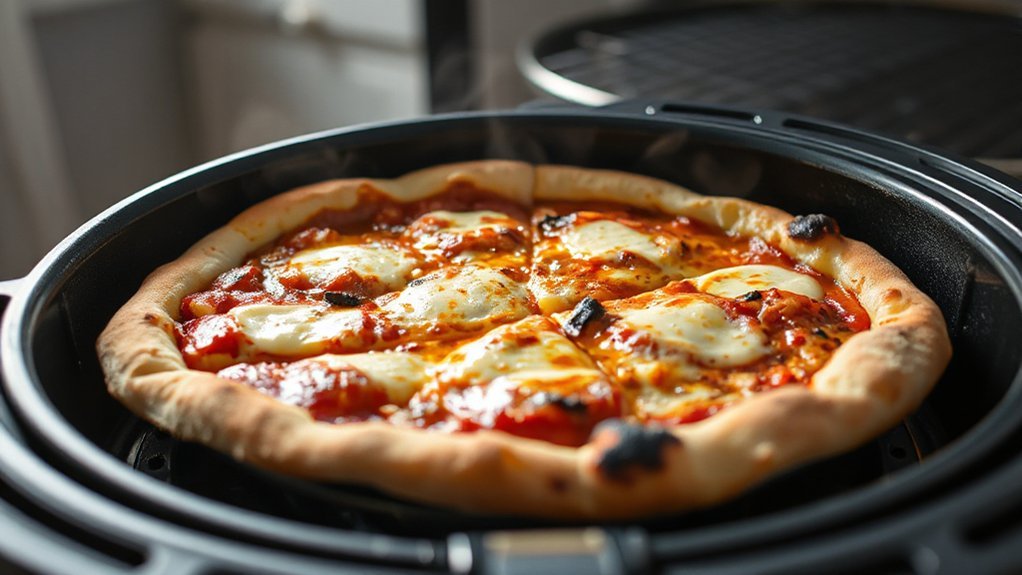
If you’ve got leftover pizza in the fridge, the air fryer’s the fastest way to get it tasting fresh and crisp again. You preheat to 350°F, arrange slices in a single layer with space for air to circulate, and give them about 3–5 minutes—check at three. That short blast restores crunchy crust without drying toppings. For thicker or loaded slices, add a minute or two. Use a light spray of oil if the edges seem dry. Remember food safety: don’t reheat pizza that’s been sitting out over two hours; refrigerate promptly and reheat only once. Practice reheat etiquette by warming just what you’ll eat and sharing timing tips so everyone gets a hot slice. If you want cheese melty without burning crust, cover loosely with foil for the last minute. Pull slices when bubbling and enjoy immediately; the air fryer makes leftover pizza feel intentional, not second-rate delicious.
Troubleshooting Common Air Fryer Pizza Problems
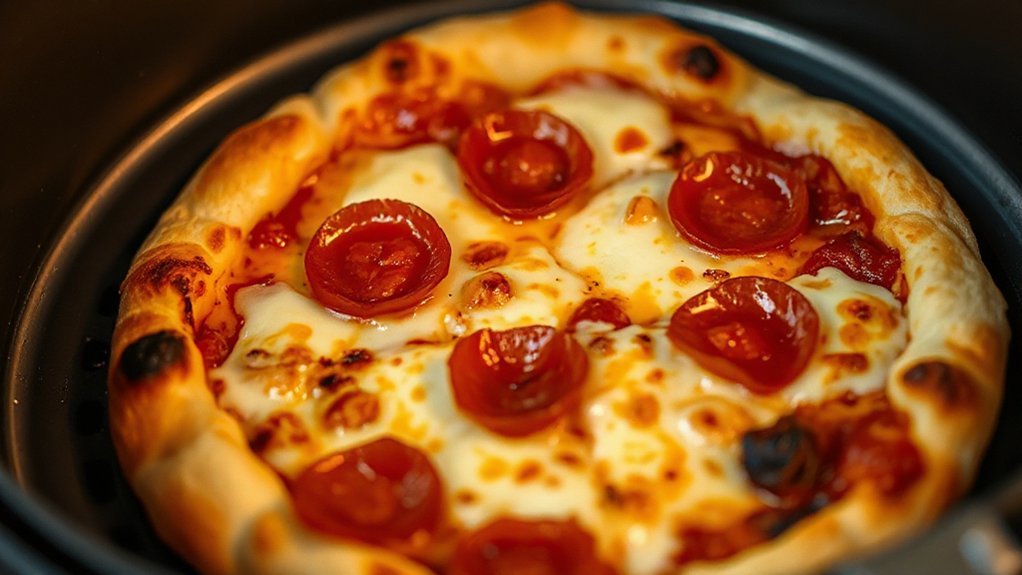
Why’s your pizza coming out soggy, burnt, or unevenly cooked? You’re not alone—air fryers demand tweaks. Check temperature and time; overcrowding blocks airflow and causes sogginess. For burnt edges, lower temp or stagger cooking. Use a probe or brief peek to avoid guesswork.
Air fryer pizzas need tweaking—avoid overcrowding, adjust temp and time, rotate mid-cycle for crisp, even crust.
- Preheat and shake: make sure even heat and avoid cold spots.
- Prevent basket sticking: spray a little oil or use parchment made for air fryers.
- Smoke prevention: trim excess grease, clean crumbs, and don’t cook oily toppings at max temp.
You can fix most problems with small changes: single layer cooking, adjusting temps, and rotating mid-cycle. If crust still varies, try a slightly lower temp for a couple extra minutes. Keep your basket clean and dry, and you’ll get consistent crispness without smoke or sticking. Practice and tiny tweaks will make your personal pizzas perfect every time. Don’t be afraid to experiment a bit. Enjoy experimenting.
Conclusion
You’re ready to make personal frozen pizzas sing in the air fryer: pick a thin-crust or par-baked option, preheat and place the rack so air can circulate, and cook at the recommended temp while checking for a golden, crispy rim. You’ll avoid a soggy middle by starting hot and finishing low, and reheat leftovers to revive crispness. Follow these simple steps and pizza night will be as easy as pie every single time, no guessing.
About The Author