You can get restaurant-quality halibut with a flaky, moist interior and crisp golden exterior in under 15 minutes using your air fryer. Pat fillets dry, brine briefly if you like, brush lightly with oil, season simply with salt, pepper and paprika, and avoid overcrowding for even browning. Preheat to about 380–400°F, flip once, and pull at 135–140°F to rest. Stick around and I’ll show timing, brine ratios, and finishing ideas, plus sides and wine pairings.
Why This Method Works
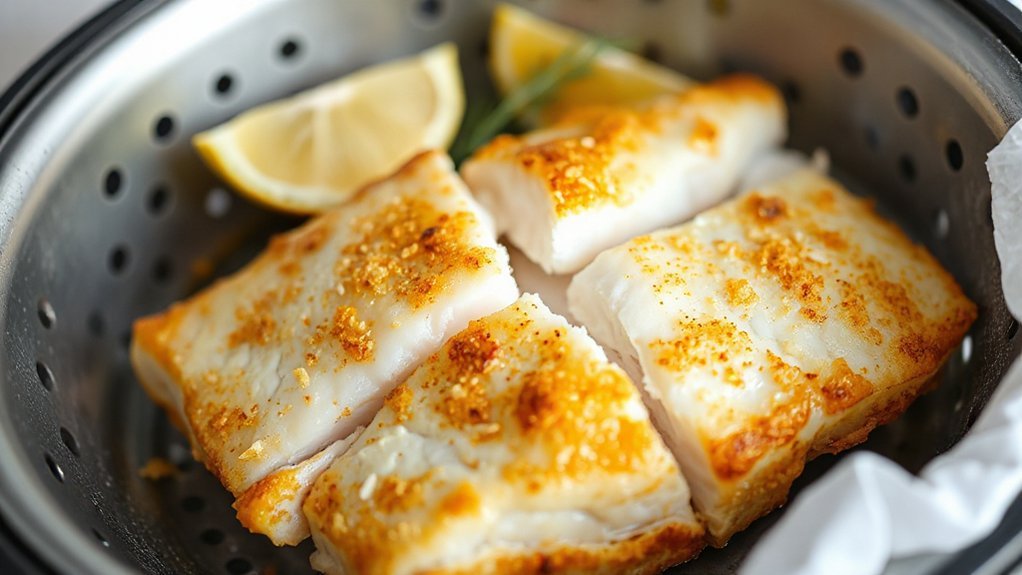
Because the air fryer blasts high, circulating heat around the fillet, you get a crisp exterior without drying the delicate flesh—so the outside browns quickly while the inside stays flaky and moist. You’ll notice Maillard development on the surface in minutes, creating flavor and visual appeal without sitting under a broiler. That rapid surface browning pairs with gentle Protein restructuring inside the flake, so your halibut firms just enough while retaining succulence. You control doneness by brief cook times and quick rest, letting carryover heat finish the center. Preheat and avoid overcrowding so airflow stays efficient; flip once if pieces vary in thickness. The method trims fat use and speeds prep, giving consistent results even if your oven skills are basic. You’ll get restaurant-style texture without fuss: crisp edges, tender layers, and predictable timing that makes weeknight dinners feel special and reliable for repeatable, quick, foolproof weeknight success.
Ingredients and Smart Seasoning
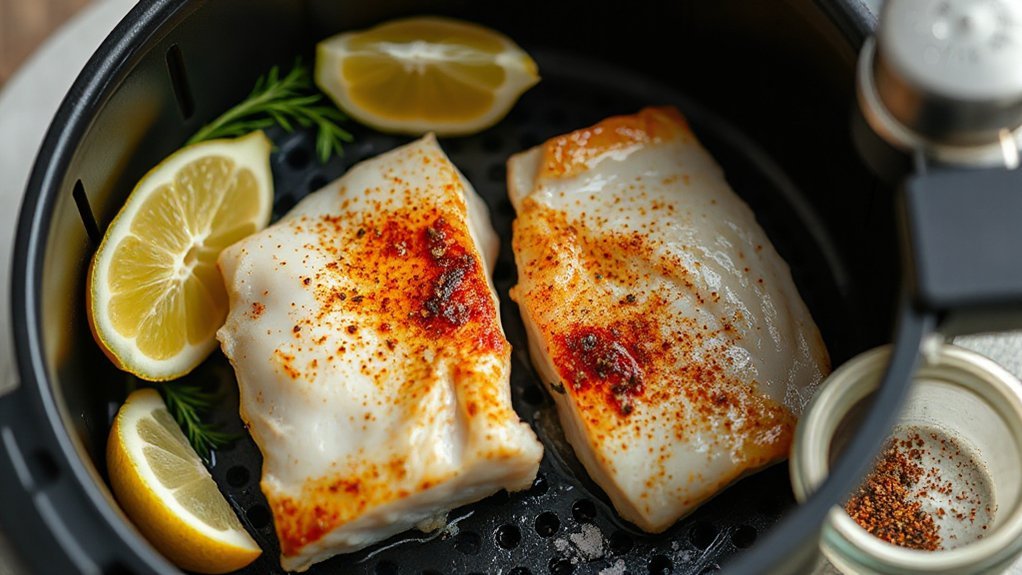
You want firm, translucent halibut that smells clean—look for fillets that spring back and show no browning. Keep a few pantry staples on hand—kosher salt, cracked pepper, garlic powder and smoked paprika—to make the fish pop. Finish with chopped herbs like parsley or dill and a squeeze of lemon (or a touch of orange zest) for bright, fresh flavor.
Selecting Fresh Halibut
How do you pick the freshest halibut without getting overwhelmed at the fish counter? Look for clean, briny scent—use the smell test: it should remind you of the ocean, not ammonia. Check flesh color; it should be translucent white and consistent. Press gently and note flesh firmness—good fish bounces back quickly, with no sticky residue. Ask the fishmonger about catch date and storage on ice; freshness beats fancy labels. Choose steaks or fillets with intact edges and minimal liquid in the package. If buying frozen, pick vacuum-sealed pieces with no freezer burn. Trust your senses: sight, smell, and touch will steer you to halibut that flakes beautifully in the air fryer and tastes like a win. You’ll be cooking restaurant-level halibut in minutes easily.
Essential Pantry Seasonings
With beautiful, firm halibut in hand, the right pantry seasonings make the difference between bland and brilliant.
- Kosher salt
- Freshly cracked black pepper
- Smoked paprika
- Garlic powder
Those staples give crisp, savory backbone in the air fryer. Keep jars tidy with simple spice organization so you grab what you need without stopping mid-recipe. Use clear labeling systems—date and name each jar—to avoid mystery spices and stale flavors. Before cooking, taste a pinch of a dry mix to balance salt and heat. Measure confidently, season evenly, and let the short air fry time do the rest. Smart pantry choices keep your halibut reliably flaky and flavorful. You’ll impress guests without fuss every single time, guaranteed, honestly always. Try them this week.
Herb and Citrus Finishes
Finishing halibut with herbs and citrus lifts it from good to memorable, so pick bright, delicate flavors that won’t smother the fish. You’ll want a light brush of citrus emulsions—think lemon or orange whisked with olive oil and a touch of honey—to add shine and snap without sogginess. For herb accents, smear small dollops of herb pastes made from parsley, chives, or dill mixed with a little olive oil and lemon zest; they melt into flakes and boost aroma. Sprinkle flaky salt and a whisper of cracked pepper last. Keep it minimal: apply finishes just after air frying so the heat wakes aromatics but doesn’t burn them. Taste, adjust, and serve immediately for maximum freshness. A citrus-herb drizzle ties everything together in seconds flat.
Quick Brine to Lock in Moisture
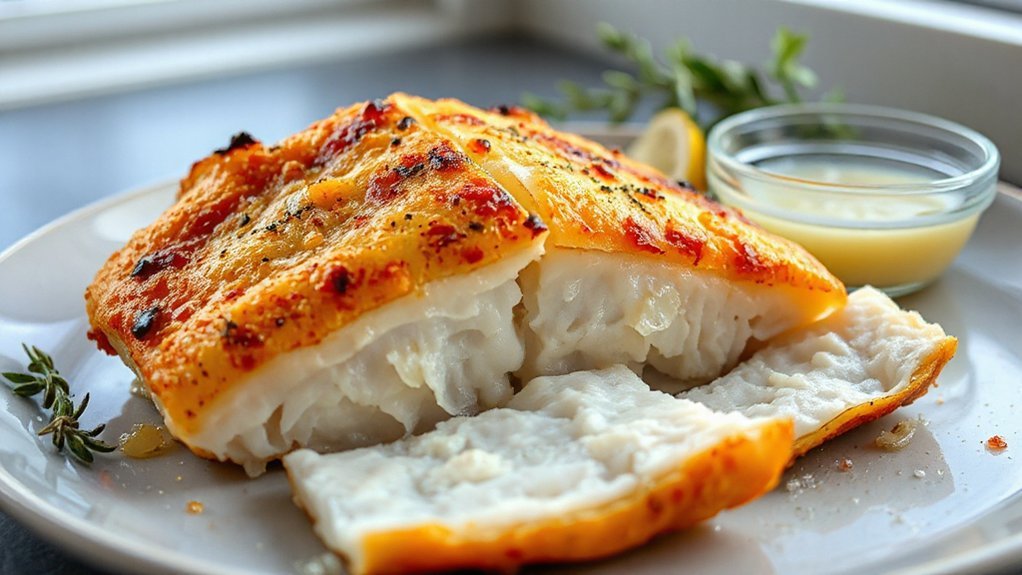
You’ll want a simple brine—about 1 tablespoon kosher salt per cup of water with a touch of sugar—to season without overpowering. Keep halibut in that mixture for 15–30 minutes depending on thickness so it soaks up moisture without getting mushy. Rinse and pat dry before air frying and you’ll lock in juiciness every time.
Brine Ratio Rules


When you want moist halibut fast, a quick brine is your shortcut — and nailing the salt-to-water ratio is the rule you shouldn’t skip. You’ll use Osmosis Principles and simple Concentration Math to balance flavor and moisture: too weak does nothing, too strong firms the flesh. Aim for predictability.
- Use 1 tablespoon kosher salt per cup water for a gentle brine.
- For a firmer bite, go 1.5 tablespoons per cup — still safe for short brines.
- Add 1 teaspoon sugar per cup if you want a touch of caramelized color.
- Keep aromatics minimal; they won’t change the ratio but boost flavor.
Rinse briefly, pat dry, and you’re ready to air fry flaky, juicy halibut. Serve immediately for best texture and flavor.
Brine Timing Guide
Although halibut’s delicate flesh won’t tolerate long soaks, a short, controlled brine will lock in moisture without turning the fish overly firm or salty. You’ll brine 15–30 minutes for fillets, and up to 45 minutes for thick steaks; any longer invites Overnight Risks and a gummy bite. Rinse briefly and pat dry before air frying. Watch Texture Timing: firm but flaky is the goal.
| Cut | Brine Time |
|---|---|
| Thin fillet | 15 min |
| Thick fillet | 30–45 min |
| Steak | 45 min |
Trust your clock, not guesswork. If you want more flavor, add herbs to the fridge during the final 10 minutes, not the whole soak. Start timing as soon as salt hits the fish; quick brines are forgiving, but don’t ignore Texture Timing cues like springiness. Enjoy.
Air Fryer Setup and Temperature Guide
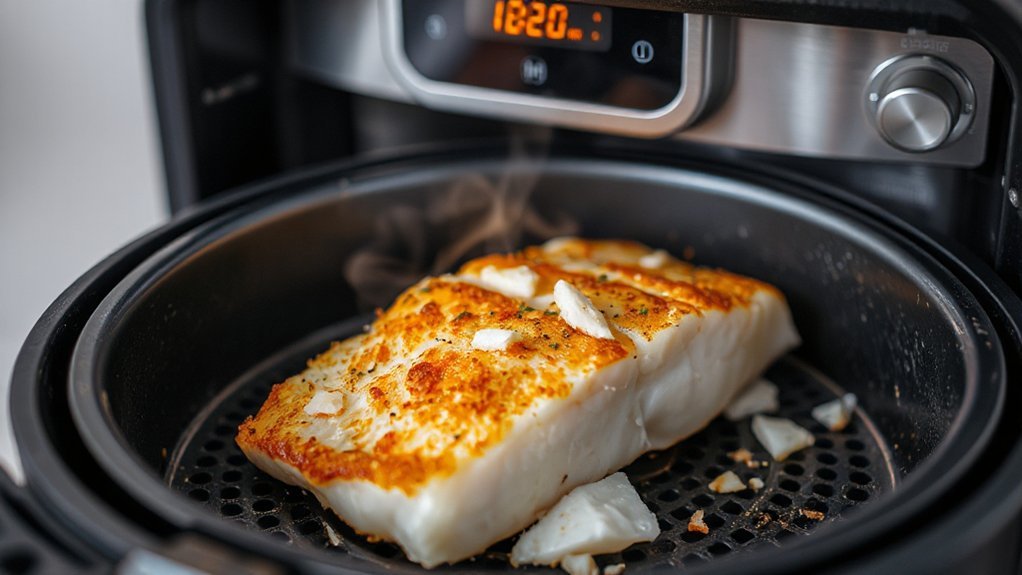
Because air fryers differ, you’ll want to set yours up deliberately before cooking halibut: preheat for 3–5 minutes, pat the fillets dry, brush or spray lightly with oil, and arrange them in a single layer with space for air to circulate. You’ll aim for a medium-high range—about 380–400°F—and perform temperature calibration if your unit runs hot or cool. Mind rack placement so the hot air hits the fillets evenly; higher racks give quicker browning, lower racks milder heat. Keep things simple and confident: don’t overcrowd, don’t drown the fish in oil, and trust visual cues.
Preheat, pat dry, lightly oil, single layer; 380–400°F and watch rack placement for flaky halibut
- Preheat and confirm with a thermometer.
- Rack placement: middle or slightly above center.
- Light oiling and spacing for airflow.
- Adjust temp after one test batch.
Tune these basics to your model, and you’ll get consistent, flaky results. Make minor tweaks and note them for next cooks for repeat success.
Step-by-Step Cooking Instructions
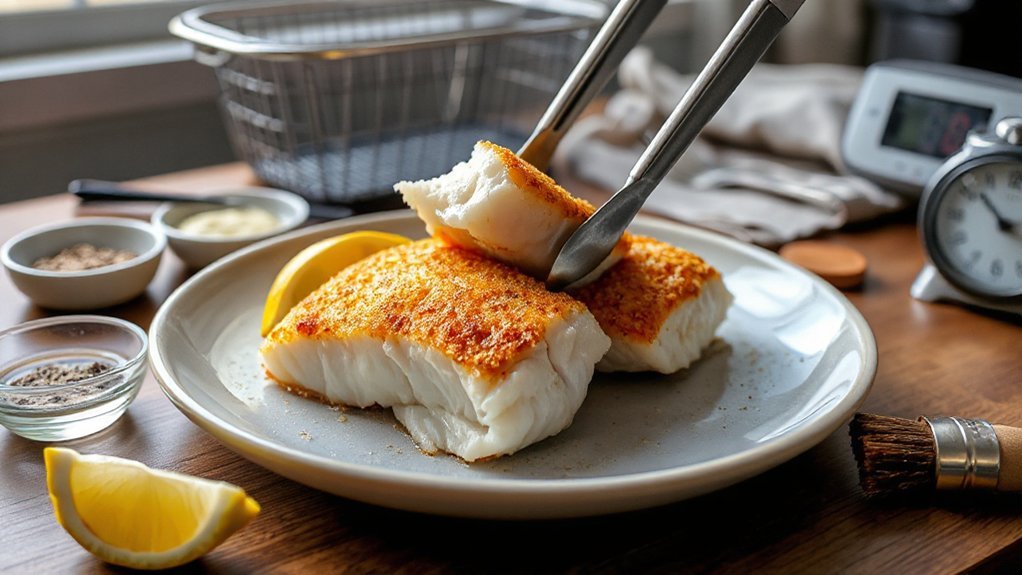
Start by preheating your air fryer to 380–400°F, then place the oiled, dried fillets in a single layer with space between them. Pat seasoning gently so it sticks, and load the basket without crowding. Cook for 8–10 minutes for 1-inch fillets, flipping halfway; thicker pieces need 12–14 minutes. Use an instant-read thermometer — 135–140°F signals flaky perfection. Keep Tool Prep minimal: a brush, tongs, thermometer, and a small bowl for pan sauce are all you need. Check at the earlier time to avoid overcooking; air fryers vary.
If you want crisp edges, spray a light mist of oil before the flip. Capture Process Photos during the flip and at finish so you can review doneness and repeat success. Rest fillets 2–3 minutes before serving to let juices redistribute. You’ll get flaky, restaurant-quality halibut with confident, simple steps. Tweak times based on fillet thickness and your specific air fryer model.
Serving Suggestions, Sides, and Storage Tips
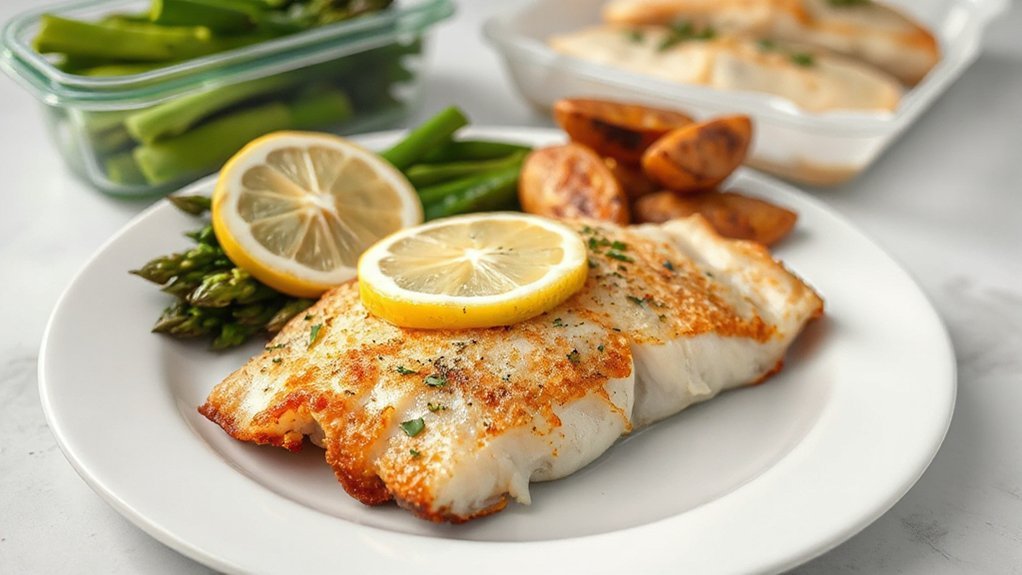
Want ideas for plating and keeping leftovers tasting great? You’ll plate halibut simply: a drizzle of lemon-herb butter, microgreens, and a lemon wedge for brightness. Choose sides that balance the fish’s flakiness — roasted asparagus, herbed quinoa, or a crisp fennel slaw. For Wine pairings, go with chilled Sauvignon Blanc or an unoaked Chardonnay to lift delicate flavors without overpowering them. Store cooked halibut tightly wrapped in the fridge for up to three days; cool it quickly and avoid stacking pieces.
- Reheat gently in the air fryer at 300°F for three to four minutes to preserve texture.
- Make Leftover recipes: flake into tacos with slaw, toss into a lemony pasta, or fold into a warm grain bowl.
- Pack sauces separately to keep the crust crisp.
- Freeze portions in airtight containers for up to one month; thaw overnight in the fridge.
Enjoy your fresh halibut.
Conclusion
You’ll love how this air fryer halibut flakes like a sunlit cloud under your fork, bright, juicy, and impossibly tender. With that quick brine and a kiss of seasoning, you’ll pull plates that look restaurant-ready yet feel totally homey. Pop it on your favorite greens or buttery potatoes, and savor the crisp edges and melt-in-your-mouth center. Keep it simple, eat it warm, and enjoy the proud, satisfied smile you’ll wear, and make dinner feel effortless.
About The Author