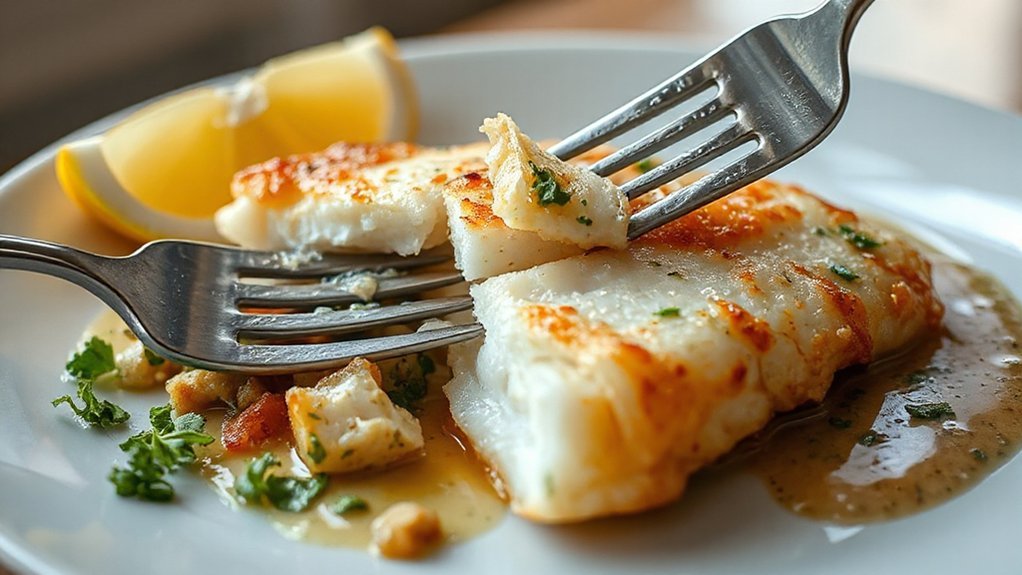
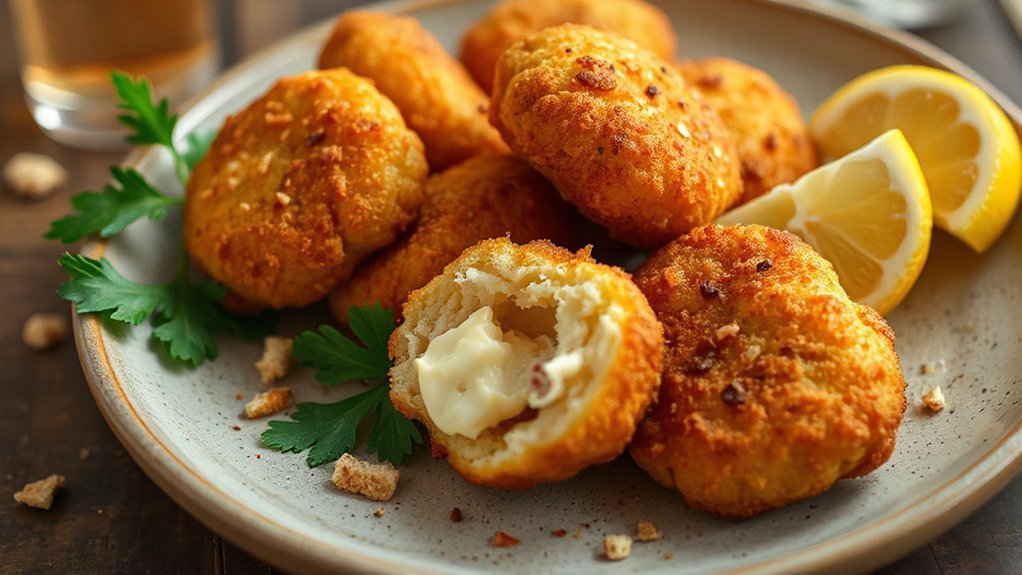
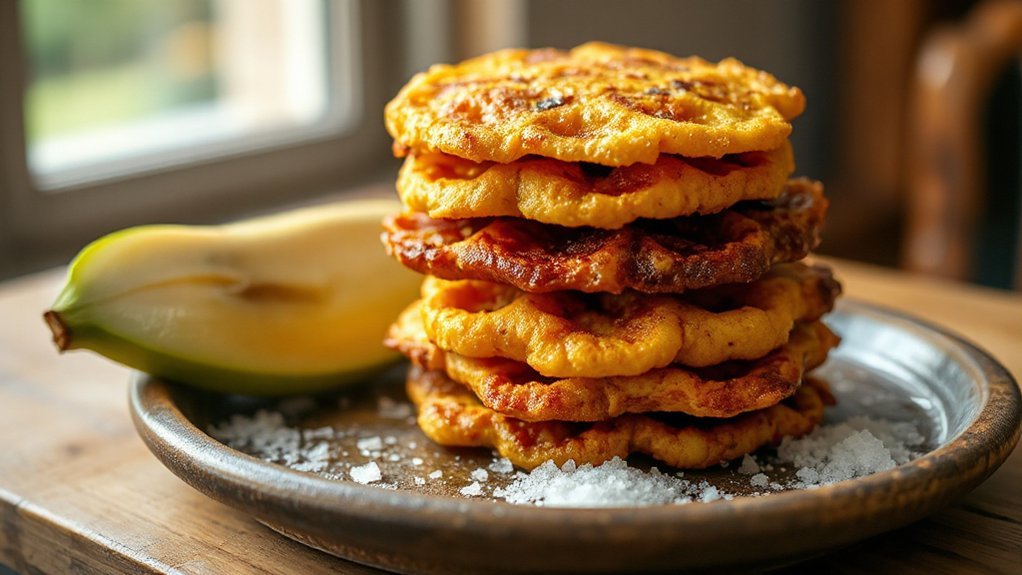
You’ll get golden, ultra-crisp cornmeal‑crusted catfish that stays flaky inside using a quick buttermilk soak, seasoned cornmeal with a little flour or cornstarch, and an air fryer heated to 400°F. Pat fillets dry, press the coating on, let it set, spray lightly with oil, and cook in a single layer—about 8 minutes, flip once, then 4–6 more minutes—until deep golden. Keep it simple, serve with lemon and remoulade, and I’ll show tips to perfect it.
Why This Version Works
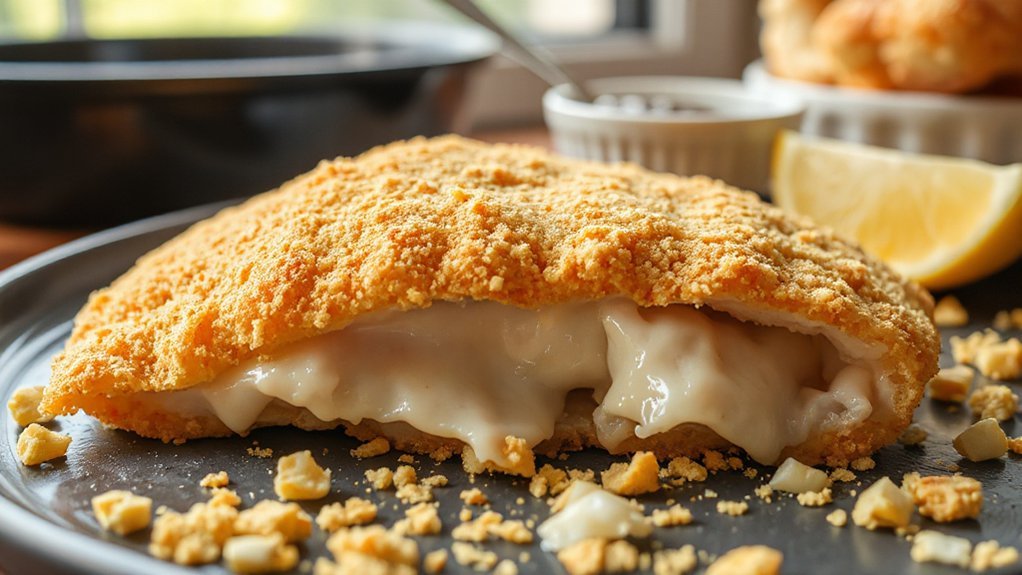
Because it marries classic Southern cornmeal crunch with the air fryer’s fast, even heat, this version gives you crisp, golden catfish without drowning it in oil. You get the familiar snap of a cornmeal crust and flaky interior in minutes, so weeknight dinners feel like a Sunday gathering. It honors Cultural resonance by nodding to regional techniques while updating them for modern kitchens; that’s why family recipes translate so well to the air fryer. You’ll appreciate how less oil highlights the fish’s natural flavor and lets spices sing, delivering Nostalgic comfort without the guilt. The method’s predictability means you’ll hit the same satisfying texture every time, whether you’re feeding kids or friends. That consistency lets you experiment with sides and sauces, confident the catfish will stay the star. Try it once and you’ll see why this approach becomes your shortcut to Southern-style crunch and flaky fish every time.
Ingredients You’ll Need
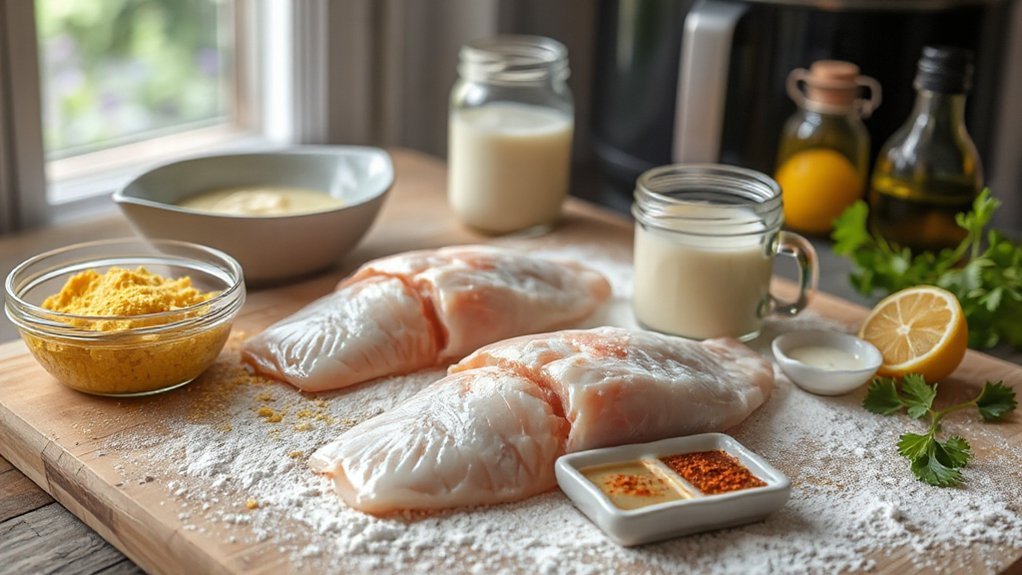
Now that you’ve seen how the air fryer brings Southern cornmeal crunch to life, let’s gather what you’ll need to pull it off. You’ll want 1½–2 pounds catfish fillets (fresh or thawed), yellow cornmeal for that signature crust, all-purpose flour to help coatings stick, and a couple of eggs or buttermilk for an easy binder. Add fine salt, black pepper, garlic powder, and a pinch of cayenne for Southern kick. Finish with a drizzle of neutral oil or cooking spray to encourage crisping. For sides and finishing: lemon wedges and chopped parsley brighten the plate.
Keep pantry essentials like cornmeal, flour, and spices stocked—this recipe leans on basic staples. If you’re budgeting, I include a simple cost breakdown: catfish and cornmeal are the main expenses; spices and eggs are low-cost staples you’ll reuse. You’re ready to shop smart and cook confidently. Grab these and let’s make dinner tonight.
Equipment and Prep
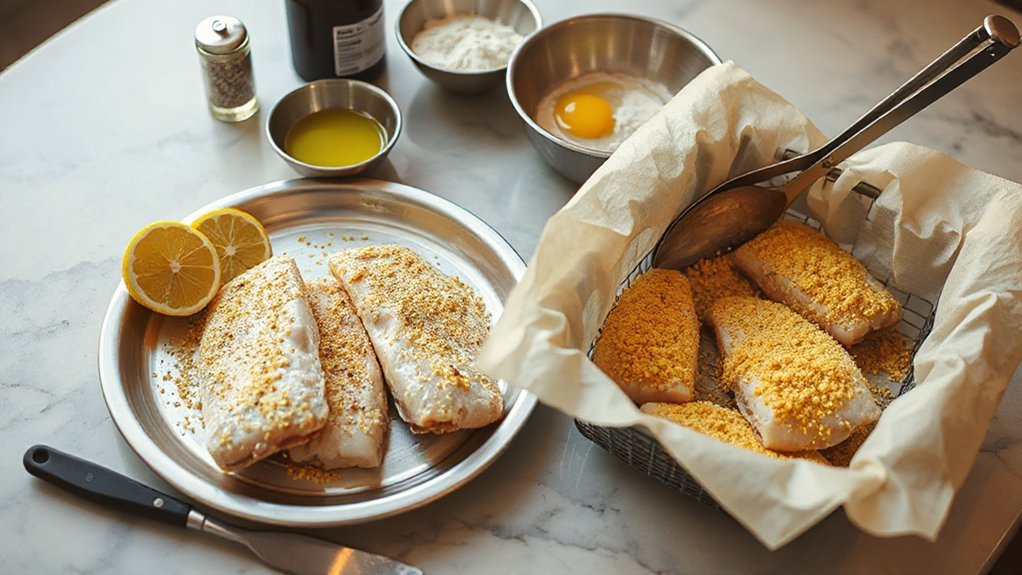
You’ll want an air fryer that’s big enough for a single layer of catfish and can hit 375–400°F, with a nonstick basket or tray for easy cleanup. Pat the fillets dry, season them generously with salt, pepper, and Cajun or creole spices, and let them rest while you set up your coating station. For a crisp Southern crust, set out flour, beaten eggs or buttermilk, and cornmeal or breadcrumbs, then press and shake off excess before frying.
Air Fryer Requirements
If you want crisp, flaky catfish, pick an air fryer that can hold fillets in a single layer and maintains steady temperature—ideally 3–6 quarts for 2–4 servings. Check size constraints so your fillets don’t overlap; overcrowding ruins the crust. Look for adjustable thermostat and reliable fan for even browning. If you travel or use a dorm unit, confirm voltage compatibility to avoid tripping breakers or frying performance issues. Nonstick, removable baskets make cleanup quick, and racks help cook multiple pieces without stacking. Aim for 360–400°F capability and a simple timer. You’ll want a model with easy controls and a sturdy handle—practical features that make cooking Southern cornmeal-crusted catfish effortless and consistent every time. Smaller units suit singles; larger baskets work great for family meals often.
Prep and Season Fish
Gathering the right tools—a shallow dish for dredging, a pair of tongs, a wire rack, paper towels, and a small bowl for your spice mix—makes prepping catfish quick and tidy. Pat fillets dry with paper towels, then inspect each for pin bones; a simple deboning technique is to run your fingertips along the flesh, lift stray bones with tweezers, and recheck. Keep fillet thickness even by gently pressing thicker areas or trimming so they cook uniformly in the air fryer. Season simply: salt, pepper, smoked paprika, a touch of cayenne, and a squeeze of lemon; mix in your small bowl and sprinkle evenly. Let seasoned fillets rest on the wire rack for 10 minutes to absorb flavors before cooking. Don’t skip this quick step.
Breading and Coating
Set up a three-station dredge: one shallow dish for seasoned flour, a second bowl with beaten egg or buttermilk, and a third with your cornmeal-panko mix; have tongs, a whisk, and a wire rack or cooling rack over a tray ready. When you dredge, pat fillets dry so the adhesion science works — less surface moisture means the flour tacks on. Dust, dip, then press the cornmeal mix firmly so the protein interaction between egg and fish helps the crust cling. Use tongs to avoid smashing flakes and let coated pieces rest on the rack for 5–10 minutes to set. That brief rest improves adhesion and crisps edges in the air fryer. You’ll get a golden, flaky crust that holds up to flipping easily.
Buttermilk Soak Explained
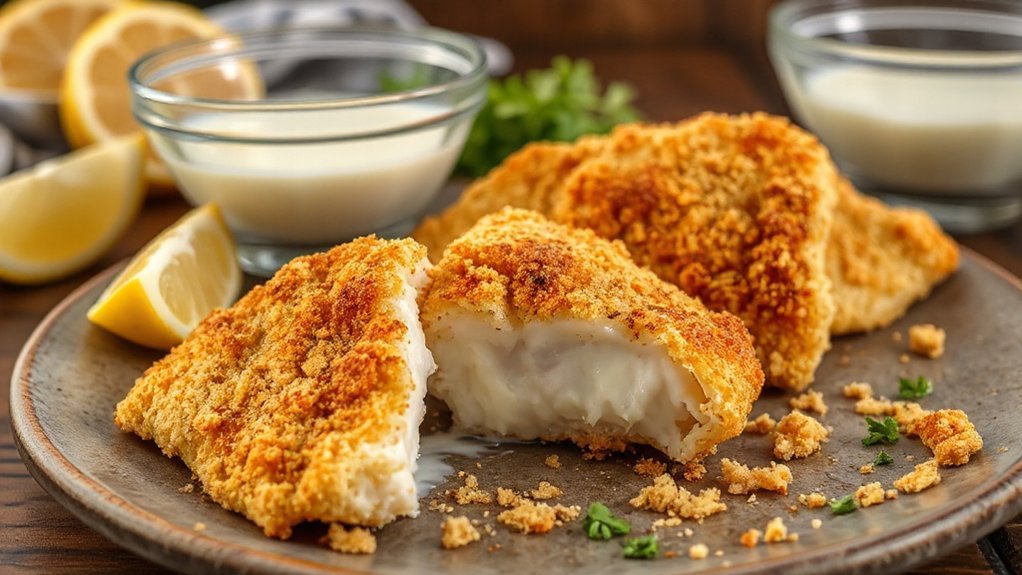

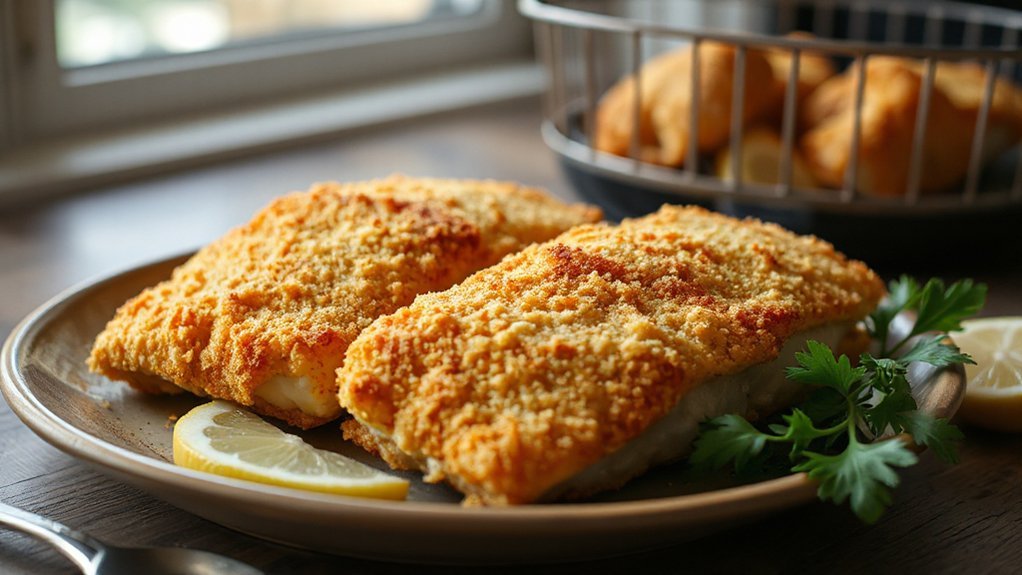
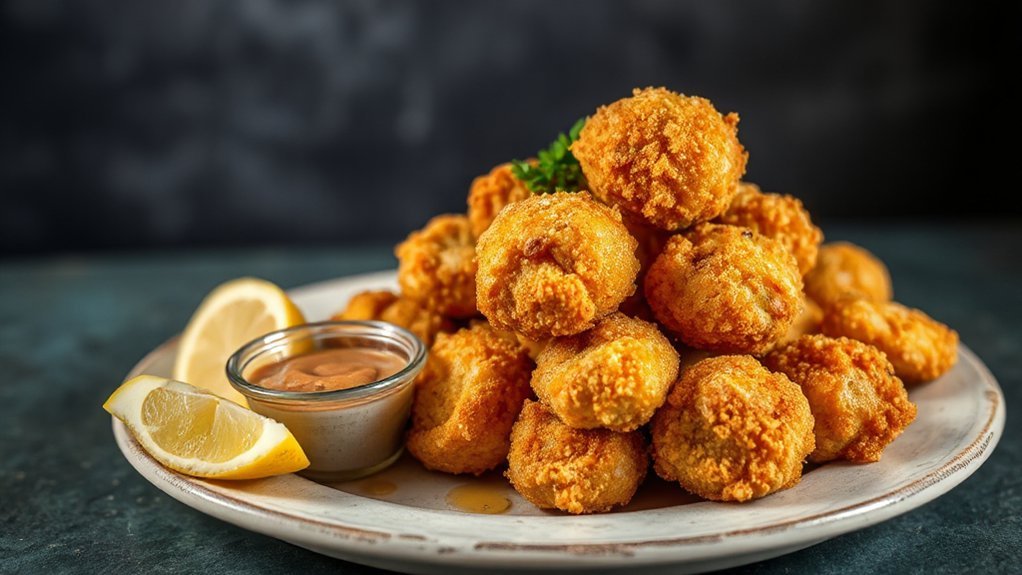
When you soak catfish in buttermilk, you’re doing more than following tradition—you’re tenderizing the flesh, mellowing any briny or “fishy” notes, and giving the coating something to cling to for a crisp, even crust. You get real Acidity Benefits: lactic acid breaks down muscle fibers, aiding Protein Tenderization so the fillets stay flaky, not rubbery. The soak also evens moisture and helps sauces and coatings adhere.
- Short soak (30–60 minutes) — light tenderizing and flavor mellowing.
- Longer soak (up to 4 hours) — deeper softening without turning mushy.
- Quick rinse or shake-off — remove excess buttermilk for proper browning.
Trust this step; it’s simple, forgiving, and it lifts plain catfish into reliably tender, flavorful bites. You’ll notice better texture and a milder, cleaner fish flavor after a proper buttermilk rest. Try it once; you’ll notice the difference every time you air-fry for crisp, tender results.
Seasoning and Cornmeal Coating
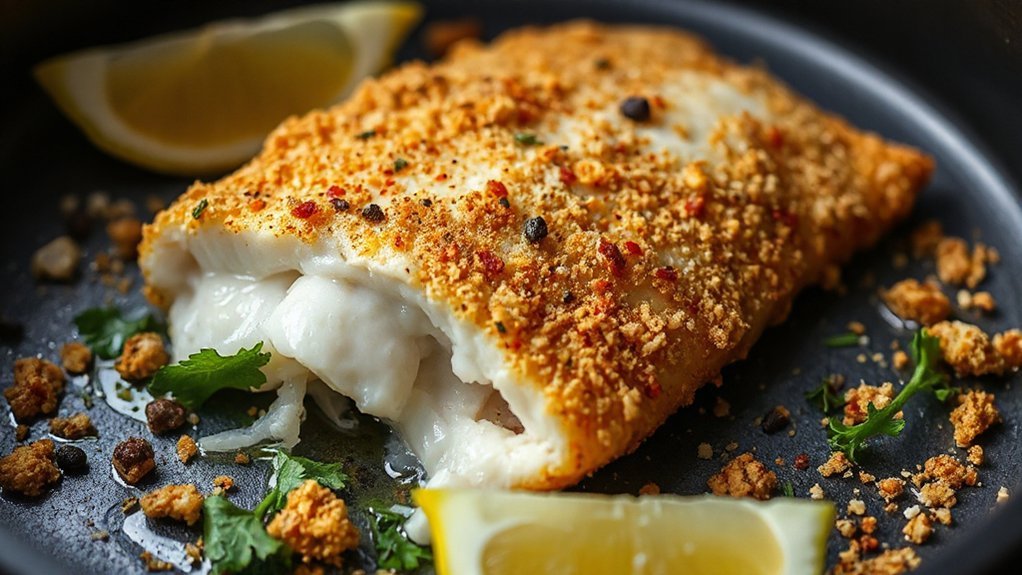
You’ll pick a spice blend—Cajun, Creole, lemon‑pepper, or a simple smoked‑paprika, salt, and pepper mix—to season the catfish. Pat the fillets dry, press the spices into the flesh, then coat evenly with yellow or fine‑ground cornmeal for that classic Southern crunch. Lightly spray the coating with oil and give the fillets a gentle shake to remove excess so the crust crisps up without clumping in the air fryer.
Spice Blend Options
Although simple cornmeal and salt will get you crispy catfish, the right spice blend makes it sing — and you can tailor it to match how adventurous you feel. Think about Regional Influences and Pairing Beverages as you pick spices; Cajun heat, Creole, lemon‑pepper brightness, or smoked paprika’s warmth shift the dish. Keep balance—don’t overpower the fish.
- Cajun kick: paprika, cayenne, garlic powder—bold, great with cold beer.
- Creole herb: thyme, oregano, onion powder—earthy, pairs well with iced tea.
- Citrus & smoke: lemon zest, smoked paprika, black pepper—bright, matches white wine.
Use small batches to test blends and trust your taste. Rotate spices seasonally, note favorite proportions, and write them down so your go‑to mix becomes reliably delicious every time you fry catfish.
Cornmeal Coating Technique
Pick your spice blend, then let the coating do the rest—it’s what turns seasoned fillets into a crisp, golden crust. You’ll choose a cornmeal grind selection that matches your texture goal: fine for light, almost tempura-like crisp; medium for classic Southern crunch; coarse for extra toothiness. Season the cornmeal with salt, pepper, paprika, and a touch of cayenne, and combine with a little flour to improve browning. For adhesion techniques, pat fillets dry, brush them with mustard or beaten egg, then press them into the cornmeal mix so it bonds evenly. Don’t overload—shake off excess. Preheat the air fryer and spritz oil for instant crispness. With these steps, you’ll get flaky fish with a reliably crunchy crust. Serve immediately for peak texture and flavor.
Step-by-Step Air Frying Method
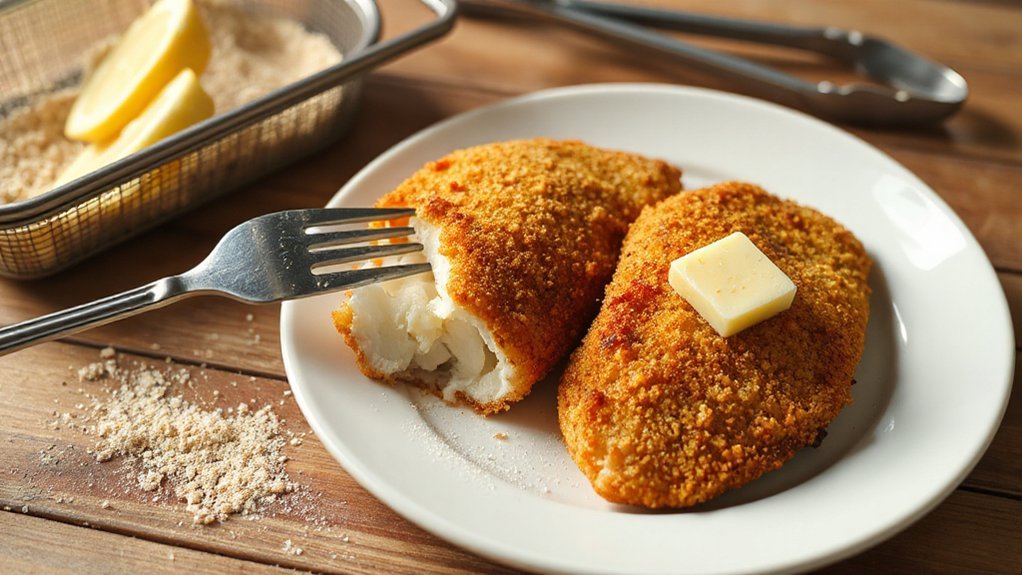
Once the fillets are breaded and the air fryer’s preheated to 400°F, you’re ready to cook. Place fillets in a single layer, don’t crowd, and watch for visual cues like golden edges and bubbling coating that signal doneness. Use step sequencing: set 8 minutes at 400°F, flip, then 4–6 more minutes until flaky. Keep a timer and check thick pieces earlier.
- Arrange: leave space between fillets for air flow to promote even crisping.
- Flip: turn gently at the halfway mark to expose both sides to heat.
- Rest: let fish sit 2 minutes after cooking so juices settle and coating firms.
You’ll learn to trust the cues and timings, adjusting for thicker or thinner fillets. This straightforward method gives crispy, flaky catfish without fuss. Follow these clear steps and rely on texture and color rather than exact times when your fillets vary in thickness at home.
Tips for Extra Crispiness
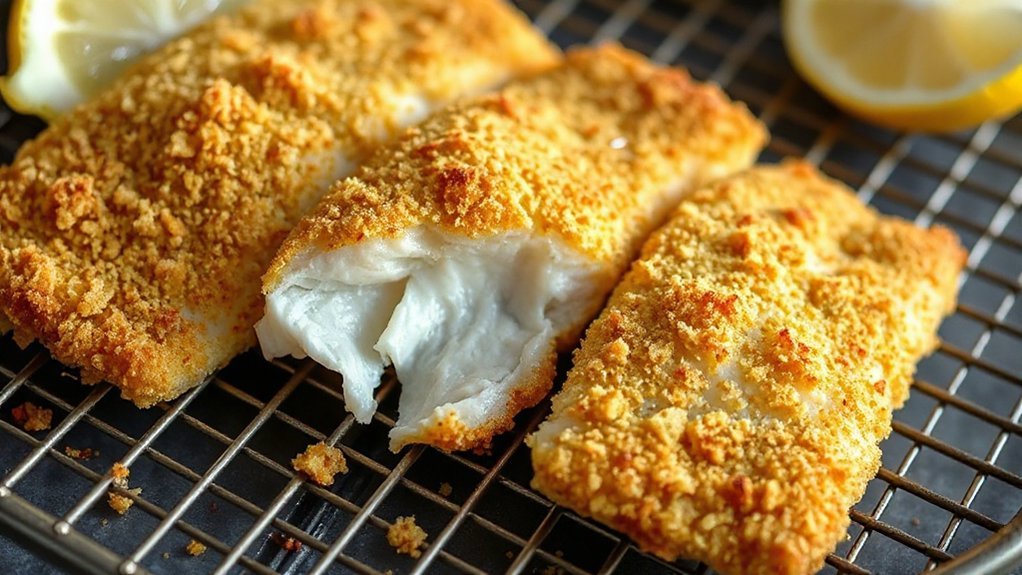
To crank up the crunch, start by patting your fillets thoroughly dry and give the coating a little cornstarch or rice flour before breadcrumbs for extra grip. Let the coated fillets rest 10 minutes so the crust sets, then spray lightly with oil so it browns evenly. Don’t crowd the basket; airflow makes the difference. Flip once halfway for uniform color. Pay attention to Texture perception: look for even golden color and slight shredding at the edges. Use a timer but trust Sound cues—light sizzling and crisp tapping hint readiness. If you want an ultra-crisp finish, increase temp for the last 2–3 minutes. For delicate fillets, use thicker cornmeal to keep flakiness without sogginess. Cool briefly on a rack to prevent steam from softening the crust. With these tweaks you’ll get very reliably crispy, flaky catfish every time.
| Tip | Why |
|---|---|
| Dry | Grip |
| Cornstarch | Brown |
| Oil | Spray |
| Rack | Rest |
Serving Suggestions and Sides
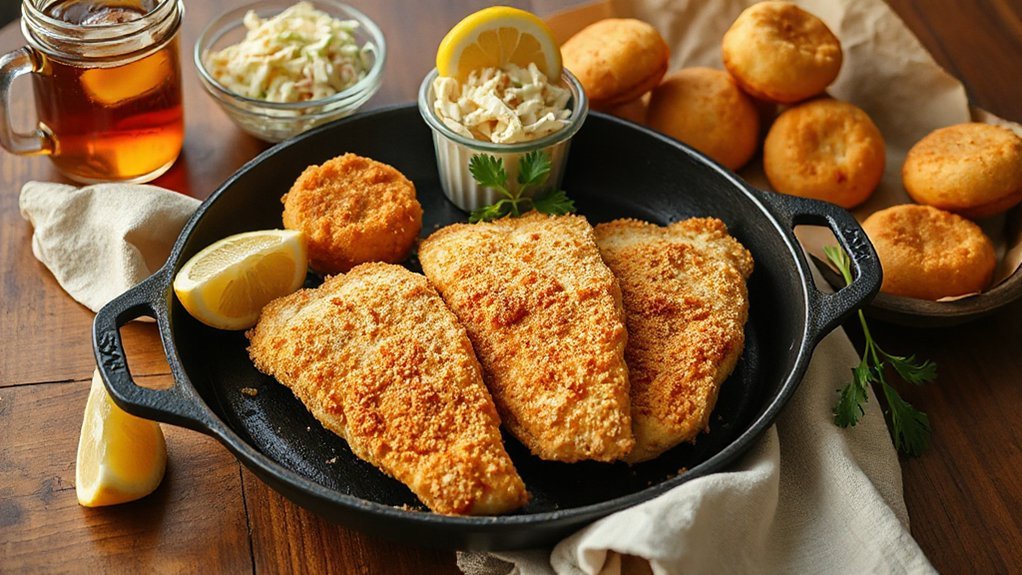
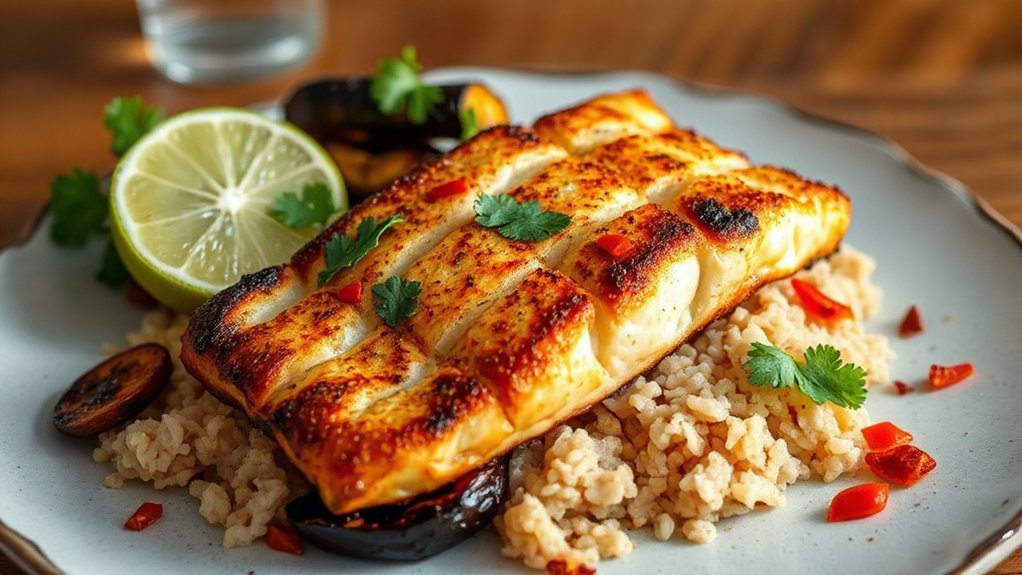
Pairing your crispy catfish with the right sides turns a simple meal into a Southern-style feast you’ll actually want leftovers for. Start with bright slaw tossed in vinegar and lemon to cut richness, and a spoonful of tangy remoulade for zip. Offer hushpuppy options like honey-drizzled minis or jalapeño-studded balls so guests customize heat. Keep sides balanced: roasted corn, sautéed greens, or mashed sweet potatoes. Think about Beverage pairings too; an ice-cold lager, citrus iced tea, or crisp Sauvignon Blanc highlight the cornmeal crust. Serve family-style so people can mix flavors. Use contrasts to elevate each bite:
- Crunch — cornmeal crust and fries
- Acid — slaw, pickles, or lemon
- Cool sip — beer, iced tea, or white wine
Also add pickles or a dill cucumber salad for brightness and extra texture on the plate. Set out lemon wedges and hot sauce for immediate bright heat.
Storage and Reheating

Although air-fried catfish tastes best straight from the fryer, you can keep leftovers crisp and safe if you store them right: chill pieces in a single layer on a tray until cool, then wrap each piece in parchment or paper towel and tuck them into an airtight container in the fridge for up to 3 days (or freeze for up to a month). When you refrigerate, add fridge labeling with the date so you know freshness. To reheat, preheat your air fryer or oven to 350°F; thaw frozen fillets in the fridge overnight or add a few extra minutes when reheating from frozen. Reheat in the air fryer 5–8 minutes, flipping once, until crisp and heated through; oven takes about 10–12 minutes. Avoid microwaving unless you’re short on time — it softens the crust. For longer storage note the freezer duration; use within recommended time to keep texture.
Conclusion
You’ll love how this southern air fryer catfish turns out—crispy crust, flaky heart—like summer on a plate. After a simple buttermilk soak and cornmeal coat, you’ll pop fillets into the fryer and watch golden magic happen. It’s fast, forgiving, and perfect for weeknights or company. Serve with tart lemon, cool slaw, and warm hush puppies, and you’ll keep coming back for more; comfort cooking never felt this effortless. Grab napkins too and smile big bites.
About The Author