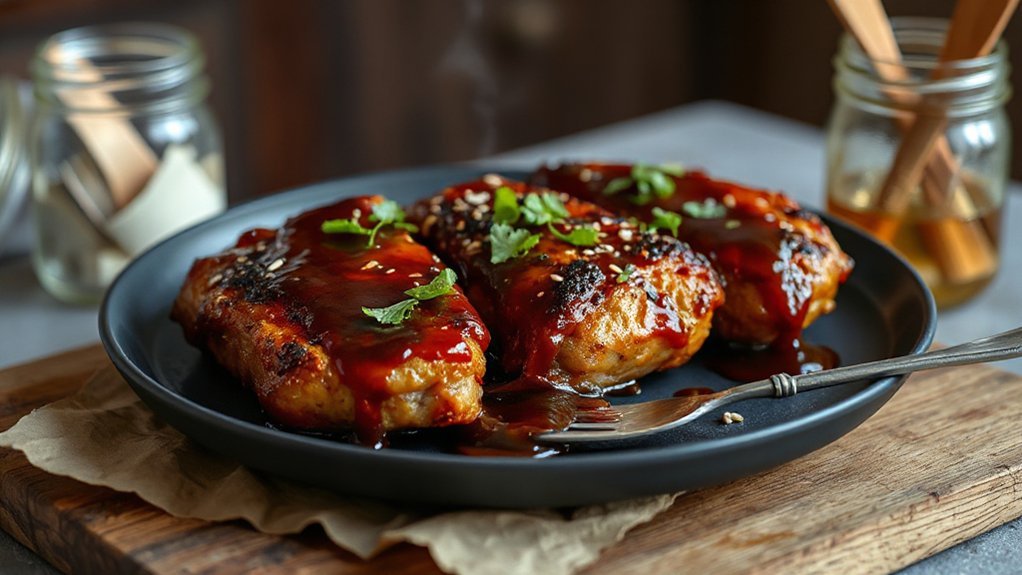
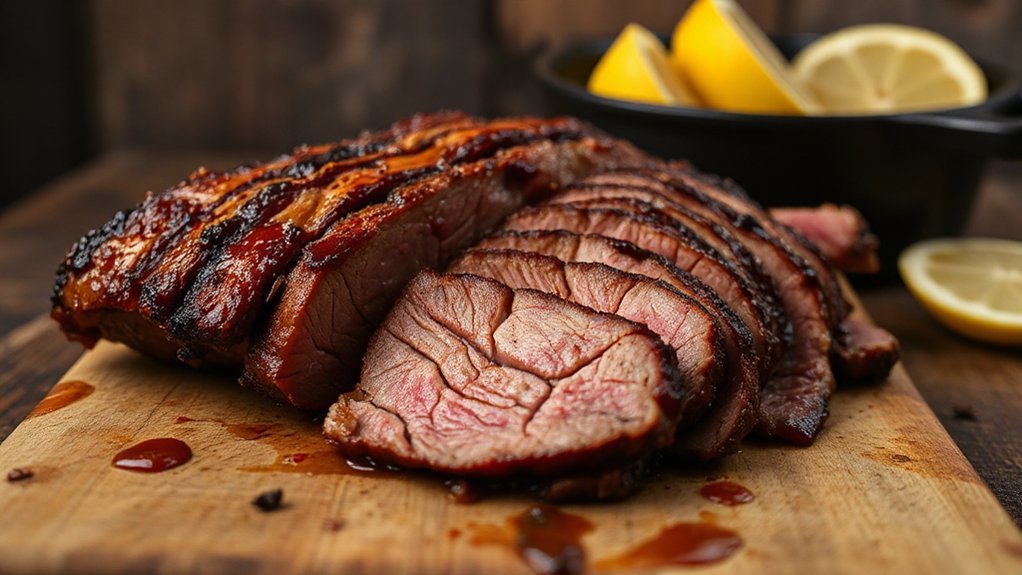
You’ll get juicy, caramelized beef kabobs in about ten to twelve minutes using the air fryer—no grill needed. Cut the beef into even 1–1¼ inch cubes, marinate oil, acid, garlic and spices for thirty minutes to overnight, then thread with peppers and onions. Preheat to 400°F, arrange skewers single layer and flip once; target 135°F for medium-rare. They’re fast, low-fuss, and perfect for weeknights—keep going to pick up tips on timing, marinades, and sides today.
Why These Kabobs Work
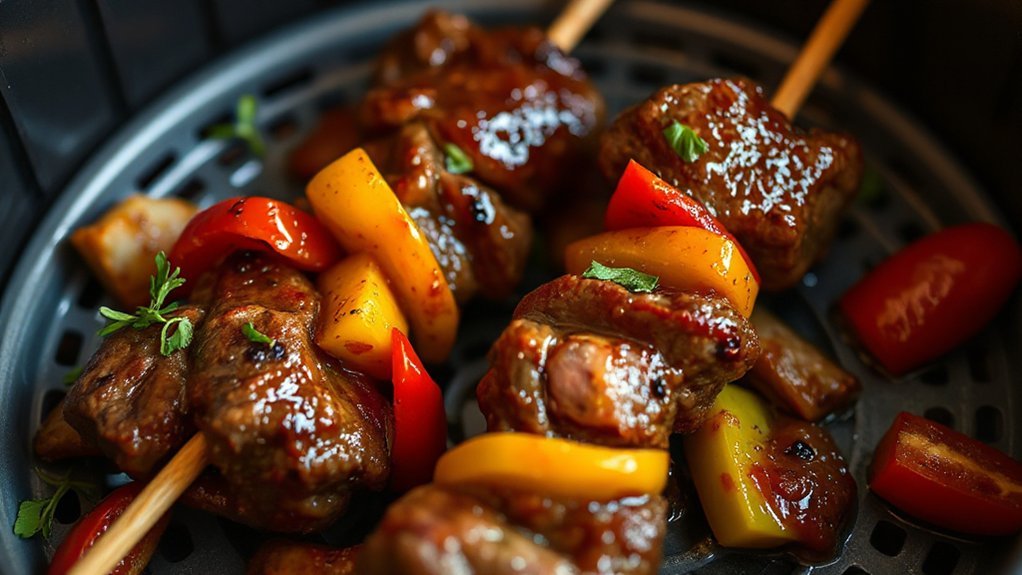
Because the cubes are small, evenly sized, and marinated, they sear quickly in the air fryer and stay juicy inside—you get crisp, caramelized edges without overcooking the center. You’ll notice consistent cooking because each piece hits the heat the same way, so timing’s predictable and you won’t babysit the basket. The marinade locks flavor while the air fryer’s circulation gives that charred finish you crave, boosting both taste and visual appeal. Skewer order matters: alternate meat with veggies for even heat exposure and an appealing color rhythm. You’ll serve bites that look as good as they taste, and guests will dig into a shared experience that feels casual but intentional. Cleanup’s simple, portions are flexible, and you can tweak spices fast. In short, these kabobs turn a stove-time chore into a quick, satisfying ritual you’ll repeat all season. They’re perfect for weeknights, parties, and quick outdoor gatherings anytime.
Ingredients You’ll Need
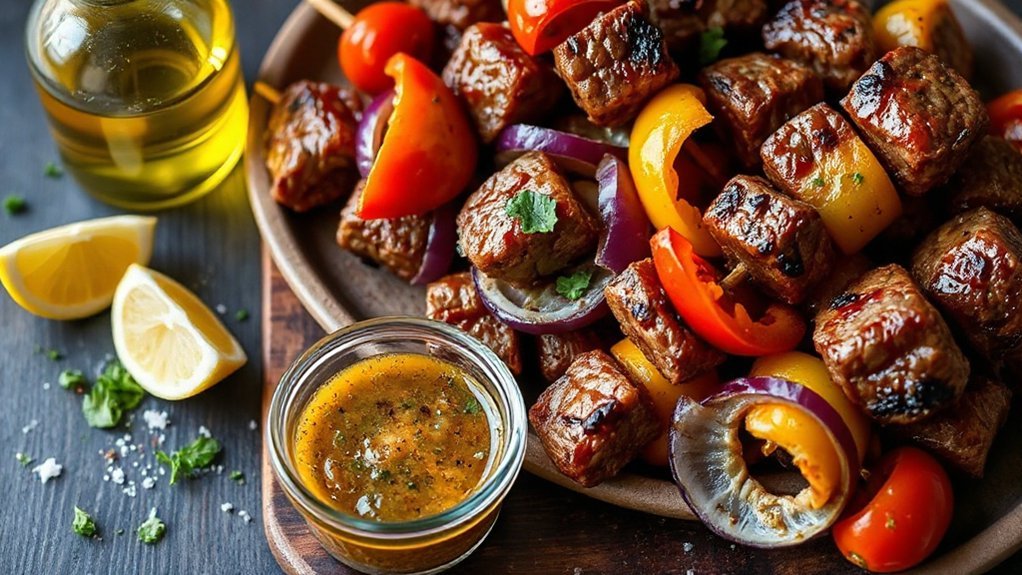
You’ll want a sturdy, well-marbled beef like sirloin or ribeye cut into even cubes so they cook evenly. Add sturdy veggies—peppers, red onion, and cherry tomatoes—trimmed and sized to match the meat. And don’t forget a simple marinade of oil, soy or Worcestershire, lemon or vinegar, garlic, and spices to boost flavor and tenderize.
Protein and Cuts
A sturdy cut of beef makes all the difference for kabobs, so pick pieces that stay tender and don’t dry out in the air fryer. Choose sirloin, ribeye, or flank trimmed and cut across the grain into uniform 1- to 1.5-inch cubes so they’ll cook evenly. You can also use skirt steak if you marinate longer; it rewards you with big flavor. Look for beef labeled from sustainable sourcing and brands that prioritize animal welfare —it improves quality and your conscience. Aim for well-marbled meat for juiciness, but avoid overly fatty slabs that flare. If you want convenience, ask your butcher to cube it. Keep the pieces consistent so every skewer finishes at the same time. Trust your senses; adjust time as needed, too.
Vegetables and Prep
When prepping vegetables for kabobs, pick firm, quick-cooking options like bell peppers, red onions, zucchini, cherry tomatoes, and cremini or button mushrooms so everything finishes together. Choose a seasonal selection to keep colors bright and flavors peak — think sweet corn rounds in summer or petite eggplant in fall. Cut pieces roughly uniform, about 1½-inch chunks, so they thread and cook evenly. If using carrots or broccoli, use blanching basics: briefly boil, then shock in ice water to tenderize without overcooking. Pat everything dry to help browning and prevent splintering skewers. Lightly oil and season vegetables just before skewering. Keep similar-sized veggies together on each stick so every bite cooks at the same rate. You’ll love the contrast of charred edges and tender centers every time.
Marinade Components
Several pantry staples will make a bold, tenderizing marinade for your beef kabobs. Gather olive oil, soy sauce or tamari for depth, and a splash of acid—lemon juice or red wine vinegar—to break down fibers. Add minced garlic, grated ginger, and brown sugar or honey for balance. Toss in smoked paprika and ground cumin for warmth; they act as subtle color enhancers while boosting aroma. Include Dijon mustard for emulsification and cracked black pepper for bite. If you like heat, add chili flakes or sriracha. For best results, choose ingredients with sustainable sourcing—olive oil, honey, and soy alternatives labeled responsibly. Measure salt last so proteins stay juicy. Mix well, coat beef, and let it rest before air frying. You’ll notice brighter flavor and texture.
Choosing the Right Beef Cut
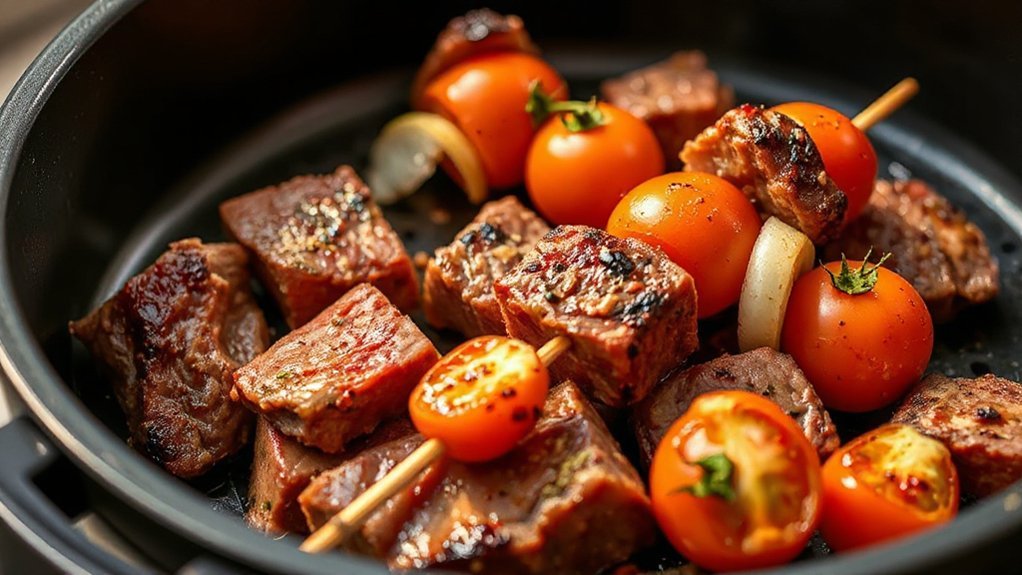
Because air fryers blast heat quickly, you’ll want beef that stays tender and won’t dry out—pick well-marbled, tender cuts like top sirloin, strip, ribeye, or flat iron, or leaner cuts such as flank if you plan to marinate them. Choose pieces about 1–1½ inches thick so cubes stay juicy and cook evenly. If you’re budget conscious, look for budget cuts and ask your butcher for value portions—chuck eye, sirloin tips, or skirt can work when sliced across the grain. Use basic Butcher terminology when requesting steaks or roasts to guarantee consistent size and texture; saying “1-inch top sirloin steak” beats vague requests. Trim excess fat but leave a little for flavor; overly lean cubes dry out fast. Cut uniformly so kabobs cook together. Finally, consider how you’ll serve: tender cuts need less cook time, tougher cuts benefit from a shorter, higher-heat blast in air fryer to avoid overcooking exterior.
Marinade: Flavor Profile and Tips
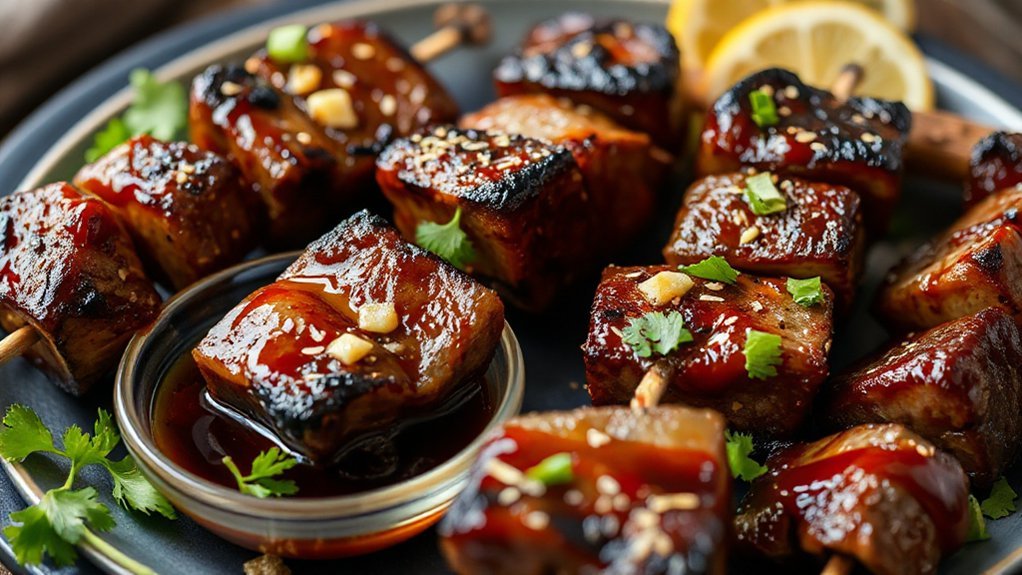
You want a marinade that balances acid and oil so the beef gets flavor without drying out. Add herbs for freshness, spices for punch, and aromatics like garlic, ginger, or shallots to wake up the meat. I’ll give quick ratio tips and pairing ideas so your kabobs come out perfectly seasoned every time.
Acid and Oil Balance
How do you get acid and oil to play nice in a kabob marinade? You balance them by building a simple emulsion, understanding emulsion stability and how molecular interactions keep flavors suspended. Start with roughly three parts oil to one part acid, whisk or shake to combine, and taste — tweak acidity for brightness without toughening meat. Short marination avoids overcooking proteins; longer lets flavors penetrate. Use salt early to help extraction.
| Component | Role | Tip |
|---|---|---|
| Oil | Coats, carries fat-soluble flavor | Use neutral oil |
| Acid | Brightens, tenderizes | Measure, don’t guess |
| Ratio | Stability | 3:1 oil:acid, whisked |
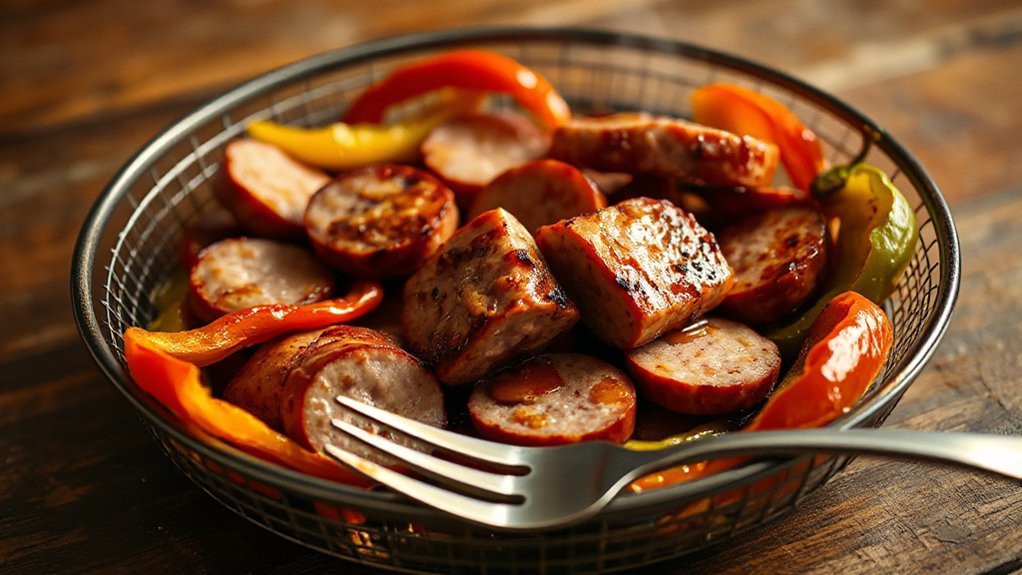
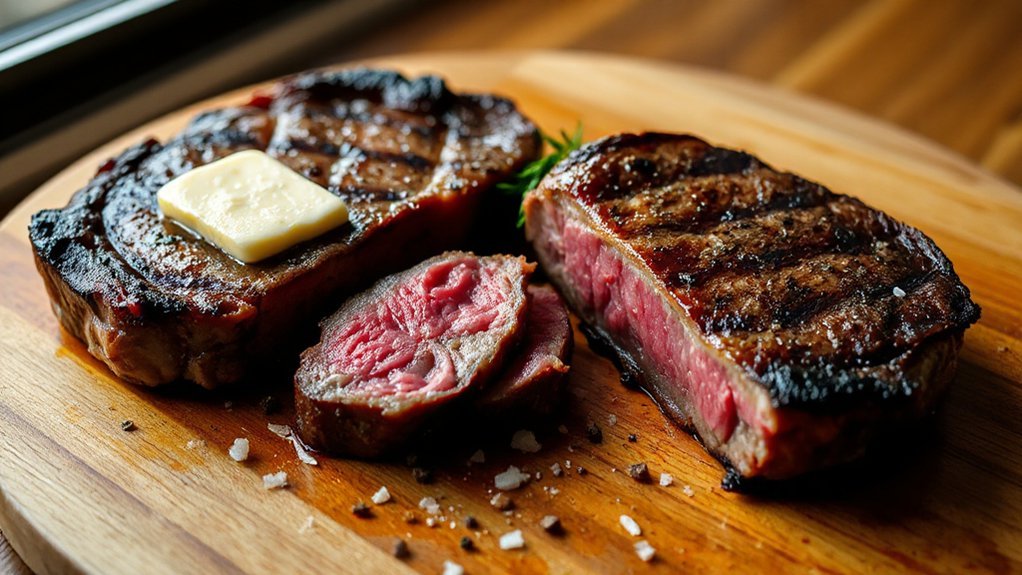
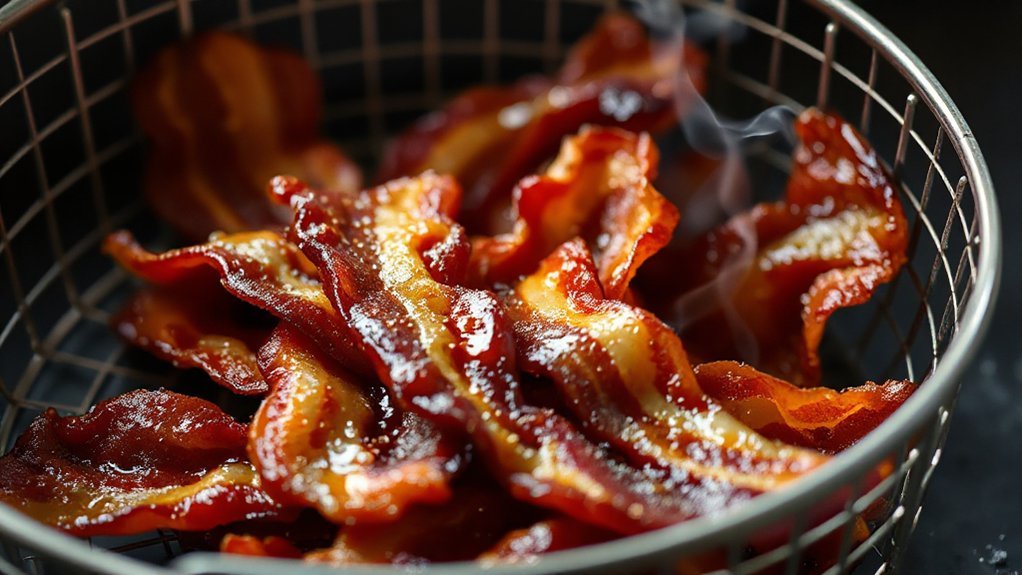
Trust your palate and time; small adjustments make big differences. If you want more lift, add a touch of sugar or mustard to stabilize and brighten without overpowering the beef.
Herbs, Spices, Aromatics
Layering fresh herbs, toasted spices, and pungent aromatics gives your kabob marinade real depth—think bright parsley or cilantro for lift, rosemary or thyme for savory backbone, and cumin or smoked paprika for warmth. Use garlic, shallot, and lemon zest to punch through beef richness, and chop herbs just before mixing so they stay vibrant. If you enjoy adventures, try herb foraging for wild mint or oregano to add unique notes. Toast whole seeds briefly to wake oils, then grind and taste—spice provenance matters, so buy spices from sources that list origin and roast date. Balance is simple: herbs for freshness, spices for character, aromatics for bite. Marinate at least an hour, longer for bolder flavor. Refrigerate while marinating and flip skewers halfway through too.
How Long to Marinate
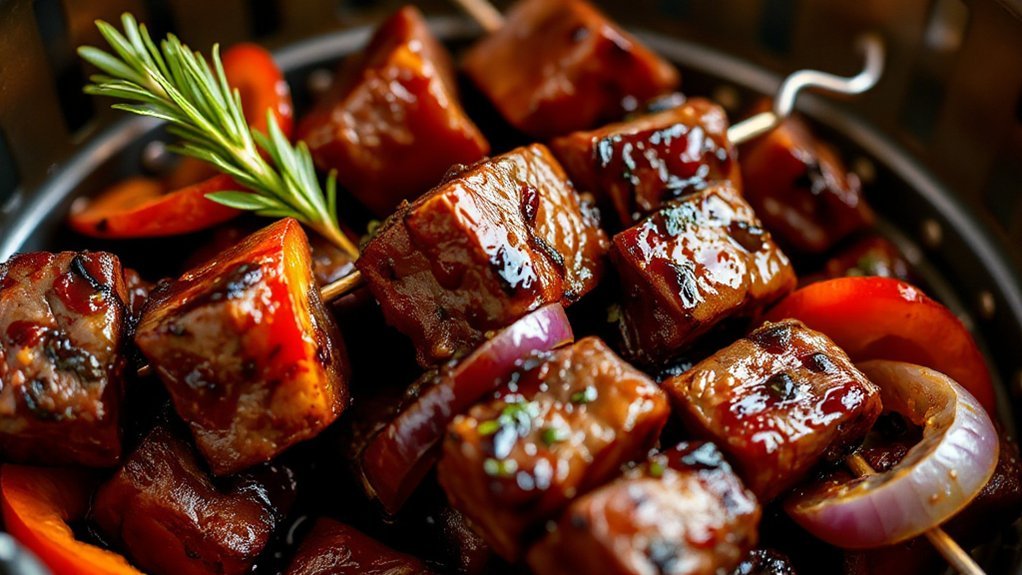
While a quick 30 minutes will perk up flavor, plan at least 2–4 hours for the best balance of taste and tenderness—overnighting (8–24 hours) gives the deepest flavor if you’ve got the time. You’ll find that acid and oil proportions change how fast the beef softens, so check marinade recipes and don’t overdo citrus or vinegar on thinner cuts. Use a simple marination schedule: label each container with time started and finish window, and rotate batches so nothing sits too long. A clear labeling system prevents guesswork and food-safety slipups. Chill the beef while it marinates, and keep containers sealed to avoid fridge contamination. If you’re short on time, cube the meat smaller to accelerate flavor uptake, but remember very long marinating can make texture mushy. Trust your eyes and texture—if meat smells off, toss it. Otherwise, follow the schedule and you’ll get juicy, flavorful kabobs every time.
Skewering and Prep Techniques
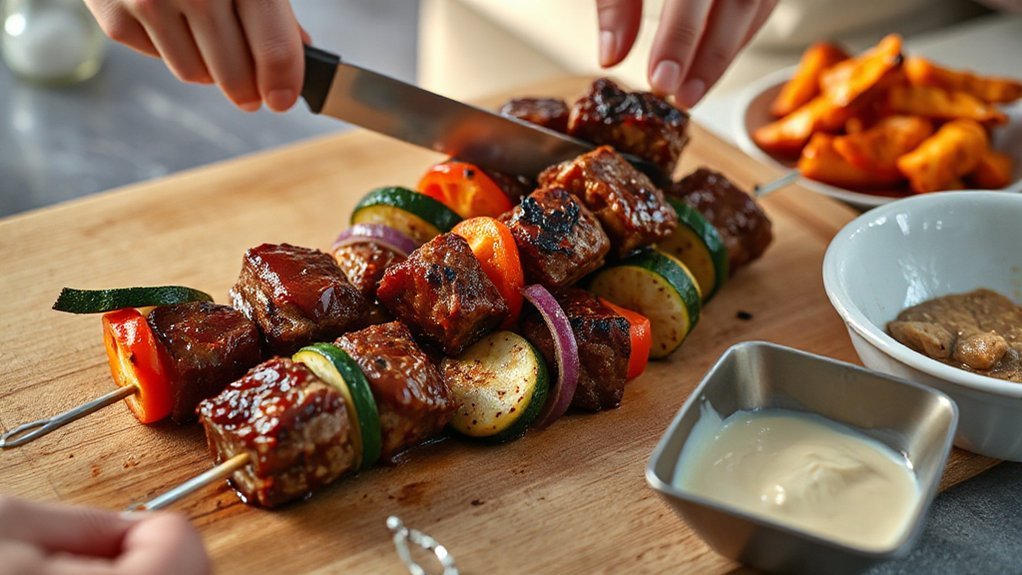
Choose the right skewers—use metal for repeated use or soak bamboo for 30 minutes so they won’t burn. Cut your beef and veggies into uniform, bite-sized pieces (about 1 to 1½ inches) so everything cooks at the same rate. Thread ingredients with a bit of space between pieces and alternate meat and vegetables to promote even airflow and consistent cooking.
Skewer Selection Tips
How do you know which skewer will give you the best kabob? Pick skewers that balance durability and comfort: stainless steel for heat transfer and wooden or bamboo for gentle handling. Check handle ergonomics—grips that won’t slip make flipping and serving easy. If you prefer eco-friendly options, look for sustainable materials like certified bamboo or recycled metal. Match skewer thickness to your beef chunks; thicker skewers resist bending. Choose flat or twisted metal skewers to prevent spinning, and avoid flimsy short sticks that crowd the air fryer basket. If you’ll reuse them, confirm they’re dishwasher-safe and rust-resistant. Finally, test how they fit your air fryer layout so everything cooks evenly and you don’t juggle pieces mid-cycle. Good skewers make cooking and cleanup faster too.
Cutting Uniform Pieces
Trimming and cutting your beef into even, bite-sized pieces sets you up for perfectly cooked kabobs every time. Start by chilling the meat slightly so it firms up; that makes clean cuts easier. Use a sharp chef’s knife and practice a steady knife technique: slice with confident strokes, keeping fingers tucked. Aim for consistent cubes—about 1 to 1¼ inches—so each piece finishes at the same time. Pay attention to grain orientation; cut across the grain to shorten fibers and promote tenderness. Trim excess fat and silver skin before you cube to avoid chewy bits. Work on a stable board, rotate pieces as needed, and pause to re-square ragged edges. Uniform pieces give you predictable cooking and a better final texture. They look restaurant-ready now.
Threading for Even Cooking
Now that your beef is cut into uniform cubes, skewering them properly makes all the difference—it’s where even cooking and good presentation meet. Thread pieces so grain alignment runs perpendicular to the skewer; that shortens fibers and yields a tender bite. Alternate meat with veg for visual contrast and steady heat, but keep size consistent. Leave small gap spacing between items so hot air circulates and edges sear; crowded skewers steam instead of caramelize. Use two parallel skewers for stability if pieces are large, which prevents spinning while you turn. Trim any floppy fat that causes flare-ups in other methods. Finally, test one kabob first; you’ll adjust spacing and timing faster when you get a feel for your air fryer. Enjoy your juicy kabobs.
Air Fryer Settings and Timing
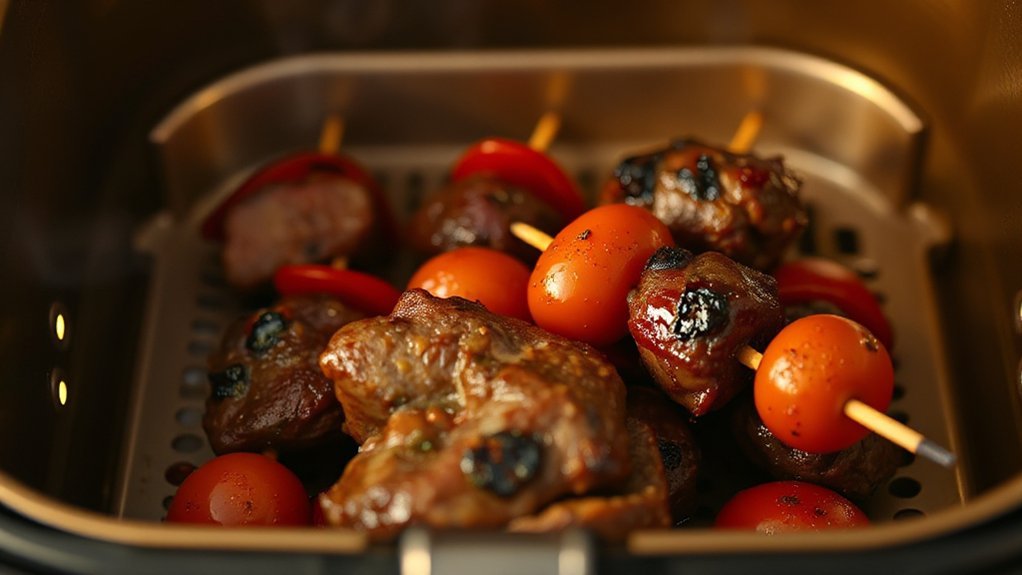
Why settle for guesswork when your air fryer can deliver consistent kabobs every time? You’ll start by following clear preheat protocols: 400°F for 5 minutes helps sear the exterior. Set fan speeds medium-high so air circulates without drying the beef. Arrange skewers in a single layer, leave gaps for airflow, and flip halfway.
| Doneness | Temp (°F) | Time |
|---|---|---|
| Medium-Rare | 135 | 8–10 min |
| Medium | 145 | 10–12 min |
| Well Done | 160 | 13–15 min |
Check doneness with an instant-read thermometer; pull kabobs 5°F below target, they’ll carryover cook. If pieces vary in size, remove smaller ones early. Avoid stacking, overcrowding, or using the highest fan speed for long; that can toughen meat. You’ll get repeatable results by combining correct temps, timed flips, and resting briefly before serving. Adjust times for marinated cuts versus lean steaks, and log your settings so you replicate the perfect combo of char, juiciness, and texture every time.
Serving Suggestions and Sides
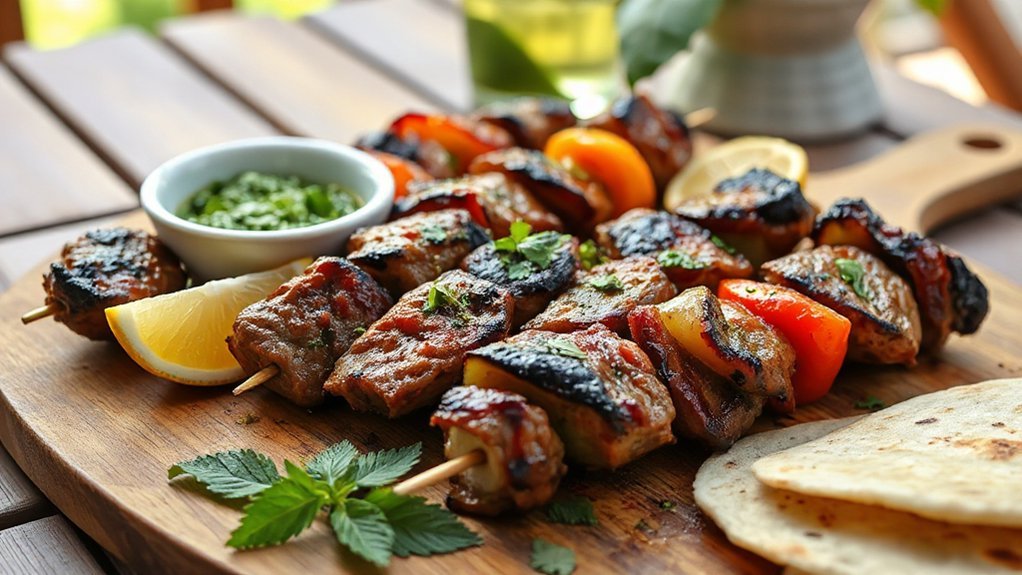
If you want to turn those kabobs into a show-stopping meal, pair them with a mix of bright, textural sides—think herbed couscous or lemon rice, a crisp cucumber-tomato salad, and garlic-y air-fried potatoes or charred flatbreads for scooping. Add simple roasted vegetables tossed with olive oil and smoked paprika, and offer a vibrant grain bowls station so guests can customize bowls with greens, grains, roasted veg and sliced kabob meat. Set up a quick condiment bar with tzatziki, harissa, chimichurri and pickled onions to amp flavor. For a lighter route, serve with citrusy slaw and a cooling yogurt-dill dip. Want comfort? Pair with buttery mashed potatoes or crusty bread to mop juices. Finish with a bright herbed gremolata or lemon wedges for squeezing. Keep plating casual: skewers on a big board, sides in bowls, and let people build their plates—it’s social, fast, and perfect for summer gatherings tonight.
Storage and Reheating
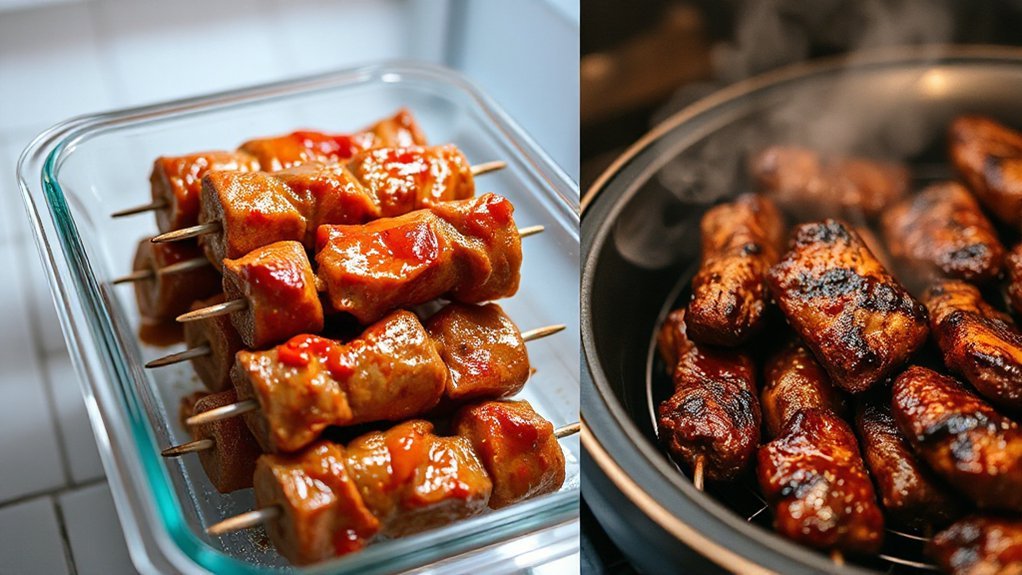
After you’ve arranged the sides, you’ll likely have leftovers—and beef kabobs hold up great in the fridge or freezer. Cool them completely, then split from skewers and pop into airtight containers for up to 4 days, or vacuum sealing for longer freezer life (3 months). Label and date packages so you’ll grab the oldest first.
When reheating, thaw kabobs overnight in the fridge or use a quick cold-water bath if sealed. For crisp, even results, finish with oven reheating: spread pieces on a sheet, tent with foil, and warm at 350°F (175°C) for 8–12 minutes until internal temperature reaches 165°F. You can also reheat gently in a skillet over medium heat with a splash of broth to keep beef juicy. Avoid microwaving too long, which dries meat. Let kabobs rest a couple minutes before serving so juices redistribute and flavor shines, and enjoy warm, flavorful leftovers every time.
Tips for Weeknight Meal Prep
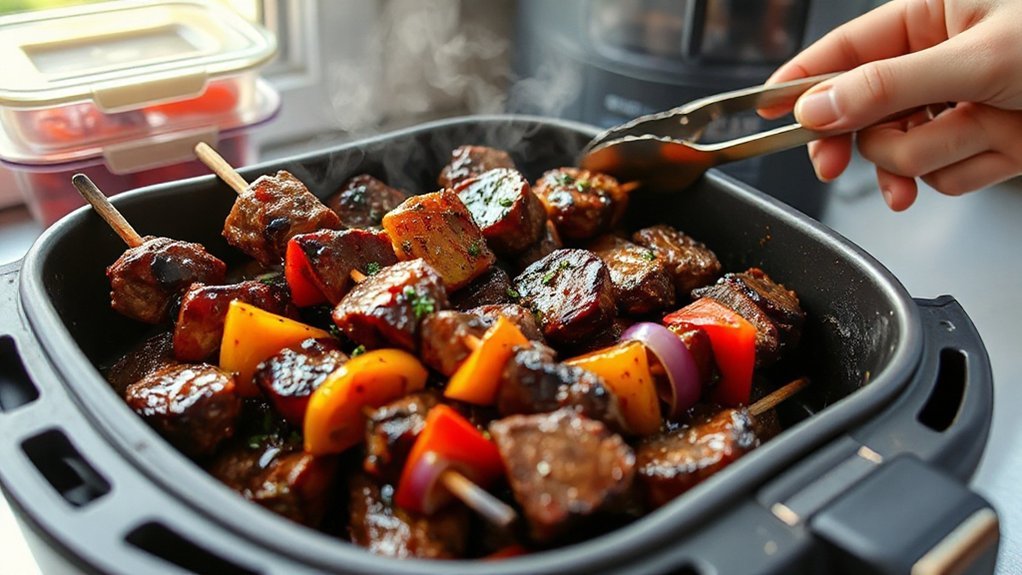
Planning a simple kabob strategy will make weeknight dinners fast and satisfying — you’ll prep once and assemble or reheat all week. Start by choosing proteins and veggies that cook at similar rates; cube beef and slice peppers, onions, zucchini so threading goes quick. Set aside a jarred marinade in the fridge and portion meat into meal-size bags for easy thawing. Use batch cooking on a weekend: sear or air-fry multiple trays, then cool and store in airtight containers. Keep skewers, sauces, and quick sides together so assembling always feels effortless. Label containers with dates and pair each portion with a suggested side—rice, salad, or pita—to speed decisions. Improve efficiency with pantry organization: group spices, oils, and grains so you grab what you need without hunting. On busy nights, reheat gently in the air fryer or oven to keep texture. You’ll have flavorful, stress-free kabob dinners every week.
Conclusion
You’ve just learned how to turn simple beef into juicy, marinated air-fryer kabobs that taste like summer—without the grill. Try this: 70% of home cooks say a quick, flavorful weeknight meal boosts dinner satisfaction; that means you’re not just saving time, you’re creating moments. Keep a prepped batch in the fridge, and you’ll breeze through busy nights while still serving bold, satisfying food your family will actually look forward to and get compliments often, too.
About The Author