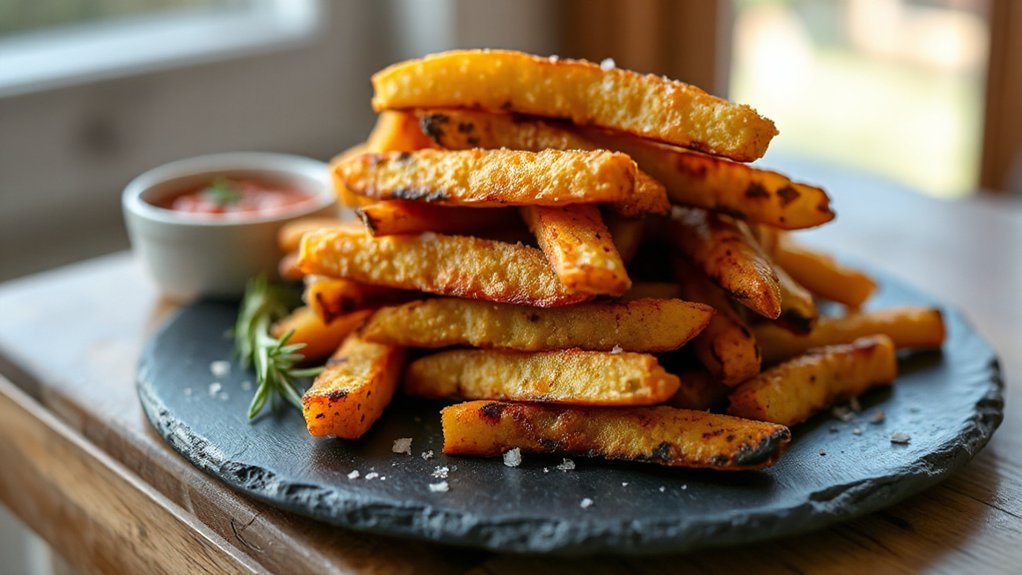
You can make perfectly caramelized, tender butternut squash cubes in under 20 minutes with your air fryer—peel or buy pre-cut, toss uniform cubes in a high‑heat oil and spices, spread in a single layer so they brown instead of steam, then check and shake at about ten minutes. Try maple‑cinnamon, smoked paprika, or rosemary‑lemon for variety. Leftovers refrigerate or freeze; a quick air fryer reheat restores crisp edges, and tips below help you nail it.
Why You’ll Love These Butternut Squash Cubes
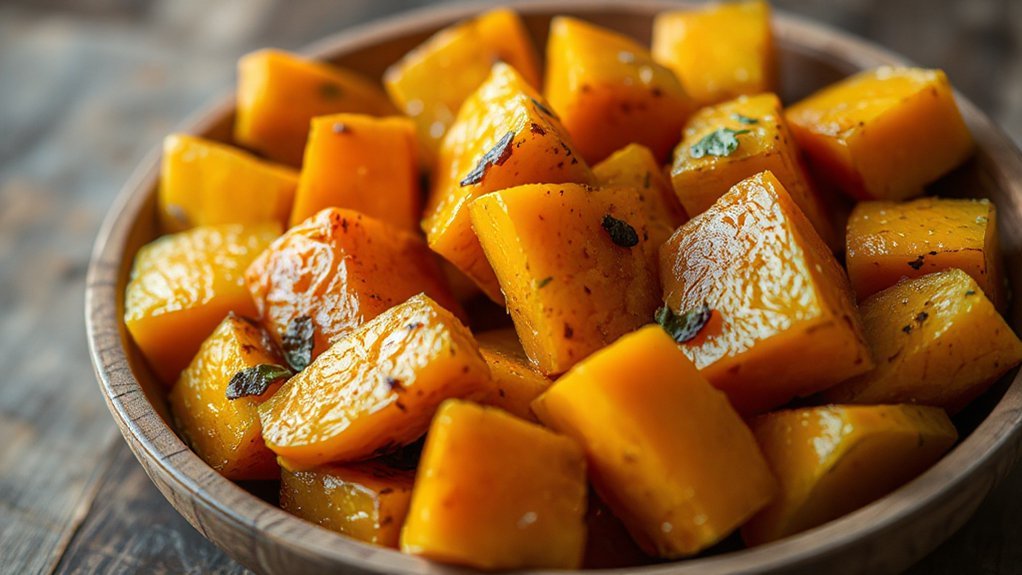
When you want a side that’s crispy on the outside, meltingly tender inside, and ready in under 20 minutes, these air fryer butternut squash cubes deliver. You’ll love how they give instant cozy comfort without fuss: toss, air fry, and serve warm. The caramelized edges add a caramel-like sweetness while the interior stays plush, so every bite feels homey and satisfying. Their bright orange hue and lightly browned corners bring serious visual appeal to your plate, making weeknight meals look special. You’ll appreciate the quick cleanup and predictable timing, so dinner’s less stressful and more fun. They pair with roasted proteins, salads, or bowls, and you can tweak seasonings to match your mood—savory herbs, a hint of spice, or maple glaze. In short, these cubes make you look forward to sides again: simple, fast, and utterly comforting. You’ll serve them year-round, and guests will always ask for seconds.
Ingredients You’ll Need
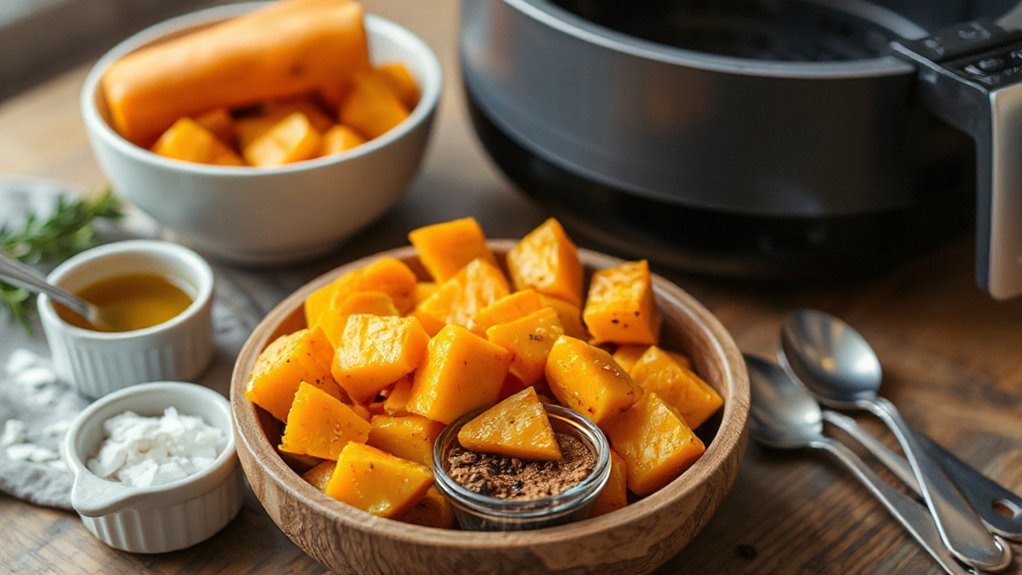
You’ll pick between fresh whole squash, pre-cut cubes, or frozen pieces depending on how much prep you want to do. Then choose a seasoning mix—think salt, pepper, smoked paprika, a touch of cinnamon, or fresh herbs—to match your mood. Finish with an oil that promotes crisping, like olive or avocado oil, or use a light spray for fewer calories.
Butternut Squash Options
How do you pick the best butternut squash for the air fryer? Look for a squash with a smooth, matte tan skin, heavy for its size and free of soft spots or deep scratches. Smaller to medium fruits cook more evenly and caramelize better than huge monsters. You can choose classic butternut or explore heirloom varieties for unique color and flavor—just note their shapes and densities so cubes are uniform. If you buy pre-cut, inspect for bright orange flesh and no excess moisture. Consider ripeness: a hollow sound when thumped and a firm neck mean sweetness. Know a little culinary history—these squashes originate from the Americas and have long been pantry staples—so pick one that feels vibrant and ready to roast for dinner tonight.
Seasonings and Oils
Now that you picked a squash that’ll caramelize beautifully, let’s talk what you’ll toss it with: choose an oil with enough body to coat the cubes—neutral options like avocado or light olive oil, or melted butter for richness—and add a sprinkle of kosher salt and freshly ground black pepper to bring out the squash’s sweetness. For high-heat air frying you’ll want oils with higher smoke points so they won’t break down or taste bitter; avocado and light olive fit, grapeseed works. Then play with flavor: a pinch of smoked paprika, a drizzle of maple, or minced garlic add complexity. Don’t forget umami boosters like a dusting of nutritional yeast or a touch of soy sauce for depth. Toss, then air fry until edges brown.
Equipment and Prep Tips
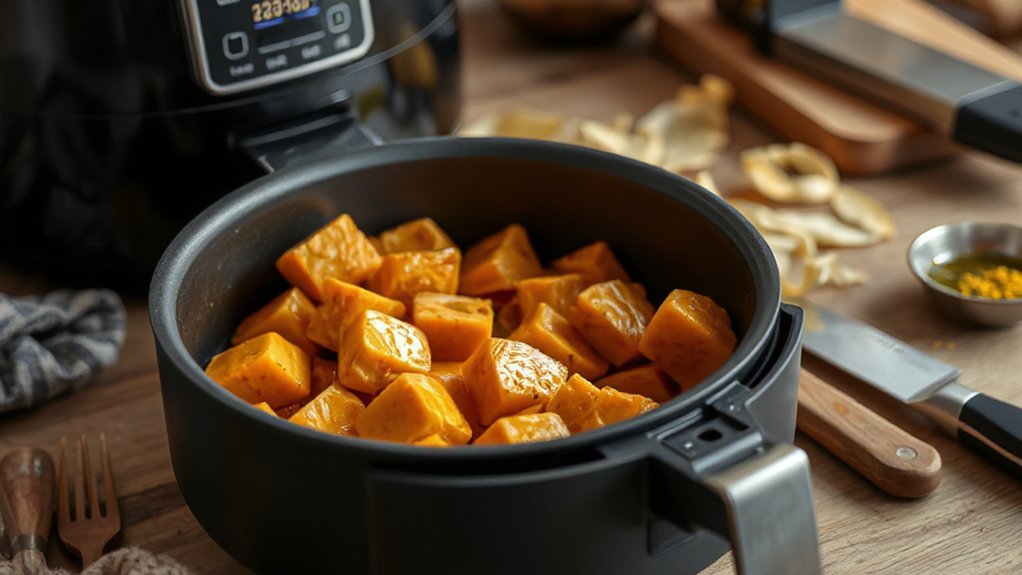
Pick an air fryer that fits the amount you want to cook—smaller units need batches, larger ones save time. You’ll want a sharp chef’s knife, sturdy cutting board, peeler, mixing bowl, and tongs or a spatula for easy handling. Cut the squash into uniform cubes so they cook evenly, and don’t cram the basket if you’re working with a compact fryer.
Air Fryer Size
Many home air fryers run from 2 to 6 quarts, and the size you choose will directly affect how you’ll cook butternut squash cubes. Smaller 2–3 quart units fit one or two servings, so you’ll work in batches. Larger 4–6 quart baskets hold a single layer for even crisping and save time. Consider how size fits your Kitchen aesthetics and Travel portability if you take a unit to gatherings. Pick a basket that allows cubes to sit in a single layer without crowding. If you crowd, you’ll steam instead of crisping. Match capacity to typical portions, counter space, and cleanup preferences. Checklist to decide:
- For singles or couples, 2–3 qt.
- For families, 4–5 qt.
- For parties or batch cooking, 6 qt+.
Prep Tools Needed
A sharp chef’s knife and a sturdy cutting board will save you time and frustration when you prep butternut squash cubes. You’ll also want a vegetable peeler, a sturdy spoon for seeding, and a reliable kitchen scale if you’re tracking portions. An air fryer-safe bowl and silicone spatula make tossing oil and spices easy. If you’re on a budget, consider Budget alternatives like a serrated utility knife and a reclaimed wooden board — they work fine and last. Look for Eco materials when replacing utensils: bamboo tongs, silicone lids, and stainless steel bowls reduce waste. Keep a damp towel handy to stabilize the board, and organize tools within reach so you move quickly from peel to cube to air fryer with confidence every time.
Step-by-Step Air Fryer Instructions
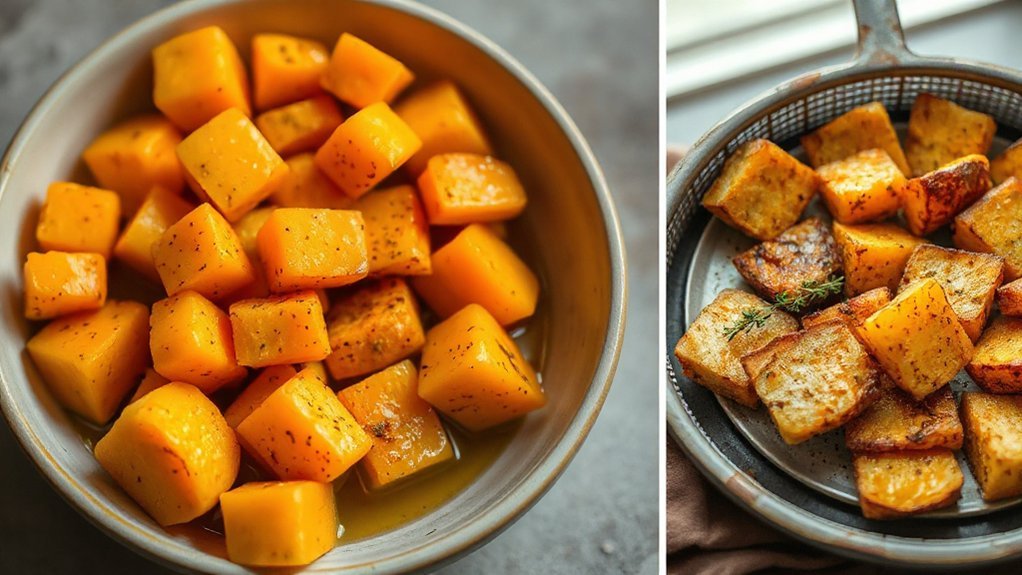
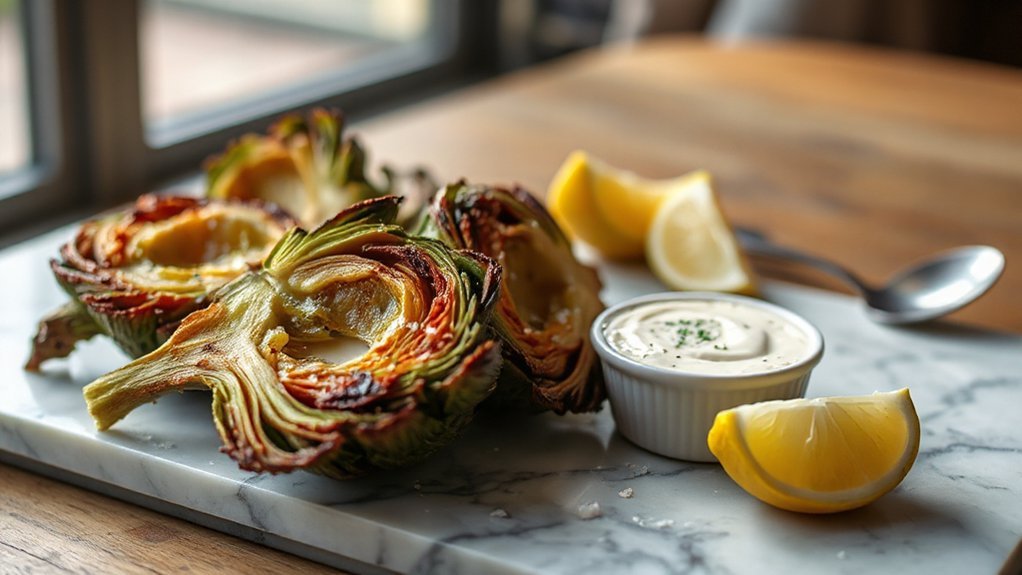
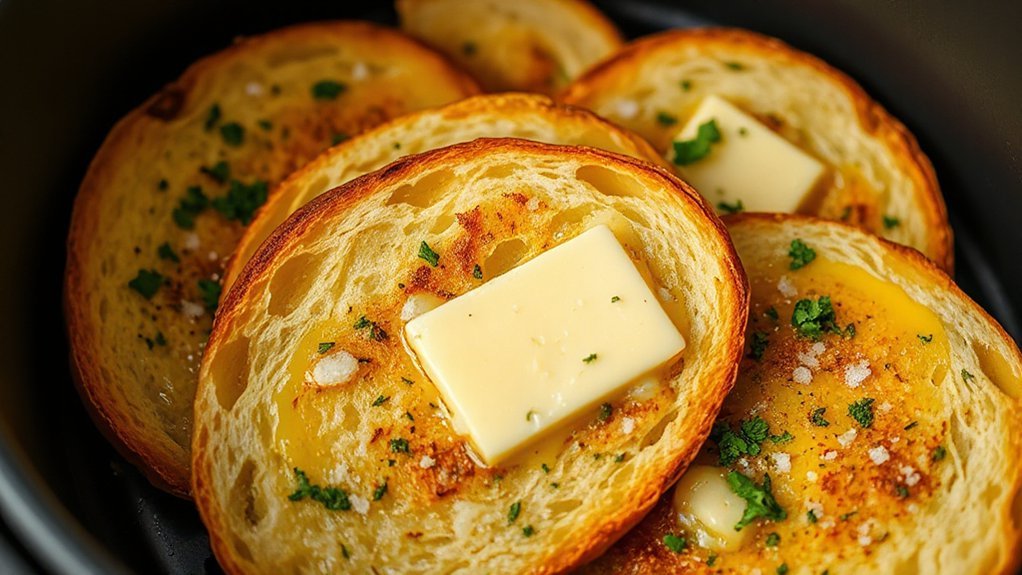
Let’s walk through the simple steps to get perfectly crisp, tender butternut squash cubes in your air fryer — from trimming and tossing them with oil and spices to preheating, arranging in a single layer, and shaking halfway through for even browning; follow these concise steps and you’ll have roasted squash ready in about 15–20 minutes. Now, you’ll focus on timing, temperature, and crisp checkpoints like exterior color and fork-tender centers; use a quick basket shaking at midpoint to avoid crowded pieces and promote even crisping. Preheat to 400°F, then cook 15–20 minutes, checking at 10 minutes. Use this checklist:
Perfectly crisp, tender butternut squash—preheat to 400°F, single layer, shake halfway, 15–20 minutes.
- Arrange cubes in a single layer; avoid overcrowding.
- Shake basket halfway (Basket shaking) and flip any large pieces.
- Check for browning, test with a fork (Crisp checkpoints).
Remove when edges are golden and centers yield; let rest briefly before serving. Enjoy your quick, healthy fall side every time.
Seasoning and Flavor Variations
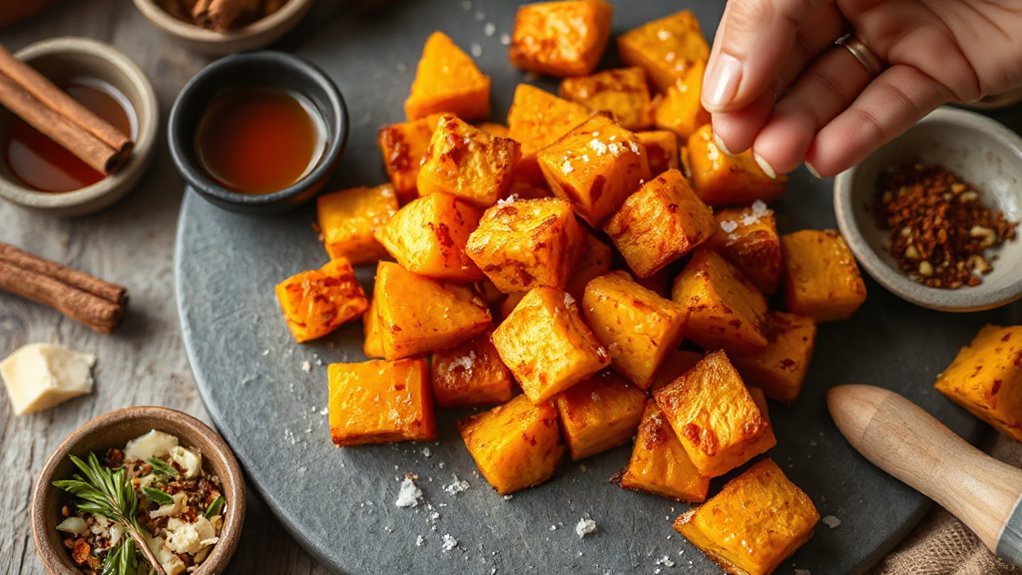
Once your cubes are golden and tender, you can turn them into any flavor profile you want with just a few pantry staples and a quick toss. Keep it simple: olive oil, salt, pepper, and a bold seasoning blend will highlight squash’s natural sweetness. For a cozy option, brush on maple or honey-based Sweet Glazes and finish with a pinch of cinnamon and toasted pepitas. If you’re craving heat, toss with smoked paprika, chili powder, and a squeeze of lime. For herb-forward freshness, use rosemary, sage, or thyme with lemon zest. Don’t be afraid to explore Global Inspirations—curry powder, garam masala, za’atar, or Chinese five-spice each create distinct, vibrant results. Measure boldly but taste as you go; start light and add more. You’ll find favorite combinations quickly, and these easy variations keep the dish exciting throughout fall and beyond. Add nuts or seeds for extra crunch and texture.
Serving Suggestions and Pairings
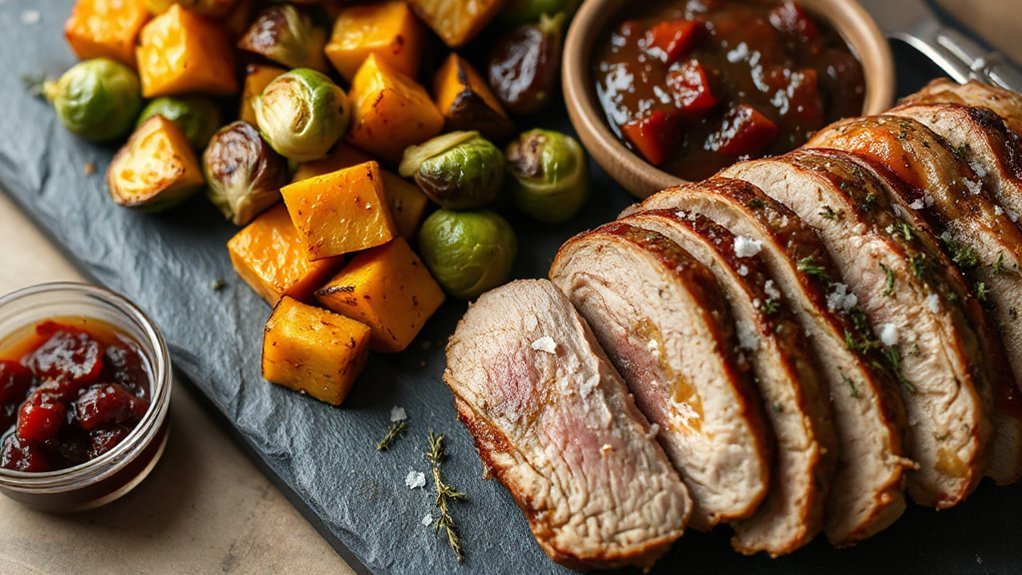
How will you serve these golden cubes? You’ll love them as a bright fall side — crisp edges and sweet interior make them versatile. For weeknights, toss with arugula and goat cheese; for dinner parties, arrange on a platter with herbs. Think about Wine Pairings that complement sweetness: try a unoaked Chardonnay or a light Pinot Gris to balance caramelized notes. For heartier meals, consider Protein Matches like roast chicken, pork tenderloin, or pan-seared salmon — the squash adds texture and a touch of sweetness.
- Serve as a salad topper with lemon vinaigrette for contrast.
- Pair with roasted root vegetables and thyme for rustic appeal.
- Blend into warm grain bowls with farro, kale, and a drizzle of tahini.
Finish with toasted pepitas or a splash of balsamic glaze to add crunch and brightness — simple, seasonal, and crowd-pleasing. Serve immediately for best texture and flavor.
Make-Ahead, Reheating, and Storage
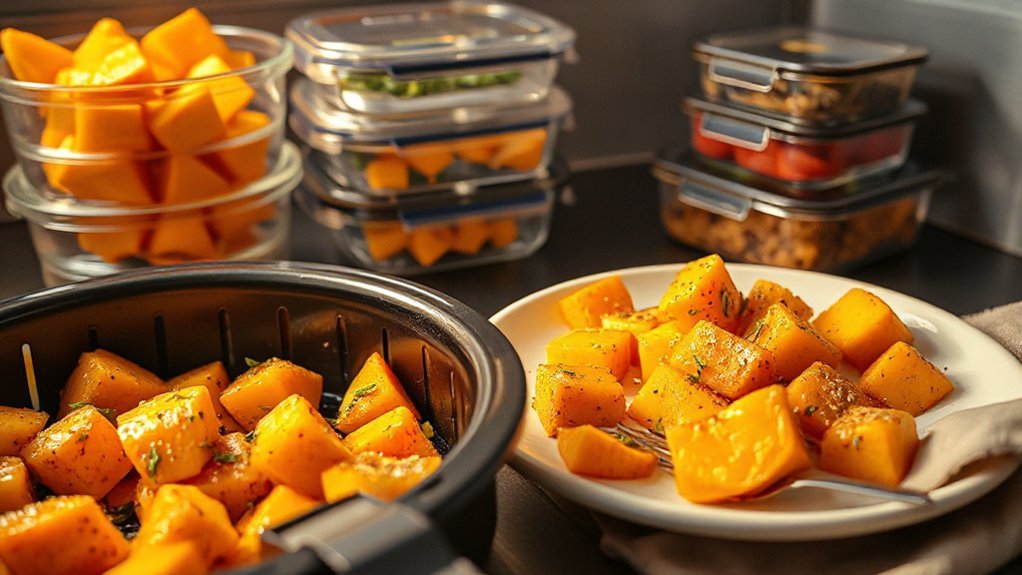
If you want to get ahead, roast the squash, let the cubes cool completely, then store them in an airtight container in the fridge for up to 4 days or in the freezer for up to 3 months. When refrigerating, keep cubes loose so they chill fast; for portion freezing, spread cubes on a tray until firm, then bag by meal-size portions. To reheat, toss frozen or chilled cubes in the air fryer at 375°F for 5–10 minutes, shaking halfway, until edges crisp and centers heat through. That quick blast restores crispness without drying, aiding texture restoration so the cubes feel freshly roasted. If you prefer the oven, use 400°F on a sheet pan, watching. Thawing in the fridge overnight shortens reheating time. Label containers with date and portion size to avoid waste. Cool and handle safely: don’t leave cooked squash at room temperature more than two hours.
Dietary Modifications and Substitutions
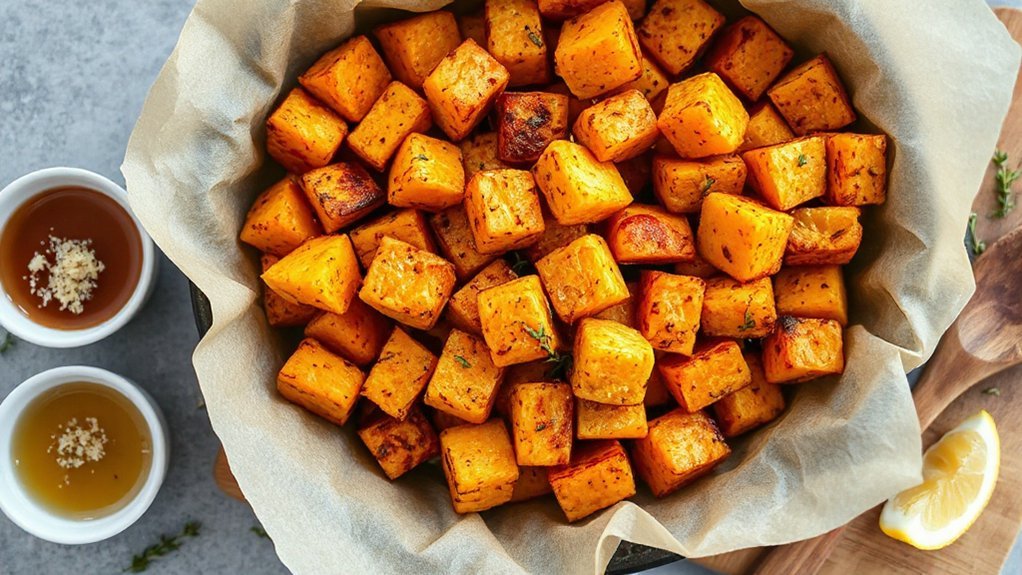
While butternut squash is naturally gluten‑ and dairy‑free, you can easily tweak oils, seasonings, or even the veg itself to fit keto, low‑FODMAP, nut‑allergy, or low‑sodium needs. You’ll still get sweet, caramelized cubes with simple swaps. For keto, cut portion sizes and pair with a fatty protein; for diabetic adjustments, emphasize fiber and monitor portion carbs. If someone has nut sensitivities, use allergy substitutions like pumpkin seeds or roasted chickpeas for crunch. Consider these quick swaps:
- Use avocado oil or olive oil spray for lower saturated fat and keto‑friendly fat.
- Swap garlic for garlic‑infused oil for low‑FODMAP diets.
- Replace maple syrup with a light monk fruit glaze to lower sugar.
You can also roast mixed winter squash for variety or halve seasoning amounts to reduce sodium. Test swaps in small batches so flavors balance and your family enjoys this cozy side without compromise. and keep portions sensible, enjoy!
Troubleshooting Common Issues
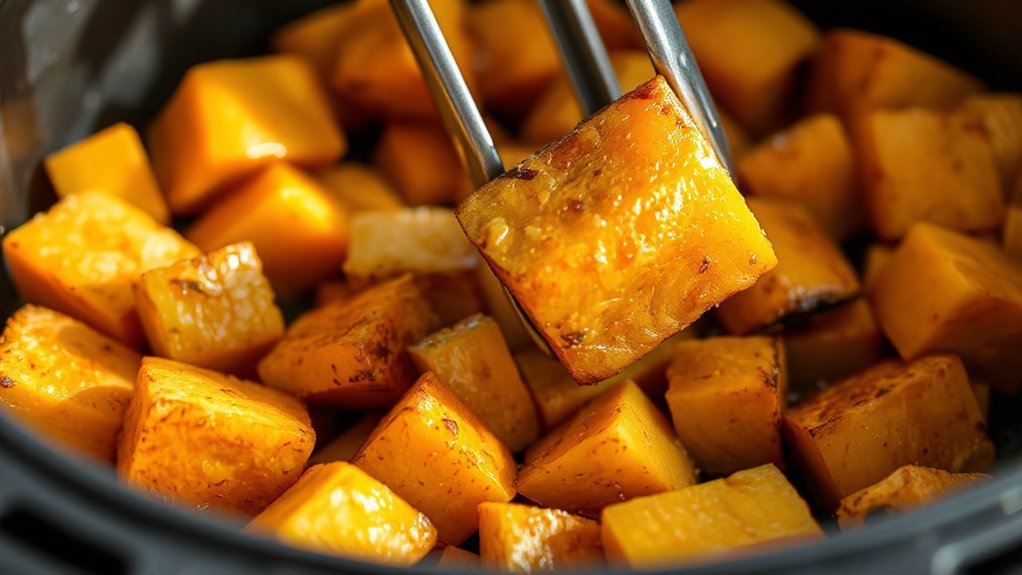
After tweaking oils, sweeteners, or portion sizes, you might still hit a snag when cooking your cubes — and that’s normal. You can fix uneven browning by shaking the basket halfway and trimming inconsistent pieces. If your air fryer runs hot or cool, check Temperature Calibration with an oven thermometer; adjust time and temp accordingly. For sudden shutdowns or odd readings, consider Sensor Failure; consult the manual or test another outlet.
| Problem | Quick Fix |
|---|---|
| Soggy center | Increase temp 10°F, shake more |
| Burnt edges | Lower temp 15°F, reduce time |
| Under-cooked | Cut smaller, preheat longer |
| Erratic display | Power cycle, check sensor |
If problems persist, contact manufacturer support, update firmware, or replace aging units; safety first. Also, document settings and room conditions so you reproduce successes; small records save trial and error. Happy cooking, friend!
Conclusion
You’ll love how these air fryer butternut squash cubes crisp up like autumn sunshine, sweet and caramelized, ready in minutes. Keep experimenting with spices, dressings, and herbs; they’ll turn a simple side into a star. You can make them ahead, reheat gently, and swap oils or seasonings to suit diets. Serve them hot, warm, or at room temperature, and watch guests dig in with delight. You’ll feel proud every time they’re gone in a flash.
About The Author