You can batch‑make nutrient‑dense air fryer muffins in about 20 minutes for grab‑and‑go breakfasts that freeze and reheat beautifully. Use whole‑grain flours, Greek yogurt or protein powder, mashed fruit or shredded veg for moisture, and healthy fats like nut butter or olive oil. Portion batter with a scoop, bake in silicone cups, then cool, freeze individually and reheat in the air fryer. Keep going to find recipes, timing, and troubleshooting tips to perfect your routine.
Why Air Fryer Muffins Are a Game-Changer for Busy Mornings
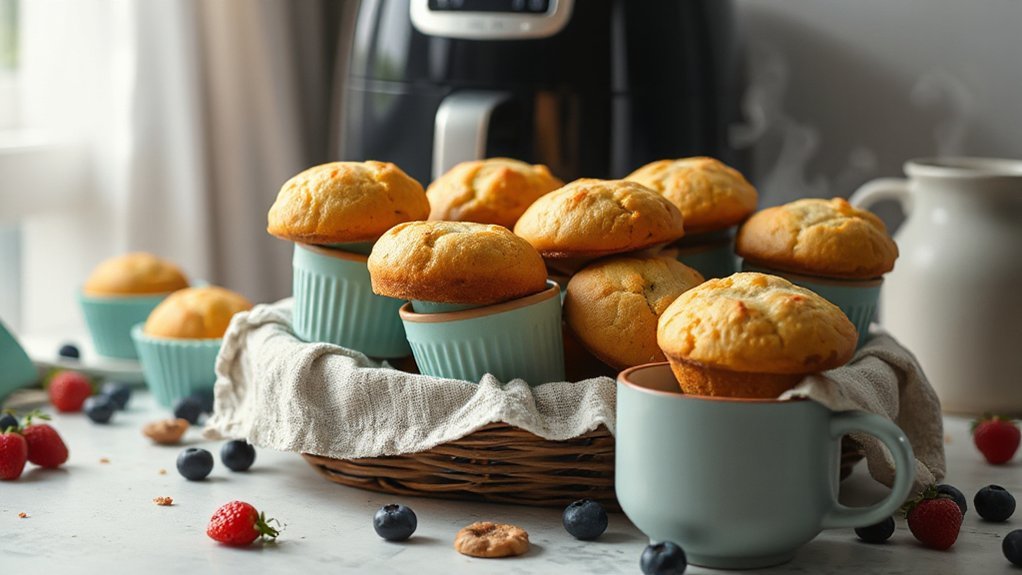
How much time could you save if breakfast finished itself? You can batch-cook muffins in an air fryer that turn out consistent, fast, and portable, giving you real Schedule Flexibility for hectic weekdays. You’ll mix, portion, and pop them in—no long oven preheat—and get golden results in a fraction of the time. Because muffins reheat quickly or travel well cold, you’ll avoid frantic mornings and enjoy visible Stress Reduction as routines smooth out. They freeze and thaw predictably, so you’ll build a simple rotation: cook once, grab several, and move on. Portion control and protein or fiber add-ons keep you satisfied longer, so you skip impulse snacks and stay focused. Those minute-saving wins add up: less prep, less cleanup, fewer decisions under time pressure. You’ll reclaim morning minutes and approach your day calmer, fed, and ready to tackle what matters. You’ll thank yourself when schedules finally run smoother.
Key Ingredients for Nutritious, Balanced Muffins
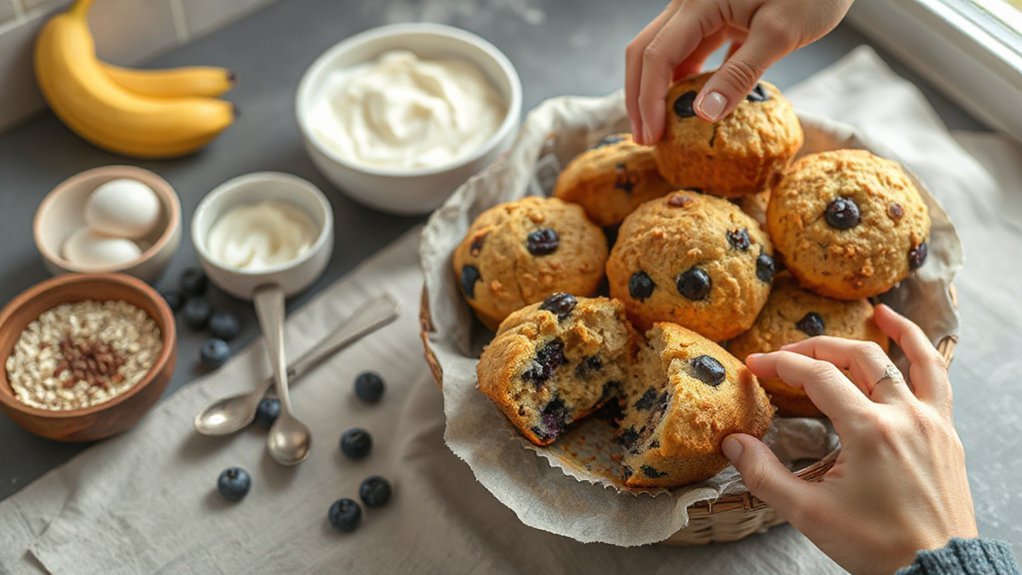
You can swap refined flour for whole-grain options like whole wheat, oat, or spelt to boost nutrients and keep muffins hearty. Add protein with Greek yogurt, cottage cheese, eggs, or nut butters to make them more satisfying. Include healthy fats and fiber—olive oil or avocado, ground flax or chia, plus fruit or veggie mix-ins—to support fullness and balance.
Whole-Grain Flour Choices
While whole-wheat is the obvious go-to, branching out to flours like oat, spelt, buckwheat, and rye can boost flavor, fiber, and nutrients without sacrificing texture. You’ll enjoy experimenting: oat lends creaminess, spelt adds a nutty chew, buckwheat gives earthiness and gluten-free options, and rye brings a tangy depth. Mix them with whole-wheat or use blends to retain structure in air fryer muffins. Consider Regional Varieties for subtle taste shifts and choose lighter or darker grind depending on your recipe. Pay attention to Processing Methods—stone-ground flours keep more bran and flavor, while highly refined types bake faster but offer less fiber. Measure carefully, hydrate batters a bit longer, and don’t overmix; you’ll get moist, hearty muffins every time. Adjust sweetness and spices to your liking.
Protein Add-Ins
Boosting protein in muffins makes them more filling and turns a snack into a mini-meal. Choose add-ins that fit your routine: Greek yogurt or cottage cheese keep batter moist and add tang, while eggs provide structure and a protein punch. If you want plant-based options, fold in pea or soy protein powder, mashed silken tofu, or canned beans for moisture and heft. Use nut butters if nuts suit you, and consider hemp or chia for a boost. Plan Allergen Swaps up front—swap dairy for coconut yogurt or use sunflower seed butter instead of peanuts. Do a quick Cost Comparison—you’ll see whole-food add-ins cost less per serving than specialty powders, but powders save space and boost protein efficiently. Taste-test to find what you prefer every week.
Healthy Fats & Fiber
Mixing in healthy fats and fiber keeps muffins satisfying and gives you steady energy, so pick ingredients that do double duty: olive or avocado oil, nut or seed butters, and ground flax or chia add heart‑healthy fats and structure, while oats, whole‑grain flour, bran, fruit, and veggies boost soluble and insoluble fiber for better digestion and longer fullness. You’ll boost satiety signaling by pairing fats with fiber so your body stays full between bites. Add mashed banana or applesauce for moisture and sweetness, plus a tablespoon of nut butter and a sprinkle of seeds for omega‑3s. These choices support microbiome balance and steady blood sugar. Keep portions sensible—one to two tablespoons of fat per batch. Swap refined flour for whole grain for added fiber.
Equipment, Portioning, and Prep Essentials
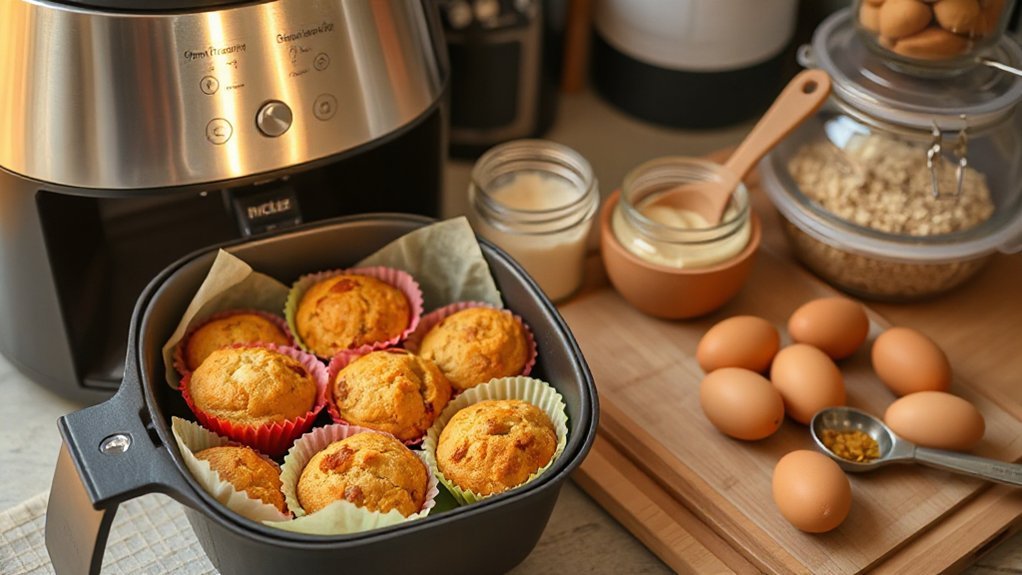
Getting your gear and mise en place right makes air fryer muffins foolproof: you’ll want a reliable air fryer with a removable tray or rack, silicone or metal muffin cups that fit your basket, a small ice-cream scoop for even portions, and basic measuring spoons and cups. Add Silicone Liners for sticking-free cleanup and a silicone spatula to scrape batter. A set of glass prep bowls keeps dry and wet ingredients separated so you mix quickly and consistently.
Portion control matters: use that scoop for uniform muffin size so cooking time stays predictable, and weigh batter if you want exact batch consistency. Keep kitchen scale, timer, and oven mitts within reach. A Temperature Probe helps you check doneness without overbaking—aim for a target depending on mix-ins. Finally, line a tray for cooling and label storage containers for grab-and-go breakfasts; organized prep saves time and prevents soggy, rushed mornings.
Base Healthy Muffin Recipe (Whole Grains + Protein)
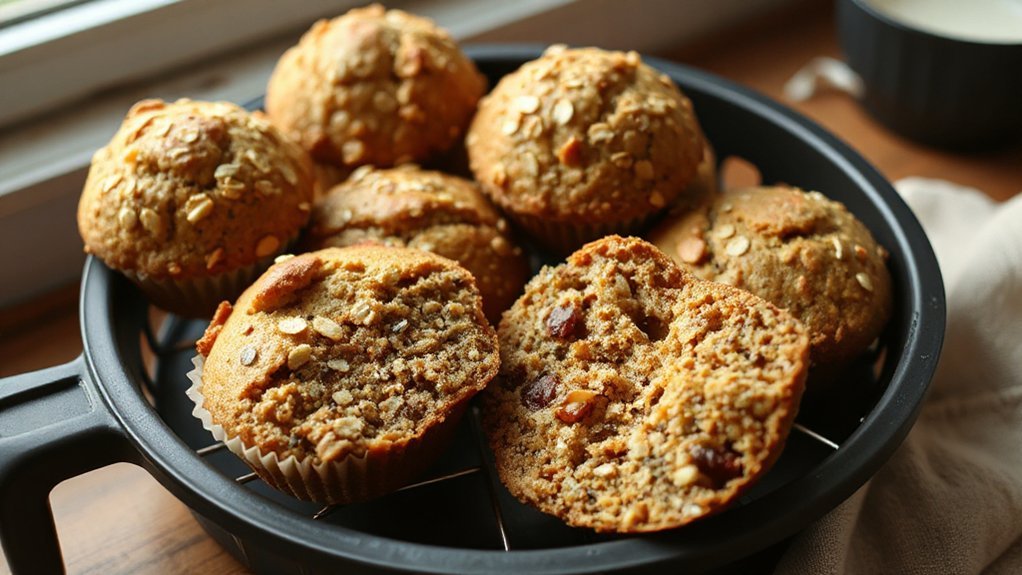



You can swap in whole-grain flours—whole wheat, spelt, oat, or buckwheat—to boost fiber and nuttiness. You’ll add protein with Greek yogurt, cottage cheese, nut butters, or protein powder, adjusting for texture so muffins stay tender. Aim for about a 1:1.25 liquid-to-dry ratio (roughly 60–65% hydration) and tweak upward when using denser flours or extra protein.
Whole-Grain Flour Choices
Which whole-grain flour you pick will shape flavor, texture, and how much protein your muffins pack, so choose with purpose. You’ll notice whole wheat gives familiar nuttiness and reliable rise, while spelt and einkorn—two ancient varieties—offer sweeter, more delicate notes and digestibility. Rye adds earthy depth and denser crumb; oat and buckwheat bring tender, gluten-free options with toasty nuance. Consider milling methods: stone-ground retains more bran and oils, boosting flavor and chew; commercially roller-milled flours are lighter and finer, yielding airier muffins. You can blend flours—half whole wheat with half oat or spelt—to balance structure and moisture. Always weigh or spoon-measure your flour, adjust liquids, and expect slight texture shifts when you swap flours. Taste-test small batches until you find your ideal blend quickly.
Protein Add-Ins Options
Boosting muffins with protein add-ins lets you tailor both nutrition and texture without losing flavor. You can stir in Greek yogurt for moistness and whey or pea protein powder for a clean protein lift; use ricotta to keep crumb tender. For Texture Pairings, combine crunchy chopped nuts with chia or hemp seeds for bite plus omega-3s. If you want savory options, fold in shredded chicken, turkey bacon bits, or cottage cheese. Consider Allergen Swaps: swap almond flour for oat flour, choose soy- or pea-based proteins, or use ground flax when nuts aren’t allowed. Measure add-ins so batter stays balanced, and test small batches to find what you like. Adjust quantities gradually until you hit your ideal texture consistently.
Liquid-To-Dry Ratios
Because whole grains and protein powders soak up more moisture, aim for a wetter batter than you would with white flour: target about 1 to 1.1 parts liquid to 1 part dry by weight (roughly 1/2 to 2/3 cup liquid per cup flour by volume), and be ready to increase liquids 10–20% or add an extra egg/yogurt when using lots of oat, whole wheat, almond, or protein powder; measure by weight when you can, watch for a thick, spoonable batter that falls off the spoon in ribbons, and tweak in small increments until your muffins stay tender without collapsing. Use Hydration Percentages to guide swaps, and run quick Absorption Testing (dry+liquid, five minutes) to dial liquids, eggs, or yogurt precisely for moist, stable muffins.
Fruit, Vegetable, and Savory Flavor Variations
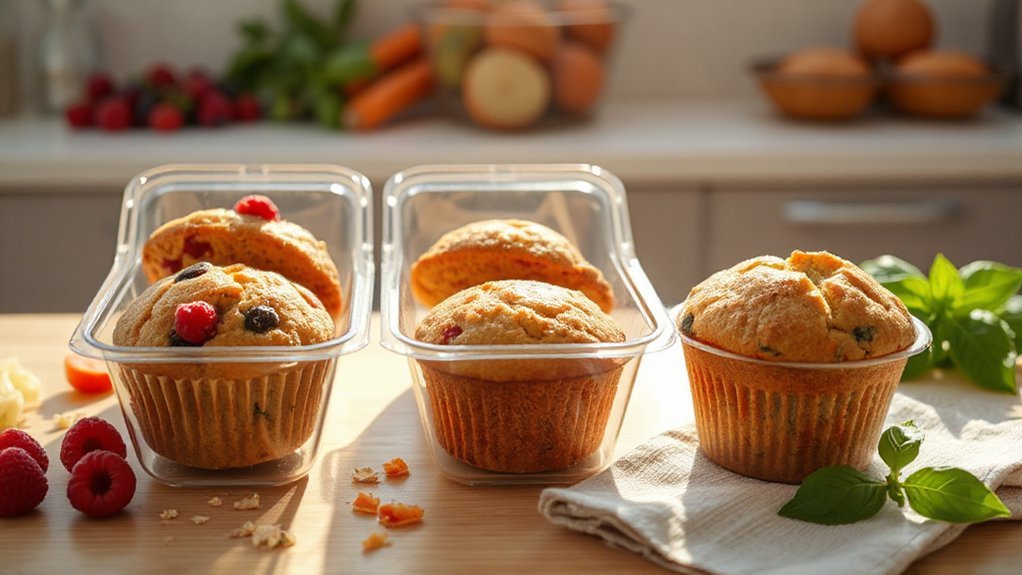
When you want to mix things up, fruit, vegetable, and savory add-ins turn basic air fryer muffins into something memorable—you can toss in berries or diced apples for sweetness, shredded zucchini or carrot for moisture and nutrition, or things like grated cheese, chopped herbs, and cooked bacon for savory bites. Aim for balance: about a cup of chopped fruit or veg per batch so batter stays manageable. Use seasonal pairings like pear-cinnamon in fall or strawberry-basil in spring to keep flavors bright, and experiment with cultural twists—think za’atar and feta, or kimchi and scallion—to make breakfasts exciting. For texture, fold in nuts, oats, or seeds. Precook watery veggies lightly. Keep add-in pieces small and evenly distributed so every muffin bakes consistently. Taste as you go and adjust salt, spice, or sweetness to match your routine. Swap some sugar for honey or maple to use a natural sweetener instead.
How to Air Fryer Bake for Moist Centers and Crisp Edges
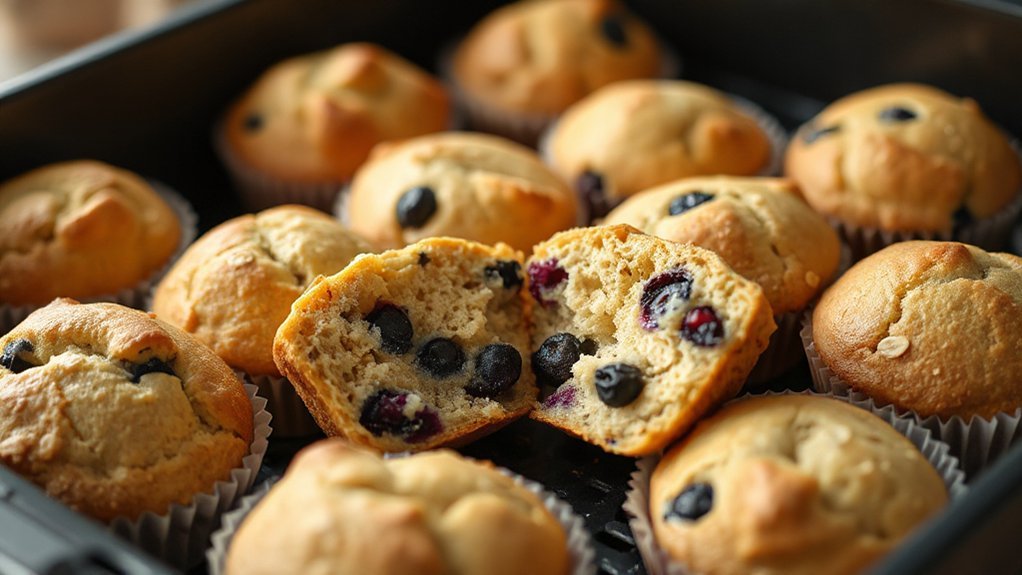
Although the air fryer’s blast of hot air can dry things out if you’re not careful, you can get tender, moist centers and golden, crisp edges with a few simple tweaks. Use temperature staging: start higher to set edges, then drop heat to finish the center. Preheat briefly, fill muffin cups only two-thirds, and don’t overmix batter—air pockets help moisture. Rotate or flip baskets halfway if your model has hot spots; that’s airflow modulation in practice. Tent tops with foil for the last few minutes if edges brown too fast. Check doneness with a toothpick; it should come out with a few moist crumbs.
| Stage | Effect |
|---|---|
| High start | Crisper rims |
| Lower finish | Even, moist center |
| Rotate | Uniform browning |
With these small steps you’ll produce consistent, grab-and-go muffins that stay tender inside and delightfully crisp outside. Adjust timing per model and altitude; keep a small log of tweaks noted.
Batch-Making Strategy: Timing, Quantities, and Labels

If you plan your batches like a small assembly line, you’ll save time and keep every muffin consistent: figure out how many fits in one basket (usually 6–8 standard muffins), time each cycle including a short cool-down so the next batch doesn’t overbrown, and mix batter in quantities that let you bake in 2–3 back-to-back runs without letting it sit too long. Start by deciding how many portions you need for the week, then block prep slots on a prep calendar so you’re not scrambling. Measure ingredients into labeled bowls or jars so you can pour and go; that consistency cuts errors and keeps your flow. Track batter volume so you know when to mix another batch and use inventory tracking for staples: flour, sweetener, add-ins. When you stagger warm-ups and maintain a rhythm—one basket in, cooling—you’ll maximize productivity, keep texture reliable, and make morning grab-and-go life effortless.
Storage, Freezing, and Reheating for Grab-and-Go Use
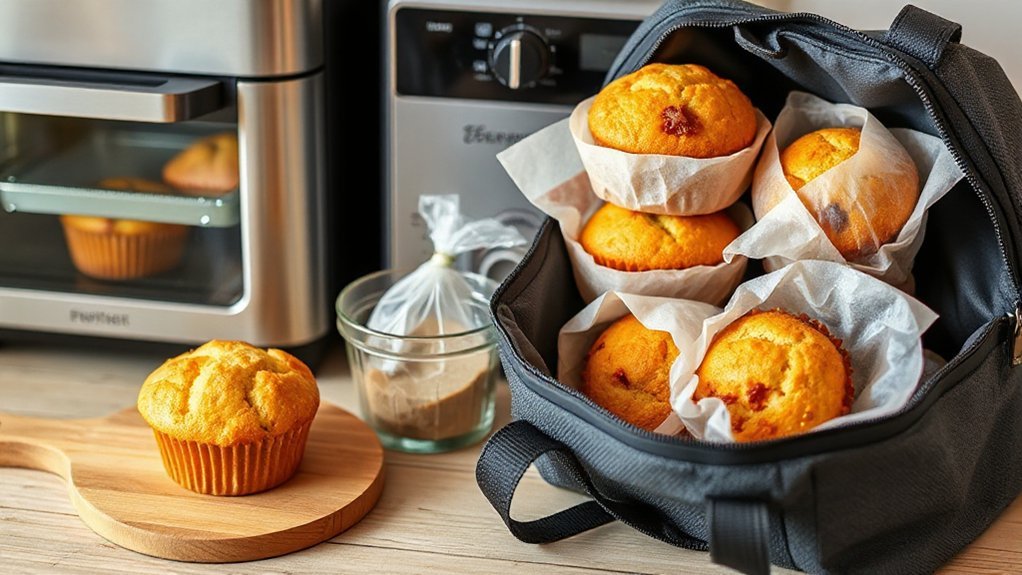
After you’ve nailed the batching rhythm, storage and reheating keep those muffins tasting fresh all week long. Cool then stash muffins in an airtight container for up to three days in the fridge. For longer storage, freeze individually on a tray until solid, then transfer to a freezer bag—this preserves shape and flavor. Use a simple labeling system on bags with date and flavor so you grab the right ones. To reheat, thaw in the fridge overnight or use a microwave on low power for 20–30 seconds, flipping halfway; finish in the air fryer at 300°F for 3–5 minutes to restore crisp tops. For commute stability, wrap muffins in parchment or place in a container to avoid shifting and smooshing during travel. Pack reheated muffins in an insulated sleeve or thermos to maintain warmth until you reach the office. These steps keep your grab-and-go mornings calm and tasty.
Troubleshooting Common Muffin Issues and Fixes
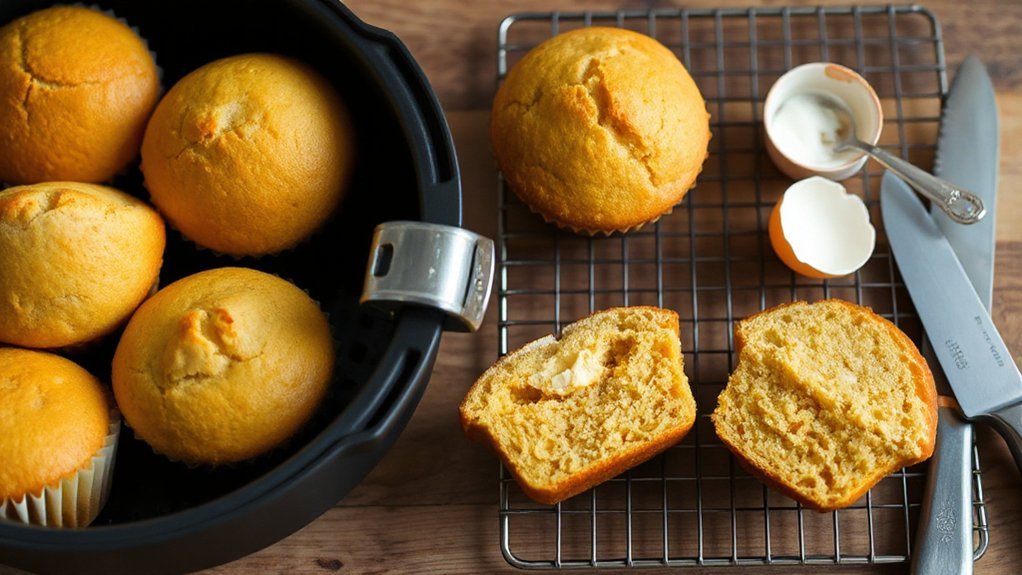
Ever wonder why your muffins come out flat, gummy, or oddly domed? You can fix most problems quickly. Collapsed Tops often mean you underbaked, overmixed, or opened the air fryer too soon. Soggy Bottoms usually signal excess moisture or low heat. Take these simple fixes and try again:
- Check doneness: insert a toothpick; bake until it comes out clean, and avoid opening early.
- Mix gently: fold wet into dry until just combined to prevent toughness and collapse.
- Adjust moisture: reduce liquid or add a tablespoon of flour for batter that’s too loose.
- Optimize air fryer: preheat, space liners for airflow, and raise temperature 10–15°F if bottoms stay wet.
With a few tweaks you’ll nail texture and rise every time. Also, cool muffins on a wire rack to avoid steam buildup, and consider using silicone cups or perforated parchment to improve circulation and prevent burnt edges for consistent results.
Conclusion
You’ve turned muffin-making into a morning lifesaver—think of each batch like a tiny flashlight you tuck into your bag: when your day goes dim, it brightens the path. I once prepped a dozen before a 6 AM commute and watched coworkers trade stress for crumbs; studies show protein-rich breakfasts curb midmorning slumps. Keep these muffins handy, and you’ll feel calmer, fed, and ready to sprint into whatever the day throws, with a smile every morning.
About The Author