You’ll get juicy, restaurant‑style chicken tikka by marinating bite‑sized chicken in a spiced yogurt blend (Greek or full‑fat), chilling it so acids and enzymes gently tenderize, then air‑frying in short, hot bursts for charred flecks and a tender interior. Use thighs for juiciness, trim and size pieces evenly, preheat the fryer, space items for airflow, and baste or spray lightly for caramelized edges. Keep going to learn timing, spice ratios, and finishing tips, plus tricks.
Why Yogurt Marinade Works
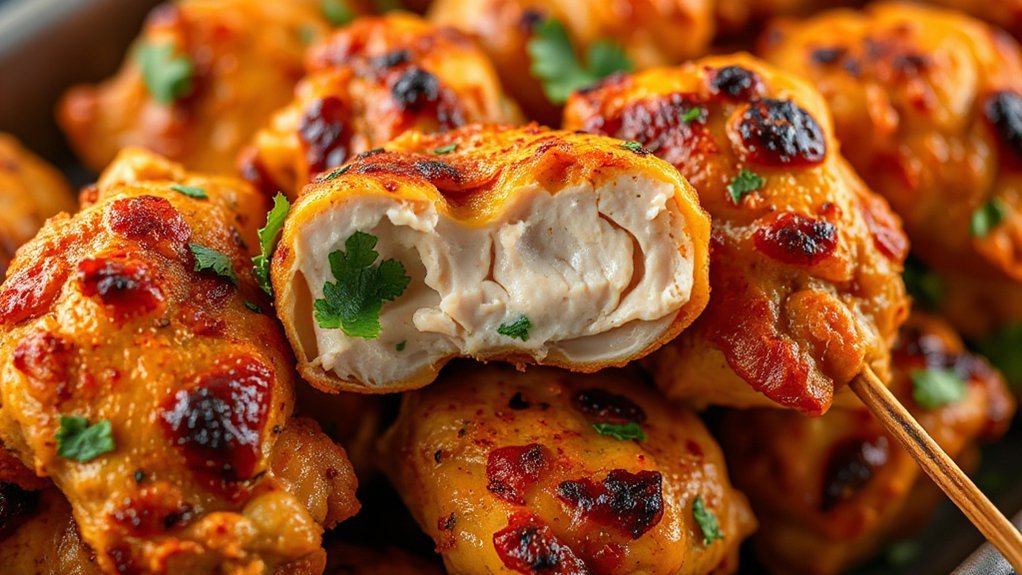
Because yogurt combines gentle acidity, moisture, and texture, it’s the secret behind tender, flavorful tikka. You’ll notice yogurt does two key things: its acidity causes acid denaturation of the chicken proteins, loosening muscle fibers so marinades penetrate and meat stays juicy when air fried. At the same time lactic fermentation gives yogurt a nuanced tang and enzymes that subtly enhance mouthfeel and depth without harshness. You’ll also appreciate yogurt’s creamy body; it carries spices evenly, promotes even browning, and forms a protective coating that reduces dryness in high-heat air frying. Use it smartly—shorter marination still softens, longer lets flavors develop—but avoid over-marinating fragile pieces. The result: tender, flavorful bites with balanced acidity and a pleasant fermented note. You get restaurant-style texture at home by relying on yogurt’s science rather than heavy oils or complex techniques. Trust this simple method, and you’ll impress family and friends every single time.
Ingredients You’ll Need
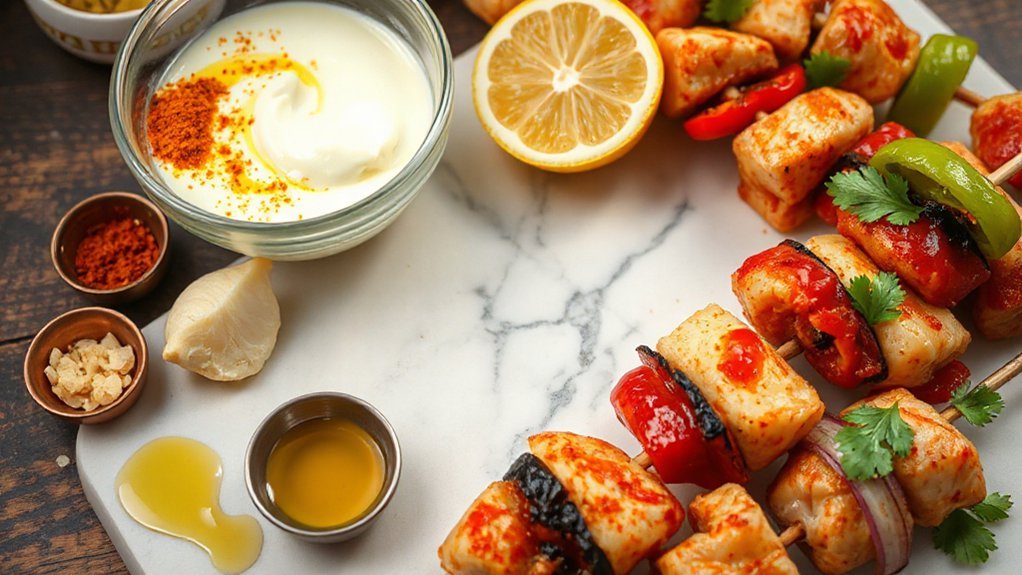
You’ll pick the right chicken—breasts, thighs, or bone-in pieces—and trim them for even cooking. You’ll make a creamy yogurt-based marinade (plain yogurt, maybe a splash of cream or milk) to tenderize and coat the meat. Then you’ll grab your spices, herbs, and aromatics—garam masala, cumin, turmeric, garlic, ginger, and fresh cilantro or fenugreek—for big, layered flavor.
Main Protein & Cuts
Start with boneless, skinless chicken thighs — they stay juicy and tolerate the high heat of an air fryer best — though chicken breast works if you prefer leaner meat (just marinate longer). Choose uniform 1 to 1.5-inch pieces so they cook evenly; trim excess fat but don’t overstrip flavor. You can use bone-in cuts for extra depth, but they’ll need longer cooking and precise timing. Consider Poultry breeds, Sourcing ethics when selecting meat — look for trusted farms or labels and ask about welfare and feed. If you buy whole birds, cut thighs off and portion them. Pat pieces dry before marinating to help the spice stick. Avoid overcrowding the basket so each piece crisps nicely. Reserve a few small pieces for testing doneness mid-cook and adjust.
Yogurt and Dairy Base
Now that your thighs are trimmed and patted dry, you’ll want a yogurt base that both tenderizes and carries the spices. Use full‑fat plain yogurt for creaminess, or Greek for a thicker cling. You can fold in a splash of cream or a spoon of paneer paste for richness; small swaps honor Regional Varieties and flavor. Consider lactose‑free or plant strained yogurts if Dairy Sustainability and dietary needs guide you. Chill the base so flavors meld and the acids gently work. Below is a quick ingredient snapshot:
| Ingredient | Purpose |
|---|---|
| Plain Yogurt | Tenderizer |
| Greek Yogurt | Thickness |
| Cream or Milk | Richness |
| Paneer or Labneh | Depth |
Measure quantities by weight when possible, and taste the yogurt base before marinating to balance tang, creaminess, and salt every time.
Spices, Herbs & Aromatics
When you combine toasted whole spices with bright aromatics and fresh herbs, the yogurt base really sings—so pick ingredients that build warmth, depth, and a little heat. You’ll want garam masala or a mix of cinnamon, cloves, and green cardamom, plus ground coriander and cumin for earthiness. Add turmeric for color and Kashmiri chili for mild heat; crushed black pepper adds bite. For aromatics, use grated ginger, minced garlic, and lemon zest to lift flavors. Fold in chopped cilantro and mint, practicing Herb Preservation by adding some fresh at the end and freezing extras in oil. Think Aroma Pairings: citrus with mint, ginger with cumin. These choices make your chicken tikka truly restaurant-style. Adjust quantities to suit your heat tolerance and flavor preference today.
Step-by-Step Marinade and Prep
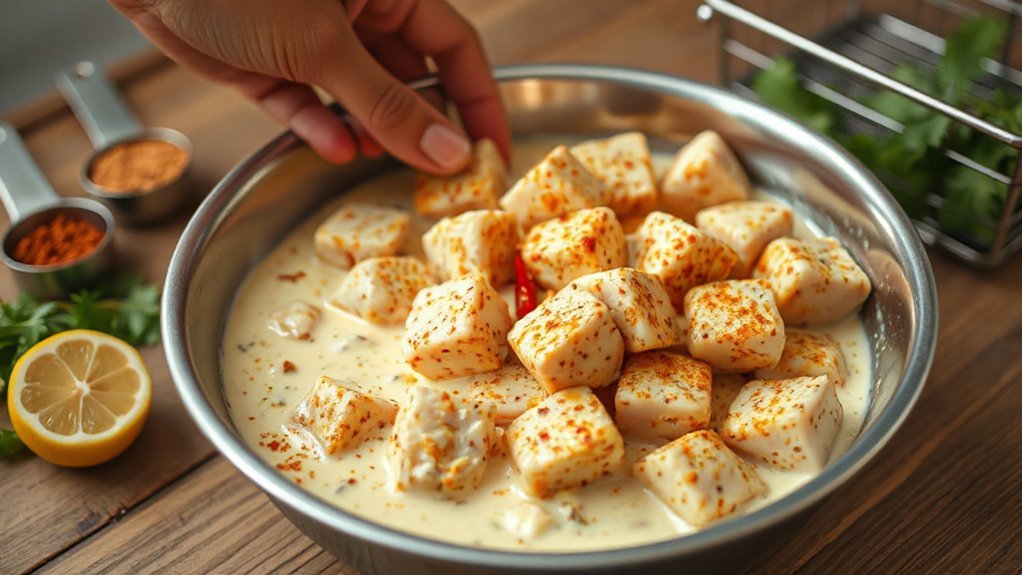
Start by mixing your spice blend into thick yogurt so it’ll cling to the chicken. Trim excess fat, cut the thighs into even cubes, then marinate at least 2 hours (overnight is best) — score the meat and add lemon or a splash of vinegar to help the flavors penetrate. Finally, thread the pieces onto skewers evenly so they cook in the air fryer without crowding.
Spice Blend and Yogurt
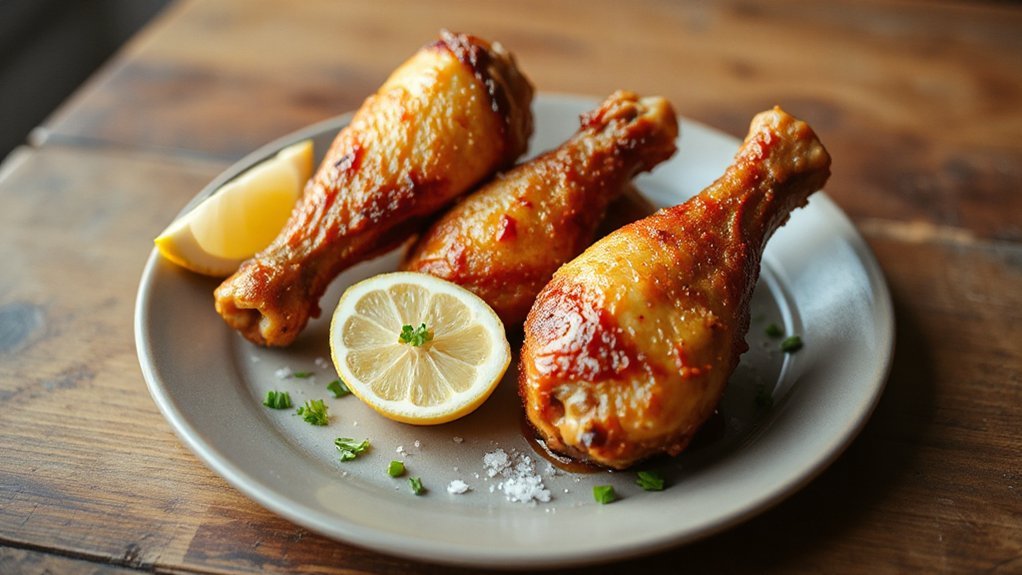

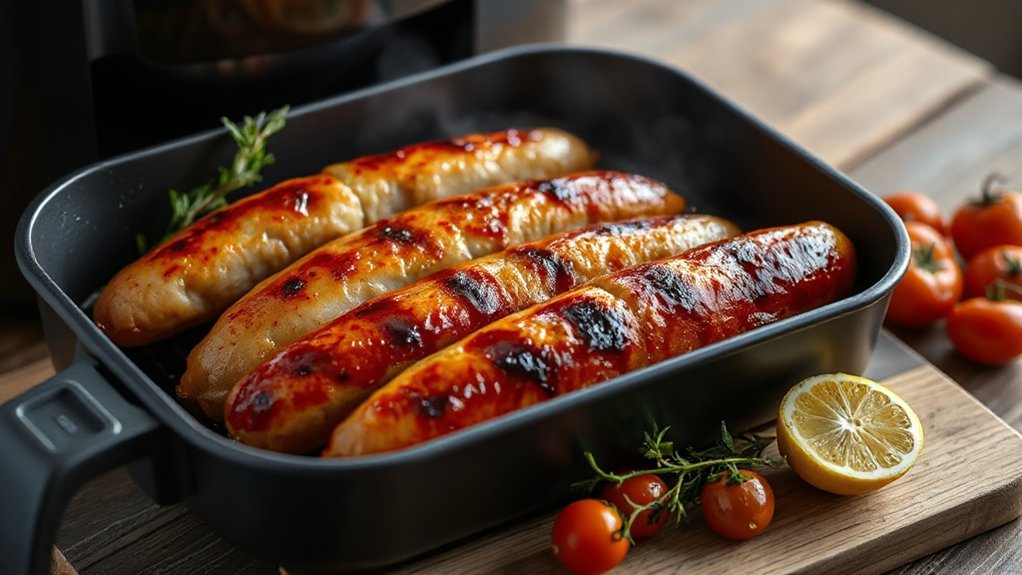
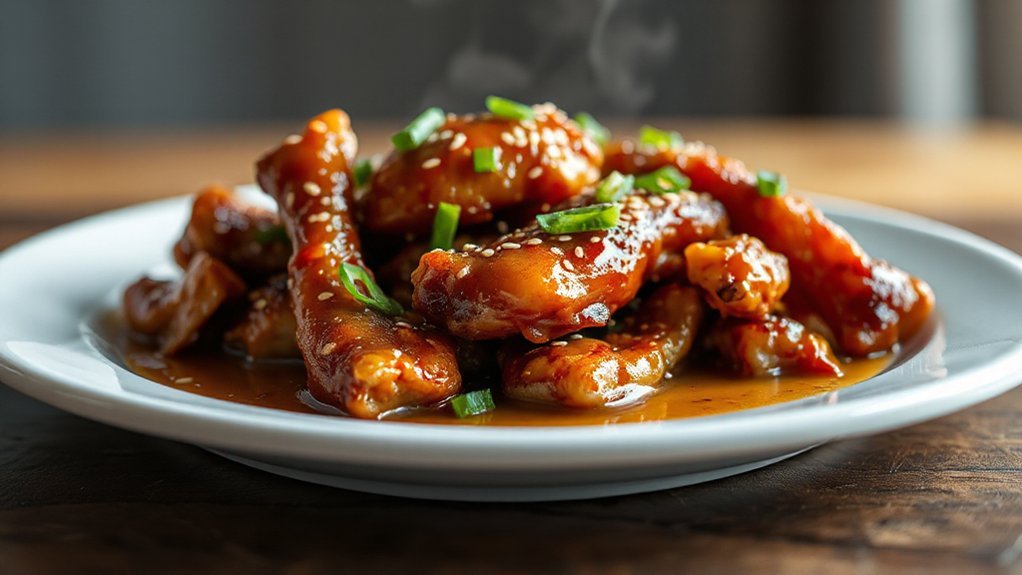
A vibrant spice blend is the heart of great chicken tikka, and folding it into thick yogurt gives the meat bold flavor and gentle tenderizing. You’ll pick coriander, cumin, garam masala, and a pinch of smoky paprika; do label reading so you know there’s no salt or fillers, and favor sustainable sourcing when possible. Whisk the spices into full-fat Greek yogurt until smooth, then add lemon juice, grated ginger, and minced garlic for brightness. You want a glossy, clinging marinade that coats each piece. Imagine these sensory cues as you mix:
- Warm, earthy cumin aroma.
- Citrus zing from lemon and ginger.
- Creamy, tangy yogurt sheen.
- Red paprika specks like sunset.
Keep everything chilled and ready now for the next step.
Marinating Time and Tips
You’ve folded the spice-laced yogurt into the chicken, so now it’s all about timing and technique to let those flavors sink in. You’ll get best depth with at least 2 hours chill time, but overnight (8–12) hours is ideal for restaurant-like punch. If short on time, 30–45 minutes still perks it up. Use glass, stainless, or food-safe ceramic to marinate — avoid long contact with thin plastics to prevent plastic leaching, especially with acidic yogurt. Seal tightly and turn jar or bowl once or twice for even coating. Keep the marinating chicken cold in the fridge; never leave it at room temperature. When you’re ready, drain excess yogurt briefly for even cooking without rinsing away that seasoned goodness. This simple patience rewards big flavor.
Trimming, Cutting, Skewering
Trim off any excess skin, visible fat, and silver skin so the pieces cook evenly and won’t flare or get gummy in the air fryer. You’ll want uniform chunks, about 1½-inch, so they brown without drying. Keep a sharp blade—knife maintenance matters; a dull knife crushes meat and slows you down. Pat pieces dry, then toss gently with marinade so it clings.
- Imagine firm cubes, not ragged strips.
- Thread each piece snugly but not overcrowded.
- Alternate colors—pepper or onion—for visual pop.
- Leave a little space at ends for skewer safety.
Work on a clean board, keep fingers tucked, and check skewers for splinters before cooking. Rotate skewers midway so every side crisps evenly and juices redistribute for tender bites always.
Air Fryer Cooking Technique
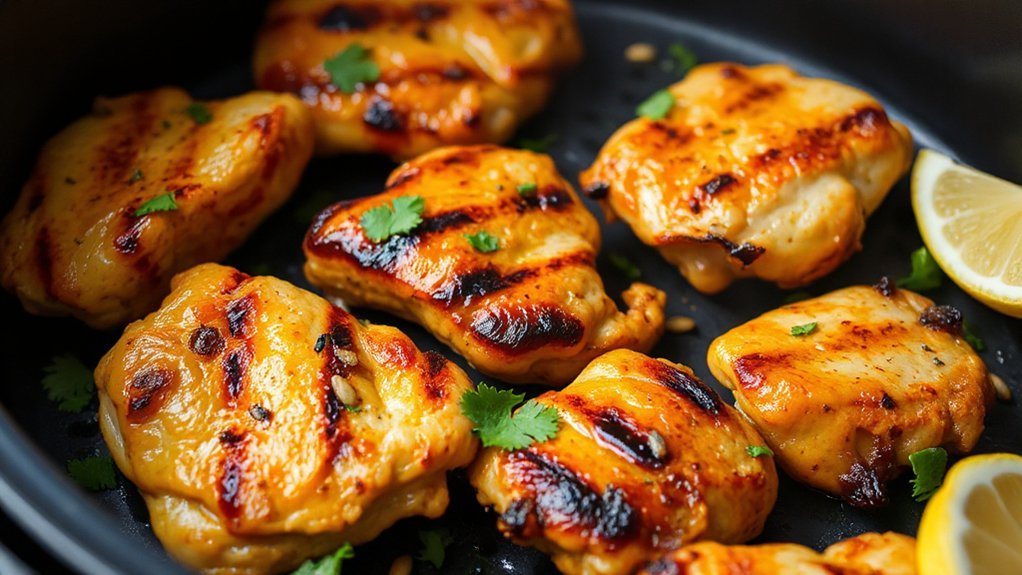
Using the air fryer gives you the charred edges and juicy center of traditional tikka without the fuss of a tandoor, and it speeds things up while cutting fat. You’ll preheat the unit to a high but controlled temperature so the yogurt marinade sets quickly and seals juices. Think in short cycles: cook, check, rotate. Focus on airflow management—don’t overcrowd the basket—and arrange skewers or pieces in a single layer. Good basket arrangement keeps hot air circulating evenly, preventing uneven doneness. Flip midway, basing exposed sides with leftover marinade for flavor retention. Use a quick spray of oil if things look dry; that helps browning without heavy fat. Rely on an instant-read thermometer to hit the target internal temperature rather than guessing by time. When pieces are done, rest briefly so juices redistribute. These simple steps make your air fryer reliable, predictable, and fast for restaurant-style chicken tikka.
Achieving Restaurant-Style Char
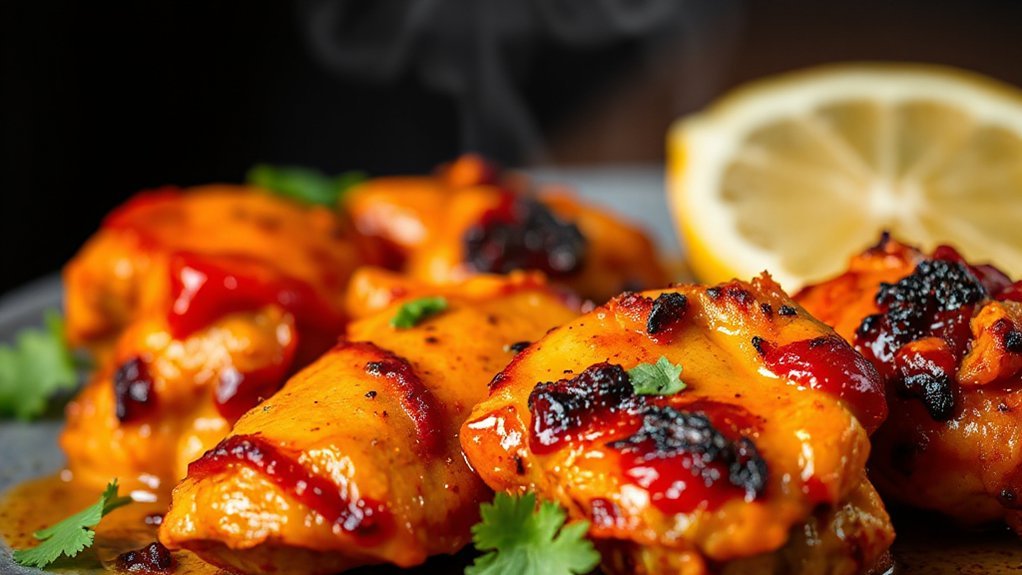
To get that restaurant-style char, you’ll marry intense direct heat with a few simple prep moves: pat the chicken dry, brush or spray a little oil, and hit it hard in short bursts so the exterior browns without overcooking the inside. You want quick, hot contact to trigger the Maillard Reaction and concentrated Sugar Caramelization on edges. Score pieces lightly and space them so air flows; don’t crowd the basket. Watch timing closely — a hotter, shorter cook gives char without chew. Finish with a brief rest so juices redistribute.
- Hot, oiled surface — sizzling start.
- Small, uniform pieces — even color.
- Short, high-temp bursts — controlled charring.
- visual check — deep speckles, not black crust.
You’ll get those dark freckles and roasted notes that feel restaurant-made, confident and clean, every batch. Keep a meat thermometer handy to nail doneness and avoid drying out chicken.
Serving Suggestions and Sides
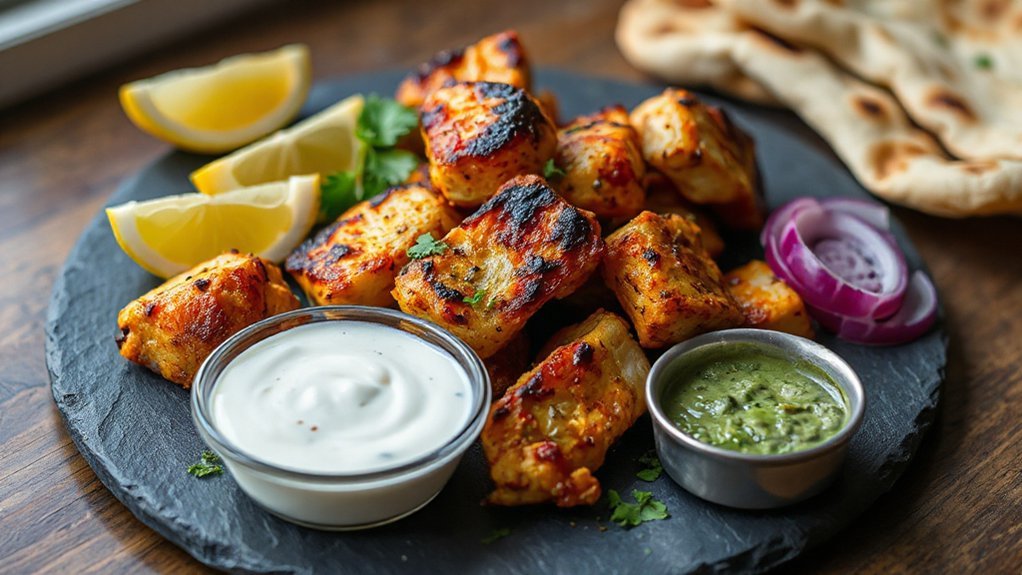
When you plate your air fryer chicken tikka, aim for bright contrasts and uncomplicated accompaniments that let the char and spice shine: pillowy naan or garlic flatbread, fragrant basmati or jeera rice, cooling cucumber-mint raita, and a tangy tamarind or mint chutney. Keep it simple: offer a couple of Bread Options so guests choose soft or crisp—charred naan, buttered flatbread, or toasted pita. For Salad Pairings, pick crunchy, fresh elements: shredded cabbage with lemon, tangy onion-salad with cilantro, or a kachumber of tomato, cucumber, and red onion tossed in lime and chaat masala. Add a small bowl of pickled onions and lemon wedges for acidity. If you want greens, serve a peppery arugula salad with a yogurt-dill dressing that won’t compete with spices. Finish with a sprinkle of chopped cilantro and a few charred lemon halves for squeezing—everything should be easy to assemble and bold on the plate.
Make-Ahead, Storage, and Reheating Tips
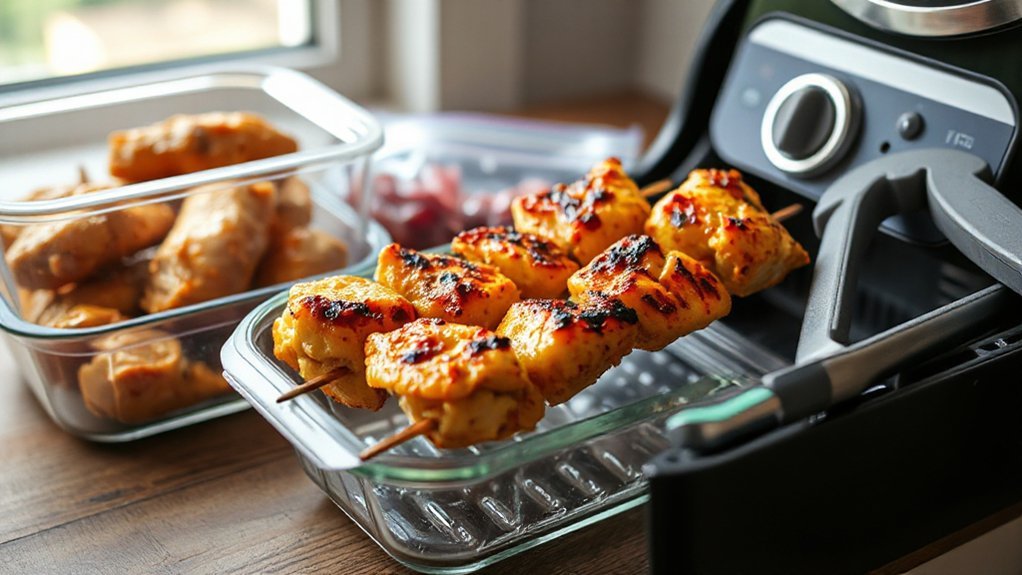
After you’ve picked your breads, sides, and chutneys, think about how you’ll prep and preserve the tikka so it stays flavorful and tender for later. Make the night before when possible: marinate, portion, and chill to let flavors deepen. For storage, cool pieces completely, then pack in shallow airtight containers or freezer bags—consider Vacuum Sealing for longer life. Use Labeling Containers with date and contents so you grab the right batch.
- Flash-chill pieces on a sheet pan before packing.
- Portion single meals to speed thawing and reheating.
- Freeze for up to 3 months; refrigerate up to 3 days.
- Reheat gently in the air fryer at 350°F until just hot.
When reheating, avoid overcooking: spritz with a little water or yogurt, cover briefly, then crisp outside in the air fryer. Enjoy leftovers that taste fresh, not tired. Label and rotate stocks, using oldest ones first.
Conclusion
You’ve just made restaurant-style chicken tikka that’s as comforting as a warm hug — and you nailed it. Quick, flavorful, and guilt-free in the air fryer, this yogurt marinade keeps your chicken juicy while spices pack the punch. Serve it with warm naan, tangy chutney, and a squeeze of lemon, or toss into salads and wraps. Store leftovers properly, reheat gently, and you’ll enjoy this easy favorite all week and impress friends with every single bite.
About The Author