You can make restaurant‑quality Greek chicken souvlaki in your air fryer in minutes: marinate thigh or breast cubes in lemon, garlic, oregano and yogurt for tenderness, skewer with gaps, then air fry at 400°F until golden and 165°F inside for crisp edges and juicy centers. Whip quick tzatziki from thick Greek yogurt, squeezed cucumber, garlic, lemon and dill. It’s a fast, bright summer BBQ alternative—keep going and you’ll find tips, timing and serving ideas.
Why This Recipe Works
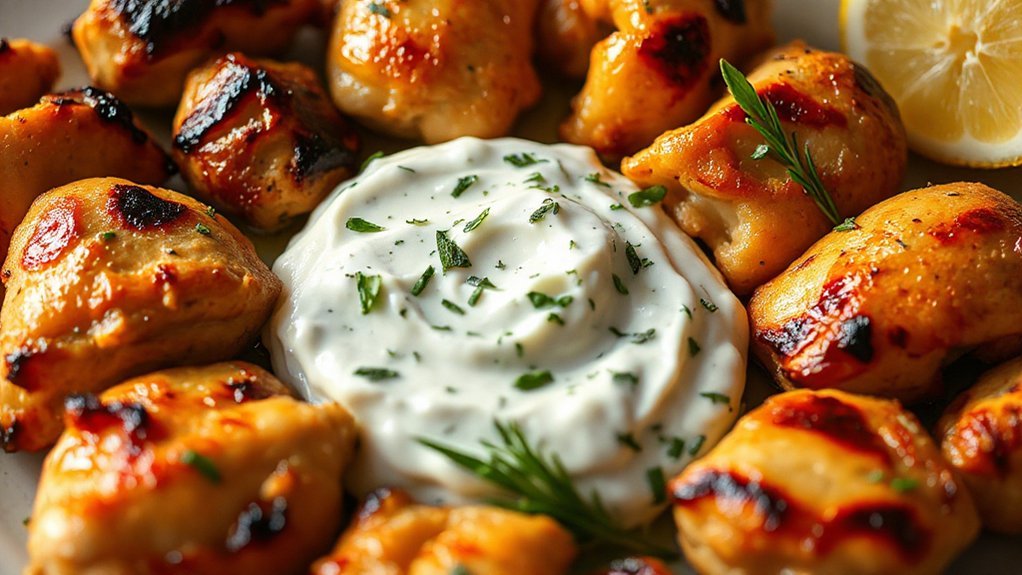
Because the marinade pairs bright lemon and tangy yogurt with garlic and oregano, the chicken stays juicy and bursts with classic Greek flavor after a quick grill. You’ll notice the yogurt tenderizes without turning the meat mushy, so each bite has a clean, satisfying snap. Quick high heat promotes the Maillard reaction, creating browned edges and a savory crust that contrasts the interior’s tenderness. Skewering keeps pieces uniform, so they cook evenly and you avoid dried-out tips. You get Texture contrast from charred bits, soft centers, and crisped exterior fat, which makes each mouthful interesting. The tzatziki cools and balances acidity, giving you a bright finish that ties flavors together. Overall, this method saves time, maximizes flavor, and scales easily for a crowd. You’ll serve juicy, flavorful souvlaki that feels authentic without fuss. You’ll get consistent results whether you’re using an air fryer, grill pan, or backyard grill.
Ingredients You’ll Need
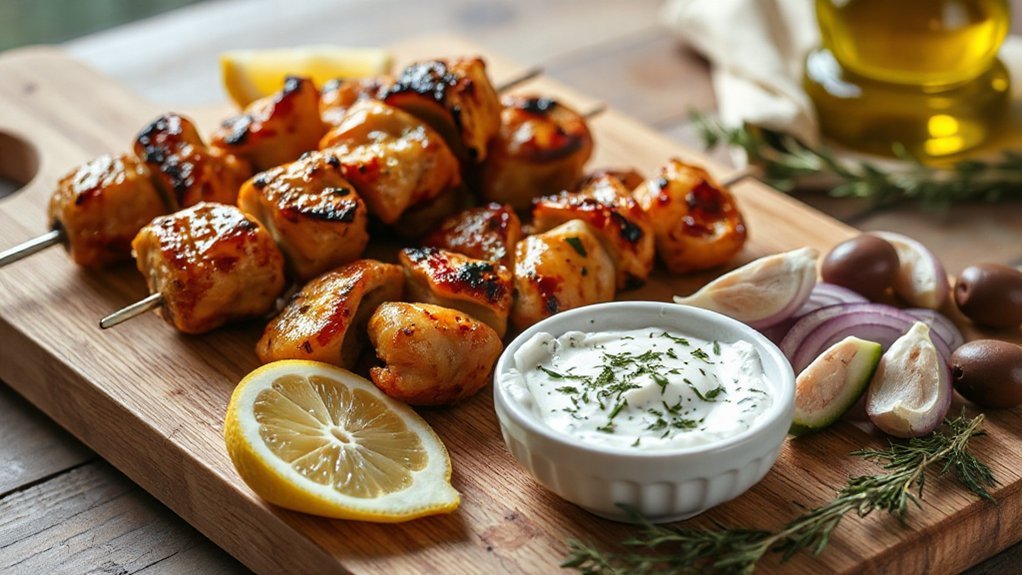
You’ll want to pick the right protein—boneless, skinless chicken thighs for juiciness or breasts if you prefer leaner meat. For the marinade, have olive oil, lemon, garlic, oregano, salt and pepper on hand to infuse flavor. And for tzatziki, stock up on thick Greek yogurt, cucumber, garlic, dill (or mint), lemon and a drizzle of olive oil.
Protein and Cuts
For the juiciest souvlaki, choose boneless, skinless chicken thighs—about 6–8 oz (175–225 g) per person—since they stay moist and handle high heat well. You’ll also find chicken breast suitable if you prefer leaner cuts, but expect firmer texture and shorter cooking windows. Trim excess fat and square the pieces so they thread evenly on skewers; consistent thickness promotes even cooking in an air fryer. If you want convenience, ask your butcher for pre-cut cubes or butterfly breasts. Focus on quality poultry selection and transparent meat sourcing—look for local, pasture-raised or responsibly farmed labels when possible. Finally, pat the pieces dry and chill briefly before skewering; that simple step helps achieve better browning and consistent results. You’ll love the texture and flavor this choice delivers.
Marinade Components
Gather the essentials: good extra-virgin olive oil, fresh lemon juice (and a little zest), plenty of minced garlic, flaky sea salt and cracked black pepper, and fragrant oregano (fresh or dried). Then add a splash of red wine vinegar for brightness and a touch of honey to round the edge. Use smoked paprika and ground cumin for warm depth, and a pinch of cayenne if you like heat. Combine mustard or Greek yogurt as an emulsifier if you want a thicker coat. Measure salt carefully to support the acid balance and help the chicken absorb flavor. Keep spice layering simple: build mild, medium, and hot notes rather than crowding the mix. Whisk and taste before marinating. Marinate at least 30 minutes, ideally a few
Tzatziki Essentials
Starting with a base of thick, full‑fat Greek yogurt, you’ll add grated, well‑drained cucumber, minced garlic, a squeeze of fresh lemon juice, a drizzle of extra‑virgin olive oil, chopped dill or mint, and a pinch of flaky salt and cracked black pepper. Keep quantities flexible—start with a cup of yogurt, half a cucumber grated and squeezed, one to two crushed garlic cloves, a tablespoon of lemon, and a teaspoon of olive oil. Season to taste with flaky salt and cracked pepper, fold in two tablespoons chopped dill or mint, and chill a few hours so the cooling chemistry develops. The probiotic benefits of yogurt boost flavor and gut health, while the balance of acid, fat, and herbs keeps it bright and spoonable every time.
Kitchen Tools and Air Fryer Tips
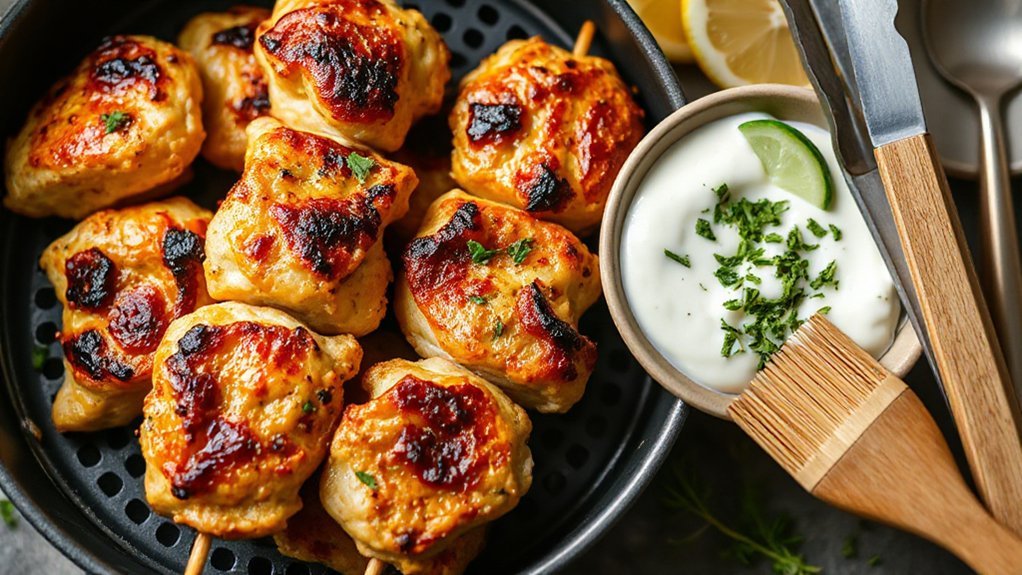
You’ll want a handful of essential tools—metal or bamboo skewers, heatproof tongs, a silicone brush, and a quick-read thermometer—to make crisp, juicy chicken in the air fryer. Keep parchment discs, a small wire rack, and a silicone mat nearby to prevent sticking and promote even airflow. After cooking, wipe the basket while it’s warm, soak removable parts in soapy water, and dry everything thoroughly to keep your air fryer working its best.
Essential Air Fryer Tools
With an air fryer and a few well-chosen tools, you’ll turn Greek chicken souvlaki into a weeknight favorite. Start with a Buying checklist: reliable tongs, a meat thermometer, and silicone brushes—these give control and consistent results. Consider Warranty considerations when choosing quality tools; a solid warranty often signals durability. You’ll also want a small spray bottle for oil, skewers that fit your basket, and a compact baking pan for drippings. Keep everything reachable so you can flip and check without fuss.
- Tongs, thermometer, silicone brush
- Skewers and small pan
- Spray bottle and heatproof mitts
These basics speed prep, prevent overcooking, and make serving effortless—so you’ll grill Greek flavors fast, even on busy nights, and you’ll love the speed, too.
Cleaning & Care
Keeping your air fryer and tools clean not only preserves flavor but extends their life, so make it part of your routine: wipe the basket after each use, soak removable parts when needed, and dry everything thoroughly before reassembling. After cooking souvlaki, scrape loose bits with a soft brush, then run a quick warm-soapy cycle for the basket and tray. For stubborn spots use a paste of baking soda and water for stain removal, let it sit, then scrub gently. Tackle oil with paper towels first—good grease management prevents smoke and odors. Clean tongs, skewers, and silicone spatulas by hand; avoid abrasive pads on nonstick surfaces. Store components dry and check seals and vents monthly so your fryer performs safely, efficiently and reliably.
Quick Lemon-Herb Marinade
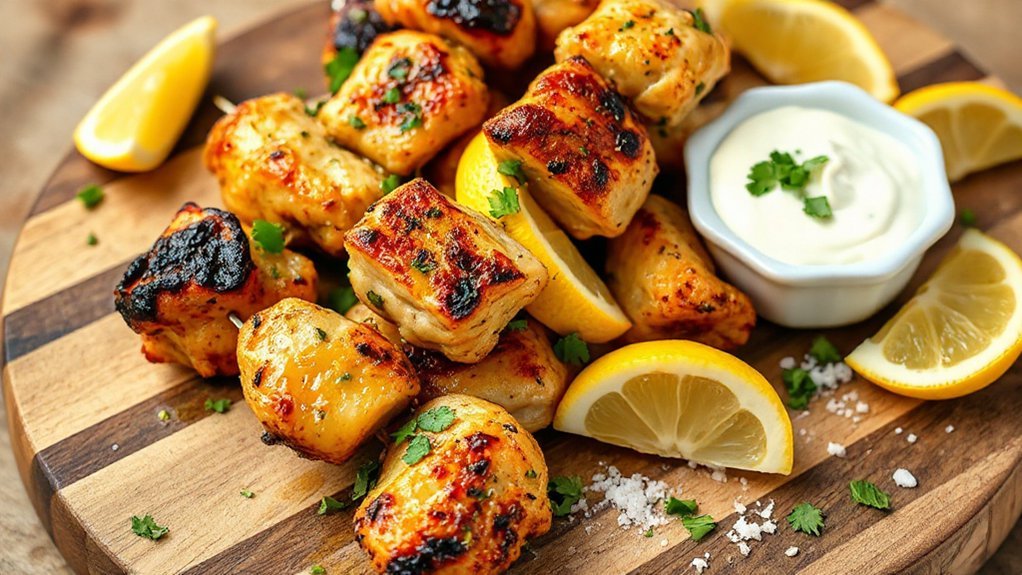
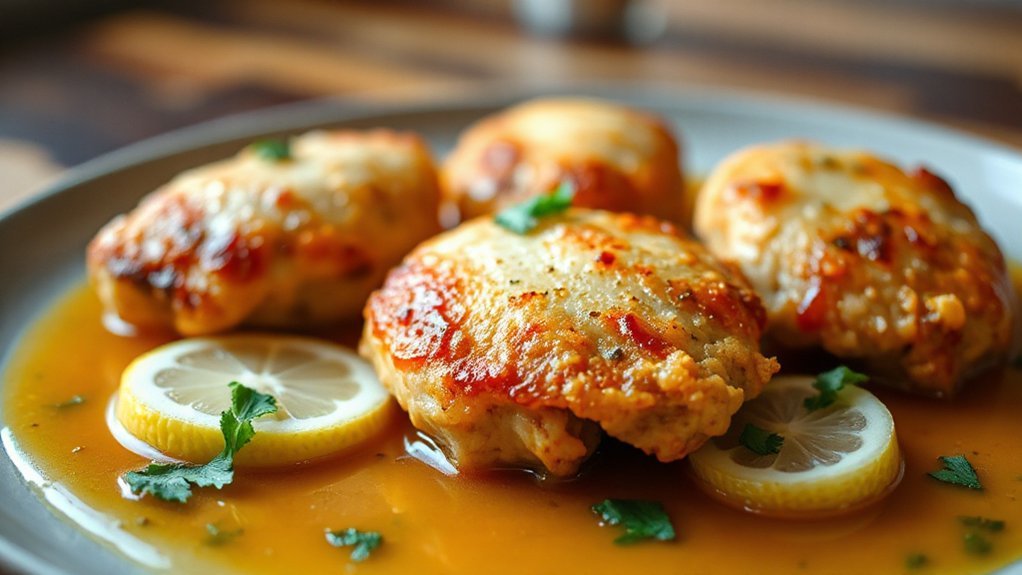
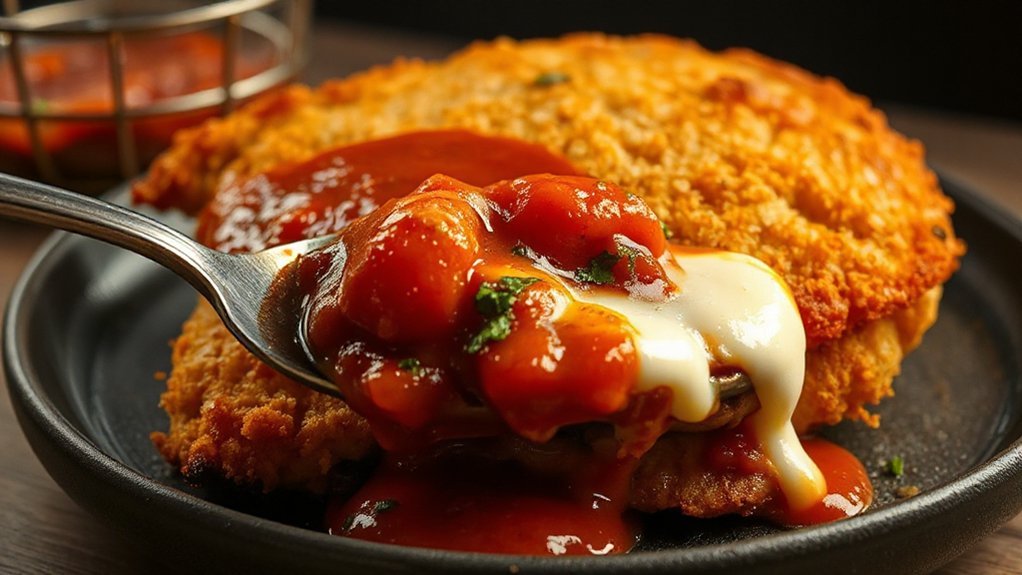
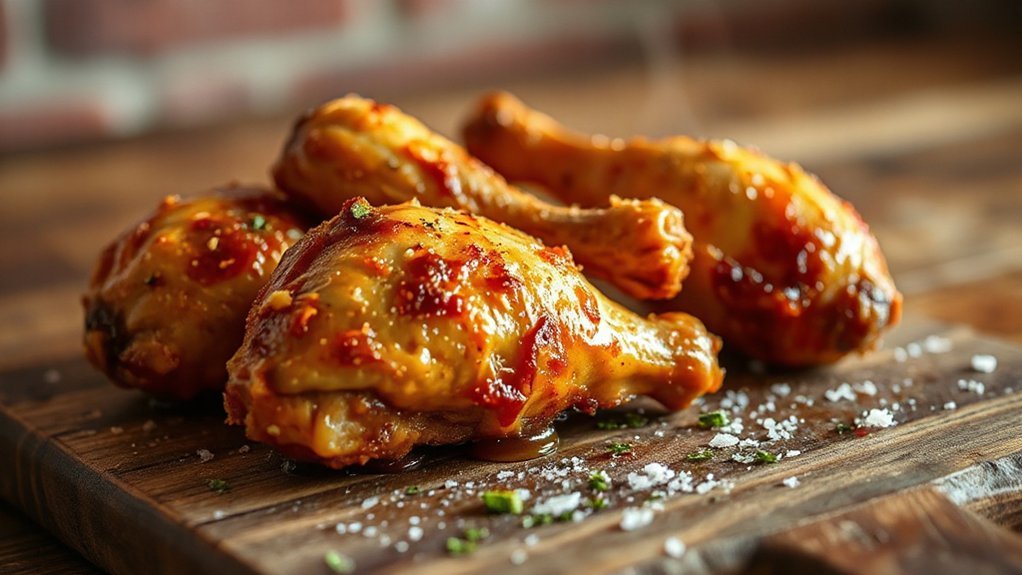
Marinating the chicken in a bright lemon-herb mix wakes up the flavors fast — a few minutes’ hands-on prep and the citrus, garlic, and oregano start doing their work. You’ll whisk lemon juice, olive oil, minced garlic, chopped oregano, salt, and pepper, then toss in chicken so every piece gets coated. Think about sourcing ethics when choosing olives and olive oil; better ingredients lift the whole dish. You don’t need long—30 minutes to a few hours is plenty. This is also flavor psychology at play: acid tenderizes and herbs amplify aroma, so steps feel like big results. For a quick hit of citrus brightness, try these tweaks:
- Add a teaspoon of zest for citrus punch.
- Fold in a tablespoon of yogurt for creaminess and gentler acidity.
- Toss crushed red pepper for warmth.
Shake the marinade occasionally so the chicken soaks evenly and you’re all set.
Air Fryer Cooking Method
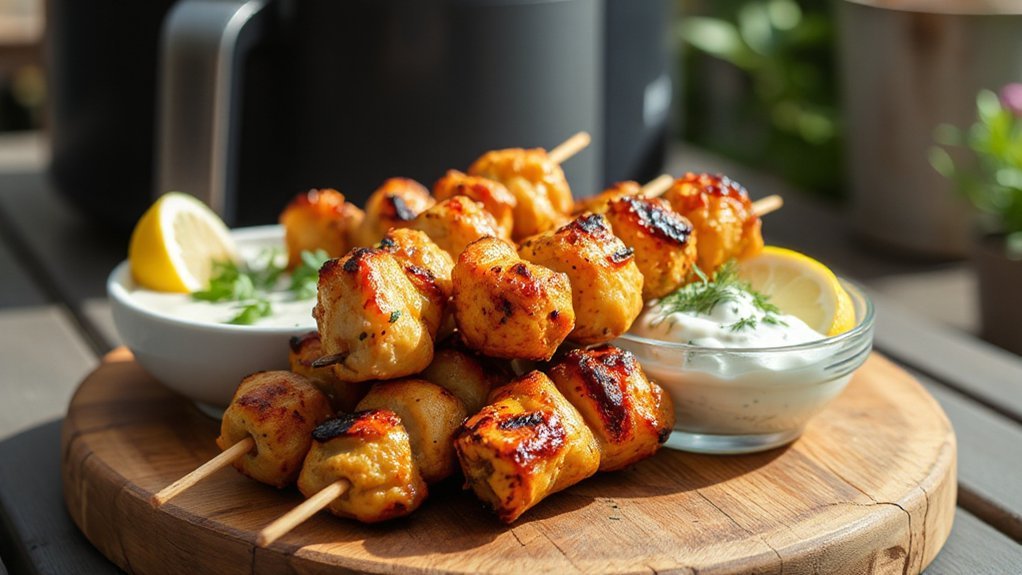
When you use an air fryer for souvlaki, you’ll get crisp edges and juicy centers in a fraction of the time. You preheat to 400°F, thread marinated chicken with space between pieces, and set a short cook cycle so heat circulates. Pay attention to airflow dynamics: leave gaps, don’t overcrowd, and flip once for even browning. Use thermal mapping instincts—hot spots near the fan need rotation to avoid char. Aim for 8–10 minutes depending on cube size, checking internal temperature of 165°F. Rest skewers briefly so juices redistribute.
| Visual | Expectation |
|---|---|
| Golden edges | Crispy bite |
| Slight char | Smoky hint |
| Juicy center | Tender texture |
| Even color | Proper cook |
| Aromatic herbs | Bright finish |
You’ll get repeatable results by monitoring spacing, time, and a quick flip; efficient, fast, and reliably delicious. Adjust temp slightly for denser pieces and note that different models vary in circulating heat. Trust the senses and thermometer always.
Easy Tzatziki Sauce
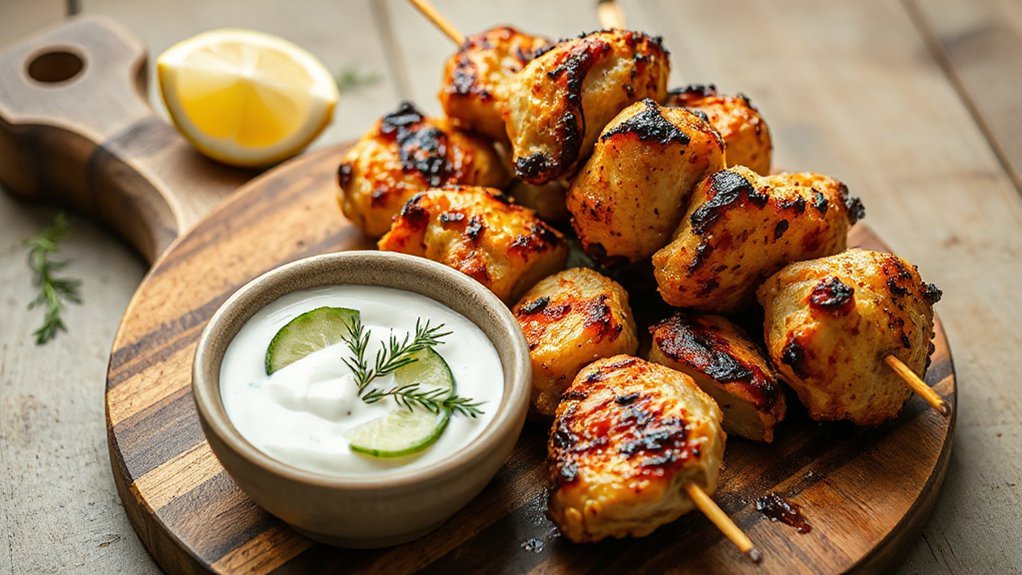
Whisking together thick Greek yogurt, grated cucumber, garlic, lemon, dill, and a splash of olive oil gives you a bright, cooling tzatziki in minutes. You’ll want to squeeze the cucumber dry so the sauce stays thick and not watery. Taste, then tweak salt, acid, and garlic to match your mood. Make it ahead—chill lets flavors meld and the texture firm up. For quick variations, try a touch of mint, a pinch of smoked paprika, or extra lemon zest when you want brightness.
- Use Greek yogurt for creaminess.
- Drain cucumber for body.
- Add dill and lemon for freshness.
Tzatziki fits traditional serving customs as a communal dip, but it’s also versatile and simple—brush it on skewers, dollop on rice bowls, or serve alongside grilled veg. When pairing drinks, lighter white wines or rosés complement the herb and acid; think crisp, unoaked options for ideal wine pairings.
Plating and Serving Ideas
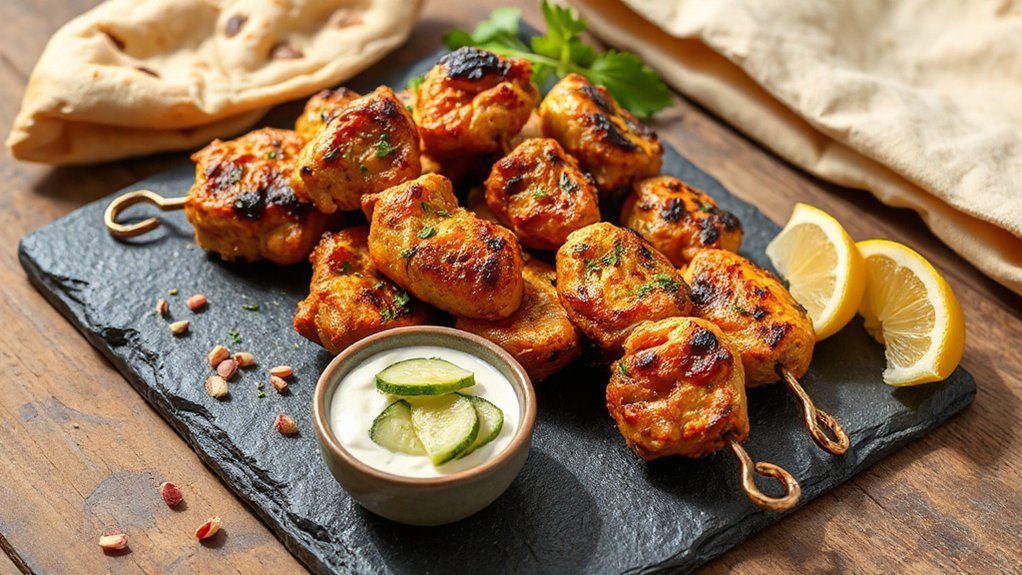
How should you plate Greek chicken souvlaki so it looks as good as it tastes? Start with a warm plate, arrange skewers diagonally, and let charred edges face up for visual contrast. Tuck a generous dollop of tzatziki beside the skewers and sprinkle with chopped dill and a squeeze of lemon. Add a small pile of cucumber-tomato salad and scatter crumbled feta for color. Offer a stack of warmed pita triangles you’ve brushed with olive oil, or slice pita and fan it around the main elements.
For a relaxed, sociable spread, go Family style: set a long platter with extra skewers, bowls of Mediterranean sides—olives, roasted peppers, herbed rice—and let people help themselves. Garnish with lemon wedges and a drizzle of olive oil. Serve with chilled white wine or ouzo if you like. Keep lines clean, colors bright, and portions inviting so every plate feels festive and effortless.
Make-Ahead, Storage, and Reheating
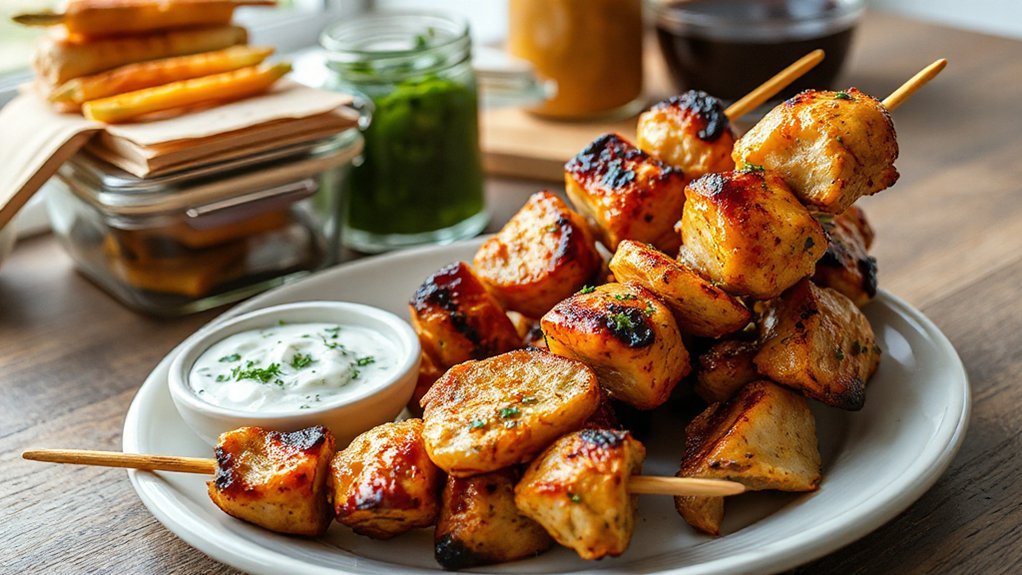
Plating looks great, but you can save time and stress by prepping much of this ahead: marinate the chicken up to 24 hours and thread skewers a few hours before cooking, store finished skewers in an airtight container in the fridge for up to 3 days (or freeze cooked skewers for 2–3 months), and keep tzatziki refrigerated in a sealed jar—don’t mix it with hot meat.
Save time: marinate up to 24 hours, prep skewers ahead, refrigerate tzatziki—don’t mix with hot meat.
When you’re ready to store, use a simple labeling system so you know dates and contents. If you plan storage, vacuum sealing prevents freezer burn and keeps texture intact.
- Refrigerator: cool, stack flat in airtight containers, eat within 3 days.
- Freezer: vacuum seal portions or wrap, freeze 2–3 months.
- Reheat: thaw overnight in fridge if frozen, reheat in air fryer at 350°F for 6–8 minutes until 165°F.
For tzatziki, stir cold and serve chilled. Don’t overcook—keep chicken juicy.
Variations and Helpful Tips
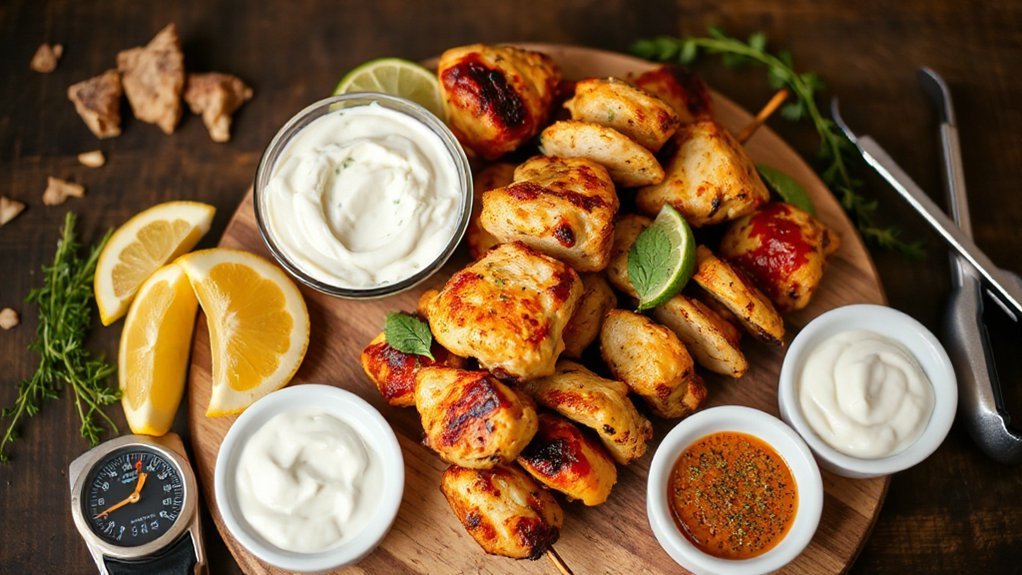
Often you’ll want to tweak this recipe to match your pantry or mood, and you can do that without breaking the flavor. Swap chicken thighs for breasts or pound tenderloins for quicker cooking, or use lamb cubes for a richer bite. Change herbs—more oregano or fresh dill—and add lemon zest for brightness. For spice, toss in smoked paprika or chili flakes. If you’re vegetarian, grill halloumi or marinated mushrooms on skewers.
Think about Seasonal pairings: serve with grilled asparagus in spring, tomato-cucumber salad in summer, roasted peppers in fall, or warm pita and braised greens in winter. Hosting tips matter—keep extra skewers on hand, label sauces, and set up a simple build-your-own platter so guests assemble plates. Make tzatziki a day ahead to let flavors meld. Finally, use an instant-read thermometer for perfect doneness and rest meat five minutes before serving. Save leftovers for pita sandwiches tomorrow afternoon.
Conclusion
You’ve just air-fried your way to pseudo-Greek glory, and you’re practically a backyard Zeus now—minus the thunderbolts and questionable judgment. You’ll toss skewers, slather tzatziki, and pretend you invented Mediterranean cuisine between sips of rosé. Guests will clap, Instagram will nod approvingly, and you’ll secretly promise to do it again next weekend. Do it; you’re a culinary demigod, and the grill can take a well-deserved sabbatical. Culinary fame is only skewers, yogurt, and hubris away.
About The Author